Genuine by Nature: The Biggest Brands Born in Maine and What the Pine Tree State Is Actually Buying
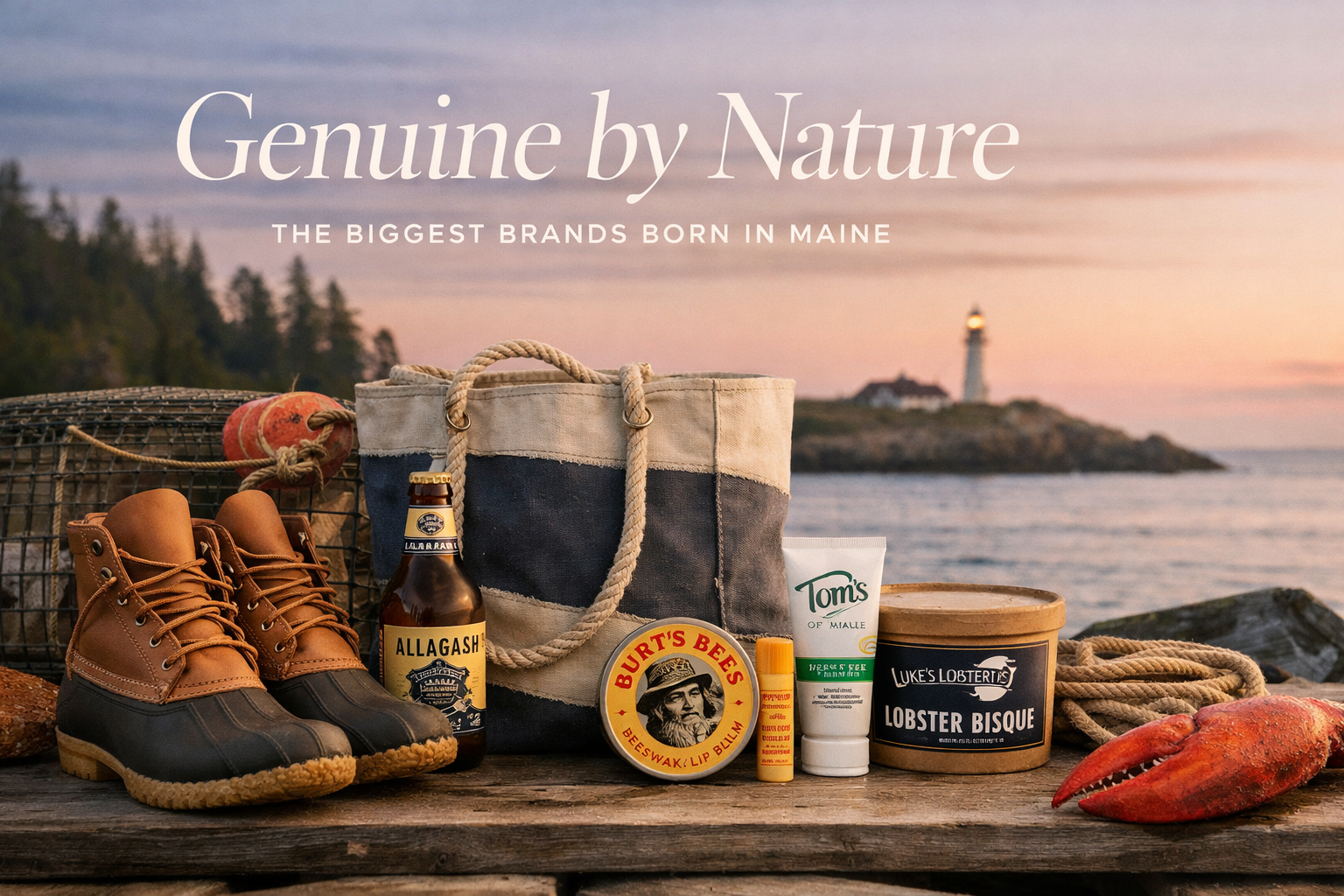
Maine is not a state that shouts. It is a state that endures. It is a place where the winters are real, the coastline is jagged and unforgiving, and the people who choose to live here — year-round, not just in the summer — have a shared understanding that authenticity is not a brand value. It's a survival trait.
And yet, from this cold, beautiful, stubbornly independent corner of New England has emerged some of the most genuinely beloved brands in American consumer history. Not flashy brands. Not brands built on hype cycles or venture capital spray-and-pray. Brands built on solving real problems, making things that last, and earning trust one honest product at a time.
This is the sixth entry in Ritner Digital's State by State Brand Series. Welcome to Maine — where the lobster is cold, the boots are waterproof, and the marketing had better be real.
The Brands That Made Maine
L.L. Bean — Freeport, ME (Est. 1912)
There is no more complete expression of Maine's brand identity than L.L. Bean. L.L.Bean is an American privately held retail company that was founded in 1912 by Leon Leonwood Bean in Freeport, Maine, where it was founded. The company began as a one-room operation selling a single product, the Maine Hunting Shoe — a waterproof boot combining lightweight leather uppers and rubber bottoms that Bean sold to hunters. Wikipedia
Leon Leonwood Bean returned from a hunting trip with cold, damp feet and a revolutionary idea. By combining leather uppers with rubber bottoms, he created an innovative boot that changed footwear forever. L.L.Bean The first batch didn't go well — 90 of the first 100 pairs were returned. L.L. sent refunds, corrected the problem, and sent more mailers. L.L.Bean That willingness to acknowledge failure, fix it, and keep going is as Maine as it gets.
More than a century later, L.L. Bean is still headquartered in Freeport, still family-controlled, still making Bean Boots by hand in Brunswick, Maine. Today, the family-owned business makes 500,000 Bean Boots a year in Maine and operates 58 stores in 19 states, along with 25 stores in Japan and 13 in Canada. Every year, over three million people visit the Freeport flagship store, which is open 24/7 and is undergoing a $50 million revamp. Mainebiz.biz
The flagship store — open every hour of every day since 1951, never once closed for weather, only shuttered briefly for presidential deaths and COVID-19 — is itself a brand statement. It says: we are always here, in all conditions. That is what Maine means.
L.L. Bean's endurance as a brand is rooted in something that California brands often struggle with: patience. The Bean Boot was not designed to be trendy. It was designed to keep your feet dry. The fact that it became a fashion staple for prep school students, country weekenders, and outdoor enthusiasts across generations is a byproduct of genuine utility, not positioning strategy. When Duck Boots cycle in and out of fashion, Bean Boots don't notice. They just wait for the next generation of wet feet to discover them.
Tom's of Maine — Kennebunk, ME (Est. 1970)
Tom's of Maine is a national brand of natural toothpastes, soaps and other personal care products based in Kennebunk. Tom and Kate Chappell founded the company in 1970 and sold a majority stake to Colgate-Palmolive in 2006. Ten percent of profits are donated to nonprofit organizations that support the environment, health and well-being, and disaster relief. Mainebiz.biz
Tom's of Maine arrived on the natural personal care scene five decades before "clean beauty" became a marketing category. The Chappells moved from Philadelphia to rural Maine in the late 1960s, troubled by the synthetic ingredients in the products they were using, and built a company around the simple idea that personal care products could be made from natural ingredients without sacrificing effectiveness. That idea — so obvious in retrospect, so radical at the time — built a brand that anticipated an entire cultural shift in consumer values by a generation.
The Colgate acquisition raised eyebrows among loyal customers, but Tom's has largely maintained its ingredient commitments and giving philosophy. What it represents for brands entering Maine's market is instructive: Maine consumers were early adopters of natural, clean, and transparent products — not because of trend pressure, but because the state's cultural disposition toward the natural world made those values feel intrinsically right.
Burt's Bees — Dover-Foxcroft, ME (Est. 1984)
Burt Shavitz and Roxanne Quimby founded Burt's Bees in 1984, when she started making candles from leftover beeswax in a one-room schoolhouse in Dover-Foxcroft. Mainebiz.biz Burt was a beekeeper. Roxanne was an artist and entrepreneur. Together, they built a natural personal care brand from Maine's fields and forests that eventually sold to Clorox for nearly $1 billion. The brand's origin story — two people in rural Maine making lip balm from beeswax — is one of the great American entrepreneurial stories, and it is completely, authentically Maine.
Allagash Brewing Company — Portland, ME (Est. 1995)
Maine's largest brewer, founded by Rob Tod in 1995, specializes in Belgian-style beers led by Allagash White, its award-winning hazy concoction of oats, malted wheat and raw wheat. Allagash White won its first gold medal at the World Beer Cup in 1988, and Tod is a 2019 James Beard Award winner for Outstanding Wine, Spirits or Beer Producer. Mainebiz.biz
Allagash is the anchor of Maine's extraordinary craft beer ecosystem. When Rob Tod founded Allagash Brewing in 1995, it was the 12th brewery in Maine. By 2015, there were 73. According to the guild's latest figures, there are 156 — ranking second in the country in breweries per capita and contributing $696,000,000 in economic impact to the state. Newscenter Maine
Maine's craft beer scene is one of the most per-capita dense and critically respected in the country. Allagash, Bissell Brothers, Maine Beer Company, Oxbow, Geary's — these aren't just regional players. They are benchmark breweries that beer lovers travel to Maine specifically to visit. Allagash's taproom in Portland is consistently rated the number one thing to do in the city on TripAdvisor, which tells you something about how completely craft beer has woven itself into Maine's identity and tourism economy.
Sea Bags — Portland, ME (Est. 1999)
Sea Bags, a Portland-based maker and retailer of totes and other accessories crafted out of recycled sail cloth, has 50 stores in 15 states. Founded in 1999, the company has saved over 1.5 million pounds of material from going into landfills, sponsors a women's sailing team, and scored a multiyear licensing deal with the National Football League in 2024. Mainebiz.biz
Sea Bags is the perfect Maine brand for the 21st century. It takes something deeply rooted in Maine's maritime identity — sailcloth — and transforms it into a sustainable, fashion-forward product that tells the story of Maine's relationship with the sea every time someone carries it. No two Sea Bags are identical, because no two sails are identical. That built-in uniqueness, combined with a genuine environmental purpose, has made the brand a darling of Maine tourism and a growing national player.
Luke's Lobster — Portland, ME (Est. 2009)
Luke's Lobster, founded in 2009 by Luke Holden and Ben Conniff with a single restaurant in New York City, now operates eateries in a dozen states as well as Japan and Singapore. The name has put Maine on the map as the world's lobster-roll capital, spreading its wings in 2024 to Boston's Fenway Park and New York's Rockefeller Center. Mainebiz.biz
Luke's Lobster did for the lobster roll what Shake Shack did for the burger — stripped it to its essential, beautiful simplicity, sourced it responsibly, and built a national brand around a regional identity. The Maine lobster roll — cold meat, mayo, a split-top bun, done — is now a $20 menu item in airports from LAX to JFK, and Luke Holden's Maine sourcing story is a genuine differentiator. Luke's doesn't just sell lobster rolls. It sells Maine.
IDEXX Laboratories — Scarborough, ME (Est. 1983)
IDEXX is Maine's most significant corporate brand story that most people outside the state have never heard of. Founded in Scarborough in 1983, IDEXX builds diagnostic and information technology for veterinary medicine, livestock, and water quality testing. It is a Fortune 500 company, one of the largest employers in Maine, and a global leader in veterinary diagnostics — which matters increasingly as the pet care industry explodes worldwide. IDEXX is the quiet anchor of Maine's corporate economy, a reminder that the state's brand output extends well beyond boots and lobster.
What Maine Consumers Are Actually Buying
The Lobster Economy — and Its 2025 Complications
No product is more central to Maine's consumer and export economy than lobster. The Maine lobster industry is the state's defining economic and cultural institution — worth hundreds of millions of dollars annually and deeply tied to Maine's coastal communities, identity, and sense of self.
But 2025 has been a difficult year. Maine fishermen caught a total of 78.8 million pounds of lobsters in 2025, compared to more than 110 million pounds in 2024 — the lowest statewide haul since 2008. Maine lobster harvesters took over 21,000 fewer fishing trips in 2025 than in 2024, a nearly 10% decline in fishing effort, as rising bait, fuel, and gear prices made many trips economically unviable. The Week
The trade dimension is significant as well. China's 125% tariff on American exports, including lobster, means that lobster dealers must find new markets for lobsters once intended for China, which was Maine's second largest export market. The Maine Lobster Marketing Collaborative's 2025 marketing campaign concentrates on getting high-volume wholesale buyers to purchase Maine lobster, promoting it as an "affordable luxury." MLCA
For brands connected to Maine's seafood economy — restaurants, distributors, retailers, food brands — this is a moment of real uncertainty. The lobster roll as an affordable treat is being challenged by supply constraints and price pressure at exactly the moment consumer confidence is already strained nationally.
Craft Beer as Consumer Identity
Maine's 156 breweries don't just serve beer. They serve community, identity, and place. The taproom model — local, small-batch, experiential — has become one of the defining consumer experiences in Maine, particularly in Portland and along the midcoast. The Maine craft brewing industry is now evolving rapidly, with brewers adding non-alcoholic options, hard seltzers, ciders, and even THC-infused beverages to meet shifting consumer preferences. Newscenter Maine
For consumer brands operating in Maine, the craft brewing ecosystem is a useful lens. Maine consumers respond to transparency about ingredients and process. They reward local sourcing and community investment. They are skeptical of mass-market shortcuts. And they are early adopters of product innovation when it comes from a trusted local source. These values aren't just true for beer — they're true across consumer categories in the state.
Natural and Clean Product Adoption
Maine was a natural products market before the natural products industry had a name. Tom's of Maine, Burt's Bees, and dozens of smaller Maine brands built their businesses on the idea that what goes in and on your body should come from the earth, not a chemistry lab. That sensibility is deeply embedded in Maine's consumer culture. Maine brands must be authentic and genuine like the state itself, says Nancy Marshall, CEO of Marshall Communications in Maine. "Our state doesn't have any tolerance for anything phony or inauthentic, so a strong Maine brand needs to resonate with its community through honest, genuine, direct communications and relationships." Mainebiz.biz
This authenticity standard isn't just a branding principle. It's a consumer filter. Maine residents can tell the difference between a brand that genuinely cares about what it makes and one that has slapped "natural" on a label because research told them to. The former earns loyalty that lasts decades. The latter gets found out fast.
The Portland Food Scene as a Market Signal
Portland, Maine has been named one of the best food cities in America repeatedly and consistently — remarkable for a city of roughly 70,000 people. The concentration of exceptional restaurants, farm-to-table ethos, local sourcing pride, and culinary ambition in such a small geographic footprint creates a consumer market that is extraordinarily food-literate and fiercely loyal to what's local.
For food brands entering Maine, Portland is the proving ground. If your product can earn genuine enthusiasm in Portland — where the Allagash taproom is the number one tourist attraction, where lobster rolls are a category with genuine craft standards, and where restaurant culture rivals cities ten times larger — you have built something real. Portland is small enough to be understood and connected enough to amplify what it loves to a national audience.
Tourism's Role in Maine's Consumer Economy
Maine's tourism economy is significant and seasonally concentrated, which creates a distinctive consumer pattern: a summer surge of high-spending visitors who discover local brands, buy them, take them home, and become brand ambassadors for Maine products in other states. L.L. Bean's flagship store draws three million visitors a year. The Allagash taproom draws beer tourists from across the country. Luke's Lobster built its initial following among New Yorkers who first ate there on a Maine vacation.
This tourism-to-national-brand pipeline is one of Maine's most powerful and underappreciated brand-building mechanisms. Brands that create excellent local experiences — not manufactured tourist traps, but genuinely good products and places — get carried home in suitcases and shared in social posts and recommended to friends. Maine doesn't need a marketing budget if the product is good enough. The tourists do the work.
What Makes Maine's Brand Ecosystem Unique
Authenticity is table stakes, not a differentiator. In most states, authentic brand storytelling is a competitive advantage. In Maine, it's the price of admission. The state's consumer culture — shaped by its environmental conditions, its working-class maritime heritage, and its deep suspicion of anything manufactured or performative — makes authenticity not optional but existential. Brands that fake it in Maine don't just underperform. They get ignored.
Longevity is proof. L.L. Bean at 113 years. Tom's of Maine at 55. Allagash at 30. Maine consumers trust what has endured. New brands can earn trust, but they earn it slowly, through consistent delivery and genuine community investment. There are no shortcuts here.
Small scale, long reach. Maine's population is just over 1.3 million people — smaller than many individual American cities. But Maine brands consistently punch far above their weight because the state's identity resonates nationally. The L.L. Bean Boot, the Allagash White, the Luke's Lobster roll — these products carry Maine's meaning with them wherever they go. For brands that get Maine right, the state's small size is irrelevant. The idea travels.
The natural world is the brand. In California, sustainability is a value. In Maryland, the Chesapeake is an identity. In Maine, the natural world is the entire operating context. The cold ocean, the pine forests, the granite coast, the brutal winters — these aren't backdrop. They are the reason every significant Maine brand exists. L.L. Bean exists because Maine winters make your feet wet. Allagash exists because Maine's craft culture found expression in Belgian-style brewing. Burt's Bees exists because Maine's fields were full of bees. You cannot separate the brands from the landscape.
The Marketing Takeaway for Brands in Maine
Maine rewards patience and punishes performance. Brands that arrive in Maine with a polished campaign, a national rollout strategy, and a timeline measured in quarters will struggle. Brands that arrive with a genuine product, a real story, a willingness to start small and earn their place in the community will find one of the most loyal and vocal consumer bases in the country.
The Maine consumer is not easily impressed. But when they are impressed — when a product genuinely delivers on its promise, when a brand genuinely reflects the values of the place — they become advocates with a ferocity that no paid media can replicate.
The state has no patience for anything phony. Which means it has enormous patience for everything real.
Ritner Digital helps brands build smarter, more targeted marketing strategies at the local, regional, and national level. Want to talk about what your brand could look like in the Pine Tree State? Let's connect.
Sources: Mainebiz, L.L. Bean Company History, Wikipedia, Maine Department of Marine Resources, Maine Lobster Marketing Collaborative, Maine Brewers' Guild, WBLM, News Center Maine, Bangor Daily News, The Week, Zippia
Frequently Asked Questions
Why does Maine produce such disproportionately beloved brands for such a small state?
Because Maine's identity is unusually coherent and unusually powerful. Most states contain multitudes — competing regional identities, demographic divides, cultural contradictions. Maine has those too, but it also has a dominant cultural throughline: the natural world, the working maritime tradition, the uncompromising relationship with real conditions. Brands that emerge from that context carry a built-in authenticity signal that resonates far beyond the state's borders. When you see L.L. Bean or Allagash or Burt's Bees, you don't just see a product — you see a place and a set of values. That place happens to be one that Americans romanticize deeply, even those who have never been there. Maine's small population means brands can't survive on local volume alone. The ones that make it do so by becoming ambassadors for an idea that travels well: genuine, durable, earned.
Is L.L. Bean still relevant in 2026 or is it living off nostalgia?
It's both — and that's not the weakness it might sound like. L.L. Bean has genuine product credibility in categories like footwear, outerwear, and outdoor gear that comes from over a century of functional design. The Bean Boot is not popular because it's nostalgic. It's popular because it works, it lasts, and it carries a story. Where L.L. Bean faces real strategic tension is in expanding product categories where its functional heritage doesn't automatically transfer — lifestyle apparel, home goods, fashion-adjacent items — where newer brands with stronger design aesthetics compete more aggressively. The $50 million flagship renovation underway through 2026 signals a brand that understands it needs to evolve the experience without abandoning the identity. That's the right instinct. The risk is always in the execution.
What's happening with Maine's lobster industry and how does it affect brands tied to it?
The lobster industry is navigating a genuinely difficult period. The 2025 haul of 78.8 million pounds was the lowest since 2008, driven by rising operating costs that made many fishing trips economically unviable. On top of that, China's tariffs on American seafood effectively closed what had been Maine's second largest export market, forcing the industry to find alternative buyers. For brands built around Maine lobster — restaurants, food companies, tourism operators, distributors — this creates real pressure. Supply is tighter, prices are being squeezed from multiple directions, and consumer confidence nationally is cautious. The Maine Lobster Marketing Collaborative has pivoted toward positioning lobster as an "affordable luxury" — a messaging strategy designed to capture consumers who are cutting back on big-ticket discretionary spending but still want a treat. Whether that framing holds depends heavily on how the broader economic environment evolves through the rest of 2026.
How does Maine's craft beer scene relate to the state's broader consumer culture?
Very directly. Maine's 156 breweries — second in the country per capita — are not just a beverage story. They're a consumer culture story. The values that define Maine's best breweries — local sourcing, ingredient transparency, community investment, small-batch quality over mass-market volume — are the same values that define Maine's strongest consumer brands across every category. The taproom model, in particular, has become a physical expression of these values: a place where the product is made, where the people who make it are present, and where the community gathers around something real. For brands entering Maine's market, the craft brewing ecosystem is useful not just as a distribution channel or co-branding opportunity, but as a consumer behavior reference point. If you understand why Allagash and Bissell Brothers earn the loyalty they do, you understand what Maine consumers are looking for in every category they shop.
What's the biggest mistake brands make when trying to enter the Maine market?
Treating Maine as a tourism backdrop rather than a community. There is an enormous temptation for brands entering Maine to lean on the state's aesthetic — the rocky coastline, the lobster imagery, the rugged outdoors — without doing the deeper work of understanding the people who actually live there year-round. Summer tourists are a real market, but they are not the Maine consumer. The year-round Maine resident — particularly in communities away from the tourist corridor — is independent-minded, value-conscious, highly skeptical of marketing that doesn't connect to something real, and deeply loyal to brands that have genuinely earned their place in the community. Brands that arrive in Maine with a campaign built around the aesthetic without the substance tend to get a polite but firm cold shoulder. The state's tolerance for inauthenticity is, as one Maine brand expert put it, exactly zero.
How does Portland, Maine function as a brand proving ground?
Remarkably well, given its size. Portland has a food and beverage culture that consistently outperforms what you'd expect from a city of 70,000 people — driven by a concentration of talented chefs, a deep farm-to-table sourcing ethic, a craft brewing ecosystem anchored by nationally recognized names, and a tourism economy that brings in high-spending, food-literate visitors who carry their Portland discoveries home. For brands, this creates a uniquely efficient market test: if you can genuinely win in Portland — earn real loyalty, not tourist novelty — you've built something with national potential. The Allagash taproom is the number one tourist attraction in the city. Luke's Lobster started with a single small restaurant and became a global brand. Portland has a track record of amplifying what's genuinely good. The filter is high. The reward is real.
How does Maine's tourism economy create long-term brand value beyond the summer season?
Through a word-of-mouth pipeline that no paid media strategy can fully replicate. Maine's summer visitors are disproportionately high-income, high-education, highly connected consumers who discover local Maine brands during their vacations — a Sea Bags tote, a case of Allagash White, a pair of Bean Boots, a jar of Stonewall Kitchen jam — and take them home as both souvenirs and brand stories. These products then show up in homes in Boston, New York, Washington DC, and beyond, generating conversations about where they came from. The tourist who buys a Sea Bag in Portland and carries it to a board meeting in Manhattan is doing more meaningful brand work than a national advertising campaign. Maine brands that understand this pipeline invest in the tourist experience — excellent retail, memorable service, products worth talking about — and let the word-of-mouth do the national work. It's a slow-build model, but it builds something that lasts.
What role does the natural environment play in shaping what Maine consumers buy?
It's not background — it's the entire operating context. Maine's natural environment shapes what products exist in the state, why they exist, and what values they carry. L.L. Bean exists because Maine winters make your feet cold and wet. Allagash exists because Portland's craft culture found an expression rooted in local ingredients and Belgian tradition. Burt's Bees exists because Maine's fields were full of bees and a beekeeper had leftover wax. The environment doesn't just inspire Maine brands aesthetically — it generates them functionally. For consumer brands entering Maine, this means that any product positioning disconnected from the natural world will feel like an import, not a fit. Products and brands that can genuinely connect to Maine's landscape — through ingredients, function, sourcing, or purpose — earn a cultural legitimacy that outsider brands almost never achieve through messaging alone.
Why did Burt's Bees succeed when so many other small natural product companies don't?
Three things converged at the right time. First, the product was genuinely good — natural lip balm that worked better than most synthetic alternatives at the time. Second, the founders had an authentic story that was completely impossible to fabricate: a beekeeper and an artist in a one-room schoolhouse in rural Maine, making candles from leftover wax. That origin story carried enormous credibility precisely because it was so specific and so real. Third, the timing aligned with a growing consumer interest in natural ingredients that would eventually become a mainstream market. Burt's Bees didn't chase a trend — it existed before the trend existed and got absorbed by it when the market caught up. That's the Maine model at its best: build something real, for real reasons, and trust that the market eventually finds its way to what's genuine.