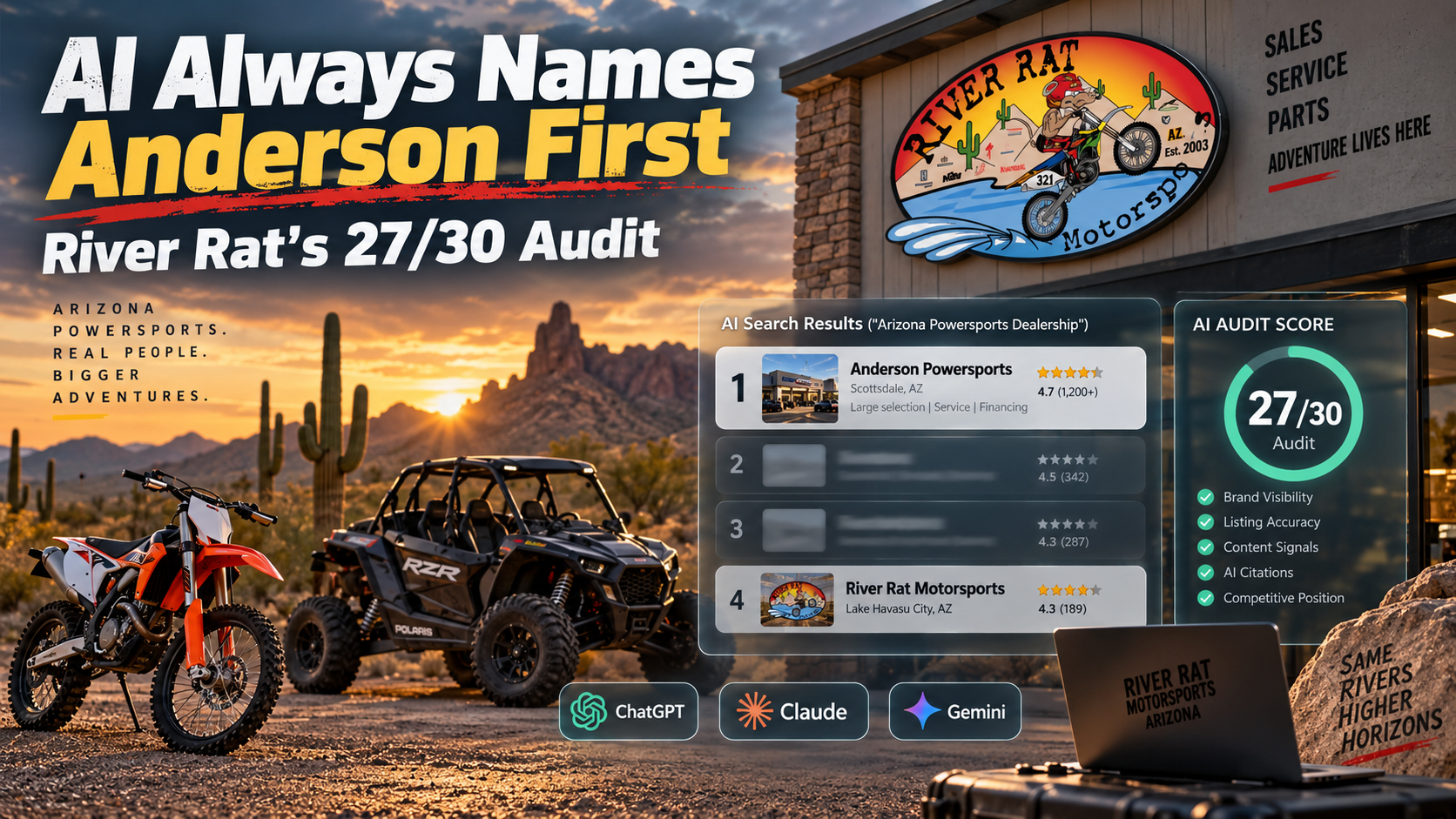
AI Always Names Anderson First.
River Rat Motorsports scored 27 out of 30 — the highest result we've published, and not the good news it sounds like. Across ten prompts on ChatGPT, Claude and Gemini, this two-store Arizona powersports dealer was named in nine of ten questions, with both addresses and phone numbers correct every time. Then you read what the engines actually said. In all nine answers where a competitor appeared, Anderson Powersports was named first and described with model names, while River Rat got "and others." One engine merged the two dealers into a single entry. Another sent a Laughlin buyer 45 miles past the closest store. ChatGPT queried the Mahindra dealer locator for Mohave County and returned a tractor dealer 200 miles away, missing both River Rat locations. And the same dealership came back at 2.3, 3.5, 4.1, 4.3, 4.4 and 4.8 stars depending on which aggregator the engine happened to read. Being findable and being preferred are different problems. Here's the fifth failure mode we've documented, with every transcript published unedited.

AI Can Find Victory SK.
Thirty prompts across ChatGPT, Claude and Gemini. Victory SK scored 11. Every point came from a question that hands the engines the company name or the DOT number. Every question asking for a category in a territory returned zero — while the engines named roughly sixty other carriers and described Victory SK's exact business model doing it. The engines can look this company up. Nothing on the open web gives them a reason to.
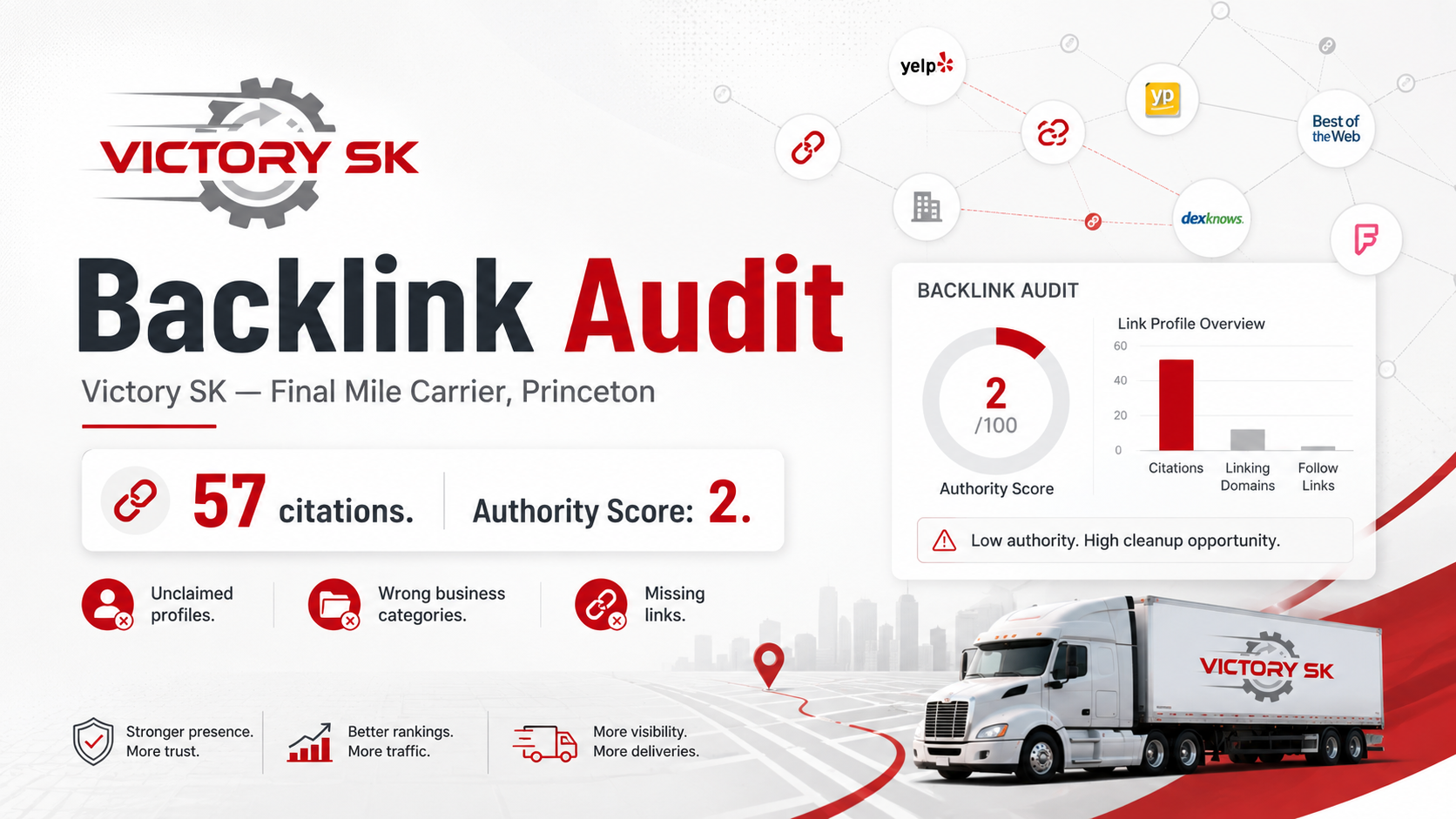
Backlink Audit: Victory SK
Most backlink audits open by telling a business it needs more links. This one doesn't. Victory SK's federal record is current and accurate, which puts them ahead of most carriers. The problem is what happens downstream: dozens of directory profiles that describe them, almost none that link to them, nearly all unclaimed, and every one classifying them as the wrong kind of business entirely.
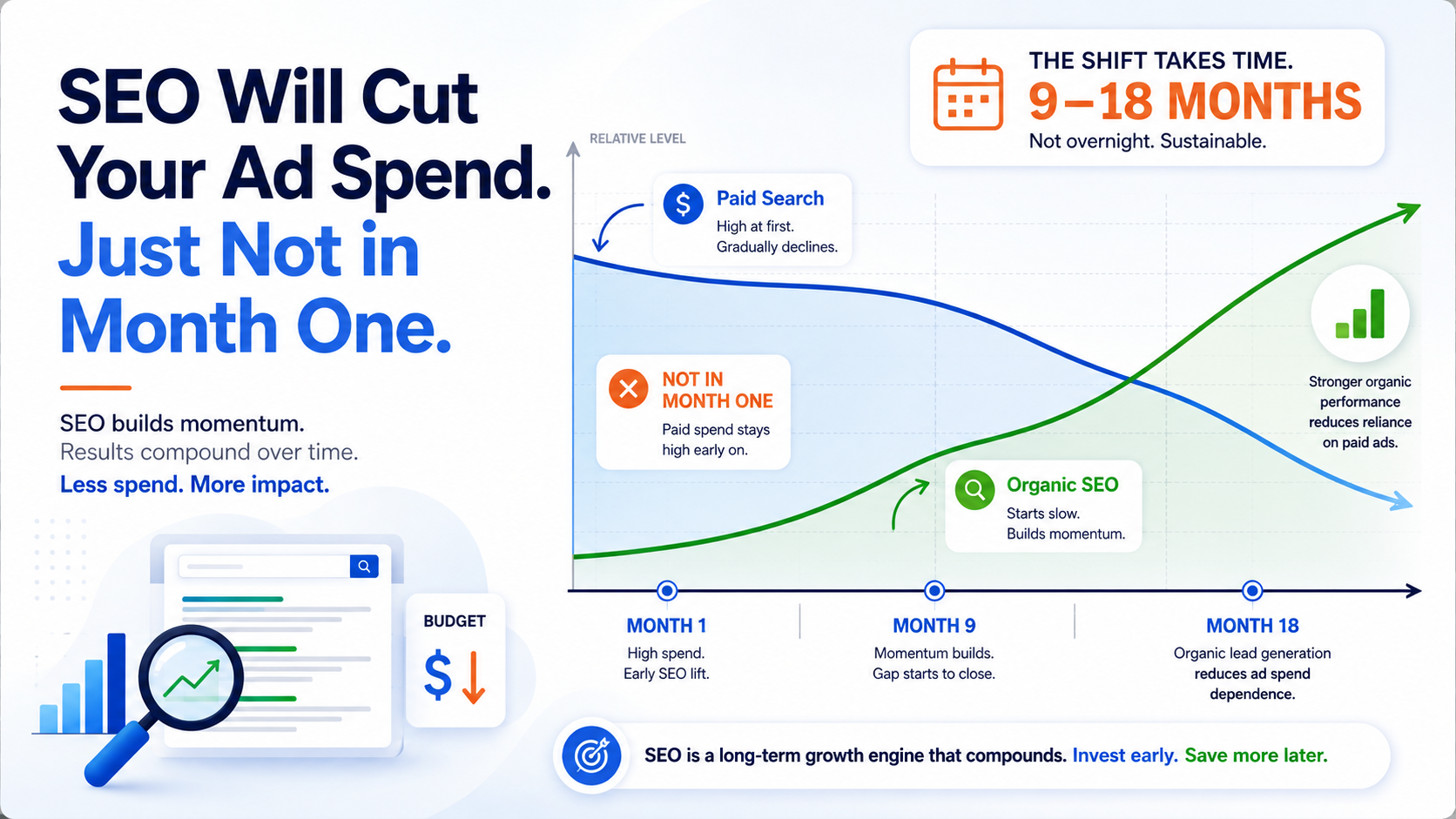
SEO Will Cut Your Google Ads Bill. Just Not in Month One.
Every SEO pitch promises the same thing: stop renting traffic, own it, watch the Google Ads invoice shrink. The promise is real and the mechanism is documented in Google's own research. The mistake is the timing. Here's what the data actually says about how paid-to-organic substitution works, how long it takes, and the five conditions that tell you a keyword is ready.
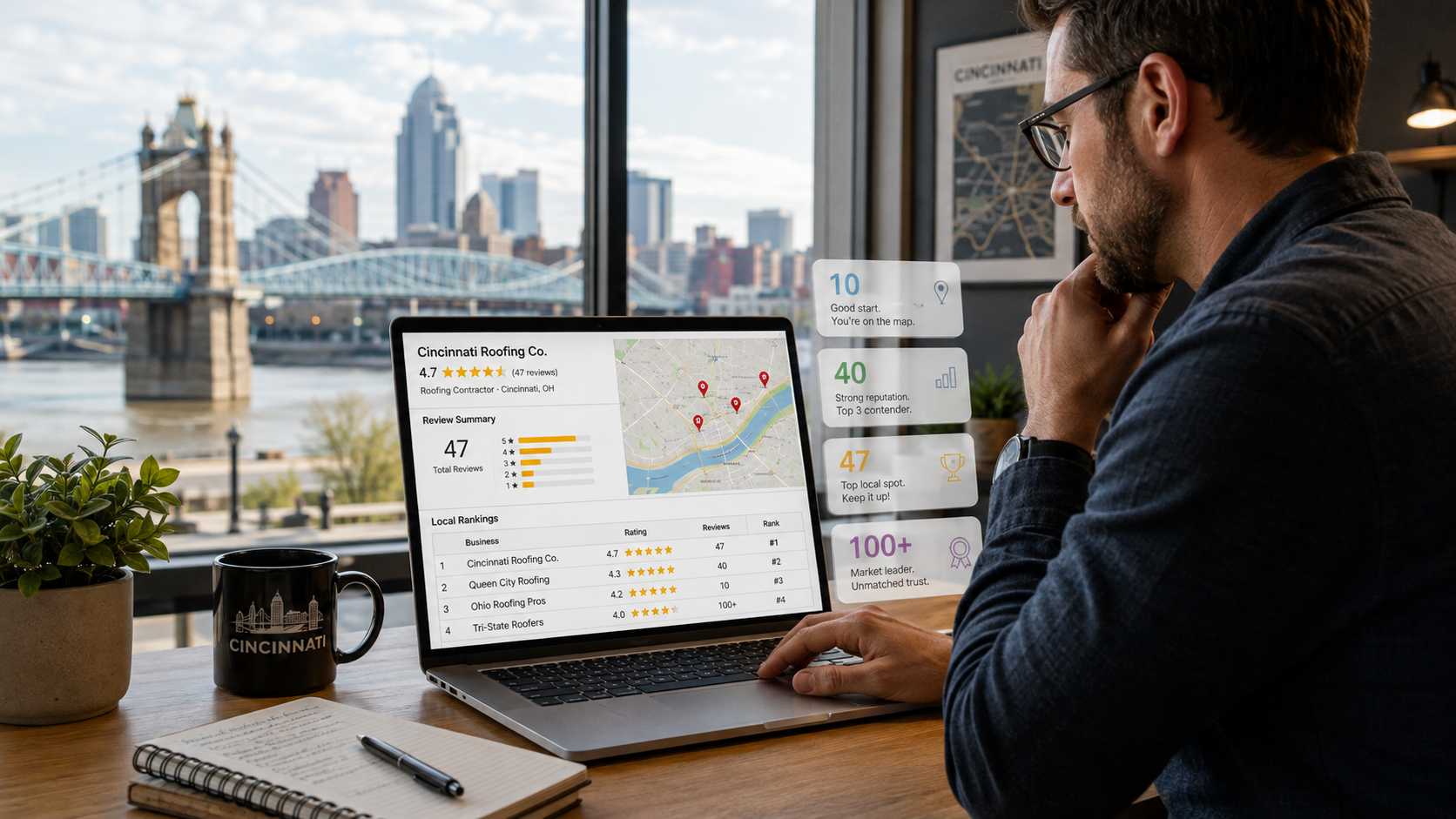
Cincinnati Review Benchmarks by Industry: How Many Google Reviews You Actually Need to Compete
Every owner has done the math staring at a competitor's profile: they have 212 reviews, you have 31 — is that the gap? Here's the quantified answer: the research ladder (10 reviews for credibility, ~40 before consumers trust a rating, ~47 to match the map-pack average, 100+ for the conversion tier), why a 4.7 with a hundred reviews beats a perfect 5.0, industry-by-industry benchmarks, and the Cincinnati correction — your real benchmark isn't a national table, it's the top three profiles in your own neighborhood's map pack, auditable in five minutes. Plus the most hopeful finding in the data: dentists hold a 4.9 average on two reviews a month. The gap is almost never satisfaction. It's a system for asking.
Cincinnati Local Search Statistics: What Tri-State Consumers Actually Do (2026 Edition)
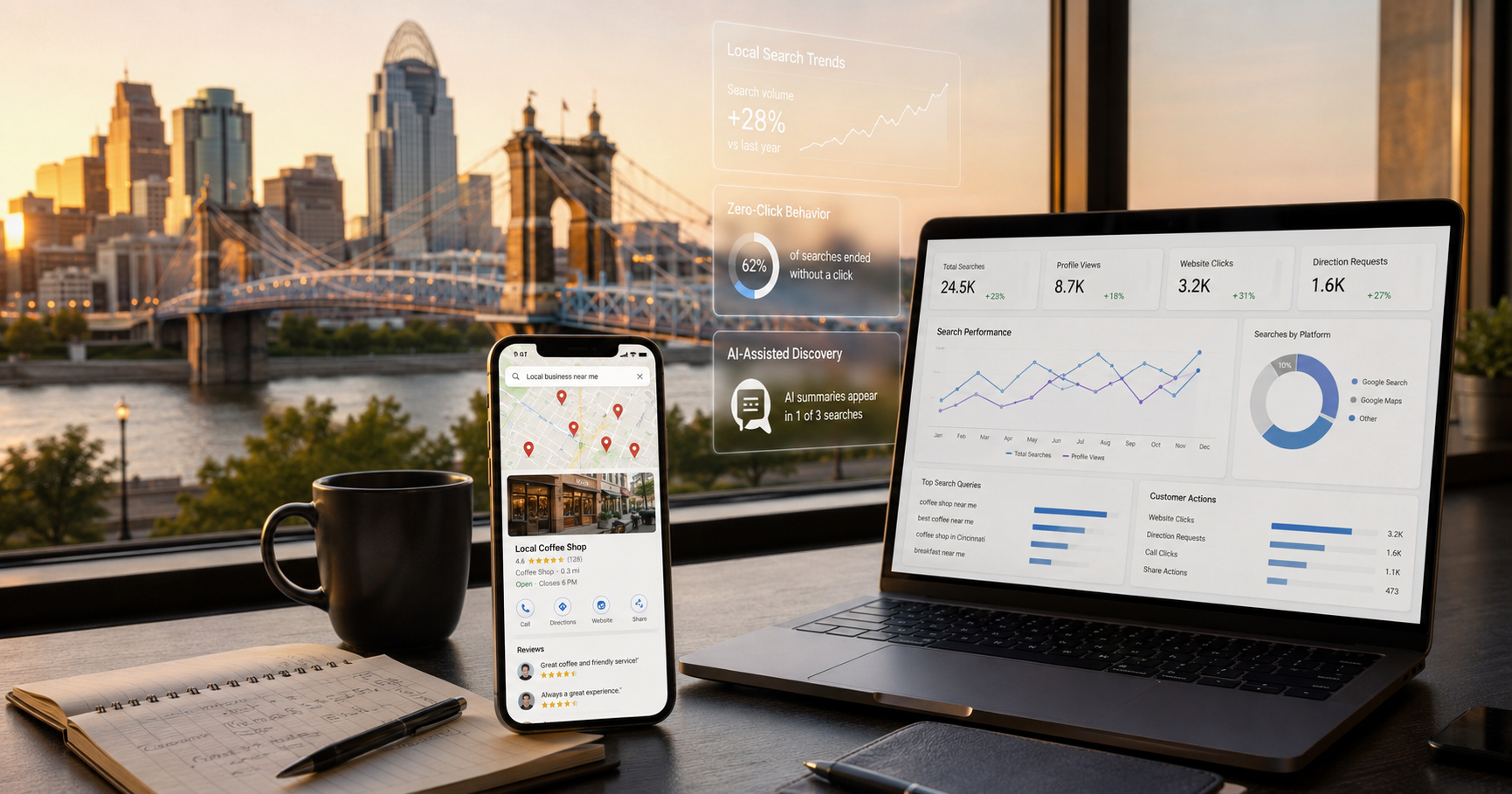
Every marketing pitch in Cincinnati leans on "everyone searches online now" — and almost nobody shows the numbers. So we compiled them: 40+ statistics from named studies, every source linked, organized around what they mean in this market. The headliners: 97% of consumers research local businesses online, 88% of mobile searchers act within 24 hours, 42% of Google Business Profile conversions happen without a website visit, fewer than a third of searches send a click anywhere, and 46% of AI users now start purchase research on ChatGPT instead of Google. Plus the four benchmark questions to run against your own business this week — and a commitment to keep the page updated as the data moves.

Should Cincinnati Businesses Still Run Google Ads, or Build Organic? Renting vs. Owning, Honestly
Run the pause test: turn off Google Ads for two weeks — in your head, what happens to your leads? If they stop, you don't own your demand; you rent it from an auction where the rent only rises and the click pool only shrinks. But "just build organic" is its own trap, because compounding takes quarters and payroll runs monthly. The honest version of the debate: what paid genuinely does best, what the rent actually costs, organic's fine print (a mortgage, not a windfall), the stat that ends the either/or framing — brands cited in AI answers earn 91% more clicks on their paid ads — and the three-stage sequence from ads-as-ventilator to ads-as-scalpel.
Squarespace vs. WordPress for Cincinnati Small Businesses: The Honest Comparison From a Shop That Picked a Side
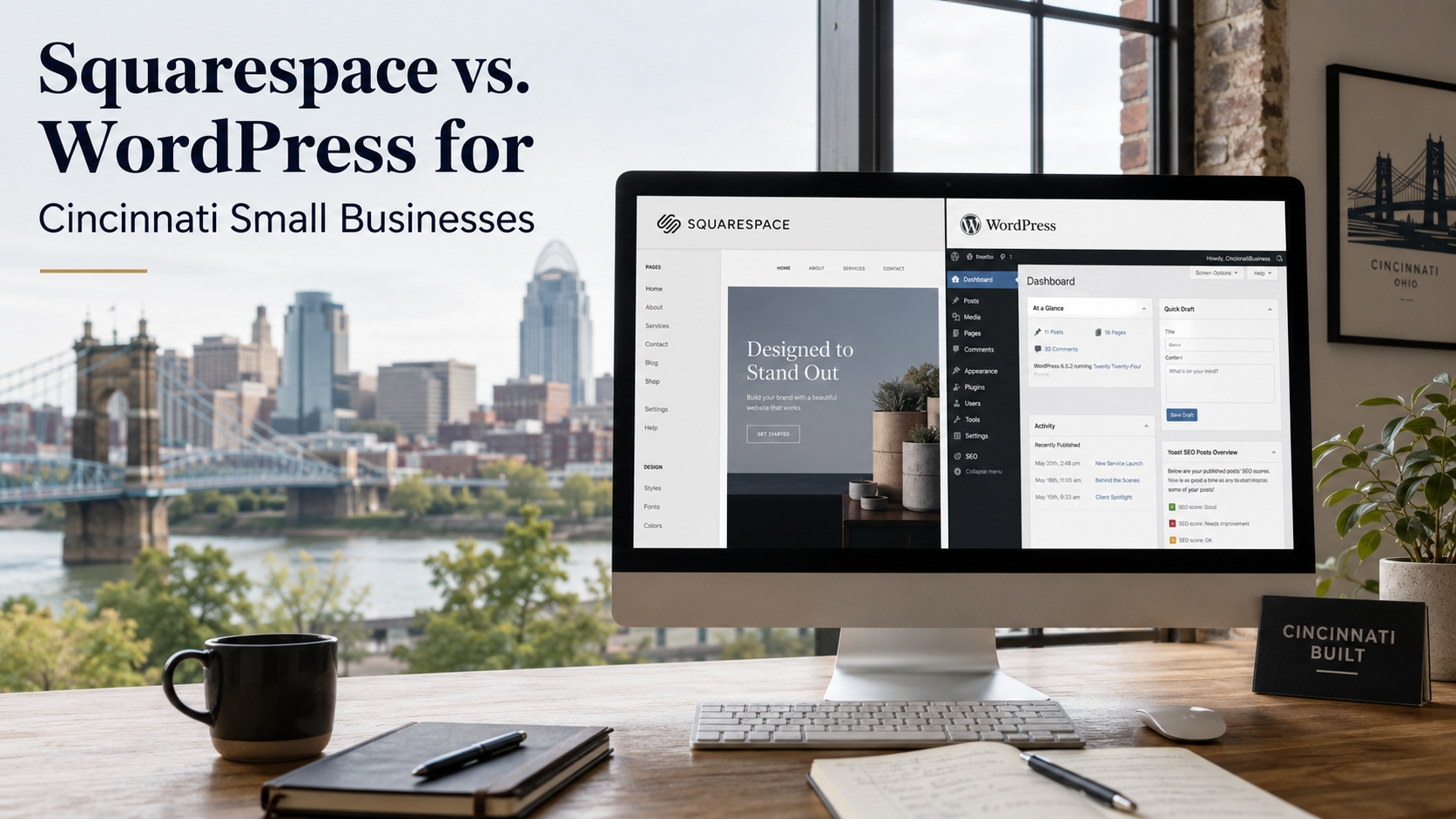
Full bias up front: we build on Squarespace, and our own site — the one with 375 backlinks and record traffic weeks — runs on it too. So here's the comparison we'd want as the buyer instead of the seller: why the 42%-market-share stat tells a five-page service business almost nothing, the total-cost audit where WordPress's "free" runs ~4.5x more over three years, the security data (90–97% of WordPress vulnerabilities come from plugins someone has to keep updating), why the SEO debate is mostly a proxy war — and the genuine list of situations where WordPress wins and we'd tell you to hire someone else. The decision rule: who, specifically, will maintain this site in year three?
Cincinnati Neighborhood SEO: How to Actually Rank in OTR, Hyde Park, Oakley, Mason, and West Chester
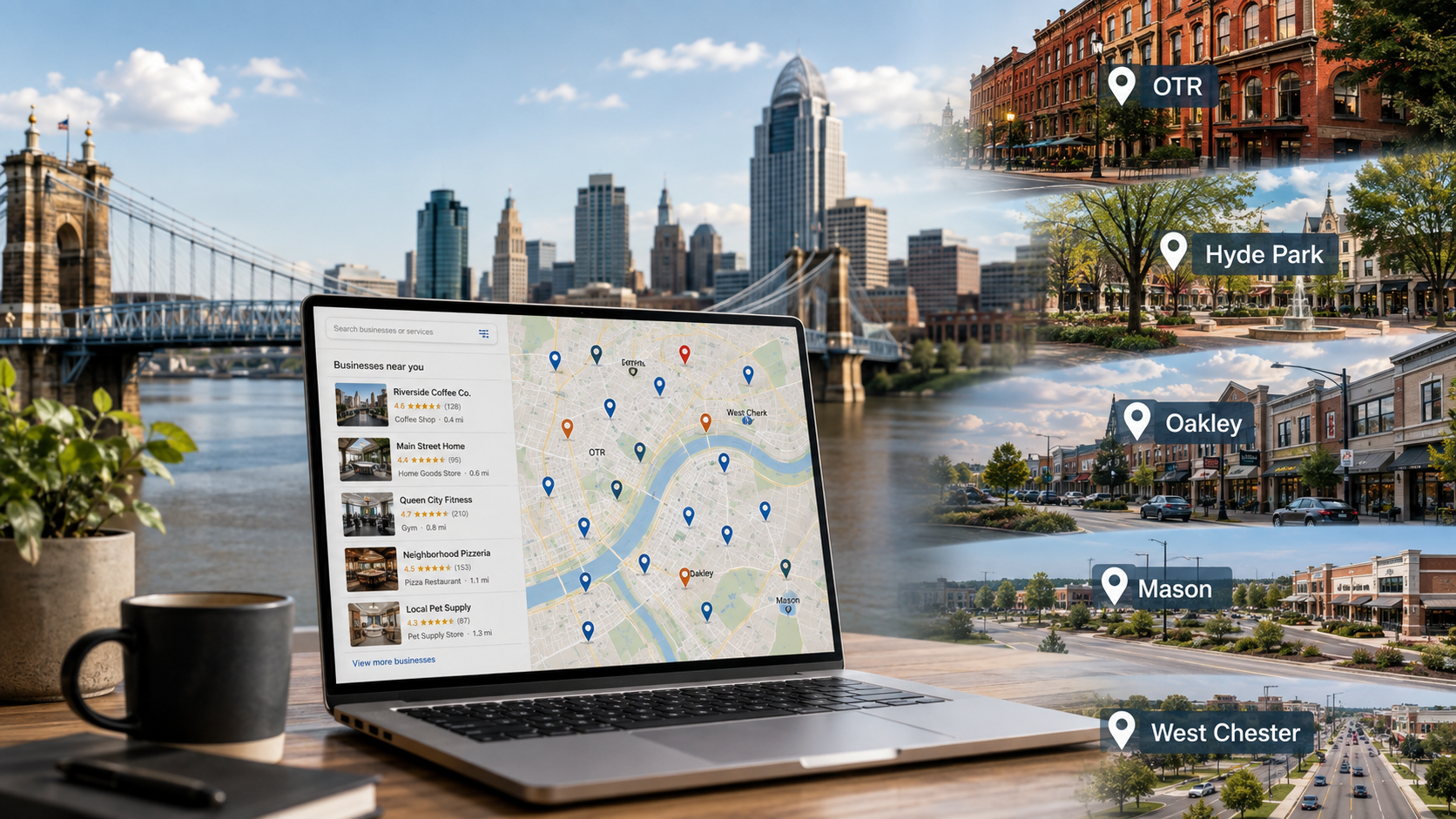
Open an incognito window and search your service in Hyde Park, then Mason, then West Chester. Different results, different map packs, different winners — because "Cincinnati SEO" is mostly a fiction; the contests are awarded neighborhood by neighborhood. This is the tactical guide: why the five areas in the title are five completely different games (including OTR's two-name problem and West Chester's Pennsylvania mix-up), the anatomy of a neighborhood page that ranks versus the templated doorway page Google's spam policy exists to punish, the block-level signals that decide ties, and the ring-by-ring build order that compounds instead of collapsing.

Why Your Cincinnati Business Stopped Getting Calls (and How to Diagnose It in 30 Minutes)
The phone used to ring on its own. Now it doesn't, and the fog between "slow week" and "admitted pattern" is where businesses make expensive guesses — ads bought to paper over a broken contact form, websites rebuilt that were fine, agencies fired mid-build. A quiet phone is a symptom with eight known causes, and each leaves a different fingerprint in data you already have: your own form and phone line, Search Console's impressions-vs-clicks shape, the map pack, your review trend, and the AI assistants no dashboard monitors. Here's the full diagnostic in triage order, the 30-minute checklist, and the three panic moves to avoid while you run it.

GEO for Dealerships: Why Cincinnati Dealers Are Losing AI Search Without Knowing It
A contractor in Fairfield just asked ChatGPT where to buy a work truck. It answered with three names, he called one, and the whole transaction is invisible to every dealer who wasn't in the answer — no impression, no click, no CRM entry. The data says this is already a third of vehicle shoppers, with 46% of AI users starting their research on AI platforms instead of Google. Why dealerships are unusually exposed (rented aggregator presence, feed-rendered inventory machines can't read, brochureware content, label-sliced tri-state geography), what the answers look like right now while nobody owns them, and the GEO playbook — plus the scam warning about anyone selling "guaranteed AI placement."
How an Indiana Dealership Shows Up in Cincinnati Searches: The Playbook We're Running in Public
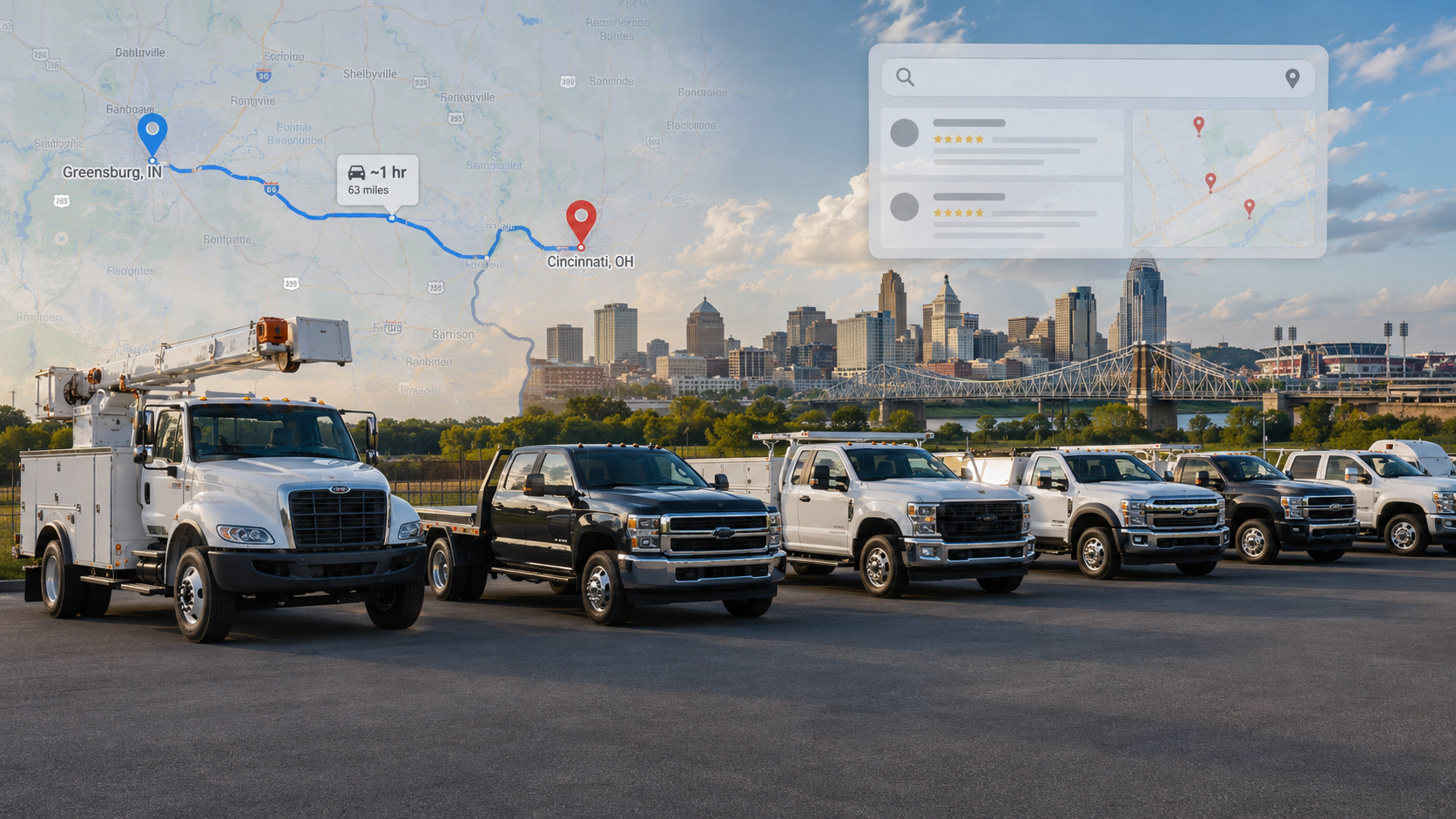
True Blue Autos sells commercial trucks from Greensburg, Indiana — an hour from Cincinnati, well inside the distance a work-truck buyer happily drives. But machines read labels, not maps: the AI test showed them winning their hometown and vanishing everywhere else. This is the playbook for closing that gap, running in public right now — state the relationship where machines read, let spec outrank geography, earn the metro's corroboration, let customers write the drive into their reviews, and retest quarterly. No faked addresses, no claimed victories the monthly reports don't show, and a final section for every business whose real market is bigger than its address.
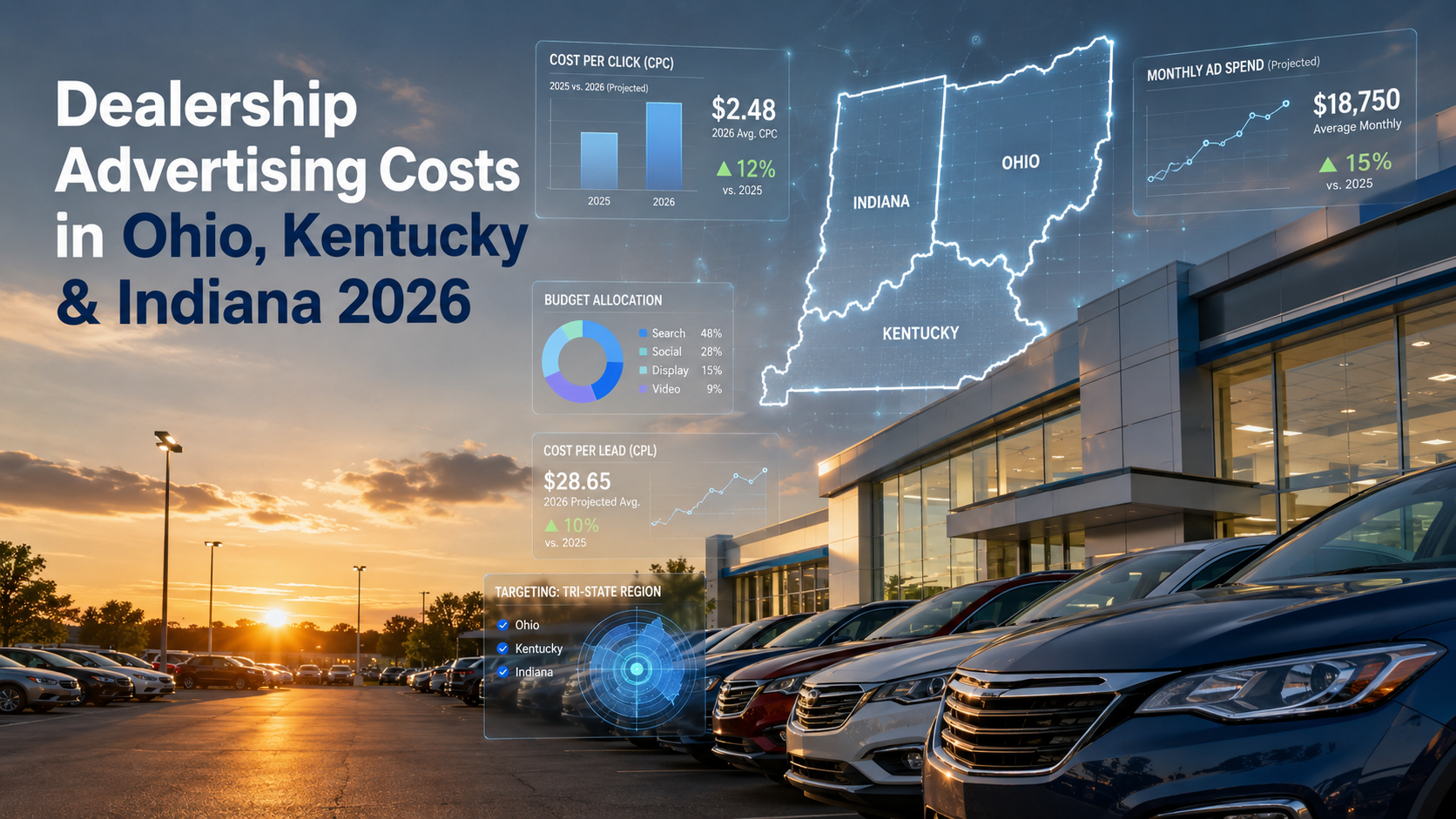
Dealership Advertising Costs in Ohio, Kentucky, and Indiana: What Tri-State Dealers Actually Pay in 2026
The national benchmark says the average dealership spends $586K a year on advertising — nearly triple NADA's own recommended per-vehicle target. But national averages blend LA with rural Kansas, and Ohio-Kentucky-Indiana runs on different math: automotive clicks priced well below coastal markets, broadcast DMAs that make you pay for counties that will never cross the river to buy, and the region's best-kept arbitrage — rural-cost media next to metro-scale demand for dealers whose digital footprint actually reaches it. The full regional breakdown, budget math for three dealer profiles, and the one budget line that compounds instead of resetting every month.
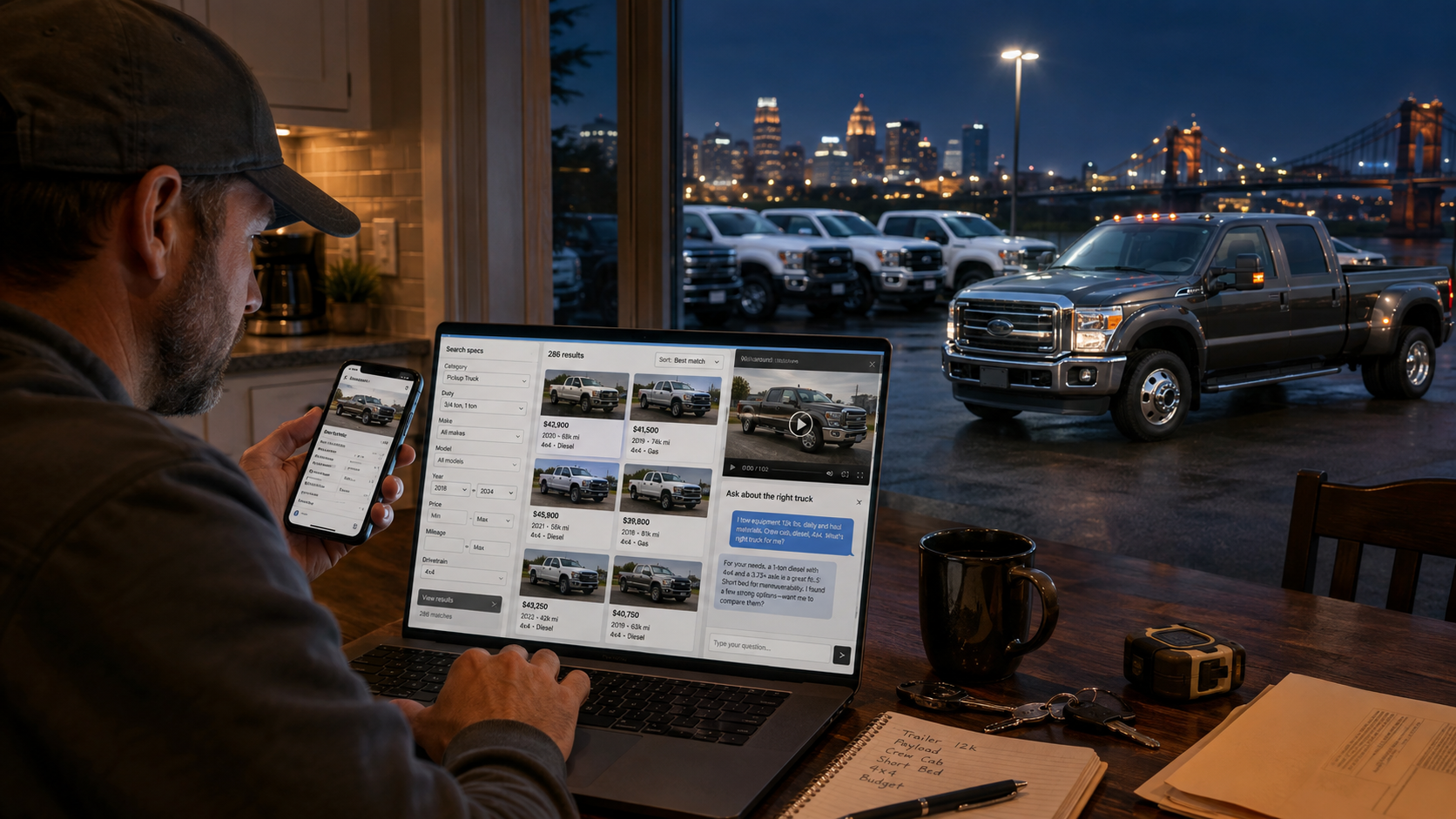
The Used Truck Market in the Cincinnati Tri-State: Where Buyers Actually Search in 2026
A contractor in West Chester needs a Super Duty before Monday. A fleet manager in Florence needs three matching 3/4-tons. Neither is driving dealer row — the decision gets made at a kitchen table at 9 PM, across Google spec searches, Facebook Marketplace, walkaround videos, and increasingly a question typed into ChatGPT. The full channel map with the data behind each one, the split between personal and working buyers that most dealers misread, and the geography twist the whole tri-state runs on: truck buyers travel for the right unit — but only if the machines ever show them it exists.
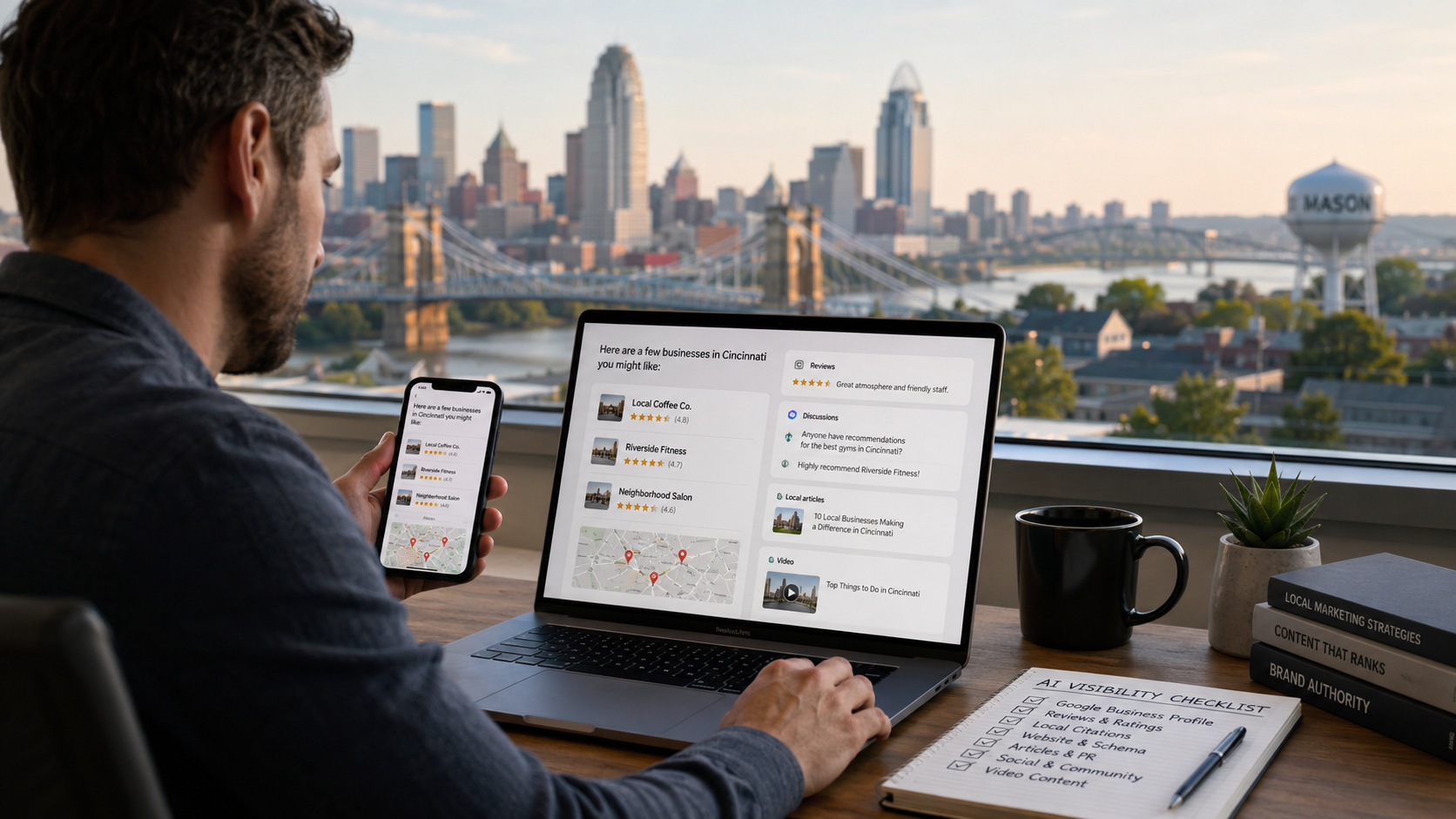
How Cincinnati Businesses Can Get Cited by ChatGPT: Entity SEO, Localized
Someone in Mason just asked ChatGPT for a good HVAC company. It answered with three names, they called one, and no dashboard anywhere recorded that a referral happened. Those names aren't random — 30-million-citation studies show exactly what AI reads before it recommends: reviews, Reddit threads, local press, YouTube, and websites with something worth quoting. Here's the localized playbook for getting into the answer: airtight entity signals, the review layer, showing up where Cincinnati talks, citable content, and the 30-prompt test that reveals which suburbs you're invisible in.
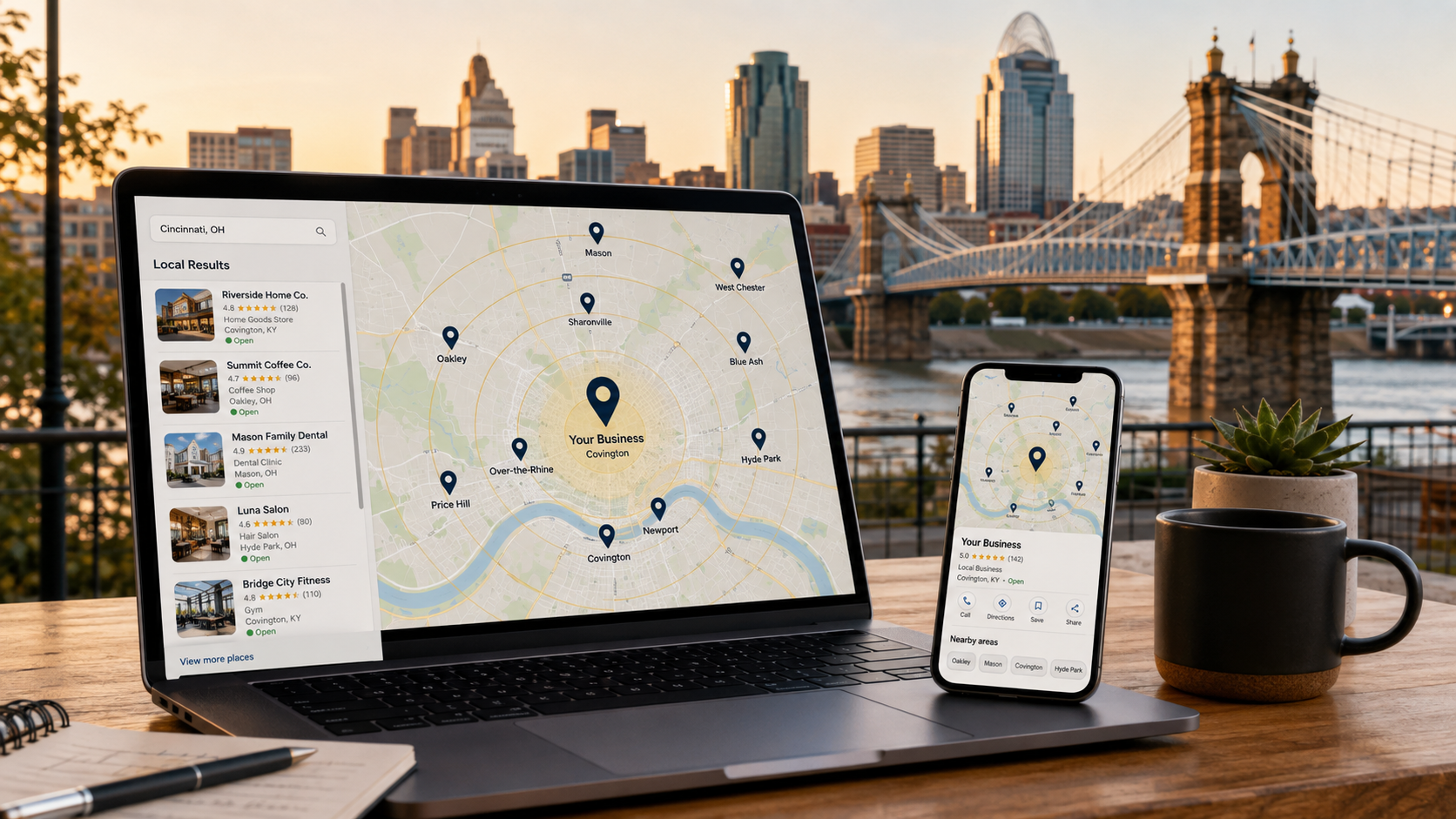
Local SEO for Cincinnati: Google Business Profile, Reviews, and the Neighborhood Factor
Cincinnati isn't one search market — it's fifty of them, from Oakley to Mason to across the river in Covington, and every one generates its own map pack. That's the opening small businesses miss: you're not competing for "Cincinnati," you're competing for a ring of neighborhoods, each separately winnable. The full playbook: the three factors Google itself says decide local rankings, the numbers behind a complete Business Profile and a real review system, and the ring-by-ring expansion strategy that lets one location beat a competitor spraying the whole metro.

10 Signs Your Cincinnati SEO Agency Is Wasting Your Money (and 2 Signs That Look Bad but Aren't)
You're months into an SEO retainer and can't honestly say what you've gotten. The reports look busy; the phone doesn't. Bad SEO engagements fail in the same ten ways everywhere — guaranteed rankings Google itself calls impossible, wins over zero-volume keywords, work you can't name, links you wouldn't want, assets you don't own — and every one is checkable by a non-expert in under an hour. Just as important: the two signs that look like waste but are actually normal, so you don't fire a good agency at the worst possible moment.

How Long Does SEO Take for a Cincinnati Small Business? The Honest Month-by-Month Answer
"When will I see something for my money?" Every Cincinnati business owner asks it, and almost no agency answers it straight — because a real timeline comes with checkpoints a client can hold you to. Here's ours anyway: what Google's own guidance says, what the ranking data proves, why local SEO moves faster in a fragmented market like Cincinnati, and exactly what should be happening in months 1, 3, 6, and 12 — including the early dip that scares businesses into quitting right before the turn.
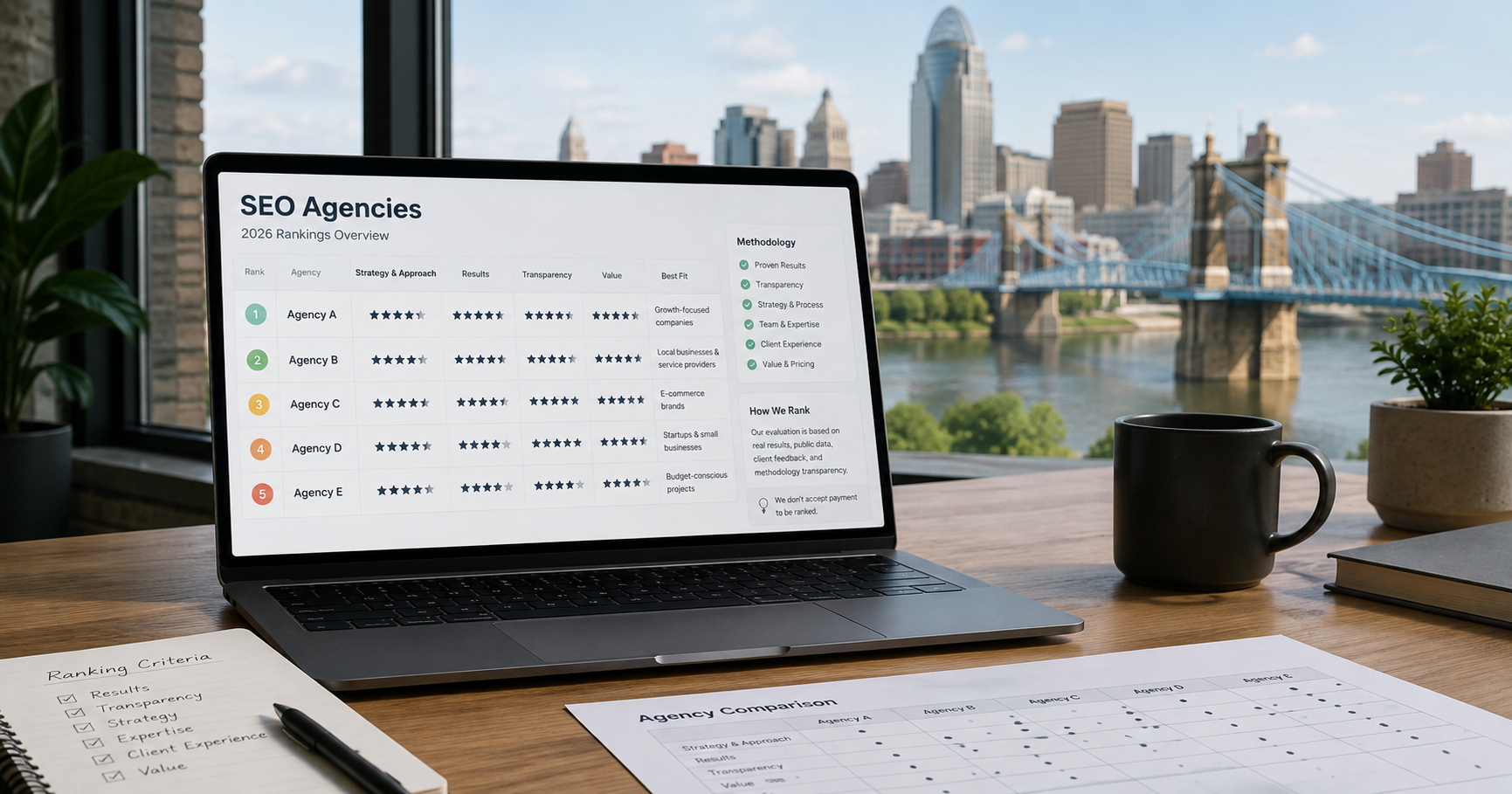
The Best SEO Agencies in Cincinnati — Ranked Honestly, Including Where We'd Place Ourselves
Search "best SEO agencies in Cincinnati" and you'll find a stack of listicles, almost all written by agencies that ranked themselves first. We're an SEO shop writing the same kind of post — so we did it differently: disclosed our bias, showed the methodology, gave competitors credit by what they're genuinely best at, and placed ourselves where we actually belong (not #1, and not even on the main list). Plus the five checks to run on any agency before signing, us included.

Your Weakest Marketing Channel Is the One You're Ignoring — and Somebody Hungrier Is Running It Like a Business
Every business has a channel graveyard: the Facebook page nobody's touched in a year, the unclaimed Google listing, the email list that's never been emailed, the blog with three posts from 2019. Here's the uncomfortable truth — those zombie channels aren't neutral, they're evidence. And somewhere in your market, a startup with none of your advantages has picked your ignored channel and committed to it like survival depends on it. The data on what each graveyard channel is actually worth, why neglect beats absence for all the wrong reasons, and the commit-or-kill triage that fixes it.