
How Behavioral Targeting with AI Doubles Engagement Rates
Why does an ad for the exact product you were browsing twenty minutes ago feel completely different from an ad for something you've never thought about? Both are ads. Both appear in the same feed. One feels relevant. The other gets scrolled past. That difference is behavioral targeting — and AI has turned it from a useful tactic into the defining competitive advantage in modern digital marketing. Ads using behavioral targeting increase engagement by 50% compared to generic ads. Here's what's driving that number and how to build a system that produces it.
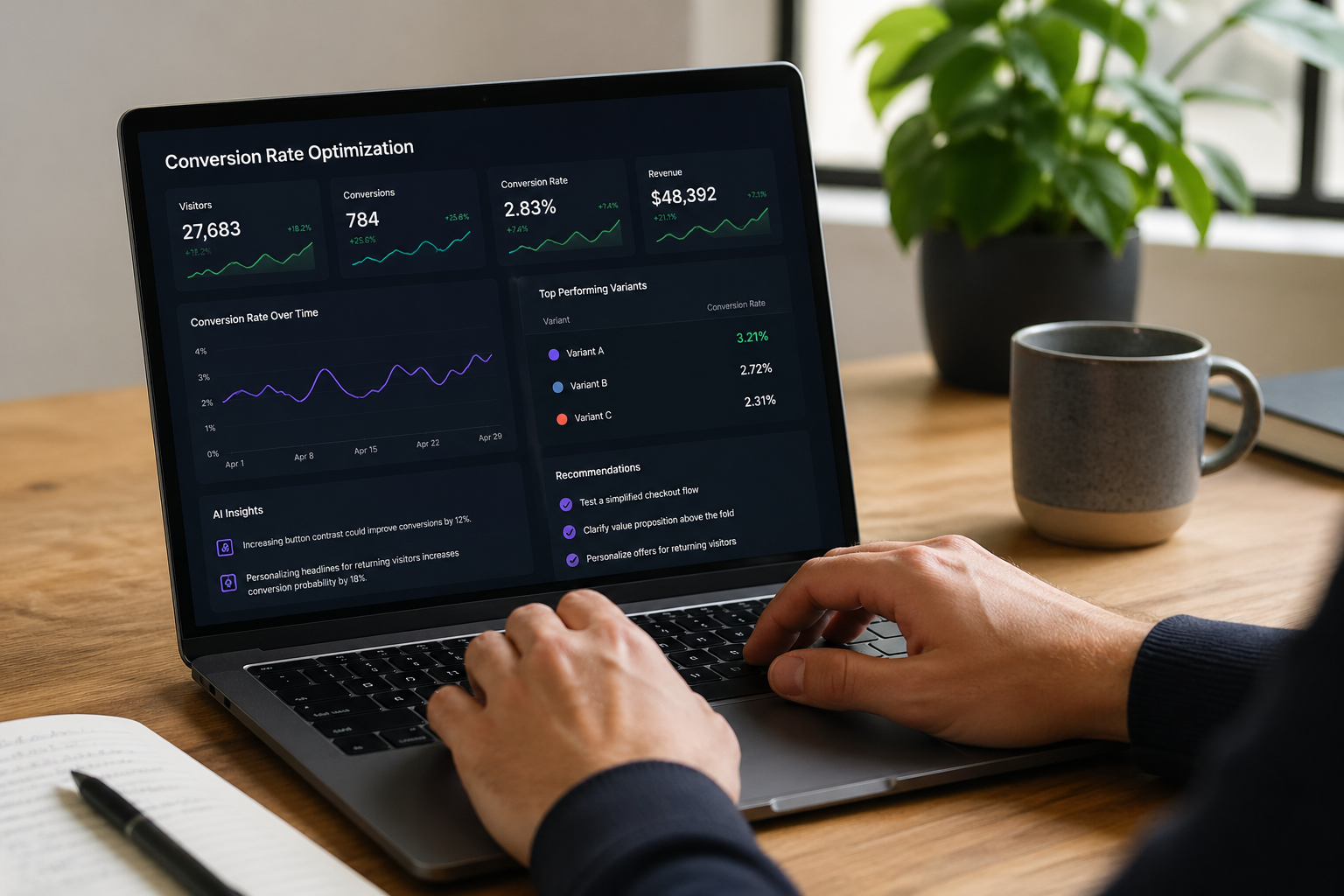
The Beginner's Guide to AI-Powered Conversion Rate Optimization
Most businesses focus the majority of their marketing energy on getting more traffic. But if only 2–3% of that traffic is converting, the highest-leverage opportunity isn't more visitors — it's making the visitors you already have more likely to take action. AI-powered conversion rate optimization does exactly that, using behavioral data, real-time personalization, and automated testing to continuously improve the percentage of visitors who convert — without increasing your ad spend. This beginner's guide breaks down what it is, how it works, and the practical steps to start using it.
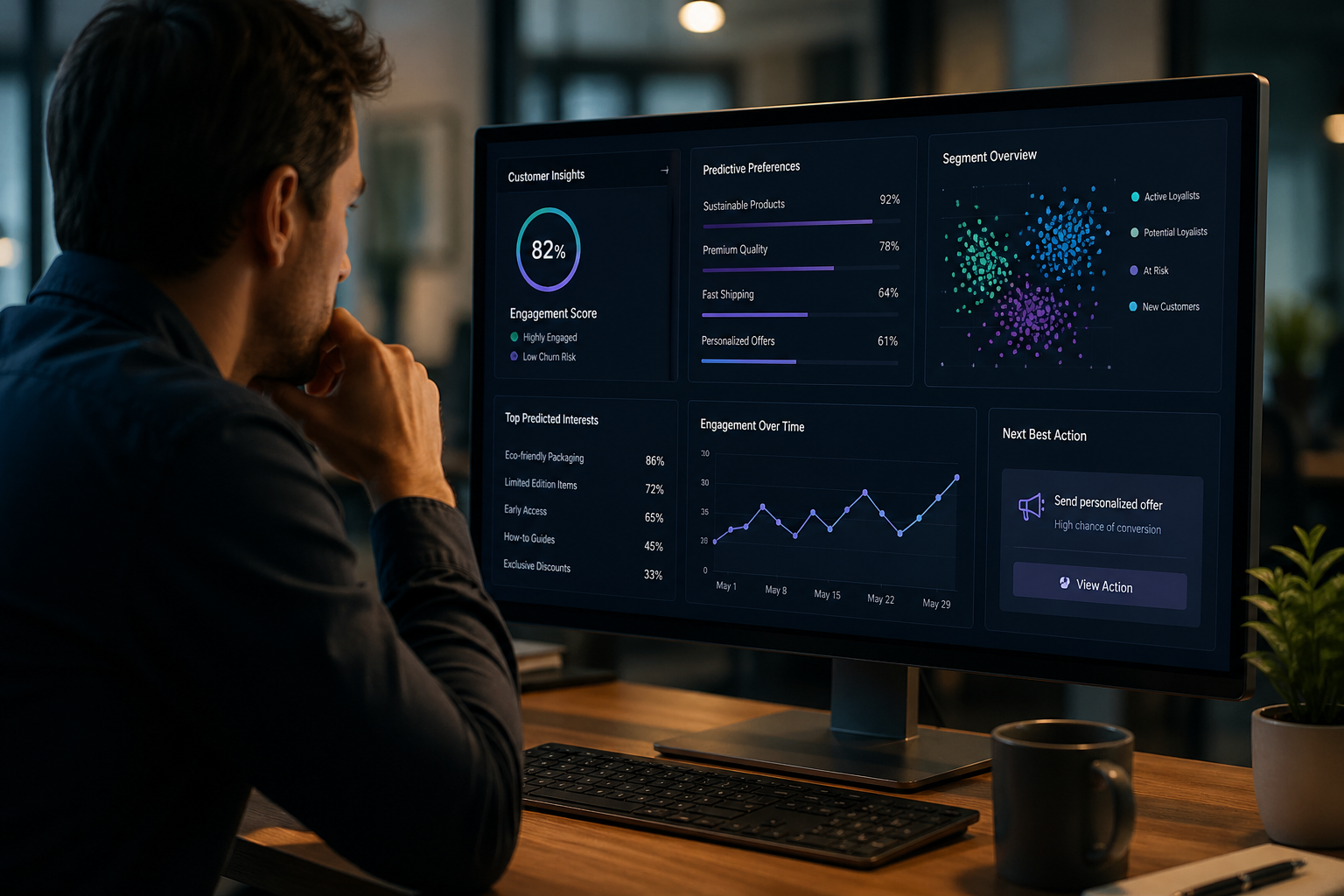
Stop Guessing What Your Customers Want — Let AI Tell You
Every marketing decision is a bet. And most of those bets are based on some combination of experience, instinct, past campaigns, and whatever data happened to be available when the decision was made. Some pay off. A significant portion don't. The ones that don't represent not just wasted budget, but missed opportunities with customers who were genuinely interested and never got the right message at the right moment. AI doesn't guess better — it replaces guesswork entirely with a continuously updating, data-driven picture of what your specific customers actually want. Here's what that looks like, what it costs when you don't have it, and how to build it.

How AI Builds Customer Journey Maps That Actually Reflect Reality
Somewhere in your organization there is probably a customer journey map. It might be a slide in a deck or a diagram on a whiteboard. It shows the stages in a clean, logical sequence with arrows pointing in one direction. It is almost certainly wrong. Not because the people who built it were careless — but because customer journeys were never the linear progressions that traditional maps describe, and AI is finally building something that reflects what customers actually do instead of what teams assumed they were doing. Here's what that looks like, what it discovers, and why the gap between mapped assumption and behavioral reality is costing businesses more than they realize.
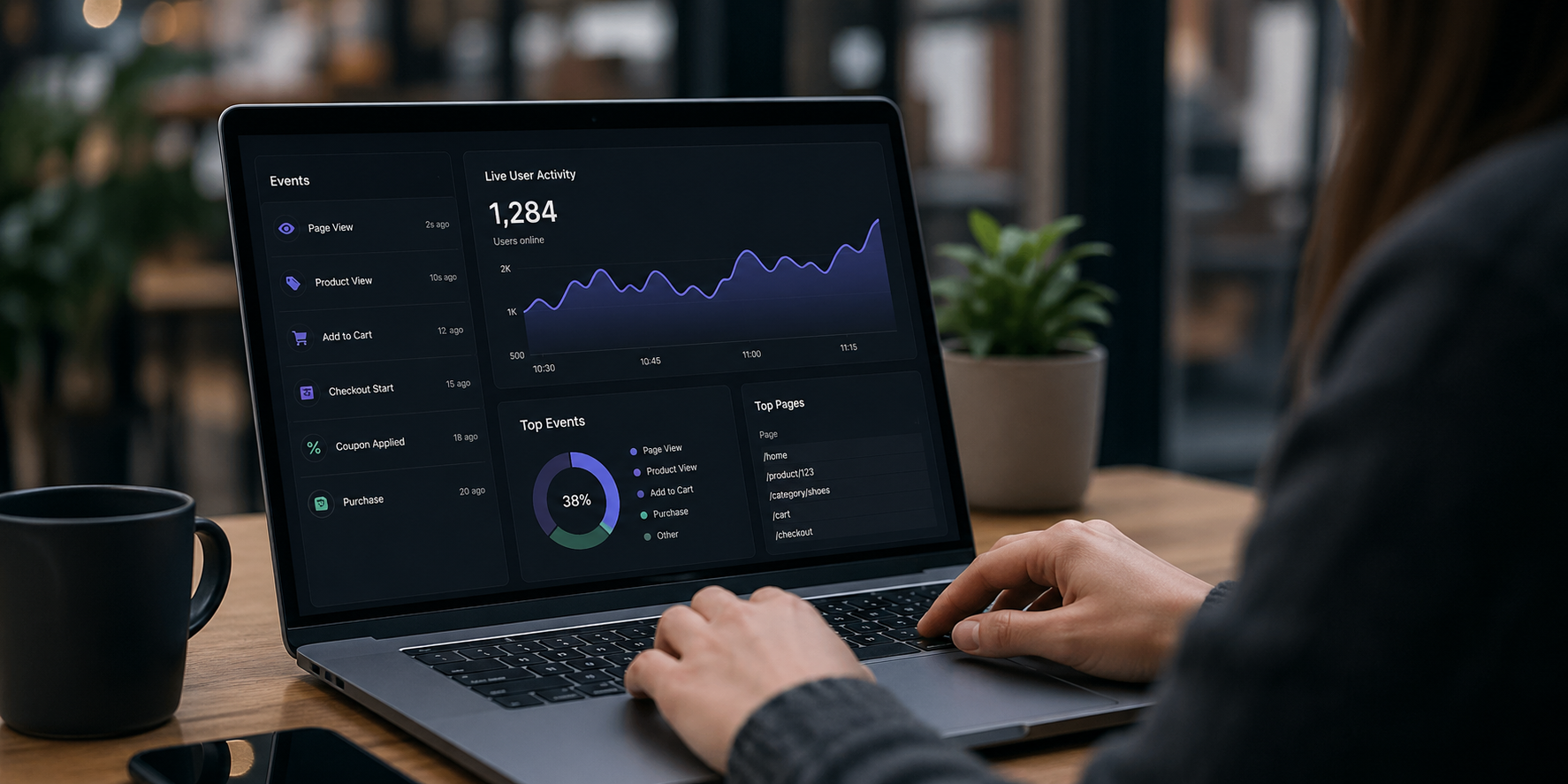
What Real-Time Marketing Data Actually Looks Like — And Why It Matters
Most marketing teams will tell you they're data-driven. The problem is the word "last" — last month's report, last week's analytics, last night's CRM sync. In a customer journey that unfolds in seconds, data that arrives hours after the behavior occurred isn't real-time data. It's history. Real-time marketing data captures behavioral signals as they happen, triggers responses within the same session, and powers personalization that actually reflects what a customer is doing right now — not what they did yesterday. Here's what it looks like in practice, what infrastructure it requires, and why businesses that have built it are pulling ahead.

How to Use First-Party Data with AI to Outperform the Competition
Most businesses have plugged in AI tools and called it a strategy. But AI is only as good as the data underneath it — and businesses still relying on fragmented, third-party data are getting mediocre outputs from powerful tools. The competitive advantage in 2026 belongs to businesses that have built proprietary first-party data assets and learned how to activate them with AI. Here's exactly how that works, why it compounds over time, and how to start building the infrastructure that makes it possible.
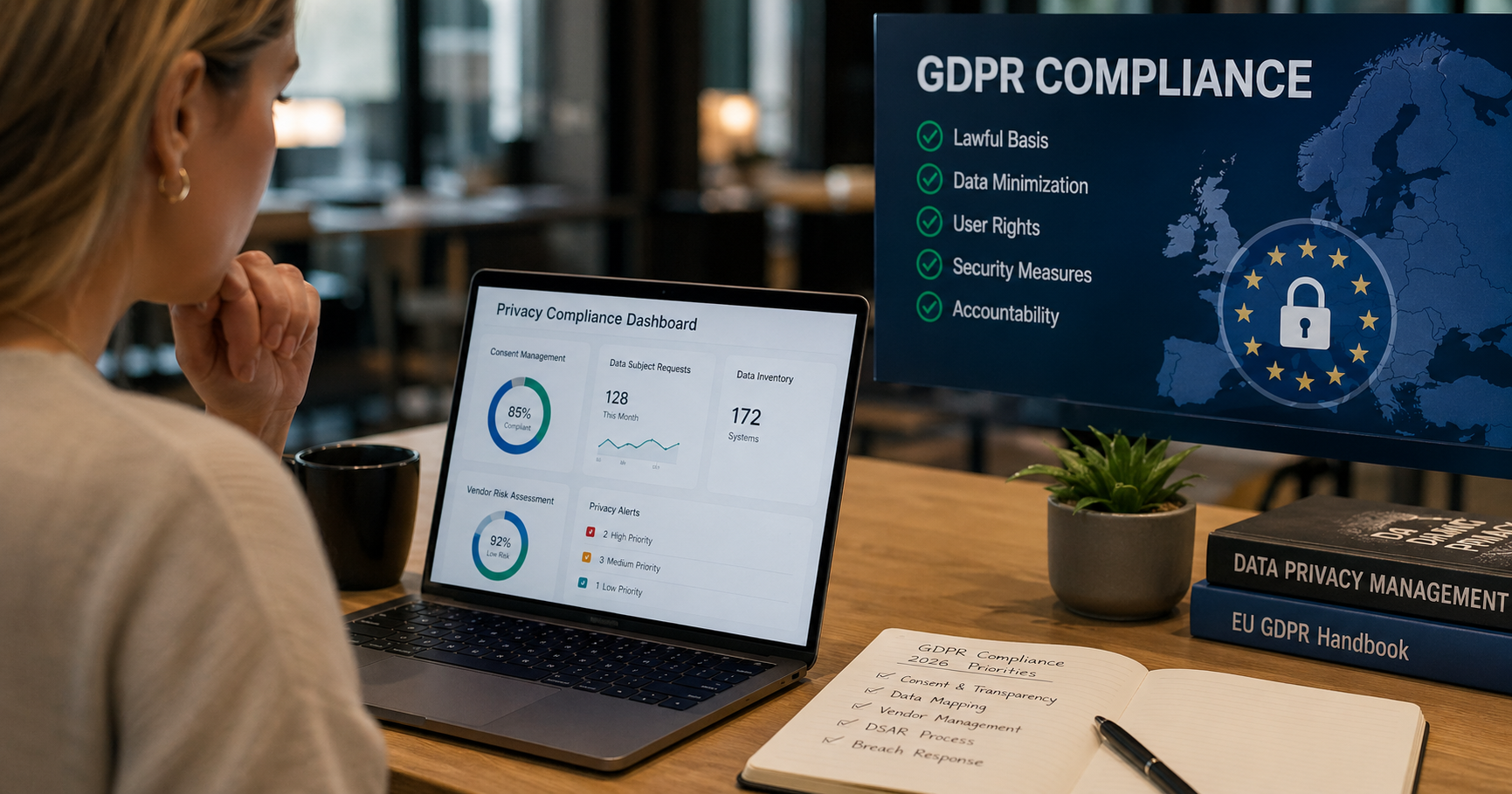
What GDPR Compliance Looks Like for US Companies in 2026 — And What Smart Marketers Are Doing About It
For years, the standard American business response to GDPR was some version of: "That's a European thing. We're fine." In 2026, that position is no longer defensible. With over 20 US state privacy laws in effect, coordinated enforcement sweeps targeting marketing-specific violations, and cumulative GDPR fines surpassing $5.88 billion globally, data privacy compliance has become a core operational requirement — not a legal department checkbox. Here's what it actually looks like, what regulators are actively targeting, and what smart companies are doing to stay ahead of it.
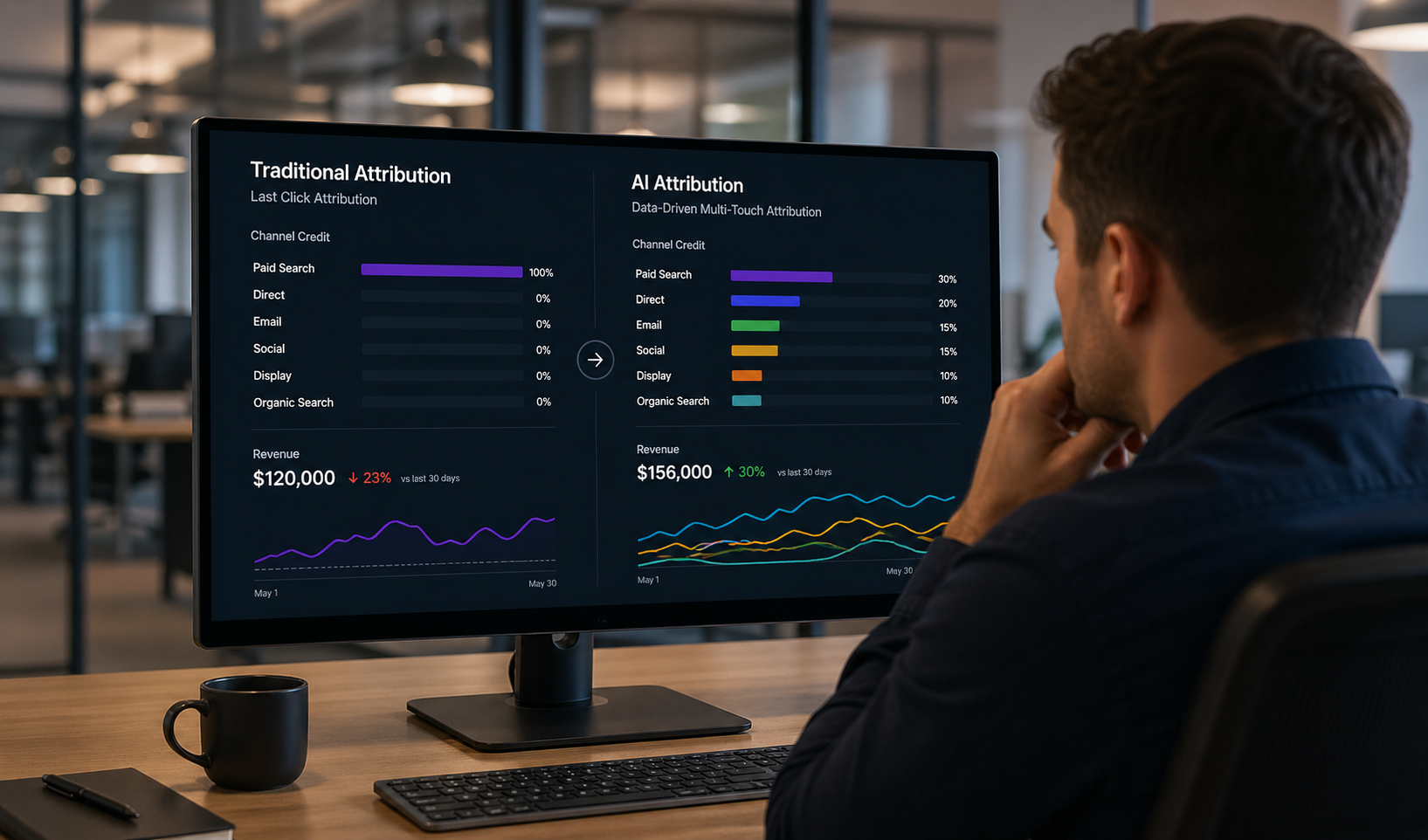
Why Marketing Attribution Is Broken — And How AI Fixes It
Ask any marketing team where their best customers come from and you'll get a confident answer backed by data. In most cases, that answer is wrong. Traditional attribution models — last-click, first-click, even rules-based multi-touch — were built for a buyer journey that no longer exists. They credit what's trackable, ignore what's influential, and systematically misdirect budgets at scale. AI attribution doesn't just offer a better version of the same approach. It changes the methodology entirely — from counting touches to understanding influence. Here's what's broken, why it matters, and how AI fixes it.

Why Every LinkedIn Company Page Needs the Auto-Invite Feature Turned On Right Now
Every time someone reacts to, comments on, or shares your LinkedIn company page content, they're raising their hand. Without the auto-invite feature, that warm signal disappears the moment they scroll away. With it turned on, they get an automatic follow invitation while your content is still fresh in their mind — no credits used, no manual effort required. LinkedIn says it can grow your followers 6.7x faster. Here's everything you need to know about the feature and why leaving it off is one of the most common and costly mistakes on the platform.
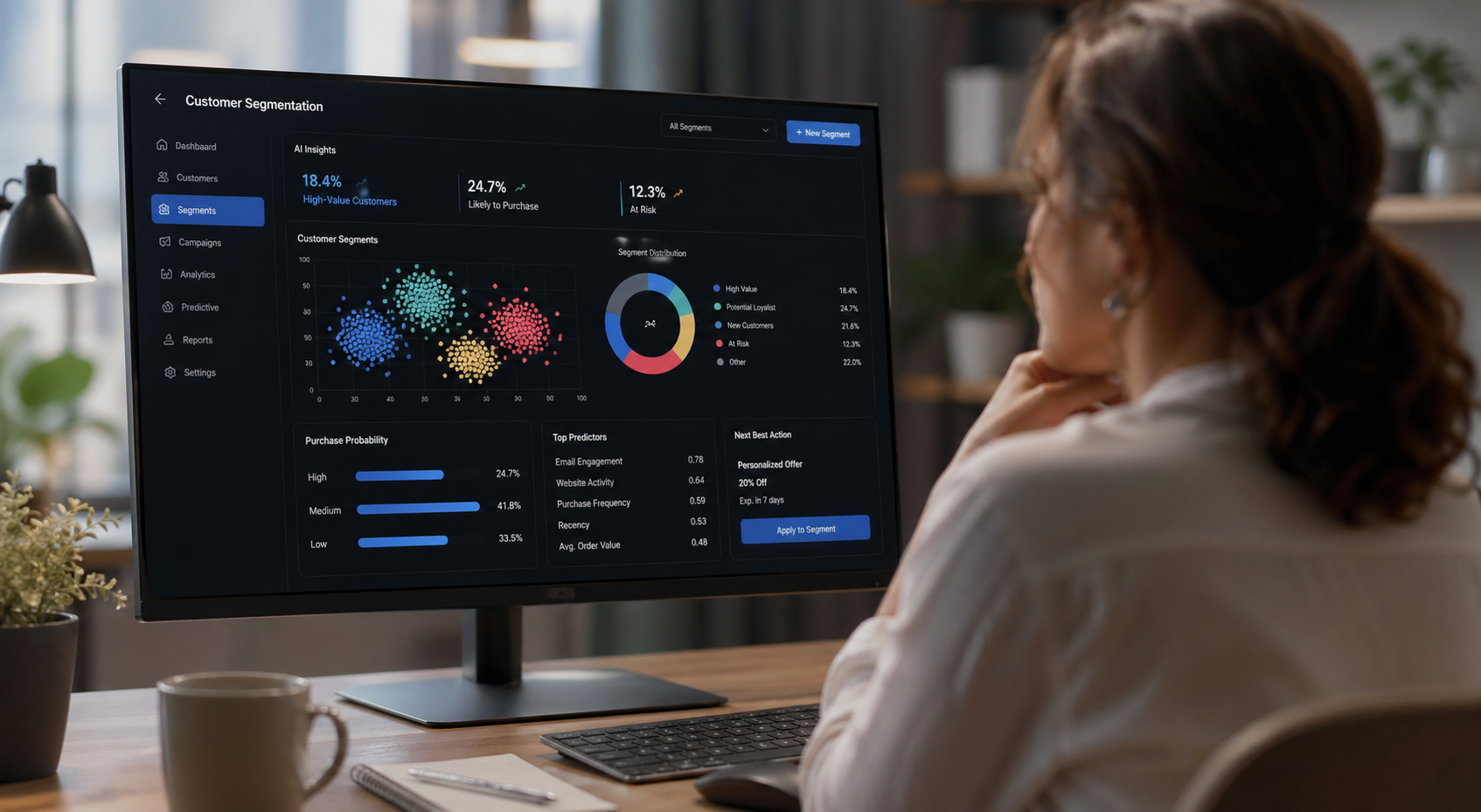
How AI Customer Segmentation Finds Buyers You Never Knew You Had
Your most valuable future customers might already be in your database — browsing your site, opening your emails, and buying occasionally. But traditional segmentation is too blunt to find them. AI customer segmentation uses machine learning to scan hundreds of behavioral signals at once, surface hidden buying patterns, and identify your next best customer before they ever raise their hand. Here's how it works and what it means for your business.

What Is a Domain Name Server? A Plain-English Guide for Business Owners
Every time someone types your website address into a browser, a chain of lookups and translations happens in under a second — and most business owners have no idea it's occurring. That system is called DNS, and understanding it isn't just for tech people. It affects your website speed, your email delivery, your uptime, and your security. Here's everything you need to know in plain English.

What Hitting 5,000 Followers on LinkedIn Actually Signals About Your Personal Brand
Most people treat their LinkedIn follower count as a vanity metric. The professionals winning new business from the platform know it's something else entirely — it's social proof, market validation, and a trust signal that does your selling before you ever get on a call. Here's what crossing 5,000 followers actually communicates, and why it matters more than you think.
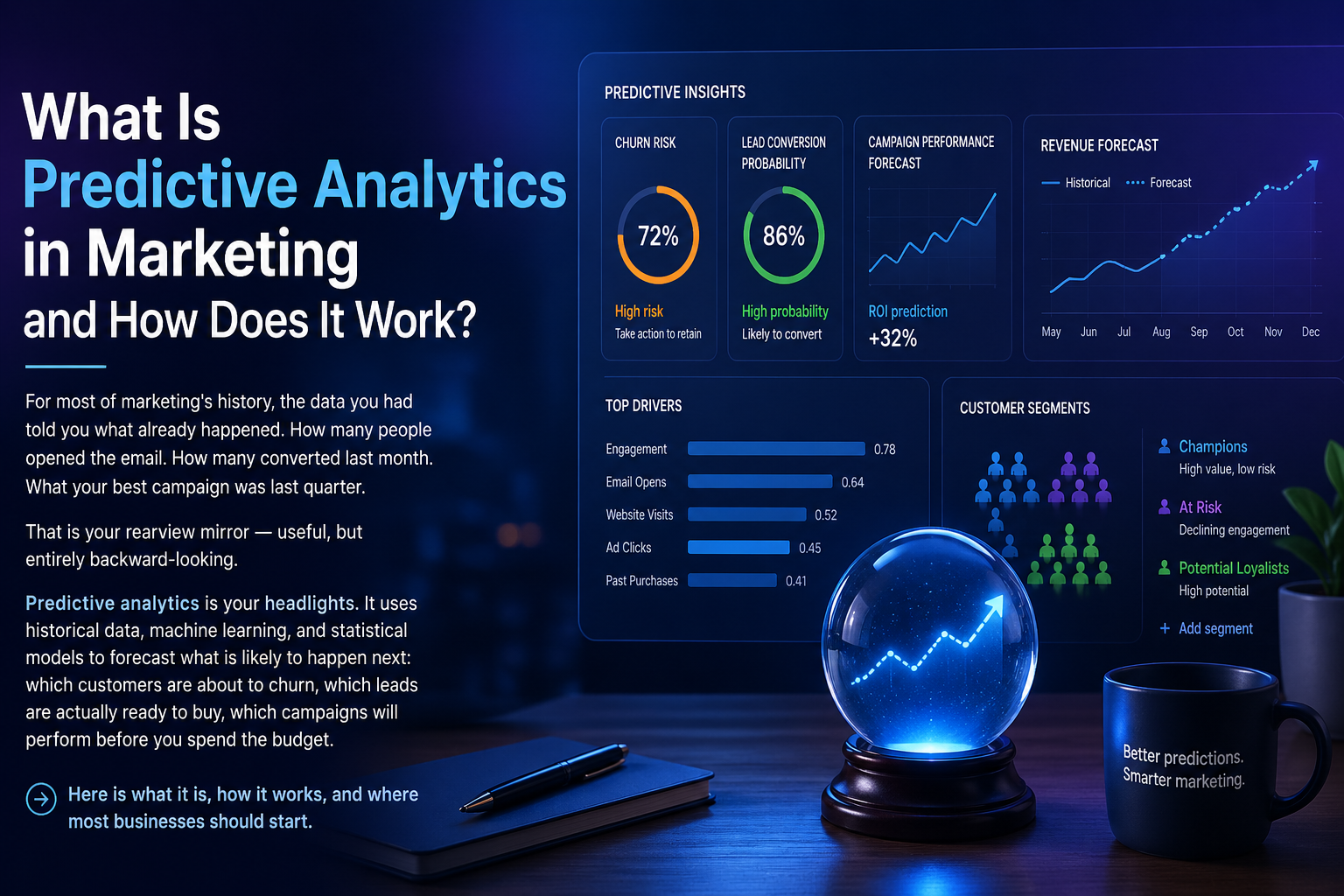
What Is Predictive Analytics in Marketing and How Does It Work?
For most of marketing's history, the data you had told you what already happened. How many people opened the email. How many converted last month. What your best campaign was last quarter. That is your rearview mirror — useful, but entirely backward-looking. Predictive analytics is your headlights. It uses historical data, machine learning, and statistical models to forecast what is likely to happen next: which customers are about to churn, which leads are actually ready to buy, which campaigns will perform before you spend the budget. Here is what it is, how it works, and where most businesses should start.
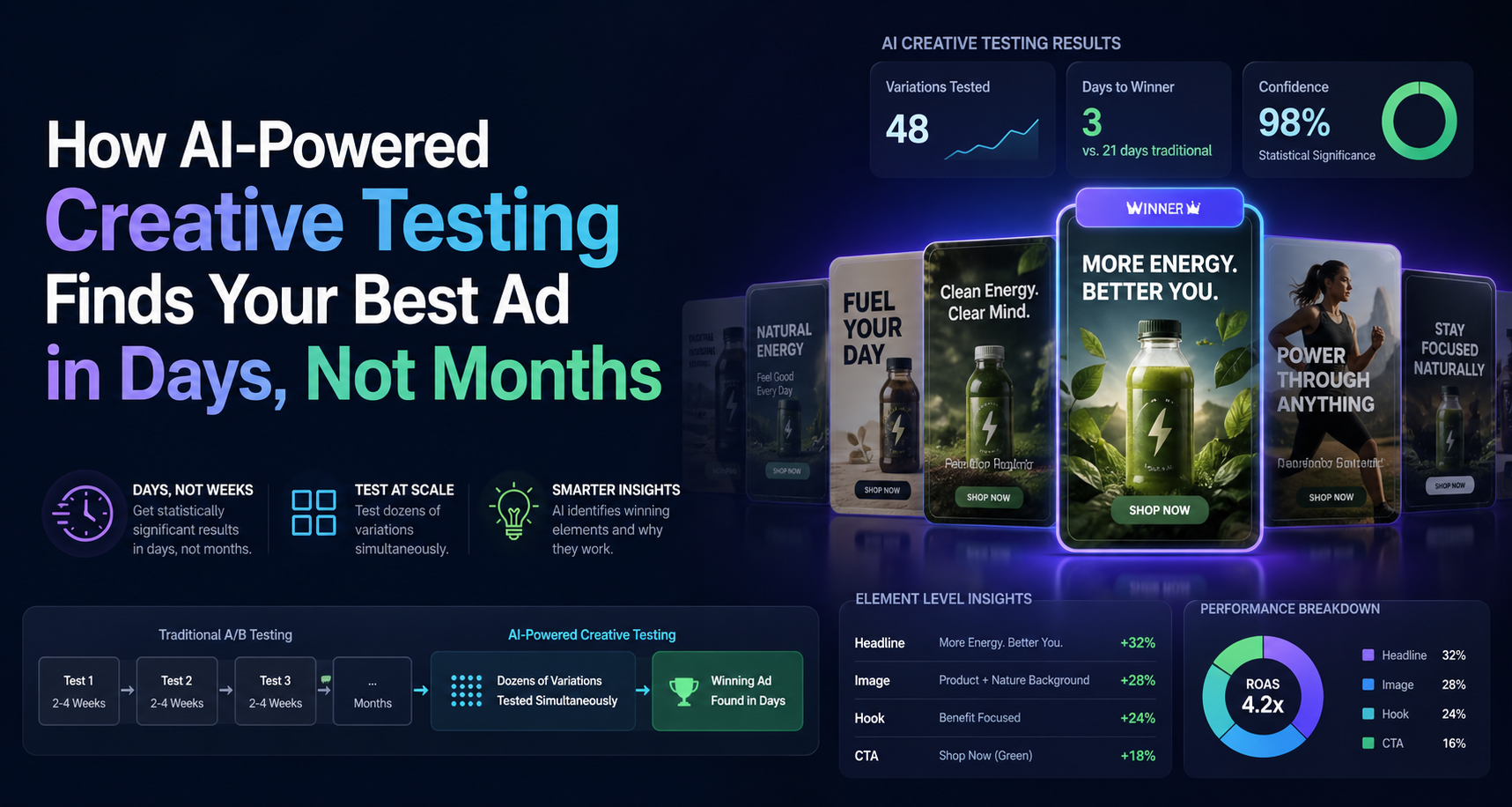
How AI-Powered Creative Testing Finds Your Best Ad in Days, Not Months
There is a math problem at the center of advertising creative that most businesses have never fully solved. You know different headlines, images, and hooks perform differently. You know the only way to find what works is to test. But testing takes time — two to four weeks per test, one variable at a time, running sequentially. By the time you have an answer, the market has moved. AI-powered creative testing changes all three constraints simultaneously: it runs dozens of variations at once, surfaces statistically significant winners in days rather than weeks, and generates element-level intelligence that traditional A/B testing was never designed to produce.
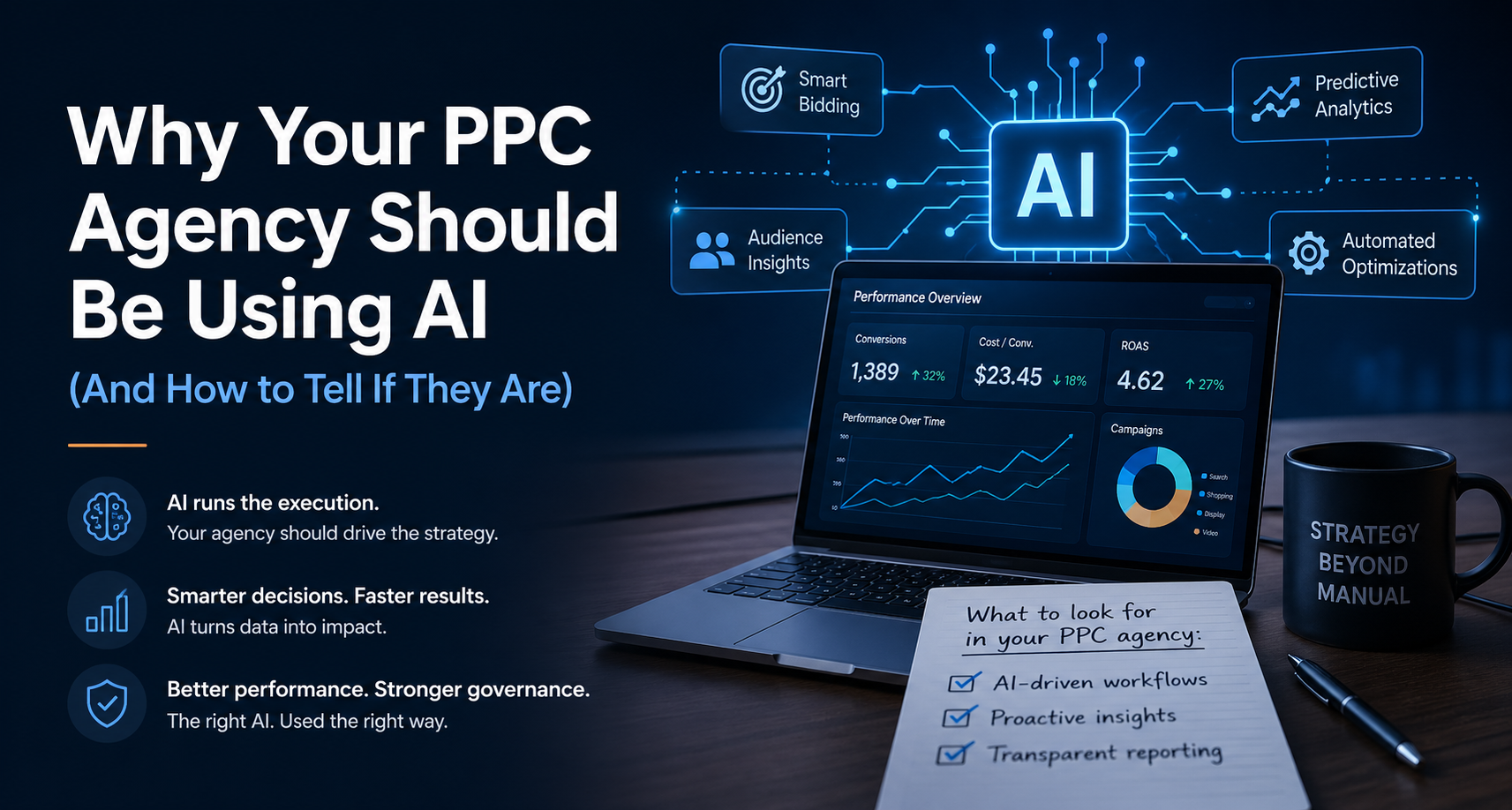
Why Your PPC Agency Should Be Using AI (And How to Tell If They Are)
When most businesses hire a PPC agency, they are buying expertise, time, and access. For most of the past decade, that value proposition held up. The knowledge gap between a skilled agency and an amateur was real and meaningful. That gap has not disappeared — but it has fundamentally shifted. 53% of PPC professionals say their work is harder today than two years ago. The platforms are more automated, more opaque, and faster-moving than any human team can match without AI. The agencies navigating this environment well are not the ones with the most manual bidding experience. They are the ones that know how to configure, govern, and extract strategic value from the AI systems that now control most of the execution layer. Here is how to tell whether yours is one of them.
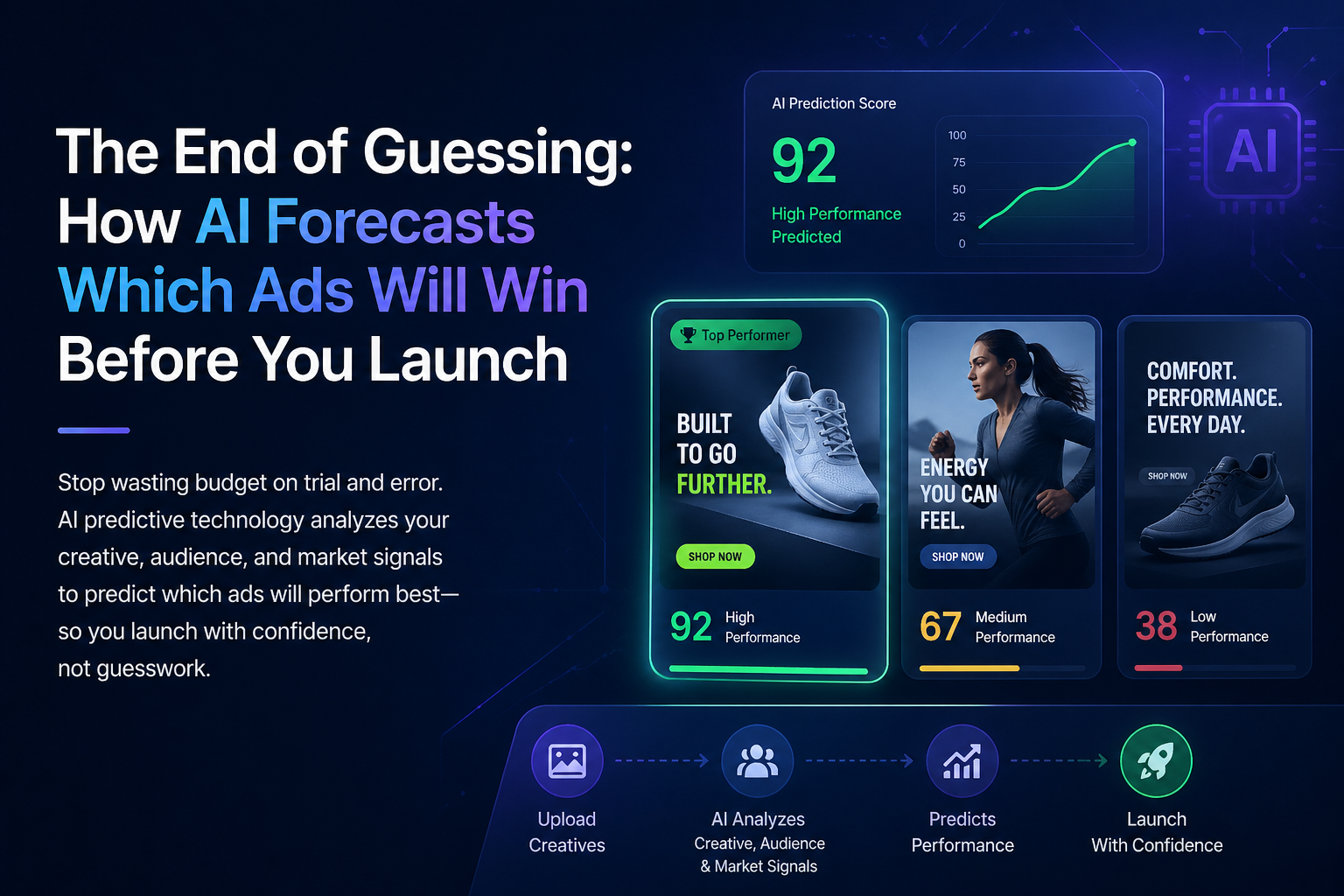
The End of Guessing: How AI Forecasts Which Ads Will Win Before You Launch
You have spent time developing a campaign. The creative looks sharp. The copy feels right. You hit launch — and then you wait. Forty-eight hours of refreshing the dashboard, hoping the instinct that guided your creative decisions turns out to be correct. Sometimes it is. More often, you discover which headline was wrong, which image was not converting, and which variation you almost cut is quietly outperforming everything else. By the time you know this, you have already spent real budget finding it out. AI creative prediction is designed to eliminate that cost. Here is how it works.
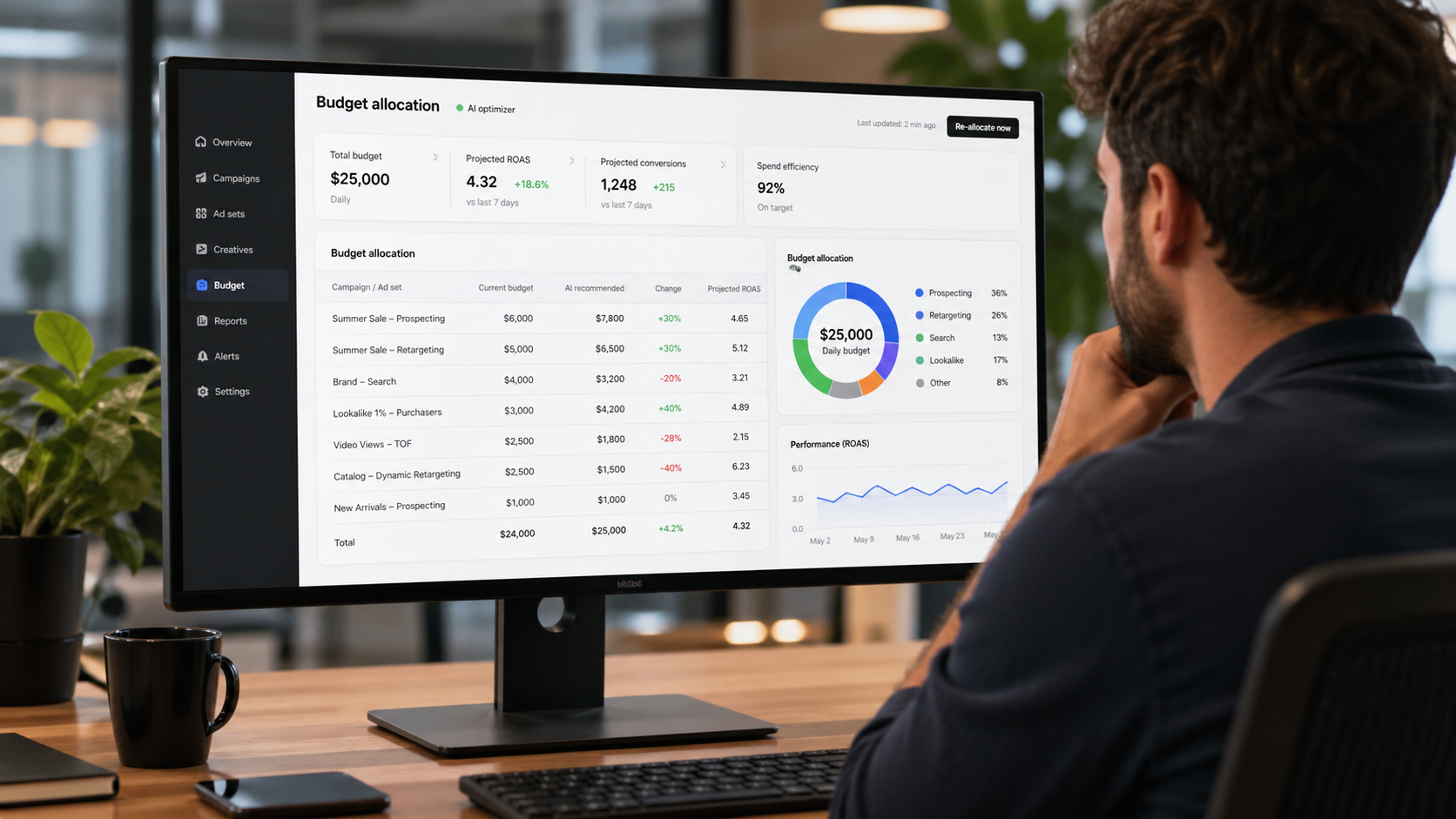
How to Let AI Automatically Allocate Your Ad Budget for Better ROI
Every week, businesses running paid ads face the same problem. A campaign that was converting well last Tuesday is underperforming today. Another ad set is burning through budget on clicks that never convert. A third runs out of money by noon and misses the evening traffic window where half the day's conversions happen. The traditional fix is a manual review — shift some budget, adjust some bids, hope it holds until next week. The problem is that Google and Meta's auction systems change thousands of times between each human check-in. Here is how AI budget allocation closes that gap, and how to set it up so it actually works.

Why Your Website's Search Bar Can't Find Your Own Content (And How to Fix It)
You publish a blog post. You want to share it with a client. So you go to your own website, type the full title into the search bar — and nothing comes up. You try one word from the title and there it is immediately. The post exists. The search bar knows your website. But it could not find the thing you were looking for when you asked for it directly. This is not a bug. It is how most website search functions work by default — and it is quietly making your content invisible to the people most likely to want it.
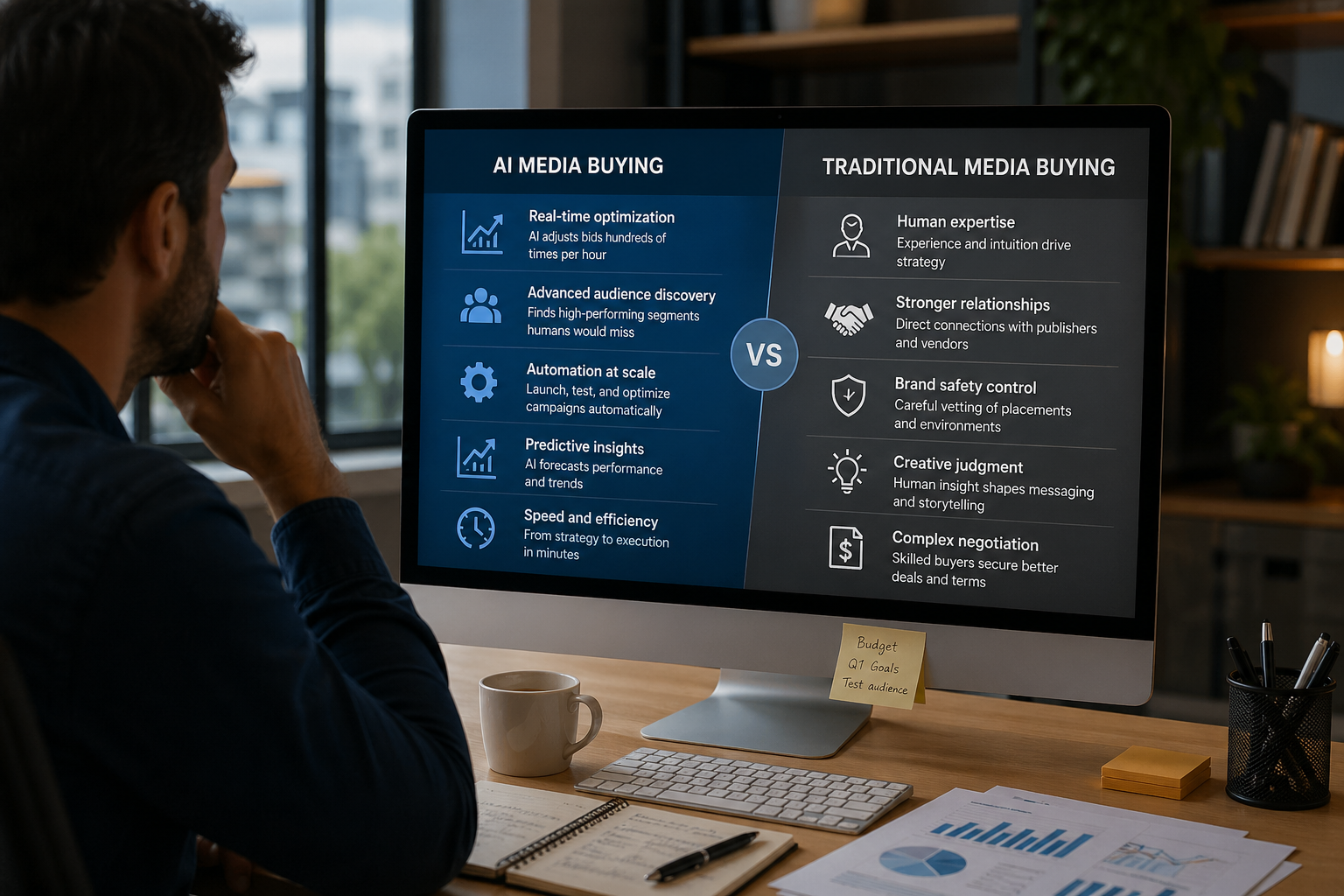
AI Media Buying vs. Traditional Media Buying: A Head-to-Head Breakdown
Global ad spend is expected to exceed $1 trillion in 2026, and the way those dollars get placed has changed permanently. AI systems now adjust bids hundreds of times per hour, discover audience segments no human buyer would identify, and in some cases generate entire campaigns from nothing more than a URL. But the same platforms reporting record AI performance numbers are also the ones defining how that performance gets measured. Here is an honest breakdown of where AI media buying wins, where traditional buying still holds the edge, and what the right balance looks like for your business.
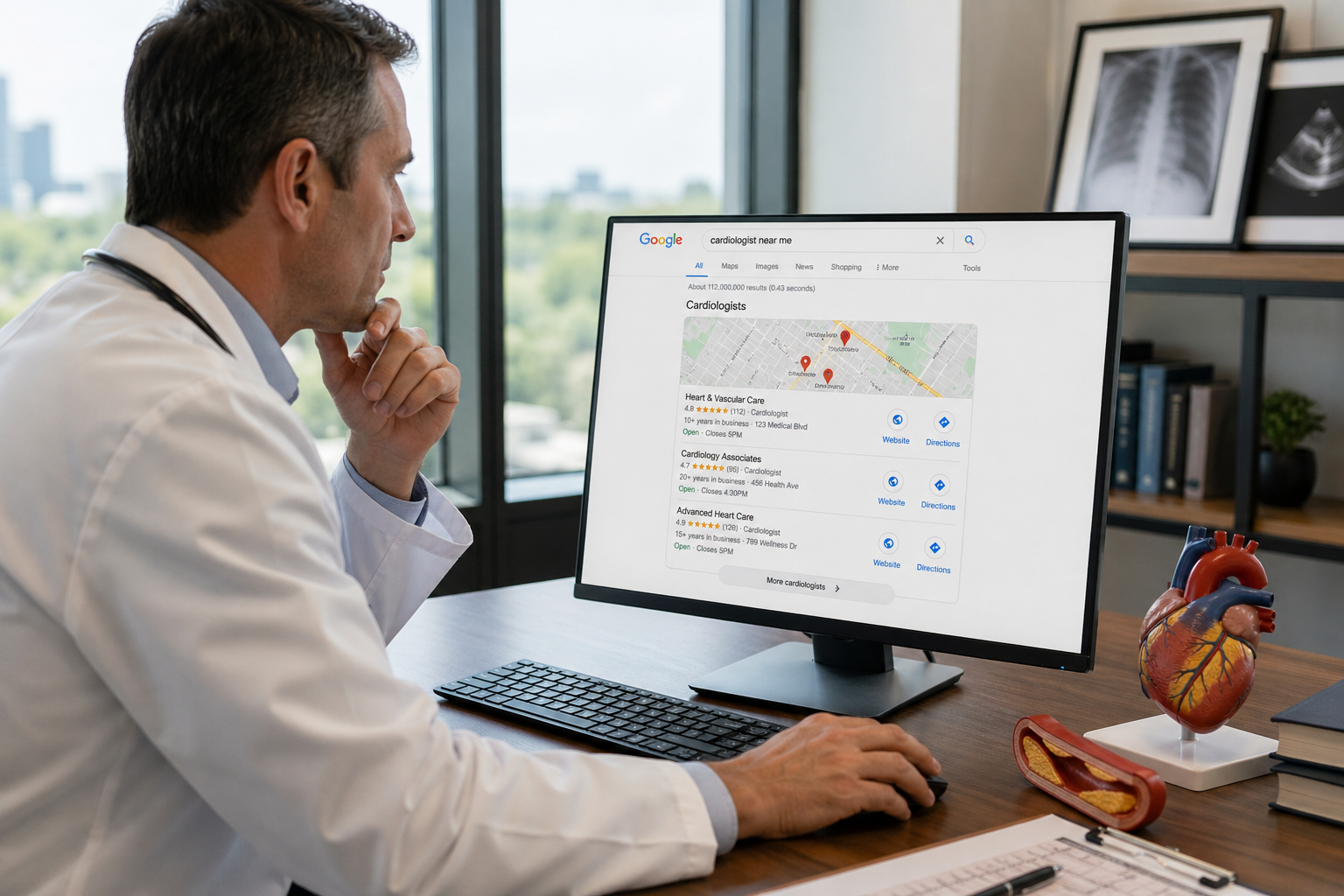
SEO for Cardiologists: The Complete Guide to Getting Found by Patients in 2026
The referral-only era for cardiologists is fading. Patients who receive a referral now routinely Google the recommended cardiologist before confirming the appointment — and they frequently switch providers based on what they find. Meanwhile, a growing share of cardiac patients are searching for specialists directly, without any referral at all. If your practice is not visible in local search results, you are invisible to the majority of patients who are actively looking for cardiac care right now. Here is everything your practice needs to know about SEO in 2026.