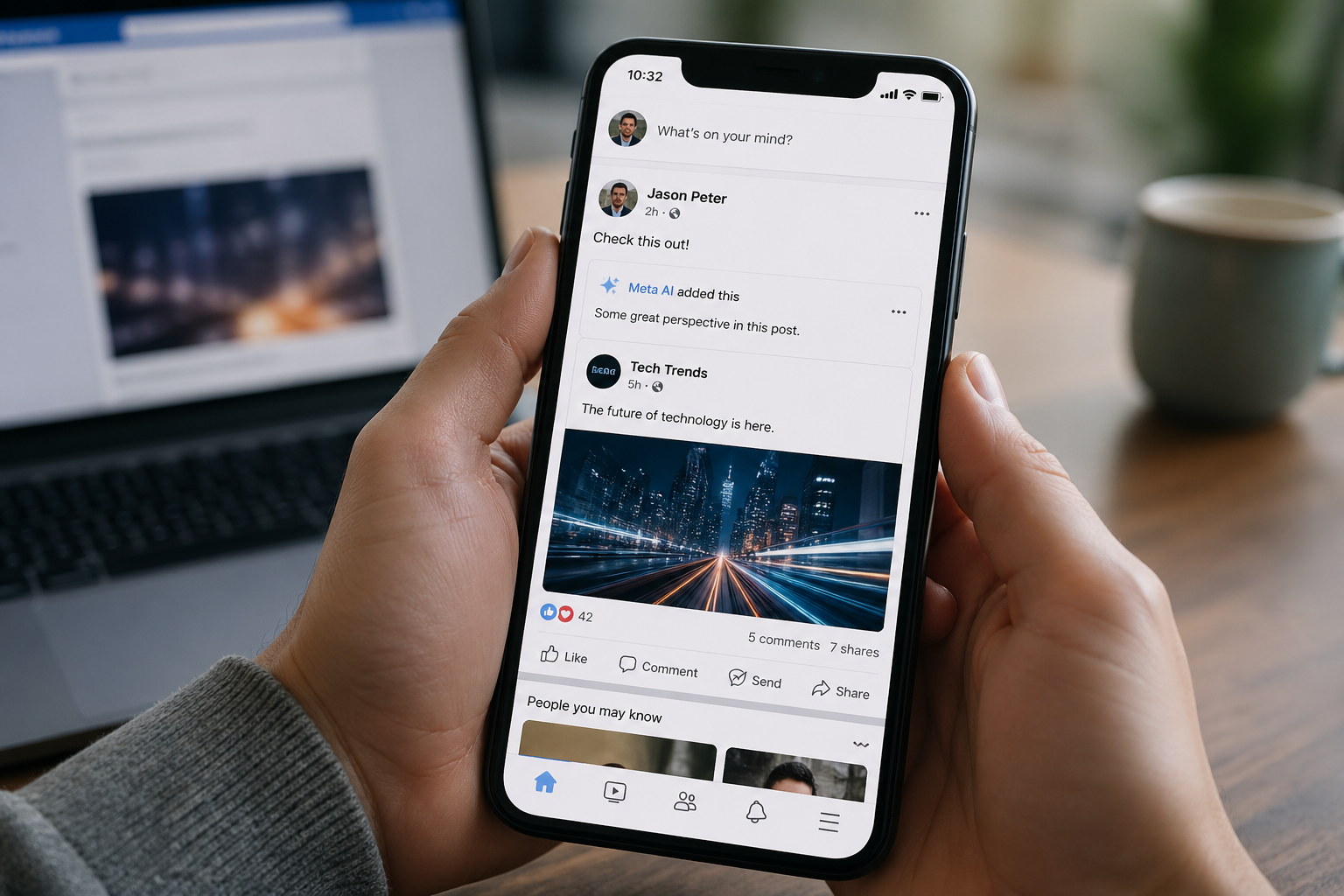
Meta AI Is Writing on Your Posts — Whether You Asked It To or Not
You shared a post on Facebook. You added your own caption — or maybe nothing at all — and hit publish. Then you looked at what actually went live. There was text you did not write. A phrase attached to your reshare that you never approved. Meta AI added it automatically, on your behalf, to your post. For individual users it is annoying. For businesses managing a brand, it is a content authenticity problem that needs to be addressed right now. Here is exactly what is happening and what to do about it.

Why 2026 Is the Year of "Search Everywhere" Optimization
Search used to have a front door. You opened a browser, went to Google, typed a query, and clicked a link. That model is gone. In 2026, your customers are searching on TikTok, asking Alexa, querying Perplexity, validating decisions on Reddit, and watching YouTube — often before they ever see a traditional search results page. If your strategy is still built around one platform, you are optimizing for a search landscape that no longer exists. Here is what to do instead.

Bifurcated Search Strategy: Optimizing for Google AIO vs. Perplexity
For two decades, ranking on Google was the whole game. That era is over. In 2026, your customers are finding you — or not finding you — through platforms with fundamentally different architectures, different citation signals, and different content preferences. Google AI Overviews and Perplexity are not competing versions of the same tool. They are different systems that reward different strategies. Here's how to build one that works on both.

The Death of the Keyword: Why Semantic Intent is Your New North Star
There's a version of SEO that a lot of businesses are still running: find a keyword, repeat it in your headings, hit a word count, and wait for Google to reward you. It worked once. It doesn't anymore. The search engine that ranked pages based on keyword density has been replaced by one that reads content the way a human expert would — judging meaning, context, and intent. Here's what that shift means for your business and how to build a strategy that actually works in 2026.

Why Zeely AI Is One of the Best AI Ad Creation Tools on the Market Right Now — and Why Our Clients Swear By It
We test a lot of AI tools. Most earn a "promising but not ready" verdict. Zeely AI earned something different — a permanent spot in how we build paid social campaigns for our clients. It turns a product URL into complete ad creative in minutes, connects directly to Meta Ads Manager to launch campaigns, and integrates the best AI video models available including Sora, Kling AI, and Google's Veo. The result: clients producing 3x more creative variations per month, cutting time-to-live-ad by 40%, and finding winning ads faster than they ever could with traditional production processes. Here's the full story on what Zeely is, how it works, and why it is one of the most practical AI marketing tools available right now.

Why New Domains Die in the Index Queue — and Why Checking Daily Is the Difference Between Weeks and Months of Lost Visibility
Most founders launching on a new domain assume that publishing good content is the hard part. It isn't. The hard part is that Google limits manual indexing requests to roughly 10 to 12 URLs per day per account — and for new domains with almost no crawl budget, missing even a single daily quota window is capacity you can never get back. Without someone checking for index windows every single day and submitting priority content the moment the quota resets, your published content can sit invisible in the "Discovered — currently not indexed" queue for weeks. Multiply that across a full content launch, and you are looking at a go-to-market timeline that is two to four months longer than it needed to be.

When Accenture Buys Your Agency, What Are They Actually Buying? The Data on What Large Acquirers Value Most.
Most agency principals assume their client roster is their most valuable acquisition asset. The M&A data says otherwise. When large acquirers — Accenture, WPP, PE roll-ups — pay a premium above the financial baseline, they are almost always paying for one of four things: specialized talent that cannot be replicated through hiring, proprietary data that compounds over time, original research and entity authority that survives team and client churn, or a specific combination of all three. Client relationships set the floor of the valuation conversation. Everything above that floor comes from somewhere else — and most agency owners are systematically underbuilding the assets that actually drive the premium.

The Line Between Marketing Agencies and AI Consulting Firms Is Blurring. Here's Why — and What B2B Buyers Should Do About It.
Five years ago the vendor selection decision was clean: campaigns went to agencies, AI strategy went to consultants. That clarity is gone. Accenture committed $3 billion to AI and is competing for CMO budgets through Accenture Song. WPP launched an enterprise AI transformation unit and moved to outcome-based billing. McKinsey has 5,000 AI specialists and is selling into marketing functions. Publicis posted 5.7% organic growth by positioning itself as an AI-driven transformation platform. The firms that defined two separate industries are converging on the same client, the same budget, and the same set of services — and the categorical labels they use to describe themselves are increasingly unreliable guides to what they actually deliver.
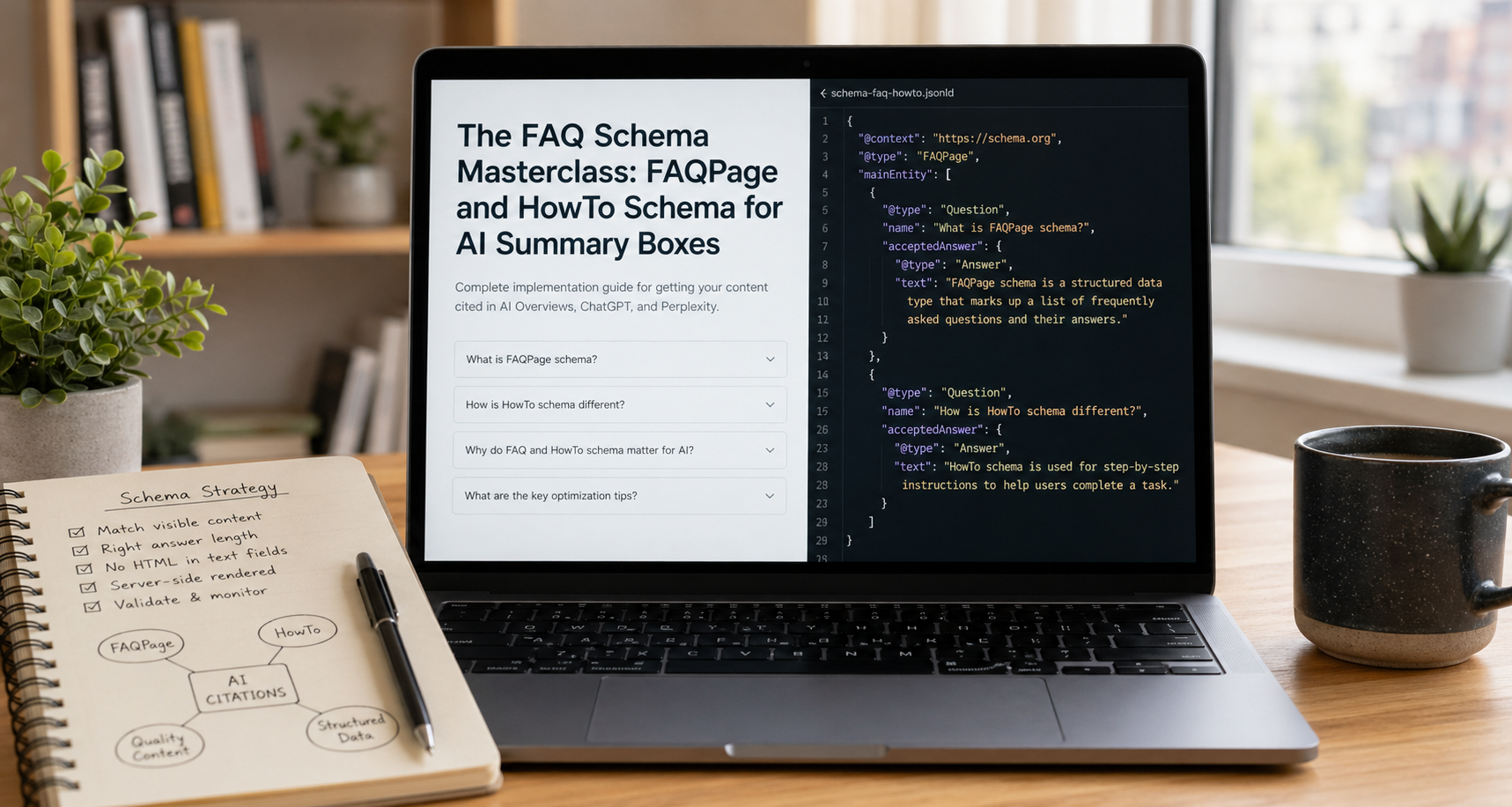
The FAQ Schema Masterclass: How to Use FAQPage and HowTo Schema to Win AI Summary Boxes
FAQPage and HowTo schema are the closest thing to a direct line between your content and AI-generated answers. Done correctly, they tell ChatGPT, Perplexity, and Google AI Overviews exactly what questions your content answers, exactly what steps your procedures contain, and exactly how to extract that information accurately. Done incorrectly — wrong answer length, HTML in text fields, client-side rendering, schema that doesn't match visible content — they are silently ignored. This masterclass covers the complete implementation for every major stack, the specific optimization decisions that move you from technically valid to actively preferred by AI citation systems, and a full validation and monitoring workflow.
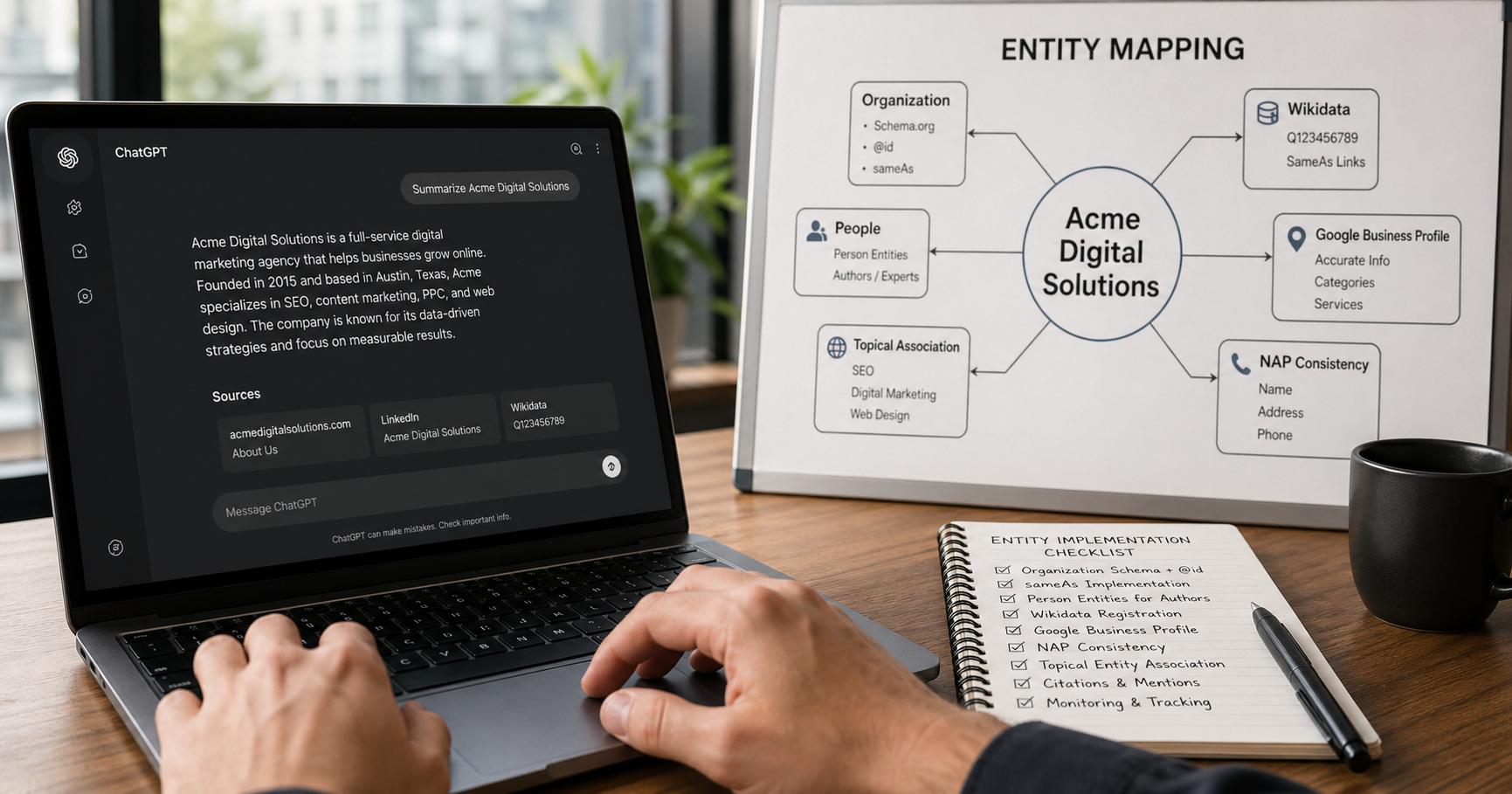
Entity Mapping 101: How to Make Sure AI Models Recognize Your Company as a Real Entity — Not Just a String of Text
Type your company name into ChatGPT. If the model produces an accurate, confident summary, your entity signals are working. If it hedges, hallucinates, or declines — you have a string, not an entity. Entity mapping is the discipline of building the structured, corroborated, consistent signals that transform your brand from a text pattern AI models sometimes recognize into a distinct, well-defined entity they can accurately describe and consistently cite. This guide covers the full technical stack: Organization schema with @id and sameAs, Person entities for named authors, Wikidata registration, Google Business Profile optimization, NAP consistency, topical entity association, and a complete implementation checklist with priority order.
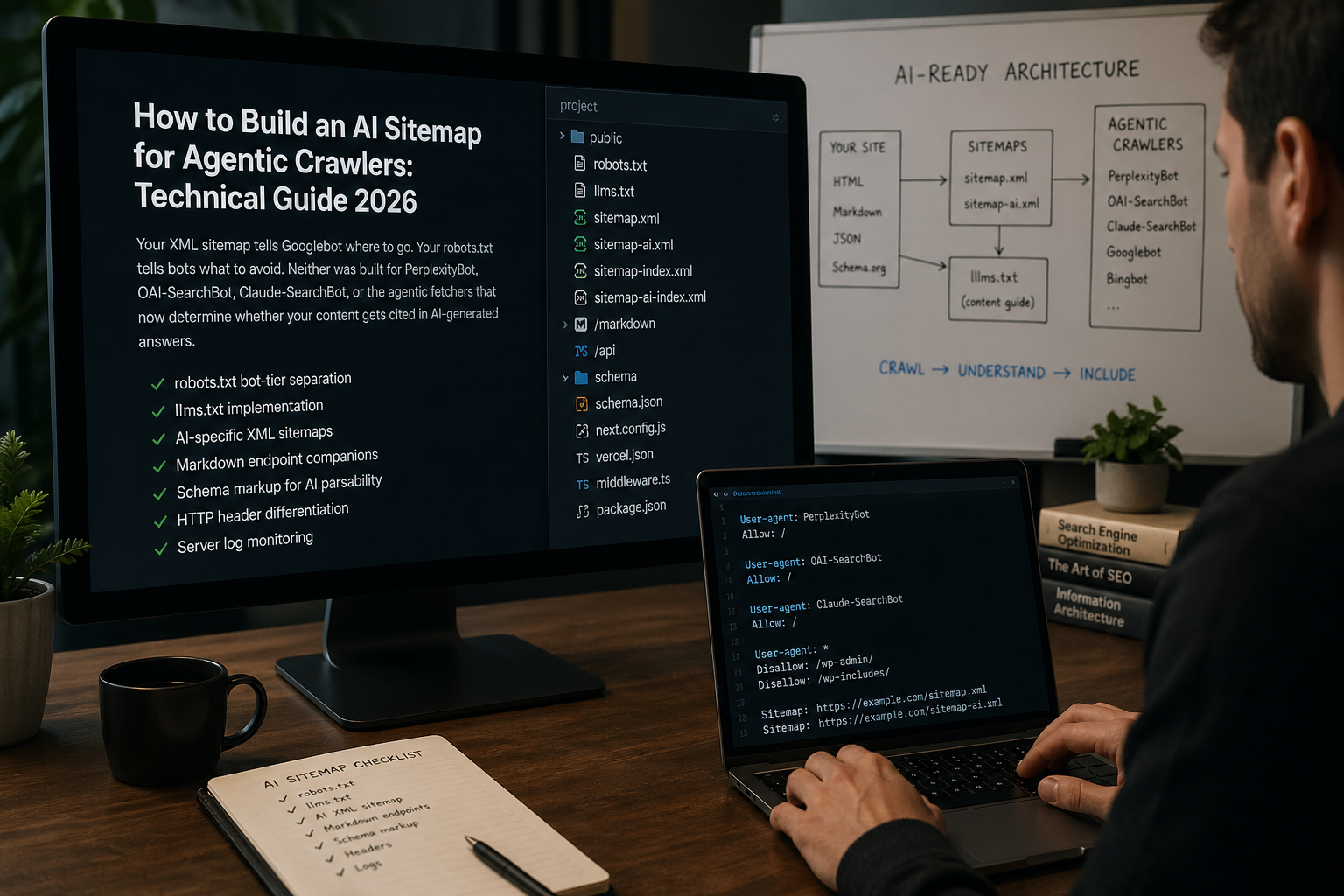
How to Build an AI Sitemap for Agentic Crawlers: A Technical Guide to Signaling Content Structure Beyond Google
Your XML sitemap tells Googlebot where to go. Your robots.txt tells bots what to avoid. Neither was built for PerplexityBot, OAI-SearchBot, Claude-SearchBot, or the agentic fetchers that now determine whether your content gets cited in AI-generated answers. This technical guide covers the full stack: robots.txt bot-tier separation, llms.txt implementation with honest impact assessment, AI-specific XML sitemaps, Markdown endpoint companions, schema markup for AI parsability, HTTP header differentiation, and server log monitoring — with working code for Next.js, Express, WordPress, and Nginx.
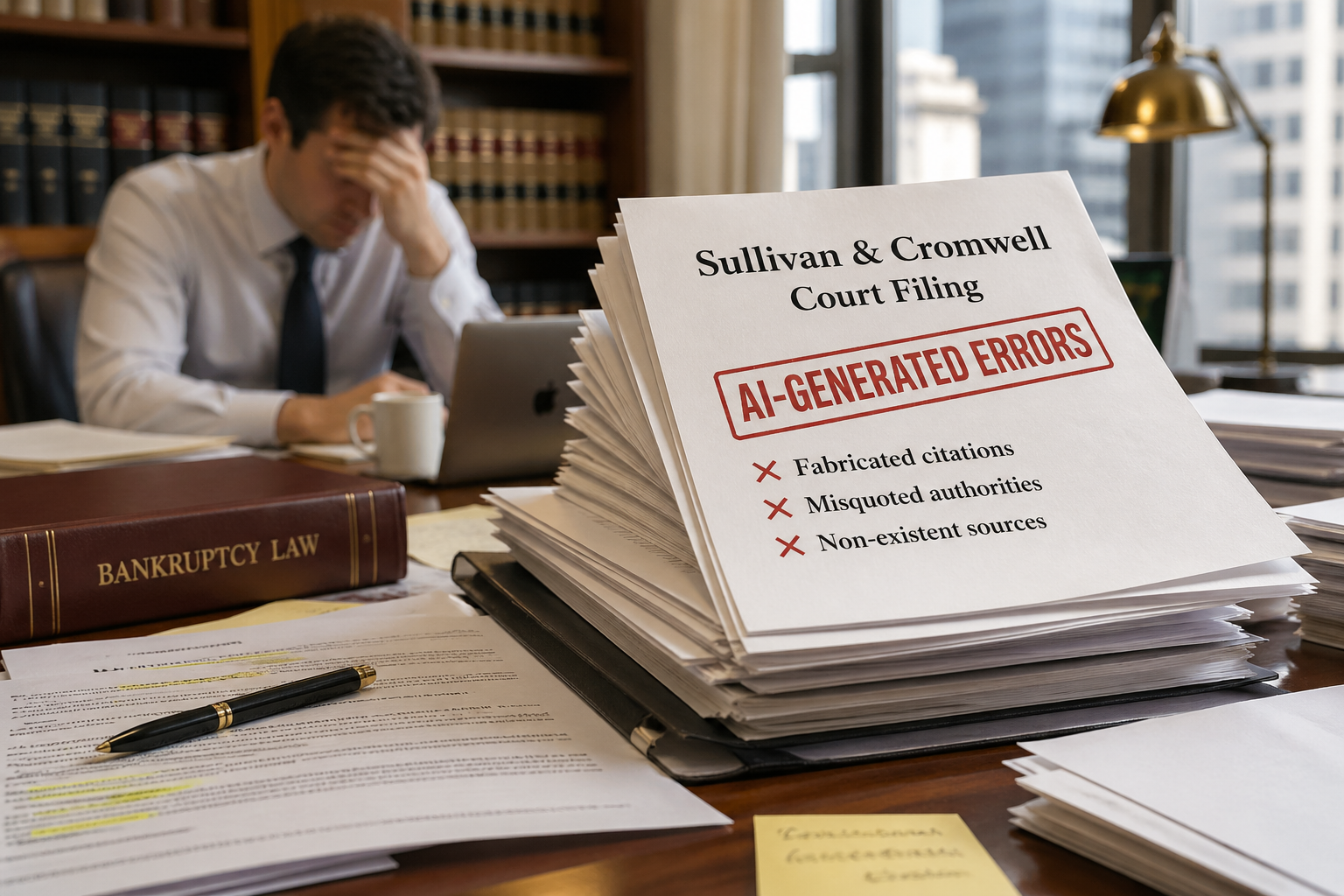
What the Sullivan & Cromwell AI Disaster Tells Us About B2B Adoption — and Why Trust, Not Technology, Is the Real Bottleneck
Sullivan & Cromwell advises OpenAI on the safe and ethical deployment of AI. Last week they filed a bankruptcy court brief containing more than 40 AI-generated errors — fabricated citations, misquoted authorities, non-existent sources. Their own safeguards failed to catch it. Opposing counsel did. If this can happen at one of the most resource-rich law firms on the planet, it can happen anywhere — and the data on B2B AI adoption suggests most organizations are not as protected as they think. Here's what the incident reveals about the real bottleneck in enterprise AI adoption: not the technology, but the trust infrastructure around it.

What Whisper Down the Lane Taught Us About AI Hallucinations and Made-Up Citations
Nobody lied in Whisper Down the Lane. The distortion happened through a series of small, confident approximations — each player faithfully passing along their best reconstruction of what they heard. That is exactly how AI hallucinations work. And it is exactly why AI models cite sources that don't exist with complete confidence. This post explains the mechanism behind AI hallucinations, the real-world consequences of fabricated citations, and what brands can do to make their content hallucination-resistant in an AI-mediated search landscape.

The State of AI Search in Personal Finance 2026: What the Real Data Shows — and What It Means for Your Content Strategy
Educational finance queries now trigger Google AI Overviews 91% of the time. Investopedia captures 42% of finance AI citations. And brands cited in AI Overviews see 35% higher click-through rates than those that aren't. This report synthesizes verified data from BrightEdge, SparkToro, Forrester, and Seer Interactive to map the real state of AI search in personal finance — with clear strategic implications for every brand publishing financial content in 2026.

AI Design Tools Promised to Replace Designers. Here's What They Actually Deliver in 2026.
Claude Design can turn a text prompt into a polished presentation layout in minutes. What it can't do is deliver a clean, production-ready file your team can actually ship. We tested it across real B2B marketing use cases and found the same gap every AI design tool has right now: impressive at generating, broken at delivering. Here's the technical reason why — and what it means for marketers and designers wondering whether AI is actually coming for their jobs.

What Is Entity SEO? The Complete Guide for B2B Brands Who Want to Be Found by AI and Google
Keywords got you ranked. Entities will get you cited. Entity SEO is the practice of making your brand clearly understood and recognized as a credible, trusted source by Google's Knowledge Graph and AI retrieval systems — and it's the single most important shift B2B marketers haven't made yet. This complete guide explains what entities are, why they matter more than ever in the AI search era, and gives you a practical step-by-step playbook to audit and build your brand's entity signals from the ground up.

Indexed vs. Amplified: What Actually Gets Your Content Surfaced by AI — Publishing Alone or Distributing Across LinkedIn, Google Business, Facebook, and Reddit?
Most marketers assume AI models find content the same way Google does. They don't. Publishing and indexing your content is necessary — but it's not enough to consistently earn citations from ChatGPT, Perplexity, or Google AI Overviews. The missing piece is entity signal: the cross-platform corroboration that tells AI systems your brand is real, credible, and authoritative. Here's what the evidence shows about which platforms actually matter — and in what order.
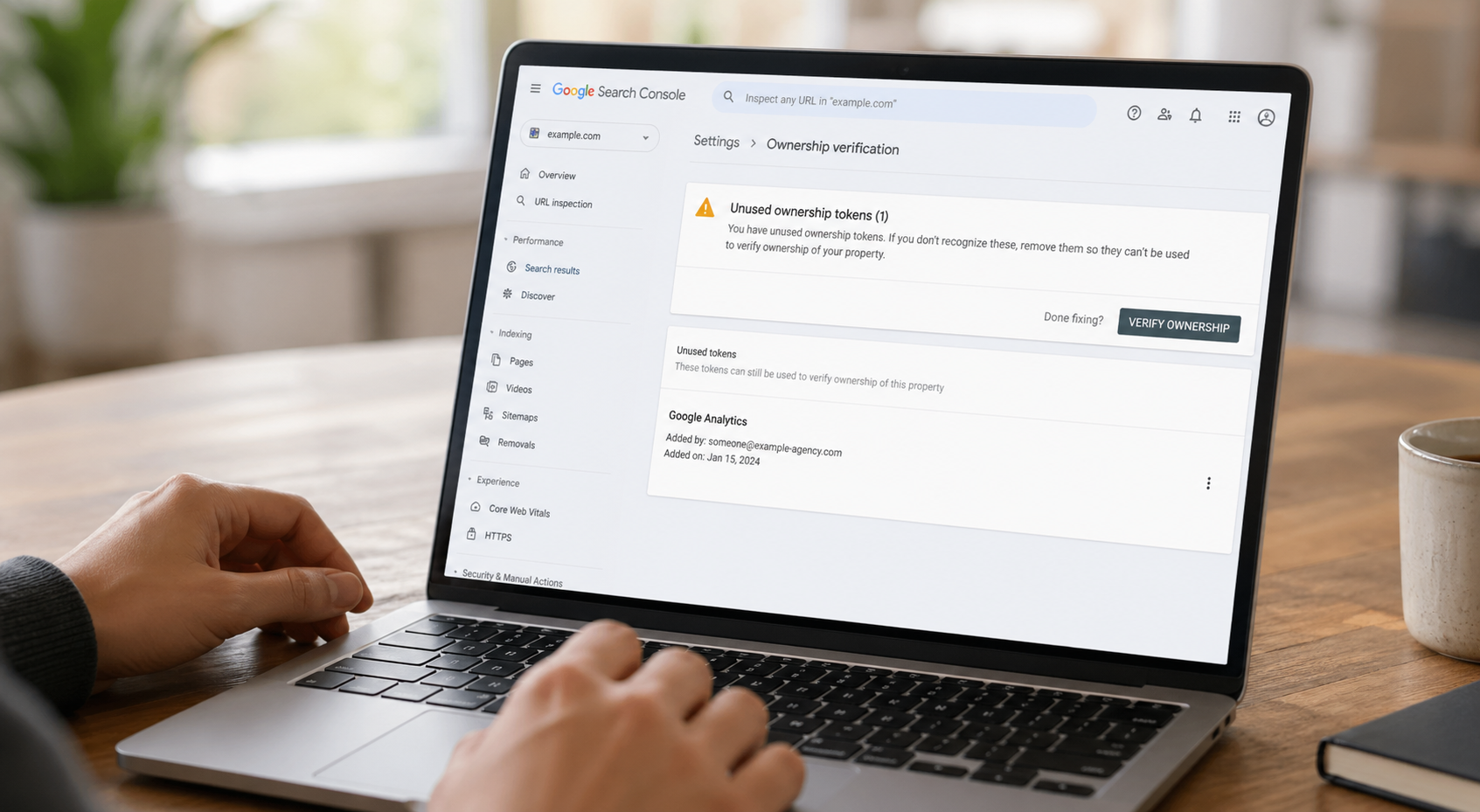
Google Search Console Ownership Tokens: What They Are, Why They're a Security Risk, and How to Clean Them Up
Most people see the "unused ownership token detected" warning in Google Search Console and move on. They shouldn't. That token could mean a former agency, a platform you migrated away from, or a Google service you stopped using still has verified access to your most sensitive SEO data. This guide explains what ownership tokens are, how they get onto your site without your knowledge, what the real risks are, and exactly how to audit and clean up your Search Console property — step by step.

CTR vs. AIC: Why Click-Through Rate Is the Wrong Metric for the AI Search Era
Your click-through rate is flat. Your pipeline is shrinking. Those two things are related — but not in the way your dashboard suggests. As AI tools like ChatGPT and Perplexity answer more B2B research queries without a single click to your website, CTR has become a dangerously incomplete metric. We introduce AI-Influenced Conversions (AIC), the KPI built for the zero-click era, and show you exactly how to measure the pipeline your current reporting is missing.

The AI Citation Gap: Analysis of 1,000 B2B Search Queries
Ranking #1 on Google is no longer enough. We analyzed 1,000 B2B search queries and found that AI models like ChatGPT and Perplexity cite the top Google result less than 41% of the time — drawing instead from original research, named expert sources, and long-form analysis that most brands aren't producing. This is the AI Citation Gap, and it's quietly eroding pipeline for B2B brands that haven't adapted their content strategy.