
What a Williamstown golf club's family-friendly Halloween event—and one family's experience attending—reminds us about community, accessibility, and the kind of marketing that builds real relationships.
Some businesses become so closely associated with a particular experience that people forget there's more to them.
A golf club is a good example.
If you don't play golf, aren't a member, and have never attended an event there, it's easy to assume the property simply isn't part of your world.
You might drive past it for years without ever having a reason to pull into the parking lot.
That's what makes community events like Scotland Run Golf Club's Trunk-or-Treat so meaningful.
On Tuesday, October 20, 2026, Scotland Run Golf Club in Williamstown, New Jersey, hosted its second annual Trunk-or-Treat, inviting local families to enjoy an evening of Halloween fun.
The event was free and open to the public, featuring costumes, candy, decorated vehicles, and opportunities for families to celebrate together.
According to Scotland Run's official event announcement, the celebration was scheduled from 6:30 to 8:30 p.m. at its Fries Mill Road property. The Chamber of Commerce Southern New Jersey also listed it as the club's second annual event.
The concept was simple.
But the gesture behind it deserves recognition.
You didn't need to be a golfer. You didn't need a membership. You just needed to be part of the community.
And this year, that experience was personal for us.
My family attended the event, and it was wonderful to have an opportunity to enjoy a Halloween evening together at a place we might not otherwise associate with a family outing.
There were costumes, decorated trunks, Halloween candy, and even some familiar yellow Minions making an appearance.
Our family got to be part of the festivities, enjoy the decorated displays, and make some memories together.
It was the kind of experience that reminds you why local community events are worth supporting.
And before getting into the marketing lessons, I want to say something important.
Thank you, Scotland Run, for hosting such a wonderful event and giving local families another opportunity to celebrate together.
Sometimes, the most meaningful thing a business can do is simply create a place where people feel welcome.
A Golf Club Can Be More Than a Place to Play Golf
Scotland Run has long been a recognizable destination in South Jersey.
Located at 2626 Fries Mill Road in Williamstown, the golf club is known for its distinctive course built around a former sand quarry.
The property incorporates dramatic changes in elevation, sandy terrain, and unique landscape features that make it different from a traditional golf course.
But Scotland Run has also changed over time.
As reported by 42Freeway in October 2024, the course transitioned to private membership beginning with the 2025 golf season.
That naturally affects how some people may view the property.
When a business becomes associated with private membership, people may begin to assume that the entire experience is reserved for members.
Not necessarily because anyone told them they weren't welcome.
Sometimes it's simply because they haven't been given a reason to feel otherwise.
But Scotland Run is more than its golf course.
According to Scotland Run's official website, the course is private, while the Highlander Pub & Grill remains open to the public.
The property also hosts weddings, dining experiences, celebrations, and events with different participation arrangements.
That's an important distinction.
The golf experience may be exclusive to members and their eligible guests, but the property continues to offer opportunities for people outside that membership community.
Public Experiences Help People See a Different Side of a Business
A golf club can mean different things to different people.
For members, Scotland Run is a place to enjoy golf.
For someone planning a wedding, it may be a potential venue for one of life's biggest celebrations.
For local residents, the Highlander Pub & Grill offers a public dining experience.
And for families attending Trunk-or-Treat, the property became a place to enjoy Halloween.
Those identities don't compete with one another.
They demonstrate that a business can serve different audiences in different ways.
A public event creates an opportunity for people to experience a place without participating in its primary business offering.
Instead of discovering the venue through advertising, they can become familiar with it through a real experience.
That's a different kind of introduction.
And it can be a meaningful one.
We Were There, and the Minions Made It Even More Memorable
It's one thing to write about community events from a marketing perspective.
It's another to experience one with your family.
For us, Scotland Run's Trunk-or-Treat wasn't simply an example of a local business doing community outreach.
It was a family outing.
We attended together, enjoyed the Halloween decorations, and spent time participating in an event designed for families.
And if you've seen our pictures from the evening, you've probably noticed the Minions.
The Minions-themed trunk was hard to miss.
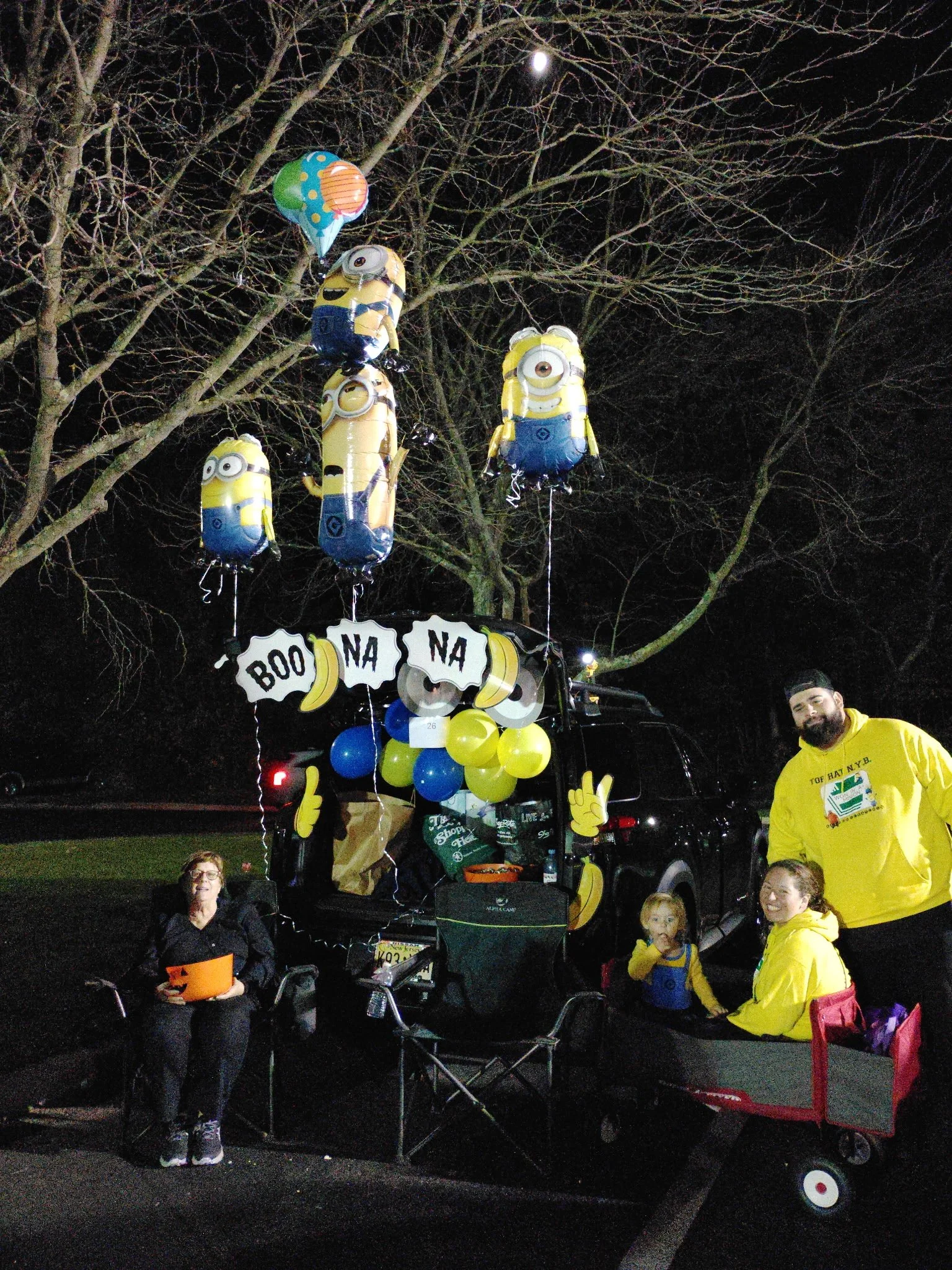
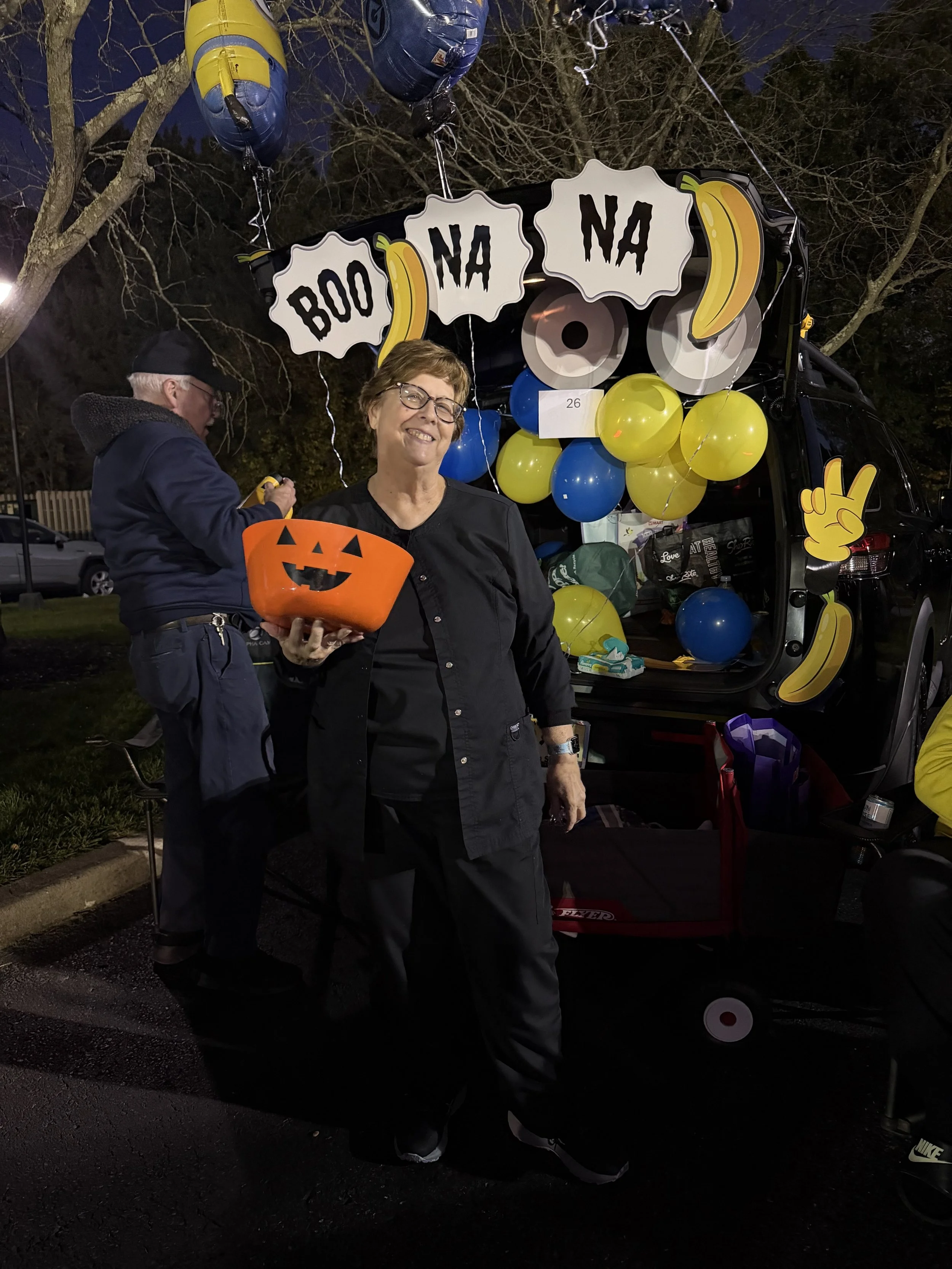
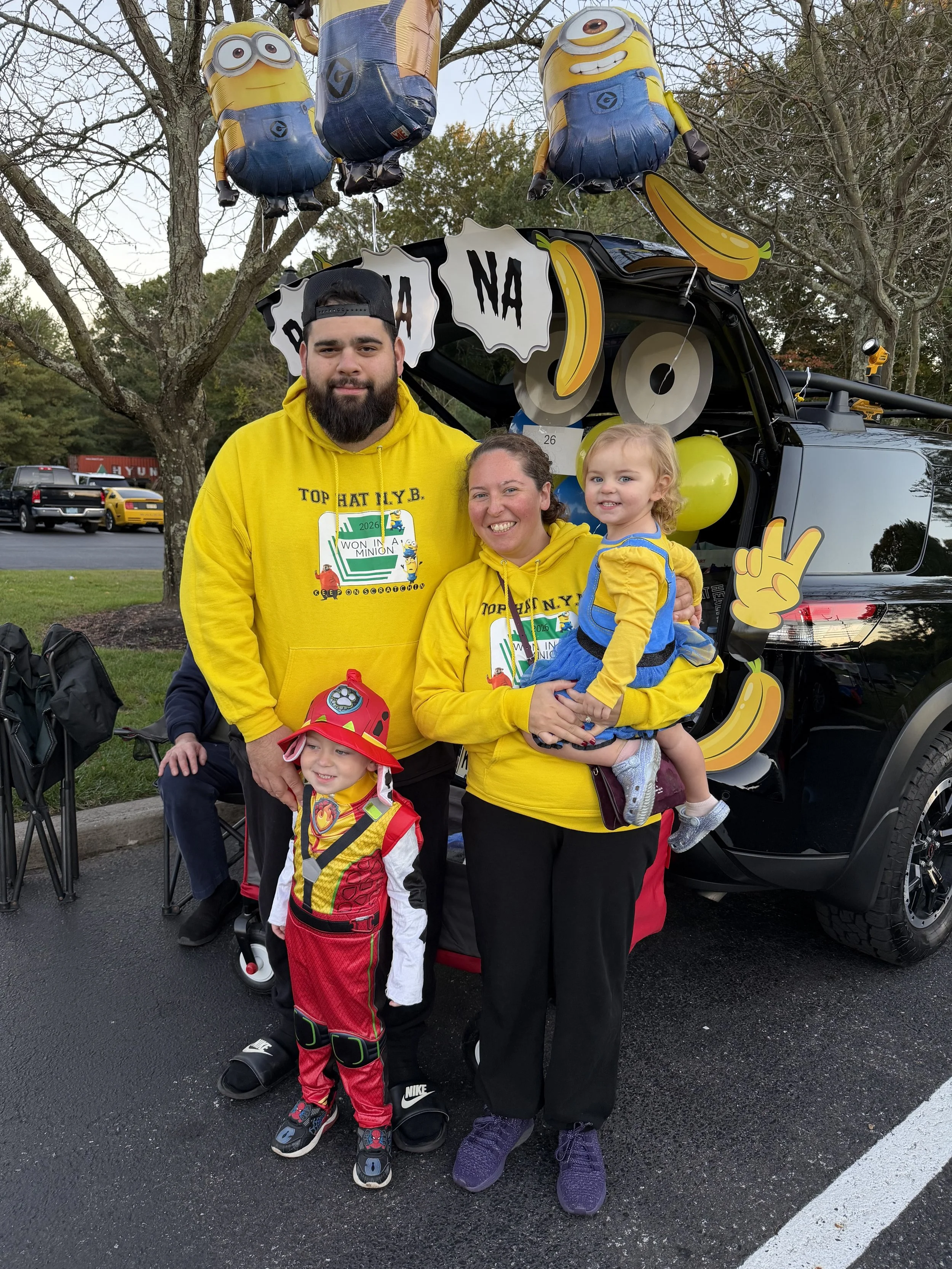
There were floating character balloons, yellow and blue decorations, banana cutouts, and a playful "BOO-NA-NA" display.
It was colorful, silly, and exactly the kind of Halloween setup that makes a family event fun.
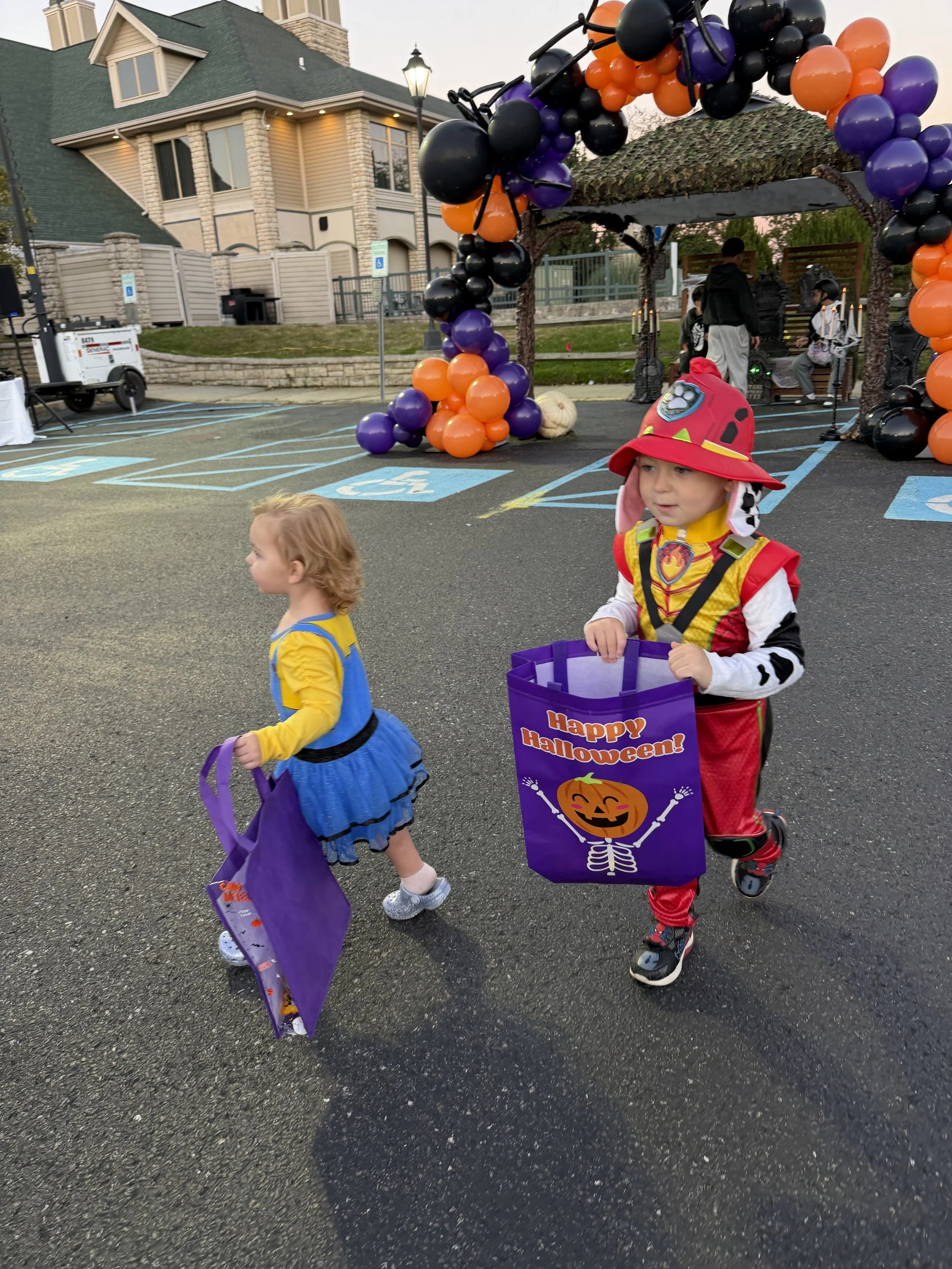
Our pictures capture moments from the evening, including our family together by the decorated vehicle and the kids enjoying the festivities in their costumes.
One of the children was dressed as Marshall from PAW Patrol, complete with his red firefighter costume, while another joined in wearing a Minion-inspired costume.
There was even a large arch of black, orange, and purple balloons welcoming visitors into part of the event.
Nothing about those moments required an elaborate itinerary.
It was simply a chance to get out, spend time together, and enjoy a local Halloween activity.
Sometimes It's the Little Details That Make the Memory
When families look back on an event, they don't necessarily remember every decoration or activity.
They remember pieces of the experience.
A favorite costume.
A funny display.
The candy bags.
A family picture.
The excitement of being somewhere different.
Those are small things, but they're often what make an outing worth remembering.
For us, the Minions theme added some extra personality to the evening.
But the bigger takeaway had nothing to do with the decorations themselves.
It was being able to participate in something enjoyable, close to home, in a setting that welcomed local families.
That's what community events do well when they're approached with the right intention.
They give people a reason to gather.
They create opportunities for shared experiences.
And they remind us that meaningful interactions don't always involve buying something.
The Best Community Marketing Doesn't Feel Like Marketing
There's something refreshing about an event that doesn't require a sales pitch.
Nobody needs to explain the value of a golf membership while a child chooses a piece of Halloween candy.
Nobody needs to hand a parent a brochure about weddings, restaurant packages, or private events.
And families shouldn't have to provide their contact information or schedule a sales conversation to enjoy a community celebration.
The event can simply be a positive experience.
That's part of what makes it valuable.
Businesses often approach marketing with specific objectives.
Increase visibility.
Generate leads.
Bring in new customers.
Encourage repeat purchases.
Build awareness.
Those are all legitimate goals.
At Ritner Digital, we spend plenty of time thinking about search visibility, website traffic, SEO, and how digital marketing contributes to customer inquiries.
But community involvement reminds us that not every valuable business interaction follows a traditional sales funnel.
Sometimes, the purpose of an event is simply to give people something enjoyable.
A Positive Experience Doesn't Need an Immediate Return
Imagine a family attending Scotland Run's Trunk-or-Treat.
Maybe they've never visited the property before.
Maybe they already know about the golf course but didn't realize it hosts public events.
Maybe they're simply looking for something fun to do with their children.
They attend, enjoy themselves, and go home.
No purchase takes place.
No membership conversation happens.
No sales opportunity is created.
Has the business accomplished something valuable?
Absolutely.
It has contributed an experience to the community.
That contribution matters independently of whether anyone becomes a customer.
And it's worth recognizing that sometimes generosity itself is what people remember.
A business can create goodwill without making goodwill conditional on a transaction.
That doesn't mean businesses should abandon measurable marketing or ignore financial realities.
It means some activities serve a different purpose.
Community events can help establish relationships, familiarity, and a sense of connection that simply aren't captured by an immediate sales report.
Sometimes the Biggest Barrier Is Feeling Like You Don't Belong
Businesses spend enormous amounts of money trying to overcome a lack of awareness.
But awareness isn't always the problem.
People may know a business exists and still feel no personal connection to it.
They may think it's too formal.
Too expensive.
Too specialized.
Or simply intended for someone else.
Those impressions aren't necessarily accurate, but they can influence whether someone ever considers visiting.
A recognizable business can still feel unfamiliar.
A well-known property can still feel inaccessible.
And a company can have a strong reputation without people understanding everything it offers.
An Invitation Changes the Relationship
An open community event offers a different kind of introduction.
It creates a setting where the first interaction isn't about buying a product or evaluating a service.
It's about being welcomed.
That's particularly relevant for businesses associated with premium experiences, private memberships, professional services, or specialized audiences.
People don't always need more advertising.
Sometimes they need an invitation.
Scotland Run's Trunk-or-Treat did exactly that.
The event was explicitly promoted as free and open to the public.
For families who don't golf, that made participation straightforward.
They didn't need to understand the club's membership structure or its golf offerings.
They could simply attend a family-friendly Halloween celebration.
Accessibility Is Also About Perception
When we talk about making businesses accessible, we often think about physical accessibility, affordability, and available services.
Those are important.
But there's another consideration: whether people feel comfortable participating.
Does the invitation clearly communicate that they're welcome?
Do they understand what to expect?
Are the event details easy to find?
Is there pressure to purchase something?
Can families enjoy themselves without needing to be part of the business's usual customer base?
These questions matter.
They affect whether someone sees an opportunity as intended for them.
And when a business with a private or premium identity hosts a free public event, it can help demonstrate that its relationship with the community extends beyond its core customers.
Why Community Gatherings Matter Beyond Business
The value of events like Trunk-or-Treat isn't limited to branding.
Community connection has broader importance.
The U.S. Surgeon General's advisory on social connection discusses how relationships, community participation, and opportunities for social interaction contribute to individual and collective well-being.
A Halloween event at a golf club isn't a solution to social isolation, nor should any individual event be assigned that kind of responsibility.
But it reflects a larger principle.
Communities benefit when residents have opportunities to gather.
Families benefit when there are approachable activities they can participate in together.
And local businesses can play a role by contributing space, time, resources, or organization.
Community Doesn't Have to Be Complicated
Not every gathering needs to be a major festival.
Sometimes a neighborhood activity is enough.
A school celebration.
A local fundraiser.
A seasonal event.
A family afternoon.
A holiday gathering.
The value isn't always in the complexity of the event.
It's in the opportunity it provides.
For young children, Halloween activities can become part of the memories associated with growing up in their community.
For parents, they're an opportunity to spend time together outside the usual routine.
For neighbors, they can provide casual opportunities to interact.
And for a local business, participating in those experiences is a way to contribute to the place where it operates.
That's why Scotland Run deserves recognition.
The event created another opportunity for families in and around Williamstown to enjoy an evening together.
Scotland Run's Second Annual Event Has the Potential to Become a Local Tradition
One of the details that stands out is that this was Scotland Run's second annual Trunk-or-Treat.
It wasn't being introduced as a brand-new event.
The golf club brought it back for another year.
That doesn't guarantee the event will continue indefinitely, but it does suggest the possibility of building something recognizable over time.
And recurring community experiences can become especially meaningful.
Traditions Give People Something to Look Forward To
The first time a business holds an event, people are discovering it.
The second time, some residents may recognize it.
As a community activity returns, it can gradually become part of the local seasonal calendar.
Families may begin to recognize the name.
They may remember the location.
They may look forward to participating again.
This familiarity is different from repeatedly seeing the same advertisement.
It's grounded in a shared experience.
A recurring event gives people an opportunity to build memories around a place.
That doesn't guarantee more customers or increased revenue.
But it can make a local business more personally familiar.
Consistency Can Matter More Than Scale
Businesses sometimes assume successful community involvement requires a large budget, elaborate programming, or significant promotion.
That isn't always the case.
A thoughtfully organized event that returns consistently may create more meaningful familiarity than an expensive one-time promotion.
The format doesn't have to be groundbreaking.
The experience needs to be relevant to the community.
And the invitation should feel genuine.
Scotland Run's Trunk-or-Treat is a good reminder that a simple seasonal concept can serve a valuable purpose when a local business makes room for it.
A Private Golf Course Can Still Have an Inclusive Community Presence
There is an important distinction worth preserving.
Scotland Run's golf course is private.
The Trunk-or-Treat did not change that, nor should it be presented as though every part of the property is available to the public at all times.
But a business can maintain exclusive services while also offering public experiences.
The private course and public Highlander Pub & Grill are examples of different offerings serving different audiences.
The same is true of public events.
Businesses Don't Have to Change Their Identity to Participate
A specialized company doesn't need to abandon its business model to be involved in community life.
A private fitness studio could host a public wellness workshop.
A financial institution could offer a free educational program.
A contractor could participate in a neighborhood improvement project.
A restaurant might contribute to a community celebration.
A commercial business could support a local family activity even when the people attending aren't its typical customers.
These experiences don't need to become new revenue streams.
They're opportunities to participate in the community beyond the usual customer relationship.
And that's something businesses of many sizes can learn from.
What Other South Jersey Businesses Can Learn From Scotland Run
You don't need a golf course or a large event venue to apply the same principle.
A meaningful community effort should reflect what your business can realistically contribute and what the people around you might appreciate.
Start With the Community, Not the Marketing Calendar
It's easy to create events because a holiday is approaching and the company needs something to post on social media.
But a stronger starting point is asking what kind of experience would genuinely benefit the surrounding community.
What would families enjoy?
Which organizations could use support?
What resources does the business have available?
What activities fit the people it serves?
The answer may be an event, but it doesn't have to be.
Sometimes it's a partnership, volunteer effort, donation, or educational opportunity.
The important thing is that the activity serves a genuine purpose beyond generating attention.
Make Participation Easy to Understand
If a business hosts an event, clear communication matters.
Residents should know the location, schedule, cost, and participation requirements.
If registration is required, explain how it works.
If an activity is free, say so.
If some portions are limited to specific participants, make that clear.
And when possible, provide information about accessibility and whom to contact with accommodation questions.
People are more likely to consider an event when they understand what's involved.
Don't Make Every Experience a Sales Opportunity
A local business can host a community activity without turning it into a lead-generation campaign.
There is a difference between letting people become familiar with a company and pressuring them to become customers.
A family attending a holiday event shouldn't feel obligated to hear a sales presentation.
A parent shouldn't be treated as a potential conversion simply because they brought their children to collect candy.
Let the experience be what it is.
If participants later develop an interest in the business, that's their choice.
The immediate purpose should remain the community experience.
Build Relationships With Other Local Organizations
Community involvement doesn't always need to happen independently.
Schools, nonprofits, civic groups, and other businesses may share similar interests.
Partnerships can bring different resources and perspectives together.
But the goal should be to improve the experience, not simply add sponsors to a flyer.
A smaller, thoughtful collaboration can be more meaningful than a larger event built primarily around promotional exposure.
Be Consistent
One community activity doesn't automatically establish a lasting relationship.
Trust is developed through repeated actions and how people are treated over time.
Businesses don't need to host a major event every month.
But consistent participation can demonstrate that community involvement is part of how the business operates.
That's one reason annual events are worth encouraging.
They create the possibility of continuity.
Community Marketing Is Different From Traditional Advertising
A traditional advertising campaign is often designed around a measurable action.
Someone sees an ad.
They visit a website.
They submit an inquiry.
The business records a conversion.
That process can be useful and appropriate.
But community marketing doesn't always work that way.
A person may attend an event with no intention of purchasing anything.
They may never become a customer.
They may simply enjoy the experience and remember it.
Those outcomes don't always fit into a marketing dashboard.
Not Every Valuable Interaction Is a Conversion
Imagine measuring Scotland Run's Trunk-or-Treat only by the number of new golf membership inquiries generated.
That would miss much of what made the event meaningful.
Families weren't attending to evaluate golf memberships.
They were attending to celebrate Halloween.
The event served a different purpose.
It created an opportunity for the business to interact with the surrounding community in an approachable way.
The absence of an immediate sale doesn't diminish that contribution.
Community Goodwill Is Difficult to Measure Precisely
Some forms of marketing are easier to quantify than others.
Website traffic, search clicks, phone inquiries, and completed purchases can often be measured with varying degrees of accuracy.
A positive first impression is harder to record.
So is the feeling that a local business is welcoming.
Or the memory of a pleasant family outing.
Those experiences may influence future perceptions, but we shouldn't pretend to know precisely how much.
Without attendance surveys or other evidence, it would be inappropriate to claim that Scotland Run's event generated a particular number of future customers or measurable improvements in public opinion.
The lesson doesn't require those claims.
The value of the event is visible in the opportunity it created for community participation.
How Local SEO and Community Involvement Can Support Each Other
There is also a practical connection between local community events and digital visibility.
Before anyone can attend an event, they need to know it exists.
An accurate website listing, community calendar, or shared announcement can help people discover the opportunity.
For Scotland Run, the Trunk-or-Treat appeared on its official website and the Chamber of Commerce Southern New Jersey's event calendar.
Those sources provided essential details for residents looking for local Halloween activities.
Useful Event Information Is Good Local Content
A strong event listing should explain what is happening, where it's taking place, who can participate, and whether admission or registration is required.
That's more useful than a generic promotional announcement.
Google's people-first content guidance emphasizes providing original, helpful information created for the audience rather than primarily for search manipulation.
For local events, that means prioritizing the information residents actually need.
Community Involvement Shouldn't Exist Just to Generate Backlinks
A genuine community event may receive online mentions from local organizations and publications.
Those mentions can help people discover the activity.
But hosting an event doesn't guarantee search ranking improvements.
And businesses shouldn't treat community participation as a scheme to manufacture links.
The better approach is to do something worthwhile, communicate it accurately, and make the information easy to find.
Good local marketing can help a community event reach the people it's intended to serve.
The event itself should remain the priority.
Accessibility Means Making People Feel Invited, Not Just Saying They're Allowed
One of the strongest aspects of Scotland Run's event announcement was the clear statement that it was free and open to the public.
That removed uncertainty about admission and membership requirements.
For a venue primarily known for private golf, that clarity was especially important.
But welcoming people involves more than one statement.
Financial Accessibility
Free admission can make family activities easier to consider.
It doesn't remove every possible cost associated with attending an event, such as transportation, but it removes an important participation barrier.
Informational Accessibility
Residents benefit from knowing what to expect.
Clear event details help people plan.
A parent may need to know when to arrive, where the event is located, and what activities are included.
A simple, accurate announcement can make participation less intimidating.
Physical and Practical Accessibility
Businesses planning community events should also consider relevant mobility needs, parking, navigable routes, and available accommodations.
These details depend on the venue and shouldn't be assumed without confirmation.
Providing a way for attendees to ask accessibility questions can help organizers communicate available options accurately.
Social Accessibility
Sometimes the most important question is whether a person feels welcome.
A resident who doesn't belong to a private club may hesitate to attend an event there unless the invitation is explicit.
Scotland Run addressed that uncertainty by promoting the Trunk-or-Treat as a public family event.
That message matters.
It communicates that the experience is intended for the surrounding community, not only existing members.
The Best First Impression Might Have Nothing to Do With Your Services
Think about how people become familiar with businesses.
Some discover a company because they need something immediately.
A homeowner searches for a plumber.
A business owner needs an accountant.
Someone is looking for a restaurant.
Others become familiar with a company long before they need its services.
Maybe they've attended a community event.
Maybe the business supported a local organization.
Maybe they've seen employees volunteering in the neighborhood.
These interactions don't automatically lead to purchases.
But they can influence what someone knows about a business.
Being Known Isn't the Same as Being Familiar
A person may recognize Scotland Run's name because of its golf course.
But attending a public Halloween celebration introduces the property in a different context.
Instead of thinking only about golf, the person may now associate the destination with a family experience.
That doesn't change the business's core identity.
It adds another dimension to it.
And for a local destination with public dining and event offerings, that broader understanding can be useful.
Familiarity Can Begin With Something Small
An elaborate brand campaign isn't required for people to develop a personal impression.
Sometimes that impression begins with a friendly invitation.
A seasonal gathering.
A shared celebration.
A family photograph.
Or a child carrying a Halloween candy bag beside a decorated Minions-themed trunk.
Those aren't conventional marketing metrics.
But they're real experiences.
And real experiences can be more meaningful than another advertisement.
Why This Matters to Us at Ritner Digital
At Ritner Digital, our work centers on helping businesses become more visible online and connect with the audiences they want to reach.
That involves SEO, content strategy, website performance, and understanding how digital activity contributes to customer inquiries.
But it's important not to lose sight of what all that visibility is supposed to support.
Businesses are part of communities.
They employ people.
They serve neighbors.
They build relationships.
And sometimes they have the opportunity to contribute something that isn't directly connected to a sale.
Attending Scotland Run's Trunk-or-Treat with my family was a nice reminder of that.
It wasn't a professional conference or networking event.
We weren't there to study a marketing strategy.
We were there to enjoy Halloween as a family.
But the experience reinforces something I think more businesses should remember.
You don't have to turn every interaction into a transaction for that interaction to matter.
Sometimes, allowing people to enjoy an experience is enough.
And when a business creates that opportunity, it's worth saying thank you.
Frequently Asked Questions
1. When was Scotland Run's second annual Trunk-or-Treat?
Scotland Run Golf Club held its second annual Trunk-or-Treat on Tuesday, October 20, 2026.
The event was scheduled from 6:30 to 8:30 p.m. at 2626 Fries Mill Road in Williamstown, New Jersey.
Details were published through Scotland Run's official event calendar and the Chamber of Commerce Southern New Jersey.
2. Was Scotland Run's Trunk-or-Treat open to the public?
Yes. The event was advertised as free and open to the public.
Families did not need a golf membership to participate in the Halloween celebration.
The event featured decorated trunks, candy, costumes, and family-friendly activities.
3. Is Scotland Run Golf Club open to the public?
Scotland Run's golf course operates as a private membership facility.
However, the Highlander Pub & Grill remains open to the public, and the property offers certain public dining and event experiences.
Availability and participation requirements can vary by activity.
Visitors should review the official Scotland Run website for current details.
4. Where is Scotland Run Golf Club located?
Scotland Run Golf Club is located at 2626 Fries Mill Road, Williamstown, NJ 08094.
The property is known for its golf course built around a former sand quarry, as well as its dining and special event facilities.
5. Why are community events important for local businesses?
Community events allow businesses to interact with residents outside traditional purchasing relationships.
They can create opportunities for participation, familiarity, and positive shared experiences.
Events may also help businesses communicate which public experiences are available.
But the value of community involvement shouldn't be measured solely through immediate sales.
6. Can community events help build brand awareness?
They can create opportunities for residents to become more familiar with a business.
Someone who attends a public event may learn about a property or develop a clearer understanding of what it offers.
However, the actual effect on awareness depends on the event and audience, and it shouldn't be assumed without evidence.
7. Does a local business need a large budget to host a meaningful community event?
Not necessarily.
The format should reflect the business's capabilities and the community's interests.
Small gatherings, educational workshops, volunteer initiatives, and local partnerships can all create opportunities for connection.
A useful event doesn't have to be elaborate.
It should be thoughtful, clearly communicated, and genuinely welcoming.
8. How can businesses promote community events without making them overly commercial?
Focus promotional materials on practical event information.
Clearly explain what people can expect, who can participate, the location, and any costs or registration requirements.
Avoid making unrelated sales activities a condition of participation.
After the event, thank attendees and contributors without assuming they should become customers.
9. Can community events support local SEO?
Public event information can create relevant local website content and help residents discover activities through online searches or community calendars.
Legitimate local mentions may also make the event easier to find.
But hosting an event doesn't guarantee better Google rankings.
Community involvement should remain genuine rather than being treated primarily as a link-building tactic.
10. What made Scotland Run's 2026 Trunk-or-Treat meaningful?
For our family, it was an enjoyable opportunity to participate in a local Halloween celebration.
More broadly, the event was noteworthy because it welcomed the public to a property people may primarily associate with private golf membership.
Its free, family-friendly format made participation approachable without requiring a purchase or membership.
A Personal Thank-You to Scotland Run
Before closing, I want to come back to the reason this article was written in the first place.
My family attended Scotland Run's second annual Trunk-or-Treat, and we genuinely appreciated the opportunity.
We got to enjoy a Halloween evening together, see the decorated trunks, take family pictures, and participate in something fun right here in South Jersey.
The Minions decorations added a little extra humor to the night.
The kids had their costumes and candy bags.
And we came away with photos and memories from an evening spent together.
Sometimes, that's all a family needs from a community event.
Not something extravagant.
Just a welcoming place, a fun activity, and the opportunity to enjoy time together.
So, to Scotland Run Golf Club and everyone involved in organizing and supporting the event:
Thank you for opening your property to the community and hosting such a wonderful Trunk-or-Treat.
Thank you for creating an opportunity for families to celebrate together.
And thank you for demonstrating that a business known for a private golf experience can also make room for meaningful public events.
It's encouraging to see local businesses create experiences that extend beyond their everyday offerings.
We appreciated being part of it.
The Most Valuable Marketing Isn't Always Measured in Clicks
The candy eventually gets eaten.
The Halloween costumes get put away.
The decorations come down.
And everyone moves on to the next event on the calendar.
But a positive family memory can last much longer.
That's part of what makes community involvement meaningful.
At Ritner Digital, we believe that businesses should be discoverable, credible, and easy for the right customers to connect with.
Digital visibility matters.
Search rankings matter.
Website performance matters.
But those things don't capture everything about why people develop positive relationships with businesses.
Sometimes the strongest impression comes from a real experience.
One that doesn't ask for anything in return.
Scotland Run's second annual Trunk-or-Treat is a reminder that businesses can contribute something valuable simply by making space for the people around them.
And when those experiences become part of local traditions, they can help strengthen the connection between a business and its community.
Sometimes the best way to become part of someone's consideration set is to become part of their community first.
For our family, the evening was about Halloween, Minions, candy, and spending time together.
For me, it was also a reminder that there's real value in businesses making people feel welcome.
And that's a kind of marketing worth celebrating.
Build a Local Brand That People Can Find, Trust, and Connect With
At Ritner Digital, we believe meaningful marketing starts with understanding the people and communities a business serves.
Community involvement builds relationships in ways digital advertising can't always replicate.
And a strong digital presence can help people discover the businesses, services, and local experiences relevant to them.
Whether your business needs stronger local search visibility, a more useful website, or a content strategy that communicates its expertise and values, the goal should be the same: create genuine connections with the right audience.
Let's talk about building a stronger local digital presence. Contact Ritner Digital →