Built on the Slopes: The Biggest Brands Born in Utah and What the Beehive State Is Actually Buying
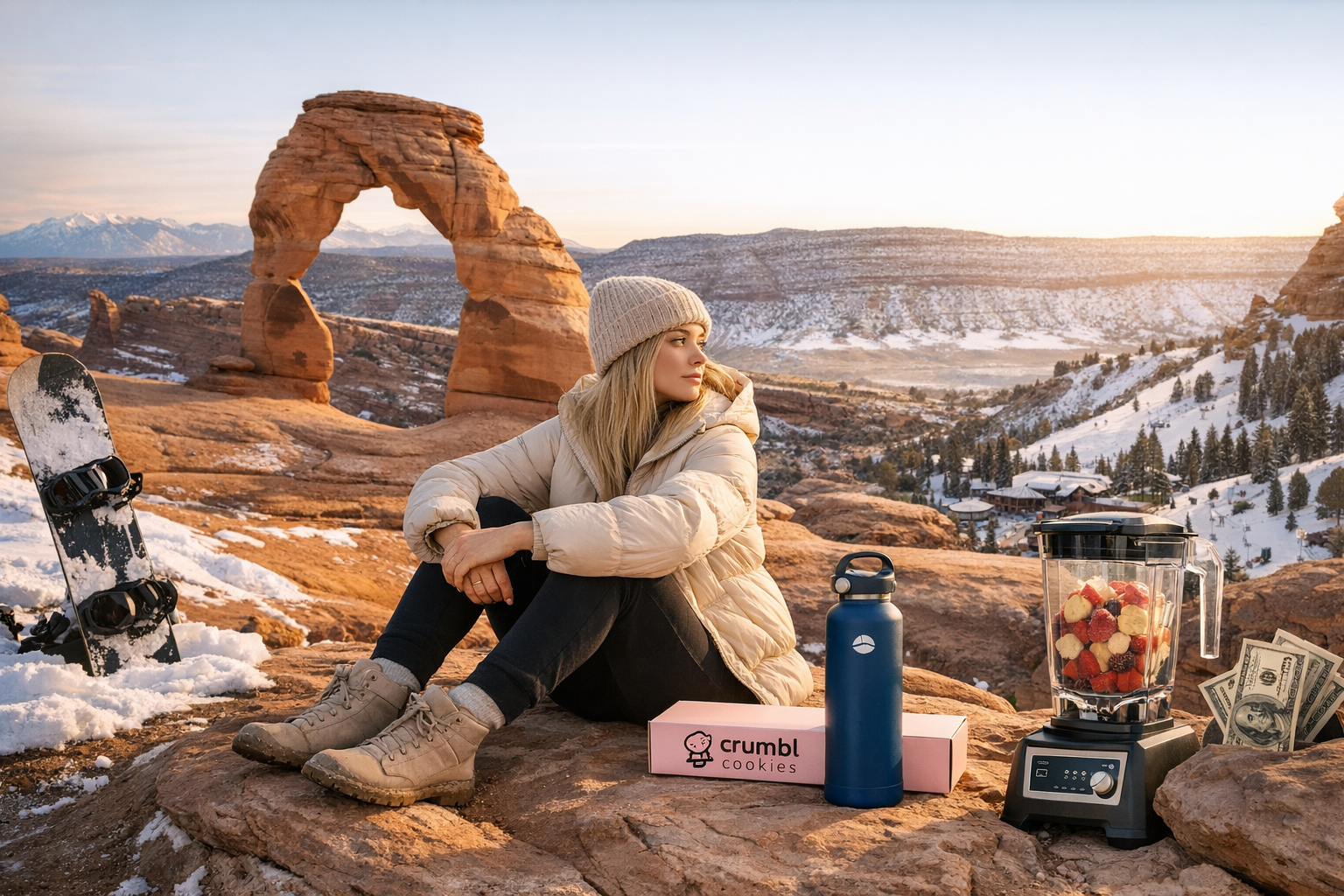
When most people think of Utah, they think of red rock canyons, world-class ski resorts, and the Great Salt Lake. What they don't think about is that this mountain-flanked state in the heart of the American West has quietly become one of the most fertile brand-building environments in the country — producing everything from a cookie company that broke the internet to a blender brand that went viral on YouTube before "going viral on YouTube" was even a thing. Utah's brand story is one of the most surprising in America, and its consumer market is one of the most misunderstood.
This is the third entry in Ritner Digital's State by State Brand Series. Welcome to the Beehive State.
The Brands That Made Utah
Crumbl Cookies — Logan, UT (Est. 2017)
No brand in recent Utah history has exploded onto the national stage quite the way Crumbl has. Crumbl was created in Logan, Utah, in 2017 by cousins Jason McGowan and Sawyer Hemsley. It expanded quickly across Utah and soon enough into other states. Now in 2025, it's a nationwide trend and has even expanded into Canada. ABC4
The Crumbl model is a masterclass in social-first brand building. The oversized, rotating weekly menu of specialty cookies was purpose-built for the era of TikTok and Instagram sharing — the pink box is as recognizable as the cookies inside it. Social media users recognize the cookies from several recent trends, including a collaboration with the Kardashian-Jenner family that garnered mixed reviews from influencers on TikTok and Instagram. They've also teamed up with artists like Olivia Rodrigo and Benson Boone to create cookies for tours and to celebrate new music releases. ABC4
What Crumbl proved is that you don't need a century of brand history to build a loyal following — you need a product that photographs well, a rotating hook that keeps people coming back, and a social strategy that treats every new flavor drop like a product launch. It's a model that's now being studied by food brands across the country.
Kodiak Cakes — Salt Lake City, UT (Est. 1995)
Before protein pancakes were a cultural trend, Kodiak Cakes was doing it from Utah. The company started from humble beginnings back in 1995 in Salt Lake City. Two young Utah brothers, Jon and Joel Clark, decided to take their mother's wheat pancake recipe and turn it into an easy add-water-only mix that they could sell. KSL The road from that family recipe to national grocery dominance wasn't straight — the brothers spent years struggling to get traction — but Kodiak eventually became one of the great CPG comeback stories of the last decade, ultimately landing a Shark Tank appearance that catapulted the brand to mainstream awareness.
The brand's success is deeply tied to Utah's wellness and outdoor culture. A high-protein, whole-grain pancake mix that fuels morning adventures before hitting the slopes is a product that practically markets itself to the Utah consumer. Zac Efron's latest business endeavor is joining the Kodiak Cakes team as their chief brand officer. KSL That kind of celebrity partnership signals a brand that has moved well beyond the regional grocery shelf and into full lifestyle brand territory.
1-800 Contacts — Draper, UT (Est. 1992)
Utahn Jonathan Coon was an undergraduate at BYU when he realized that getting prescription contacts took much longer than receiving prescription lenses. Frustrated with the process, he decided to fix that problem and started a small business out of his dorm room in 1992. BYU rules prohibited him from publishing his room's telephone number, so he went out and secured his own: 1-800-CONTACTS. The company started out by making about $500,000 in 1995. According to a 2020 Bloomberg article, the company was purchased for more than $3 billion. The company remains headquartered in Draper. KSL
This is a quintessential Utah startup story — a student at a religious university solving a real problem with determination and a phone number. The brand pioneered direct-to-consumer prescription eyewear delivery decades before the DTC model became a startup buzzword, and did it from a dorm room in Provo.
Skullcandy — Park City, UT (Est. 2003)
According to a press release from Skullcandy, the popular headphones brand was born on a chairlift in Park City in 2003. The company is now headquartered in that same city. Skullcandy calls itself "the original, irreverent, lifestyle audio brand," and says that it is on a mission to "amplify experiences while unleashing creativity on the mountains, beaches, and streets." ABC4
Grounding itself in counterculture and street style, Skullcandy quickly became the global go-to brand for hip headphones. Since 2015, all revenue from Skullcandy headphones sold in Park City has been donated to support arts, sports and other community programs. KSL In March 2025, famous skateboarder Tony Hawk joined Skullcandy as a brand ambassador, with Skullcandy's VP of Brand stating: "Tony represents everything Skullcandy stands for — fearless expression, lasting impact, and love for the lifestyle." ABC4
The chairlift origin story is perfect. No amount of brand strategy could manufacture that — a headphone company conceived on a ski lift in one of America's premier mountain towns, serving an audience that lives between the mountain and the street. That is Utah in brand form.
Blendtec — Orem, UT (Est. 2001)
Long before brands understood content marketing, Blendtec invented it. Utahn Tom Dickson launched wildly popular YouTube videos called "Will It Blend?" that garnered millions of views in a matter of days. In the videos, he puts random — yet sturdy — objects into the Blendtec and condenses them to a pile of blended dust. Some of those items include iPhones, hockey pucks, and glow sticks. Companies like Starbucks and Jamba Juice immediately requested the machines. KSL
"Will It Blend?" is one of the most effective viral marketing campaigns in internet history — years before brands even had playbooks for that kind of thing. Blendtec didn't go viral because a social media agency planned it. It went viral because someone had a genuinely funny idea and executed it without overthinking it. That's a Utah brand energy: practical, inventive, and not worried about what the coasts think.
Owala — Lehi, UT (Est. 2020)
25 years ago, Steven Sorensen invented the BlenderBottle, a bottle with a small metal ball inside that worked as an internal whisk. Alongside his wife, the couple founded Trove Brands, headquartered in Lehi, Utah. Steve Sorensen's most recent creation is the popular Owala water bottle, especially popular among teens and young adults. The Owala brand was founded in March 2020. In 2023, the Owala FreeSip water bottle was named as one of TIME's best inventions of the year. ABC4
In a market dominated by Stanley and Hydro Flask, Owala broke through on pure product design and social media momentum. The FreeSip — with its combined spout and straw and locking lid — became a Gen Z obsession practically overnight, built on organic recommendation and creator content rather than traditional advertising. It is a Utah-born product that followed the exact playbook modern brands aspire to.
Ancestry — Lehi, UT (Est. 1983)
Utah is no stranger to genealogy, but Ancestry transformed it from a niche hobby into a global phenomenon. With cutting-edge DNA testing and the world's most extensive collection of historical records, this Lehi-based company has helped people across the globe reunite with lost family, uncover their roots, and even solve mysteries generations in the making. What started as a small publishing company in the 1980s is now a tech-driven storytelling machine valued at over $4.7 billion. KSL
The Ancestry origin story is inseparable from Utah's cultural DNA. The state's deep roots in the Church of Jesus Christ of Latter-day Saints — which places profound importance on family history and genealogy — created a natural home for a company dedicated to connecting people with their ancestors. Ancestry didn't just build a product in Utah. It built a product that Utah was culturally primed to create.
Cotopaxi — Salt Lake City, UT (Est. 2014)
You can spot a Cotopaxi backpack from across the airport — bright, bold, unmistakable. But it's not just about looking good. Cotopaxi was founded with a social mission: to fight extreme poverty. Every purchase helps fund education, health and livelihoods for underserved communities around the world. KSL
Cotopaxi represents the newer wave of Utah brand building — purpose-driven, visually distinctive, and built for a consumer who wants their outdoor gear to stand for something. The brand has become a cult favorite among travelers, outdoor enthusiasts, and socially conscious consumers who want to look good while doing good.
Qualtrics — Provo, UT (Est. 2002)
It started in a basement — just a professor and his son trying to make academic research easier. But what they built was much bigger. Qualtrics quietly evolved from a survey tool into a revolutionary platform for experience management, helping companies like Microsoft, Under Armour and JetBlue understand what their customers, employees and users truly feel. By the time SAP acquired it for $8 billion in 2018, Qualtrics had redefined an entire category — and it did so without ever leaving Utah. KSL
Silicon Slopes: Utah's Secret Brand Engine
You cannot understand Utah's brand ecosystem without understanding Silicon Slopes. Salt Lake City, once primarily recognized for its picturesque landscapes and outdoor recreation, has rapidly transformed into a burgeoning tech hub known as the "Silicon Slopes." This evolution traces back to early tech pioneers like WordPerfect and Novell, and has since seen exponential growth. The term "Silicon Slopes" encompasses not just Salt Lake City but also extends to surrounding areas like Provo and Lehi — attracting tech companies due to an appealing combination of lower operational costs and high quality of life. Pure Utah
Utah ranks in the top 10 most innovative states in the U.S., with considerable government support for tech businesses. This business-friendly environment, combined with access to top talent from universities like the University of Utah and BYU, has created the Silicon Slopes ecosystem. Utah's tech scene offers something unique: the growth opportunities of Silicon Valley with the work-life balance and lower costs that allow both companies and employees to thrive. ProLink IT Solutions
In a state where 59% of residents describe themselves as active Mormons, the Church of Jesus Christ of Latter-day Saints has a presence in the startup scene as well. Many company founders are members, and the emphasis on family permeates many startups in the area. Some say the Mormon culture fosters a collaborative spirit among the area's tech community. The Seattle Times
What Silicon Slopes has produced is a startup culture that's distinct from both Silicon Valley and the East Coast tech corridor — more collaborative, more family-centered, and deeply rooted in the specific geography and cultural values of the state. That shows up directly in the brands being built here.
What Utah Consumers Are Actually Buying
A Young, Growing Population That Spends Differently
Utah is one of the youngest states in the country by median age, has one of the highest birth rates nationally, and has been among the fastest-growing states by population for years. This demographic profile shapes everything about what Utah consumers buy. Larger families mean more spending on food, children's products, outdoor gear, and home goods. Younger households mean heavier tech adoption, social-first brand discovery, and a higher tolerance for new products and brands.
Taxable sales in Utah grew nearly 5% year-to-date through mid-2025, according to the Salt Lake Chamber and the University of Utah's Kem C. Gardner Policy Institute. "Strong job creation and resilient consumer spending are fueling Utah's economic momentum," said Derek Miller, president and CEO of the Salt Lake Chamber. Deseret News
Utah continues to outperform the rest of the country on inflation, job growth, and state GDP. Employment in the state grew 2.3% year-over-year, outpacing the nation's 1% growth. Deseret News That economic momentum creates a consumer base that's spending with confidence even when national sentiment is cautious.
Outdoor Recreation Is a $9.5 Billion Economy — And a Consumer Category
Utah's outdoor recreation sector supports roughly 72,000 jobs and contributes $9.5 billion to the state's economy. Deseret News That's not a niche hobby. That's a defining economic and consumer force. Utah residents spend meaningfully on outdoor gear, ski equipment, hiking apparel, water bottles, performance food products, and everything else that powers an active outdoor lifestyle. Brands like Cotopaxi, Skullcandy, Kodiak Cakes, and Owala all owe a significant portion of their success to a Utah consumer who genuinely lives the lifestyle these products are built for.
The Wasatch Range serves as more than a prominent background to Salt Lake City's stunning skyline — it also houses top universities and creates a hotbed for the next generation of innovators. Combined with one of the youngest populations among large metros in the nation and a strong community, it creates fertile ground for innovation. TechBuzz News
The Faith Factor in Consumer Behavior
Utah's large LDS population shapes consumer behavior in ways that marketers regularly underestimate. The Word of Wisdom — a health code followed by observant members of the Church of Jesus Christ of Latter-day Saints — discourages alcohol, tobacco, coffee, and tea. This has real, measurable effects on the Utah consumer market. Alcohol sales per capita in Utah are among the lowest in the nation. Coffee shop culture operates differently here. Non-alcoholic beverages, sparkling waters, and flavored drink products have outsized market penetration compared to national averages.
This also shapes food brand opportunities. Products that are clean-label, health-forward, and family-friendly outperform in Utah in ways that don't necessarily predict performance nationally. Kodiak Cakes, Just Ingredients, and Beehive Meals — all Utah-born — reflect a consumer base that wants food products aligned with a health-conscious, family-first value system.
The Cookie Wars and What They Tell Us About Utah Consumers
What's come to be known as the Utah Cookie Wars began when Crumbl filed suit against competitors Dirty Dough and Crave, claiming IP infringement. When the lawsuit hit, competitor Dirty Dough had 90 franchise sales — but over the following eight or nine months, they sold more than 300. "It's not because Crumbl sued us but because of our reaction. It gave us the attention we needed," said Dirty Dough founder Bennett Maxwell. Utah Business
The fact that Utah has its own Cookie Wars — a legitimate competitive market for large-format specialty cookies — tells you something important about this consumer base. Utah residents adopt local brands enthusiastically, return loyally, and generate word-of-mouth at a rate that few markets can match. The young, family-dense, community-oriented demographic creates natural virality for food brands in particular.
The Social Commerce Advantage
Utah's tech-savvy, young consumer base is among the most active in the country when it comes to social media-driven purchasing. The Silicon Slopes culture has created a state full of early adopters — people who discovered Owala from a TikTok, bought Crumbl because they saw it in someone's Instagram story, or found Cotopaxi through a travel creator. Many younger families are turning to Utah to settle down and lay their family roots, bringing with them digital-native shopping behaviors and a preference for brands that show up in their content feeds. TechBuzz News
For brands marketing to Utah consumers, social-first strategy isn't optional — it's the primary channel of brand discovery for a significant portion of the population.
What Makes Utah's Brand Ecosystem Unique
The startup loop. Utah produces brand founders who are consumers of other Utah brands. The Silicon Slopes community is tight-knit, collaborative, and mutually supportive in ways that create genuine grassroots momentum for local companies. When a Crumbl franchise opens near a Silicon Slopes campus, it fills immediately — not because of national advertising but because of the organic enthusiasm of a community that roots for its own.
Family scale drives volume. Larger average household sizes mean Utah consumers buy more of everything — more food, more outdoor gear, more kids' products, more vehicles. Brands that understand this and build product lines and value propositions around the family unit rather than the individual consumer are consistently better positioned in this market.
Values alignment matters enormously. Utah consumers reward brands that align with their values — family, community, health, and an active lifestyle. They also notice when brands feel tone-deaf to those values. Marketing that works in New York or LA doesn't automatically translate to Salt Lake City. The humor, the imagery, the cultural references, and the product positioning all need to reflect an understanding of what life in Utah actually looks like.
The outdoor identity is non-negotiable. Famously, many transplants find Utah easy to love because of the access to abundant, year-round outdoor recreational activities. Aumni That outdoor identity isn't just a lifestyle perk — it's a consumer filter. Brands that align with it earn an automatic credibility boost. Brands that ignore it miss a core element of what makes Utah consumers tick.
The Marketing Takeaway for Brands in Utah
Utah is one of the most exciting consumer markets in the country precisely because it's so different from the coastal markets that dominate most national brand conversations. Young, growing, values-driven, and deeply community-oriented, Utah consumers are early adopters who become fierce loyalists when a brand earns their trust.
The brands that have thrived here — Crumbl, Kodiak, Owala, Cotopaxi, Skullcandy — share a common thread: they built products that genuinely fit the Utah lifestyle, then let the community carry them. None of them broke through on traditional advertising alone. They broke through because Utah consumers found them, loved them, and told everyone they knew.
That's the Utah brand advantage in a sentence: build something real for this community, and the community will build the brand for you.
Ritner Digital helps brands build smarter, more targeted marketing strategies at the local, regional, and national level. Want to talk about what your brand could look like in the Beehive State? Let's connect.
Sources: KSL, ABC4 Utah, Deseret News, Utah Business, Silicon Slopes, TechBuzz News, Choose Utah, Salt Lake Chamber / Kem C. Gardner Policy Institute, BLS, Utah Division of Outdoor Recreation
Frequently Asked Questions
Why has Utah produced so many successful consumer brands in such a short period of time?
Several forces converge to make Utah unusually fertile for brand building. The Silicon Slopes tech ecosystem has created a culture of entrepreneurship that rewards risk-taking and celebrates founders. The large, young, family-dense population provides a built-in test market of enthusiastic early adopters who spread word-of-mouth organically. The LDS community creates a collaborative, trust-based business culture where founders actively support each other. And the state's outdoor identity generates constant demand for gear, food, and lifestyle products that fit an active way of living. Add a lower cost of doing business than coastal hubs and access to strong university talent pipelines, and you have a compounding advantage that's still accelerating.
How does the LDS faith influence what Utah consumers buy?
More than most national marketers realize. The Word of Wisdom, a health code followed by observant members of the Church of Jesus Christ of Latter-day Saints, discourages alcohol, tobacco, coffee, and tea. This meaningfully suppresses demand in those categories while creating outsized opportunities in non-alcoholic beverages, clean-label food products, and health-forward brands. Utah's per capita alcohol consumption is among the lowest in the nation. Specialty soda shops — a uniquely Utah phenomenon — have exploded in popularity as a social and sensory substitute for bar culture. Family-sized packaging, value-forward pricing, and wholesome brand messaging also perform better here than in most other states. Brands that ignore these dynamics tend to waste budget on positioning that simply doesn't land.
What is Silicon Slopes and why does it matter for marketers?
Silicon Slopes is the informal name for Utah's tech corridor, running roughly from Salt Lake City through Provo and Lehi. It's one of the fastest-growing tech ecosystems in the country, home to companies ranging from early startups to established names like Qualtrics, Ancestry, and 1-800-Contacts, with major offices from Adobe, Microsoft, and Oracle nearby. For marketers, Silicon Slopes matters because it's created a state full of tech-savvy, digitally native consumers who adopt new products early, discover brands through social media, and have the disposable income that comes with working in a high-growth industry. It's also created a founder community that cross-pollinates constantly — Utah brands are often discovered first by the people building the next Utah brand.
Why did Crumbl Cookies become such a massive national brand so quickly?
The product was purpose-built for the social media era without anyone necessarily planning it that way. The oversized cookies, the rotating weekly menu, the signature pink box, the dramatic unboxing experience — all of it photographs and videos beautifully. Each weekly flavor drop functions like a product launch, giving fans a recurring reason to share content. The brand's collaborations with celebrities and musicians added cultural currency at exactly the right moments. And the franchise model expanded physical access fast enough that the social buzz didn't outrun the product availability. Crumbl succeeded because the product, the packaging, and the distribution strategy all aligned perfectly with how younger consumers discover and share brands in 2025.
How is outdoor recreation shaping what Utah consumers spend money on?
Profoundly. With $9.5 billion contributed to the state economy by outdoor recreation and 72,000 jobs tied to the sector, this isn't a hobby for Utah residents — it's infrastructure. Utah consumers budget for ski passes, trail gear, hydration products, performance apparel, and outdoor food products in ways that most other states simply don't. Brands like Skullcandy, Cotopaxi, and Owala owe meaningful portions of their success to a Utah consumer base that lives the lifestyle these products are built for. For CPG and apparel brands entering the Utah market, alignment with outdoor recreation isn't just good marketing — it's a basic credibility requirement.
What's the biggest mistake brands make when marketing to Utah consumers?
Treating Utah like a smaller version of California or a generic middle-American market. It's neither. Utah has a specific cultural identity — shaped by faith, family structure, outdoor recreation, and a tight-knit entrepreneurial community — that requires genuine understanding, not a slightly adjusted national campaign. Brands that use alcohol-centric imagery, assume nuclear family skepticism, lean on irony-heavy humor, or ignore the outdoor identity of the state tend to underperfom badly. The brands that win here show up with products and messaging that feel like they were made for this community, even if they weren't.
Are Utah consumers actually brand loyal, or do they just chase the next new thing?
Both — but in sequence. Utah consumers, particularly the younger demographic, are enthusiastic early adopters who will try something new based on a social recommendation or a community buzz. But when they love something, they become deeply loyal and vocal advocates. The Crumbl phenomenon, the Owala obsession, the Kodiak Cakes fanbase — all of these are built on communities of genuine repeat customers who actively recruit friends and family into the brand. Utah's community-oriented culture means that brand loyalty isn't just individual — it's social. When a brand earns the trust of one Utah household, it often earns access to an entire network.
How does Utah's young population affect brand strategy compared to older states?
It shifts almost everything. Younger consumers mean social media is the primary channel of brand discovery, not television or print. It means larger household sizes and more volume-based purchasing. It means a preference for brands that align with values rather than just delivering functional benefits. It means faster adoption cycles but also faster abandonment if the brand experience disappoints. For brands used to marketing in states with older median ages and more established purchasing patterns, Utah requires a recalibration toward speed, authenticity, and community — and away from the slower-burn brand-building approaches that work in more demographically mature markets.
What categories are most underdeveloped for brands in the Utah market?
Non-alcoholic social beverages is the most obvious gap — and it's already being filled by the specialty soda shop explosion that's unique to Utah. Clean-label, family-sized food products remain an underserved opportunity, particularly in the health and performance food space where Kodiak Cakes blazed the trail. Purpose-driven outdoor brands with genuine environmental and community commitments — like Cotopaxi — continue to find receptive audiences. And any brand that can serve the large family household unit with products designed for scale rather than the individual consumer has a structural advantage in a state where the average household size is meaningfully higher than the national average.