Proudly Philly, Built for Everyone: The Brands That Kept Their Roots and Still Conquered New Markets
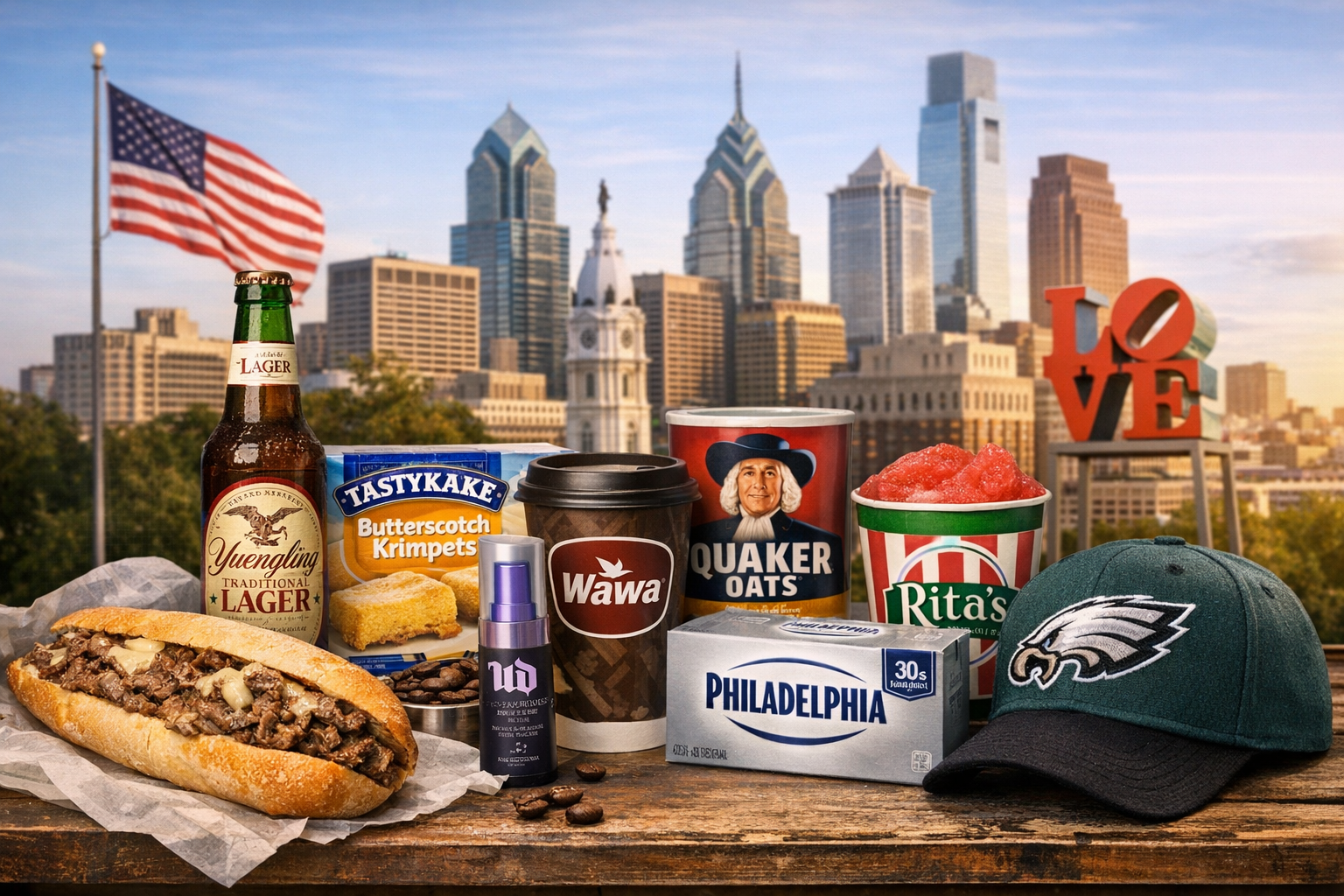
There is a particular kind of brand confidence that comes from knowing exactly where you're from.
Not the kind that retreats into regionalism — the "local" badge worn as a limitation, a reason to stay small, a substitute for ambition. The kind that treats origin as advantage. That wears its hometown loudly while building something the whole country, and sometimes the whole world, wants a piece of.
Philadelphia has produced more of these brands than it usually gets credit for. Some of them are so embedded in daily Philly life that it's easy to forget they operate at national or global scale. Others built their national identity so intentionally that the Philadelphia origin became part of what made them compelling outside the region.
All of them contain lessons — about brand identity, about the relationship between place and scale, about what it actually means to stay true to where you came from while building something that travels. And for Philadelphia businesses watching their city transform around them, those lessons are directly applicable.
Wawa: The Brand That Made "Local" a Competitive Moat
No brand in Philadelphia's identity is more totemic than Wawa. Mention it outside the region and you get one of two reactions: the recognition of someone who grew up here and immediately feels something, or the baffled curiosity of someone who has heard the devotion described but never experienced it.
That divide is not an accident. It's a brand strategy — even if it emerged organically rather than by design.
Wawa operates stores across more than a dozen states including Pennsylvania, New Jersey, Delaware, Maryland, Virginia, Florida, Georgia, North Carolina, and Washington D.C. Wikipedia By any conventional measure, it's a large regional chain trending toward national. But its brand identity has never tried to become generic to accommodate that growth. The hoagie is still the hoagie. The coffee is still the coffee. The cult around Hoagie Day still exists. The brand's expansion has been done without diluting the thing that makes people feel something about it.
This is harder than it sounds. Most brands that expand geographically do so by smoothing their edges — by becoming more neutral, more legible to audiences without the cultural context that made the original audience love them. Wawa has largely resisted this, maintaining the specific character of a brand that belongs to a particular place while making that specificity attractive enough that new markets adopt the devotion rather than requiring the brand to abandon it.
The lesson isn't "be Wawa." It's that authentic regional identity — when it's genuine rather than performed — can be a differentiator in national expansion rather than an obstacle to it. The people in Florida who become Wawa devotees aren't despite the brand's Philly-ness. They're often because of it. There's something compelling about a brand that clearly comes from somewhere and doesn't pretend otherwise.
URBN: A Global Empire Built on Philadelphia Authenticity
Urban Outfitters opened its first store in West Philadelphia in 1970 as a single small shop called Free People, selling clothing and housewares to University of Pennsylvania students. URBN What it has become since is one of the most instructive brand-building stories in American retail.
URBN is now a $3.4 billion global company, a family of lifestyle brands that rings the world — Urban Outfitters, Anthropologie, Free People, Terrain, BHLDN, and more — with over 500 stores globally and more than 30 percent of revenue coming from online and catalog sales. Philadelphia Magazine
And yet the company never left Philadelphia. URBN's headquarters campus sprawls across multiple historic buildings at the Philadelphia Navy Yard — 280,000 square feet of office and design studio space housed in former shipbuilding machine shops, iron plating facilities, and commander's offices, all carefully restored to maintain the layered history of the place. Blrck
Most of the decisions on product mix, store footprint, visual identity, and business strategy have been made in this city, by artists, marketers, and executives who are either from the region or were lured here from other places including fashion capitals like New York and Los Angeles. Before there was a tech scene here, before designers and coders packed co-working spaces in Fishtown, URBN brought creative talent to Philadelphia. Philadelphia Magazine
This matters for brand identity in a specific way. URBN's aesthetic — the layered history, the exposed brick, the respect for original materials, the preference for repurposed spaces over new construction — is the Philadelphia Navy Yard expressed as a design philosophy. The company didn't just stay in Philadelphia while building a global brand. It let Philadelphia shape the brand's visual and cultural DNA in ways that have proven to have universal appeal.
Anthropologie's first standalone store opened in a refurbished automobile shop in Wayne, Pennsylvania. The brand's signature look — stripping paint to its original layer, exposing brick walls, using original features as displays — grew directly from the founders' approach to preserving rather than transforming the spaces they worked in. URBN That aesthetic, born from a Philadelphia sensibility, became the thing that people around the world fell in love with.
The lesson: when your local environment is genuinely distinctive, building your brand's aesthetic around it rather than away from it creates something that carries meaning precisely because it comes from somewhere real.
honeygrow: Philadelphia Fast-Casual With National Ambitions
honeygrow started in Philadelphia in 2012 with a straightforward premise — fresh, customizable stir-fry and salads made with locally sourced ingredients, fast enough for a weekday lunch but good enough that you'd choose it over a sit-down meal.
The brand is now in a deliberate expansion push to become more national, with new locations continuing to open across multiple markets as the company builds out its footprint beyond its Philadelphia base. The Philadelphia Inquirer
What's notable about honeygrow's brand identity is that it has never tried to obscure its Philadelphia origin. The brand's voice, its aesthetic, its community-forward positioning — all of it carries the specific character of a company that was built in and for a particular kind of urban environment, then proved that character traveled.
This follows a pattern that some of the most durable restaurant brands have followed: build something genuinely great in one city, let the identity of that city become part of the brand's story, and expand knowing that the origin is an asset rather than a liability. "Born in Philadelphia" means something — it signals a certain kind of grit, a certain relationship with quality, a certain no-nonsense approach to food that doesn't trade on pretension.
Comcast: The Philly Giant That Wears the City on Its Sleeve
Comcast is the most prominent example of a Fortune 500 company that has made Philadelphia central to its brand identity rather than incidental to it. The company ranked 35th on the 2025 Fortune 500 with approximately $123.7 billion in revenue The Philadelphia Inquirer — and its presence in Philadelphia is physical, civic, and unmistakable. The Comcast Technology Center tower stands as one of the tallest buildings in the city. The company's name is on the Eagles' stadium. Its investment in Center City is continuous and visible.
This is a deliberate choice. Comcast could operate from Philadelphia without making its Philadelphia identity so prominent. Instead it has leaned into the association — sponsoring civic infrastructure, investing in neighborhood development, making the company's relationship with the city a core part of its public story.
For a company that operates in markets across the country, the Philadelphia identity functions as a grounding mechanism. It answers the "where do you come from" question with a clear, specific, prideful answer. And in a media landscape where corporate identity often feels placeless and generic, having a genuine hometown is a brand asset.
Dietz & Watson: Authentically Philly, Available Everywhere
Dietz & Watson is about as Philly as it gets — a deli meat and cheese brand that is a staple in South Philadelphia Italian households and a fixture at Eagles tailgates. Tag Strategies It's also available in grocery stores across the country, competing at national scale against far larger consumer packaged goods companies.
The brand's competitive advantage has always been authenticity. It doesn't position as a national brand that happens to make cold cuts. It positions as a Philadelphia brand that makes cold cuts the right way — with the kind of commitment to quality that the Italian immigrant tradition it came from demanded. The regional identity is the premium signal. "Made in Philly" carries specific connotations about food quality and tradition that give the brand permission to charge more than commodity competitors and earn the loyalty of customers who aren't from the area but respond to the story it tells.
This is the CPG application of the same principle that URBN demonstrated in retail: when your origin is genuinely distinctive and your product is genuinely good, leaning into the provenance creates a brand story that travels.
The URBN Portfolio Brands Separately: Free People and Anthropologie
Worth noting independently from the URBN parent story are Free People and Anthropologie — both global brands that most of their customers in New York, Los Angeles, London, and Paris likely don't know are Philadelphia companies.
Anthropologie was born when founder Dick Hayne recognized that URBN's original customer was entering a new life stage and built a lifestyle brand catering to creative, educated, and thoughtful women — opening its first standalone store in a refurbished automobile shop in Wayne, Pennsylvania in 1992. URBN
Today Anthropologie operates more than 200 stores around the world, known for its magically immersive spaces that invite customers to wander, explore, and be inspired. URBN
That immersive retail philosophy — the experience of walking into an Anthropologie store anywhere in the world — was developed and refined in Philadelphia. The design teams work from historic buildings at the Navy Yard. The aesthetic that defines the brand globally was shaped by a company rooted in a city with deep history, distinctive architecture, and a particular sensibility about the relationship between old things and new uses.
Customers in Tokyo or London experiencing the Anthropologie aesthetic are experiencing something that was made in Philadelphia, even if they don't know it.
What These Brands Have in Common — And What It Means for Yours
Looking across this group, the pattern that emerges isn't "they stayed local." Most of them are anything but local in their reach. The pattern is something more specific and more actionable.
They Treated Origin as Identity, Not Limitation
Every brand on this list made a choice — often counterintuitive by conventional marketing wisdom — to keep Philadelphia visible in their story rather than neutralizing it for broader appeal. The assumption that "going national" requires becoming generic is one of the most common mistakes growing brands make. These companies demonstrated the opposite: the specificity of origin, when it's genuine and when the product merits it, becomes more appealing at scale, not less.
Their Local Identity Was Backed by Real Quality
The pride in origin works because the product or experience warrants it. Wawa's devotion is real because the food is genuinely good and the experience is genuinely consistent. URBN's Philadelphia roots carry weight because the brands built on those roots are genuinely exceptional. Dietz & Watson's authenticity claim holds because the product genuinely reflects the tradition it claims. Local identity without product quality is just a story. Product quality with local identity is a brand.
They Built Physical Identity Into Their Brands
URBN restored shipbuilding machine shops to house its design studios. Wawa built its largest flagship in Center City with murals celebrating Philadelphia. Comcast put its name on a stadium and built skyscrapers in the skyline. These aren't just operational decisions. They're brand decisions — commitments to a place that signal permanence, investment, and genuine belonging to a community rather than presence in a market.
For smaller Philadelphia businesses, this principle translates directly: the way you present your business physically and digitally should communicate where you're from with pride. Photography that captures the actual city. Language that reflects the actual community. References that signal genuine rootedness rather than generic "we love our city" boilerplate.
They Used Scale to Amplify the Story, Not Replace It
None of these brands abandoned their Philadelphia identity when they got big. They used scale to tell that story to more people. A honeygrow in Chicago is still a Philadelphia concept. An Anthropologie in London still carries the design DNA of a company rooted in Wayne and the Navy Yard. Wawa in Florida is still, unmistakably, Wawa.
This is the lesson that applies most directly to Philadelphia businesses with growth ambitions: the right approach to scaling isn't to sand off the edges that make you specific. It's to make your specific identity compelling enough that it travels. That requires being genuinely clear about what your brand stands for, where it comes from, and why that matters — and then communicating it with enough conviction that people outside your original market understand and feel it.
The Implication for Philadelphia Businesses Right Now
Philadelphia is in a moment of genuine transformation. New residents are arriving. New employers are anchoring. New investment is reshaping neighborhoods. The audience for Philadelphia businesses is getting larger and more diverse simultaneously.
This is exactly the context in which strong local brand identity becomes more valuable, not less. In a city growing fast, the businesses that know who they are and where they come from have an advantage over the ones scrambling to figure out their identity on the fly. The brands that have built something durable — a voice, a set of values, an aesthetic that reflects genuine commitment to this city — have something to offer new arrivals that can't be faked or rushed.
You don't need to be Wawa or URBN to apply this principle. You need to know what makes your business specific to Philadelphia, communicate that with conviction, and build a digital and marketing presence that reflects the same quality and intentionality that the best Philadelphia brands have always brought to their work.
The city is building at scale. The brands that will grow with it are the ones that are proudly, specifically, unapologetically from here — and confident enough in that identity to take it everywhere.
Ritner Digital is a Philadelphia agency built by people who live here, serve businesses here, and believe in what this city is becoming. If your brand isn't telling that story as well as it should be, let's work on it together.
Frequently Asked Questions
Does having a strong local identity actually help when trying to reach customers outside Philadelphia?
Yes — and consistently more than businesses expect. The instinct when scaling is to neutralize regional identity so you don't alienate people who don't share the cultural context. What the most successful Philadelphia brands have demonstrated is the opposite: genuine specificity is more compelling to outside audiences than generic positioning, not less. People respond to brands that clearly come from somewhere and aren't pretending otherwise. The Wawa devotee in Florida isn't put off by the brand's Philadelphia roots — they're drawn in by the conviction of a brand that knows exactly what it is. The goal isn't to make your Philadelphia identity invisible when you expand. It's to make it attractive enough that new audiences adopt it.
We're a small business, not a national brand. Is any of this relevant to us?
The scale is different but the principle is identical. A Philadelphia law firm, contractor, restaurant, or service business that communicates genuine rootedness in this city — through its voice, its visual identity, its marketing, its community involvement — builds a different kind of trust than one that presents itself as generic and interchangeable. Especially right now, as thousands of new residents arrive in Philadelphia without established relationships with any local business, a brand that clearly belongs here and clearly stands for something specific has an advantage over one that looks like it could be anywhere. You don't need 500 stores to benefit from strong local brand identity. You need conviction about who you are and the discipline to communicate it consistently.
What does it actually look like to build a "proudly Philadelphia" brand identity in practice?
It means making deliberate choices at every touchpoint that signal genuine belonging to this city rather than generic "we love our community" boilerplate. Photography that captures real Philadelphia — the architecture, the neighborhoods, the people — rather than stock images that could be anywhere. Language that reflects how people actually talk here, not the sanitized corporate voice that smooths everything flat. References to real local history, real local context, real local relationships rather than hollow gestures. A willingness to take positions on things that matter to the city. The brands that do this well don't feel like they're performing Philadelphia. They feel like they are Philadelphia — and that authenticity is what creates the loyalty that generic brands can never buy.
Why do so many Philadelphia brands keep their headquarters here even after they've scaled nationally?
Because the city is genuinely part of what makes them work. URBN didn't stay at the Navy Yard purely out of sentiment — the physical environment, the creative talent it attracts, the aesthetic sensibility of the place is woven into the product the company makes. Comcast's civic investment in Philadelphia isn't just PR — it's the expression of a company that understands its identity is bound up with a specific place. For brands that have built their identity around genuine Philadelphia roots, leaving would be a brand decision as much as an operational one. It would signal that the origin was always incidental rather than essential — and audiences, particularly loyal ones, would notice. Staying is a statement about what the brand believes about itself.
Wawa seems to have scaled while keeping its identity intact. How do you do that without the brand getting diluted?
By deciding that the core of the brand is non-negotiable before expansion begins, not after. Wawa's product standards, its store experience, its relationship with the communities it enters — these aren't things that get negotiated away to make expansion easier. The brand expands on its own terms, which means the experience in a new market is recognizably Wawa rather than a diluted version of it. Dilution happens when businesses treat their identity as a starting point to be modified for each new market rather than a standard to be maintained across all of them. The practical application for any growing business is to identify the two or three things that are genuinely non-negotiable about your brand experience and protect them fiercely regardless of the pressure to compromise for growth.
Is it possible to be too Philadelphia in your branding — to the point where it limits your appeal?
It's possible but less common than the opposite problem, which is being too generic. The risk of leaning heavily into local identity is that it can feel exclusionary to people without the cultural context — insider references that land perfectly for a South Philly native and confuse everyone else. The way to avoid this is to use local identity as a foundation rather than a filter. The story of where you came from and what this city means to you should be accessible and compelling to someone who just moved here and is learning the city for the first time, not just to people who have been here for decades. The best Philadelphia brand stories are ones where the local specificity creates curiosity and belonging in new audiences rather than shutting them out.
What's the marketing lesson from Anthropologie and Free People being Philadelphia brands that most of their customers don't know are Philadelphia brands?
That origin doesn't have to be front and center in every piece of communication to be doing important work. Anthropologie doesn't put "Made in Philadelphia" on every hang tag — but the design philosophy that came from a company rooted in a city with extraordinary architectural history and a particular sensibility about old things and new uses is evident in every store. The Philadelphia identity shaped the product deeply even if it isn't explicitly marketed. For businesses that aren't in consumer-facing categories where local provenance is an obvious selling point, this is the applicable model: let where you're from shape how you think, how you design, how you build, and how you hire — and the authenticity will come through in the work even without explicit promotion. Origin as operating philosophy rather than marketing claim.
How should a Philadelphia business think about building its brand identity right now given how fast the city is changing?
With urgency and with confidence. The city is growing, new audiences are arriving, and the competitive landscape for local businesses is expanding simultaneously. This is exactly the moment when having a clear, specific, well-communicated brand identity matters most — because the new Philadelphia resident choosing between ten businesses they don't know anything about yet will gravitate toward the one that has something distinct and credible to say about who it is. Build the brand now, while the opportunity to shape first impressions is wide open. The businesses that know exactly who they are and communicate it with conviction will earn the loyalty of the new Philadelphia in ways that the ones still figuring it out simply won't.
Ritner Digital builds brand identity and marketing for Philadelphia businesses that are ready to grow — locally and beyond. Let's build something worth being proud of.