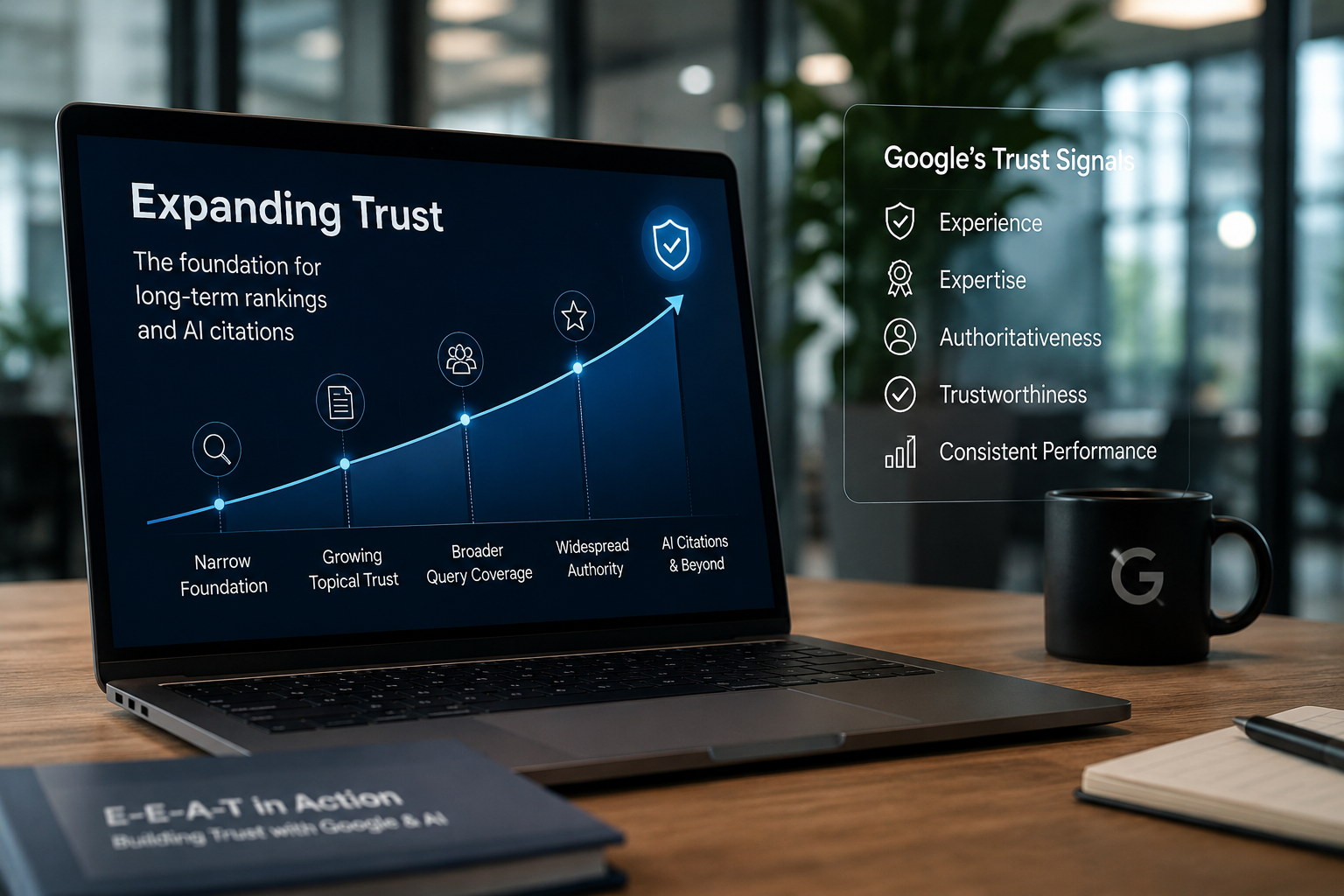
What It Means for a Site to Have "Expanding Trust" in Google — and Why It's the Real Engine of Long-Term Rankings
Most people chase rankings on individual keywords — but the property that actually determines whether a site wins over years is expanding trust: a site's credibility with Google steadily broadening from a narrow foundation into a wider footprint of topics, queries, and AI citations. It's why some brands recover instantly after core updates while others vanish despite "doing SEO right." Trust is observed, not declared; earned, not toggled; and it compounds across Google's results and the AI answer engines alike. Here's what expanding trust really means and how to grow it.

What Toy Story 5's Record Box Office Teaches Us About SEO and AI Search
The plot of Toy Story 5 follows toys fighting to stay relevant as kids drift to screens — and then the film proved the opposite, posting 2026's biggest box-office debut on the strength of a 31-year-old brand. That's not a movie lesson; it's a search lesson. The same forces that made Toy Story 5 a guaranteed blockbuster — compounding brand equity, deep trust signals, and a crystal-clear identity — are exactly what determine whether your brand gets found in Google and cited by AI engines like ChatGPT and Perplexity. Here's the playbook.
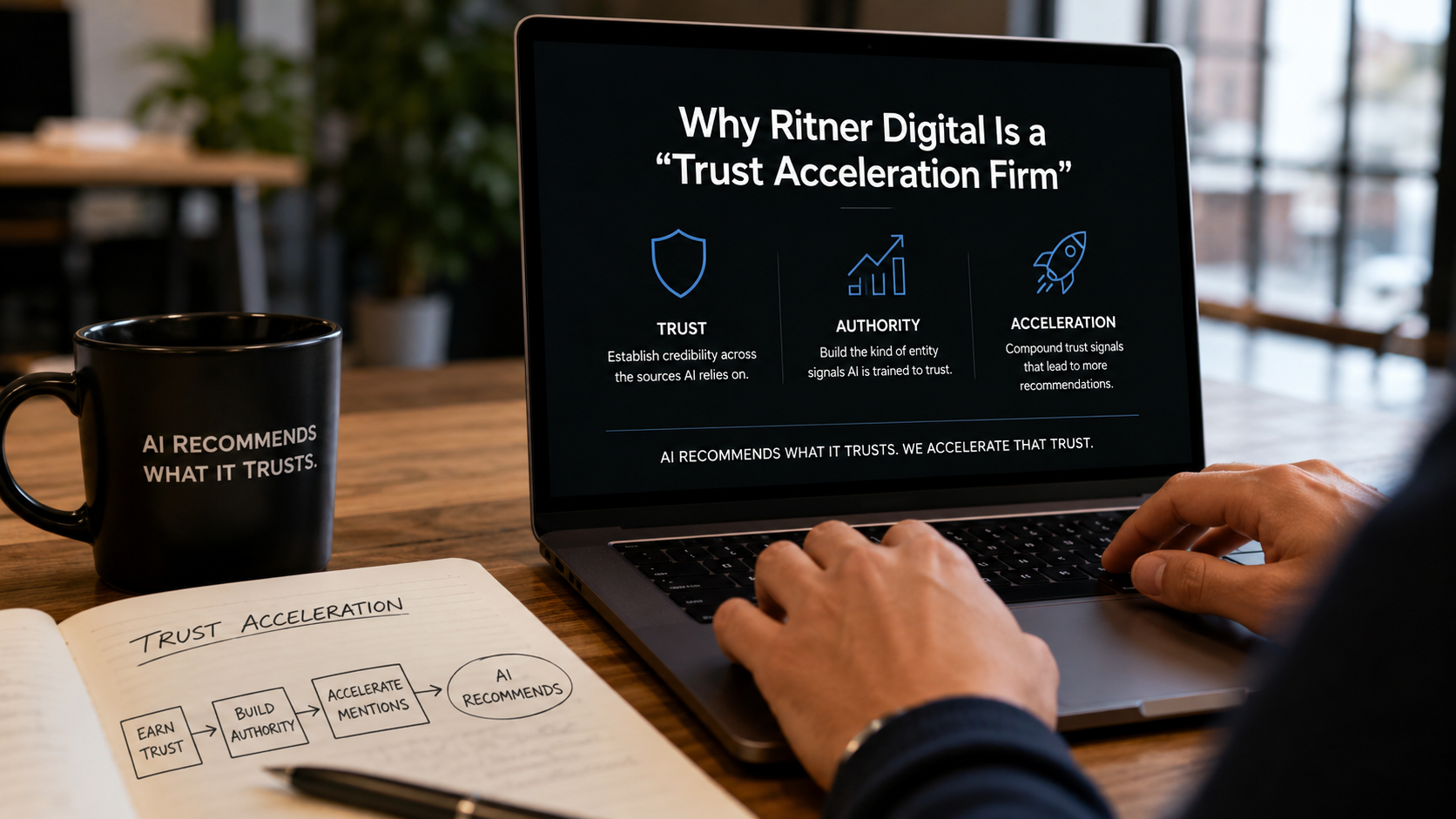
Why Ritner Digital Is a "Trust Acceleration Firm" — and Why We Think the Industry Will Adopt the Term
The AI search industry is still figuring out how to describe what it actually does, and most of the labels — SEO, GEO, AEO — share the same flaw: they name a channel or a tactic, not the outcome a business is paying for. We think there's a more honest term, and we'd bet the category eventually follows us in using it: trust acceleration. Here's the case for it. AI answer engines recommend the entities and content they trust, so the real job isn't "optimization" in the mechanical sense — it's building and accelerating the trust that makes a model willing to recommend you. This post breaks down why the framing is more accurate, more durable, and more honest than the acronyms it replaces.

What Makes a Company "Citation Worthy" to LLMs?
Not every company that publishes content, maintains a website, and shows up in search results makes the cut when ChatGPT or Perplexity synthesizes an answer about a category or vendor recommendation. The ones that do get cited share a specific set of attributes — some structural, some content-based, some about how the brand exists across the web rather than just on its own domain. Together they form a profile that AI systems treat as worth referencing. Here's what that profile looks like and how to build it.
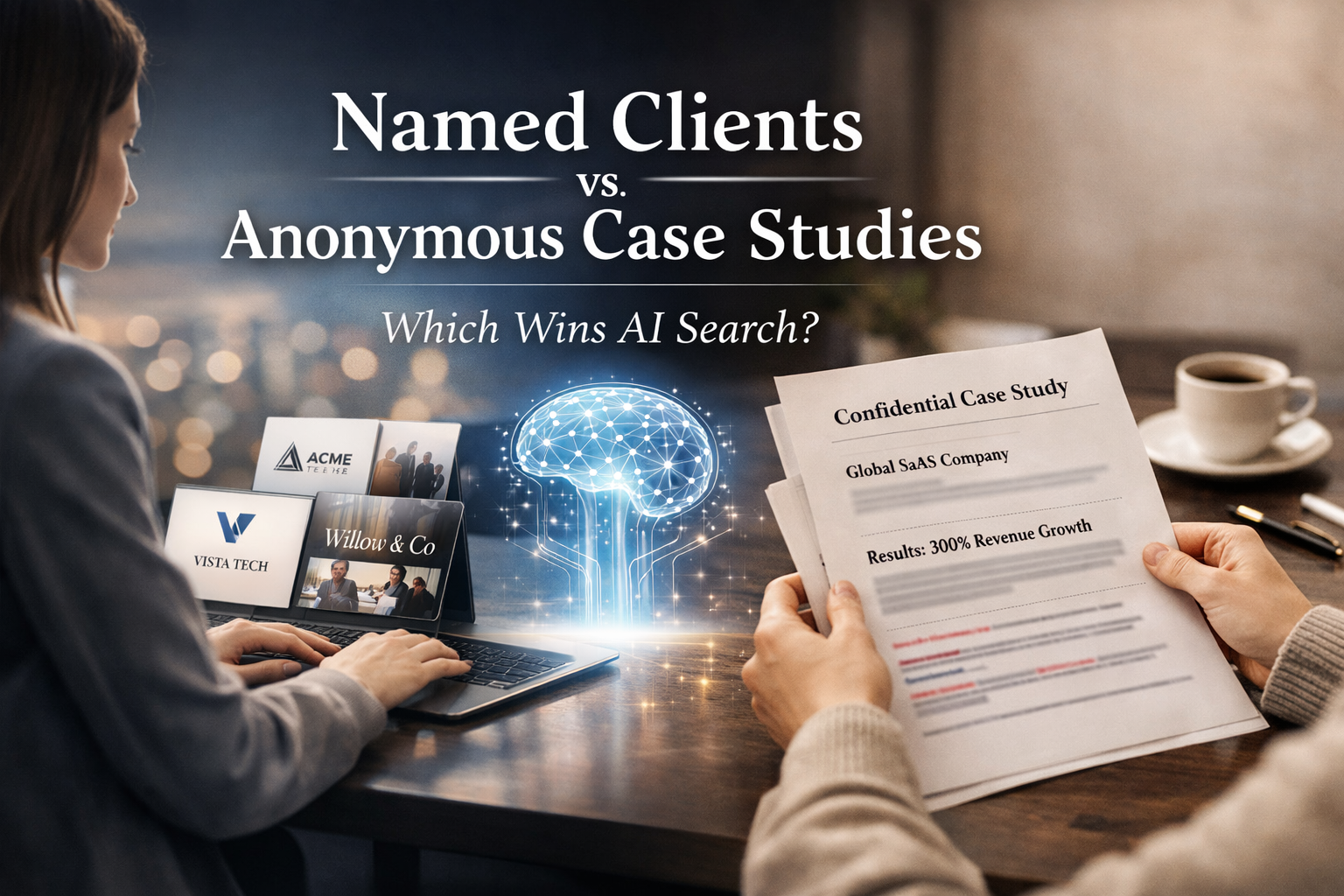
Named Clients vs. Anonymous Case Studies: Which Actually Helps You Get Cited by AI Search?
This is the debate quietly happening inside every marketing team right now. One side says list every client logo you're allowed to name on the homepage — because AI engines need named entities to understand who you work with. The other side says anonymous case studies are safer, more compliant, and let you use bigger numbers. Both camps have a point, but if your goal is actually getting cited by ChatGPT, Perplexity, and Google AI Overviews, the answer isn't close. Named clients win — and not for the reason you think. Here's what's actually happening under the hood, and how to structure your site to take advantage.

Why New York's Most Competitive Businesses Are Investing in Digital PR Right Now
There's a strategy shift happening among New York's most competitive businesses that most owners haven't noticed yet. The highest-performing companies in the most competitive markets are moving budget away from generic content production and toward digital PR — the deliberate work of earning editorial coverage, brand mentions, and high-authority backlinks from legitimate publications. This isn't about vanity press coverage. It's driven by two converging forces rewriting the rules of digital visibility in 2026: Google's ability to distinguish authoritative brands from commodity content, and AI-generated search that rewards third-party credibility above everything else. Here's why it matters, what the data says, and what it looks like in practice for New York businesses.
Should Executives Write Personal Posts on the Company Blog?
Should executives write personal posts on the company blog—or is that bad for SEO? We break down when thought leadership helps, when it doesn’t, and how to make it work without hurting performance.