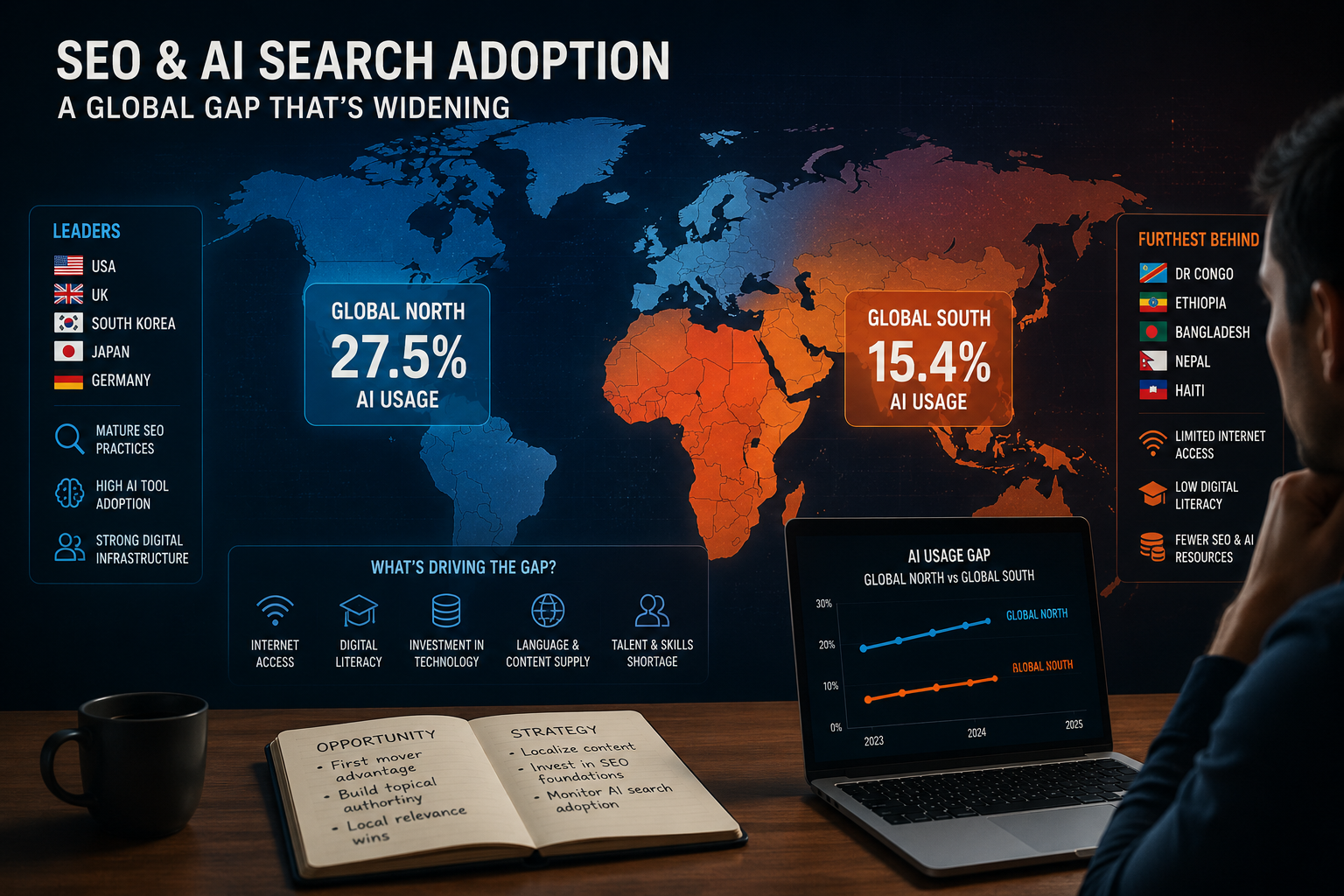
Which Countries Are Farthest Behind on SEO and AI Search — and What That Gap Actually Means
The global conversation about SEO and AI search is dominated by the US, UK, and a handful of advanced Asian markets — and for good reason. These are the places where search optimization is most mature and AI search tools are most embedded in daily buyer behavior. But zoom out to a global view and the picture changes dramatically. AI usage sits at 27.5% in the Global North and just 15.4% in the Global South, a gap that is widening — not closing. In this post we map which countries and regions are furthest behind on both traditional SEO and AI search adoption, what's driving those gaps, and what it means strategically for brands expanding into new markets or trying to build visibility across borders.
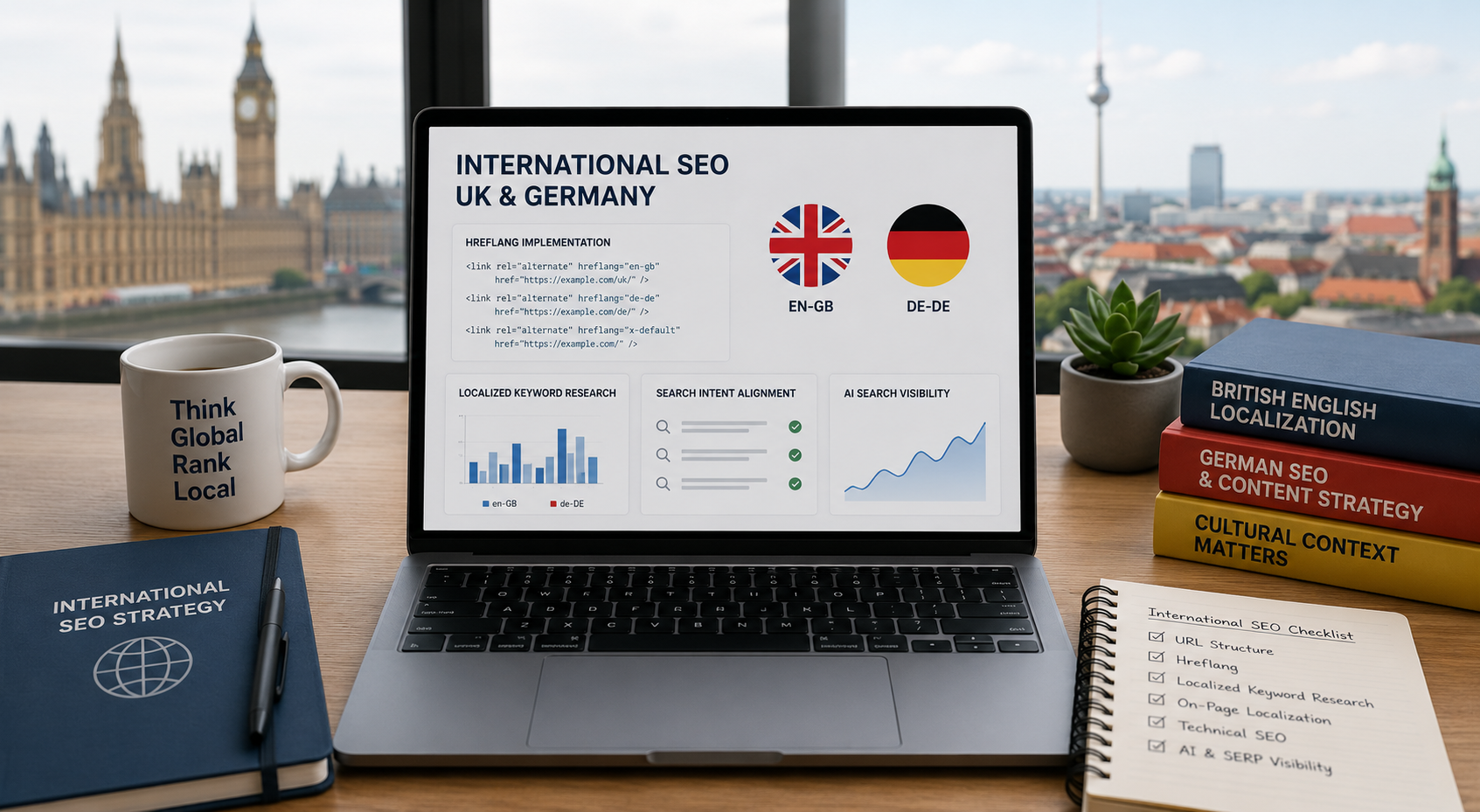
Expanding Into the UK and Germany? Here's Everything You Need to Know About International SEO Before You Launch.
Expanding into the UK and Germany isn't a translation project — it's a market entry strategy with deep technical, linguistic, and cultural dimensions. In this post we cover everything brands need to build real organic visibility in both markets: how to choose the right URL structure, how to implement hreflang without the errors that sink 75% of international sites, why localized keyword research means starting from scratch in each market, and what AI search visibility looks like when your buyers are searching in British English and German. If you're serious about international expansion, this is where to start.
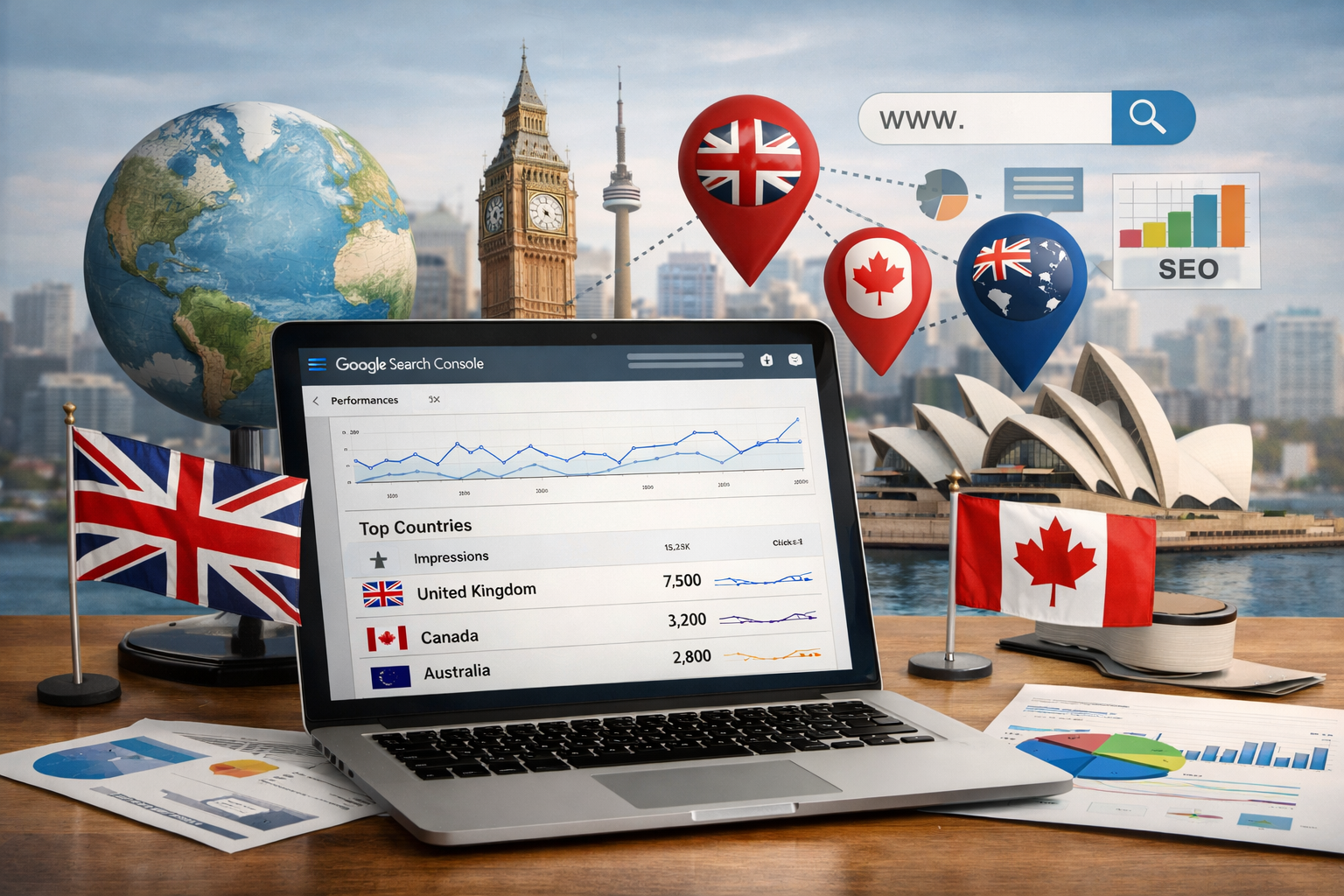
Your Content Is Showing Up in Places You Never Targeted. Here's What That Means.
You never wrote a word for a UK audience. No hreflang tags, no international landing pages, no geo-targeted campaigns. And yet Google Search Console is showing thousands of impressions coming in from the United Kingdom, Canada, and markets you've never once considered. That's geographic cross-ranking — and it's one of the most underleveraged signals in SEO. When your content earns rankings in markets you never targeted, the algorithm is telling you something specific: your content quality is strong enough to compete beyond the borders you assumed defined your audience. This post breaks down what cross-ranking actually means, why English-speaking international markets show up first, how the same dynamic plays out domestically across states and cities, and what to do with the data that's already sitting in your Search Console account.