
Why Microsoft Clarity's "Submit Form" and "Contact Us" Numbers Can Be Inflated (And What They're Actually Counting)
Clarity's "Submit form" event fires on any browser form submission — including your search box and inventory filters — and "Contact us" counts phone-number taps that never connect. Here's the full mechanical breakdown of why the numbers inflate, with Microsoft's own docs as the source, and how to get counts you can defend.

Rolling Window vs. Fixed Date Range: What's the Difference, and Why Does Your Reporting Keep Using Both?
Your dashboard says "last 28 days." Your invoice says "June 1–30." Both are date ranges — so why do they never agree? In this guide, we break down the difference between rolling windows and fixed date ranges in plain English: a fixed range is a photograph (stable, citable, calendar-shaped), while a rolling window is the view out a moving car (always current, recalculated daily). We cover where each shows up — from Google Search Console's 28-day window to trailing-twelve-month revenue — the signature traps of each (spike anniversaries, five-Monday months, overlapping snapshots), and the one rule that prevents most reporting arguments: monitor on rolling, record on fixed.
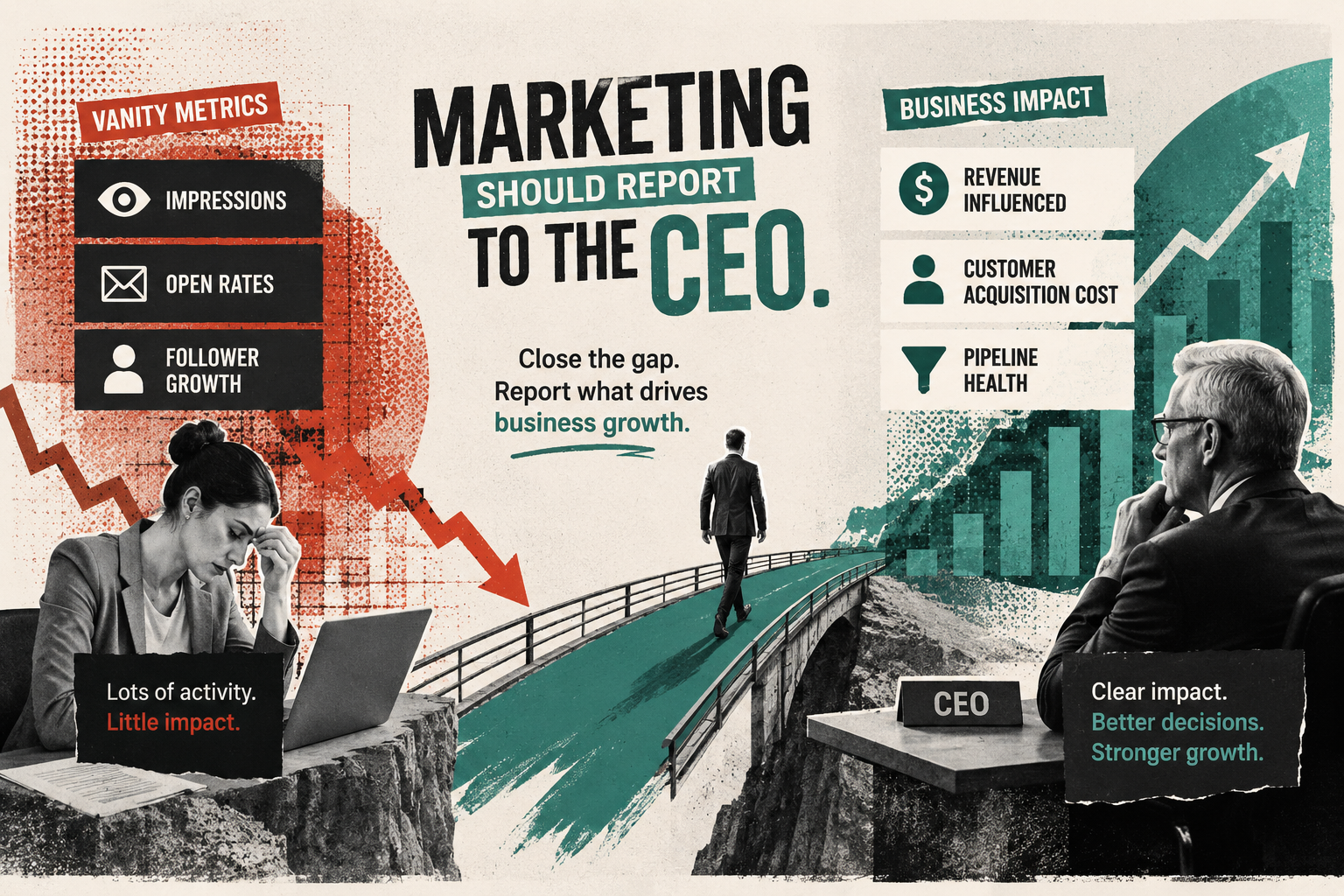
What Should Marketing Actually Report to the CEO?
Most marketing teams report impressions, open rates, and follower growth. CEOs make decisions based on revenue, acquisition cost, and pipeline health. That gap is why marketing budgets keep getting cut — and why marketing keeps losing credibility at the executive table. Here's how to fix the reporting.