
On-Page SEO for Financial Institutions: A Practical Checklist
Financial content plays by stricter rules than any other industry. This practical, page-by-page checklist covers the on-page SEO fundamentals that win in 2026 — from author credentials and schema markup to Core Web Vitals and AI Overview visibility — built specifically for banks, lenders, and financial advisors.

Why Obsessing Over 65-Character Titles and 155-Character Descriptions Is an Outdated SEO Mindset
The 65-character title and 155-character description guidelines feel like solid SEO ground. They're not — at least not in the way most teams treat them. Google rewrites metadata constantly, display constraints have shifted repeatedly, and hitting a character count has never been a ranking signal. Here's what actually matters.
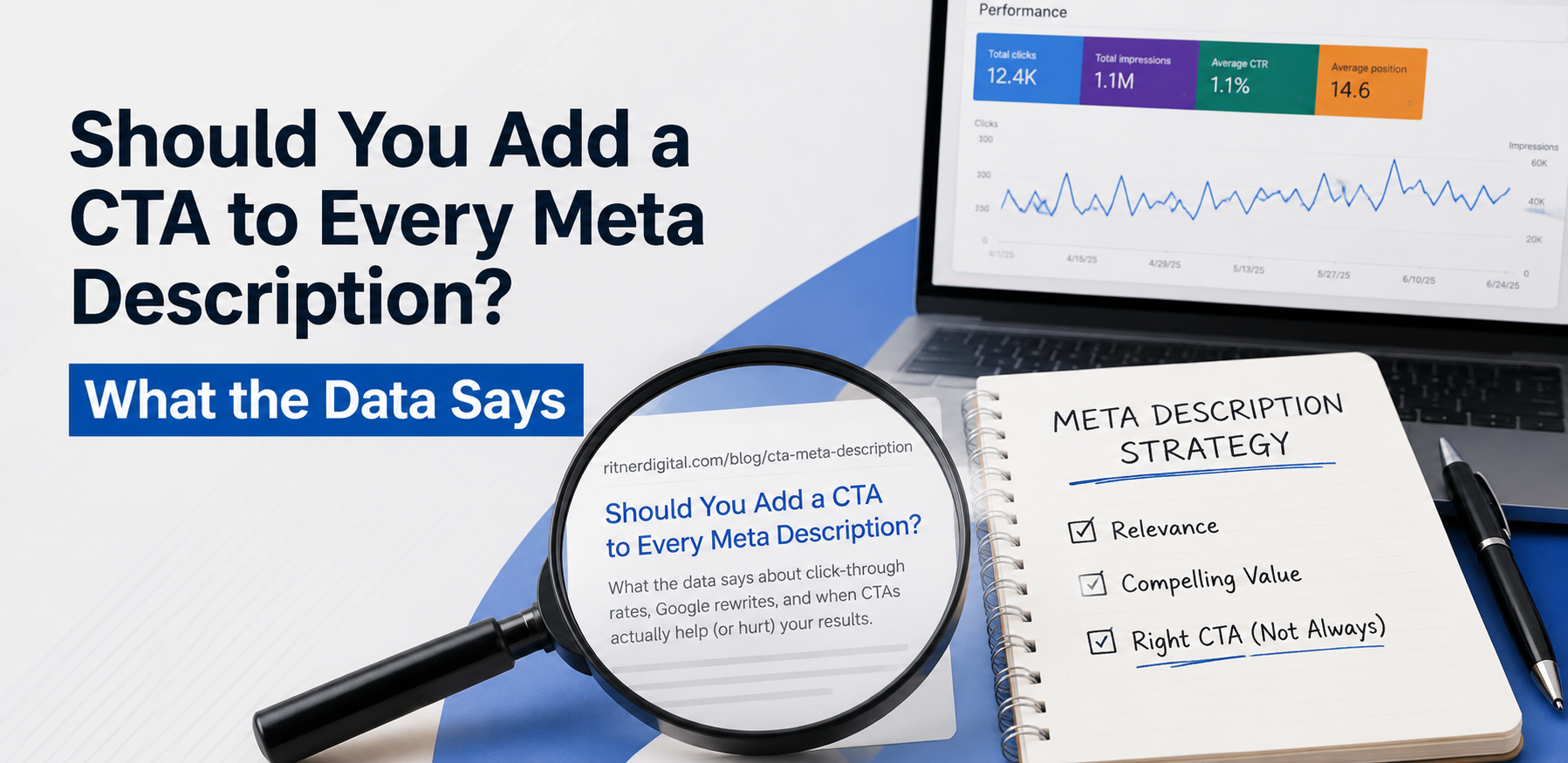
Should You Put a CTA at the End of Every Meta Description? Here's What the Data Actually Says
You've been told to always end your meta description with a call to action. But what does the data actually say? With Google rewriting meta descriptions up to 87% of the time and mobile truncating anything past 120 characters, the standard advice may be working against you. This post breaks down when CTAs in meta descriptions drive real click-through lift, when they don't, and the framework Ritner Digital uses to decide where to focus optimization energy.

Why Your Site Title Should Do More Than Just Say Your Name
If your homepage title tag is just your business name, you're leaving money on the table. Google rewrites 76% of title tags — usually by stripping brand names — because they don't tell searchers what your page is about. Here's how to write a title tag that actually works for you.

Does Your Image File Name Matter for SEO and AI Citations?
You optimize the title, the meta description, and the headers — then upload a featured image called IMG_4782.jpg. That file name is a missed opportunity. Here's why what you name your images matters for SEO, Google Image Search, and how AI systems decide which content to cite.

If I Already Have Meta Descriptions, What's the Point of Blog Tags?
You've already written meta descriptions for every blog post — so why bother with topic tags? Because they're solving completely different problems. Meta descriptions get people to click from search results. Tags organize your blog, build internal links, and help you develop the topical authority search engines reward. Here's how they work together and how to use both the right way.