
100 Clicks a Day: The Organic Search Sweet Spot Where Leads Become a Daily Habit
There's a number where organic search stops being a marketing line-item and starts behaving like a salesperson who shows up every morning: 100 clicks a day. That's 3,000 a month — one lead a day at a deliberately conservative 1% conversion, six to eight customers a month at normal close rates, and about $16,000 a month in equivalent ad spend at 2026 prices. Most business sites run at a twentieth of that, which is exactly why organic feels like it doesn't work. Here's the full math — including where we sit on our own curve.
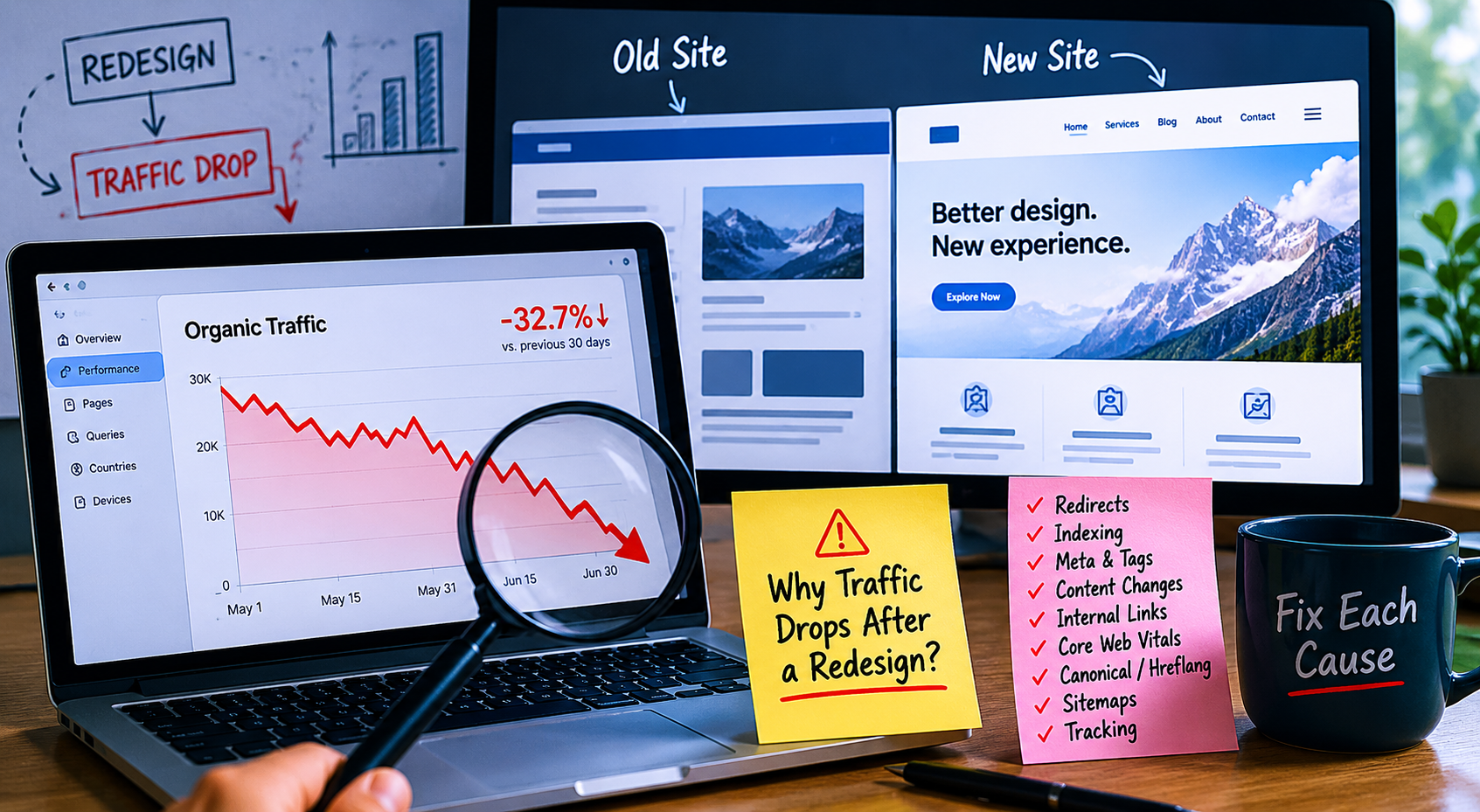
Why Traffic Drops After a Redesign
You launched the new site. It looks better. It loads on mobile. The stakeholders are happy. And then the traffic graph starts going in the wrong direction. Post-redesign traffic drops are one of the most common and most preventable problems in digital marketing — and one of the most frustrating, because the cause is almost never obvious from looking at the new site. The design looks fine. The pages load. Users can navigate. But Google is seeing something different from what the design team built, and the ranking signals it's evaluating have changed in ways that nobody planned.

Should You Delete, Rewrite, or Refresh Declining Blog Content? The SEO Answer Is More Nuanced Than You Think
Every content program eventually faces the same reckoning. You published a blog post two years ago. It ranked well for a while, drove a meaningful amount of traffic, and then — quietly, over the course of months — began to decline. The ranking slipped. Traffic halved. Then halved again. Now it's generating a trickle of visits that barely registers in analytics. The instinct is often one of two things: delete it and move on, or leave it alone and hope it recovers. Both are usually wrong. The right answer in most cases is a third option — a deliberate, strategic refresh that keeps the content on the same URL, updates it to competitive standard, and signals to Google that this asset has been meaningfully renewed.
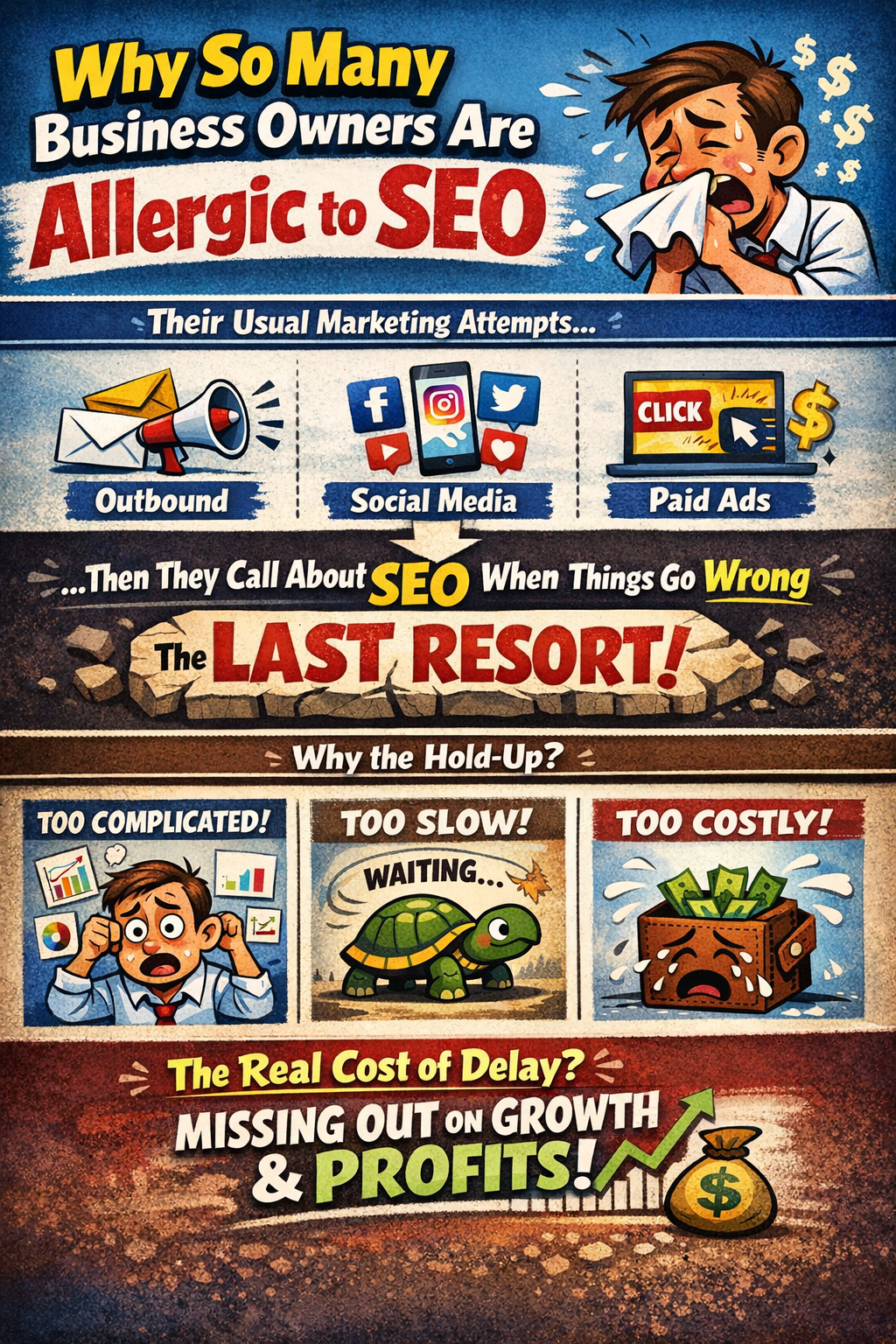
Why So Many Business Owners Are Allergic to SEO
There's a predictable pattern with small business marketing: they try everything — outbound, social, ads — and only call about SEO when something's clearly not working. It's always the last resort. This post breaks down exactly why that happens and what the delay actually costs.

Are Any Companies Still Thriving on a Blog-Heavy Content Model?
Every few months a new piece of content crosses your feed declaring that blogging is dead. SEO is finished. Long-form content is obsolete. AI has made the blog irrelevant. And yet some of the most valuable, fastest-growing, and most-cited companies on the internet still run blog-heavy content models as their primary engine for traffic, leads, and authority — not as a legacy strategy they haven't gotten around to updating, but as a deliberate, compounding competitive advantage they continue to invest in aggressively. The question isn't whether blogging still works. The evidence on that is unambiguous. The more interesting question is what kind of blogging works, for whom, and under what conditions.