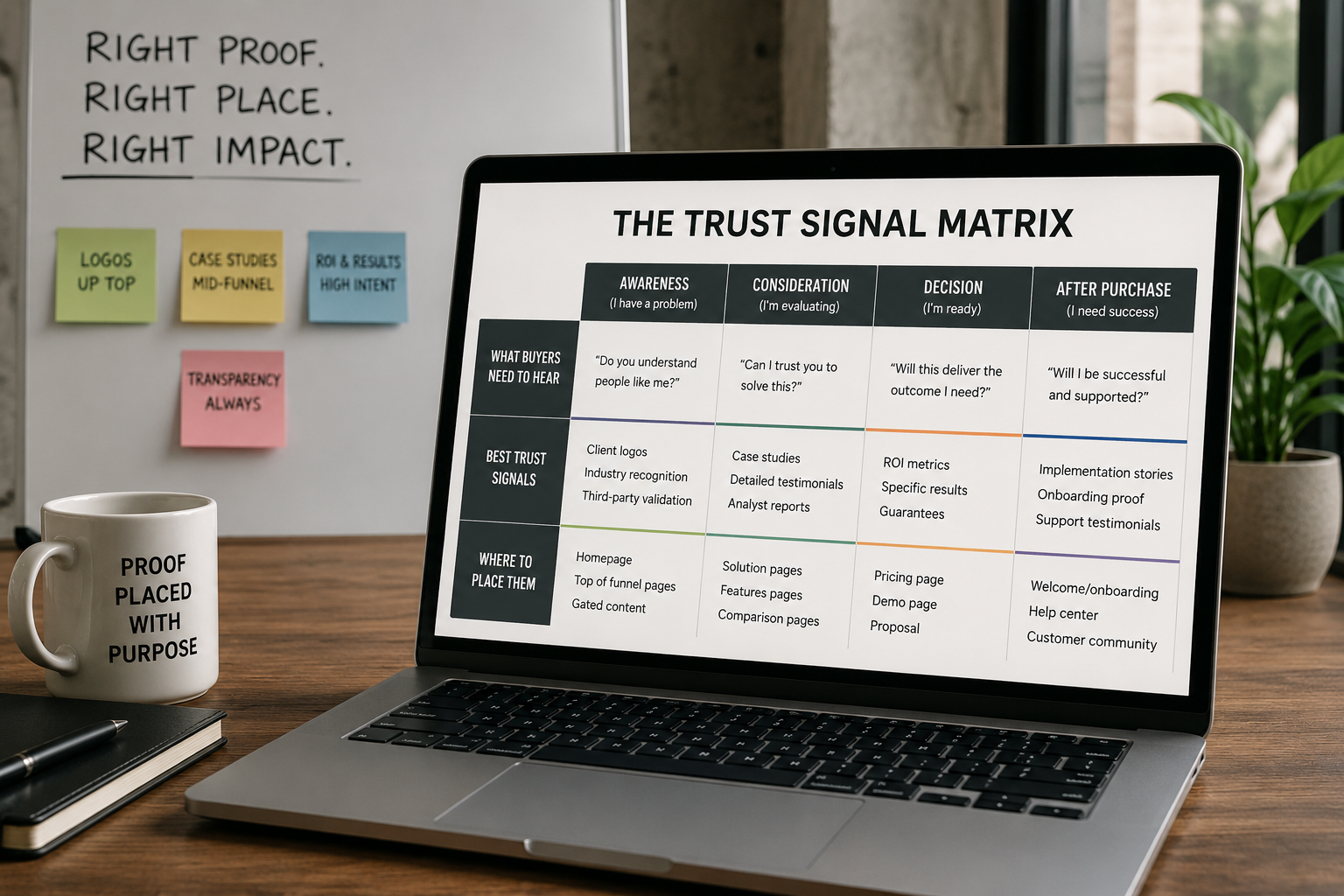
The Trust Signal Matrix: Why Where You Place Proof Matters as Much as Having It
Most companies treat social proof as a checkbox: grab some logos, scatter testimonials everywhere, call it credibility. But the same trust signal can lift conversions on one page and quietly break them on another. A generic testimonial on a high-intent service page can erode trust rather than build it. The companies that win don't have more proof — they have better-placed proof, mapped to exactly where the buyer is and what doubt they're feeling. Here's the structural matrix for getting it right.

Why Your Website Visitors Decide to Trust You (or Not) in About 8 Seconds
Nobody reads your website the way you think they do. They land, they scan, and in somewhere between five and fifteen seconds they've already decided whether this business is real, legitimate, and worth their time — usually without being able to explain why they stayed or left. Understanding the trust signals that drive that split-second judgment is one of the highest-leverage things you can do for your business. Because all the SEO and paid advertising in the world means nothing if the traffic you're generating lands on a site that immediately triggers the wrong instincts.