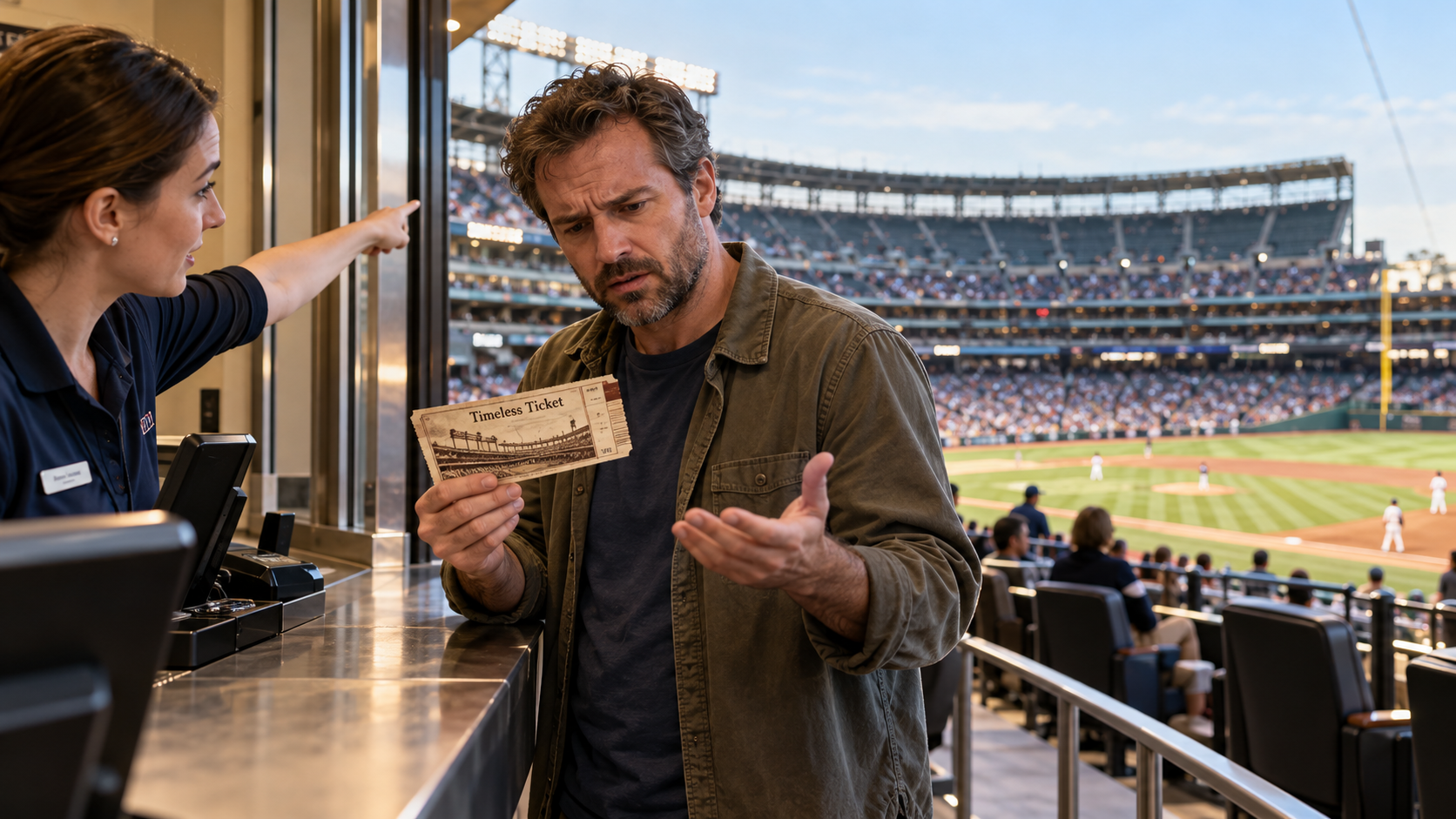
Eleven years ago, the Milwaukee Brewers sold fans a once-in-a-lifetime experience. Now, a World Series appearance has exposed a major problem with that promise—and an important lesson for every business that uses promotions to build customer loyalty.
Imagine paying $1,000 for something you might not use for another decade.
Not a vacation.
Not a concert.
Not an expensive piece of technology.
A baseball ticket.
And not just any baseball ticket.
A special ticket that promises access to a future game of your choosing, including the World Series.
You buy it because you're a loyal fan. You trust the organization. You believe that one day, when your team finally makes it to baseball's biggest stage, you'll be there to experience it.
Then you wait.
And wait.
And wait some more.
Eleven years later, your team makes the World Series.
You finally get the opportunity you've been dreaming about.
But when you attempt to redeem your special ticket, the premium seating experience you expected isn't available.
Instead, you're offered upper-deck seats or standing-room-only options.
That's the controversy surrounding the Milwaukee Brewers' Timeless Ticket promotion, which became national news in October 2026.
The Brewers originally sold 1,000 of these special tickets in 2015 for $1,000 each. They could be redeemed for a future home game, including a potential World Series appearance.
The offer referred to the best available seating, subject to availability.
But when the Brewers reached the 2026 World Series against the Tampa Bay Rays, several ticket holders reported receiving seating options that they believed fell far short of the original promise.
The team's president of business operations, Rick Schlesinger, acknowledged problems with the redemption process and announced a remedy.
Fans who met the relevant deadline could attend the World Series using their allocated tickets while retaining their Timeless Tickets for another future redemption.
That's an important attempt to address the problem.
But it doesn't erase the marketing lesson.
A promotional promise isn't finished when a customer pays. It's finished when the business delivers the experience it created an expectation for.
And if that delivery happens eleven years later, the promise still matters.
For businesses investing in branding, digital marketing, SEO, customer loyalty programs, and long-term reputation management, this story deserves a closer look.
Because what happened in Milwaukee isn't just about baseball.
It's about the difference between selling an exciting idea and delivering the reality.
What Happened With the Milwaukee Brewers' Timeless Tickets?
Let's start with the facts.
In 2015, the Milwaukee Brewers introduced a limited-edition ticket promotion called the Timeless Ticket.
The concept was unusual.
Fans could purchase a special brass ticket for $1,000 and redeem it for admission to one future Brewers home game.
The ticket wasn't restricted to a particular season.
It wasn't scheduled to expire after a few years.
And it could be redeemed for a postseason game, including the World Series, subject to the program's terms.
According to the Milwaukee Brewers' official Timeless Ticket page, only 1,000 tickets were produced.
Each ticket was personalized with the owner's name and authenticated through the Major League Baseball Authentication Program.
Buyers could also purchase up to three additional tickets at regular retail prices, subject to availability, when redeeming their special ticket.
At the time, it was an interesting promotion for a team that hadn't reached the World Series since 1982.
For fans willing to wait, the possibilities were exciting.
Eleven Years Later, the Opportunity Finally Arrived
Fast-forward to October 2026.
The Brewers reached the World Series for the first time in 44 years.
Game 1 was scheduled for Friday, October 23, at American Family Field in Milwaukee.
For Timeless Ticket holders, this represented the moment they'd been waiting for.
According to Associated Press reporting published October 20, 2026, several hundred ticket holders expressed interest in using their special passes for a World Series game.
But when the redemption process began, some fans found the available seating options disappointing.
Rather than the premium locations they expected, they were offered seats in the upper levels or standing-room areas.
Why Fans Were Upset
The original promotion included language stating that the tickets could be redeemed for the best available seating, subject to availability at the time of redemption.
That qualification matters.
The offer did not provide an unconditional guarantee of front-row seats.
However, some buyers said the sales experience had created expectations of priority access to desirable locations.
One fan, Danny Fochesato, told reporters that the original promotion had been presented as a chance to secure excellent seats for a future World Series game.
According to the Associated Press, Fochesato said that when he attempted redemption for 2026, his initial options were largely limited to the 400 level or standing room.
Local television coverage documented similar concerns from other ticket holders.
In FOX6 Milwaukee's October 20 report, fans described feeling that the seating offered did not reflect the experience they believed they had purchased.
The Brewers Acknowledged the Problem
On October 20, Brewers president of business operations Rick Schlesinger issued a statement acknowledging internal communication problems in coordinating ticket requests.
He also acknowledged that the team had not fulfilled the intended experience of the program.
The organization's solution was to allow qualifying Timeless Ticket holders to keep their allocated World Series seats while retaining the original special ticket for another future redemption.
The response was a meaningful concession.
But the controversy raises a larger question.
How does a promotion that seemed so clever in 2015 become a customer experience problem in 2026?
The answer starts with expectations.
1. Your Marketing Promise Becomes Your Customer's Expectation
Every advertisement makes some kind of promise.
Sometimes that promise is explicit.
“Free delivery.”
“Guaranteed appointment.”
“Lifetime access.”
Sometimes it's more emotional.
“An unforgettable experience.”
“VIP treatment.”
“Exclusive access.”
“Your once-in-a-lifetime opportunity.”
The problem is that customers don't always separate those promises into legal terms and emotional expectations.
They remember what they believed they were buying.
The Timeless Ticket Sold More Than Admission
Technically, the promotion involved a ticket redeemable for a future game.
But from a marketing perspective, it also offered something more compelling.
Possibility.
Exclusivity.
Anticipation.
The idea of owning a special collectible that could eventually become the ticket to a historic baseball moment.
The physical brass ticket reinforced that appeal.
It wasn't a normal digital ticket sitting in an account.
It was personalized, limited in quantity, and designed to feel special.
That packaging matters because the tangible presentation can influence how customers perceive the product's value.
Emotional Value Can Exceed Functional Value
Imagine two offers.
One says:
“Purchase admission to a future Brewers game, subject to ticket availability.”
The other emphasizes a limited-edition collectible offering access to a future game, even a World Series appearance.
Both may involve similar redemption mechanics.
But the emotional reaction is different.
The second invites the customer to imagine the most exciting possible outcome.
That is part of what makes promotional marketing powerful.
It is also what makes expectations difficult to manage.
When a business sells the dream, customers remember the dream—not just the terms and conditions.
The Business Lesson
A promotion should be evaluated based on the full impression it creates.
What does the headline communicate?
What does the imagery suggest?
What do sales representatives emphasize?
What will a reasonable customer believe is included?
And can the business fulfill that expectation when the customer eventually redeems the offer?
Those questions matter for sporting events, membership programs, subscription services, and ordinary small business promotions.
2. The Difference Between a Brand Promise and the Fine Print
One of the most interesting details in this controversy is the phrase best available seats.
The original offer was qualified by ticket availability at the time of redemption.
That creates an important distinction between a customer's expectations and the offer's written limitations.
“Best Available” Can Mean Different Things
Consider how someone might interpret the phrase.
A customer might assume the best available seats means the best locations not already committed to season ticket holders.
A ticketing department might interpret it as the best seats remaining within an inventory allocation established for a particular promotion.
Those interpretations can produce very different outcomes.
The phrase isn't necessarily meaningless.
But its practical value depends on how the organization defines and administers availability.
Fine Print Doesn't Automatically Resolve Every Communication Problem
The Federal Trade Commission's Advertising FAQs explain that commercial advertising claims are evaluated based on the overall impression they create, including express and implied representations.
The FTC also emphasizes that important information affecting purchasing decisions should be presented appropriately.
This article is not making a legal determination about the Brewers' promotion or whether it violated consumer protection law.
That would require examining the complete historical offer, relevant communications, and applicable law.
The point is broader.
Businesses should not rely on vague qualifications to resolve expectations created by highly persuasive marketing.
Clear Terms Are Part of the Customer Experience
Imagine a company advertises an exclusive membership promising priority booking.
But when members attempt to book, they discover priority applies only after several other customer categories have received access.
Even if the terms technically describe some limitations, the experience may still feel disappointing.
A better approach is to explain how priority works before selling the membership.
Clarity may make the advertisement less dramatic.
But it can make the promise more dependable.
3. The Hidden Risk of Long-Term Promotional Offers
The Brewers' Timeless Ticket is especially interesting because of the enormous gap between purchase and redemption.
The product was sold in 2015.
The controversy emerged in 2026.
That's eleven years.
Most marketing promotions operate on much shorter timelines.
A coupon expires after a month.
A seasonal discount lasts a week.
A product launch offer may end after a few days.
But the Timeless Ticket allowed the promise to continue indefinitely, subject to its terms.
A Long-Term Offer Creates a Long-Term Obligation
A promotion that remains redeemable for years requires more than a clever launch campaign.
It requires operational planning.
The company needs to preserve records.
Maintain customer information securely.
Document the redemption process.
Train future employees.
Coordinate with relevant departments.
And ensure that changes in normal business operations don't make the original promise impossible to administer as intended.
Business Systems Change
Think about how much can change in eleven years.
Employees leave.
Managers retire.
Software platforms change.
Ticketing procedures evolve.
Pricing structures shift.
Customer expectations change.
New sales channels appear.
An organization may introduce entirely different inventory allocation policies.
A promotion created in one operating environment can eventually become difficult to fulfill in another.
The Problem of Institutional Memory
One of the biggest operational risks is losing the original reasoning behind a promotion.
A company may retain the contractual terms while losing the informal knowledge surrounding how the offer was intended to work.
That can include sales scripts, priority assumptions, operational procedures, and internal expectations.
For a small business, the equivalent might be a legacy membership program or a lifetime service guarantee established years before the current management team arrived.
The business may still be responsible for honoring the offer.
But the people handling redemption might not fully understand its original purpose.
The Marketing Lesson
Don't launch a long-term promotion unless you're prepared to manage it for the entire period customers are entitled to use it.
That includes understanding what happens when the promotion becomes most valuable to the customer.
4. The Bigger the Customer's Anticipation, the Greater the Potential Disappointment
One of the most important psychological factors in this situation is anticipation.
Timeless Ticket holders weren't simply purchasing admission.
Many were waiting for a major event.
For years, the ticket represented a possibility.
Maybe next season.
Maybe the year after.
Maybe someday.
Then the opportunity finally arrived.
Customer Expectations Grow Through Imagination
When someone anticipates an experience for years, they can develop a detailed picture of what it will feel like.
Where they'll sit.
Who they'll bring.
How the stadium will look.
What the moment will mean.
That's part of the emotional value of entertainment and experiential marketing.
But it also creates a risk.
The actual experience must compete with years of expectations.
Not All Customers Evaluate Value the Same Way
One person may be thrilled simply to enter a World Series game.
Another may feel that an upper-deck location falls far short of a premium promise.
Both reactions can exist.
The business should understand that the purchased product may carry different emotional meaning for different customers.
The Moment of Redemption Is a Critical Touchpoint
A long-term promotion may have multiple customer interactions.
The initial purchase.
Confirmation communications.
Periodic updates.
The redemption request.
Seat allocation.
The event itself.
If the redemption experience creates confusion or disappointment, earlier positive feelings may be overshadowed.
This is why marketers need to think beyond acquisition.
A successful sale is only one part of a successful customer relationship.
5. Why Customer Loyalty Programs Need Operational Support
Loyalty programs are common across industries.
Retailers offer reward points.
Hotels offer status benefits.
Airlines offer priority services.
Businesses provide memberships, subscriptions, and exclusive experiences.
These programs can encourage repeat engagement and strengthen relationships.
But their value depends on whether customers can reliably receive the promised benefits.
Exclusivity Creates Expectations
When a business uses words such as premium, VIP, or exclusive, customers reasonably look for a meaningful distinction from ordinary service.
If the actual benefit feels indistinguishable from what other customers receive, the perceived value may decline.
The concern is not necessarily whether the company technically provided something.
It's whether the delivered benefit corresponds with what the program communicated.
Loyalty Is a Relationship, Not Just a Transaction
A longtime customer may have supported a company through periods when the relationship offered little immediate reward.
That investment can carry emotional weight.
For sports fans, loyalty is particularly meaningful because team identity and personal history often overlap.
For businesses, the parallel may involve customers who renew memberships, make repeated purchases, or refer friends over many years.
Those customers remember how they've been treated.
Don't Reward Loyalty Only in Your Advertising
Many businesses advertise how much they appreciate loyal customers.
But appreciation needs to appear in operational decisions.
Are returning customers given the benefits they were promised?
Are policies communicated clearly?
Do employees understand membership privileges?
Can the organization explain limitations before they become disappointments?
Marketing creates the expectation.
Operations must deliver it.
6. Why the Redemption Process Matters as Much as the Promotion
One of the most revealing aspects of the Timeless Ticket controversy concerns the redemption process itself.
Ticket holders had to make requests through the team.
Some reported receiving forms that offered limited seating choices.
Meanwhile, the team had to coordinate World Series inventory amid extraordinary demand.
Operational Complexity Doesn't Disappear Because a Promotion Is Exciting
A stadium has a limited number of seats.
Some inventory may already be committed to season ticket holders, partners, league allocations, or other categories.
When demand exceeds supply, allocation rules become extremely important.
But those rules should be considered when the promotion is created—not invented after demand arrives.
Why Inventory Planning Matters
Imagine a hypothetical business selling 500 priority-access passes.
The company promises customers early access to a highly desirable future product.
Years later, demand surges.
But the business discovers that most premium inventory has already been allocated elsewhere.
At that point, it faces a preventable conflict between promises.
The original customers expect priority.
Other customers may already have confirmed commitments.
The business cannot satisfy everyone through ordinary inventory allocation.
That's why promotion design requires coordination between marketing and operations.
A Promotion Should Include a Redemption Plan
For a long-term or limited-edition offer, businesses should determine how redemption priority works.
What inventory is reserved?
When can customers make requests?
How are requests prioritized?
What happens if demand exceeds supply?
How are customers notified?
What alternatives are available if the preferred benefit cannot be delivered?
The answers need to exist before customers begin redeeming the offer.
7. The Most Important Marketing Lesson: Don't Overpromise and Underdeliver
You've probably heard the phrase underpromise and overdeliver.
The principle is straightforward.
Set realistic expectations.
Then try to provide an experience that meets or exceeds them.
The opposite approach can create a serious problem.
A business makes an exciting promise to generate sales.
Customers develop high expectations.
The final experience doesn't match the marketing.
And disappointment follows.
Why Overpromising Is Tempting
Bold promises are appealing because they make promotions easier to sell.
“Priority access” sounds more exciting than “access determined by a future inventory allocation process.”
“Exclusive experience” sounds more compelling than “standard admission with certain conditions.”
But a promise that is difficult to fulfill can create future costs.
Those costs may involve compensation, administrative work, lost trust, and negative publicity.
When Messaging and Delivery Become Disconnected
Marketing teams often focus on acquisition.
Operations teams focus on delivery.
Customer service teams handle complaints.
But customers experience these functions as one company.
They don't necessarily care which department created the problem.
If marketing advertises a benefit, the entire organization needs to support it.
The Lesson for Small Businesses
Before promoting an offer, ask whether your team can fulfill it under challenging—not merely ideal—conditions.
It's easy to deliver premium access when demand is low.
The real test is whether the business can deliver when everyone wants the benefit at once.
8. Why the Brewers' Response Matters
To the Brewers' credit, the organization publicly acknowledged a problem.
That doesn't resolve every question about the original promotion.
But it is an important part of the story.
Rather than only pointing to ticket availability restrictions, team leadership recognized that customers were dissatisfied and announced additional value.
The Response Had Three Important Elements
First, the team acknowledged problems in its internal redemption communications.
Second, it recognized that the allocated seating did not fulfill the program's intended experience.
Third, it offered a concrete remedy.
Eligible ticket holders could use their World Series seats and retain their original Timeless Tickets for a future game.
This is more meaningful than a generic statement expressing regret without offering any practical resolution.
Why a Concrete Remedy Matters
An apology communicates recognition.
A remedy addresses the customer's loss or disappointment.
Both can be important.
If someone receives a service that falls short of what they were promised, simply explaining the internal reason may not be enough.
The customer may need an actual solution.
Is the Remedy Perfect?
That depends on the ticket holder's experience and expectations.
For some fans, the opportunity to keep the special ticket may represent substantial additional value.
For others, the particular World Series moment was the entire reason they purchased it.
A future redemption cannot recreate the exact circumstances of October 2026.
This distinction is important.
An organization can provide a meaningful remedy without necessarily restoring every aspect of the original expectation.
9. What Research Says About Service Recovery
Marketing researchers use the term service recovery to describe how organizations respond when a customer experience goes wrong.
Service recovery may involve apologies, explanations, refunds, replacement services, compensation, or procedural changes.
A successful response can help rebuild confidence.
But the outcome depends on the circumstances.
Customers Evaluate Fairness
A customer may consider whether the organization took responsibility.
Whether the explanation was credible.
Whether the remedy was proportionate.
And whether the process of obtaining help was respectful.
These evaluations can influence satisfaction and future behavior.
Research Supports the Importance of Recovery
A 2026 meta-analysis published in the Journal of Business Research examined online service failures and recovery outcomes across 147 studies involving a combined sample of more than 82,000 individuals.
The researchers explored how responsibility, fairness, and recovery efforts relate to customer responses.
Another 2026 meta-analysis published in the International Journal of Quality and Service Sciences synthesized evidence concerning service recovery, customer responses, word of mouth, and intentions to return.
These findings support treating recovery as a serious part of customer experience management.
However, the effects vary by situation.
The Service Recovery Paradox
You may encounter the idea that a customer can become more loyal after a company successfully fixes a mistake than they would have been if no mistake occurred.
This is sometimes called the service recovery paradox.
But businesses should not interpret it as a reason to create problems intentionally.
Research on service recovery does not establish that errors are universally beneficial.
Some failures cause lasting damage.
Some customers remain dissatisfied despite compensation.
And some situations cannot be fully restored.
The safer lesson is that good recovery can reduce harm—but preventing avoidable failures is better.
10. Why Customer Complaints Become Reputation Stories
A disappointed customer can share an experience with friends.
They can post on social media.
They can speak with a local reporter.
And when the story involves a major sports franchise on the eve of the World Series, it can attract national attention.
That's what happened with the Timeless Ticket controversy.
The Original Customer Experience Became Public Information
What began as a seating allocation dispute became a story about a promise made eleven years earlier.
Media coverage examined both the historical promotion and the organization's response.
That transformed an operational issue into a reputation issue.
Public Complaints Create a Wider Audience
When a business responds to a public complaint, it's no longer communicating only with the original customer.
Prospective customers may be watching.
Existing customers may be evaluating the response.
Other people may be deciding whether the organization takes its commitments seriously.
The public response becomes part of the brand experience.
Why Defensiveness Can Be Risky
A company may have contractual language supporting its position.
That language matters.
But responding only with technical qualifications can leave the emotional concern unanswered.
A better response distinguishes between contractual terms, operational circumstances, and the customer's experience.
The Brewers' acknowledgment that the redemption process fell short of the intended program experience illustrates why this distinction matters.
11. What This Controversy Teaches Us About Brand Trust
Trust is often described as one of the most valuable assets a business can develop.
But trust isn't simply a slogan.
It involves expectations about future behavior.
Customers trust companies when they believe those organizations will communicate accurately and fulfill their commitments.
Trust Is Built Over Time
A customer may start with a small purchase.
A positive experience makes another purchase more likely.
Over time, the relationship can become familiar.
The customer may eventually be willing to purchase a more expensive product or commit to a long-term service.
That's valuable.
Trust Can Be Challenged at Important Moments
A business may perform reliably for years and still face scrutiny after one disappointing experience.
This is particularly true when the experience involves a promise that customers consider important.
For Timeless Ticket holders, the long waiting period contributed to the emotional significance of redemption.
Transparency Supports Trust
A company should explain what customers receive.
Which limitations apply.
What happens when circumstances change.
And how problems will be resolved.
The goal isn't to promise perfection.
It's to communicate clearly and respond responsibly when expectations aren't met.
12. What Businesses Can Learn From the Brewers' Promotion
The Timeless Ticket controversy provides a useful framework for evaluating promotional marketing.
The point isn't that every business should stop creating ambitious promotions.
It's that ambitious promotions require equally thoughtful execution.
13. The Problem With “Lifetime” and “Forever” Marketing
Timeless Tickets are one example of a broader category of offers that businesses should approach carefully.
Lifetime memberships.
Forever discounts.
Unlimited access.
Permanent benefits.
One-time payments for indefinite services.
These promotions can be appealing because they create a sense of exceptional value.
But what exactly does lifetime mean?
The customer's lifetime?
The company's lifetime?
The product's supported lifetime?
A defined contractual period?
These details matter.
Future Costs Are Difficult to Predict
When a business sells a permanent benefit, it may be accepting obligations that extend far beyond the original transaction.
Service costs can change.
Technology can become obsolete.
Product availability may decline.
A future management team may inherit commitments it didn't create.
The Promise Needs a Sustainable Business Model
A long-term offer should be evaluated financially and operationally.
The business must understand what it is promising, how the obligation will be tracked, and how it will be funded.
A promotion generating immediate cash flow isn't necessarily sustainable if future fulfillment becomes substantially more expensive.
Don't Use Ambiguity as a Selling Point
If an offer has meaningful limitations, explain them.
A clear promotion may be less dramatic, but it can still be compelling.
And it reduces the risk of customers imagining benefits the company never intended to provide.
14. How the Story Connects to Online Reputation Management
Online reputation management involves maintaining accurate business information, responding appropriately to customer feedback, and understanding how a company is represented across digital channels.
The Brewers controversy demonstrates how quickly a customer experience can become part of a public brand narrative.
Search Results Preserve Context
Someone researching the Brewers' Timeless Ticket promotion may encounter the team's official redemption page, independent news coverage, and comments from ticket holders.
The official page explains the program.
The reporting documents customer concerns.
Both can influence how someone understands the situation.
A Business Doesn't Own Every Search Result
A company can update its website.
It can publish explanations.
It can communicate directly with customers.
But it cannot dictate how independent journalists or customers describe their experiences.
That's why preventing unnecessary problems matters.
Reviews and Public Responses Can Affect Perception
Google's guidance for managing customer reviews encourages businesses to respond professionally, acknowledge legitimate concerns, and explain relevant circumstances.
Google also prohibits incentives intended to manipulate reviews.
For small businesses, the principle is straightforward.
Don't try to conceal a legitimate complaint with manufactured praise.
Address the underlying issue.
Provide an accurate explanation.
And demonstrate that customer feedback is being taken seriously.
15. What Does This Have to Do With SEO?
A surprising amount.
Search engine optimization isn't limited to keywords and rankings.
It also involves making useful, accurate information available to people researching a business, product, or service.
A well-known controversy can change what people search for.
For example, searches may shift from a generic product name to questions about complaints, redemption terms, or company policies.
Branded Searches Reflect Curiosity and Concern
A branded search includes a company or product name.
Someone might search for the Brewers' Timeless Ticket to understand how the program works.
After news coverage, another person might search for information about the seating dispute.
These are different search intentions.
One involves product information.
The other involves evaluating a controversy.
Strong Content Should Answer Real Questions
A business website should explain its products and policies clearly.
If customers regularly misunderstand a promotion, that may indicate the need for better information architecture.
Helpful FAQs.
Clear terms.
Accessible policies.
Straightforward redemption instructions.
And accurate examples.
SEO Cannot Erase Legitimate Criticism
A company shouldn't assume that publishing more favorable pages will make independent news coverage disappear.
Search engines may continue showing relevant reporting and third-party information.
The more sustainable approach is to maintain useful, trustworthy content and address genuine problems.
Google's People-First Content Guidance
According to Google Search Central, useful website content should provide original value, answer people's questions, and avoid exaggerated or misleading presentations.
That principle applies to promotional pages just as much as educational articles.
A promotion page should help customers understand what they're purchasing.
Not merely persuade them to buy.
16. Why AI Search Makes Marketing Promises Even More Important
AI-powered search introduces another way people may encounter information about a brand.
Instead of clicking several articles, someone might ask an AI assistant to summarize what happened with a company's promotion.
The system may draw on public information, depending on the platform and query.
That information can include company statements, news reporting, and other available material.
AI Search Can Combine Multiple Narratives
Consider a hypothetical question:
"What happened with the Milwaukee Brewers' Timeless Tickets?"
An AI search experience might summarize the original promotion, the seating complaints, and the team's response.
But the exact answer depends on the platform and the sources available at that moment.
It is not guaranteed to cite any particular article.
Clear Official Information Helps
If a business publishes confusing terms or outdated policies, customers may struggle to understand what is actually offered.
AI-generated summaries may also have difficulty preserving complicated distinctions.
That doesn't mean a business can control what an AI system says.
It means accurate public-facing information is valuable.
SEO Fundamentals Still Matter
Google's AI search documentation explains that established SEO best practices remain relevant to AI Overviews and AI Mode.
There are no special technical requirements exclusively for appearing as a supporting link in those features.
Clear content, crawlable pages, and accurate information remain useful.
AI Doesn't Replace Customer Experience
Even if a business appears in an AI-generated recommendation, it still needs to deliver the promised service.
A favorable summary won't compensate for a disappointing redemption process.
AI search may influence how customers discover your promise. It cannot fulfill that promise for you.
17. Why Transparent Website Copy Matters
The Timeless Ticket story is a reminder that words create expectations.
That includes website copy.
Consider common promotional language:
“Guaranteed results.”
“Exclusive access.”
“Priority treatment.”
“Unlimited support.”
“Lifetime membership.”
“Premium experience.”
Each phrase can communicate something valuable.
But each requires careful definition.
Explain What the Customer Actually Receives
A service business advertising priority support should explain what priority means.
Does it refer to response time?
Scheduling order?
Availability?
Access to a dedicated contact?
The more specific the benefit, the easier it is for a customer to evaluate.
Put Important Qualifications Near the Promise
Customers shouldn't have to search through several unrelated pages to understand material restrictions.
The FTC's truth-in-advertising guidance emphasizes that advertisements must be truthful and not misleading, including through omitted information that could affect a purchasing decision.
Avoid Contradictory Sales Messaging
The written terms, sales presentations, emails, and customer support explanations should tell a consistent story.
If the website describes one benefit and a sales representative promises something broader, the organization may create conflicting expectations.
Review Promotional Language Periodically
Business operations change.
Offers should be updated when necessary.
If a company no longer has the ability to provide a previously advertised benefit to new customers, it should not continue promoting that benefit unchanged.
Existing commitments require separate consideration.
18. Why Landing Pages Should Be Evaluated for Accuracy, Not Just Conversion Rate
Digital marketers often optimize landing pages to encourage visitors to take action.
That can involve improving headlines, forms, calls to action, and page structure.
But conversion rate isn't the only important measure of a promotional page.
A page can persuade people to buy something they don't fully understand.
That may generate short-term revenue while creating future dissatisfaction.
Conversion Optimization Needs Guardrails
A strong landing page should accurately explain the offer.
It should make material limitations understandable.
It should avoid unsupported guarantees.
And it should provide a clear path toward an informed decision.
A Higher Conversion Rate Doesn't Always Mean a Better Business Outcome
Imagine two versions of a membership landing page.
One emphasizes unlimited benefits without explaining important restrictions.
The other clearly describes what is included and when benefits apply.
The first might attract more purchases in a short experiment.
But if customers later discover limitations they didn't expect, the business may face increased complaints, refund requests, and support costs.
The better long-term outcome depends on more than immediate conversion volume.
Measure Customer Quality and Satisfaction
Businesses should evaluate whether customers understand the offer before purchasing.
Review support inquiries.
Track recurring complaints.
Analyze cancellation or refund patterns where appropriate.
Customer experience information can reveal problems that conversion analytics alone won't capture.
19. How Small Businesses Can Avoid a Timeless Ticket-Style Mistake
Not every business sells baseball tickets.
But many sell future experiences or ongoing benefits.
A gym sells memberships.
A salon sells service packages.
A consultant sells retainers.
A retailer sells gift cards.
A travel company sells future reservations.
A software provider sells subscription access.
All of these businesses can create expectations that need to be fulfilled later.
Build a Promotion Review Process
Before launching a new offer, involve the people responsible for delivery.
Marketing should explain how the offer will be presented.
Operations should evaluate how it can be fulfilled.
Customer service should understand likely questions and exceptions.
Finance should consider long-term obligations.
Legal review may be appropriate for certain commitments.
Test the Worst-Case Scenario
Don't evaluate a promotion only under ordinary conditions.
What happens if demand triples?
What if everyone redeems at once?
What if inventory is limited?
What if costs rise?
What if an employee leaves?
What if the company changes software systems?
What if the customer waits ten years?
These questions can reveal problems before customers experience them.
Create a Clear Redemption Process
Explain how customers can use the benefit.
Identify important deadlines.
Describe availability limitations.
Define priority access where relevant.
Provide confirmation records.
And ensure customer service has the information needed to resolve problems.
Keep Promises Consistent Across Channels
Your website, advertising, email campaigns, sales materials, and customer service team should describe the same offer.
Consistency reduces misunderstandings.
20. A Practical Checklist for Designing Better Promotions
The following checklist can help businesses evaluate a promotion before launching it.
A good promotion should survive more than its launch campaign.
It should remain understandable and deliverable when customers are ready to use it.
21. How Businesses Should Respond When a Promotion Goes Wrong
Mistakes happen.
Inventory problems occur.
Systems fail.
Policies create unintended consequences.
The real test often becomes how the company responds.
Acknowledge the Specific Problem
Avoid generic language that doesn't address the customer's experience.
Explain what went wrong when the facts are known.
Clarify the Original Commitment
Customers deserve an accurate explanation of what was promised and what was delivered.
Do not rewrite the original offer after the fact.
Explain the Resolution
Provide practical information.
What remedy is available?
Who qualifies?
How does someone claim it?
What happens next?
Make the Process Easy
Customers who have already experienced disappointment shouldn't face an unnecessarily complicated process to obtain a remedy.
Communicate Consistently
The website, customer service team, and public statements should provide compatible information.
Review the Root Cause
A compensation program may address the immediate problem.
But the business should also determine why the failure happened.
Was the offer ambiguous?
Was inventory allocated incorrectly?
Were employees using outdated instructions?
Did a technical system create confusion?
A lasting improvement requires understanding the cause.
22. What the Brewers Did Right—and What Businesses Can Learn From the Limitations
The Brewers' response offers a useful example of service recovery.
The organization acknowledged internal mistakes.
It recognized dissatisfaction.
And it announced additional benefits for affected customers.
Those actions matter.
The Positive Elements
Leadership addressed the issue publicly.
The organization identified a communication problem.
A concrete remedy was offered.
Eligible fans retained the opportunity for future redemption.
These are meaningful steps.
The Remaining Limitations
The original seating expectations were not universally fulfilled.
Fans who wanted a particular premium World Series experience could not necessarily receive it.
The additional redemption provided future value, but it did not recreate the original anticipated moment.
And as of the October 22 reporting, the long-term effect on fan satisfaction had not been established.
The Bigger Lesson
Customer recovery should not be judged only by whether a company made an additional offer.
The more important question is whether the response addressed the specific source of disappointment.
Sometimes compensation works well.
Sometimes customers still feel that the most valuable part of the promised experience was lost.
Businesses need to understand that difference.
23. The Real Cost of Broken Marketing Promises
A failed promotion can generate costs that don't appear in the original campaign budget.
Customer service time.
Compensation.
Operational changes.
Public relations work.
Lost future purchases.
And potential reputational concerns.
Not every business will experience all of these consequences.
But they should be considered when designing an offer.
Immediate Revenue Can Create Future Liability
A business might generate substantial revenue by selling memberships or prepaid services.
That revenue can look attractive.
But the company must account for the obligations created by those sales.
If customers redeem years later, the cost of fulfillment may be very different from the original assumptions.
Customer Lifetime Value Depends on Continued Trust
Customer lifetime value is a framework for estimating the economic value of a relationship over time.
It depends on assumptions about purchasing behavior, retention, costs, and other factors.
An initially profitable promotion may be less valuable if it creates repeated dissatisfaction or expensive remediation.
Loyalty Can Be More Valuable Than a Single Sale
A repeat customer may provide revenue over multiple years.
They may also recommend the business to others.
But loyal customers can become especially disappointed when they believe a longstanding commitment hasn't been honored.
Protecting those relationships requires more than persuasive advertising.
It requires operational reliability.
24. Why This Story Matters for Digital Marketing in 2026
The internet has changed how quickly customer experiences become public.
A promotion created in 2015 can become a national marketing story in 2026.
People can find historical offer pages.
Compare original terms with current practices.
Share screenshots.
Read interviews.
Search for additional context.
And ask AI-powered tools to summarize what happened.
That creates a more connected information environment.
Marketing Claims Can Have a Long Digital Life
Businesses should assume that important promotional statements may remain discoverable.
Old emails, archived pages, screenshots, and promotional materials can preserve expectations.
A company may forget how an offer was originally presented.
Customers may not.
Search Visibility Can Amplify a Service Problem
When a controversy becomes newsworthy, people may search for the company alongside terms such as complaints, refunds, or broken promises.
That doesn't necessarily cause an automatic SEO penalty.
But it can influence the information prospective customers encounter.
AI Search Can Summarize Reputation Stories
An AI answer may combine independent reporting with company statements and other publicly available information.
The exact response will vary.
Businesses cannot guarantee favorable treatment.
The most sustainable approach is to make accurate information available and address real problems.
Customer Experience Is Part of Marketing
This is the central connection.
Advertising attracts customers.
Website content informs them.
SEO helps them discover information.
But the experience after purchase determines whether the promise holds up.
A successful digital strategy should connect all four.
Frequently Asked Questions
What was the Milwaukee Brewers Timeless Ticket?
The Timeless Ticket was a limited-edition promotion launched in 2015. Fans could purchase a personalized brass ticket for $1,000 and redeem it for admission to a future Brewers home game, including eligible postseason and World Series games, subject to the program's terms.
How many Timeless Tickets did the Brewers sell?
The Brewers produced 1,000 Timeless Tickets, according to the team's official website. Contemporary reporting describes the promotion as involving 1,000 tickets sold for $1,000 each.
Why were Brewers fans upset about their Timeless Tickets?
Some ticket holders believed they had been promised access to desirable seating locations. When they attempted redemption for the 2026 World Series, they encountered upper-deck or standing-room options that they felt fell short of their expectations.
Did the Brewers guarantee front-row seats?
No unconditional front-row guarantee is established by the published terms reviewed for this article. The promotion referred to the best available seating, subject to ticket availability at redemption. The controversy concerned customer expectations and how inventory was allocated.
Could Timeless Tickets be used for the World Series?
Yes. The Brewers' official redemption information identifies World Series games as eligible, subject to availability and the program's rules.
Did the Timeless Ticket have an expiration date?
No. According to the Brewers' official information, the Timeless Ticket does not have an expiration date.
When did the Brewers last reach the World Series before 2026?
The Brewers last appeared in the World Series in 1982. Their 2026 appearance was their first in 44 years.
Who was responsible for the original Timeless Ticket promotion?
Brewers president of business operations Rick Schlesinger was associated with creating the 2015 promotion. He addressed the 2026 redemption concerns publicly on October 20.
Did the Brewers apologize to Timeless Ticket holders?
Yes. The organization acknowledged mistakes in coordinating redemption and expressed regret. It also offered qualifying ticket holders an additional opportunity to use their original tickets in a future season.
What compensation did the Brewers offer?
The team said eligible Timeless Ticket holders who had applied for World Series tickets before the deadline could keep their allocated World Series seats while also retaining their Timeless Tickets for future redemption.
What is a brand promise?
A brand promise is the expectation a business creates about the value, experience, or benefit it will provide. It can be communicated explicitly through advertising or implicitly through positioning, design, and customer interactions.
What happens when a business breaks a marketing promise?
Customers may become dissatisfied, request compensation, share complaints, or reconsider future purchases. The actual outcome depends on the situation, the nature of the promise, and the company's response.
What is overpromising in marketing?
Overpromising occurs when a business creates expectations that exceed what it can reliably deliver. It may involve exaggerated claims, unclear limitations, or promotional benefits that operations cannot consistently fulfill.
Why is fine print important in advertising?
Terms and conditions can clarify important limitations. However, commercial advertising should not create a misleading overall impression. Material qualifications should be understandable and appropriately presented.
What is service recovery?
Service recovery is the process of responding to a failed or disappointing customer experience. It may involve explanations, apologies, compensation, corrections, or operational improvements.
What is the service recovery paradox?
The service recovery paradox is the idea that customers may sometimes report greater satisfaction after an exceptionally well-handled failure than after an uneventful experience. The effect is not universal, and businesses should not assume mistakes improve loyalty.
Can a company rebuild trust after disappointing customers?
It may be able to rebuild trust through meaningful accountability, fair remedies, consistent communication, and improved performance. Results depend on the seriousness of the failure and the customer's circumstances.
Why do loyalty programs create high customer expectations?
Loyalty programs often emphasize exclusivity, recognition, priority, and future rewards. Those messages can create expectations that extend beyond the immediate financial value of the benefit.
How can businesses avoid confusing promotional offers?
Define benefits clearly, disclose relevant restrictions, document redemption processes, train staff, maintain consistent marketing materials, and plan for high-demand situations.
Are lifetime promotions risky for businesses?
They can create long-term operational and financial obligations. Businesses should carefully define duration, eligibility, available benefits, and fulfillment responsibilities before making indefinite commitments.
Can negative publicity affect SEO?
Public controversy may influence branded search behavior and the information displayed in search results. It does not automatically establish a Google ranking penalty. Businesses should maintain accurate content and address genuine customer concerns.
Can AI search repeat negative information about a business?
AI-powered search may summarize relevant publicly available information, including critical reporting. The specific response depends on the platform, query, and sources. Businesses cannot guarantee which sources will be included.
Does Google recommend special SEO techniques for AI Overviews?
Google states that established SEO best practices remain relevant to AI Overviews and AI Mode. It does not require special technical optimization exclusively for those features.
What should a small business do when a promotion goes wrong?
Gather accurate information, acknowledge the customer's concern, explain the issue, provide an appropriate remedy, communicate clearly, and address the operational cause to reduce the likelihood of recurrence.
What's the biggest marketing lesson from the Timeless Ticket controversy?
A promotion should be evaluated not only by how exciting it sounds or how many sales it generates, but also by whether the business can reliably deliver the benefit customers reasonably expect.
Sources and Further Reading
This article draws on original program information, news reporting, consumer advertising guidance, marketing research, and official search documentation.
Milwaukee Brewers — Official Timeless Ticket Information — Official program description, redemption instructions, eligibility, availability restrictions, and expiration information.
Associated Press — Brewers Promised a Ticket to Any Future Game for $1,000. Some Fans Unhappy With World Series Seats — October 20, 2026. Reporting on fan expectations, redemption concerns, and the Brewers' response.
FOX6 Milwaukee — Brewers Address Timeless Ticket Redemption Concerns — October 20, 2026. Local reporting with ticket holder interviews and the organization's statement.
TMJ4 Milwaukee — Brewers Release Statement After Timeless Ticket Controversy — Local reporting on customers' seating expectations and the team's response.
Morning Brew — Brewers Fans Are Mad Over a Botched Ticket Promo — October 22, 2026. Summary of the promotion, controversy, and attempted resolution.
Federal Trade Commission — Advertising FAQs: A Guide for Small Business — Official guidance on truthful advertising, implied claims, and material information affecting purchasing decisions.
Federal Trade Commission — Unfair or Deceptive Fees: Frequently Asked Questions — Guidance on transparent disclosures and pricing-related advertising practices.
Journal of Business Research — Online Service Failure and Recovery: An Integrated Meta-Analytic Perspective — January 2026. Research synthesizing findings about service failures, responsibility, fairness, and recovery outcomes.
International Journal of Quality and Service Sciences — A Meta-Analytic Review of Service Recovery — June 2026. Research examining how recovery approaches influence customer responses and future behavior.
Google Business Profile — Tips to Get More Reviews — Official guidance on genuine customer reviews and responding to complaints.
Google Search Central — Creating Helpful, Reliable, People-First Content — Recommendations for accurate, useful, trustworthy website content.
Google Search Central — AI Features and Your Website — Official information about AI Overviews, AI Mode, and relevant SEO fundamentals.
Final Thoughts: The Best Marketing Promise Is One You Can Actually Keep
The Milwaukee Brewers' Timeless Ticket promotion was a creative idea.
It transformed a future baseball game into a collectible experience.
It encouraged fans to imagine a historic moment.
And it gave supporters something exciting to hold onto.
But eleven years later, the difficult part wasn't selling the idea.
It was delivering the experience.
When the Brewers finally reached the World Series, some fans discovered that their seating options didn't match what they had expected.
The organization acknowledged the problem and offered an additional redemption opportunity.
That was a meaningful response.
But the controversy illustrates a broader business lesson that goes far beyond baseball.
Customers don't judge a promotion only by what the advertisement says. They judge it by what actually happens when they try to use it.
For businesses, that means marketing and operations cannot exist in separate worlds.
Your website copy needs to reflect your services.
Your promotional claims need to align with your capacity.
Your sales team needs to understand your terms.
And your customer service team needs a process for addressing problems when expectations aren't met.
SEO can help people find your business.
AI-powered search can introduce new ways for customers to discover and evaluate your offerings.
Advertising can generate awareness.
But none of those channels can replace the experience a customer has after the sale.
A business's most valuable marketing promise isn't necessarily the boldest one.
It's the one customers can rely on.
And whether the redemption happens tomorrow or eleven years from now, that promise should still mean something.
Build Marketing That Delivers Beyond the First Click
At Ritner Digital, we believe effective digital marketing is about more than generating attention.
Your website, SEO strategy, content, branding, and AI search visibility should work together to communicate your value clearly and help customers confidently take the next step.
That means building digital experiences around real business goals, not exaggerated promises or unnecessary complexity.
Whether you're improving your website, developing stronger content, optimizing for traditional and AI-powered search, or rethinking how your brand communicates its services, Ritner Digital can help you create a more intentional digital strategy.
Because great marketing doesn't end when someone clicks, calls, or buys.
It's supported by the experience that follows.
Let's build marketing that earns trust and supports your business. Contact Ritner Digital →