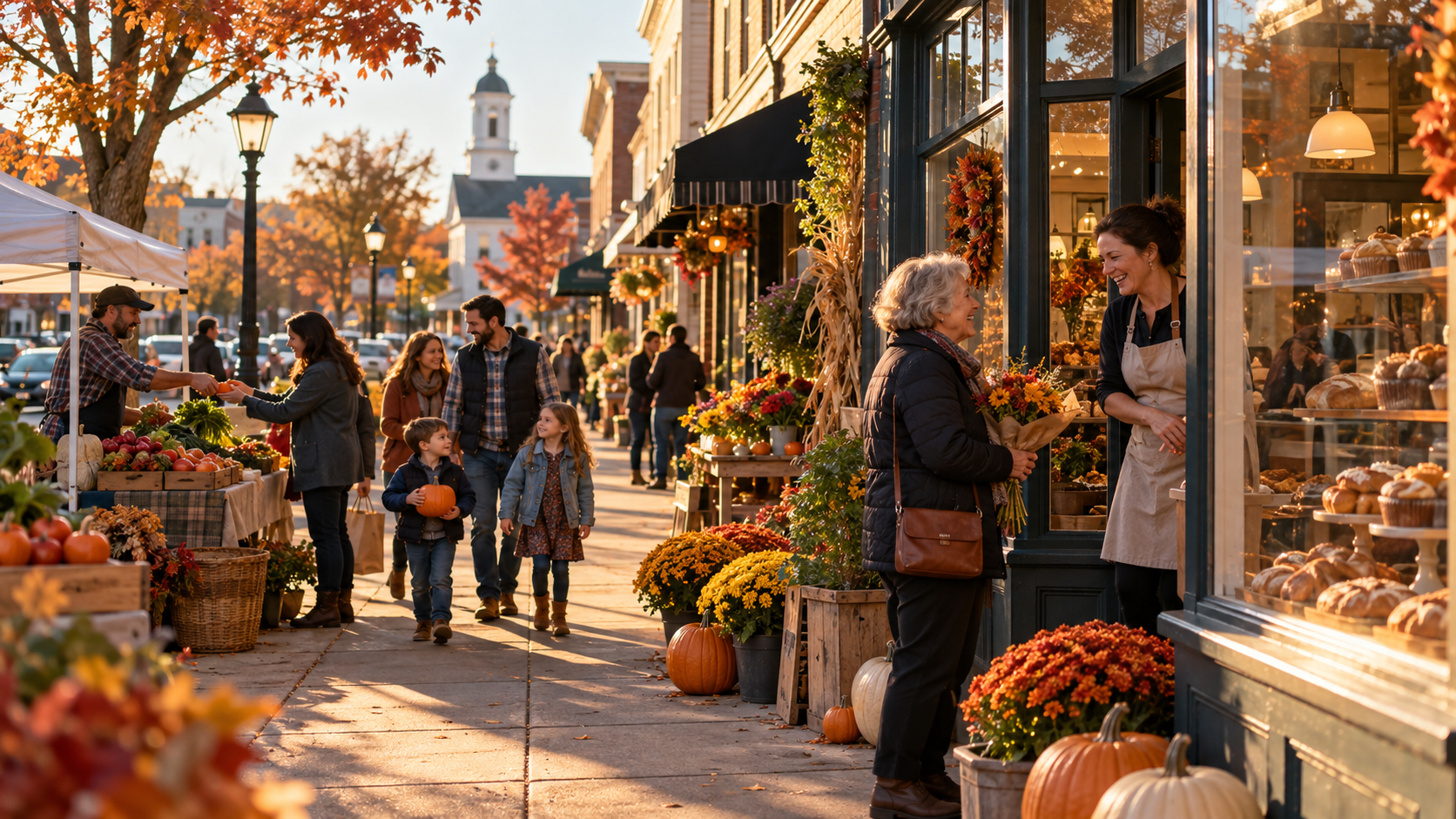
This Thanksgiving, we're recognizing the South Jersey businesses that do more than sell products and provide services. They help create the places, traditions, and everyday experiences that make our communities feel like home.
There's a good chance a local business has been part of your life for years without you giving it much thought.
Maybe it's the restaurant your family visits after a special occasion.
The mechanic who always manages to squeeze you in when your car starts making a strange noise.
The bakery where you order birthday cakes.
The contractor who helped your parents with their house.
The small shop you stop into every December.
Or the business that sponsors an event your children look forward to each year.
You probably know the name.
You might recognize the employees.
You may even have a favorite story about the place.
But when was the last time you actually thanked them?
Not for a particular transaction.
Not because they offered a discount.
But simply for being part of the community.
As Thanksgiving approaches, we spend time recognizing the people who make our lives better.
Family members.
Friends.
Neighbors.
Teachers.
Coworkers.
The people who show up when we need them.
But there's another group that deserves some appreciation.
The local businesses that quietly become part of the places we call home.
Throughout South Jersey, businesses do more than open their doors and sell something.
They employ neighbors.
They support local organizations.
They participate in community events.
They create places where people gather.
And sometimes, they help establish the traditions that make one town feel different from another.
We don't always notice that contribution because it becomes part of everyday life.
The coffee shop is simply where we meet.
The restaurant is where we celebrate.
The hardware store is where we go when something breaks.
The local business that sponsors a community event is just part of what happens every fall.
But those experiences don't appear out of nowhere.
They're often made possible by people working behind the scenes, running businesses, managing expenses, coordinating staff, and finding ways to remain involved in the communities they serve.
At Ritner Digital, we work with businesses on SEO, website visibility, content strategy, and helping the right customers discover their services.
We spend a lot of time talking about what makes a business easier to find.
But sometimes, it's worth talking about what makes a business worth remembering.
Because the strongest local brands aren't always the ones with the biggest advertising budgets.
Sometimes they're the ones that have become part of the town's story.
And this Thanksgiving, those are the businesses we'd like to recognize.
A Small-Town Business Is More Than a Place to Spend Money
When we think about the economic role of small businesses, we often focus on jobs, revenue, taxes, and commercial activity.
Those are important.
According to the U.S. Small Business Administration's Office of Advocacy, small businesses make up the overwhelming majority of businesses in New Jersey and employ a substantial share of the state's workforce.
The agency's annual profiles highlight how small enterprises contribute to employment, business openings, and economic activity.
But statistics only tell part of the story.
They don't tell you what it feels like to return to a familiar restaurant after a difficult week.
They don't describe the comfort of seeing the same friendly face behind the counter.
They don't capture what a family remembers about attending a small-town holiday event.
And they don't explain why people sometimes become genuinely upset when a longtime neighborhood business closes.
Because that business may have represented more than a convenient place to shop.
It may have been part of their routine.
Part of their family's history.
Or part of how they understood their town.
Businesses Become Familiar Through Repetition
A single transaction doesn't necessarily create a relationship.
But repeated experiences can.
You visit the same business.
You recognize the people.
You begin to understand how the place works.
It becomes familiar.
Over time, the business may become associated with particular moments in your life.
The restaurant where you celebrated a graduation.
The salon where someone helped you prepare for your wedding.
The auto repair shop that kept your first car running.
The local store where your children picked out holiday gifts.
Those connections aren't guaranteed.
Not every customer develops an emotional attachment to every business.
But when they do, the relationship becomes more personal than the original transaction.
That's one of the things independent businesses have the opportunity to cultivate.
They can become recognizable parts of everyday community life.
South Jersey Has Its Own Collection of Places That Make a Town Feel Like Home
One of the things that makes South Jersey interesting is how different its communities can feel.
Williamstown isn't Hammonton.
Hammonton isn't Collingswood.
Collingswood isn't Glassboro.
And Glassboro isn't Haddonfield.
Each community has its own history, business districts, organizations, and local traditions.
Some have walkable downtowns.
Others have businesses spread along commercial corridors or neighborhood roads.
Some are known for restaurants and shopping.
Others have strong agricultural, professional services, or industrial identities.
But across these different places, there's a common theme.
Local businesses help shape how residents experience their communities.
In Hammonton, Downtown Traditions Are Part of the Story
Hammonton offers a useful example of what can happen when businesses, local leadership, and community organizations work together over time.
According to MainStreet Hammonton's official history, Hammonton became part of the Main Street New Jersey program in 1993.
The organization documents years of work supporting downtown revitalization, storefront improvements, business activity, arts, and community gatherings.
It also identifies recurring events such as downtown trick-or-treating, holiday tree lighting, and other seasonal activities as part of its efforts to build community spirit.
Those aren't just dates on an events calendar.
They provide opportunities for residents to experience downtown as more than a place to make purchases.
A family might visit for a seasonal celebration.
Someone else may discover a shop while attending an event.
A resident may develop a favorite restaurant or return to an arts venue.
Each individual experience is different.
But together, they contribute to the identity of the downtown.
A Downtown Is Built by More Than the Storefronts
It would be a mistake to credit one business or one event with creating an entire community's character.
Downtown environments are shaped by many people.
Business owners.
Employees.
Property owners.
Residents.
Volunteers.
Local government.
Community organizations.
And the people who choose to spend time there.
MainStreet Hammonton is a useful reminder that a vibrant business district usually involves coordination and consistent effort.
A restaurant may contribute to the experience.
So might a retailer, nonprofit, theater, or event organizer.
The downtown becomes more than the sum of its individual businesses.
And that's something worth appreciating.
In Collingswood, a Farmers Market Has Become Part of the Weekly Rhythm
Another South Jersey example can be found in Collingswood.
The Collingswood Farmers' Market dates back to May 2000.
According to its official website, it began with twelve farms and grew into a recurring community destination featuring farmers, other vendors, food, and local activity.
The market operates on Saturday mornings during its seasonal schedule, from May through the Saturday before Thanksgiving.
That timing makes it especially relevant to this conversation.
For many people, a farmers market isn't simply about buying produce.
It's also about the experience of going.
Walking through the market.
Seeing what's in season.
Talking with vendors.
Meeting friends.
Enjoying breakfast or coffee.
And returning the following week.
Not everyone visits for the same reason.
But the recurring experience can become part of how people associate a place with community life.
The People Behind the Market Matter
It's easy to think of a farmers market as a single destination.
But that destination depends on individual participants.
Farmers growing produce.
Vendors preparing products.
Organizers managing schedules and logistics.
People setting up before customers arrive.
And the community members who choose to support it.
Those efforts deserve attention.
A successful market doesn't happen simply because someone declares a location worth visiting.
It requires ongoing work.
The same is true of many local business traditions.
What residents experience as a pleasant Saturday morning may involve substantial preparation by the people providing it.
That's one reason gratitude should extend beyond the storefront.
It should include the workers, producers, and organizers who make these experiences possible.
Glassboro Shows How Business and Community Events Can Share the Same Space
Glassboro provides another example of the relationship between local business activity and community identity.
The Borough of Glassboro's official events page describes a schedule of downtown festivals and community activities.
The borough also offers opportunities for businesses to participate in event sponsorships and other forms of engagement.
Its business development information emphasizes attracting and supporting businesses while promoting the downtown and broader local economy.
These efforts illustrate something important.
Community events aren't necessarily separate from a town's business environment.
They can bring people into public spaces where businesses, organizations, and residents interact.
A Festival Can Introduce People to a Place
Someone may visit a town because of an event rather than a particular business.
They might arrive for entertainment or a seasonal activity.
While they're there, they may notice a restaurant, service provider, or shop they weren't previously familiar with.
That doesn't guarantee they'll become a customer.
And it doesn't mean every sponsor receives a measurable return on investment.
But the event can introduce visitors to the business district.
It gives people a reason to spend time in the area.
The broader benefit is that community identity and business visibility can reinforce each other.
A business district feels more active when people have reasons to visit.
And local businesses can help support the experiences that attract those visitors.
Haddonfield Reminds Us That Main Street Is a Community Investment
Haddonfield is another South Jersey community where downtown identity matters.
In November 2024, the New Jersey Department of Community Affairs announced Haddonfield's designation as a Main Street New Jersey district.
The designation was part of a broader initiative supporting traditional downtowns through economic development, preservation, business partnerships, and community engagement.
The state's Main Street New Jersey program emphasizes four connected elements: organization, economic vitality, design, and promotion.
That's a useful framework for understanding why local business districts matter.
They're not simply collections of stores.
They're places that require planning, care, investment, and ongoing participation.
The Details of a Town Don't Maintain Themselves
A pleasant downtown experience may involve attractive storefronts, well-maintained public spaces, recognizable businesses, and local events.
But those details require attention.
Someone has to maintain the properties.
Someone has to coordinate activities.
Someone has to run the businesses.
And someone has to keep showing up, even when the work is difficult.
The results may appear effortless to visitors.
But they're not.
When we appreciate a beautiful or welcoming downtown, we should also recognize the people responsible for helping make it that way.
That includes the small business owners whose daily efforts contribute to the character of the place.
Sometimes a Business Makes People Feel Welcome in an Unexpected Way
Not every community connection happens in a traditional downtown.
Sometimes it happens at a place residents might not otherwise think to visit.
Earlier this month, our family attended Scotland Run Golf Club's second annual Trunk-or-Treat in Williamstown.
The event took place on October 20, 2026, and was advertised as free and open to the public.
The Chamber of Commerce Southern New Jersey's event listing confirmed the date, location, and event details.
Scotland Run is a property many residents associate primarily with golf.
Its golf course has transitioned to private membership, while the Highlander Pub & Grill continues to offer public dining.
But the Trunk-or-Treat provided a different kind of experience.
Families could attend a Halloween celebration without needing to be golfers or members.
For our family, it meant an evening of costumes, candy, and time spent together.
We even had a Minions-themed trunk, complete with playful decorations and a "BOO-NA-NA" display.
It was a simple, enjoyable community experience.
And it reinforced an idea that deserves more attention.
A business doesn't have to serve every resident as a paying customer to make a meaningful contribution to the surrounding community.
A Welcoming Event Can Change How People Experience a Business
A local resident may know where Scotland Run is located without ever having visited.
They may associate it with private golf memberships, weddings, or dining.
A public community event creates another opportunity to become familiar with the property.
It communicates that the business can participate in community life beyond its primary service.
We shouldn't assume that one event changed everyone's opinion or generated new customers.
We don't have evidence to make those claims.
But the invitation itself matters.
It gave local families another opportunity to spend time together.
And that's worth thanking Scotland Run for.
We explored that experience more personally in our earlier article about Scotland Run's second annual Trunk-or-Treat.
The larger lesson isn't about golf.
It's about what happens when a recognizable local business makes room for its community.
The Businesses We Forget Aren't Always the Ones With Storefronts
When people talk about supporting local businesses, they often imagine shops and restaurants.
Those are important.
But a community depends on many businesses that aren't as visible.
The plumbing company whose technicians arrive when a pipe breaks.
The electricians maintaining buildings.
The landscapers taking care of commercial properties.
The small manufacturers producing specialized parts.
The cleaning crews working after everyone else has gone home.
The auto repair shops keeping vehicles on the road.
The independent accountants helping local businesses manage their finances.
The commercial contractors maintaining and improving buildings.
And the service providers whose work becomes noticeable mainly when something goes wrong.
These businesses may never host a holiday market or operate a charming Main Street storefront.
But they're still part of the local economy and daily life.
Invisible Work Is Still Important Work
Some businesses become part of the community through the things they help keep running.
A repair company may not become the center of a holiday tradition.
But its work may help a family remain comfortable at home.
A commercial maintenance provider may not attract much public attention.
But its employees help businesses operate.
A specialized equipment supplier may be unfamiliar to most residents.
Yet it may support contractors and service companies that people rely on every day.
This kind of contribution isn't always easy to photograph.
It may not lend itself to a festive social media post.
But it deserves recognition.
A business doesn't need to be famous, photogenic, or highly visible to be important to the people around it.
That's particularly relevant in South Jersey, where many businesses operate outside the most recognizable retail districts.
Some serve industrial customers.
Others support homeowners.
Some provide professional expertise.
And many operate through relationships built across years of reliable service.
Those relationships help communities function.
Every Familiar Business Has People Behind It
When we talk about local brands, there's a tendency to focus on the business name.
But a name is only part of the story.
There's someone responsible for opening the doors.
Someone managing payroll.
Someone scheduling employees.
Someone ordering supplies.
Someone handling customer questions.
Someone cleaning up after closing.
Someone dealing with an unexpected repair.
And someone trying to make the numbers work when expenses increase.
Running a small business involves responsibilities customers may never see.
That's not a reason customers should overlook poor service or excuse every business decision.
Businesses still need to operate responsibly.
But it's a reminder that the familiar places in our communities depend on human effort.
The Employee You Recognize Is Part of the Experience
A business may be known for a product or service.
But the people delivering it often shape how customers remember the company.
The employee who explains something patiently.
The person who remembers a regular customer's order.
The technician who communicates clearly during a stressful repair.
The receptionist who makes a difficult appointment easier to manage.
Those moments can influence whether a customer feels comfortable returning.
They also help explain why some businesses become personally meaningful.
It's not always about the building or brand name.
Sometimes it's about the people.
So when we thank local businesses, we should remember to thank their teams, too.
Why Small Business Saturday Isn't Enough on Its Own
The Thanksgiving season naturally brings attention to shopping locally.
Small Business Saturday takes place on the Saturday after Thanksgiving and encourages consumers to support independent businesses.
For 2026, that falls on November 28.
The American Express Shop Small initiative provides resources intended to help small businesses and communities participate.
The movement has helped make local shopping a visible part of the holiday season.
That attention can be valuable.
But local businesses operate throughout the year.
They have expenses in January.
Employees to pay in March.
Equipment to maintain in June.
And customers to serve long after the holiday decorations disappear.
Community Support Shouldn't Be Limited to One Weekend
Supporting local businesses doesn't always mean spending money every day.
People have budgets.
Convenience matters.
Availability matters.
And a local company isn't automatically the right choice for every purchase.
But there are other ways to support businesses you appreciate.
You can recommend a company when it's relevant.
Share a genuine positive experience.
Attend a public event.
Offer thoughtful feedback.
Or simply acknowledge the people whose work you value.
A business may appreciate those gestures even when they don't produce an immediate transaction.
Buying Local Shouldn't Become a Guilt Trip
Not everyone has the same financial flexibility.
Sometimes a larger retailer is more affordable.
Sometimes a product isn't available locally.
Sometimes someone's schedule or transportation makes a nearby independent store difficult to visit.
Community appreciation shouldn't require people to feel guilty about practical choices.
Instead, the message can be simpler.
When a local business has provided something valuable, recognize it.
When you have an opportunity to support a business that serves your needs, consider it.
And when a company contributes positively to your community, don't assume someone else has already thanked them.
How Local Businesses Become Part of a Town's Identity
There's no single formula for becoming a meaningful local brand.
Some businesses build strong reputations through decades of dependable service.
Others become known for participating in community events.
Some develop relationships through schools, nonprofits, or neighborhood organizations.
And others create a gathering place people naturally return to.
These paths look different, but they share certain qualities.
1. They Become Familiar
Consistency helps.
People know where the business is.
They understand what it offers.
They recognize the people or environment.
Familiarity doesn't necessarily guarantee trust, but it can make a business easier to remember.
2. They Provide Something People Actually Value
That value might be a product, service, experience, or professional capability.
It doesn't need to be dramatic.
Sometimes the most meaningful contribution is simply being reliable.
3. They Participate Beyond Transactions
Some businesses sponsor events.
Others donate time, supplies, or expertise.
Some provide space for gatherings.
Others support organizations that serve residents.
Participation should be genuine and appropriate to the business's resources.
4. They Become Associated With Memories
A birthday celebration.
A holiday gathering.
A completed home project.
A recurring Saturday routine.
A helpful interaction during a difficult situation.
These experiences may create positive associations with the business.
5. They Keep Showing Up
Community relationships rarely develop overnight.
They grow through repeated interactions.
A single event can create a good first impression.
But lasting familiarity usually requires consistency.
That's one reason local business longevity can become meaningful to residents.
A company that has been part of the community for many years may become intertwined with people's experiences of the place.
Local Business Storytelling Should Begin With Real People, Not Marketing Claims
There's a marketing lesson in all of this.
But it's probably not the one people expect.
When businesses think about brand storytelling, they sometimes imagine polished videos, elaborate campaigns, or dramatic origin stories.
Those can be effective when the content is genuine.
But not every story needs to be cinematic.
Sometimes the most useful stories are about everyday work.
Why the business opened.
What problem it wanted to solve.
How the owner became involved in the industry.
What the team has learned.
Which customers it serves.
Or why a particular community matters to the people behind the company.
Specificity Makes a Story Worth Reading
Compare two possible descriptions.
"We are passionate about our community and committed to excellence."
And:
"Our shop started as a small family business, and over time we've become a place where local makers can sell their work and customers can participate in creative workshops."
The second description provides more information.
It gives the reader something concrete to understand.
A South Jersey example is Emporium on Central in Hammonton.
According to its official website, the business brings independent vendors, artisans, and makers together in one marketplace and offers activities including craft workshops and private creative gatherings.
That gives the business a story beyond a generic retail description.
It communicates a particular experience and relationship with other small businesses and makers.
We shouldn't assume how every customer perceives that experience.
But the business's public description offers a useful example of explaining what makes a local destination distinctive.
Don't Manufacture a Community Story
Not every business has a dramatic origin.
Not every owner wants to share personal details.
And not every company participates in public community events.
That's okay.
A brand story should reflect what is actually true.
A business that provides reliable industrial maintenance can tell a meaningful story about its expertise and the customers it serves.
A local contractor can document completed work.
A professional services firm can explain its approach and experience.
Authenticity doesn't require a perfect narrative.
It requires accuracy.
When Marketing Tells the Truth About a Community, People Have a Reason to Share It
This is where storytelling and digital marketing can support one another.
A business can publish an article that genuinely recognizes local people, organizations, or events.
Residents may find that content relevant because it reflects something familiar.
An event organizer may choose to share an accurate write-up.
A community publication may find the story useful.
A local organization may reference it when appropriate.
Those are possibilities, not guarantees.
But they illustrate why original, locally relevant content can be more meaningful than generic marketing material.
Write Stories People Would Appreciate Even Without an SEO Benefit
Imagine an article recognizing the people who organize a community tradition.
Or a feature about a local business that has served several generations.
Or a thoughtful account of a town's seasonal gathering.
Those subjects can be interesting because they're connected to real places and experiences.
The content should stand on its own.
It shouldn't exist solely as an excuse to target the town's name in a search result.
Google's guidance on creating helpful, people-first content emphasizes original information, useful reporting, and content developed for a genuine audience.
That aligns with good local storytelling.
If an article provides specific, accurate information that readers value, it has a stronger reason to exist.
A Backlink Should Be an Outcome, Not the Reason for the Story
Local organizations sometimes link to useful articles about their activities.
But a link shouldn't be the price of recognition.
Google's spam policies identify manipulative link practices, including buying or exchanging links for ranking purposes, as potential violations.
Sponsorship arrangements that involve links also need to follow appropriate search engine guidance.
If a business supports a fundraiser, the contribution should not depend on receiving a ranking-passing hyperlink.
If a publication covers an event, it should be free to decide whether a link is editorially appropriate.
And if a local organization chooses to share an article, that should happen because the information is useful.
The best community stories are worth sharing even if they never produce a backlink.
That's what makes them meaningful in the first place.
What South Jersey Businesses Can Do to Tell Their Stories Better
Not every business has a marketing department.
And not every owner has time to create lengthy articles.
But there are practical ways to improve local storytelling without making it an enormous project.
Document What You're Already Doing
If your team participates in a community event, keep a record of it.
If you've completed a meaningful project, document the work appropriately.
If your business supports a local organization, make sure the details are accurate before sharing them.
You don't need to exaggerate the significance of an activity.
Explain what happened, why it mattered, and who was involved.
Give Other People Credit
A community activity may involve volunteers, partner organizations, employees, and participants.
Recognize their contributions when appropriate.
Don't present an event as your company's accomplishment if several groups made it possible.
Credit makes the story more complete.
It also reflects the collaborative nature of community involvement.
Ask Permission Before Publishing People or Private Information
Public events often involve photographs.
Businesses should be especially thoughtful when publishing identifiable images of children or other attendees.
Obtain appropriate permissions, respect event rules, and avoid revealing private information.
The same applies to customer testimonials, private projects, and personal experiences.
An accurate story shouldn't come at the expense of someone else's privacy.
Be Specific About the Place
A story about Williamstown should contain something meaningful about Williamstown.
An article about Hammonton should do more than mention the town name in the headline.
A Collingswood story should reflect a genuine person, business, event, or experience connected to Collingswood.
This makes the content more relevant to local readers.
It also helps distinguish meaningful local reporting from generic location-targeted SEO pages.
Make the Content Easy to Discover
Use a clear title.
Identify the business or event accurately.
Provide appropriate links to official sources.
Include useful context.
And make sure the article is readable on mobile devices.
You don't need an elaborate technical SEO strategy for every community story.
But the content should be accessible and understandable.
A Community's Reputation Isn't Built by One Business
One important distinction gets lost in discussions about local branding.
A business can contribute to its community's identity.
But it doesn't own that identity.
A town's character comes from many sources.
Its residents.
History.
Schools.
Public spaces.
Organizations.
Local traditions.
Arts.
Businesses.
And the relationships among them.
No single company can reasonably claim credit for all of that.
A good community story recognizes the broader picture.
Small Businesses Are Part of Something Larger
The New Jersey Department of Community Affairs' Main Street approach emphasizes collaboration among residents, merchants, civic organizations, property owners, and public officials.
That reflects an important reality.
A downtown or neighborhood succeeds through many contributions.
An individual business can play a meaningful role.
But its contribution exists within a larger network.
That's why local marketing should make room for other voices.
A community story can celebrate a business while still acknowledging the people and organizations around it.
Goodwill Can't Be Claimed. It Has to Be Experienced.
A company can call itself community-focused.
It can include the word "local" in every advertisement.
It can publish photographs of familiar landmarks.
But those statements alone don't prove that residents feel connected to it.
People develop opinions through experiences.
How they're treated.
Whether the business delivers on its promises.
Whether participation feels welcoming.
Whether the company's actions reflect its stated values.
That's why community involvement should never be reduced to a slogan.
The most meaningful reputation is the one people build from real interactions.
The Businesses We Remember When They're Gone
There's another reason this topic feels especially appropriate around Thanksgiving.
Sometimes we don't realize how much a business meant to us until it's no longer there.
A longtime restaurant closes.
A shop changes ownership.
A familiar business moves.
A local service company retires.
And suddenly, people begin sharing memories.
They remember family dinners.
Holiday shopping trips.
Conversations with employees.
Small moments that seemed ordinary at the time.
The business may have been part of their lives for years.
But much of the appreciation arrives only after it's gone.
Appreciation Doesn't Have to Wait
You don't need to write an elaborate tribute every time you have a good experience.
But you can acknowledge the businesses that matter to you while they're still part of the community.
Thank an employee.
Tell an owner you appreciate the business.
Share a genuine positive experience.
Recommend the company when appropriate.
Attend a public event.
Or simply continue supporting places you value when doing so fits your needs and circumstances.
These gestures aren't guaranteed to change a business's finances.
But they can help people feel recognized.
And recognition matters when someone is putting substantial effort into serving a community.
This Thanksgiving, Thank More Than the Businesses You Shop At
Here's something worth considering.
Think beyond your favorite restaurant or store.
Think about the people and companies that help your community function.
The business that sponsors a school activity.
The company that contributes to a community event.
The local contractor working on neighborhood buildings.
The small manufacturer employing area residents.
The professional service provider helping other businesses operate.
The farmers and vendors who participate in seasonal markets.
The restaurant employees working during busy holiday periods.
The volunteers helping organize community gatherings.
The local businesses that quietly support organizations without making a major announcement.
Some of these contributions are visible.
Others aren't.
But they're all worth considering when we talk about what makes a community.
You Don't Have to Spend Money to Say Thank You
Supporting local businesses can involve purchases.
But appreciation can also be expressed through words and actions.
A sincere thank-you.
A thoughtful recommendation.
An honest review on a platform that permits it.
A message recognizing excellent service.
Or sharing accurate information about a community event.
Businesses shouldn't pressure customers to provide public endorsements.
And feedback should always be authentic.
The Federal Trade Commission's guidance on consumer reviews and testimonials addresses deceptive practices such as fake reviews and misleading testimonials.
A genuine positive review can be valuable.
But appreciation doesn't need to become advertising.
Sometimes saying thank you directly is enough.
Five Questions for South Jersey Business Owners Before 2027
As a business owner, Thanksgiving can be an opportunity to reflect on the relationships surrounding your company.
Not every business needs to host a major event.
Not every company has the resources to sponsor community activities.
But there are still meaningful questions worth asking.
Who Helped Make Our Business Possible This Year?
Think about employees, customers, referral partners, suppliers, and other local businesses.
Have you recognized their contributions?
What Did We Contribute Beyond Our Core Transactions?
Maybe your business participated in a local event.
Provided support to an organization.
Shared expertise.
Or simply helped customers through difficult situations.
Not every contribution needs publicity.
But it's worth acknowledging internally.
Does Our Website Communicate Who We Really Are?
Does it explain the business accurately?
Does it reflect real experience?
Can people learn about the team, services, and values without relying entirely on generic claims?
Are We Building Relationships or Just Generating Attention?
An increase in social media views doesn't necessarily mean stronger community relationships.
Look at the quality of interactions.
Are people finding useful information?
Are customers receiving good service?
Are you maintaining meaningful connections?
What Do We Want to Be Known for in 2027?
The answer doesn't need to be grand.
Maybe you want your business to be known for reliability.
Specialized expertise.
Clear communication.
Welcoming service.
Or thoughtful community participation.
Whatever the answer, it should be supported by actual behavior.
Your brand reputation is shaped by what people experience, not simply by what your marketing says.
How to Share a Local Business Story Without Turning It Into a Sales Pitch
If your business publishes community-focused content, the tone matters.
A local tribute should feel like recognition, not a disguised advertisement.
Put the Community First
Start with the person, event, or experience being recognized.
Explain why it's meaningful.
Use accurate details.
Don't lead with a lengthy sales pitch about your company.
Include Real Local Context
The location should matter to the story.
Mention relevant history or recurring traditions when supported by reliable sources.
Link to official event information or local organizations where useful.
Avoid inventing attendance numbers, customer reactions, or outcomes.
Let Gratitude Be Genuine
A simple thank-you can carry more meaning than an elaborate promotional message.
You don't need to exaggerate a business's contribution.
Recognizing what it actually did is enough.
Keep the Call to Action Appropriate
A community story doesn't need to pressure readers to purchase something.
An invitation to recognize a local business, share a relevant memory, or learn more about a community organization may be appropriate.
If the article appears on a company's marketing website, a business-related contact option can remain available without becoming the center of the story.
Give Credit Without Expecting Anything in Return
If you feature a local business or organization, don't treat the story as an invoice for publicity.
They aren't obligated to share it.
They aren't required to link to your website.
And they don't owe you a business relationship.
The recognition should be sincere regardless of what happens afterward.
Frequently Asked Questions
1. Why are small businesses important to South Jersey communities?
Small businesses support employment, provide services, contribute to local economic activity, and can help shape how residents experience their towns.
Some also participate in local events, support community organizations, and create gathering places.
Their contributions vary by business and community, but their collective presence is an important part of South Jersey's economy and everyday life.
2. How does a small business become part of a community's identity?
A business may develop that role through years of reliable service, recurring customer relationships, community participation, and association with meaningful local experiences.
Some become familiar destinations.
Others are recognized for specialized services or behind-the-scenes contributions.
There's no guaranteed formula, and community trust needs to be earned over time.
3. What are examples of community-focused business activity in South Jersey?
Examples include MainStreet Hammonton's downtown traditions, the Collingswood Farmers' Market, downtown events supported by the Borough of Glassboro, and Scotland Run Golf Club's public Trunk-or-Treat in Williamstown.
These examples represent different kinds of community involvement and should not be treated as identical programs.
4. Is supporting local businesses only about shopping locally?
No.
Purchasing from businesses can provide direct support, but residents can also share genuine recommendations, attend public events, provide helpful feedback, and thank employees or owners.
The appropriate type of support depends on personal circumstances and the business.
5. What is Main Street New Jersey?
Main Street New Jersey is a state program focused on supporting traditional business districts through revitalization, partnerships, preservation-aware development, and community engagement.
It uses a four-point approach involving organization, economic vitality, design, and promotion.
The program is administered through the New Jersey Department of Community Affairs.
6. How can South Jersey businesses participate in community events?
Businesses can explore appropriate opportunities through local municipalities, downtown organizations, chambers of commerce, nonprofits, and event organizers.
Participation might involve volunteering, providing resources, hosting an activity, or becoming a sponsor.
Businesses should consider their capacity, relevant requirements, and the community's needs before committing.
7. Do community events improve local SEO?
A community event may lead to useful online information, local mentions, or editorial coverage.
But hosting an event doesn't guarantee higher search rankings.
Google's local results consider factors including relevance, distance, and prominence.
Community involvement should be genuine rather than organized primarily to manipulate search signals.
8. Can a local business earn backlinks through community storytelling?
It's possible for useful local content to be referenced by organizations or publications that find it relevant.
However, no business can guarantee those links.
Stories should provide original, accurate information and stand on their own value.
Businesses should avoid paid or manipulative link schemes intended to influence rankings.
9. Do I need a large marketing budget to build a community-focused brand?
Not necessarily.
Many meaningful activities depend more on consistency, reliability, and thoughtful participation than elaborate campaigns.
Businesses can also contribute through everyday service, professional expertise, and appropriate partnerships.
The goal should reflect actual resources rather than creating an unsustainable obligation.
10. How can a business tell its story without sounding self-promotional?
Focus on specific facts and useful experiences.
Explain the business's actual history, expertise, team, or community participation.
Use genuine examples and avoid exaggerated claims.
A strong story helps readers understand something real rather than simply repeating marketing slogans.
11. Should local businesses publish photos of community events?
They can when they have appropriate rights and permissions.
Businesses should respect event policies, privacy expectations, and the interests of people depicted, particularly children.
Accurate captions and relevant context can help make photos informative without turning attendees into marketing material.
12. How can residents thank local businesses?
A sincere verbal thank-you, direct message, genuine recommendation, or honest review on a platform that permits it can communicate appreciation.
Residents may also choose to support public events or relevant community activities.
People shouldn't feel obligated to spend money or make public endorsements in order to show gratitude.
13. Is community branding different from traditional advertising?
Yes.
Traditional advertising typically promotes a product, service, or business objective through a defined campaign.
Community branding involves how people come to understand a business through its actions, relationships, and participation in local life.
The two can complement each other, but community trust cannot be guaranteed through advertising.
14. How should businesses measure community involvement?
Measurement should reflect the activity's actual purpose.
For some events, attendance or participation may be relevant.
For others, volunteer contributions, funds raised, or feedback from organizers may provide context.
Business results shouldn't be invented or attributed to a community activity without evidence.
Sometimes the value of an activity is primarily the experience it provides.
15. Why is Thanksgiving a good time to recognize small-town businesses?
Thanksgiving encourages reflection on the people and relationships we appreciate.
That creates an opportunity to acknowledge the businesses, employees, volunteers, and organizations that contribute to daily life throughout the year.
But appreciation is valuable beyond the holiday season.
16. Can a local brand become well known without heavy advertising?
Yes, some businesses develop strong recognition through reliable service, referrals, longevity, and community involvement.
However, outcomes vary, and many still benefit from maintaining accurate websites, local listings, and useful information so new customers can discover them.
Recognition and discoverability can support each other.
The Small-Town Businesses We Remember Are Often the Ones That Helped Us Feel at Home
When we think about the places that make South Jersey special, we often think about towns, neighborhoods, parks, schools, and familiar roads.
But businesses are part of those memories, too.
The bakery you remember from childhood.
The restaurant where your family celebrated.
The shop you visited every holiday season.
The local professional who helped during a stressful time.
The contractor who made an important improvement to your home.
The farmers market that became part of your Saturday routine.
The community event that gave your family another opportunity to spend time together.
These experiences may seem ordinary while they're happening.
We go.
We enjoy them.
We return home.
And life continues.
But over time, those moments become part of how we understand the communities around us.
The people running the businesses may not always know which experiences mattered to us.
They may not realize that someone remembers a particular conversation.
Or that a family still talks about a community event.
Or that a reliable service call made a difficult week easier.
That's why it's worth saying thank you.
Not only when a business celebrates an anniversary.
Not only when there's a promotion.
Not only after a grand opening.
And not only when a place announces that it's closing.
Thank the businesses that have become part of your community while they're still here, still working, and still contributing.
Thank the employees who make the experience possible.
Thank the organizers behind the events your family enjoys.
Thank the local owners who keep showing up.
And recognize the less visible companies whose work helps the community function.
Not every business will be perfect.
Not every company will be around forever.
And no one can support every local business all the time.
But appreciation doesn't require perfection.
It requires noticing.
This Thanksgiving, Let's Remember the Businesses That Made South Jersey Feel Like Home
South Jersey isn't defined by one downtown, one event, or one recognizable brand.
It's shaped by the people and organizations contributing to the places where we live.
The businesses in Williamstown.
The people building traditions in Hammonton.
The vendors and organizers who help make Collingswood's market possible.
The businesses participating in Glassboro's community life.
The people investing in downtown Haddonfield.
And the countless businesses throughout Camden, Gloucester, Atlantic, Burlington, Cumberland, Salem, and Cape May counties that quietly serve customers every day.
Some are destinations.
Some are neighborhood favorites.
Some work behind the scenes.
Others become important because of one meaningful interaction.
They don't all have the same story.
But they deserve to be seen as more than places where transactions happen.
At Ritner Digital, we believe good marketing should help businesses communicate what makes them genuinely valuable.
Sometimes that's technical expertise.
Sometimes it's exceptional service.
Sometimes it's a long history of supporting customers.
And sometimes it's the role a business plays in its community.
Not every contribution can be measured in clicks or conversions.
Not every positive experience becomes a sale.
And not every meaningful community story produces a backlink.
That's okay.
Some stories deserve to be told because they recognize people and places worth appreciating.
So this Thanksgiving, think about a South Jersey business that has been part of your life.
A business you remember.
A place that made an ordinary day better.
A company that helped when you needed it.
Or a local organization whose events became part of your family's traditions.
Then consider telling them.
Because the businesses we sometimes forget to thank may be the very ones that helped make our communities feel like home.
Help Your Business Tell the Story Behind Its Reputation With Ritner Digital
Every business has a story.
But not every story is being communicated clearly online.
At Ritner Digital, we help local businesses and specialized service companies connect SEO, AI search visibility, website content, and digital strategy with the people they're trying to reach.
That includes helping businesses explain their services, demonstrate genuine expertise, document meaningful work, and make it easier for relevant customers to discover them.
We believe local marketing should be grounded in real experiences and accurate information—not generic claims about being the best or attempts to manufacture community credibility.
Whether your company has served South Jersey for decades or is still building its place in the community, a useful digital presence can help more people understand what you do and why it matters.
Your business doesn't need an invented story.
It needs a clearer way to share the one it's actually building.