Why Dropping on the Same Day Beats Staggering Every Time
Here is a scenario that plays out constantly in influencer and creator marketing — and almost always produces a worse result than the alternative.
A brand closes deals with eight creators across Instagram or TikTok or YouTube. The campaign manager, thinking they are being strategic, staggers the posts. Creator one goes Monday. Creator two goes Wednesday. Creator three goes Friday. The logic sounds reasonable — extend the campaign window, keep the brand in front of audiences across multiple weeks, avoid oversaturation.
What actually happens is that each post lands in isolation. Creator one's audience sees it, some engage, most scroll past. By Wednesday when creator two posts, the moment has passed for creator one's audience and creator two's audience has no idea anything is happening. By Friday the brand has generated seven days of middling individual performance and zero cultural momentum.
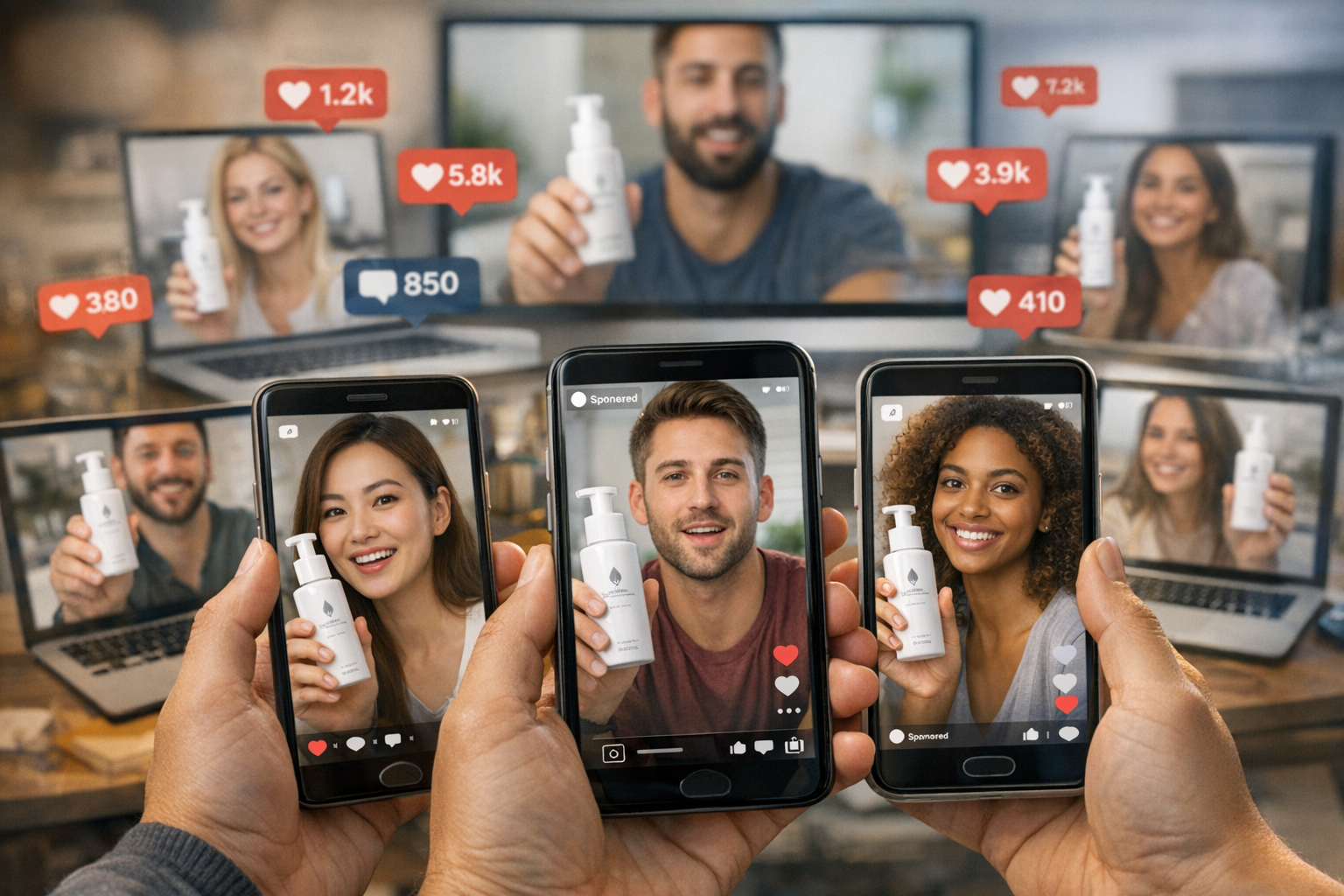
Now run the same campaign differently. All eight creators post on the same day. Same product, same moment, different voices, different audiences — all hitting simultaneously.
The effect is completely different. A person who follows three of those eight creators opens their app and sees the same brand featured by multiple people they trust on the same day. A person who only follows one of them sees it once — but their friends who follow different creators are talking about it. The brand is not just appearing in feeds. It is appearing to be everywhere. And that perception of omnipresence, combined with the social proof of multiple trusted voices all saying the same thing independently, creates something that staggered posting structurally cannot produce: the sense that something is happening right now that everyone is paying attention to.
This post is about why the coordinated same-day drop is one of the most underutilized and most effective strategies in creator and influencer marketing, why the social proof mechanism behind it is so powerful, and why most brands are leaving significant impact on the table by staggering when they should be synchronizing.
The Psychology Behind Why This Works
Social Proof at Scale Is Categorically Different From Social Proof in Sequence
Social proof is one of the most well-documented mechanisms in consumer psychology. When people are uncertain about a decision — whether to try a product, whether to trust a brand, whether something is worth their attention — they look to the behavior and opinions of others as a signal of what the correct choice is. The more people they perceive to be making a particular choice, the more confident they feel making it themselves.
The critical word is perceive. What matters for social proof is not just how many people are endorsing something — it is how concentrated and visible that endorsement is. Ten people endorsing a product across ten weeks registers as a slow trickle that most consumers never notice as a pattern. Ten people endorsing the same product on the same day registers as a consensus event — a moment where the market has collectively decided that this thing is worth attention.
The brain does not process those two scenarios as quantitatively equivalent. It processes them as qualitatively different. Ten separate endorsements feel like ten individual opinions. Ten simultaneous endorsements feel like a movement.
The Algorithm Amplifies Concentration, Not Distribution
Platform algorithms — TikTok's, Instagram's, YouTube's — are designed to identify and amplify content that is generating engagement signals within a compressed time window. A post that generates a thousand interactions in its first hour is treated very differently by the algorithm than a post that generates a thousand interactions spread across a week. Concentrated engagement signals recency, relevance, and momentum — the qualities that algorithms are built to reward with expanded distribution.
When multiple creators post about the same brand or product on the same day, two things happen algorithmically. First, each individual post generates its own engagement signals that the algorithm evaluates for distribution — and those signals are stronger because the coordinated drop creates genuine cultural conversation that drives engagement up across every post simultaneously. Second, the aggregate engagement around the brand's name, product, and associated hashtags spikes in a way that registers as a trending signal — telling the algorithm that this is something people are actively interested in right now, which drives even further organic reach beyond the creators' existing audiences.
Staggering kills both effects. Each post lands in a quiet algorithmic environment with no concurrent signals to amplify. The brand never trends. The posts never create compounding reach. Each creator's audience sees it independently with no external validation that anything significant is happening.
Fear of Missing Out Is Time-Dependent
FOMO — the fear of missing out — is one of the most powerful behavioral drivers in consumer marketing. But FOMO is not a static psychological state. It is a time-sensitive one. It is created by the perception that something is happening right now, that others are already engaged with it, and that failing to pay attention means being left behind a moment that is actively unfolding.
A staggered campaign cannot create FOMO because it has no single moment for anyone to miss. Creator one's post is just a post. Creator five's post three weeks later is just a post. There is no concentrated moment of cultural activity that creates the urgency of now.
A coordinated same-day drop creates FOMO structurally. The product is everywhere on the same day. The conversation is happening in multiple places simultaneously. The comments across multiple creators' posts are referencing each other — "I literally just saw this on [creator]'s page too" is a comment that appears organically in coordinated campaigns and is one of the most valuable pieces of social proof a brand can receive, because it is user-generated validation of exactly the omnipresence effect the campaign was designed to create.
What "Appearing Everywhere at Once" Actually Does to Brand Perception
Omnipresence Creates the Perception of Market Leadership
When a consumer sees a brand featured by multiple creators they follow on the same day, their brain does not process it as a coordinated marketing campaign. It processes it as market consensus — as evidence that this brand has reached a level of relevance and recognition where the people they trust are all independently arriving at the same conclusion about it.
That perception of market leadership is extraordinarily difficult to create through staggered content and impossible to buy through paid advertising alone. Paid ads tell consumers that a brand paid to show up in their feed. Coordinated creator drops — when executed well — tell consumers that the brand is so genuinely worth paying attention to that multiple trusted voices are talking about it right now without any apparent coordination. The coordination is real but the social proof it generates feels organic, and the resulting brand perception lift is the kind that advertising spend cannot replicate at the same cost or the same credibility.
Multiple Touchpoints in a Single Day Accelerates the Purchase Decision
Consumer psychology research consistently shows that purchase decisions require multiple touchpoints — multiple exposures to a brand or product before the consumer feels enough familiarity and trust to convert. The traditional marketing model assumes these touchpoints are distributed across time — the consumer sees the brand repeatedly over days or weeks and eventually converts.
The coordinated creator drop compresses this timeline by delivering multiple touchpoints in a single day through different voices and different contexts. A consumer who sees a brand featured by a lifestyle creator in the morning, a fitness creator at noon, and a cooking creator in the evening has received three touchpoints from three trusted sources in one day. The trust transfer from each creator to the brand is additive. By the end of that day, the consumer may have received more trust-building exposure to the brand than a staggered campaign would have delivered in three weeks.
That compression of the trust-building timeline has a direct effect on purchase velocity. Products that would have converted a consumer in week three of a staggered campaign convert them in day one of a coordinated drop — because the multiple simultaneous touchpoints have done in hours what sequential posting takes weeks to accomplish.
The Comment Section Becomes a Social Proof Engine
One of the most underappreciated effects of the coordinated same-day drop is what happens in the comment sections of each creator's post. When multiple creators post about the same product on the same day, a portion of their audiences overlap — and those overlapping audience members show up in multiple comment sections simultaneously. They leave comments like "wait I literally just saw this on [other creator]'s page" or "everyone is talking about this today" or "okay I keep seeing this everywhere I need to try it."
These comments are gold. They are organic, user-generated validation of exactly the omnipresence effect the campaign created — and they are being read by every other person in that comment section, amplifying the social proof signal beyond the creator's direct audience into the broader audience of people evaluating the comment section as part of their purchase decision research. A brand cannot pay for comments like those. It can only engineer the conditions that produce them — and the coordinated same-day drop is the most reliable way to produce them.
Why Brands Keep Staggering Anyway — And Why Those Reasons Don't Hold Up
"We Don't Want to Oversaturate Our Audience"
The oversaturation concern is the most common argument for staggering and it misunderstands how creator audiences actually work. The assumption is that a consumer who sees the same brand featured by multiple creators they follow on the same day will feel bombarded and react negatively. In practice, the opposite tends to happen — consumers interpret simultaneous appearances across multiple trusted accounts as validation that the brand is genuinely worth attention, not as evidence of an aggressive paid campaign.
Oversaturation is a real risk — but it is a risk of the wrong creators, the wrong product fit, or the wrong message, not a risk of timing. A brand that is genuinely relevant to a creator's audience will not feel oversaturated when multiple relevant creators talk about it on the same day. A brand that is not relevant to those audiences will feel intrusive regardless of whether the posts are staggered or synchronized. The timing strategy does not cause oversaturation — misalignment between brand and creator audience causes it.
"We Want to Extend the Campaign Window"
The desire to extend the campaign window reflects a measurement framework that prioritizes duration over impact — and in creator marketing, impact is what moves the needle. A seven-day campaign that creates a single day of genuine cultural momentum and then fades is more valuable than a thirty-day campaign that generates consistent low-level activity with no concentrated moment of significance.
The question worth asking about campaign window extension is what the extended window is actually producing. If the answer is continued genuine engagement with ongoing conversation — products that have long consideration cycles, content that continues generating organic search results, evergreen reviews that drive discovery over time — then extended windows have value and staggering individual creator posts within them makes sense. If the answer is that the extended window mostly represents the gap between posts where the brand is generating no engagement and producing no outcomes, the extension is not adding value — it is diluting the impact that concentration would have produced.
"It's Too Hard to Coordinate That Many Creators"
Operationally, coordinating a same-day drop across multiple creators is more complex than staggering. Briefing timelines need to be aligned. Content approvals need to happen on a coordinated schedule. Go-live instructions need to be clear and followed. Creators who are late need to be managed. This is real coordination work that staggered campaigns do not require.
But the coordination complexity is a logistics problem with logistics solutions — clear briefing documents, go-live instructions that specify posting windows rather than exact times, production timelines that build in buffer for creator schedules, and account management that follows up proactively in the days before launch. The brands generating the most impact from creator campaigns have built the operational infrastructure to execute coordinated drops consistently. The brands that continue staggering because coordination is hard are accepting lower campaign performance as the price of operational simplicity — a trade-off that gets harder to justify as the evidence for concentrated drops accumulates.
How to Execute the Coordinated Drop Correctly
Brief for Authenticity, Not Uniformity
The coordinated drop works because multiple trusted voices are all saying something similar about the same thing at the same time. It stops working when those voices all say exactly the same thing in exactly the same way — because then it reads as the coordinated marketing campaign it is rather than the organic consensus it is supposed to feel like.
The brief for a coordinated drop should specify the core message and the key product points that need to be communicated — the what — while giving each creator significant latitude on the how. Different creators should be expressing the brand in their own voice, through their own lens, in the content format that works for their specific audience. The synchronization is in the timing and the core message. The differentiation is in the expression. That combination — simultaneous, diverse, authentic — is what produces the omnipresence effect without triggering the "this is a paid campaign" filter that audiences have become very good at activating.
Choose Creators With Overlapping Audiences Strategically
The coordinated drop's FOMO and social proof effects are strongest when a meaningful portion of the creators' audiences overlap — when the same person is seeing the brand from multiple creators they follow on the same day. But pure overlap is also not the goal. A campaign where all eight creators are talking to literally the same audience is just reaching the same people eight times. The ideal creator mix combines meaningful audience overlap — enough to create the "everyone is talking about this" effect among a core audience — with sufficient audience diversity to extend the campaign's reach beyond that core.
Mapping creator audiences before building a coordinated campaign — identifying which creators share significant audience overlap and which extend reach into adjacent demographics — is one of the highest-value pieces of pre-campaign planning a brand can do. The overlap map shapes everything from creator selection to the specific messaging emphasis that will land best with each segment of the combined audience.
Build the Amplification Layer Before Launch Day
The coordinated drop creates its own momentum — but brands that build an amplification layer on top of it extract significantly more value from the campaign. This means having paid amplification ready to deploy behind the organic creator content the moment it launches — boosting the posts that are generating the strongest early engagement signals to extend their reach beyond the creators' existing audiences. It means having brand-owned social accounts ready to engage with creator content, reposting and responding in ways that add to the conversation without overwhelming it. And it means having a PR or media outreach component ready to point journalists or industry publications to the coordinated activity as evidence of genuine market momentum — because a synchronized creator campaign that generates enough organic buzz can become a news story in its own right, extending reach into audiences that no creator in the campaign directly touches.
Measure the Right Things
The metrics that reveal whether a coordinated drop is working are different from the metrics that reveal whether a staggered campaign is working. The individual post metrics — views, likes, comments, shares — matter but are not the primary signal. The signals that indicate whether the coordinated drop produced its intended effect are the aggregate engagement spike across all posts on launch day, the rate at which overlapping audience members are referencing the campaign across multiple creator posts, the organic search volume increase for the brand or product name in the days following the launch, and the conversion and sales velocity on launch day compared to the days before and after.
A coordinated drop that works produces a measurable spike in all of these metrics on launch day that decays over the following days — a sharp peak rather than a gradual curve. That peak is the concentrated impact the campaign was designed to create, and it is the signal that the omnipresence effect landed. A staggered campaign produces a gentler, more distributed curve that rarely peaks at the same height and never creates the same concentrated cultural moment.
The Bottom Line
The staggered creator campaign is the default because it feels safer, is easier to coordinate, and extends the campaign window in ways that look good in a timeline deck. It is also leaving the most valuable effect of multi-creator campaigns entirely on the table — the concentrated, simultaneous social proof that makes a brand feel like it is everywhere at once and creates the kind of FOMO-driven purchase urgency that sequential posting structurally cannot produce.
The coordinated same-day drop is harder to execute, faster to peak, and significantly more impactful. The brands that have figured this out are generating campaign results that look disproportionate to their creator spend because the timing strategy is doing work that the individual creators alone could never do.
Drop together. Peak higher. The math on this one is not close.
Frequently Asked Questions
The Core Strategy
Q: What exactly is a coordinated same-day creator drop and how does it differ from a standard influencer campaign?
A coordinated same-day creator drop is a campaign where multiple creators — across the same platform or across multiple platforms simultaneously — all publish content featuring the same brand or product on the same day, often within the same window of hours. A standard influencer campaign typically staggers those posts across days or weeks, either for logistical convenience or based on the mistaken belief that distribution over time extends reach. The difference in outcome is not incremental — it is structural. Staggered posts generate individual performance for each creator's content in isolation. A coordinated drop generates something qualitatively different: the perception that the brand is everywhere at once, the algorithmic amplification that comes from concentrated engagement signals, and the organic social proof of overlapping audience members encountering the same brand across multiple trusted voices on the same day. These effects are only available through coordination. No amount of staggered posting, regardless of creator quality or content quality, can replicate what simultaneous posting produces.
Q: How many creators do you need for a coordinated drop to produce the omnipresence effect?
There is no universal minimum but the effect becomes meaningfully stronger as the number of simultaneous creators increases. Two or three creators posting on the same day produces some amplification but rarely generates the cultural momentum that makes audiences feel like something significant is happening. Five to eight creators posting simultaneously is where most brands start seeing the omnipresence effect emerge — where overlapping audience members are encountering the brand multiple times in a single session and where the aggregate engagement spike becomes visible enough to trigger algorithmic amplification. Ten or more creators posting simultaneously in the same window produces the strongest version of the effect — genuine trending potential, significant organic cross-referencing in comment sections, and the kind of FOMO-driven purchase urgency that drives measurable sales velocity on launch day. The right number for any specific campaign depends on the size of the creators involved, the degree of audience overlap between them, and the budget available — but the directional rule is consistent: more simultaneous voices produce a stronger effect than fewer, and any number of simultaneous voices produces a stronger effect than the same number staggered.
Q: Does this strategy work differently on TikTok versus Instagram versus YouTube?
The core mechanism — concentrated social proof from multiple simultaneous trusted voices — works across all three platforms. The specific dynamics differ by platform in ways that affect how the strategy should be executed. TikTok's algorithm is the most responsive to concentrated engagement signals in a compressed time window — a coordinated drop on TikTok has the highest potential for algorithmic amplification into audiences beyond the creators' existing followers because TikTok's For You Page distribution is more aggressive about surfacing trending content to new audiences than Instagram's or YouTube's equivalent systems. Instagram produces the strongest cross-referencing effect in Stories and Reels — the overlapping audience member who sees the brand in multiple Stories on the same day is one of the most powerful social proof experiences the platform offers. YouTube coordinated drops work particularly well for products with longer consideration cycles where the detailed, searchable nature of YouTube content means the coordinated launch creates an immediate spike followed by longer-tail discovery as the videos continue ranking in search. A campaign that runs all three platforms simultaneously on the same day — coordinating TikTok, Instagram, and YouTube creators to launch together — produces the strongest version of the effect across the broadest possible audience.
Q: What is the ideal posting window for a coordinated drop — does everyone need to post at exactly the same time?
Exact simultaneous posting is not necessary and is operationally impractical with a large creator roster. The effective coordinated drop defines a posting window — typically a two to four hour block within the same day — rather than a specific minute. Within that window, individual creators have the flexibility to post at a time that works for their specific audience's peak engagement hours, which improves each individual post's performance while maintaining the concentrated same-day effect that produces the omnipresence and algorithmic amplification. What matters is that all posts are live within the same day — ideally within the same several-hour window during peak platform activity hours for the target demographic — so that overlapping audience members encounter the brand across multiple creators within a single scrolling session rather than across multiple days of separate sessions. A four-hour launch window on a Tuesday or Wednesday during afternoon peak hours is a reasonable operational target for most coordinated campaigns.
The Psychology and Social Proof
Q: Why does seeing the same brand on multiple creators' pages feel different from seeing a paid ad multiple times?
Because the trust transfer mechanism is completely different. A paid ad is explicitly a brand speaking about itself — the consumer knows the brand paid to be there and discounts the message accordingly. A creator featuring a brand is a trusted person in the consumer's life expressing an opinion or making a recommendation — the trust the consumer has in the creator transfers partially to the brand, which is why influencer marketing produces higher conversion rates than display advertising despite often lower raw reach. When multiple creators the consumer trusts all feature the same brand on the same day, the consumer is not receiving one trusted recommendation — they are receiving several simultaneously. The brain interprets that as market consensus, not as an advertising campaign. It feels like multiple independent people arriving at the same conclusion about something worth paying attention to — even when the coordination behind it is deliberate. That perception of organic consensus is the most credible form of social proof available to a brand and it is only available through coordinated multi-creator campaigns executed with enough authenticity that the individual creator posts feel genuine rather than scripted.
Q: What is the "comment section as social proof engine" effect and how significant is it really?
It is one of the most underappreciated outcomes of a well-executed coordinated drop and in some campaigns it becomes the single most powerful social proof element the campaign generates. When multiple creators post about the same brand on the same day and their audiences overlap, a portion of those overlapping audience members show up in multiple comment sections simultaneously. They leave comments noting that they are seeing the brand everywhere — "okay literally every creator I follow is posting about this today," "I just saw this on three different pages, I need to try it," "wait [creator name] posted about this too?" These comments are completely organic and completely authentic — the brand did not pay for them, did not script them, and cannot manufacture them without the coordinated drop creating the conditions that produce them. And they are read by every other person scrolling that comment section as unambiguous social proof that the brand has achieved a level of relevance and ubiquity that is worth paying attention to. A single comment of that type on a post with significant reach is more persuasive than almost any piece of brand-produced content — and a coordinated drop consistently produces dozens or hundreds of them across all participating creators' posts simultaneously.
Q: How does the coordinated drop create FOMO and why is FOMO so valuable in driving purchase decisions?
FOMO — fear of missing out — is a time-sensitive psychological state triggered by the perception that something worth engaging with is happening right now and that failing to act means being left behind an active moment. It is one of the most powerful behavioral drivers in consumer marketing precisely because it creates urgency that rational consideration would not otherwise produce. A consumer who might have spent two weeks evaluating a purchase decision acts on day one when FOMO is present because the perceived cost of waiting — missing the moment, being the last to know, being outside a cultural conversation that everyone else is already inside — exceeds the perceived cost of acting without full deliberation. The coordinated same-day drop creates FOMO structurally in a way that staggered posting cannot. When the brand is everywhere on the same day, the moment is clearly now. When the brand is appearing one creator at a time across three weeks, there is no moment — just a series of individual posts that each carry their own individual persuasion weight but collectively create no urgency. The concentrated timing is not just a tactical decision — it is what converts the campaign from a series of endorsements into a cultural event that people feel they are either inside or outside of.
Q: Does the social proof effect diminish if consumers figure out the campaign is coordinated?
Less than most marketers fear — and the research on this is instructive. Consumers are sophisticated enough to know that influencer marketing exists and that brands pay creators to feature their products. The disclosure requirements on most platforms mean that coordinated campaigns are labeled as partnerships or paid promotions. Despite that transparency, the social proof effect of coordinated drops remains significant because the trust transfer from creator to brand happens at a level that is partially independent of whether the consumer knows the post was paid. What consumers are evaluating — consciously or not — is whether the creator appears to genuinely believe in what they are featuring, whether the product seems authentically relevant to the creator's content and audience, and whether multiple trusted voices arriving at the same conclusion simultaneously signals genuine product quality. A coordinated drop of authentic creators who genuinely connect with the product produces all three of those signals even when the coordination is disclosed. A coordinated drop of mismatched creators reading scripted talking points produces none of them regardless of timing. Authenticity of creator-product fit matters more for social proof impact than the disclosure of coordination.
Execution and Operations
Q: What is the biggest operational challenge in executing a coordinated same-day drop and how do you solve it?
Creator reliability on timing is the biggest operational challenge — getting eight or ten creators to all post within the same four-hour window on the same day requires coordination infrastructure that most brands underestimate. The solution is building that infrastructure into the campaign timeline from the beginning rather than treating it as a day-of logistics problem. This means briefing documents that specify the posting window explicitly and explain why the timing matters — creators who understand the strategic reason for the coordinated timing are significantly more likely to respect it than creators who just received a go-live date without context. It means approval timelines that are structured so all content is reviewed and approved several days before launch — eliminating the scenario where a creator is waiting for approval feedback on launch morning and posts late or not at all. It means proactive follow-up in the twenty-four hours before launch confirming that every creator is ready to post within the window. And it means having contingency plans for the creators who miss the window anyway — because in any campaign of sufficient scale, some will — that protect the overall campaign effect without requiring the launch to be delayed for a single creator.
Q: How do you brief creators for a coordinated drop without making all the content look identical?
The brief needs to separate the non-negotiables from the creative latitude very clearly. Non-negotiables for a coordinated drop are typically the posting window, the core product message or key claim that needs to be communicated, any required disclosure language, and any brand safety parameters that must be respected. Everything else — the content format, the specific angle the creator takes on the product, the tone, the personal story or context they bring to the feature, the visual approach — should be left entirely to the creator's judgment. The goal is that all posts communicate the same core message through completely different creative expressions that are authentic to each creator's individual voice and content style. When a consumer encounters three posts about the same product that all look like variations of the same script, the coordinated nature of the campaign becomes obvious and the social proof effect weakens. When they encounter three posts that feel like three different people genuinely excited about the same thing in completely different ways, the social proof effect is strongest because it feels like authentic independent consensus rather than manufactured coordination.
Q: How far in advance do you need to start planning a coordinated drop to execute it well?
Significantly further in advance than most brands plan for — which is one of the primary reasons coordinated drops get converted to staggered campaigns as launch dates approach. For a campaign involving five to ten creators, a realistic planning timeline is six to eight weeks from campaign concept to launch day. The first two weeks go to creator identification, outreach, and deal negotiation — securing commitments from enough creators to hit the target roster, accounting for the inevitable dropouts and scheduling conflicts that reduce the original list. The following two weeks go to briefing, content creation, and the first round of content review — giving creators enough time to produce content that feels genuinely authentic rather than rushed and enough time for the brand to review without the approval process becoming the bottleneck that blows up the coordinated timing. The final two weeks go to final approvals, launch day logistics, and the paid amplification setup that will deploy behind the organic content on launch day. Brands that start this process three weeks before their target launch date are almost always the ones that end up staggering by necessity rather than by strategy.
Q: What paid amplification should run alongside a coordinated organic creator drop?
The organic coordinated drop creates the social proof and the cultural momentum. Paid amplification extends the reach of that momentum to audiences the creators do not directly touch and maximizes the conversion opportunity the organic activity creates. The most effective paid amplification layer for a coordinated drop has three components. First, boosted creator posts — using the creators' own content as paid ad creative, amplified to lookalike audiences based on the creators' followers, extending reach beyond the organic audience with content that carries the creator's authentic voice rather than brand-produced ad creative. This typically requires whitelisting or partnership ad arrangements negotiated with creators as part of the initial deal. Second, retargeting campaigns that capture the audiences who engaged with creator content organically — people who watched a creator's video about the product but did not convert — and serve them brand-direct follow-up content that closes the loop the creator content opened. Third, brand-owned content amplification that supplements the creator posts with brand perspective — not replacing the creator voice but adding to the conversation from the brand's own accounts in a way that is consistent with the energy the coordinated drop created. Together these three components extend the coordinated drop's peak impact window and capture conversion value from audiences who were moved but not yet converted by the organic creator content alone.
Measurement and Results
Q: How do you know if a coordinated drop worked versus just generated a lot of activity?
The test of whether a coordinated drop worked is whether it produced a concentrated spike in business outcomes — not just content metrics — on and immediately following launch day. Specific signals to look for include a measurable increase in direct search volume for the brand or product name in the twenty-four to seventy-two hours following the launch, which indicates that the campaign created genuine awareness that people are actively pursuing rather than passively scrolling past. A conversion rate and sales velocity spike on launch day that is disproportionate to the organic traffic increase — indicating that the social proof effect is making the audiences who do arrive significantly more ready to purchase than usual. An increase in new customer acquisition as opposed to repeat purchase activity — indicating the campaign reached genuinely new audiences rather than just re-engaging existing customers. And the presence of organic cross-referencing comments across creator posts — the "I'm seeing this everywhere" comments that indicate the omnipresence effect landed with overlapping audiences. A coordinated drop that produced a sharp peak in all of these metrics on launch day that decays over the following week worked as designed. A campaign that produced gradual distributed activity with no concentrated peak on launch day was effectively a staggered campaign regardless of what the timing plan said.
Q: How do you compare the ROI of a coordinated drop against a staggered campaign with the same creators and budget?
The honest answer is that this comparison is difficult to run cleanly in a controlled way because you cannot run the same campaign both ways simultaneously. What the available evidence suggests — from brands that have run both approaches at different points and from the platform data on engagement concentration versus distribution — is that coordinated drops consistently produce higher peak conversion rates, higher organic reach relative to paid spend, and stronger brand awareness lift than equivalent budgets distributed across staggered timelines. The coordinated drop front-loads the impact and produces a peak that a staggered campaign never reaches, at the cost of a shorter active campaign window. The staggered campaign produces a longer active window with lower peak impact. For most physical product launches, brand awareness campaigns, and promotional moments with a specific commercial objective, the higher peak impact of the coordinated drop produces better business outcomes than the extended window of a staggered campaign. For evergreen brand building campaigns where sustained presence over time is the primary objective, a hybrid approach — coordinated drops at strategic intervals rather than continuous staggering — often produces the best of both dynamics.
Q: Should every influencer campaign be a coordinated drop or are there situations where staggering is actually the right call?
Coordinated drops are not universally the right answer and intellectual honesty requires acknowledging when staggering makes more strategic sense. Product categories with very long consideration cycles — high-value purchases, complex B2B decisions, major life decisions — benefit less from the urgency and FOMO dynamics of a coordinated drop because the purchase decision timeline cannot be compressed by concentrated social proof in the same way that lower-consideration purchases can. Evergreen content campaigns where the goal is sustained discovery over time rather than a concentrated moment of awareness — SEO-oriented YouTube reviews, long-tail content that will be discovered through search for months after publication — are better served by scheduling that optimizes individual content performance rather than coordinated timing. And very small creator rosters — two or three creators — may not generate enough simultaneous signal to produce the omnipresence effect, in which case the coordination overhead may not be worth the marginal timing benefit. The coordinated drop is the right call for product launches, promotional campaigns with specific commercial objectives, brand awareness moments, and any campaign where creating the sense that something significant is happening right now is central to the desired effect. Those are the majority of influencer campaigns most brands run — which is why the coordinated drop should be the default rather than the exception.
Ritner Digital builds integrated digital marketing programs for brands that need their investment to produce measurable results. For brands looking to develop and execute creator and influencer strategies that actually convert, visit ritnerdigital.com or call (703) 420-9757.