
Evergreen vs. Timely Content: What Works Best for Bank Blogs
Every bank marketing team faces the same question: write durable guides that rank for years, or timely posts about rate changes that fade fast? It's a false choice. Here's how bank blogs balance evergreen and timely content — the right ratio, which timely topics are worth writing, how to link the two so short-term attention feeds long-term authority, and why quarterly refreshes aren't optional in a YMYL category.

How to Use Financial Education Content to Win SEO and Member Trust
There's a quiet irony in financial marketing: the same content that builds a member's trust is the content Google rewards with rankings. That's not a coincidence — it's the mechanism. Here's how to use financial education content to win SEO authority and member trust at once, why the E-E-A-T signals that convince a human are the same ones that convince Google, and how to structure it all for AI answer engines.

The Content Calendar Template for Credit Union Marketing Teams
If your marketing calendar feels like a string of disconnected one-off campaigns, your members feel it too. Here's the content calendar template for credit union teams — the 60/20/20 content mix, a month-by-month seasonal framework organized under umbrella campaigns, the automated email sequences that should run underneath, and how to measure what it all produces. Replace chaos with a repeatable system.

Topic Clusters for Banks: How to Build SEO Authority Around Every Product
Bankrate's mortgage pillar page drives 4.4 million organic sessions a month — and it isn't one brilliant article, it's architecture. Here's how banks and credit unions use the topic cluster model to build SEO authority around every product: pillar pages, 8–15 cluster articles, bidirectional linking, and a structure that earns 3.2x more AI citations than standalone posts.
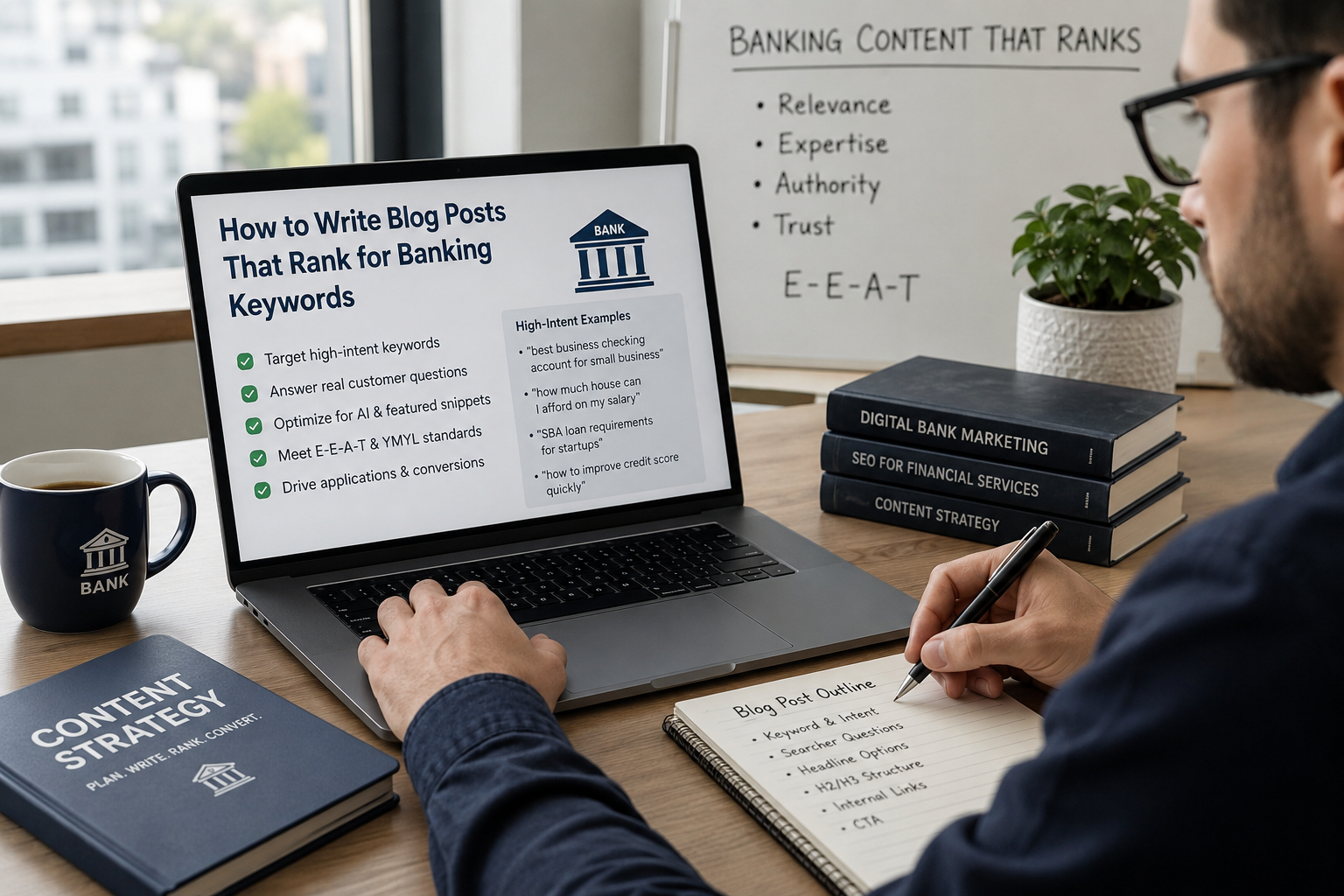
How to Write Blog Posts That Rank for High-Intent Banking Keywords
Most banking blogs are written backwards — chasing high-volume keywords that never convert. Here's how to write posts that actually produce applications: start from high-intent queries, target the terms you can realistically win against national banks, structure for AI answers, and clear the E-E-A-T trust bar Google sets for financial content. Five disciplined choices that turn each post into a compounding asset.

Financial Literacy Content That Ranks — And Converts Readers Into Members
Most credit unions treat financial literacy as community service — and leave growth on the table. Here's how to build financial literacy content that does two jobs at once: ranks in Google and gets cited by AI engines, then converts readers into funded members. From the questions people actually search to the low-bar CTAs that turn an article into a member relationship.

How to Build a Financial Content Strategy That Drives Loan Applications
A generic post about "5 tips for homebuyers" won't generate qualified leads. Learn how to build a financial content strategy that drives loan applications by mapping content to every stage of the borrower's journey, demonstrating the E-E-A-T signals Google expects for financial topics, optimizing for both search engines and AI-powered discovery, and connecting every article to measurable conversions.

The New Turnitin: How AI Detection Is Spreading From Classrooms to Everywhere Else
AI detection used to mean one thing: Turnitin catching a student's essay. In 2026, the same underlying technology — led by Google DeepMind's SynthID — has spread into search engines, YouTube, freelance marketplaces, newsrooms, and new state and international laws. This piece breaks down what SynthID actually does, why detection tools are far less reliable than they seem, and the honest answer to the question everyone actually wants answered: does getting flagged as AI, or "hybrid," really cost you anything?

How Community Banks Can Dominate Local Search Without a Huge Budget
Community banks compete against institutions with vastly bigger marketing budgets — but local search is one arena where budget size isn't the deciding factor. This guide lays out a genuinely budget-conscious roadmap for dominating local search: what to prioritize first (hint: it's free), a realistic month-by-month plan, and how to know if and when outside help is actually worth the investment for your institution.
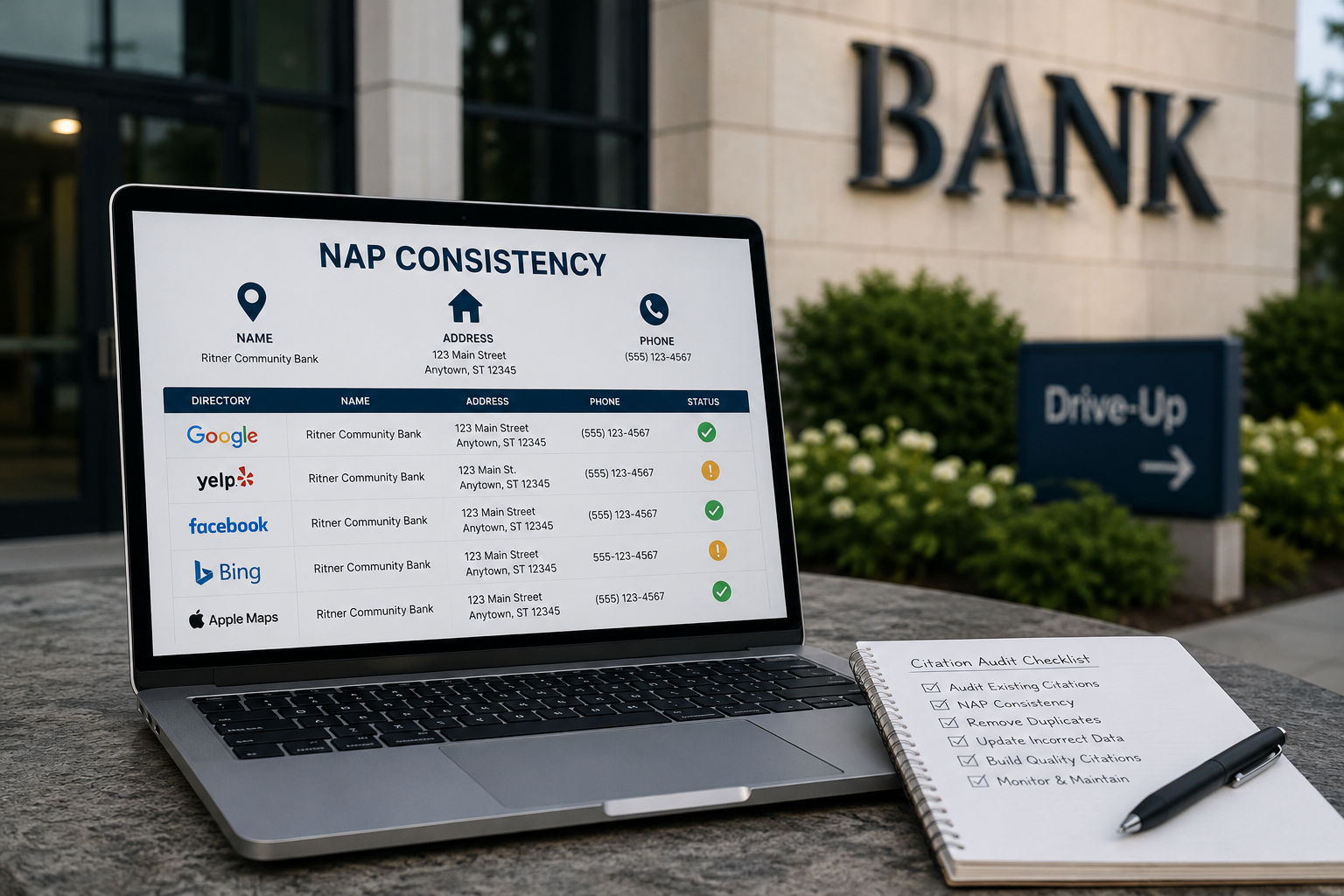
Citation Building for Banks: How to Make Sure Your NAP Data Is Consistent Everywhere
Every branch a bank operates carries its own trail of directory listings, data aggregators, and legacy citations — and inconsistencies across them quietly undermine local search rankings and confuse the AI tools increasingly used to find a nearby branch. This guide covers what citation building actually means for a financial institution, the banking-specific complications (mergers, rebrands, call-tracking numbers) that make this harder than in most industries, and a practical audit-and-maintenance process to keep every branch's data clean.
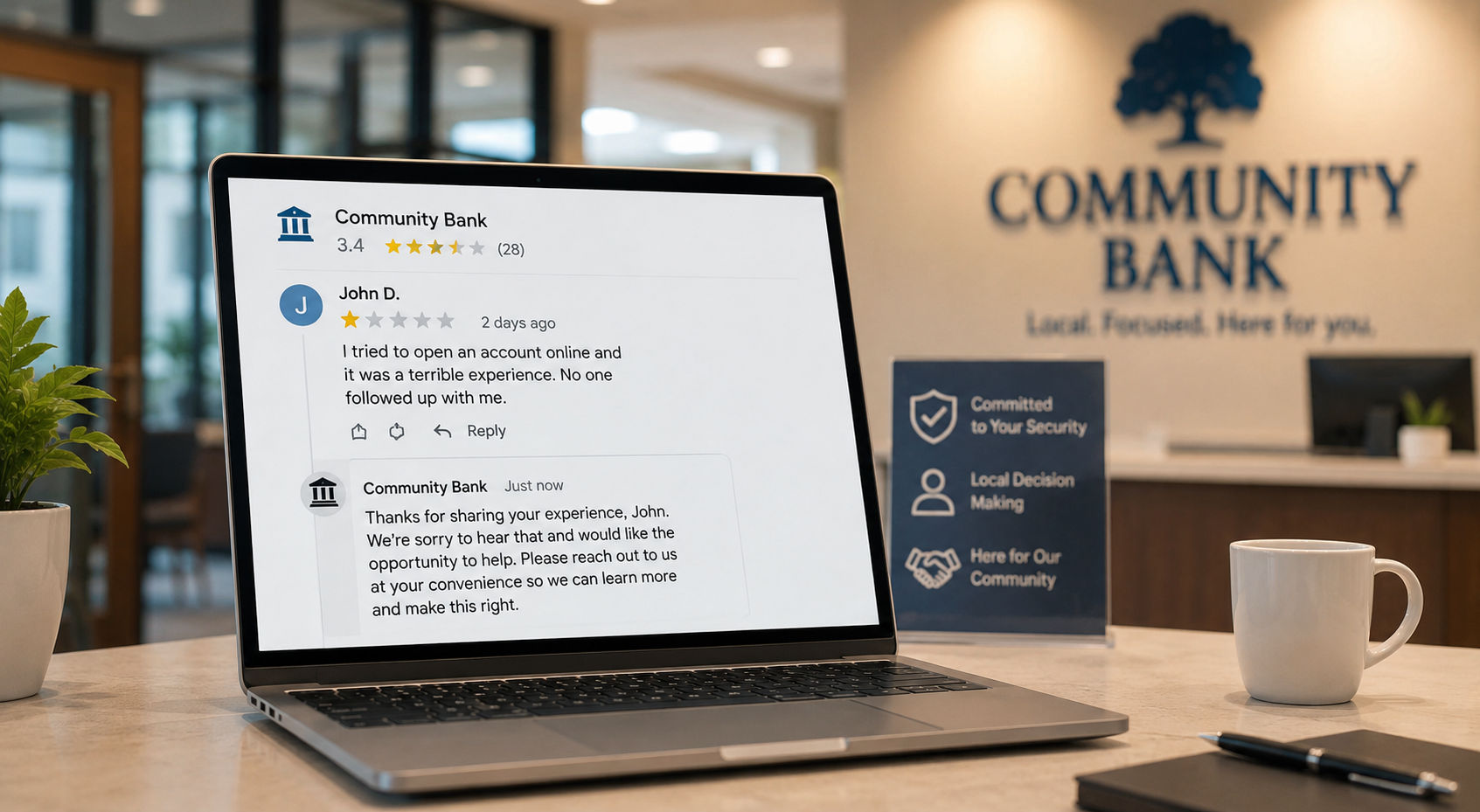
How to Respond to Negative Reviews for Financial Institutions (With SEO in Mind)
A single unanswered negative review can quietly suppress a bank's local search visibility — but responding the wrong way, by referencing account details or arguing publicly, creates real compliance risk. This guide breaks down a practical response framework built specifically for financial institutions: how to acknowledge concerns without repeating negative language, add legitimate SEO value without keyword stuffing, and redirect sensitive issues to a private channel — all while keeping every public response fast, warm, and fully compliant.
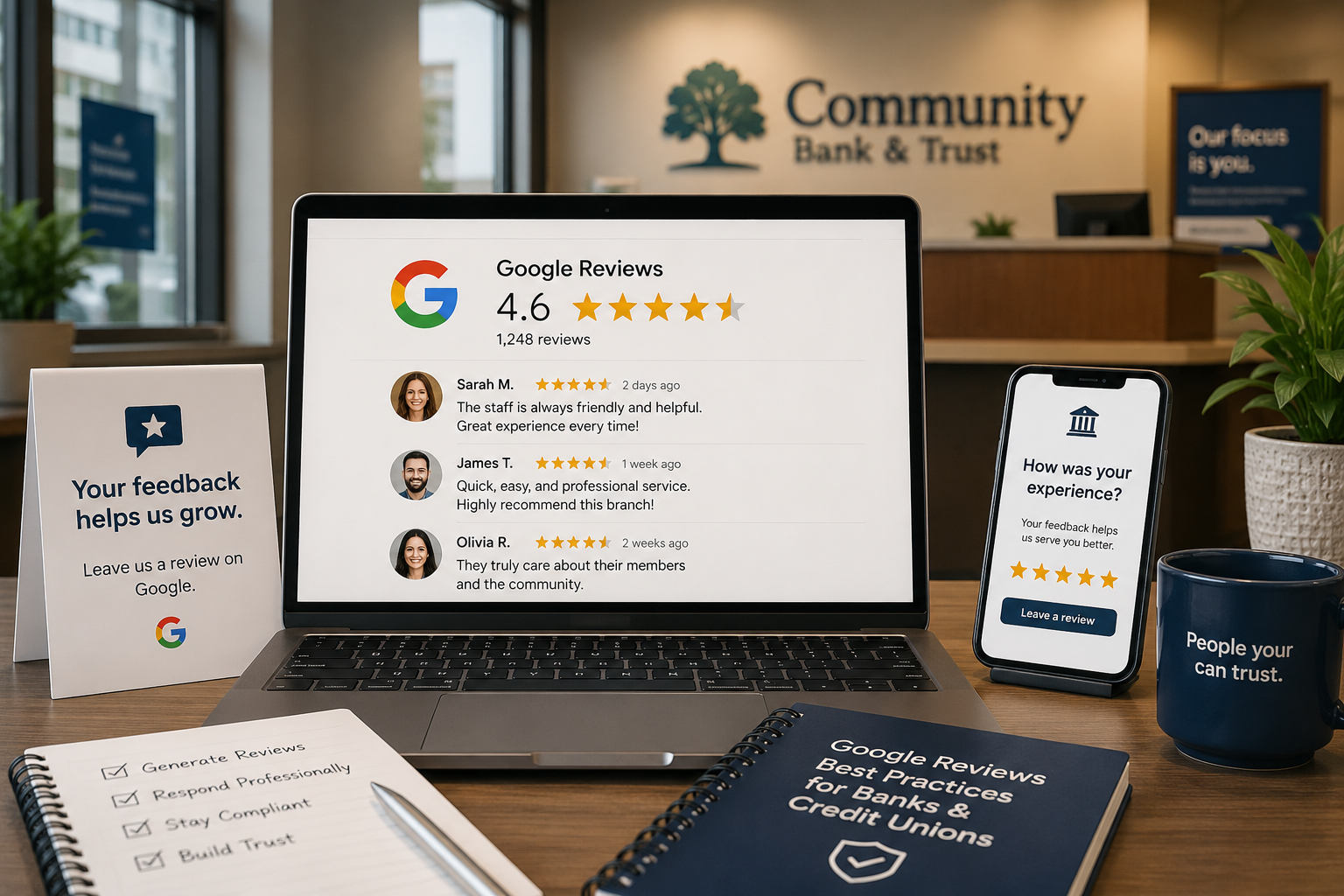
The Ultimate Guide to Google Reviews for Banks and Credit Unions
Nearly 9 in 10 consumers read reviews before choosing a financial institution, yet most banks and credit unions manage their review profile reactively, if at all. This guide covers everything from why reviews matter this much to how to generate and respond to them the right way — including the FTC's Consumer Review Rule, the privacy line banks can't cross when responding to complaints, and how to build a sustainable, per-branch review program that actually drives trust and growth.
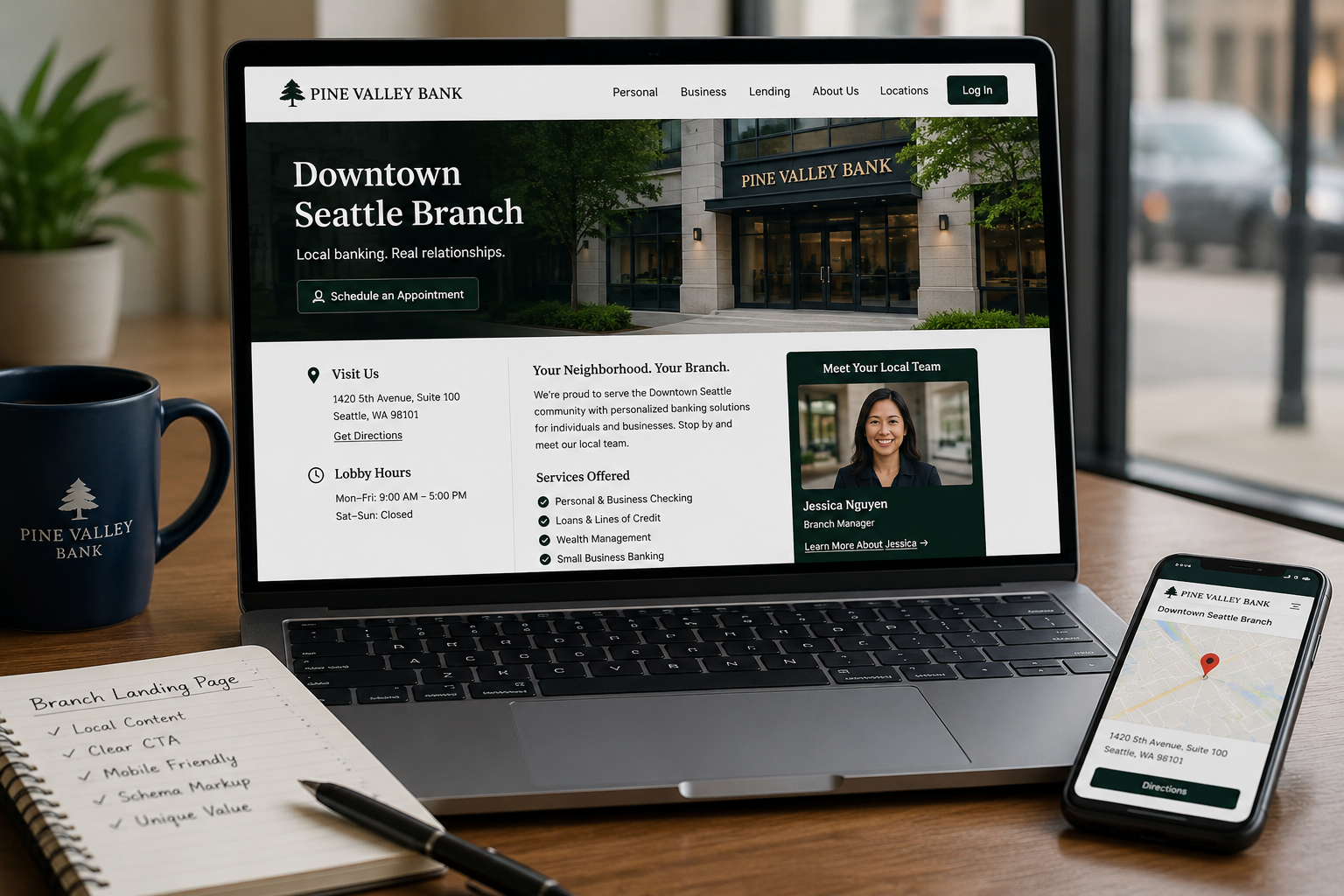
How to Use Localized Landing Pages to Drive Branch Traffic
A generic locations page with an address and a map wastes some of the highest-intent traffic a bank ever gets. This guide breaks down what actually belongs on a branch landing page — genuinely local content, a single clear call to action, mobile-first design, and the structural elements that help each page both rank and convert — plus how to scale a program across many branches without falling into the duplicate-content trap that undermines most multi-location page strategies.

Local SEO vs. National SEO: Which Strategy Should Your Bank Prioritize?
Most banks default to chasing high-volume national keywords — and for the majority of community and regional institutions, that's the wrong place to spend a limited budget. This guide breaks down when local SEO should dominate your strategy, when national SEO actually makes sense, and how the right split changes based on your branch footprint, market, and business model — from single-market community banks to digital-only neobanks.

Why Your Credit Union's Google Maps Listing Is Losing You Members
Your credit union's biggest growth obstacle might not be rates or marketing spend — it could be a handful of small, invisible errors on your Google Maps listing. This guide breaks down the specific mistakes quietly costing credit unions new members: unclaimed and duplicate profiles, outdated hours, incomplete categories, unanswered reviews, missing membership eligibility information, and more — plus a clear, prioritized order for fixing them.

How to Manage Local SEO Across Multiple Bank Branches
Most multi-branch banks don't have a local SEO strategy problem — they have a management problem. This guide focuses on the operational side: how to assign real ownership across corporate and branch teams, build a repeatable weekly and monthly rhythm, choose the right level of tooling for your network size, and set up compliance-aware governance so every branch stays consistent, not just the ones with an especially engaged manager.
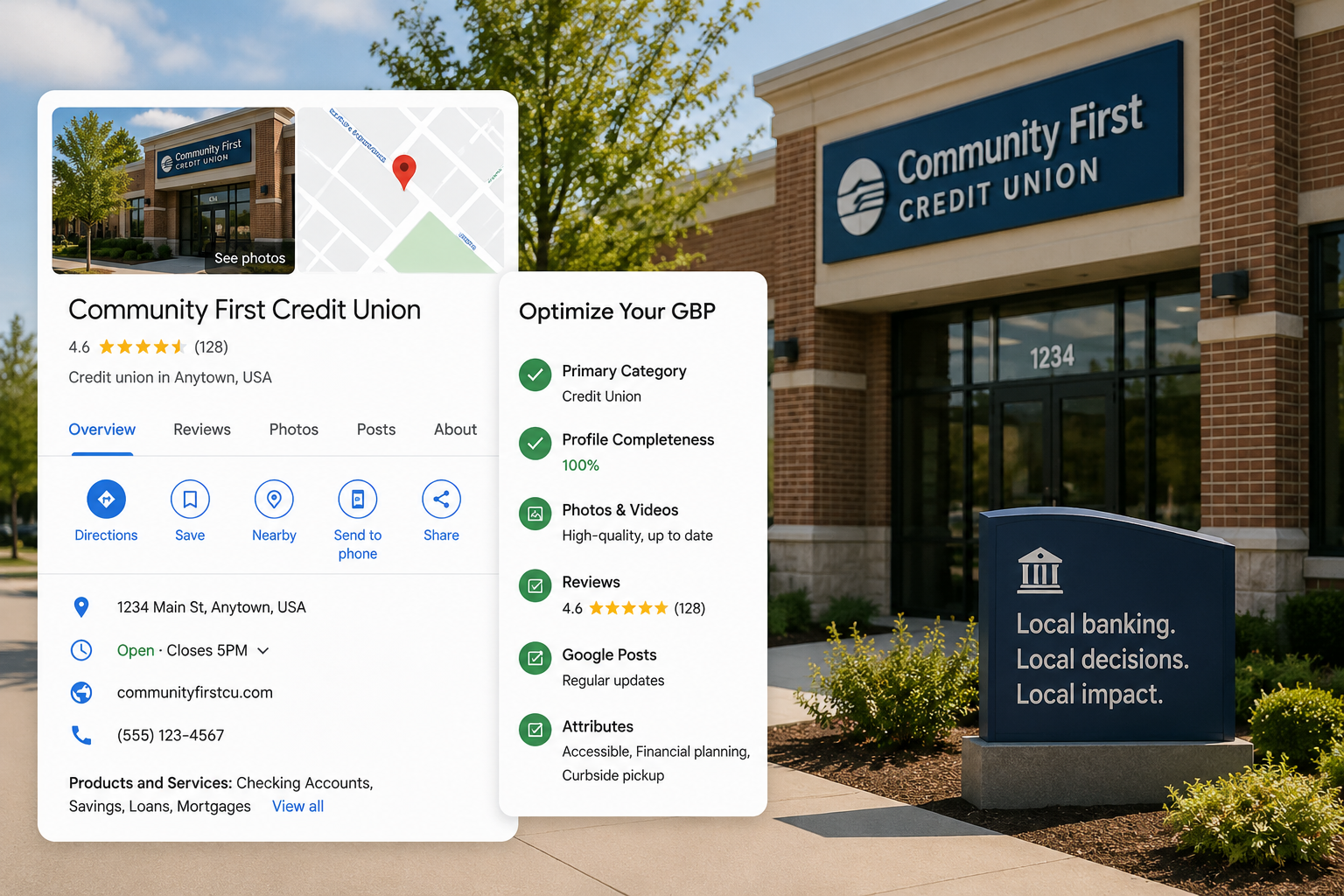
Google Business Profile Optimization for Banks and Credit Unions
Google Business Profiles appear in nearly 9 out of 10 local-intent searches, making it one of the most valuable — and most neglected — assets a bank or credit union controls. This guide breaks down what actually moves local rankings for financial institutions in 2026: category selection, profile completeness, attributes, review management, and the AI-driven signals now shaping which branches get surfaced before a customer ever visits the website.
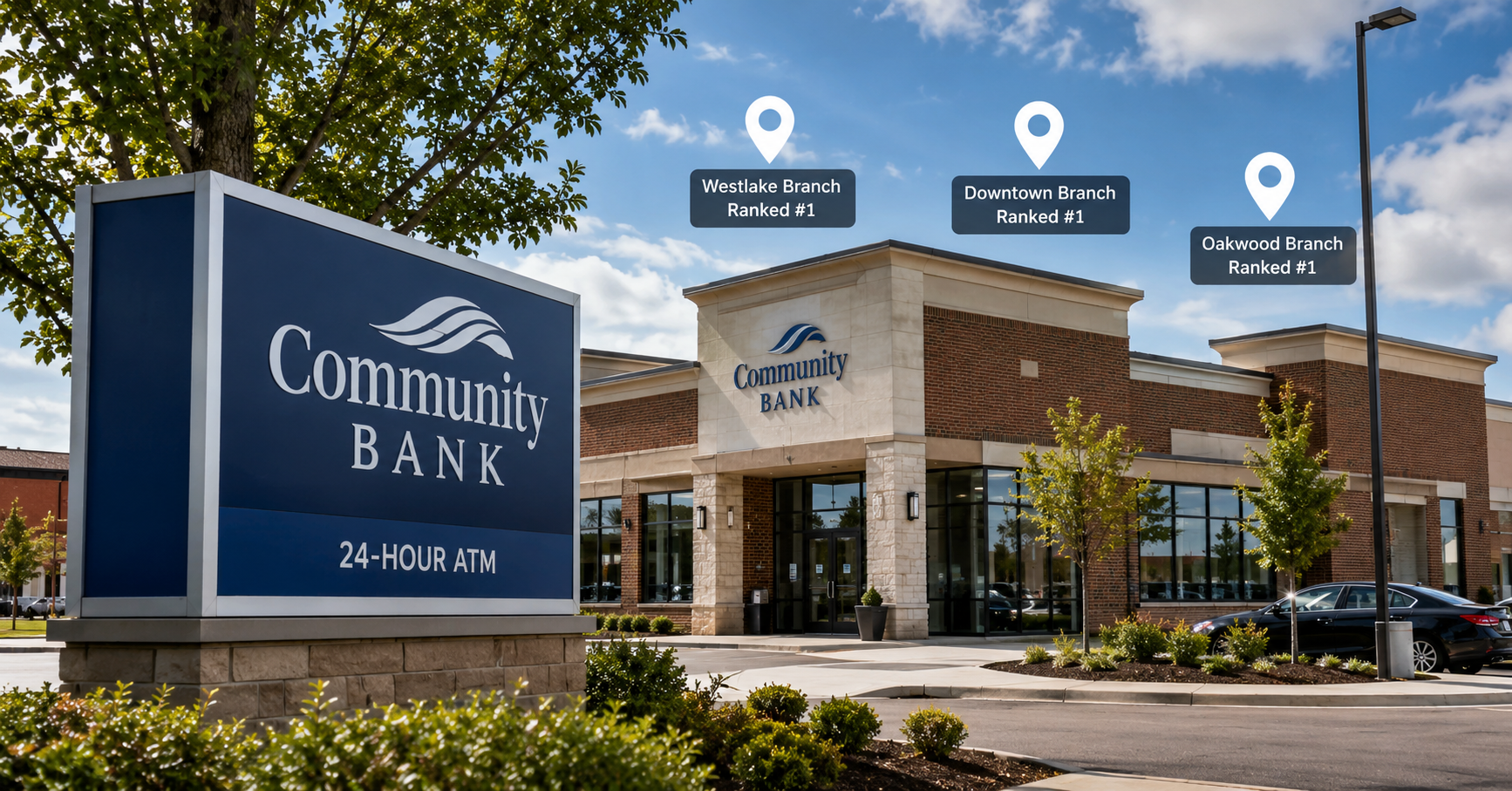
Branch-Level SEO: How to Rank in Every Market Your Bank Operates In
Most multi-branch banks don't lose local search visibility because Google penalizes them — they lose because their own site architecture fights itself. This guide breaks down why a handful of branches often capture all the visibility while others go invisible, and lays out the exact architecture — one Google Business Profile per branch, distinct local pages, clean NAP data, and a clear split between corporate and branch content — needed to rank in every market a bank actually operates in.
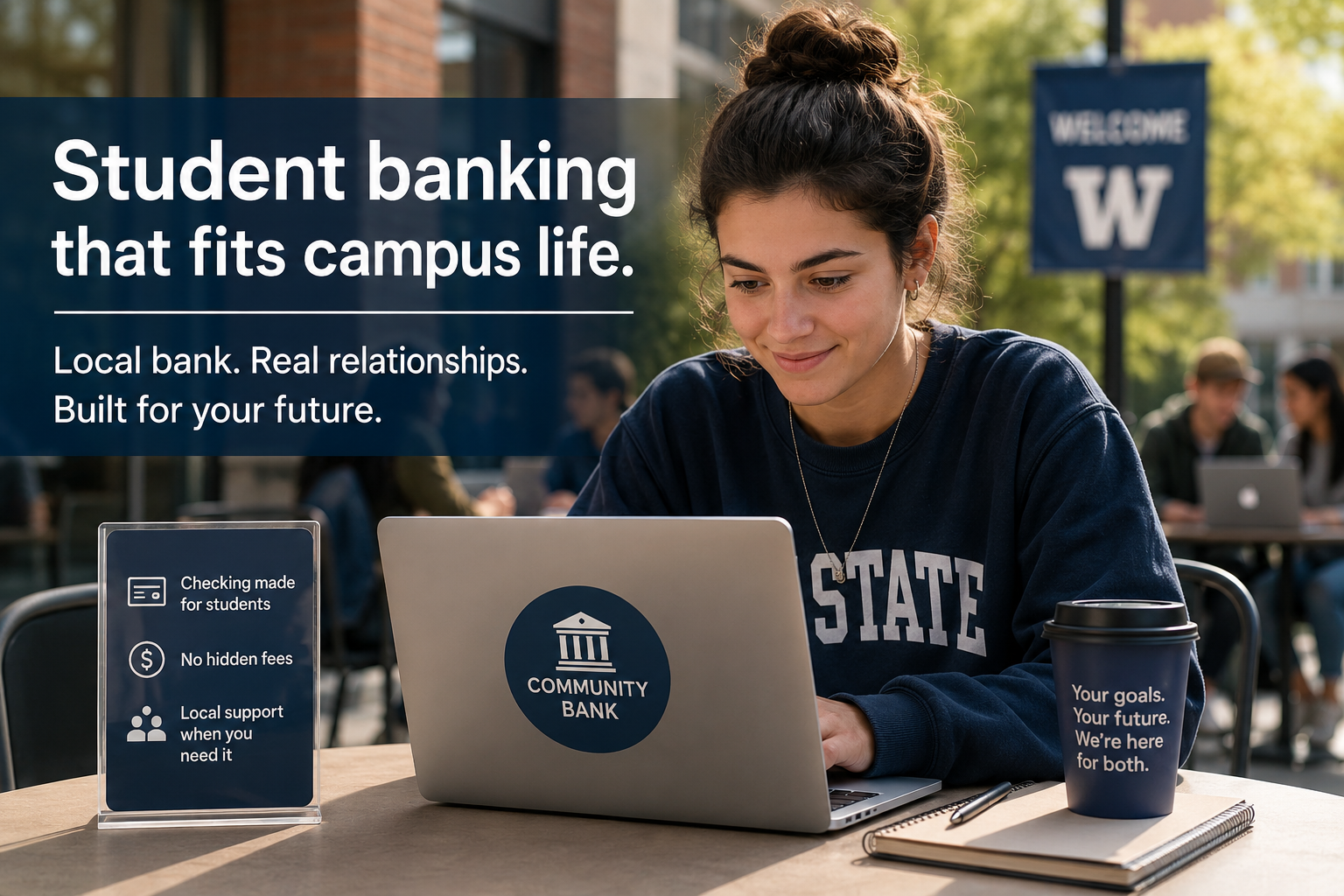
How to Rank for Student Banking Keywords on a Community Bank Budget
Half of Gen Z says they'd switch to a community bank, credit union, or online-only institution — but most community banks can't outrank Forbes or NerdWallet for "best student checking account," and shouldn't try. This guide lays out a realistic, budget-conscious SEO strategy built around campus-specific pages, local search, and financial literacy content that a lean marketing team can actually execute — and that plays to a community bank's real advantages over national brands.

Home Equity Loan SEO: A Content Strategy That Converts
U.S. homeowners are sitting on nearly $35 trillion in equity, and almost 30% are considering a home equity loan or HELOC this year — but most lenders are still running one generic product page to capture that demand. This guide breaks down how homeowners actually search for home equity products, why this category falls under Google's strictest YMYL content standards, and how to build a content strategy — from comparison pages to AI search visibility — that turns research-stage traffic into applications.