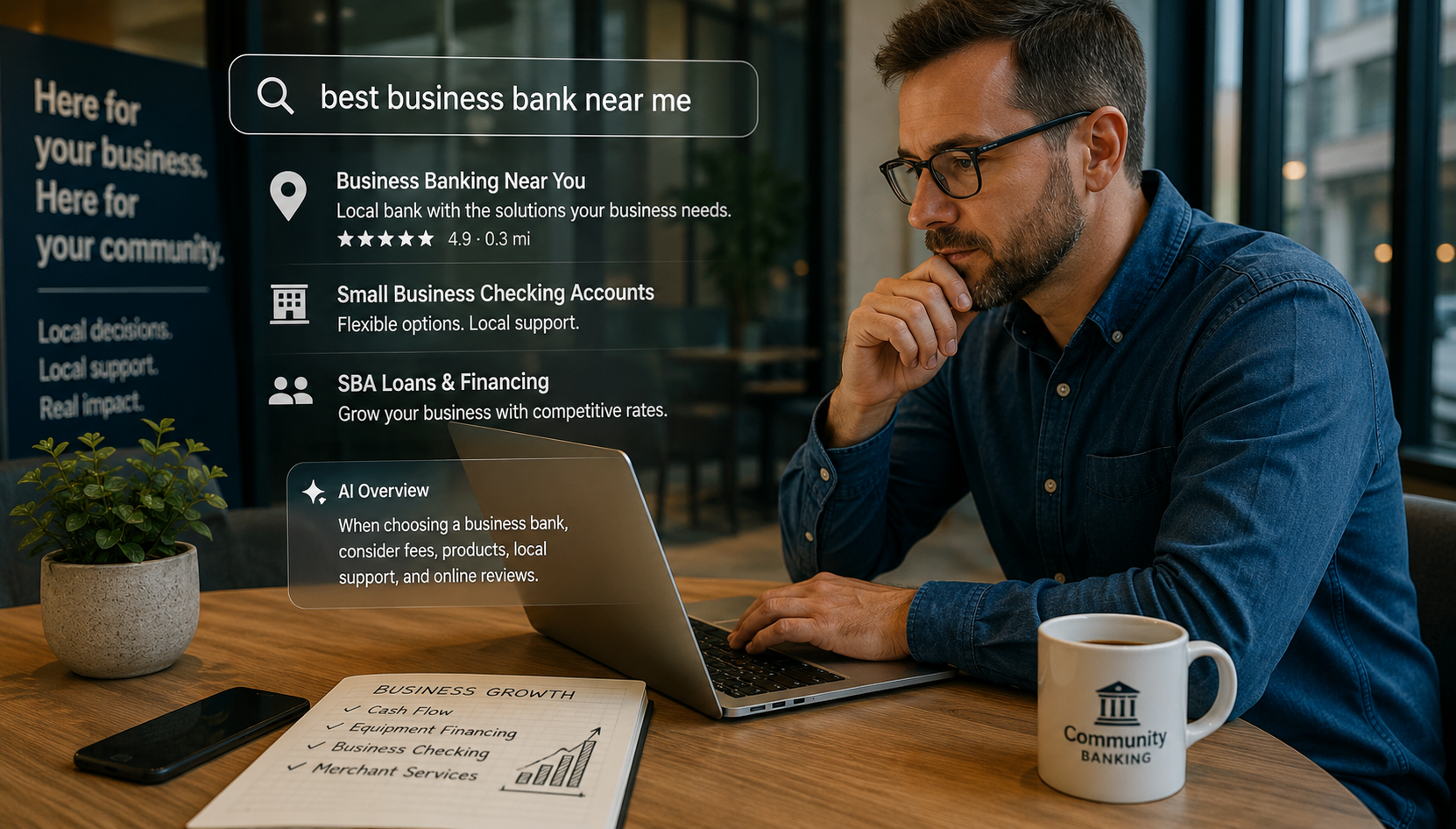
Business Banking SEO: How to Attract Small Business Owners Through Search
Two-thirds of small businesses are actively shopping for a new bank right now — and most are finding their next provider through search, not a branch visit. This guide breaks down how business banking SEO actually works: the keywords small business owners use, why local search is a hidden advantage for community banks and credit unions, how AI search tools are reshaping discovery, and a practical roadmap for turning organic visibility into real account openings.
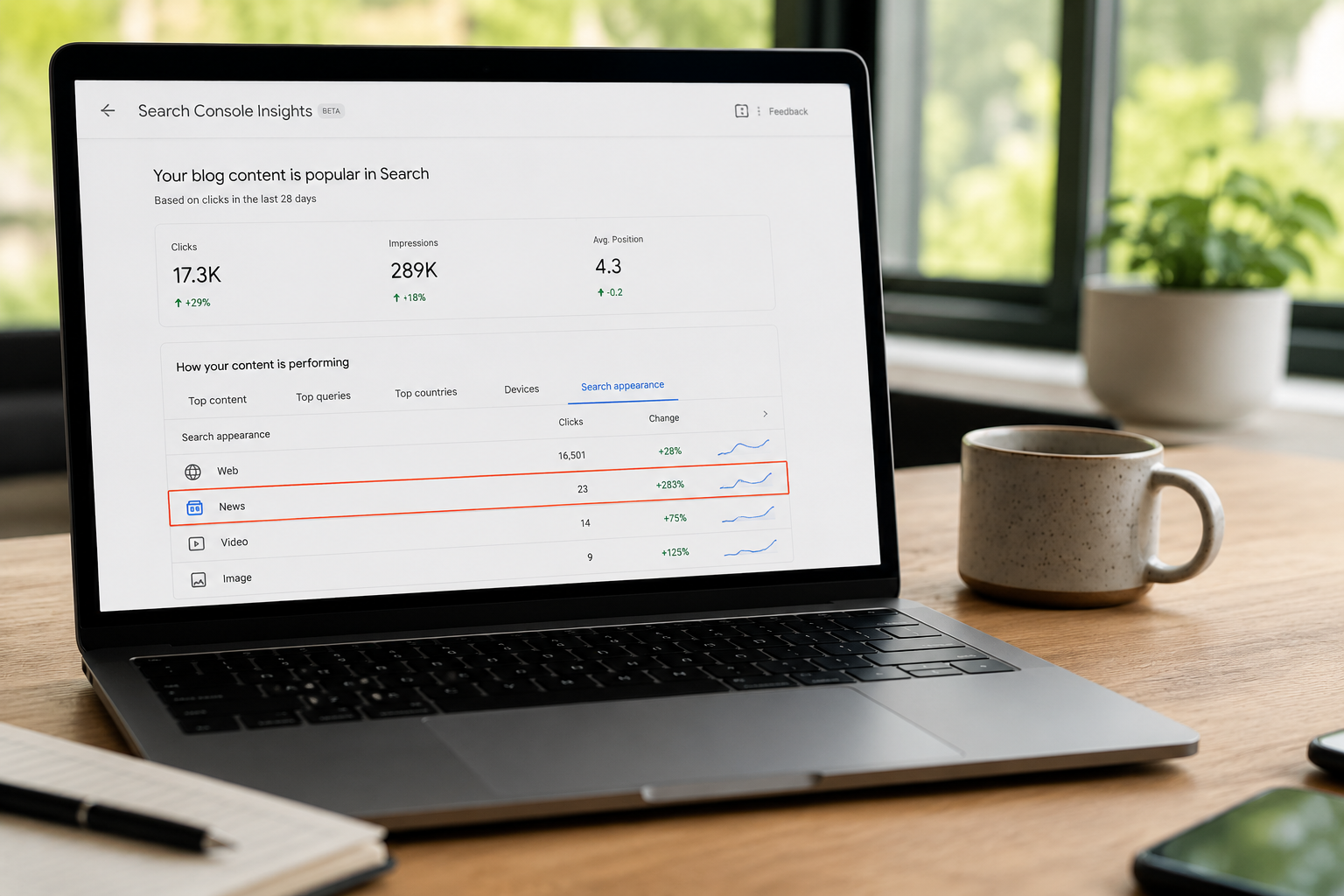
Why Did One of Our Blog Posts Get a Click From "News Search"?
We noticed a click under "News search" in Search Console Insights, credited to a post about robots.txt and AI crawlers — not exactly breaking news. Turns out you don't need to be a registered publisher to show up there. Here's what actually decides News tab eligibility, and why this specific post cleared the bar.
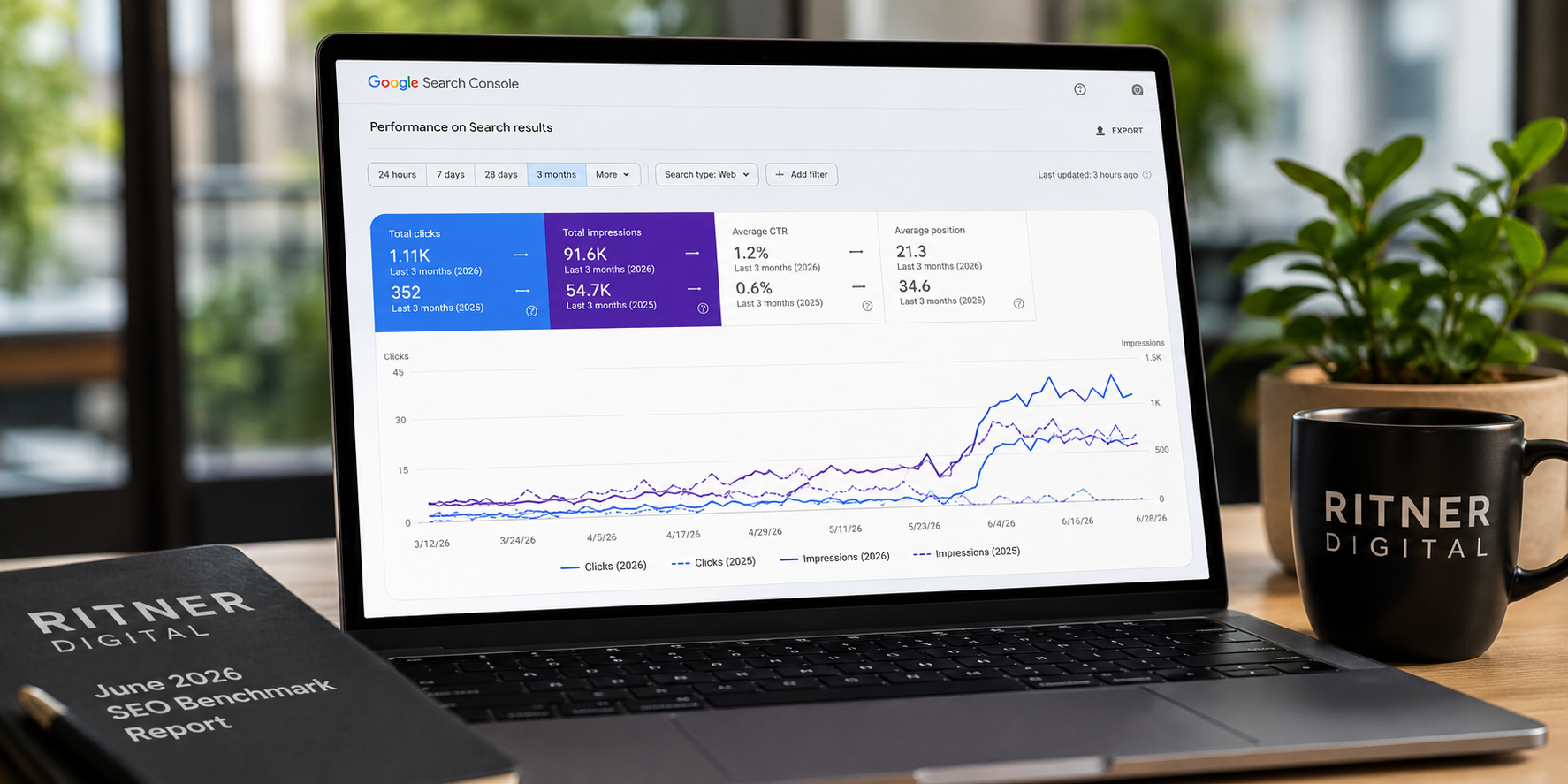
Ritner Digital June 2026 SEO Benchmark Report
May ended with clicks near zero and an average position in the high 30s. Then Google's May 2026 core update finished rolling out on June 2 — and the numbers flipped almost overnight. Here's the full Search Console breakdown of what changed, which two brand-new posts drove it, and why Germany suddenly became one of our fastest-growing countries.
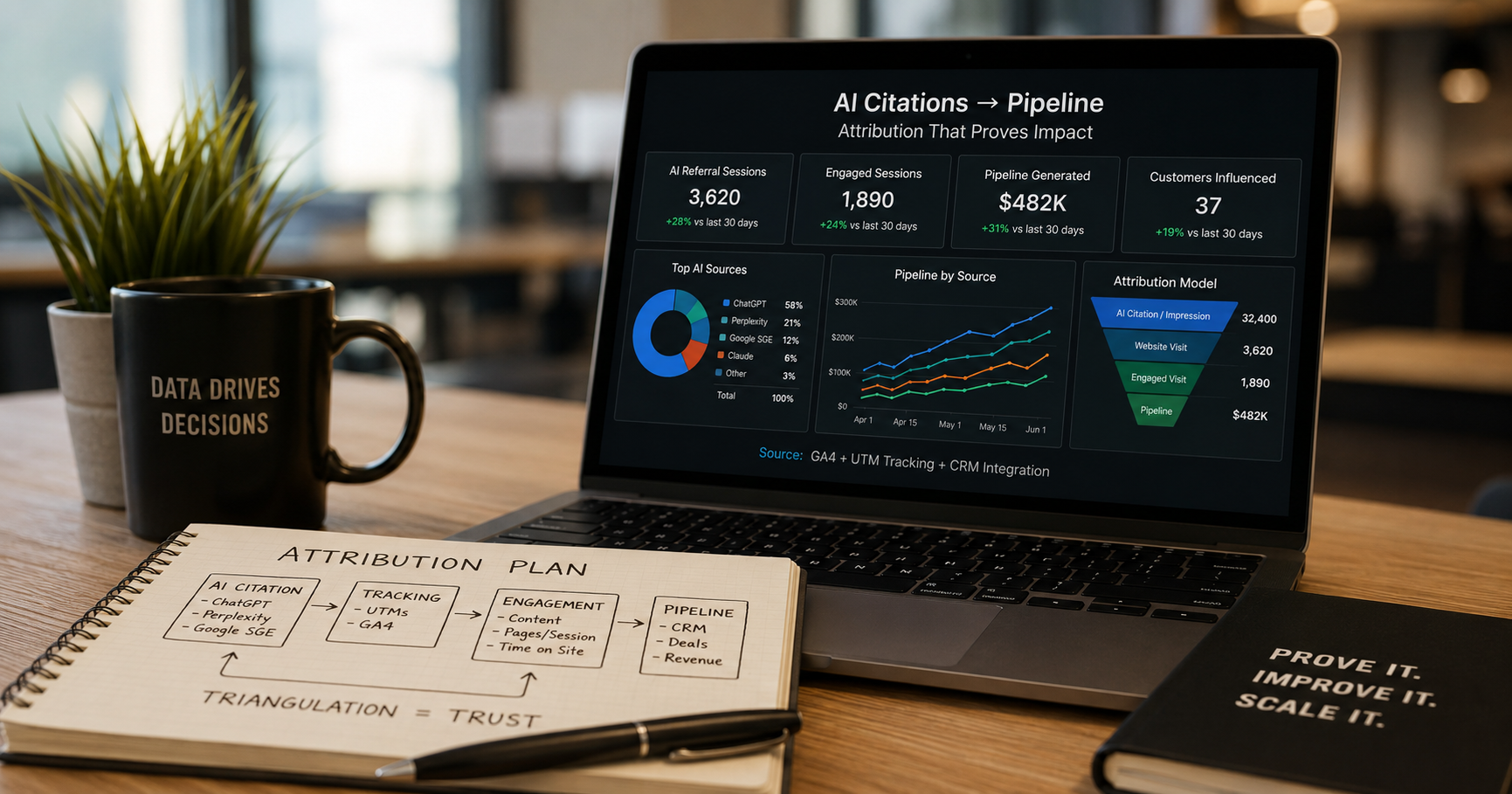
From Search to Pipeline: How to Attribute Revenue from AI Citations
"AI traffic is untrackable, so how do we know it makes money?" is the objection that kills budgets. It's half right—and far more bridgeable than skeptics think. Here's how to connect AI citations to real pipeline, and how to present it to a CFO in terms that survive scrutiny.
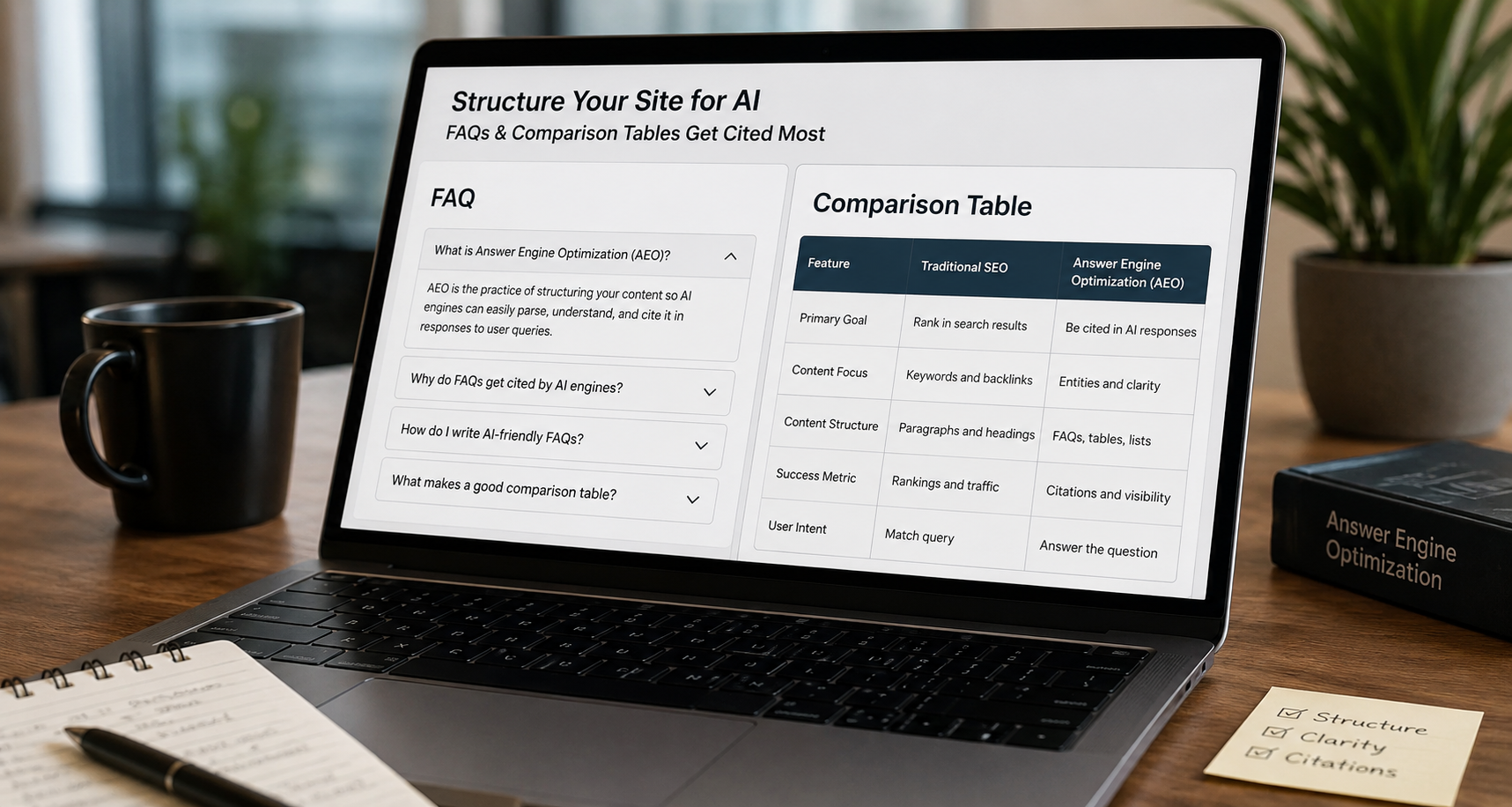
Structure Your Site for AI: Why FAQs and Comparison Tables Are Your Best Asset
AI doesn't read your page the way a person does—it chops it into fragments, grades each one, and quotes the cleanest. So content shape, not just quality, decides whether you get cited. Two structures win disproportionately: FAQ blocks and comparison tables. Here's the technical reason they work, and how to build them.
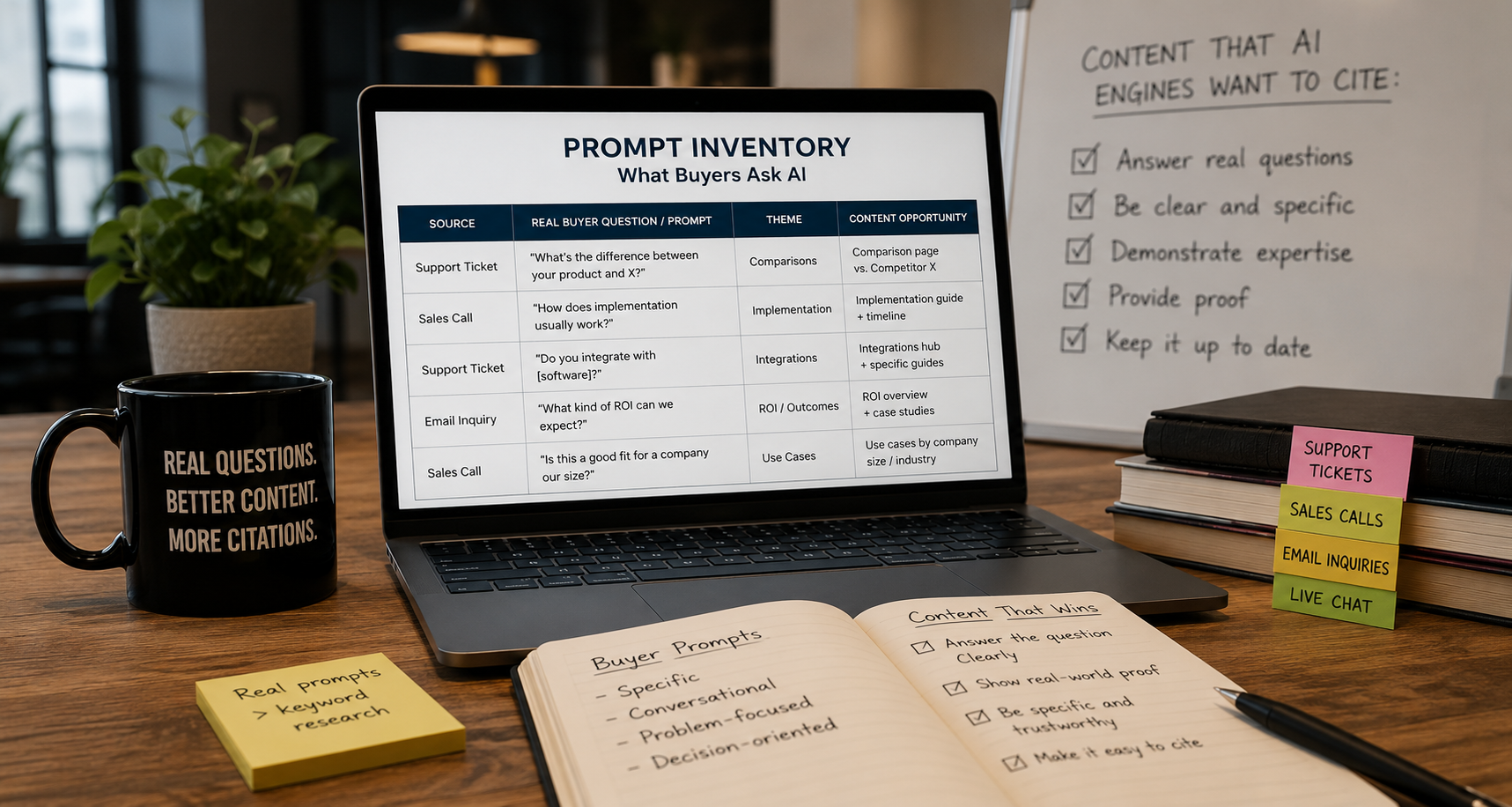
The "Prompt Inventory" Method: How to Find What Your Buyers Actually Ask AI
People don't type at AI engines — they talk to them, in full, specific questions. The new homework isn't keyword research; it's finding the real prompts your buyers ask before they reach you. The best source is free and already yours: your tickets, your inbox, your calls. Here's how to mine it.

The 5-Minute Fix: How to Optimize Your Brand for LLM Crawlers
A handful of checks, done in about five minutes, decide whether ChatGPT, Perplexity, and Google's AI can even reach and read your site. If one's broken—and often one is—you're invisible for a dumb reason. Here's the DIY fix, plus an honest take on what it will and won't do.
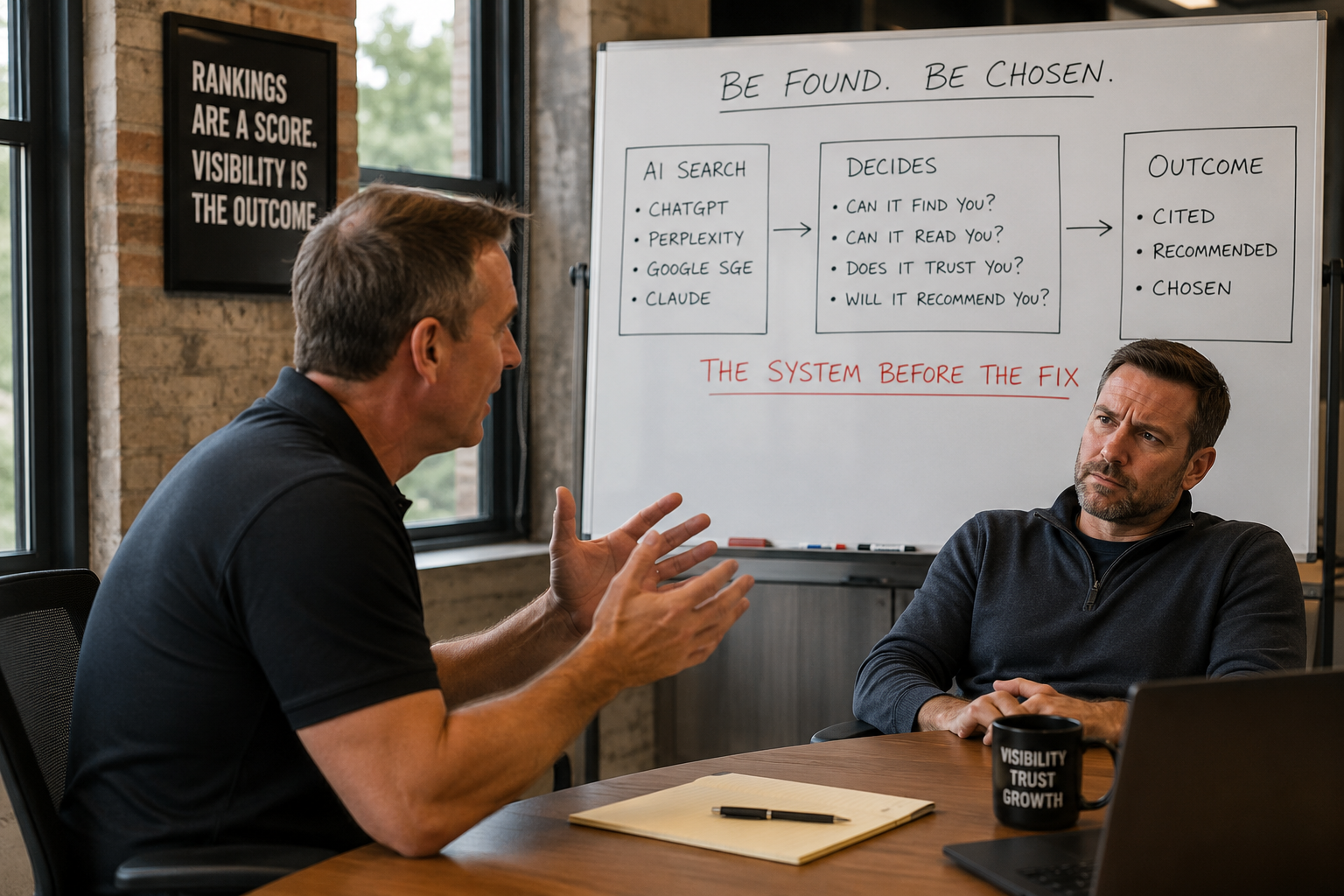
"No, It's Just the Schema": Anatomy of the Conversation That Decides Whether a Business Grows
A successful owner reaches out with the diagnosis already decided: "I just need schema." What happens in the next ten minutes—the reframe, and the pushback against it—decides whether the business pulls ahead or quietly stalls. Here's the anatomy of that conversation, and why the resistance costs more than any fix.
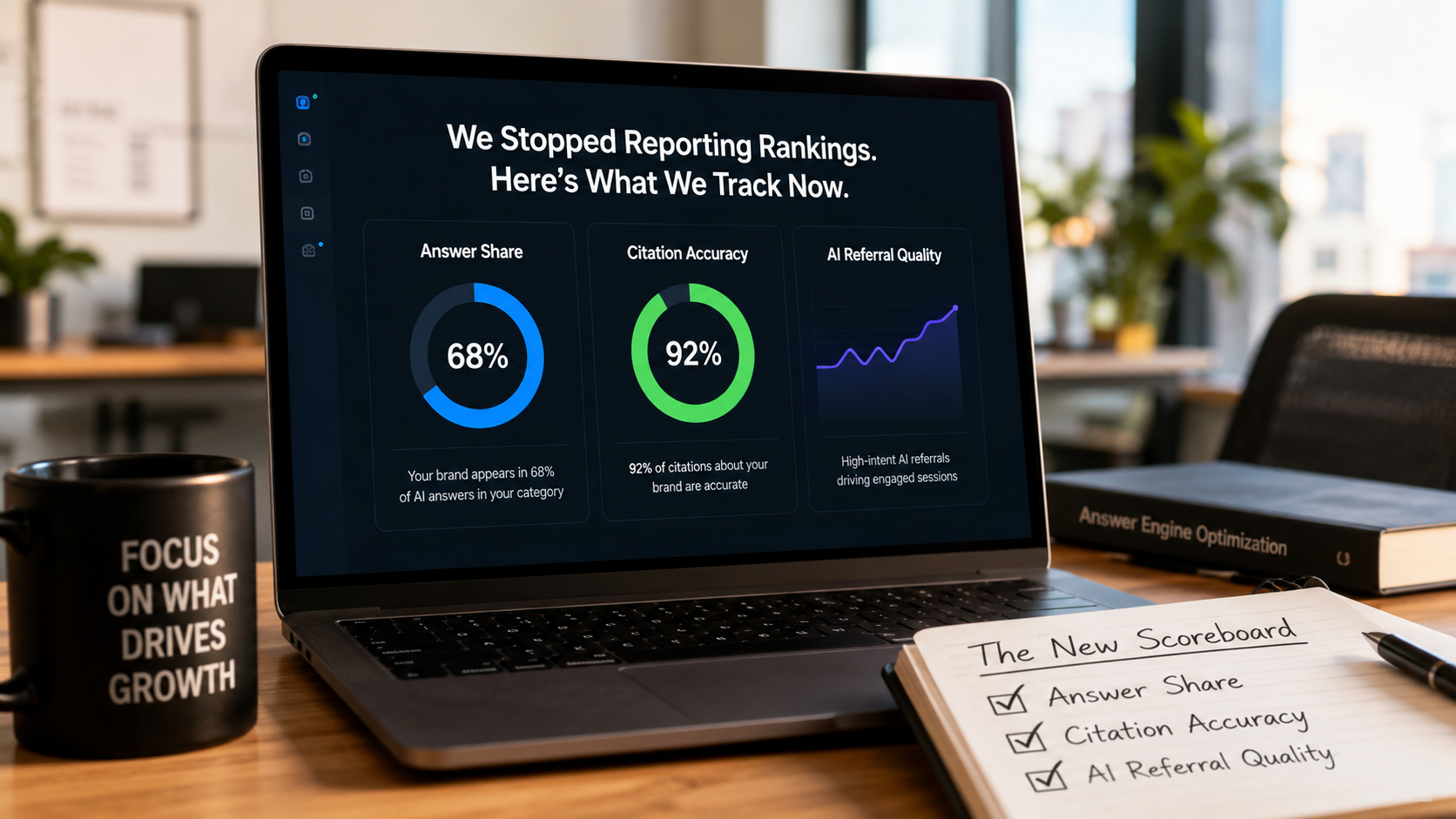
Why We Stopped Measuring "Keyword Rankings" and Started Measuring "Answer Share"
For years, the monthly report led with keyword rankings. It was clean, satisfying, and increasingly a lie—because rankings quietly stopped measuring whether buyers find and choose you. Here's why we switched to answer share, and the three metrics that replaced the old scoreboard for a world of AI-driven decisions.
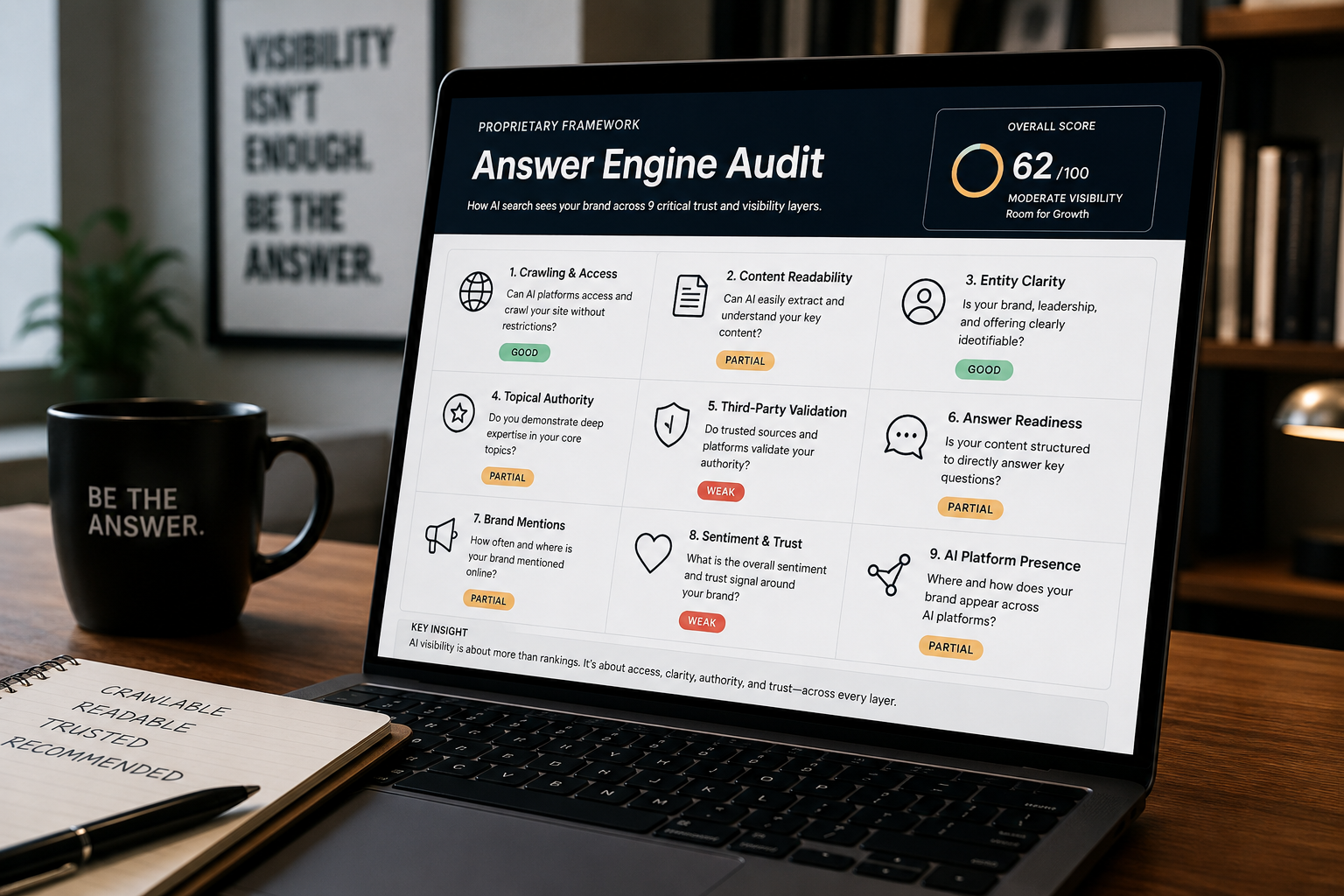
Inside Our Proprietary "Answer Engine" Audit
You know your Google ranking. But do you know what ChatGPT says when a prospect asks for a recommendation in your category—or whether Perplexity can even read your site? Our nine-point Answer Engine Audit examines your brand the way AI does. Here's the entire framework, with nothing held back.
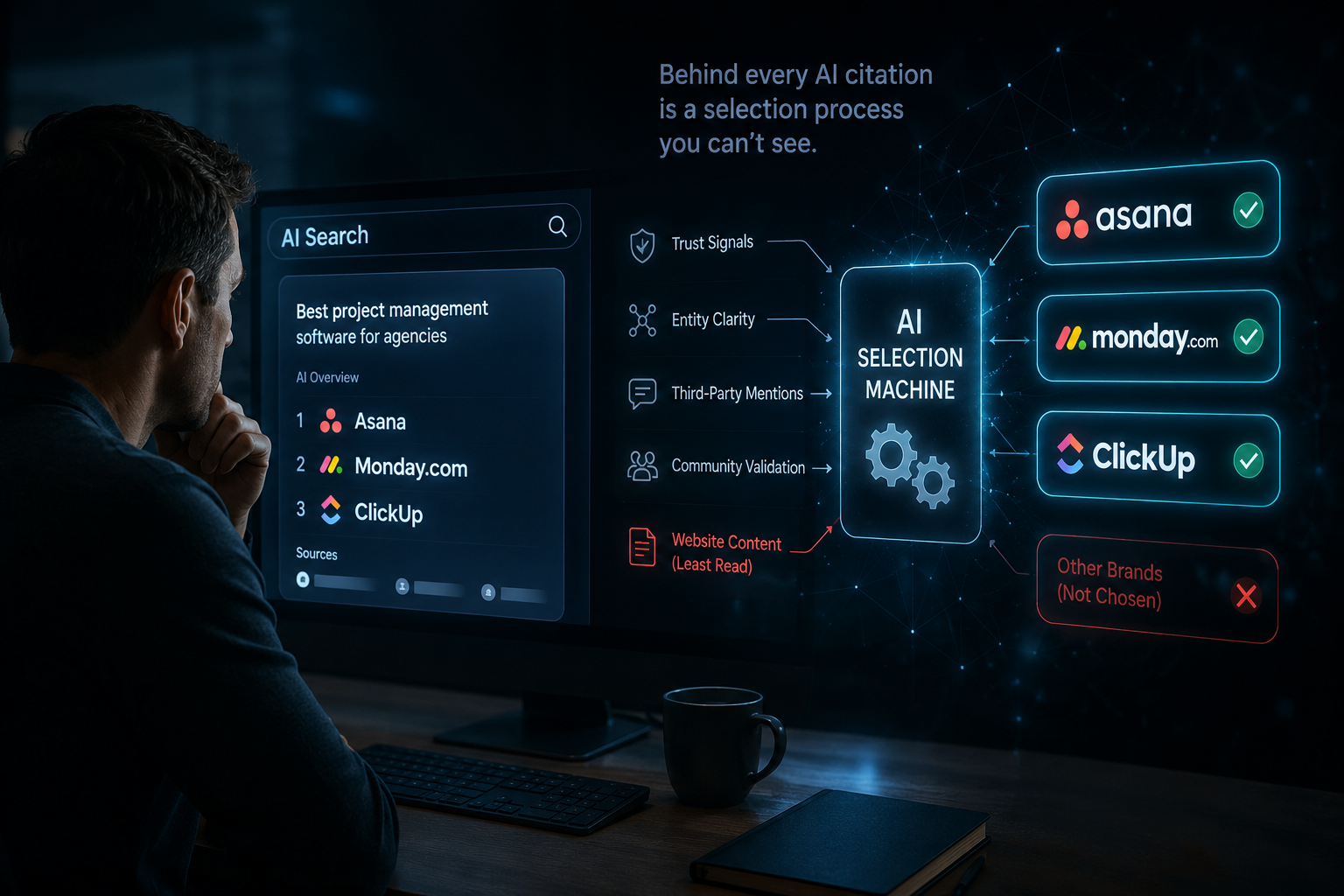
The "Dark" Side of AI Search: What You Don't Know About Who AI Cites
When AI recommends a shortlist of brands, you don't see the selection process behind it: a hidden machinery of trust scoring, entity matching, and third-party validation that decided who was even eligible. Most owners assume AI reads their website. It mostly doesn't. Here's what it actually reads—and why it matters.
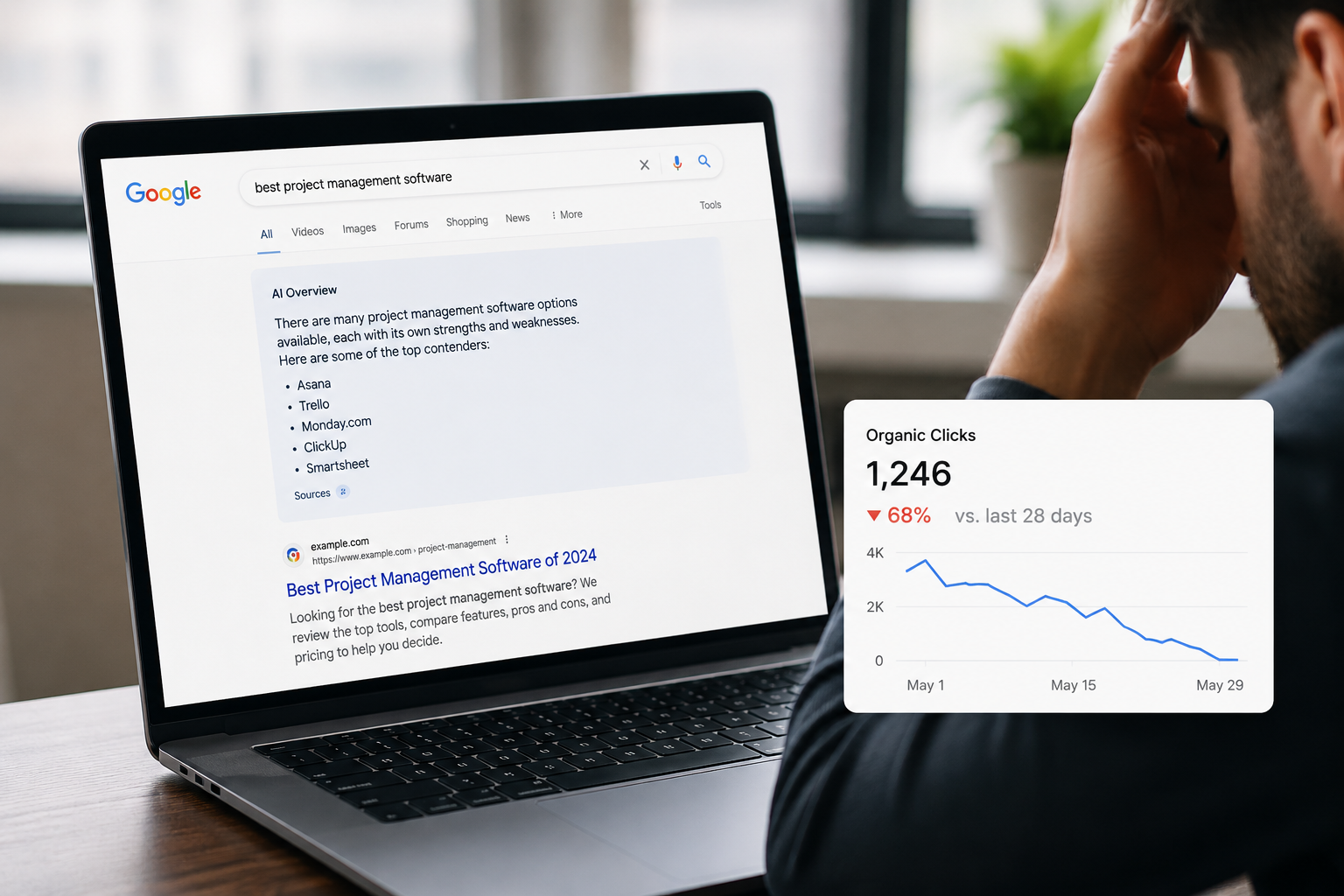
Why Being #1 on Google No Longer Guarantees Traffic
For twenty years, getting to #1 on Google meant the traffic followed. Not anymore. You can hold the top ranking and watch your clicks collapse—not because you slipped, but because the page above your link changed shape. Here's what broke, and what drives visibility now.
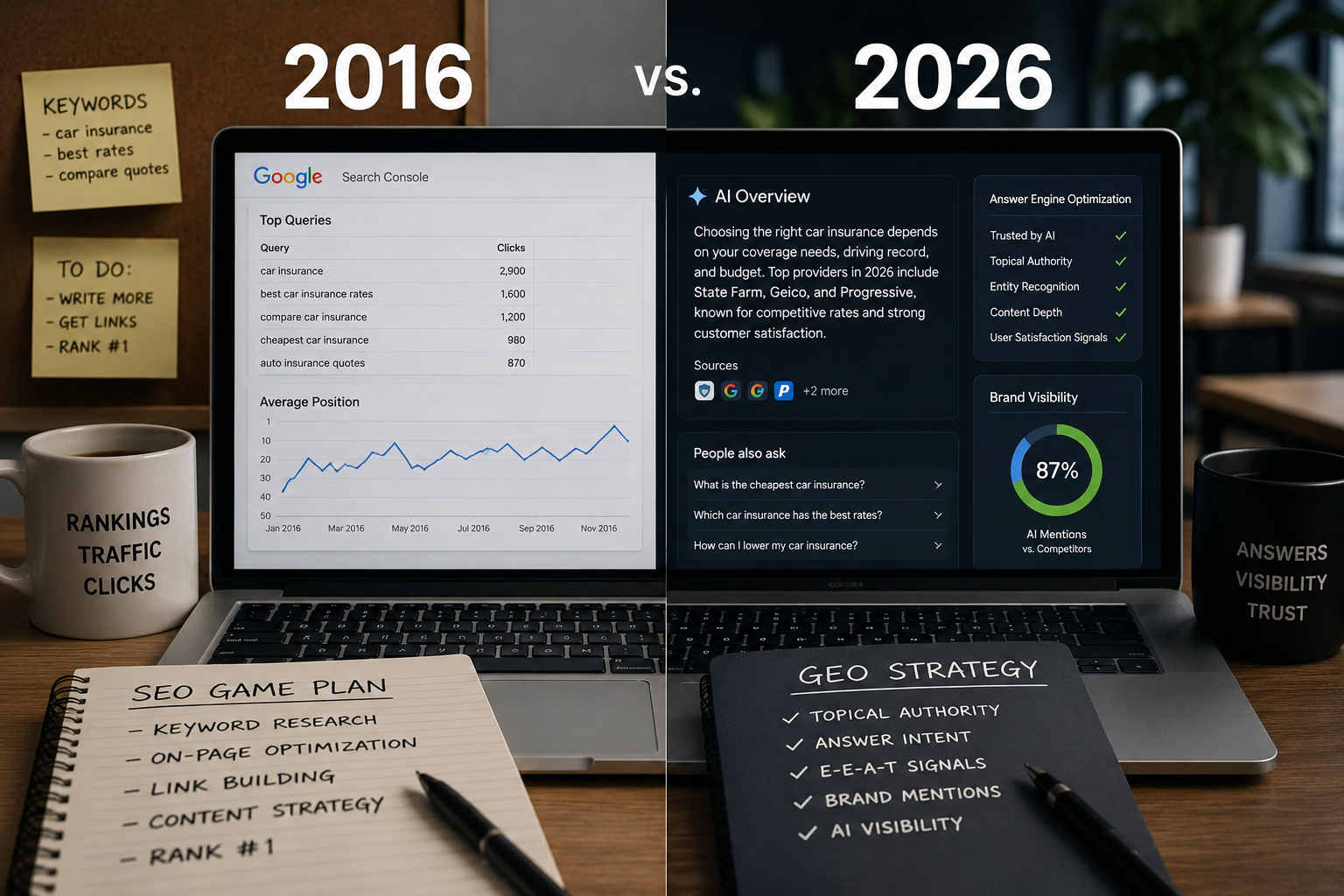
Is Your SEO Strategy Built for 2016 or 2026?
Would your SEO playbook look out of place in 2016? If it still revolves around keywords, word counts, and chasing position one, you're running a decade-old strategy in a search world that no longer rewards it. Here's what actually died, what didn't, and how to make the shift.
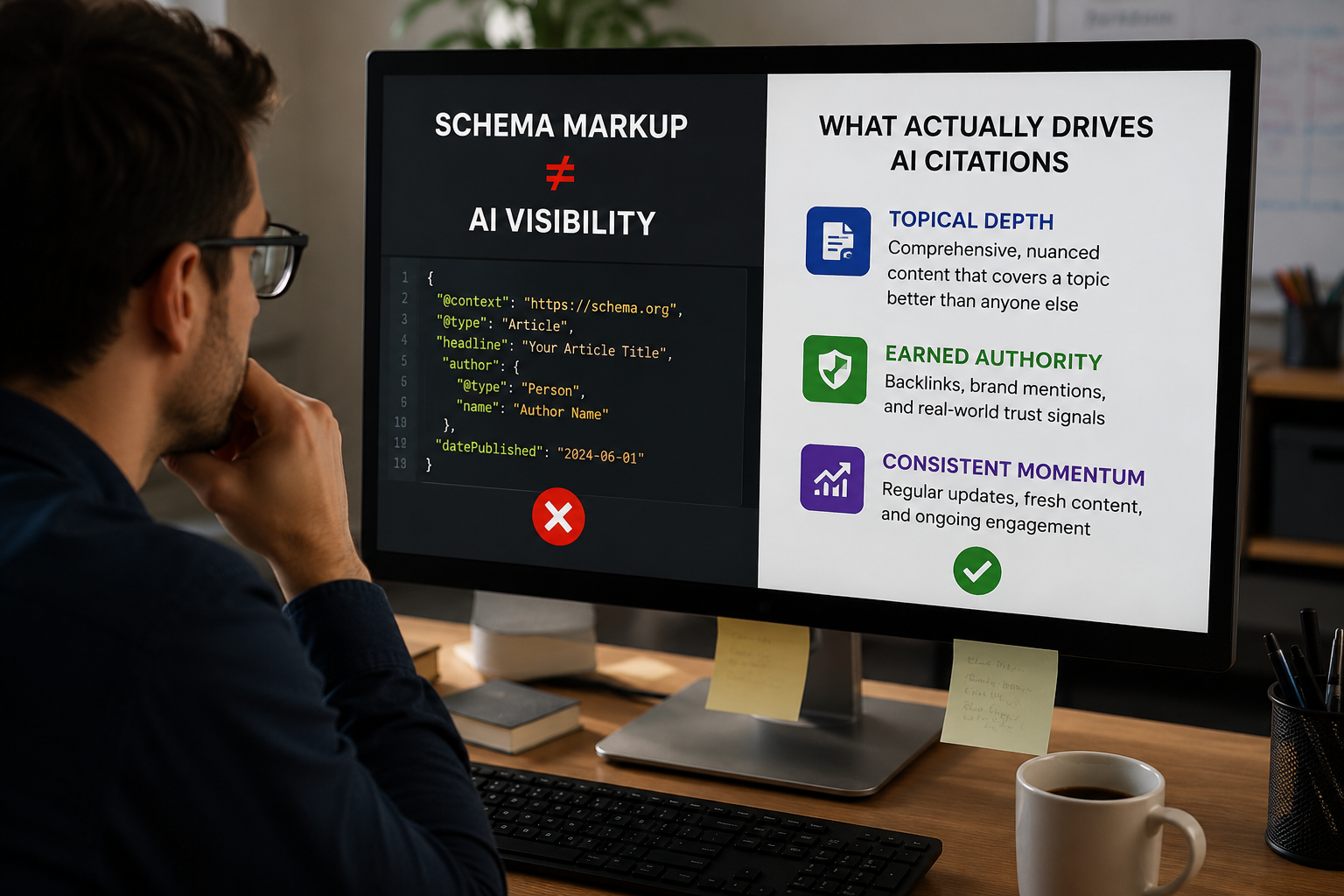
Schema Markup Is Overhyped: Why a Real Content System Beats Structured Data in AI Search Every Time
Bolt on enough JSON-LD and the AI engines will reward you with citations—or so the story goes. But controlled studies show schema barely moves the needle. A real content system built on topical depth, earned authority, and consistent momentum beats schema-obsessed thin sites every time. Here's the evidence.

Stop Waiting for the Phone to Ring: How Experiential Event Vendors Get Found by Corporate Buyers in 2026
Demand for interactive event activations is growing at double digits, and corporate budgets are expanding—but buyers have moved their entire discovery process online to search, local profiles, and AI. Most activation vendors haven't caught up. Here's how to make sure the planner with a budget finds you first.
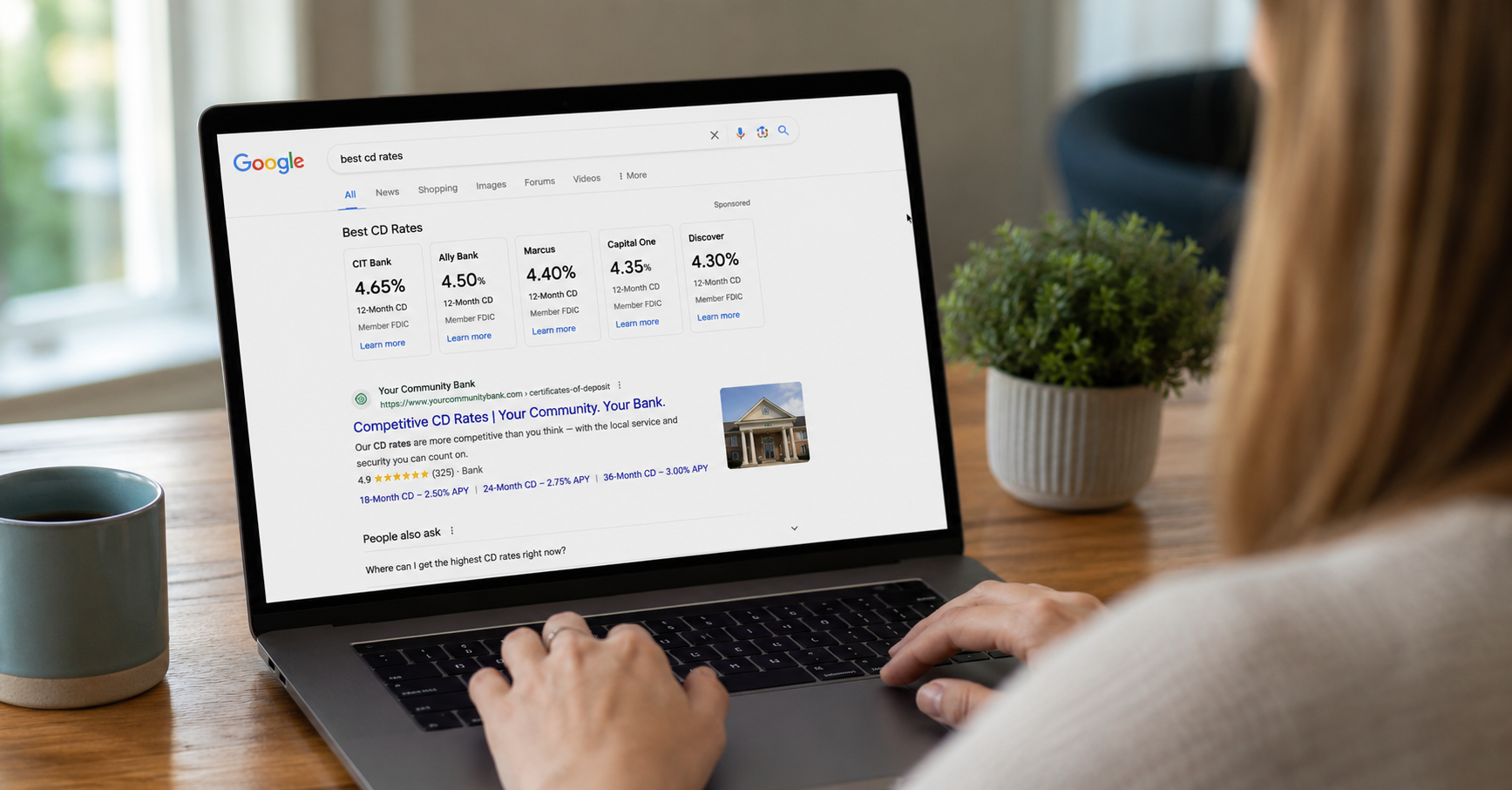
How to Win "CD Rates" and "High-Yield Savings" Searches from Fintech Competitors
Search "best CD rates" or "high-yield savings" and you'll find a wall of online-only banks. But your deposit rates are often more competitive than savers realize — they just can't find you. Here's how community banks and credit unions win CD and high-yield savings searches from fintech competitors.

Personal Loan SEO: Capturing Borrowers Before They Go to LendingTree
When someone needs a personal loan, there's a fork in the road: find a direct lender they trust, or land on LendingTree and become one of five bidders for their business. Here's how banks and credit unions use SEO to intercept borrowers before they ever reach the aggregator.
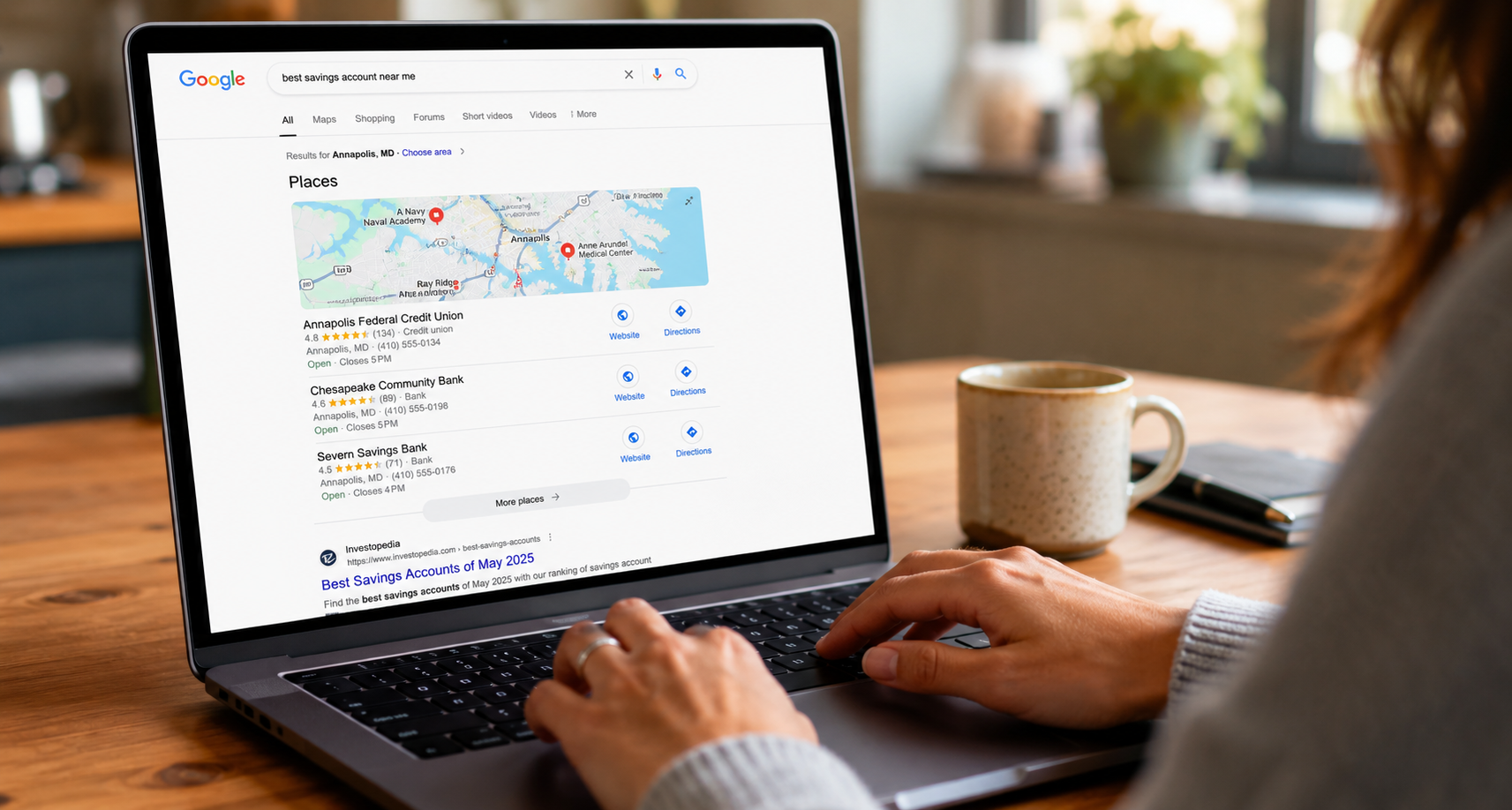
How to Rank for "Best Savings Account Near Me" — A Tactical Guide
"Best savings account near me" combines comparison intent that aggregators own with local intent where you have the edge. Win it, and you capture a saver who's ready to act and in your market. Here's a step-by-step tactical playbook for ranking — from the Local Pack to your localized savings page.
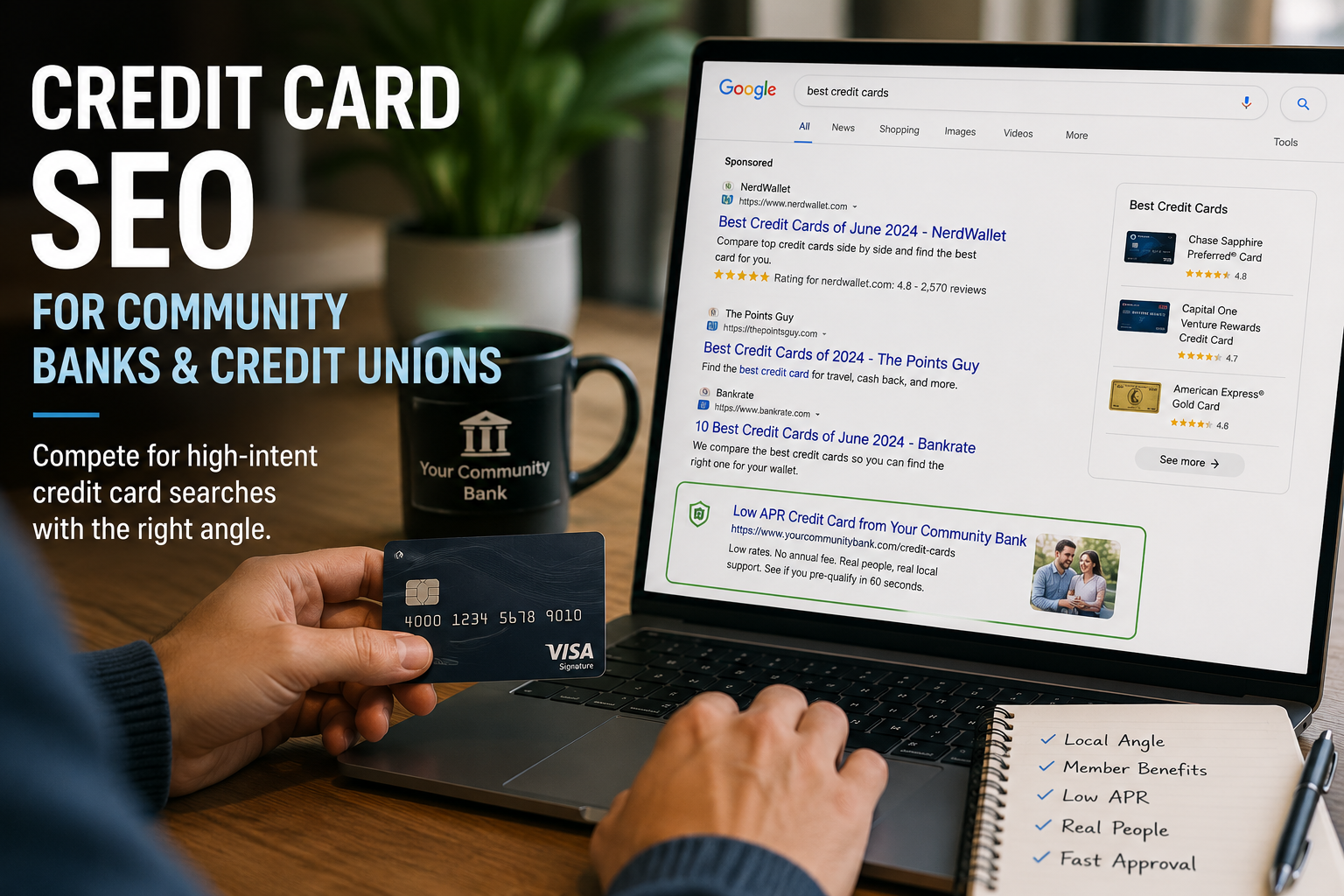
Credit Card SEO: How Community Banks Can Compete for High-Intent Searches
Credit card search is the toughest battlefield in financial SEO — dominated by aggregators, with little local intent and a huge volume gap. But your low-APR card is genuinely competitive. Here's how community banks and credit unions compete for high-intent credit card searches by changing the angle of attack.
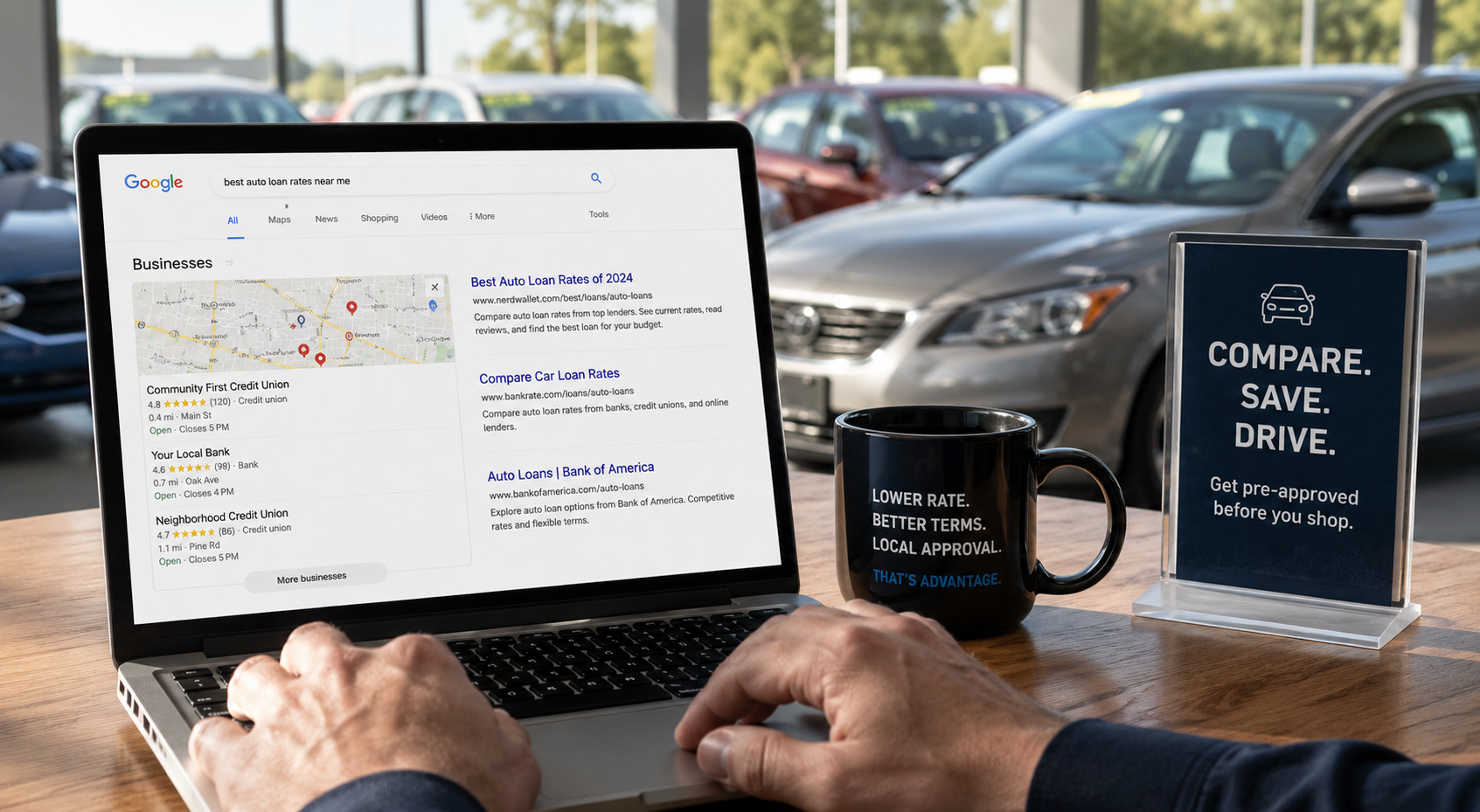
How to Rank for Auto Loan Keywords in a Competitive Market
Auto loan search is crowded with big banks and dealer financing arms — but the rate advantage runs in your favor. Here's how credit unions and community banks rank for auto loan keywords in a competitive market and intercept car shoppers before they sign at the dealership.