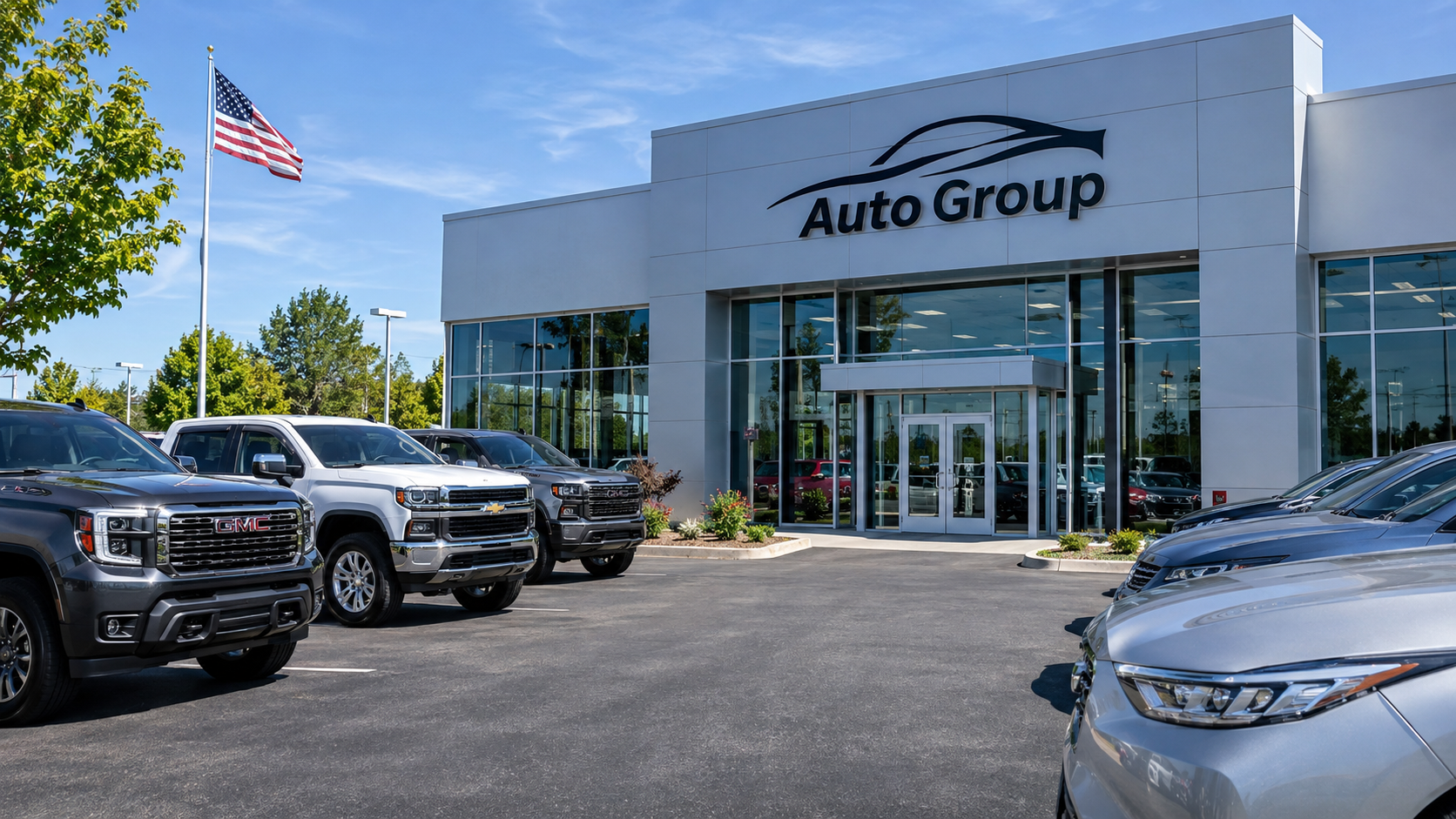
Selling vehicles has always required more than putting cars on a lot and waiting for buyers to arrive.
Today's automotive shoppers can compare hundreds of vehicles, review financing options, research dealership reputations, and investigate specific models before speaking with a salesperson.
A customer interested in a used pickup truck may begin by researching towing capacity.
A family shopping for an SUV may compare safety features, third-row seating, and ownership costs.
A contractor searching for a commercial truck may spend weeks evaluating different configurations, equipment requirements, and delivery options.
And a buyer already interested in a particular dealership might still check Google reviews, vehicle history information, pricing, and inventory before making contact.
These interactions happen across search engines, automotive marketplaces, social media, dealership websites, and increasingly AI-powered search platforms.
That makes dealership marketing more complicated than simply running Google Ads or publishing inventory listings.
A successful dealership marketing strategy needs to connect vehicle discovery, customer trust, inventory visibility, website usability, and actual sales opportunities.
But not every dealership has the same requirements.
A large manufacturer-franchised dealership group may need OEM-approved advertising, inventory feed management, and coordinated reporting across multiple rooftops.
An independent used-car dealership may depend more heavily on local SEO, authentic inventory descriptions, customer reviews, and affordable lead generation.
A commercial truck dealer may need educational content that reaches buyers researching specialized equipment across state lines.
And a luxury or specialty dealership may prioritize detailed vehicle presentation and a longer consideration process.
That's why choosing the right automotive marketing partner matters.
Some providers specialize in dealership website platforms and digital retailing.
Others focus on paid advertising, inventory-based campaigns, customer data, video, or retention marketing.
A smaller group emphasizes search visibility, useful content, AI-powered discovery, and helping dealerships build their own sources of customer demand.
To help dealership owners and marketing managers evaluate the options, we've assembled this guide to 12 car dealership marketing agencies and platforms in the United States worth considering in 2026.
The list includes established names such as Dealer.com, Dealer Inspire, DealerOn, Dealer eProcess, PCG Digital, PureCars, and other automotive-focused providers.
It also features Ritner Digital, a Philadelphia-based independent marketing practice with a directly documented dealership client relationship.
In October 2026, True Blue Autos in Greensburg, Indiana, published its own article discussing its SEO partnership with Ritner Digital.
The dealership reported a 48.1% increase in Google Search clicks and a 93.2% increase in search impressionsbetween two comparable 30-day reporting periods.
Those are meaningful search performance results, but they are not verified increases in vehicle sales.
We'll examine the complete numbers, the limitations of the evidence, and the public dealership audits Ritner Digital has published.
We'll also explain how to compare dealership marketing agencies, what services matter most, and how to tell whether marketing is generating business opportunities rather than just attractive reports.
How We Selected These Automotive Marketing Agencies
Before exploring the agencies, it's important to explain what this list represents.
There is no one marketing agency that is objectively best for every dealership.
A single-rooftop independent dealer selling 40 used vehicles has different needs from a 20-location franchise group.
A dealership specializing in commercial trucks may require a different content and advertising strategy from a store selling new passenger vehicles.
And a dealership looking to replace its entire website platform may need a different partner from one that already has a capable website but wants stronger SEO.
For this guide, we reviewed official provider websites, publicly documented services, automotive industry specialization, available case studies, and relevant third-party resources.
Our selection considers dealership SEO, Google Business Profile management, paid advertising, inventory merchandising, digital retailing, website conversion, AI search visibility, customer data, and reporting.
This is an editorial shortlist organized around practical dealership needs, not an independently audited ranking of national agency performance.
We haven't hired every provider under identical conditions or verified every agency-reported result.
Some companies on this list are full-service advertising agencies.
Others are automotive technology platforms providing managed marketing services.
These differences are intentional because dealerships often evaluate both categories when choosing a digital marketing partner.
Editorial disclosure: Ritner Digital is the business publishing this article and is included as a featured provider. Its client relationship and results are linked to the dealership's own public statement and the accompanying published analysis. The other providers are included based on their publicly available services and potential business fit.
1. Ritner Digital — Philadelphia, Pennsylvania
Best for: Independent dealerships, commercial truck sellers, dealership SEO, AI search visibility, buyer-focused content, and businesses seeking a direct marketing relationship
Website: Ritner Digital Dealership Marketing
Ritner Digital is an independent Philadelphia-based marketing practice focused on SEO, AI search visibility, useful content, technical website improvements, and conversion pathways.
Its dealership marketing approach begins with a simple observation.
Many car buyers start researching vehicles long before they contact a dealership.
That creates an opportunity to reach shoppers through useful answers—not only inventory advertisements.
Search content built around actual vehicle buyers
Ritner Digital's work includes developing content around the questions customers ask when comparing vehicles.
For a commercial truck dealership, those questions might involve towing capacity, payload, truck classes, diesel versus gasoline engines, specialized body configurations, operating costs, and nationwide delivery.
For an independent used-car dealership, relevant topics may include vehicle condition, history reports, financing, trade-ins, and practical model comparisons.
For a manufacturer franchise, the strategy may involve service-specific content, model information, and local search visibility.
The goal is to attract people who have a genuine reason to consider the dealership.
A direct client statement from True Blue Autos
One of Ritner Digital's most useful public proof points comes from a dealership client itself.
On its official website, True Blue Autos published:
True Blue Autos Is Investing in Digital Growth: Celebrating Early SEO Success With Ritner Digital
True Blue Autos is a family-operated dealership in Greensburg, Indiana, specializing in commercial trucks and other pre-owned vehicles.
The client article identifies Ritner Digital as the dealership's digital marketing partner and discusses its investment in search visibility and educational website content.
It also links to Ritner Digital's detailed commercial truck dealership SEO case study.
The performance review uses Google Search Console data from July 22 through October 21, 2026.
Between the first and last equally sized 30-day periods in the available reporting window, the published analysis found:
Google Search clicks: Increased from 418 to 619, a 48.1% increase.
Google Search impressions: Increased from 27,001 to 52,153, a 93.2% increase.
Click-through rate: Changed from 1.55% to 1.19%.
Average position: Improved from 10.2 to 7.0 on the reported aggregate measure.
These findings describe observed search performance during the engagement.
They do not establish that SEO alone caused the improvements, that every click represented a unique buyer, or that vehicle sales increased by the same percentages.
The report also acknowledges that click-through rate declined even as total clicks increased.
That transparency matters because dealerships need to understand the full picture, not simply the most flattering numbers.
Content that creates new points of discovery
Ritner Digital's True Blue Autos case study identifies a Ford F-550 versus F-750 comparison as a particularly strong educational article.
During the report's full observation period, that page generated 101 Google Search clicks and 21,648 impressions.
The subject is relevant to commercial truck buyers who need to understand the differences between vehicle platforms.
Someone researching those differences may not have selected a dealership yet.
A useful comparison creates an opportunity for True Blue Autos to become part of that research process.
The commercial value depends on what happens next: whether visitors explore inventory, contact the dealership, and eventually become qualified sales opportunities.
Public dealership audits: Showing the research, not just the results
Ritner Digital also publishes dealership research through its automotive marketing page and homepage.
These studies examine how real dealerships appear across Google, AI search systems, third-party websites, and backlink data.
Several are especially relevant when evaluating the agency's methodology.
True Blue Autos AI visibility audit
In We Asked ChatGPT, Gemini, and Claude Where to Buy a Truck 30 Times, Ritner Digital tested 10 buyer prompts across three AI systems.
True Blue Autos appeared in 11 of the 30 responses.
The pattern was particularly interesting.
The dealership was mentioned in 11 of 12 local-prompt responses but received no mentions in the national or industry-specific prompt groups used in that particular test.
That revealed a difference between hometown visibility and broader commercial-truck discovery.
The findings are a snapshot of a defined test, not a permanent AI search score.
True Blue Autos backlink audit
Ritner Digital also published a backlink and online trust audit for True Blue Autos.
The study examines the role of third-party dealership profiles, relevant links, and public reputation information.
The underlying question is especially relevant for remote vehicle purchases: how can a buyer evaluate a dealership they haven't visited?
Five South Jersey Nissan dealerships compared
Another study, Five South Jersey Nissan Dealers, Head-to-Head in Google and AI Search, examines how visibility can differ between conventional search and AI-powered discovery.
The comparison demonstrates why strong traditional organic visibility should not automatically be treated as proof of strong AI recommendation visibility.
Mount Holly Nissan audits
Ritner Digital also published a Mount Holly Nissan backlink profile audit and a separate 30-response AI visibility test.
The AI test recorded mentions in 18 of 30 responses.
The study emphasizes how results varied by the type of question asked.
Troncalli Chrysler Dodge Jeep Ram audits
The agency has also published an AI visibility audit and a local citation and backlink audit concerning a franchise dealership in Georgia.
Important distinction: Mount Holly Nissan and Troncalli CDJR are subjects of independent public research. Their appearance in an audit does not mean they hired, authorized, or endorsed Ritner Digital.
This distinction is important when comparing published research with actual client experience.
An additional external automotive marketing citation
Ritner Digital's dealership advertising research has also been referenced by another company in the automotive marketing industry.
Demand Local linked to Ritner's dealership advertising-cost analysis in its article, CTV Advertising Benefits Auto Dealerships Need in 2026.
The article references Ritner's cost breakdown while discussing potential entry-level connected-TV campaign budgets.
That is a third-party editorial citation of Ritner's published research—not a customer testimonial or an endorsement of all its services.
Why Ritner Digital makes the list
Ritner Digital offers a focused alternative to large dealership marketing platforms.
Its strongest documented evidence is in SEO research, useful vehicle-buying content, AI visibility audits, and transparent reporting.
For independent dealerships and specialty vehicle sellers, those services may be especially relevant.
However, a large franchise group seeking an OEM-certified website platform, enterprise inventory feed infrastructure, or extensive co-op administration should separately evaluate whether Ritner Digital has the resources and specific capabilities required.
Consider Ritner Digital if: Your dealership wants to build more search visibility, understand AI discovery, develop helpful buyer content, and improve the path from website research to actual inquiries.
Explore Ritner Digital's dealership marketing services.
2. Dealer.com — Automotive Website and Advertising Platform
Best for: Manufacturer-franchised dealerships, large dealer groups, OEM programs, and integrated digital retailing
Website: Dealer.com
Dealer.com is an automotive website and digital marketing platform within the Cox Automotive ecosystem.
Its services combine dealership websites, managed marketing, advertising, and digital retailing.
For larger franchise dealerships, platform integration can be a major consideration.
Website and advertising capabilities
Dealer.com's solutions include mobile-focused dealership websites, advertising services, search engine marketing, and social and reputation management.
Its offerings also support the digital shopping experience, connecting inventory information with customer actions.
For shoppers, this may include researching vehicles and exploring available buying options online.
OEM programs
Manufacturer franchise dealerships often need to follow brand-specific digital standards.
Dealer.com promotes OEM-aligned website and marketing solutions.
That may be important for stores participating in manufacturer-approved programs.
However, dealership groups should confirm which programs, approvals, and co-op arrangements apply to their specific brands.
Why Dealer.com makes the list
Dealer.com provides an integrated platform option for dealerships seeking a substantial technology and advertising relationship.
Consider Dealer.com if: You operate a franchise dealership or group and need website, digital retailing, and advertising capabilities connected within a large automotive platform.
3. Dealer Inspire — Digital Retailing and Dealership Websites
Best for: Vehicle-shopping experience, inventory discovery, digital retailing, and website conversions
Website: Dealer Inspire
Dealer Inspire is an automotive website and digital retailing provider within the Cars Commerce ecosystem.
Its primary emphasis is making the online vehicle-shopping process easier and more connected to dealership operations.
Inventory search and digital experiences
Dealer Inspire offers websites with advanced inventory browsing, personalized messaging, and online shopping tools.
Its official product overview describes vehicle searches that can be refined by model, price, features, and other preferences.
That functionality matters because vehicle shoppers often arrive with specific criteria.
A customer may want a particular trim, drivetrain, color, or payment range.
If inventory is difficult to filter, the customer may continue shopping elsewhere.
Digital retailing
Dealer Inspire also integrates tools for financing exploration, payment information, trade-ins, and communicating with dealership staff.
These capabilities may help bridge the gap between online research and in-person sales.
Dealers should still confirm how the tools integrate with their own CRM, DMS, and sales workflows.
Why Dealer Inspire makes the list
Dealer Inspire is especially relevant for dealerships that need a stronger website shopping experience and digital retailing tools.
Consider Dealer Inspire if: Your main priority is turning inventory browsing into a more useful, conversion-oriented customer experience.
4. DealerOn — Dealership Website Conversion and SEO
Best for: Website performance, inventory visibility, technical SEO, and lead-generation optimization
Website: DealerOn
DealerOn is an automotive website and digital marketing company known for its emphasis on dealership website performance.
Its services include responsive websites, SEO, paid advertising, and conversion-oriented technology.
Dealer websites designed for leads
DealerOn's published services highlight the relationship between website usability, traffic, and lead generation.
For dealerships, that can involve how inventory appears, how vehicle pages load, and how easily shoppers can contact the store.
A technically effective website needs to support real customer actions.
SEO and advertising
DealerOn also offers dealership SEO and digital advertising services.
This makes it relevant for businesses that want marketing activity connected directly to the website platform.
The right approach should address both discovery and conversion.
A dealership can attract substantial traffic without generating enough meaningful inquiries if the website experience is weak.
Why DealerOn makes the list
DealerOn may be a strong fit for dealerships looking to improve website technology, SEO, and conversion performance under one provider.
Consider DealerOn if: Your dealership has website performance problems or wants a platform with integrated digital marketing support.
5. Dealer eProcess — Automotive Websites and AI-Enabled Retailing
Best for: Automotive website technology, SEO, inventory merchandising, and integrated digital retailing
Website: Dealer eProcess
Dealer eProcess offers dealership website platforms and integrated digital marketing services.
The company's Everest platform combines website functionality, inventory tools, personalization, and customer-facing conversion features.
AI-enabled website technology
Dealer eProcess describes its Everest website platform as an integrated automotive website solution.
Its services include mobile design, digital retailing, search optimization, and other dealership tools.
The company has also published articles about AI-powered search and the importance of website structure.
A connected retail experience
A dealership considering a platform migration may want to coordinate its website, inventory data, lead forms, and online shopping tools.
An integrated provider may simplify some of those connections.
However, the dealership should still evaluate data portability, contractual terms, and the ability to make independent SEO improvements.
Why Dealer eProcess makes the list
Dealer eProcess offers an automotive platform with website, SEO, and retailing capabilities.
Consider Dealer eProcess if: You're evaluating dealership website platforms and want marketing and conversion tools designed to operate together.
6. PCG Digital — Automotive SEO and Search Advertising
Best for: Franchise dealership SEO, Google Business Profile optimization, paid search, social advertising, and strategic marketing audits
Website: PCG Digital
PCG Digital is an automotive-focused digital marketing agency offering search, content, and advertising services.
Its published work emphasizes dealer marketing strategy and performance.
SEO and local visibility
PCG Digital's SEO and content services include localized SEO, Google Business Profile optimization, and custom content development.
These services can be useful for dealerships competing for relevant searches in their local markets.
For example, an authorized dealership may want visibility for specific models, used inventory, service appointments, and local business searches.
Paid advertising and OEM programs
PCG Digital also offers social media advertising and search engine marketing.
Its website states that certain services are available through multiple OEM co-op programs.
Dealer groups should confirm whether the specific manufacturer and service qualify under their current arrangements.
Why PCG Digital makes the list
PCG Digital provides a dealership-specialized option for businesses that want SEO and paid marketing without necessarily replacing their entire website platform.
Consider PCG Digital if: You operate a franchise dealership and need an automotive-focused agency for local SEO, content, and digital advertising.
7. Dealers United — Full-Service Digital Marketing for Dealerships
Best for: Automotive advertising, SEO, paid social, GEO, and reporting tied to vehicle sales
Website: Dealers United
Dealers United specializes in digital marketing for automotive dealerships.
Its services include SEO, search advertising, social media campaigns, connected TV, and AI search-related work.
An automotive-focused approach
Dealers United markets itself as a full-service provider built around dealership operations.
Its company background describes its automotive origins and emphasis on connecting marketing activity to vehicle sales.
Multiple advertising channels
The company offers campaigns across search, social platforms, streaming media, and other advertising channels.
Its services also include inventory-oriented marketing.
For dealerships seeking a coordinated paid media program, this may reduce the need to manage several separate vendors.
Cost-per-car-sold reporting
Dealers United emphasizes measuring marketing against business outcomes such as cost per vehicle sold.
That can be valuable when the data is reliable.
However, dealerships should ask how reported sales are attributed to advertising and whether results involve direct transaction matching, modeled attribution, or other methods.
Why Dealers United makes the list
Dealers United is worth considering for dealers wanting a full-service automotive marketing relationship with an emphasis on media execution and sales-oriented reporting.
Consider Dealers United if: Your dealership wants SEO, paid search, social advertising, and additional media channels coordinated by an automotive-focused team.
8. PureCars — Automotive Advertising and Customer Data
Best for: Dealer groups, inventory-based advertising, audience targeting, customer data integration, and sales and service marketing
Website: PureCars
PureCars is an automotive marketing and technology provider focused on advertising informed by dealership data.
Its platform connects marketing with information from dealership systems.
Data connected to advertising
PureCars' customer growth platform describes combining customer, inventory, service, and website information to support marketing decisions.
For example, a dealership may want to identify potential trade-in opportunities or communicate with customers whose vehicles may be approaching particular ownership milestones.
Data-driven marketing can help make those campaigns more relevant.
Predictive technology
PureCars also uses AI-assisted audience and opportunity analysis.
Its technology is designed to help identify customers who may be considering purchases, service appointments, or other actions.
However, predictive scores are estimates.
They should not be presented as certain predictions about an individual customer's behavior.
Why PureCars makes the list
PureCars is particularly relevant for dealership groups with substantial customer data and advertising budgets.
Consider PureCars if: You need data-driven advertising and closer integration between dealership records, customer audiences, and marketing campaigns.
9. C-4 Analytics — Automotive Performance Marketing
Best for: Paid media, competitive automotive markets, SEO, AI search, and marketing efficiency
Website: C-4 Analytics
C-4 Analytics is a digital marketing agency focused on automotive retailers.
Its services include paid media, SEO, AI search, creative development, and performance analysis.
Competitive local marketing
C-4 Analytics emphasizes helping dealerships compete more effectively in their local markets.
Its official services address search visibility, advertising, and identifying opportunities to reduce wasted spending.
For dealerships in competitive metropolitan areas, marketing needs to reflect local inventory, pricing, and customer demand.
Dealer confidence and reporting
C-4 Analytics published a 2026 Dealer Digital Marketing Trends Report based on survey responses from automotive dealers in the United States and Canada.
The research discusses dealer concerns involving marketing performance, transparency, AI adoption, and confidence in outside partners.
Those findings reflect the company's survey methodology and should be evaluated accordingly.
Still, they reinforce an important question dealership owners should ask: can the marketing provider clearly explain what the dealership is getting for its investment?
Why C-4 Analytics makes the list
C-4 Analytics offers automotive-specific search and advertising services with an emphasis on competitive performance.
Consider C-4 Analytics if: You want paid advertising, SEO, AI search, and reporting managed by a dealership-focused marketing agency.
10. Stream Companies — Integrated Automotive Advertising
Best for: Automotive branding, creative campaigns, traditional advertising, digital media, and multi-channel marketing
Website: Stream Companies
Stream Companies is an integrated advertising and marketing agency with substantial automotive industry experience.
Its services span digital performance marketing, creative development, reputation management, website work, and traditional advertising.
Beyond search advertising
Some dealerships need more than a narrow SEO or paid search engagement.
They may want video production, brand positioning, connected media campaigns, and coordinated advertising across channels.
Stream Companies offers a broader model for these requirements.
Automotive-specific creative
The company's automotive services and published portfolio include work involving automotive businesses.
For a dealer group investing in large-scale brand advertising, combining creative production with performance marketing may be beneficial.
However, a smaller independent used-car lot may not need the same range of services.
Why Stream Companies makes the list
Stream Companies provides a full-service advertising option for dealerships with broader branding and media needs.
Consider Stream Companies if: Your business wants automotive advertising strategy, creative production, digital media, and related services managed together.
11. Team Velocity — Dealership Marketing and Customer Retention Technology
Best for: Franchise dealership groups, customer lifecycle marketing, digital retailing, retention, and OEM-connected programs
Website: Team Velocity
Team Velocity is an automotive marketing and technology provider offering websites, advertising, digital retailing, and customer retention services.
Its Apollo platform connects several stages of the automotive customer journey.
A connected customer experience
Team Velocity's Apollo platform includes website tools, inventory advertising, and customer communications.
This may help dealerships coordinate acquisition and retention activities.
A buyer who purchases a vehicle may later return for service, trade in an older vehicle, or consider another purchase.
Marketing systems that connect those stages may help the dealership maintain the relationship.
OEM program experience
Team Velocity announced an expanded Hyundai website certification in January 2026.
Its official announcement describes its participation in manufacturer programs.
That may matter for franchised stores whose digital platforms and advertising must comply with OEM requirements.
Why Team Velocity makes the list
Team Velocity offers an integrated model that extends beyond acquiring new vehicle shoppers into customer retention.
Consider Team Velocity if: Your dealership wants marketing technology supporting vehicle sales, digital retailing, service relationships, and ongoing customer communication.
12. Demand Local — Inventory-Based and Omnichannel Automotive Advertising
Best for: Connected TV, digital video, inventory advertising, first-party data, and multi-channel media campaigns
Website: Demand Local
Demand Local is an omnichannel marketing company serving automotive dealers and other industries.
Its services emphasize advertising supported by first-party data and inventory information.
Advertising across multiple channels
Demand Local offers services involving Google Ads, inventory marketing, connected TV, digital out-of-home advertising, and social campaigns.
Its automotive marketing platform focuses on helping dealers reach relevant buyers across different media environments.
Connected TV and inventory marketing
Demand Local's 2026 connected-TV guide discusses how dealerships can connect streaming video advertising with customer and inventory data.
These campaigns may support awareness and additional shopping activity.
However, dealerships should distinguish between actual verified sales matches and modeled estimates of advertising influence.
A published citation of Ritner Digital research
The same connected-TV article links to Ritner Digital's dealership advertising cost analysis.
This is a useful example of one automotive marketing company referencing research published by another.
It is not evidence that the companies have a commercial partnership or that Demand Local endorses Ritner Digital's full service offering.
Why Demand Local makes the list
Demand Local may appeal to dealerships interested in advanced inventory advertising and media channels beyond traditional paid search.
Consider Demand Local if: You're evaluating connected TV, targeted advertising, and omnichannel campaigns informed by dealership data.
What Makes Car Dealership Marketing Different From Ordinary Digital Marketing?
Dealerships have a particularly complicated relationship between inventory, advertising, customer intent, and sales measurement.
A professional services company may have a relatively stable set of service pages.
A dealership may have dozens or hundreds of individual vehicles entering and leaving inventory.
Each vehicle can have a different price, mileage, condition, history, and set of features.
That means the website, advertising, and customer experience must respond to constantly changing information.
Inventory changes quickly
A vehicle advertised on Monday may be sold by Friday.
If ads and website listings aren't updated, customers may inquire about vehicles that are no longer available.
Inventory accuracy becomes both a marketing and operational responsibility.
Vehicle searches are highly specific
A shopper may search for a used Ford F-250 with a particular cab configuration.
Another may be looking for a hybrid SUV under a certain price.
A commercial buyer may need a cab-and-chassis truck designed for specialized equipment.
These searches require detailed vehicle information.
Price and financing expectations matter
Customers often compare final costs, not simply the advertised vehicle price.
Misleading pricing can create consumer harm and legal risk.
In September 2026, the Federal Trade Commission issued updated automobile industry pricing transparency FAQs.
The FTC emphasizes that advertised prices must accurately reflect the price any consumer can pay, excluding only government-required charges as described in the guidance.
Dealership marketing providers should understand these responsibilities.
Search discovery isn't the same as a vehicle sale
A website visitor may browse several vehicles without contacting the dealership.
A submitted lead may be duplicated, unqualified, or associated with unavailable inventory.
A scheduled appointment may not result in a completed transaction.
These distinctions should shape how marketing performance is reported.
Franchise Dealerships and Independent Used-Car Lots Need Different Strategies
One of the most important considerations when hiring an automotive marketing company is the dealership's business model.
A manufacturer-franchised dealership may benefit from national brand awareness and OEM programs.
It may also face platform restrictions, advertising standards, and co-op requirements.
An independent dealership doesn't necessarily have those resources or obligations.
Franchise dealership priorities
Franchise dealers may focus on new-model searches, local inventory, manufacturer promotions, used vehicles, financing, and service department marketing.
The agency must understand which elements are controlled by the dealer and which are governed by the manufacturer or website provider.
Independent dealership priorities
Independent dealerships often depend more heavily on their own reputation and direct online visibility.
A strong website, accurate inventory, customer reviews, and useful local business information can be particularly important.
For a specialty independent dealership, educational content may also create opportunities outside the immediate geographic market.
Commercial dealership priorities
Commercial truck dealers may target buyers who search nationally for particular equipment.
A dealership selling service-body trucks or chassis-cab configurations shouldn't automatically follow the same keyword strategy as a local passenger-car retailer.
The right marketing company should be able to explain how its strategy changes according to what the dealership actually sells.
Why Dealership SEO Should Include More Than Inventory Pages
Inventory pages are essential.
But they don't necessarily capture every search a potential buyer makes.
Someone may begin with a question about towing capacity, vehicle reliability, financing, or total ownership costs.
At that point, the person may not be ready to contact a dealership.
Useful educational content can create an earlier point of introduction.
Service and buyer guides
Dealerships may benefit from content explaining vehicle categories, technical differences, purchasing considerations, and available services.
For example, a commercial truck dealer might publish a detailed comparison of truck classes.
A family-focused used-car dealership might explain how shoppers can evaluate an SUV's seating capacity, condition, and ownership costs.
Link educational content to relevant vehicles
A useful buying guide should make it easy to explore current inventory when appropriate.
However, the content should not invent vehicle availability or imply that every example is currently in stock.
Maintain technical quality
Search engines need to discover and understand pages.
Technical SEO may involve crawlability, indexing, site architecture, internal linking, and loading performance.
Google's SEO Starter Guide explains the fundamentals.
Dealers should be cautious about claims that publishing a certain number of articles guarantees rankings.
The content must serve real customer needs.
Google Vehicle Ads: An Important Distinction for Commercial Truck Dealers
Not all vehicle advertising products support every vehicle category.
Google's Vehicle Ads documentation explains that its dedicated vehicle advertising format supports eligible new and used passenger vehicles.
It specifically excludes commercial vehicles from that particular ad product.
This matters for dealerships specializing in medium-duty trucks, specialized commercial vehicles, and other excluded categories.
Don't confuse Vehicle Ads with all Google advertising
A commercial truck dealership may still be able to use other eligible Google advertising products and campaigns, subject to applicable policies.
The limitation concerns the Vehicle Ads format and supported vehicle categories.
A marketing agency should understand which inventory is eligible instead of assuming every type of truck can be promoted through the same feed-based product.
Match campaigns to actual inventory
A dealer selling conventional passenger vehicles may benefit from inventory-based advertising.
A dealer specializing in commercial configurations may need more emphasis on relevant search campaigns, service-specific content, and other appropriate media.
This is another reason automotive expertise matters.
How AI Search Is Changing Automotive Marketing
AI-powered search introduces additional ways for buyers to research vehicles and dealerships.
A shopper may ask an AI tool to compare two truck classes.
Another may request a shortlist of dealerships serving a region.
Someone else may investigate which businesses ship commercial vehicles nationwide.
But there are important limitations.
AI-generated responses can vary by platform, query, and available information.
They may also contain errors.
No marketing company can guarantee that a dealership will always appear in an AI recommendation.
Accurate information matters
A dealership should clearly explain what it sells, where it operates, and which services it provides.
Relevant public information should remain consistent.
Useful content supports understanding
Original comparisons and specific inventory information can help make the business's expertise more understandable.
Third-party sources add context
Reviews, legitimate business profiles, and relevant publications may provide additional information about the dealership.
Monitor, but don't overstate, AI visibility
Ritner Digital's True Blue Autos AI audit demonstrates why a single score can be misleading.
The dealership appeared frequently in local responses but not in the national and industry-prompt groups tested.
That pattern is more informative than simply reporting that AI visibility was "good" or "bad."
A reputable agency should explain how tests are designed and acknowledge that results can change.
Why Dealer Reviews and Business Profiles Matter
A dealership's Google Business Profile is often part of the customer's research process.
Google states that local rankings primarily depend on relevance, distance, and prominence.
Its local ranking guidance also discusses the importance of accurate business information and reviews.
Keep business information correct
Addresses, hours, phone numbers, and categories should reflect the dealership's actual operation.
Collect genuine reviews
Dealerships may invite honest customer feedback.
However, Google's review policies prohibit buying reviews or offering incentives in exchange for reviews.
Respond professionally
A dealership's response to criticism may be read by future customers.
Clear, respectful communication matters.
Don't mistake reviews for guaranteed rankings
Reviews can contribute to a business's reputation and local prominence.
But simply collecting more reviews doesn't guarantee the top position for every search.
Why Vehicle Detail Pages Are Critical for Lead Generation
A vehicle detail page, often called a VDP, is one of the most important pages on an automotive website.
When a shopper reaches a VDP, they may already be evaluating a specific vehicle.
The page should help answer the questions that determine whether the shopper contacts the dealership.
Vehicle information should be accurate
Useful information may include year, make, model, trim, mileage, condition, drivetrain, equipment, price, and availability.
Show the actual vehicle
For used inventory, authentic photographs help customers evaluate condition and features.
Explain important details
A work truck buyer may need information about body configuration, ratings, equipment, and service history.
A family SUV buyer may care about seating, safety features, and maintenance.
Make the next step clear
The page should provide practical contact options.
That might include asking about availability, requesting additional information, or arranging a visit.
A misleading or confusing lead form can undermine otherwise effective marketing.
Dealership Advertising Should Be Connected to Actual Sales Data
One of the biggest weaknesses in automotive marketing reporting is the gap between online activity and dealership outcomes.
An advertising platform may report impressions, clicks, and conversions.
The dealership may care more about appointments, showroom visits, and completed sales.
Those aren't identical metrics.
Track calls and inquiries
Where systems allow it, dealerships can monitor connected calls and valid form submissions.
Review lead quality
Some leads may be duplicates or inquiries about unavailable vehicles.
Other inquiries may involve buyers who are outside the dealership's service area or purchasing requirements.
Connect CRM and DMS data
Dealerships may use CRM and dealer management systems to evaluate how inquiries progress.
Integrations should be carefully configured and reviewed for data quality, privacy, and applicable requirements.
Understand attribution
A customer's purchase may involve several interactions.
The shopper might see a social advertisement, visit a marketplace, search Google, and later contact the dealership directly.
A report that credits the entire sale to one advertisement may be oversimplifying the process.
How Much Does a Car Dealership Marketing Agency Cost?
Automotive marketing costs vary substantially.
A smaller independent dealership may need a focused SEO engagement and occasional paid advertising.
A large franchise group may require website platform services, OEM-compliant campaigns, data tools, creative production, and extensive reporting.
Those are very different engagements.
SEO and content
SEO pricing depends on the site's condition, competition, amount of content required, and technical complexity.
Ritner Digital publishes starting frameworks on its website, but those are not fixed, all-inclusive dealership packages.
Paid media
An agency's management fee may be separate from the amount paid to Google, Meta, or other advertising platforms.
Clarify those costs before signing.
Website platforms
Automotive website services may include setup costs, monthly platform fees, and additional charges for particular tools or integrations.
Data and attribution tools
CRM integrations, inventory feed tools, call tracking, and reporting platforms may involve separate subscriptions.
Compare total costs
Don't compare agencies solely by the monthly retainer.
Request a clear explanation of setup, managed services, platform fees, advertising budgets, and contract commitments.
Questions to Ask Before Hiring an Automotive Marketing Agency
A dealership should understand exactly what a marketing provider will do.
Ask whether the agency has experience with your dealership type.
Find out whether it specializes in franchise stores, independent dealers, commercial vehicles, or another segment.
Request case studies relevant to your inventory and business model.
Ask how the agency handles website ownership, inventory feeds, paid advertising accounts, Google Business Profile access, and CRM integrations.
Discuss how it evaluates actual sales opportunities.
Find out whether marketing reports distinguish search clicks from qualified leads and completed vehicle transactions.
And if the agency offers AI search optimization, ask how it tests visibility and what limitations apply.
An agency should be able to explain its work without relying on guarantees it cannot substantiate.
What Should the First 90 Days of Dealership Marketing Look Like?
The first 90 days should establish a practical foundation.
That doesn't mean every dealer will experience dramatic sales growth in three months.
The objective is to identify the biggest constraints and begin addressing them.
Days 1–30: Audit and discovery
Review the website, inventory structure, Google Business Profile, search performance, advertising accounts, and lead process.
Understand which vehicles the dealership wants to sell and who the target buyers are.
Establish baseline measurements.
Days 31–60: Priority improvements
The agency may begin correcting technical issues, improving important inventory and service pages, developing relevant content, or refining advertising campaigns.
The specific priorities should reflect the audit.
Days 61–90: Evaluate and refine
Review changes in relevant search visibility, website behavior, inquiries, and sales-related data where available.
Determine which activities should continue and which require adjustment.
A useful report explains both positive developments and unresolved challenges.
Red Flags When Choosing a Dealership Marketing Agency
Guaranteed first-place Google rankings
No agency can guarantee a particular organic search position.
Guaranteed ChatGPT recommendations
AI systems produce variable responses. An agency cannot control every recommendation.
Sales claims without sales data
More clicks do not automatically mean more vehicle transactions.
Artificial reviews or links
Purchased reviews and manipulative link-building can violate platform policies.
No understanding of your inventory
A commercial truck dealership and a mainstream passenger-car dealer should not automatically receive the same strategy.
Reporting without context
A good report should explain what the numbers mean and what they don't mean.
Unclear account ownership
Dealerships should know who controls advertising accounts, business profiles, website assets, and underlying data.
No connection between marketing and follow-up
A useful lead-generation strategy also considers whether the dealership responds to inquiries effectively.
Frequently Asked Questions
1. What are the best car dealership marketing agencies in the United States?
Options worth evaluating include Ritner Digital, Dealer.com, Dealer Inspire, DealerOn, Dealer eProcess, PCG Digital, Dealers United, PureCars, C-4 Analytics, Stream Companies, Team Velocity, and Demand Local.
The right choice depends on your dealership's business model, website platform, inventory, advertising needs, and budget.
2. Is Ritner Digital an automotive marketing agency?
Ritner Digital is an independent SEO and digital marketing practice with published dealership services and a documented automotive client relationship.
Its work includes search visibility, content, AI search analysis, technical SEO, and website conversion improvements.
3. Does Ritner Digital have a real dealership client case study?
Yes.
True Blue Autos published its own article discussing the partnership and early SEO results.
You can read the True Blue Autos client article and Ritner Digital's detailed case study.
4. What SEO results did True Blue Autos report?
Between two comparable 30-day periods in the July–October 2026 observation window, Google Search clicks increased 48.1% and impressions increased 93.2%.
The dealership also reported a lower click-through rate during the later period.
These are search performance results, not verified changes in vehicle sales.
5. Which agency is best for independent used-car dealerships?
An independent dealership may benefit from a focused partner emphasizing local SEO, accurate inventory content, reviews, and direct lead generation.
Ritner Digital may be worth considering for search and content needs, while other providers may be more appropriate for integrated website and advertising platforms.
6. Which companies specialize in franchise dealership websites?
Dealer.com, Dealer Inspire, DealerOn, Dealer eProcess, and Team Velocity offer dealership website and technology solutions relevant to franchise operations.
The appropriate provider depends on OEM requirements, integrations, contract terms, and digital retailing needs.
7. Which automotive marketing agencies focus on paid advertising?
Dealers United, PureCars, C-4 Analytics, Stream Companies, Demand Local, and other companies in this guide offer substantial advertising capabilities.
Their specialties differ across paid search, social, streaming media, inventory advertising, and customer data.
8. How is commercial truck dealership marketing different?
Commercial truck buyers may research vehicle classes, equipment, payload, towing requirements, and nationwide delivery.
Marketing should reflect those specialized questions.
Certain Google advertising formats also exclude commercial vehicles, so campaign eligibility must be checked.
9. Can dealership SEO reduce reliance on third-party marketplaces?
Building stronger direct search visibility may help a dealership develop additional sources of customer inquiries.
However, that doesn't guarantee reduced marketplace spending or equal lead volume.
Dealerships should compare the cost and quality of their channels before making budget changes.
10. Do Google reviews help car dealerships attract buyers?
Authentic reviews can help shoppers evaluate a dealership and contribute to local prominence.
Google prohibits fake reviews and incentives in exchange for reviews.
Review strategies should prioritize genuine customer experiences.
11. Can a dealership marketing agency improve AI search visibility?
An agency may improve the accuracy, accessibility, and credibility of dealership information.
It may also monitor how AI systems represent the business.
However, no provider can guarantee a particular AI-generated recommendation.
12. What is the difference between a dealership website platform and a marketing agency?
A website platform may provide hosting, inventory integration, lead forms, and digital retailing tools.
A marketing agency may provide SEO, content, advertising, reporting, and strategy.
Some automotive providers offer both.
Dealerships should clarify which services are included.
13. How much does dealership digital marketing cost?
Costs vary according to the dealership, market, services, and advertising budget.
SEO, paid media, website platforms, and data tools can all involve separate expenses.
Request a written proposal with clear deliverables and fees.
14. How long does dealership SEO take?
Timelines depend on competition, website condition, inventory, technical implementation, and content quality.
Some improvements may become visible relatively quickly, while larger changes can take months or longer.
No provider should guarantee specific rankings or sales within a fixed period.
15. What should dealerships measure besides website traffic?
Useful measures may include connected calls, qualified inquiries, appointment requests, showroom visits, completed sales, and marketing costs where the available systems support reliable reporting.
Search clicks and impressions are useful early indicators but aren't the same as purchases.
16. Are the dealerships in Ritner Digital's public audits all clients?
No.
True Blue Autos is a documented client.
Ritner Digital identifies its Mount Holly Nissan, Troncalli CDJR, and other comparative dealership audits as independent public research.
Those studies should not be interpreted as endorsements or client relationships.
17. What should I ask an automotive marketing agency before signing?
Ask about dealership-specific experience, account ownership, platform access, inventory data, lead reporting, pricing, contract terms, and who actually performs the work.
Request examples relevant to your dealership type and clarify what results the agency can realistically measure.
Final Thoughts: The Best Dealership Marketing Agency Depends on What Your Store Needs
The U.S. automotive marketing industry includes a wide range of providers.
Some offer enterprise dealership websites and digital retailing platforms.
Others specialize in paid advertising, customer data, inventory merchandising, and long-term retention.
And smaller search-focused providers may offer a more direct approach to local SEO, useful content, AI search visibility, and website lead generation.
No single agency model is right for every dealership.
A manufacturer-franchised dealer group may need sophisticated OEM integrations.
An independent used-car dealership may be better served by improving its own search visibility and online reputation.
A commercial truck seller may benefit from educational content that helps buyers research specialized equipment.
The right strategy begins with understanding what the dealership sells, who its customers are, and where its existing marketing process is falling short.
For businesses evaluating an independent, search-focused provider, Ritner Digital is one option worth considering.
Its public work includes a direct True Blue Autos client statement, a detailed SEO performance report, and multiple dealership-specific AI search and backlink audits.
The published True Blue Autos results show meaningful growth in Google Search clicks and impressions during the observed period.
They do not prove that vehicle sales increased by the same amounts.
That distinction reflects how dealership marketing should be evaluated: with useful evidence, realistic expectations, and a clear understanding of what remains to be measured.
The best car dealership marketing agency isn't simply the one promising more clicks. It's the one that understands your inventory, your buyers, and how to turn relevant online discovery into genuine business opportunities.
Ready to Make Your Dealership Easier to Find and Choose?
Your next customer may already be researching a vehicle you sell.
They may be comparing truck configurations, evaluating used-car options, checking dealership reviews, or looking for a specific model.
Will your business appear during that research?
And if they visit your website, will they find accurate information and an easy way to contact your team?
Ritner Digital helps automotive businesses build a stronger digital presence through SEO, AI search visibility, buyer-focused content, technical optimization, and clearer lead-generation pathways.
The agency's publicly available dealership research can also help you understand the questions worth investigating before starting a marketing engagement.
Whether you're an independent used-car dealer, a specialty truck seller, or a franchise dealership evaluating a focused search strategy, the first step is understanding what your current online presence does well and where it creates missed opportunities.