An Ode to the Podcast Microphone on a Sales Call: Our Greatest and Most Reliable Douche Canoe
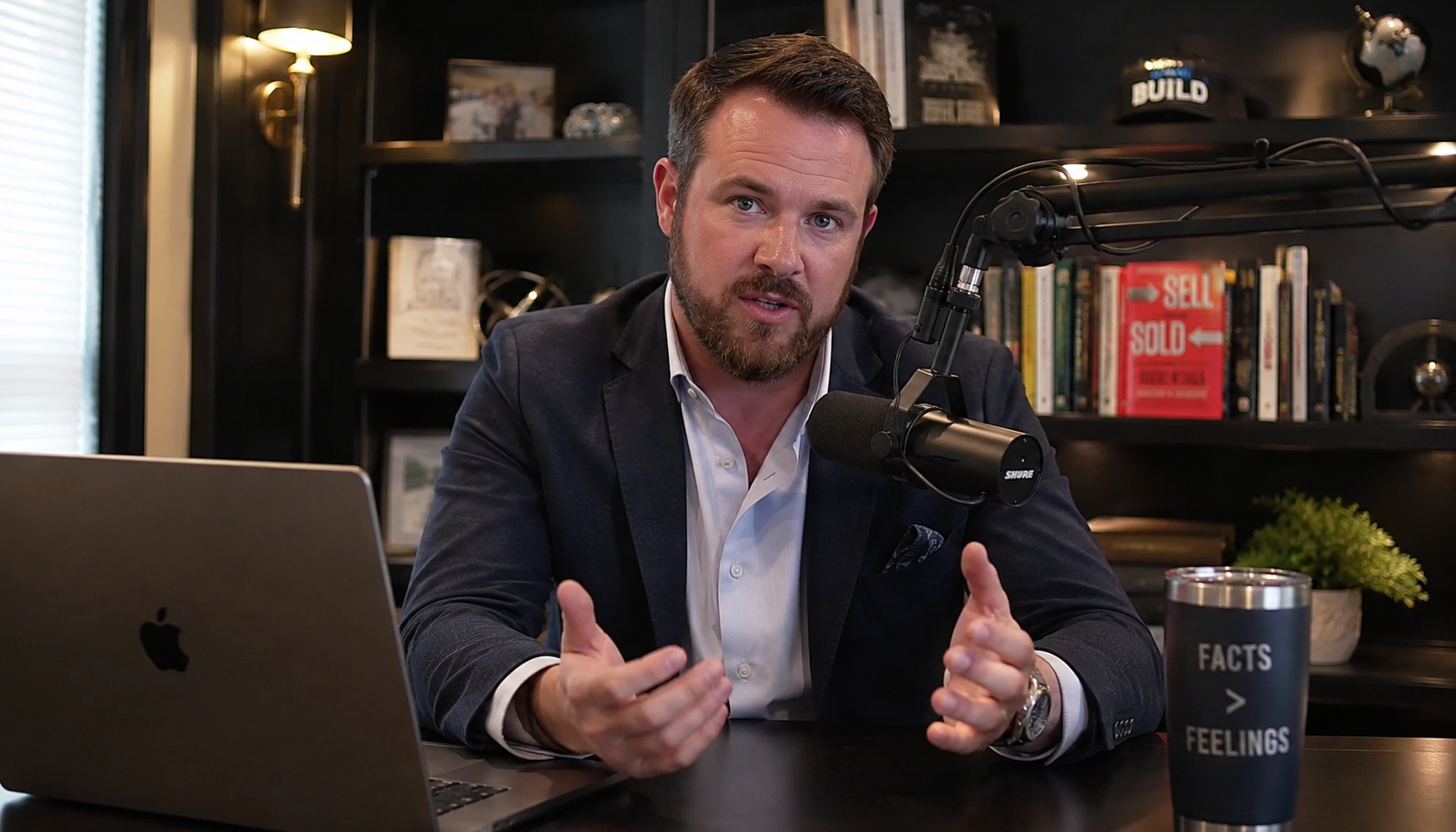
Spring has its flowers. Fall has its gourds. And every season of professional life has its podcast microphone on a Zoom call, blooming perennially, reliably, in the home offices of men who have described themselves as "builders" in their LinkedIn bio.
We are gathered here today to honor it.
Not the headset. Not the AirPods. Not the perfectly adequate built-in microphone on a laptop manufactured after 2019. We are talking about the large-diaphragm condenser microphone on a boom arm, positioned at the precise angle where it enters the frame without blocking the face, because the face must also be visible, because the face is part of the brand, because everything — everything — is part of the brand.
This is the microphone that retails for $249 and communicates, wordlessly, before a single syllable has been uttered, that you are not attending a meeting. You are attending a presence.
The podcast microphone on a sales call is the held fish of professional life. It is the energy of someone who has framed their own book on the shelf directly behind them. It is first cousin to the unsolicited mention of a Forbes article, the LinkedIn banner that displays the company name in a font size readable from orbit, the email signature with a headshot, and the follow-up note that opens with "As I shared in my framework—"
It is the crème de la crème. The championship belt. The Platonic ideal of a specific and deeply committed genre of person who has decided that the most important thing happening on this call is them.
Here is the arc of a call with the podcast microphone:
You join. You see it. Something fires in your nervous system — ancient, mammalian, correct. You push through. You ask your questions. They answer your questions with longer questions, which are actually statements, which are actually the setup for an anecdote about a conversation they had with someone you've heard of. They mention their podcast. Not because you asked. Because the podcast is ambient, like weather. The podcast simply is. They ask what you thought of their recent LinkedIn post. They ask this the way a person might ask if you saw the sunrise — genuinely puzzled that you might have been doing something else.
At minute fourteen they ask about you. This is when they look slightly to the left, in the direction of a second monitor, which you realize with a start is displaying their own video feed.
The taxonomy of things that travel with the microphone:
The ring light. The microphone does not travel without the ring light. The ring light exists to ensure that the face is lit with the same care a cinematographer might bring to a mid-budget thriller. The ring light communicates: I have considered how I look from your perspective for longer than I have considered your perspective.
The bookshelf, curated. There is always a bookshelf. The books on the bookshelf have been selected. Not all books. Specific books. Books that are having a moment, or books that had a moment three years ago which this person has now finished, or books they have not finished but which have the right spine color. Atomic Habits is there. Something by a Navy SEAL is there. A book that sounds like it's about business but is actually about Stoicism is there. The bookshelf is a mood board of the self they are currently constructing.
The slightly-too-casual blazer. It says: I dress up, but effortlessly. It says: I am serious but also I could be at Coachella. It says nothing except that this outfit was assembled with deliberate care and then photographed in a mirror before the call.
The water bottle, premium, visible. Not in hand. Not being used. Present. Stamped with a logo that means something to people who know what it means.
What the microphone is telling you is this: I have thought significantly more about how I appear than about what you came here for. This is, in its way, a gift. This information is available before hello. Most red flags wait until the third invoice. This one hands you the entire dossier before the call even loads.
The research on this is, to no one's surprise, thorough. Studies on founder narcissism — and there are many studies on founder narcissism, because researchers have also been on these calls — find that the self-centeredness, grandiosity, and overconfidence that can benefit nascent ventures often become detrimental as the company matures, leading to an inability to accept criticism, a tendency to blame others for failures, and a lack of empathy that manifests in how they treat everyone around them. Substack
Every one of those qualities is load-bearing in a bad vendor relationship. Every one of them is also, in some essential way, the microphone.
There is a specific and identifiable moment in every call with this person where you realize they are not listening to what you are saying but are instead waiting for you to finish saying it so that they can say the thing they were already planning to say. You can see it in the eyes. The eyes go ever so slightly vacant — not rude, not checked out, but loading. They are in there, composing. They have your words and they are turning them over to find the surface that reflects most favorably back onto themselves. In about four seconds they will find it and they will begin speaking and what they say will be, technically, a response to you, and will be, actually, a continuation of a monologue that started before you joined and will continue after you leave.
You are not in a conversation. You are in a podcast. You simply don't have the episode number.
Every marketer in the world spent 2024 trying to get on Joe Rogan. In 2025, they tried to become Joe Rogan themselves — with a microphone and a Zoom connection. The podcast microphone on the sales call is the physical artifact of this aspiration: the dream of a person who has decided that the most valuable thing they can do for their business is to become, themselves, a media property, and who has not quite reckoned with the possibility that the people joining their calls are not subscribers. The Honest Broker
They are prospects. They are vendors. They are candidates. They are humans who sent a calendar invite in good faith and are now watching someone adjust a boom arm and it is not yet 10am.
To be fair — and we will be fair, briefly, and then we will stop — there are people with podcast microphones who are not this person. They exist. They run actual podcasts. They were mid-session when you joined. They are mildly embarrassed about it. They make a small self-deprecating comment and then immediately ask you a genuine question about you and your situation and they wait for the answer with their eyes, both of them, pointed at the camera.
This is not who we are talking about.
You already know this is not who we are talking about.
Because when it is that person, you don't feel the thing you felt. The thing you felt — that immediate, full-body, pre-linguistic registration that something is off — is not the microphone itself. It is the microphone and the ring light and the curated shelf and the quality of attention being directed at you, which is the quality of attention a performer directs at an audience: broad, warm, fundamentally not about you specifically.
The microphone is just where the feeling lives. The feeling is the data.
Trust it. It has never been wrong about the fish either.
When you're ready to build a personal brand that doesn't require props — one that actually holds up when someone joins the call and the ring light is off — Ritner Digital can help you figure out what that looks like.
Talk to the Ritner Digital team →
Frequently Asked Questions
Is the podcast microphone always a red flag?
No. There is a narrow, documented exception for people who were actually mid-podcast when you called, who acknowledge this immediately, and who then ask you a genuine question and listen to the answer with both eyes. That person exists and is fine. The person we are describing is identifiable by the fact that the microphone is simply always there, on every call, including the 9am one, including the one you scheduled, including the one where you are supposed to be talking about invoicing. That person is not fine.
What if they just care about audio quality?
A $12 clip-on lapel mic provides excellent audio quality. So do AirPods. So does a basic USB headset. The large-diaphragm condenser microphone on a boom arm provides excellent audio quality and the ability to be seen providing excellent audio quality, which is the part that is doing the real work here. Nobody buys a boom arm for the acoustics.
What if I'm the one with the microphone?
Then this is an important moment for you and we are glad you are here. Ask yourself honestly: is the microphone visible on calls where you are not recording content? If yes, ask yourself why. If the answer involves the words "it's just always set up" or "I forget to move it," we invite you to consider what it would mean to move it. The answer might surprise you. The call might improve.
What are the other microphone-tier red flags to watch for on a first call?
The curated bookshelf is a tier-one companion signal. The ring light, non-negotiable. The premium water bottle that is present but not being consumed. The casual name-drop of someone you have heard of, delivered within the first four minutes and attached to no particular point. The LinkedIn post reference — asking if you saw it, in the tone of someone who has already checked their notifications about it several times this morning. Any one of these is ambient data. All of them together is a complete picture.
What does this person actually want from the call?
To feel correctly perceived. Everything else — your project, your budget, your timeline, your very specific situation that you prepared notes about — is secondary to the question of whether you are walking away from this call with the right impression of them. This is important to understand because it clarifies why giving them feedback, pushing back on scope, or raising a concern later will feel, to them, like a personal attack. It is not that they misunderstood your feedback. It is that feedback and self-image occupy the same room in their brain, and there is no furniture arrangement where both fit comfortably.
What happens when you actually work with this person?
The pattern is consistent and well-documented. In the early stages, their conviction and energy are genuinely useful and occasionally exciting. Then the project hits friction — it always hits friction — and you discover that their relationship with accountability is complicated. The deliverable that didn't land is reframed as a vision problem on your end. The timeline that slipped is someone else's fault, possibly yours, possibly the market's, definitely not theirs. The feedback you gave diplomatically and professionally is mentioned, in a slightly different form, to mutual contacts. You will spend more energy managing their narrative than solving the actual problem. You will wonder, sometime around month three, whether there was a call, early on, where you could have known. There was. It was the one with the microphone.
How do I exit one of these calls gracefully if I realize mid-call that I am in it?
You cannot exit gracefully. The call has a natural length and it will be that length regardless of your behavior, because the length of the call is determined by the person with the microphone. What you can do is make a note — literal or mental — of everything you observed, trust the note, and make your next decision accordingly. The note will be correct.
Can this person change?
The research suggests that self-awareness is the variable. Founders and executives who develop genuine self-awareness about the gap between how they see themselves and how they are experienced by others can and do grow into more effective collaborators. The person who cannot or will not develop that self-awareness tends to double down — more microphone, more ring light, more curated shelf, more podcast episodes about leadership and vision recorded in the home office while the people who work for them eat lunch at their desks. Change is possible. The boom arm is not a good sign.
What should a personal brand actually look like?
It should look like you — specifically, the version of you that shows up consistently across public content, first calls, difficult conversations, and Tuesday afternoons when nobody is watching. The personal brands that build durable trust are the ones where the LinkedIn post and the actual person occupy the same ZIP code. That kind of brand doesn't require equipment. It requires honesty about what you're actually good at and the patience to build content around that rather than around the image you wish projected. Ritner Digital helps people figure out the difference. Start here.