Beyond the Legal Directory: How Law Firms Earn Direct Revenue Through Search Engines and AI
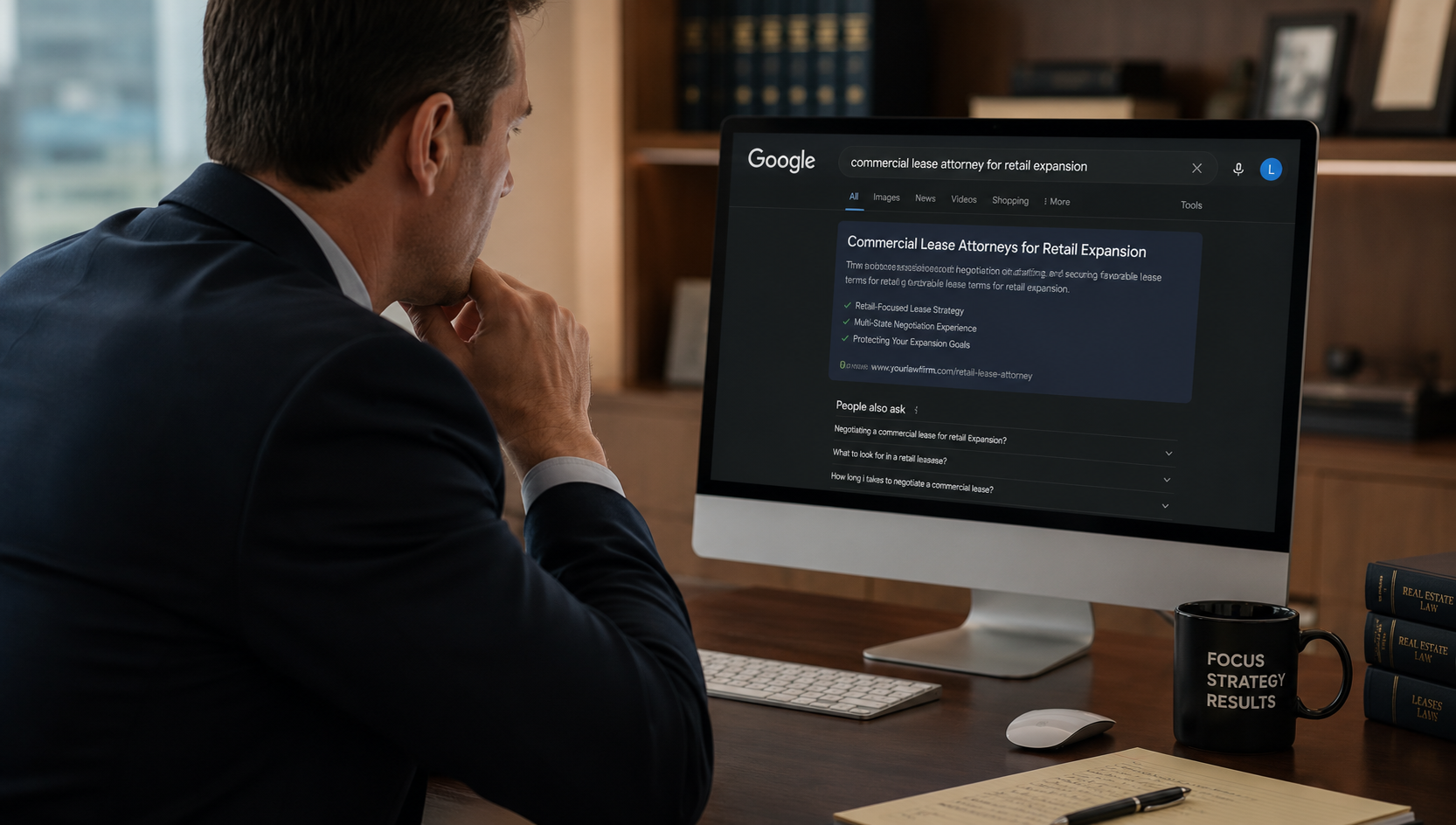
If you're a managing partner, you've almost certainly had this conversation in a partners' meeting: the directory contracts are up for renewal, the invoices keep climbing, and someone finally asks the uncomfortable question — what are we actually getting for this? The honest answer, for a growing number of sophisticated firms, is "not enough." The legal directory model that defined attorney marketing for two decades is showing its age, and the firms pulling ahead are quietly reallocating those budgets toward something with far better economics: owning the direct answer in search engines and AI.
This isn't a pitch to abandon every listing you have. It's an argument about where the marginal dollar belongs in 2026. The directories have become a crowded, expensive commodity layer, while the real competitive advantage has shifted to being the firm that directly answers the high-value query — on Google, and increasingly inside AI tools like ChatGPT and Perplexity. For firms with the substance to back it up, that shift is one of the highest-leverage marketing moves available. Let's walk through why.
The Directory Math No Longer Favors You
Start with what the directory ecosystem actually looks like now. The major legal directories — FindLaw, Avvo, Martindale, Justia, and their networks — have consolidated into a handful of platforms owned by a few large parents like Thomson Reuters and Internet Brands. Premium placements start modestly but climb quickly into meaningful monthly commitments, and the structural problem is baked in: you are paying to appear on a page alongside your direct competitors, all of whom paid for the same prominence.
That's the commodity trap. A directory profile, by design, lists you next to a dozen other firms in your practice area and city. The platform's incentive is to keep all of you bidding for position on their domain — building their authority, not yours. Industry analysis is increasingly direct about the ROI problem: many attorneys report that the paid directory packages deliver inconsistent returns compared to organic SEO or direct-response channels, with the consistent advice being to fully optimize the free listings and steer incremental spend toward assets you actually own. Even directory-friendly guides now concede the universal rule: optimize the free tiers first, and evaluate paid upgrades only after — because the paid upgrade is rarely where the real return lives.
There's a deeper issue beneath the cost. When a directory sends you a lead, that lead has just seen you ranked next to your competitors and is often shopping all of them simultaneously. You didn't win the client by being the clearest authority; you won a position in a lineup. Contrast that with a prospect who lands directly on your firm's analysis of their exact problem, with no competitor in sight. Those are two completely different kinds of leads — and only one of them is building a durable asset for your firm.
Why the Stakes Are Uniquely High in Legal
Here's what makes this shift more consequential for law firms than almost any other business: the economics of legal search are extreme, and they reward owning the answer directly.
Legal is, by a wide margin, the most expensive vertical in all of paid search. The legal industry carries the highest average cost-per-click of any industry on Google — commonly cited around $8.58 — but that average badly understates the reality at the high-value end. Competitive legal keywords routinely run between $50 and $300 or more per click, and in major metros, terms like "personal injury lawyer" or "truck accident lawyer" have reached an astonishing $500 per click. A single click. The reason is simple and tells you everything about the opportunity: a firm can rationally pay hundreds of dollars per click because the lifetime value of one signed case — often ranging from thousands to hundreds of thousands of dollars, and in mass-tort or catastrophic-injury work, into the millions — makes the math work even at brutal acquisition costs.
Now consider what that means for organic and AI visibility. If a competitor is paying $150 to $300 every time someone clicks their ad, then every high-intent prospect you capture through a directly-ranked piece of authoritative content — or through being the firm an AI engine cites — is a click your competitor would have paid a fortune to buy. The value of an organic or AI-sourced position in legal isn't theoretical; it's directly benchmarked against some of the most expensive clicks in the entire digital economy. Owning the direct answer in a vertical where clicks cost this much is among the highest-return marketing positions a firm can hold.
The Behavior Shift: From Browsing Directories to Asking for Answers
The second force reshaping legal marketing is how clients now search — and it plays directly to the strengths of firms with genuine subject-matter depth.
High-value clients, and corporate clients in particular, are no longer starting their search by browsing a directory of names. They're asking direct, conversational questions — of Google, and of AI assistants. A general counsel evaluating exposure doesn't type "litigation firm Philadelphia" into Avvo; they ask something specific and substantive, like "what are the compliance obligations under the new regulation for a mid-sized manufacturer?" The firm that has published a clear, authoritative answer to that question — structured the way these engines extract and cite information — is the firm that surfaces at the exact moment of need.
This is where the directory model and the answer model diverge completely. Directories index names and categories. AI engines and modern search reward substantive answers to specific questions. And the legal directories themselves are quietly conceding the ground: industry coverage now notes that ChatGPT, Perplexity, and Google's AI Overviews increasingly pull from structured data, and that AI visibility has become the new battleground for legal discovery. The directories know their data is being absorbed into AI answers — which raises the obvious strategic question for any managing partner: why pay to feed authority into a platform's profile when you could be building that citable authority directly into your own firm's content?
For corporate and commercial work especially, this is decisive. Sophisticated buyers of legal services judge firms on demonstrated expertise, not directory badges. A well-structured piece of case-law commentary or a clear regulatory breakdown does something a directory listing never can: it proves competence before the first conversation. When that same content is also the source an AI engine cites in response to a high-intent query, you've converted your firm's intellectual capital directly into pipeline.
What "Owning the Answer" Actually Looks Like
This is the discipline of Generative Engine Optimization — GEO — applied to the legal niche, and for law firms it aligns almost perfectly with work the firm should arguably be doing anyway. The raw material isn't marketing fluff; it's your attorneys' actual expertise, structured so that both search engines and AI models recognize it as the authoritative answer. In practice, that means a few concrete things:
Structure commentary around the questions clients actually ask. Instead of a generic "Practice Areas" page, publish focused analyses that mirror conversational, high-intent queries — the regulatory change and what it means for a specific type of business, the implications of a recent ruling for a particular industry. Lead each piece with a clear, direct, extractable answer in the opening lines, because that's what AI engines lift and cite.
Build genuine topical authority, not keyword filler. AI systems and modern search reward depth and credibility. A firm that publishes consistent, substantive commentary in a defined niche becomes the recognized entity in that space — and the source engines return to. This compounds: authority that gets cited tends to get cited again.
Make the expertise machine-readable. Proper structured data and clean technical foundations let both Google and AI engines correctly identify your firm, your attorneys, and the topics you own. This is the same structured-markup signal the directories are leveraging — except pointed at your own domain, building your own authority.
Target the high-value, lower-competition conversational long tail. The brutal $300 clicks are concentrated on a handful of obvious head terms. The specific, substantive questions that high-value corporate clients ask are far less contested — and far better qualified. A precise regulatory breakdown can pull in exactly the sophisticated client you want, without bidding against every firm in the city for the same generic term.
None of this requires inventing content from nothing. It requires taking the expertise your firm already possesses and structuring it so the modern discovery layer — search and AI — recognizes it as the answer. That's the fundamental advantage law firms have here: the substance is real, and substance is precisely what these engines are built to reward.
The Bottom Line for Managing Partners
The directory era treated your firm as one name among many on someone else's platform, charging you for the privilege of competing for position. The answer era rewards the firm that directly and authoritatively responds to what high-value clients are actually asking — and in a vertical where competitors pay up to $500 a click to reach those same clients, owning that answer organically and in AI is extraordinarily valuable.
This isn't about chasing a trend. It's about recognizing that your firm's intellectual capital — the case-law analysis, the regulatory expertise, the considered commentary your attorneys can produce — is a marketing asset that compounds in value when structured correctly, and that builds your authority rather than a directory's. The firms reallocating budget from commodity listings toward owning the direct answer aren't spending more. They're spending where the return actually is.
Turn Your Firm's Expertise Into Direct Pipeline
The directories will keep sending you invoices to compete on their turf. We'd rather help you own yours.
Ritner Digital specializes in niche Generative Engine Optimization for firms that want to be the direct answer — not another name in a directory lineup. We structure your case-law commentary, regulatory analysis, and practice expertise to align with the conversational, high-intent queries your highest-value clients are actually asking in Google and AI tools like ChatGPT and Perplexity — capturing positions your competitors are paying premium per-click rates to reach.
Stop renting visibility on someone else's platform. Start owning the answer. Book your legal GEO strategy session today →
Sources: FraudBlocker 2026 Most Expensive Google Ads Keywords; My Legal Academy 2026 Google Ads Guide; GROAS 2026 Legal CPC Strategy & Industry Benchmarks; DirJournal Best Legal Directories 2026; Inoriseo FindLaw Review 2026; MyCase Legal Directories Guide; Branded Agency Legal Marketing Firms 2026; ROA Marketing Attorney CPC Benchmarks 2026; and Blue Monkfish Law Firm PPC Guide.
Frequently Asked Questions
Are legal directories like FindLaw and Avvo still worth paying for?
It depends on your practice area and case value, but the consensus is shifting. The standard advice now is to fully optimize the free directory tiers first and evaluate paid upgrades only after — because many attorneys report inconsistent ROI from paid directory packages compared to organic SEO or direct-response channels. The structural problem is that you're paying to appear alongside your direct competitors on the platform's domain, building their authority rather than your own. For most firms, the marginal dollar now returns more when invested in assets you actually own.
Why is being the "direct answer" better than a directory listing?
A directory lists you next to a dozen competing firms, so a lead from it has already seen and is often shopping all of them. A prospect who lands directly on your firm's authoritative analysis of their specific problem — with no competitor in sight — is a fundamentally better-qualified lead. Directories index names and categories; modern search and AI engines reward substantive answers to specific questions. Owning the answer proves your competence before the first conversation.
How expensive are legal keywords in paid search?
Legal is the most expensive vertical in all of paid search. The average legal cost-per-click is commonly cited around $8.58 — the highest of any industry — but competitive keywords routinely run $50 to $300+ per click, and top terms like "personal injury lawyer" in major metros have reached around $500 per click. Firms can justify these costs because a single signed case can be worth thousands to millions in fees. This is exactly why owning organic and AI visibility is so valuable: every prospect you capture directly is a click a competitor would have paid a premium to buy.
What is GEO and why does it matter for law firms?
GEO (Generative Engine Optimization) is the practice of structuring your content so AI engines like ChatGPT, Perplexity, and Google's AI Overviews recognize and cite it as the authoritative answer. It matters for law firms because high-value clients increasingly ask direct, conversational questions rather than browsing directories. The firm that has published a clear, well-structured answer to a client's specific question is the one that surfaces at the moment of need — and law firms have a natural advantage, because GEO rewards genuine subject-matter depth, which firms already possess.
How do corporate clients actually search for legal counsel now?
Sophisticated and corporate clients rarely start with a directory of names. They ask specific, substantive questions of Google and AI assistants — for example, "what are the compliance obligations under the new regulation for a mid-sized manufacturer?" The firm with a clear, authoritative, well-structured answer to that exact question surfaces first. Corporate buyers judge firms on demonstrated expertise, not directory badges, which is why structured case-law commentary and regulatory breakdowns convert so well at this level.
Do I have to stop using directories entirely?
No. This isn't about abandoning every listing — maintaining optimized free profiles on high-authority directories still provides SEO value and consistency benefits. The argument is about where your incremental marketing dollar belongs. Rather than pouring budget into premium directory placements that build a platform's authority, sophisticated firms are reallocating toward owning the direct answer in search and AI, which builds their own durable, compounding asset.
What kind of content actually wins in legal GEO?
Content structured around the real, conversational questions clients ask — regulatory breakdowns, case-law commentary, and analyses of how a specific ruling affects a particular industry. Each piece should lead with a clear, direct, extractable answer, demonstrate genuine topical depth in a defined niche, and use proper structured data so engines correctly identify your firm and expertise. Targeting the high-value, lower-competition conversational long tail pulls in qualified clients without bidding against every firm for the same generic head term.