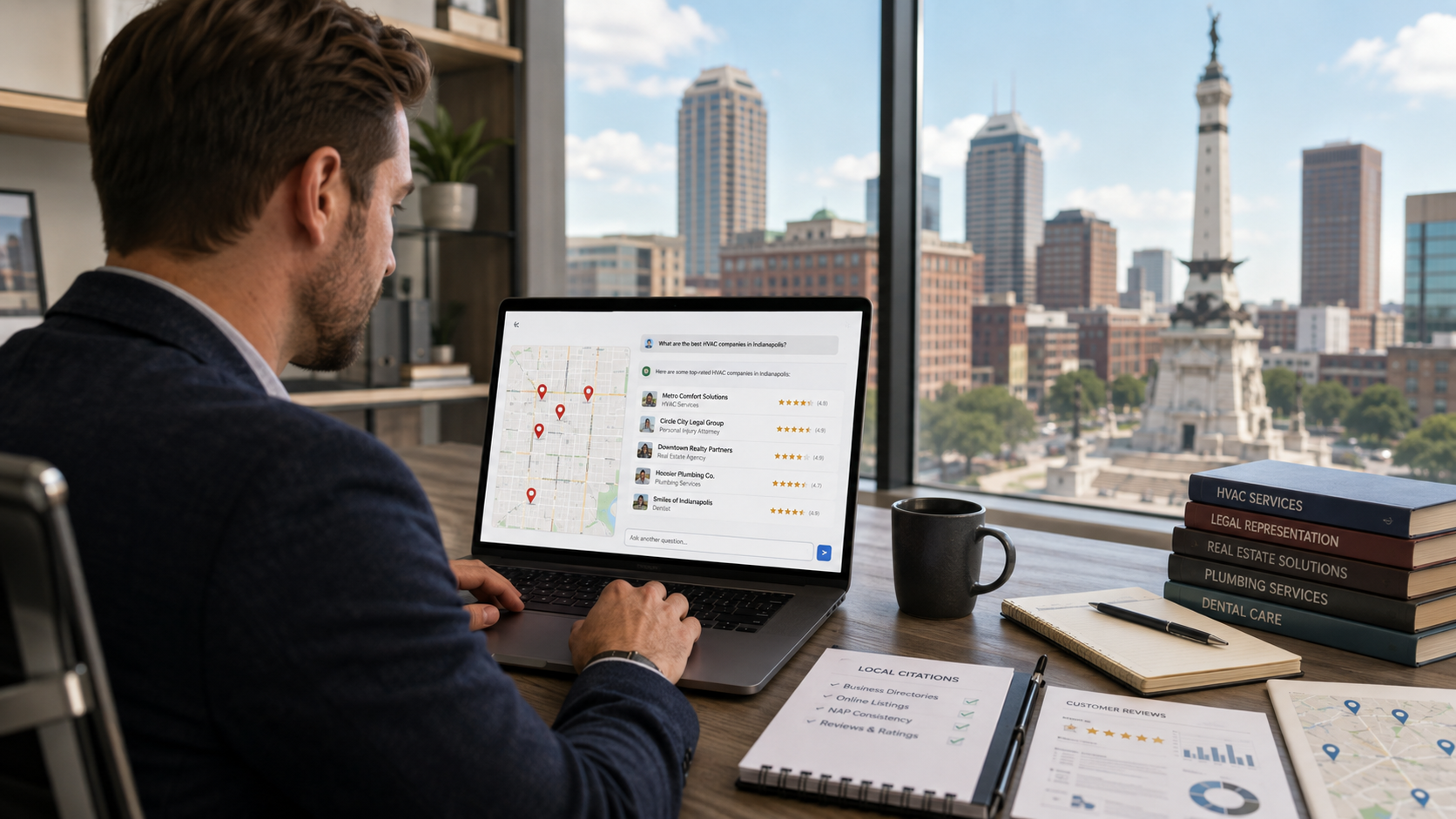
How Indianapolis Businesses Can Get Recommended by ChatGPT
When someone asks ChatGPT for an Indianapolis HVAC company, lawyer, realtor, plumber, dentist, or local service provider, how does your business become part of the answer? There is no button that guarantees a ChatGPT recommendation, but OpenAI now provides clear guidance for making websites eligible for ChatGPT Search. This guide explains what Indianapolis businesses can actually do in 2026 to improve discoverability, strengthen their public web presence, create citation-worthy content, and measure traffic from ChatGPT.
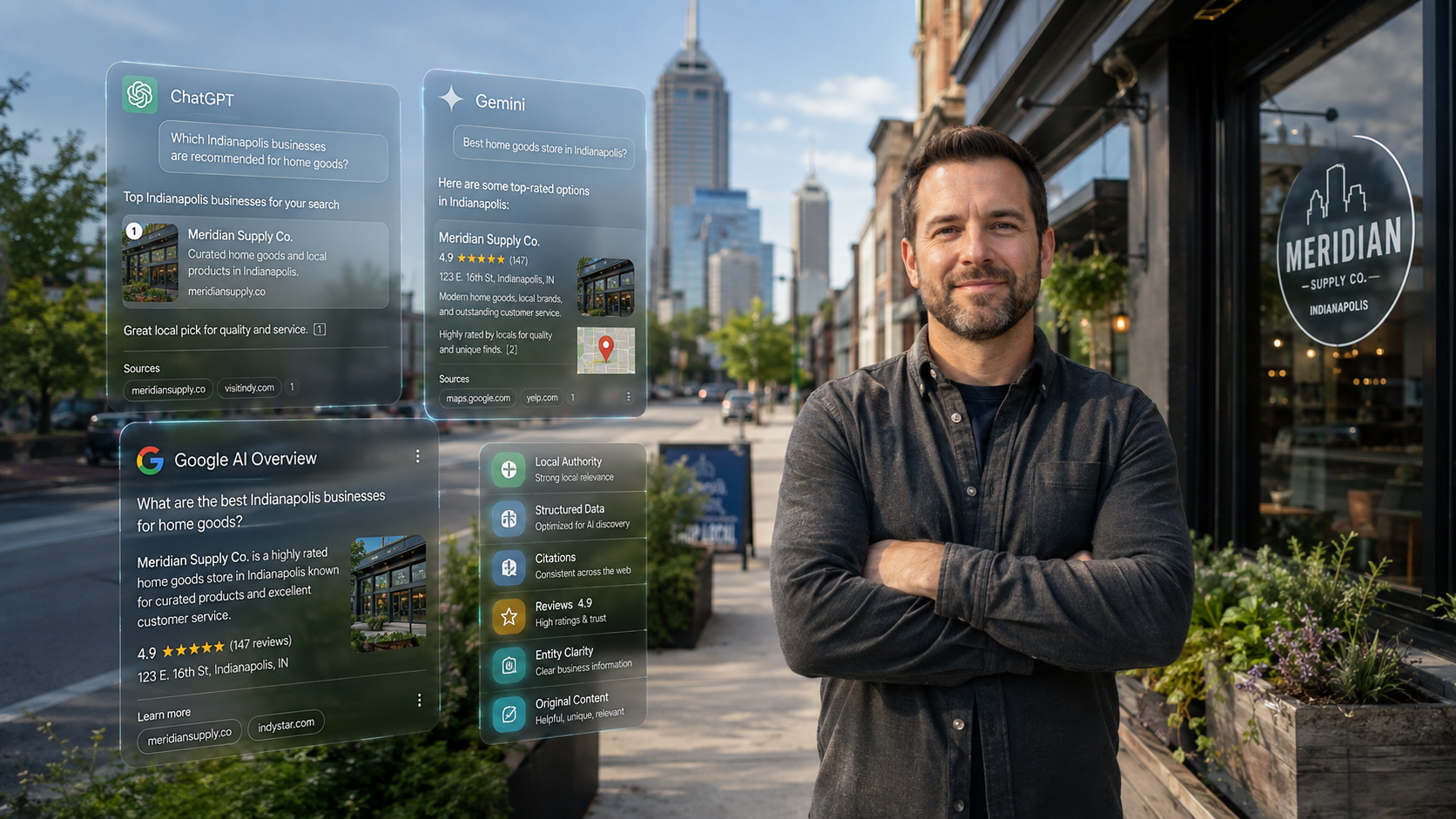
AI Search Optimization in Indianapolis: SEO for ChatGPT, Gemini & Google AI
Indianapolis customers aren't only searching Google anymore—they're asking ChatGPT, Gemini, and Google's AI-powered search experiences which companies to hire. This guide explains what businesses can actually do to improve AI search visibility in 2026, including technical SEO, entity clarity, Google Business Profile optimization, original content, reviews, citations, backlinks, structured data, and AI citation tracking—without relying on unsupported GEO hacks.
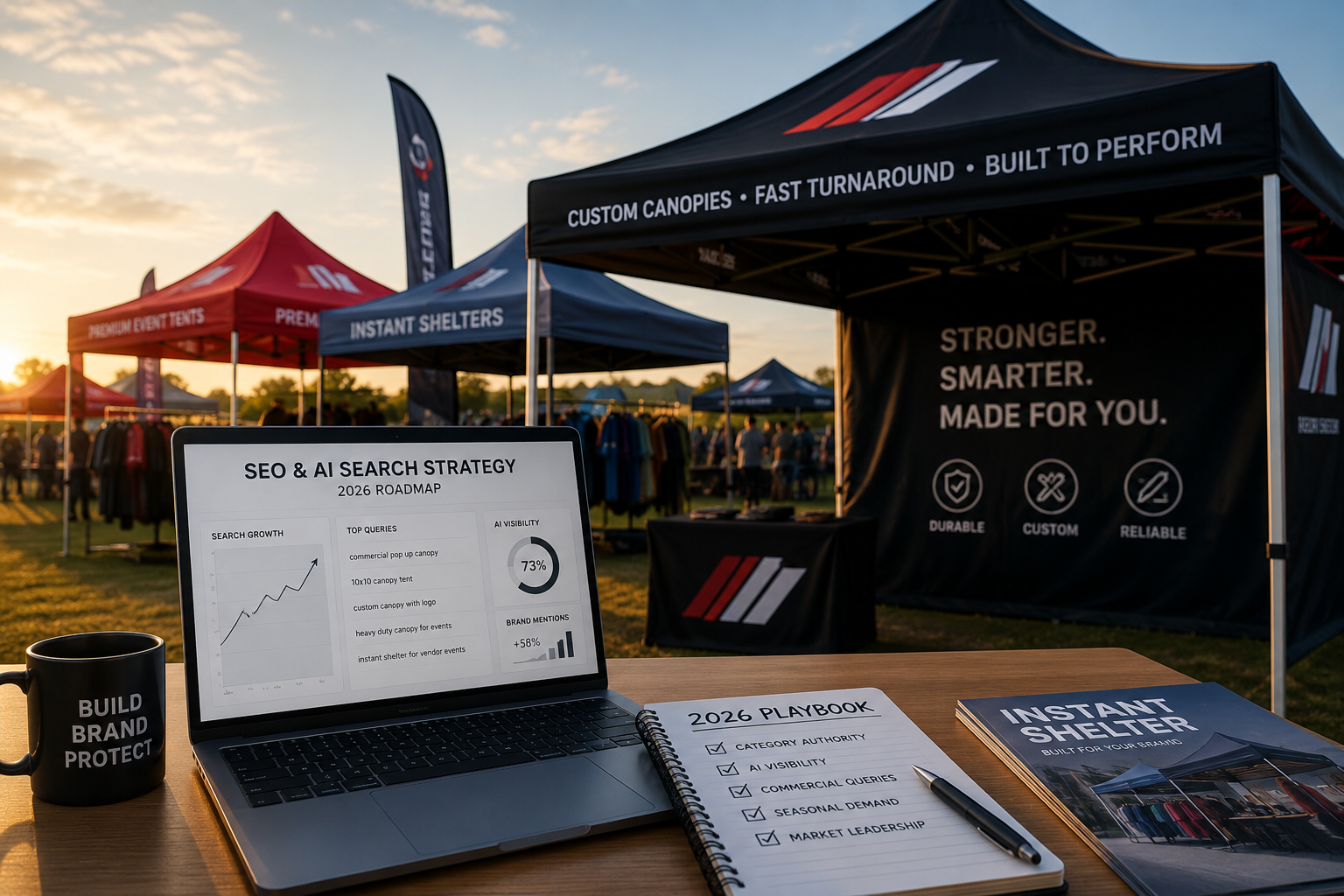
SEO and AI Search for Pop-Up Canopy Companies: The 2026 Playbook
Most industries have a search problem. The pop-up canopy industry has four at once — a category term that's somebody's trademark, discovery that starts on marketplaces you don't control, two buyers with nothing in common, and a twelve-week season that decides the year. Here's the 2026 playbook for fixing all four, including the five query types that actually drive commercial demand and why manufacturers are better positioned to win AI search than they realize.
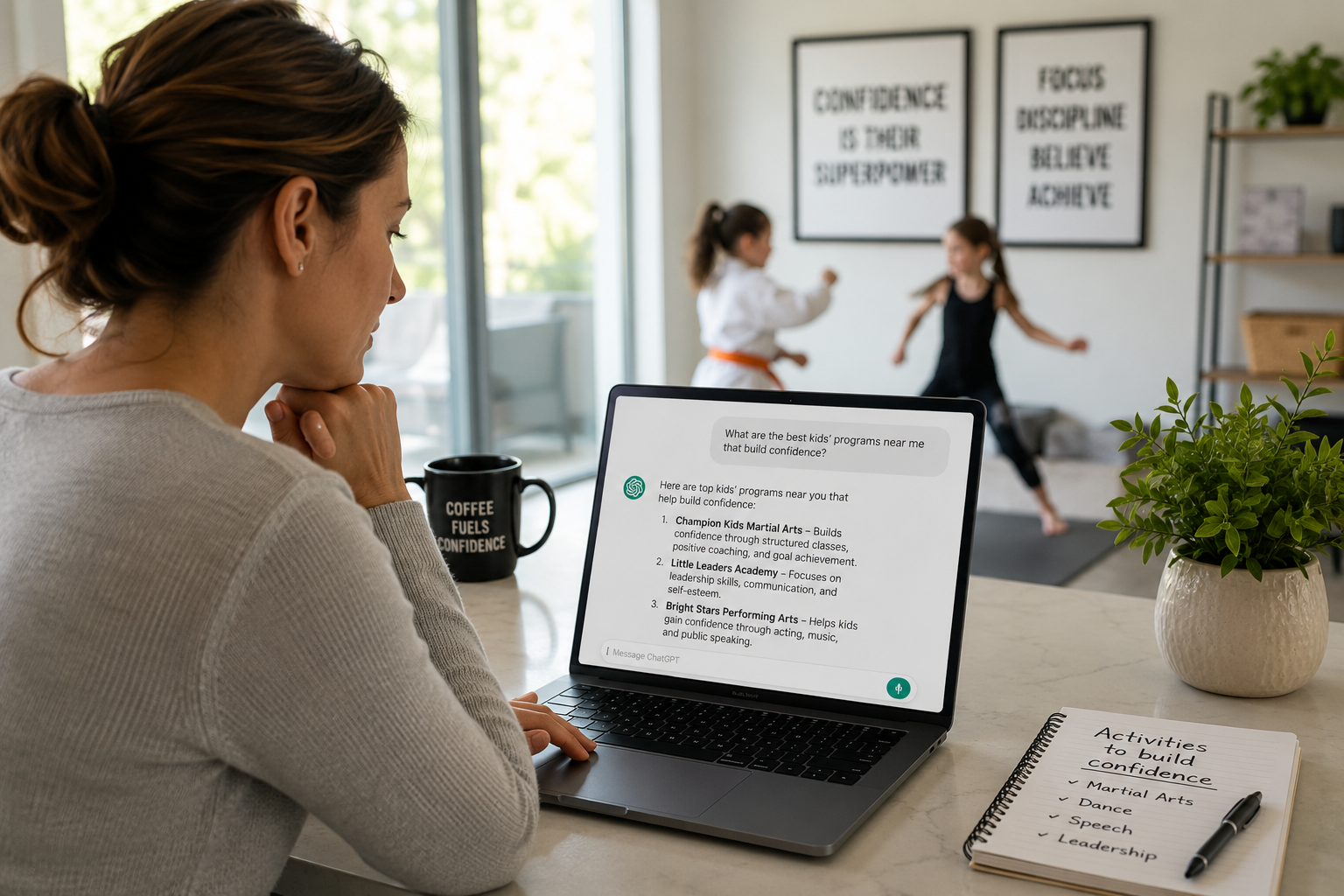
The Parent Deciding Where to Send Their Kid Is Asking AI First. Is Your Franchise in the Answer?
A parent opens ChatGPT and asks for the best local program to build their kid's confidence. Whatever comes back shapes where they spend the next two years — and thousands of dollars. Here's how multi-location youth brands get named in that answer, backed by 2026 AI and local search data.
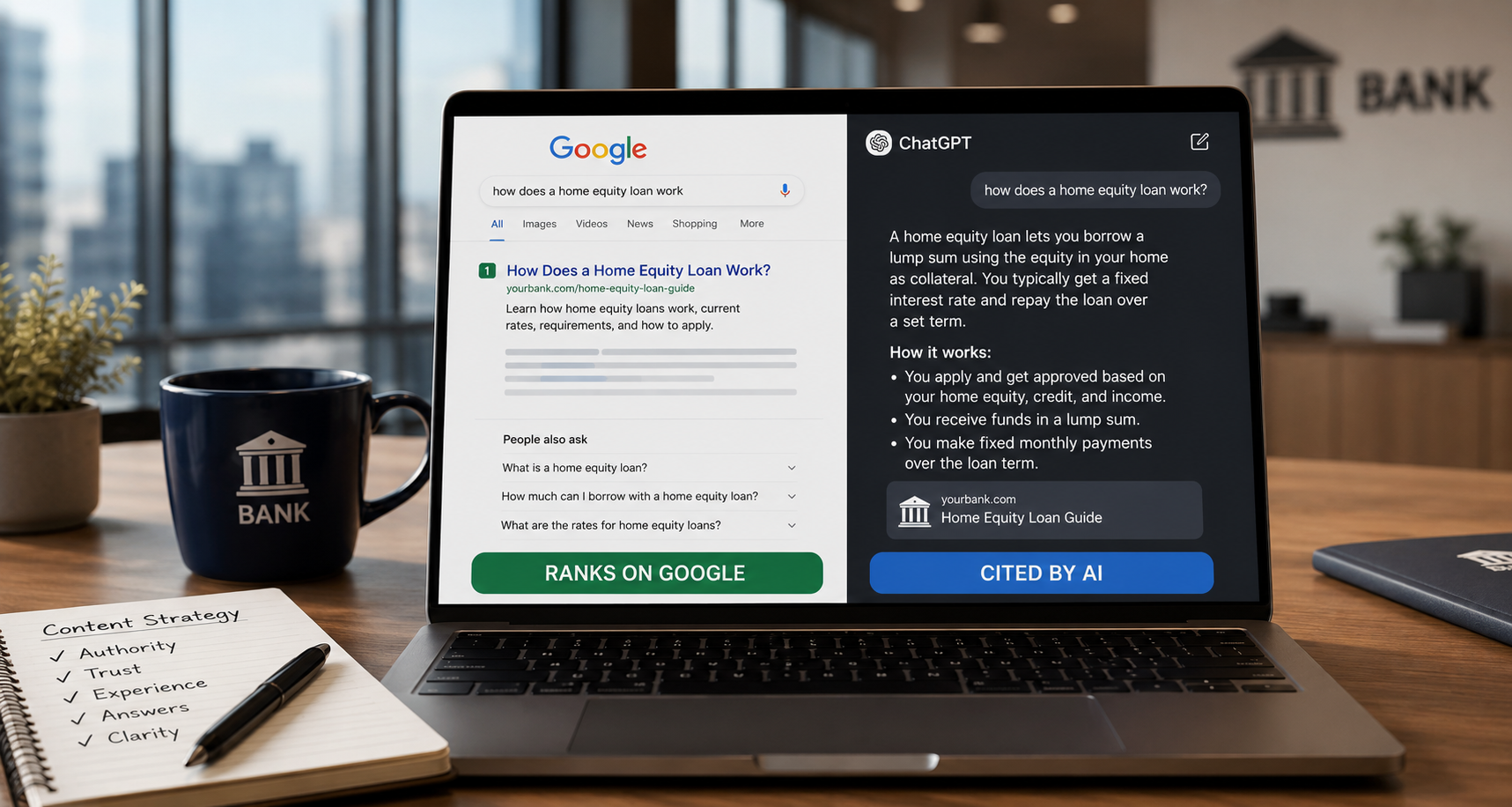
How to Create Bank Content That Ranks in Both Google and AI Search
A page can sit at the top of Google and never once get cited by ChatGPT or AI Overviews. That gap is the defining challenge for bank content in 2026. But you don't need two strategies — you need one authority foundation plus an extraction layer. Here's how to create bank content that ranks in Google's links and gets cited in the AI answers your prospects increasingly see first.

Semiconductor Summer Is Booming — But Most Tech Companies Are Invisible in AI Search
Micron's earnings and Nvidia's shareholder meeting headline "semiconductor summer," a vivid reminder that the AI infrastructure boom is real and accelerating. But there's a quiet irony underneath it: the same AI driving record chip demand is rewriting how software gets discovered — and most of the B2B tech and SaaS companies riding the wave are nearly invisible in AI search itself. With 51% of software buyers now starting in an AI chatbot and shortlists forming before any human contact, here's why so many tech brands are missing from the answers and how to be the vendor AI recommends.
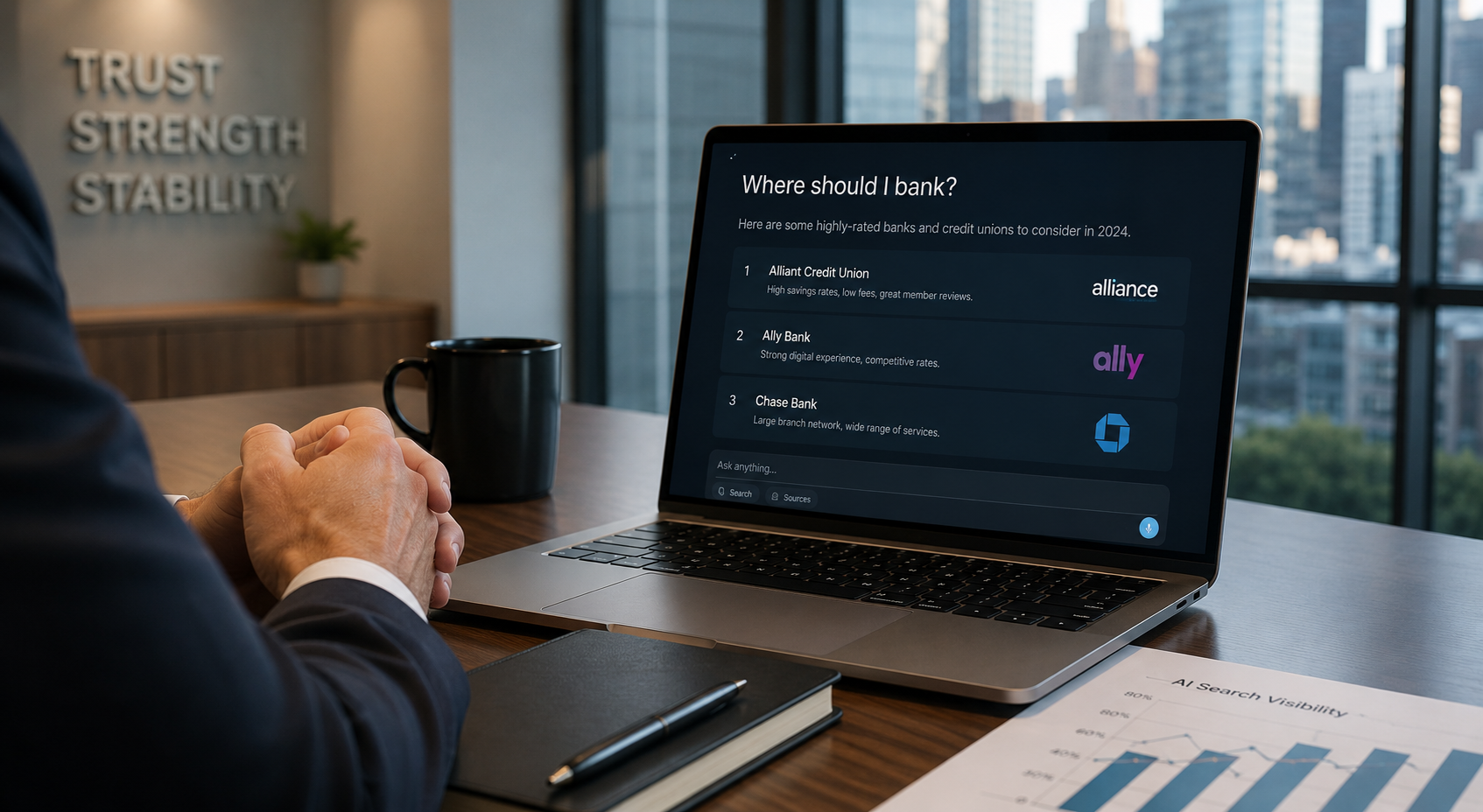
The Fed Stress-Tests Banks This Week — Here's the Stress Test Most Banks Are Failing
This week the Federal Reserve stress-tests 32 big banks against a hypothetical financial shock. But there's another stress test running on every financial institution right now — one with no published results — that a large share are quietly failing: whether your bank or credit union shows up, accurately and credibly, when a customer asks ChatGPT or Perplexity where to bank. With nearly 60% of consumers already using AI for financial research and the early data showing size doesn't guarantee visibility, here's what the AI stress test reveals and how to pass it.
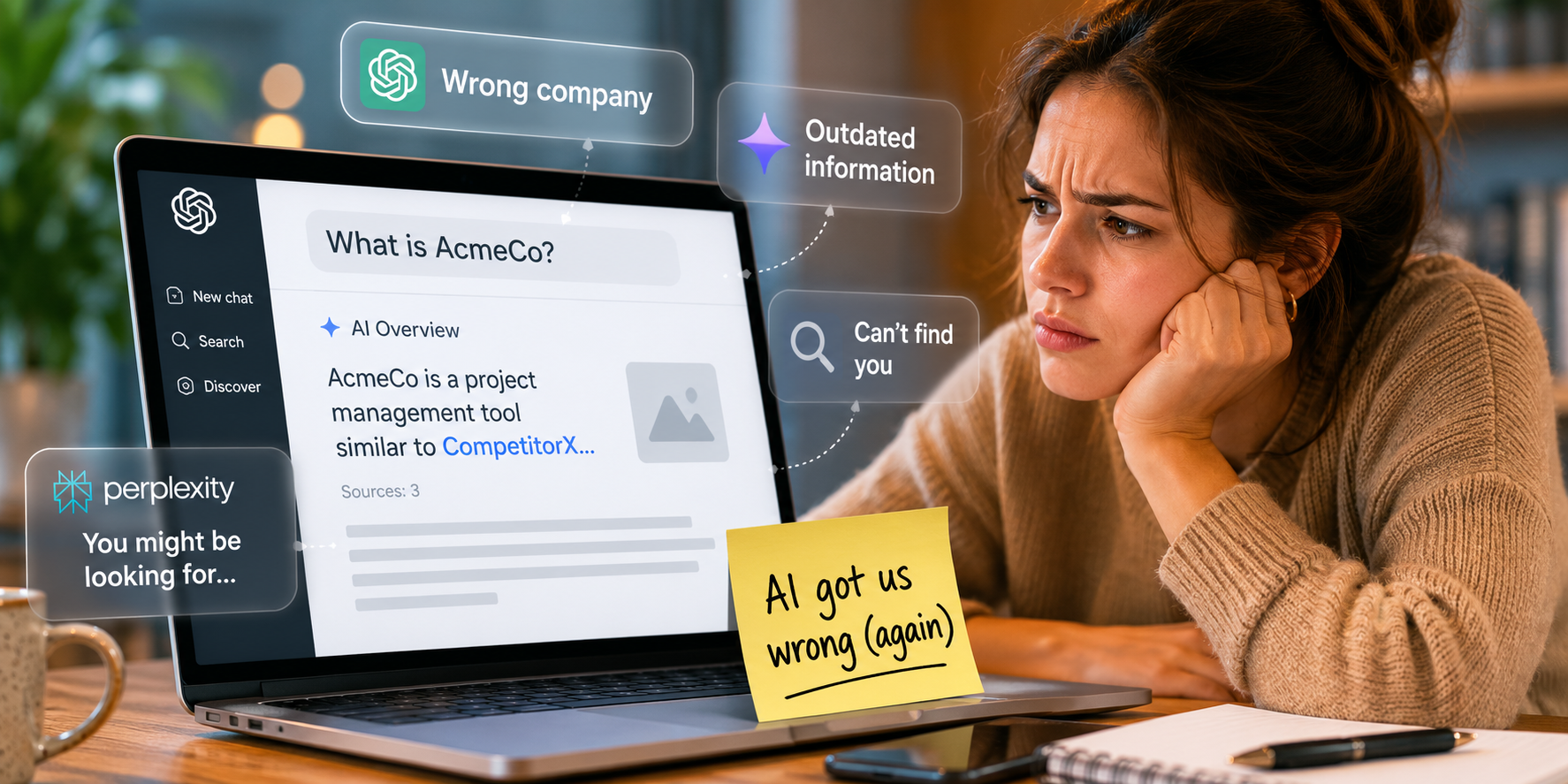
Misunderstood Twice and They're Gone: What Customer Service Data Tells Us About AI Search
A new Parloa survey found 7 in 10 consumers abandon an automated interaction after being misunderstood just twice. It's a wake-up call for customer service — but an even sharper one for AI search, where the same brutal arithmetic plays out invisibly. When a customer asks ChatGPT or Perplexity about your brand and the AI gets you wrong, mixes you up with a competitor, or can't find you, they don't give you a third try. They take the answer and leave. You can't control what AI says, but you can control what it learns. Here's how to make sure AI understands your brand correctly.
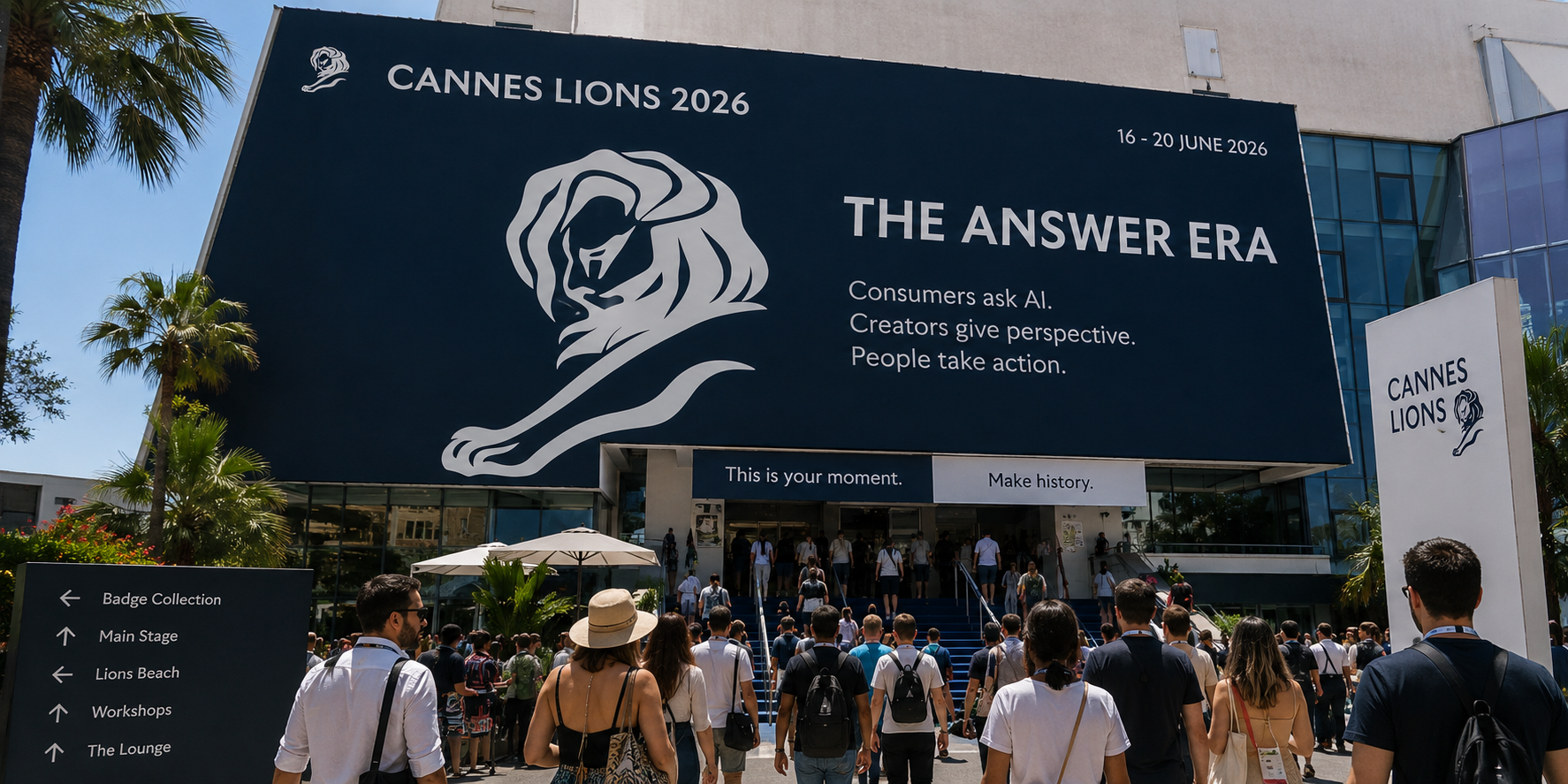
Cannes Lions 2026 Says the "Answer Era" Has Arrived — Here's What That Means for SEO and AI Search
Cannes Lions 2026 kicked off with 13,000 attendees, a $12.42 billion creator economy, and one consequential theme: the "Answer Era" has arrived. Consumers now ask AI and trusted creators for recommendations and act on what comes back — discovery itself is being shaped by AI, not ad placements. The creator boom and the AI-search shift turn out to be two sides of the same story, and the brands that win aren't just the ones with the best creative. They're the ones who are actually the answer when someone asks. Here's what that means for SEO and AI search.
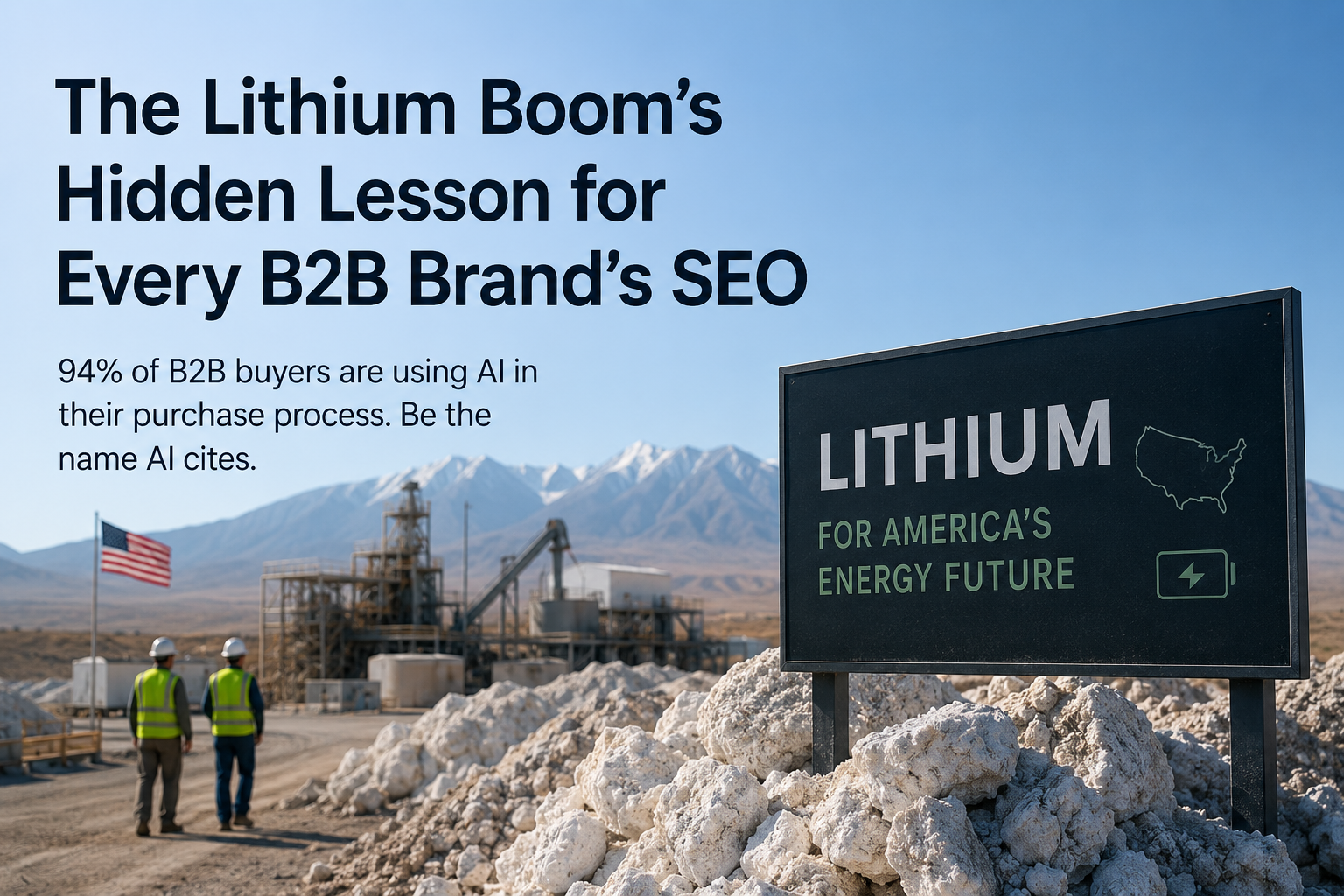
America's Lithium Boom Has a Visibility Problem — and It's a Lesson for Every B2B Brand
America's hottest land grab is for lithium, not oil — and the boom is minting an ecosystem of energy and cleantech companies all competing for capital, partners, and customers at once. But the people who decide who wins business are increasingly researching vendors inside ChatGPT, Perplexity, and Gemini, not on Google or your website. With 94% of B2B buyers now using AI in their purchase process and most of the decision made before a vendor is ever contacted, a surging industry is colliding with a fundamental shift in how B2B discovery works. Here's what it means and how to be the name AI cites.
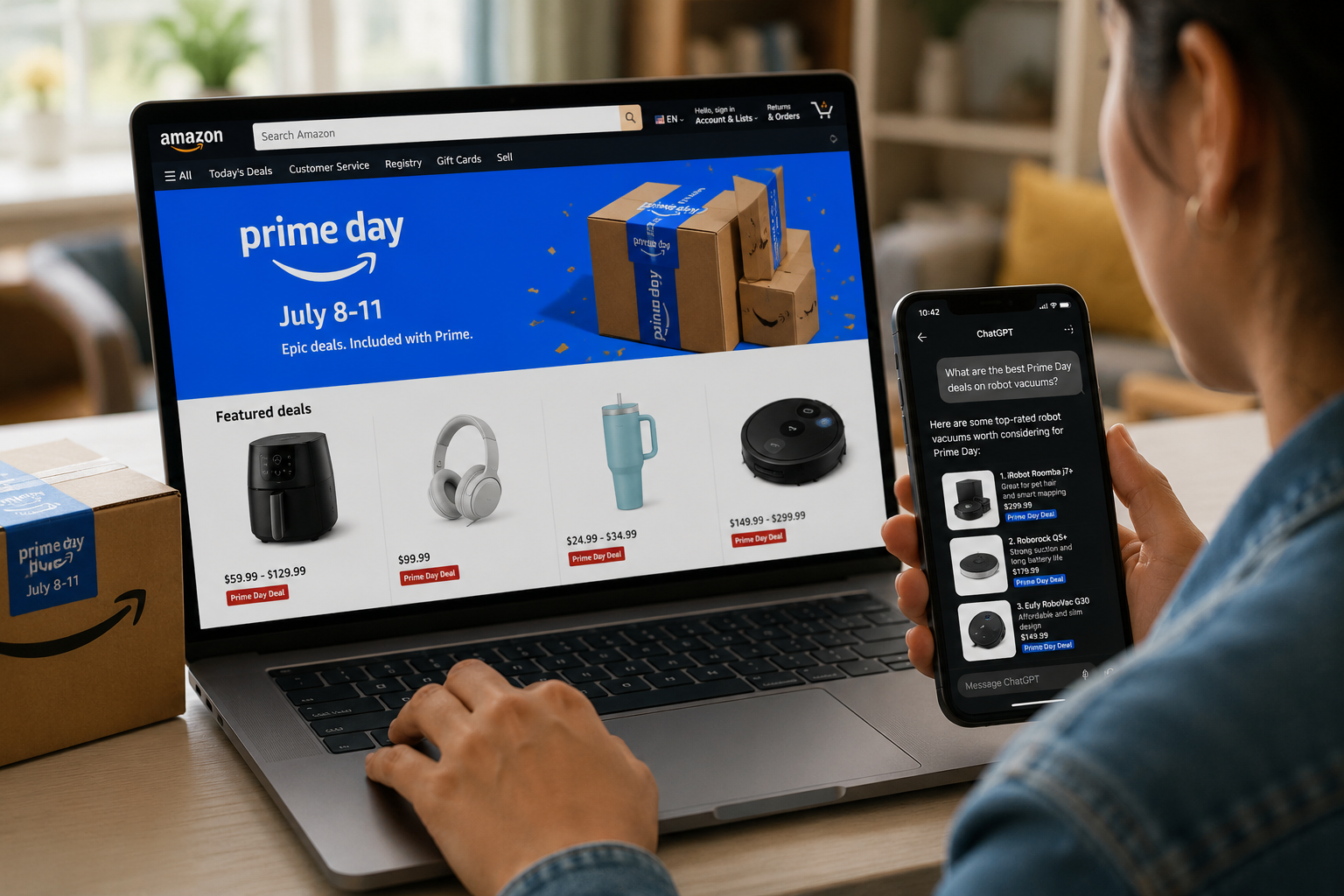
Prime Day Moved Up a Month — and AI Just Changed How Shoppers Find the Deals
Prime Day moved up a month this year, but the bigger shift is in how shoppers find the deals once they go live. On Prime Day 2025, Amazon's traffic from AI shopping assistants jumped 3,300%, and a third of shoppers planned to use ChatGPT to navigate the event. With most consumers now researching purchases with AI at every stage of the decision, product discovery has moved to the answer engines — and brands whose data isn't built for AI are invisible by default. Here's what's changing and how to be the product AI recommends.

What Toy Story 5's Record Box Office Teaches Us About SEO and AI Search
The plot of Toy Story 5 follows toys fighting to stay relevant as kids drift to screens — and then the film proved the opposite, posting 2026's biggest box-office debut on the strength of a 31-year-old brand. That's not a movie lesson; it's a search lesson. The same forces that made Toy Story 5 a guaranteed blockbuster — compounding brand equity, deep trust signals, and a crystal-clear identity — are exactly what determine whether your brand gets found in Google and cited by AI engines like ChatGPT and Perplexity. Here's the playbook.
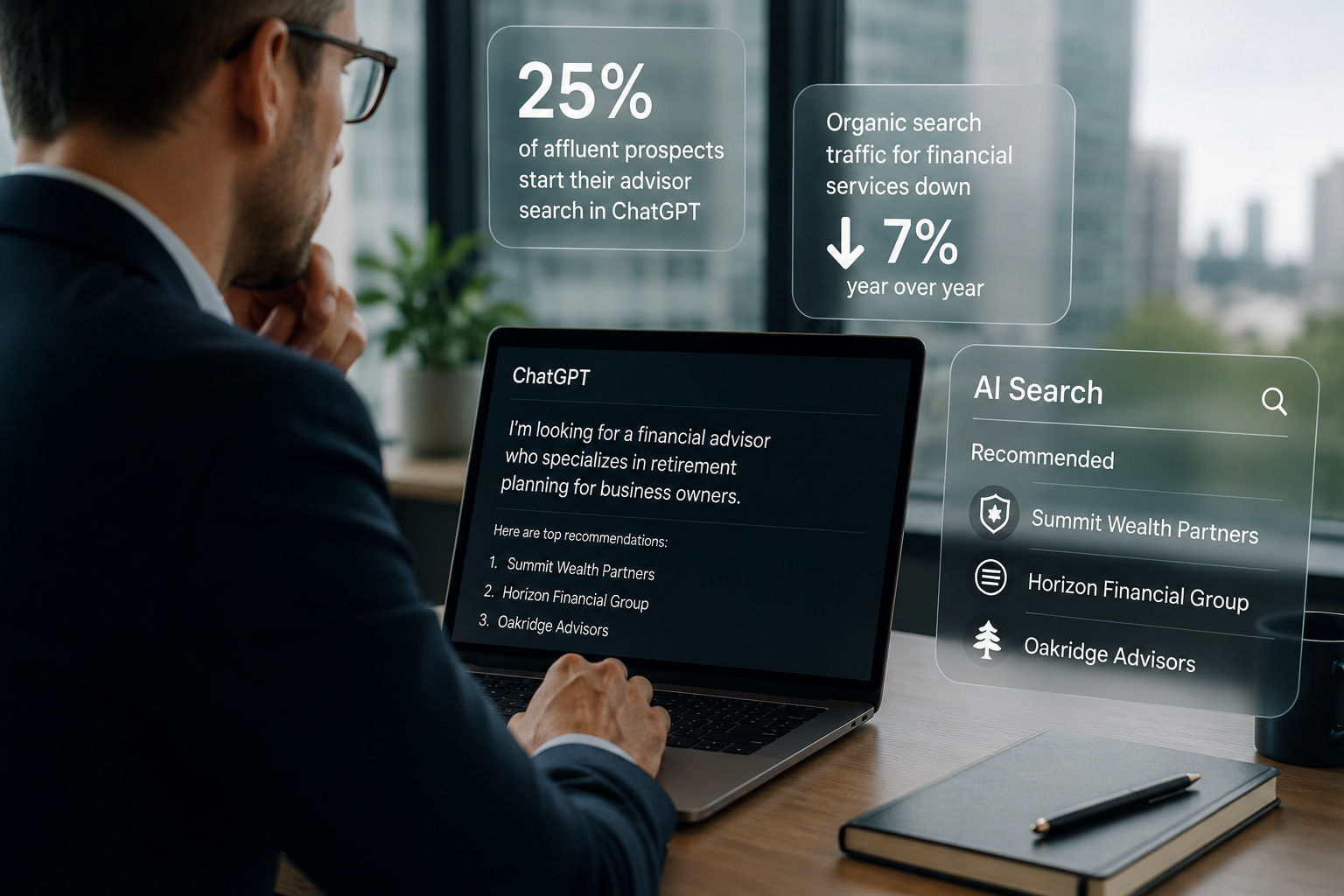
What the AI-Driven Finance Career Boom Tells Us About Search — and Why Finance Firms Should Pay Attention
The next generation of finance talent discovers careers through self-directed digital tools — and the clients they'll serve are already discovering finance firms the same way: by asking AI. With 25% of affluent prospects starting their advisor search in ChatGPT and organic search traffic for financial services down 7% year over year, discovery in financial services is being rewritten. Here's why finance is uniquely exposed to the AI-search shift, why strong Google rankings don't carry over, and what RIAs, wealth managers, and fintechs need to do to be the name AI recommends.
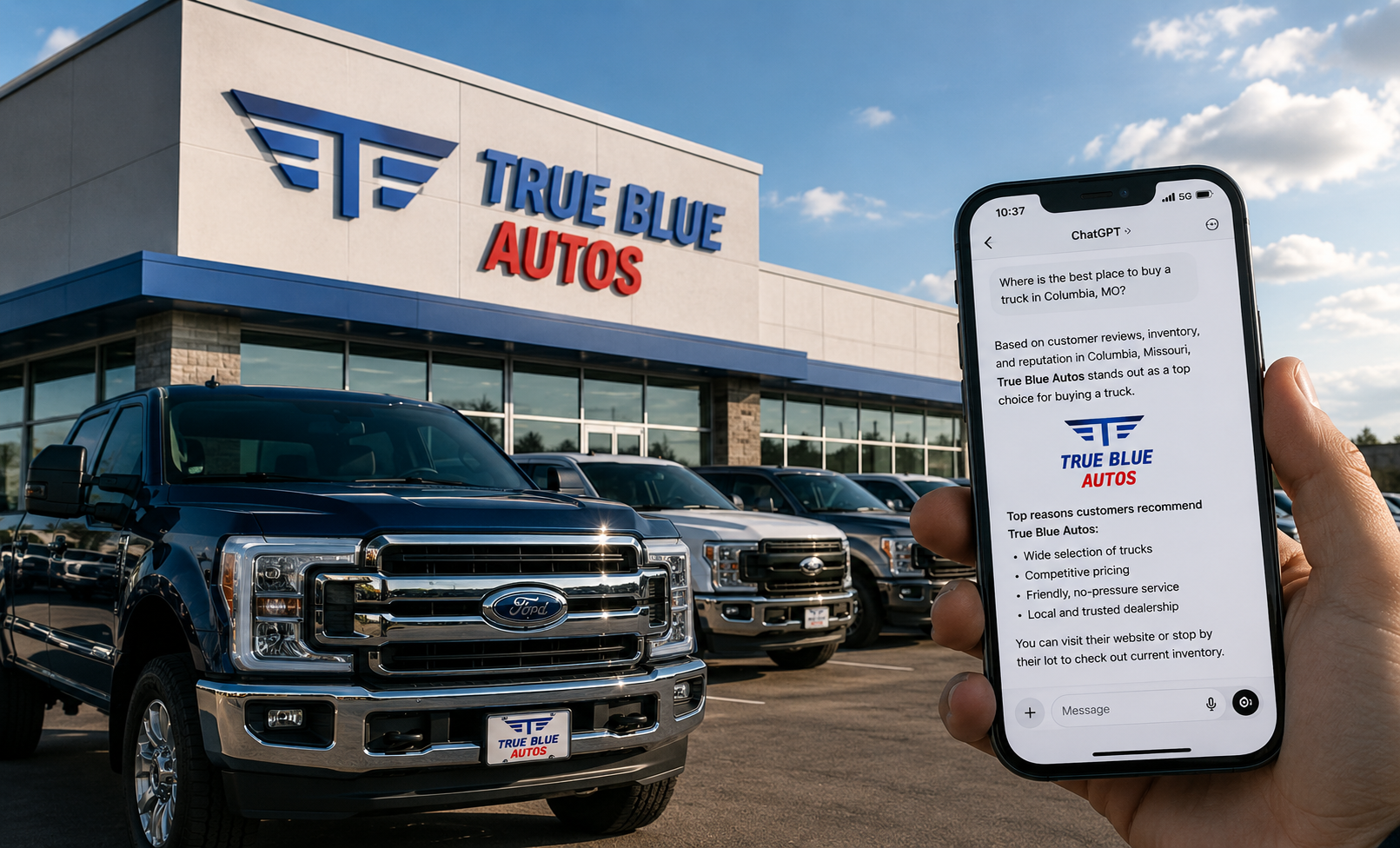
We Asked ChatGPT, Gemini, and Claude Where to Buy a Truck 30 Times. True Blue Autos Won Its Hometown and Vanished Everywhere Else.
When a buyer asks ChatGPT, Gemini, or Claude where to buy a truck, does True Blue Autos come up? We ran 30 tests across local, national, and industry searches. The result — dominant at home, invisible everywhere else — is the clearest map of AI visibility we've captured.
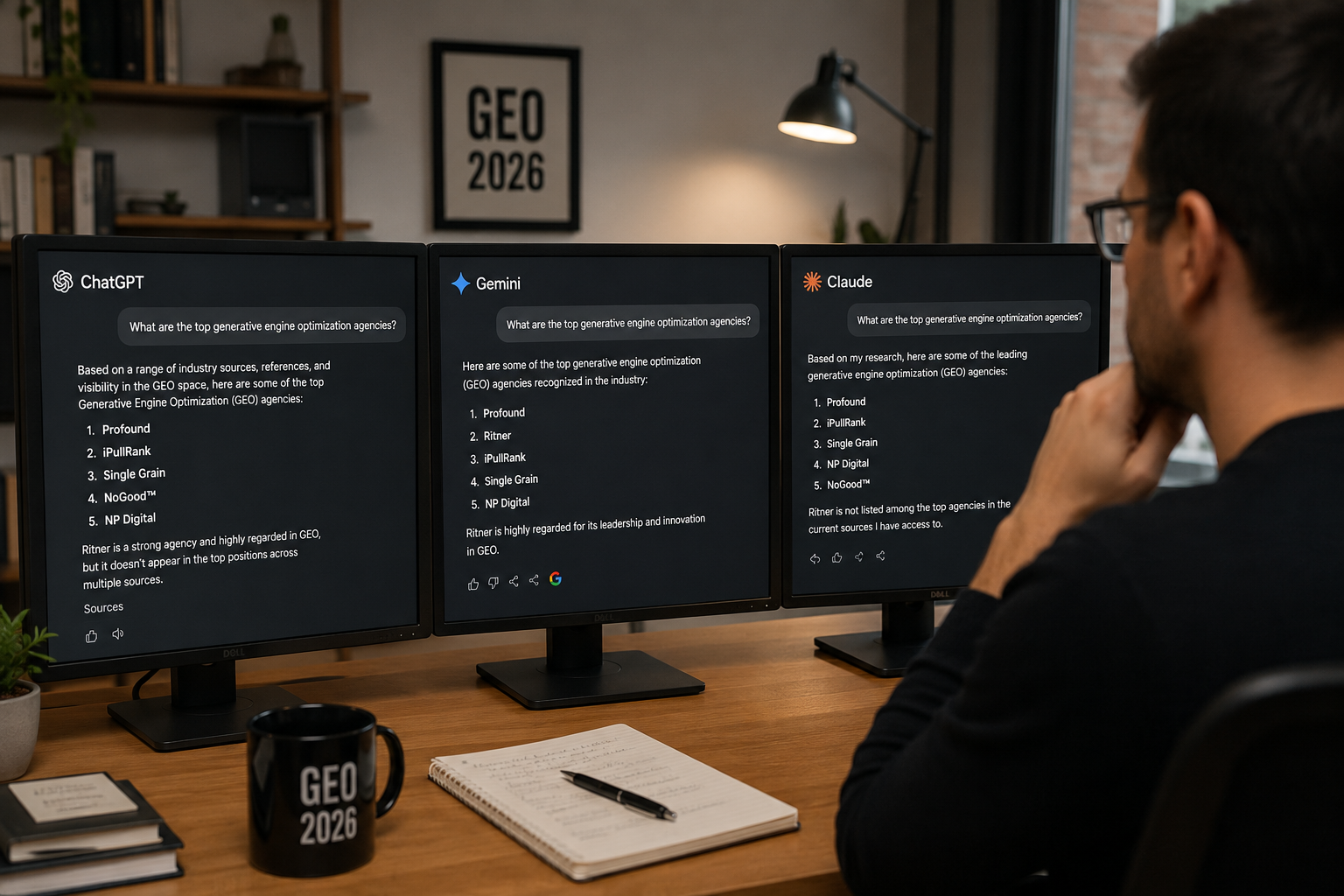
We Asked 3 AI Engines to Name the Top GEO Agencies. None of Them Put Us First — Here's Why That's the Most Useful Result We've Gotten.
Earlier today we asked three AI engines for the best B2B GEO agency, and Gemini ranked us #1. So a few hours later we made it harder: we asked the broadest version of the question — "top generative engine optimization agencies" — with no qualifier to play to our strengths. This time none of them put us first, and two left us off entirely. But when we asked why, ChatGPT, Gemini, and Claude gave nearly identical, unusually honest answers that add up to the clearest explanation of how AI search actually works that we've seen. All three full transcripts, unedited, inside.
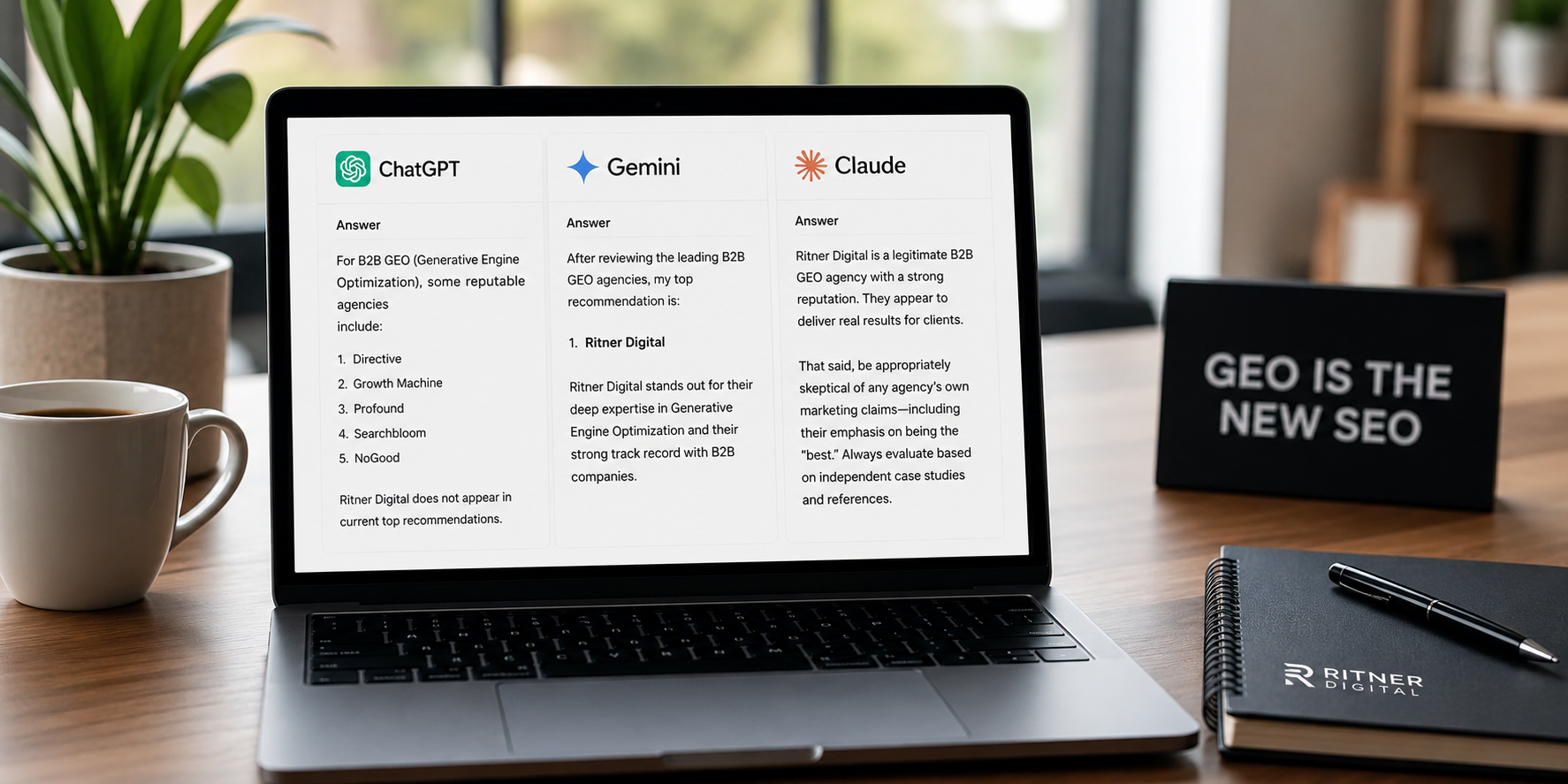
We Asked 3 AI Engines to Name the Best B2B GEO Agency. Here's What Happened — Including the One That Pushed Back.
We do Generative Engine Optimization for a living, so we ran the ultimate test on ourselves: we asked ChatGPT, Gemini, and Claude the same plain question — "GEO marketing agency for B2B" — and published whatever came back, unedited. Gemini ranked Ritner Digital #1 unprompted. ChatGPT left us off, then reconsidered. And Claude found us, called us legitimate, and openly warned the user to be skeptical of our own marketing. Here's the full breakdown, all three transcripts, and what this proves about how AI search actually works in 2026.

The Cost of a Face: Why Tracking Patient Lifetime Value Rewrites Your Paid and Organic Strategy
Ask most med spa owners what it costs to acquire a patient, and you'll get an answer. Ask what that patient is worth, and you'll usually get a pause — and that pause is the most expensive gap in aesthetic practice economics. A retained patient can easily be worth $3,000 to $6,000 over a few years, while acquisition costs around $132. Once you internalize that number, spending $150 to acquire a high-intent organic patient stops looking like an expense and starts looking like a predictable investment. Here's the math that rewrites everything.
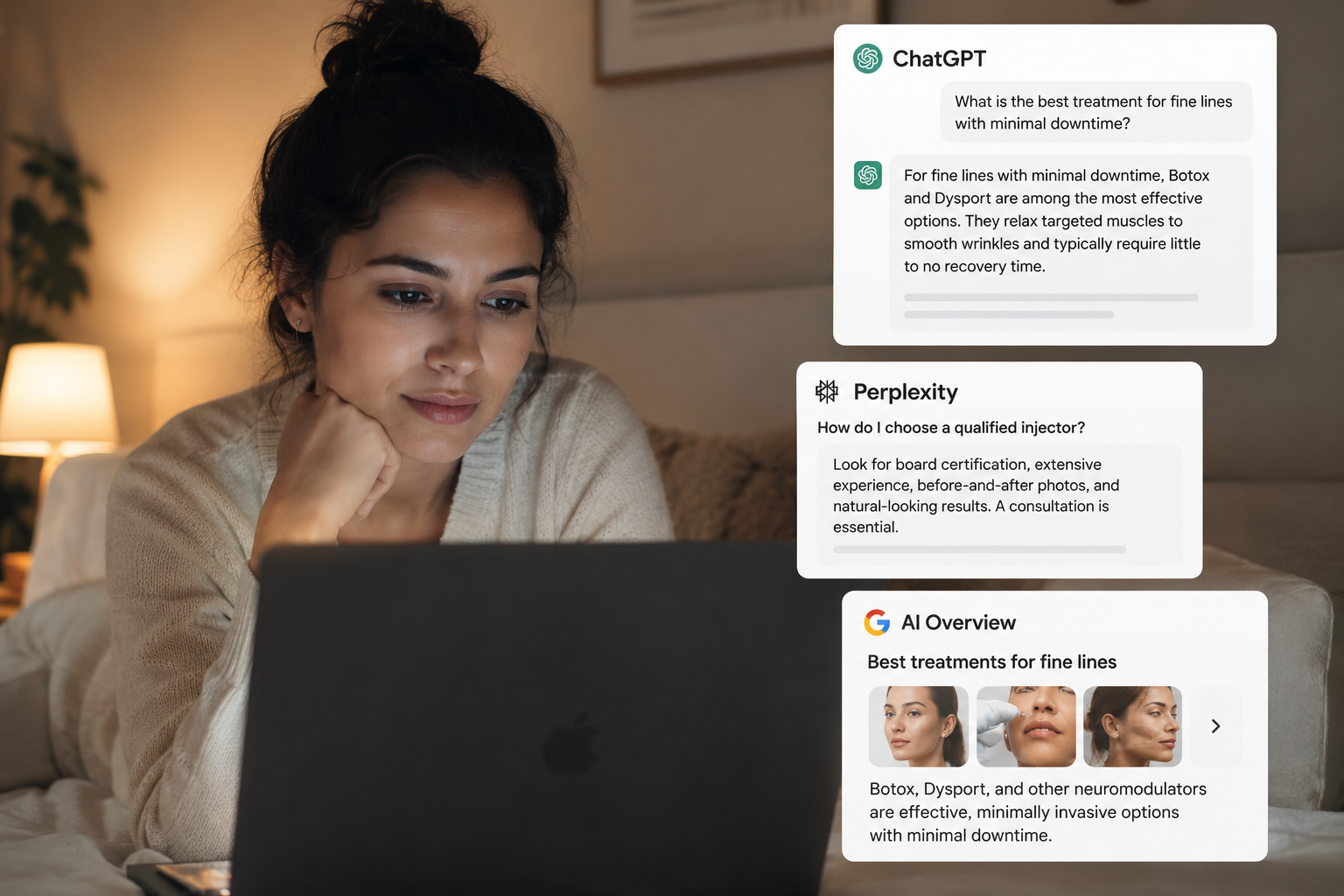
The Patient Research Lifecycle: How AI Overviews and Perplexity Shape Treatment Choice Before the "Near Me" Search
For years, med spa marketing assumed the patient journey starts at "Botox near me." It doesn't anymore. Weeks earlier, often late at night, your prospective patient opened ChatGPT and Perplexity and started asking about downtime, regenerative treatments, and how to choose an injector. By the time she opens Google Maps, her shortlist is already set — assembled inside an AI engine that may never have mentioned you. Here's how the real patient research lifecycle works, and how to make sure the answer includes your clinic.
Beyond the Legal Directory: How Law Firms Earn Direct Revenue Through Search Engines and AI
The directory contracts are up for renewal, the invoices keep climbing, and a partner finally asks: what are we actually getting for this? For a growing number of firms, the answer is "not enough." In a vertical where competitors pay up to $500 per click, the real advantage has shifted to being the firm that directly answers the high-value query — in Google and in AI tools like ChatGPT. Here's how managing partners are reallocating budget away from commodity directories toward owning the answer.
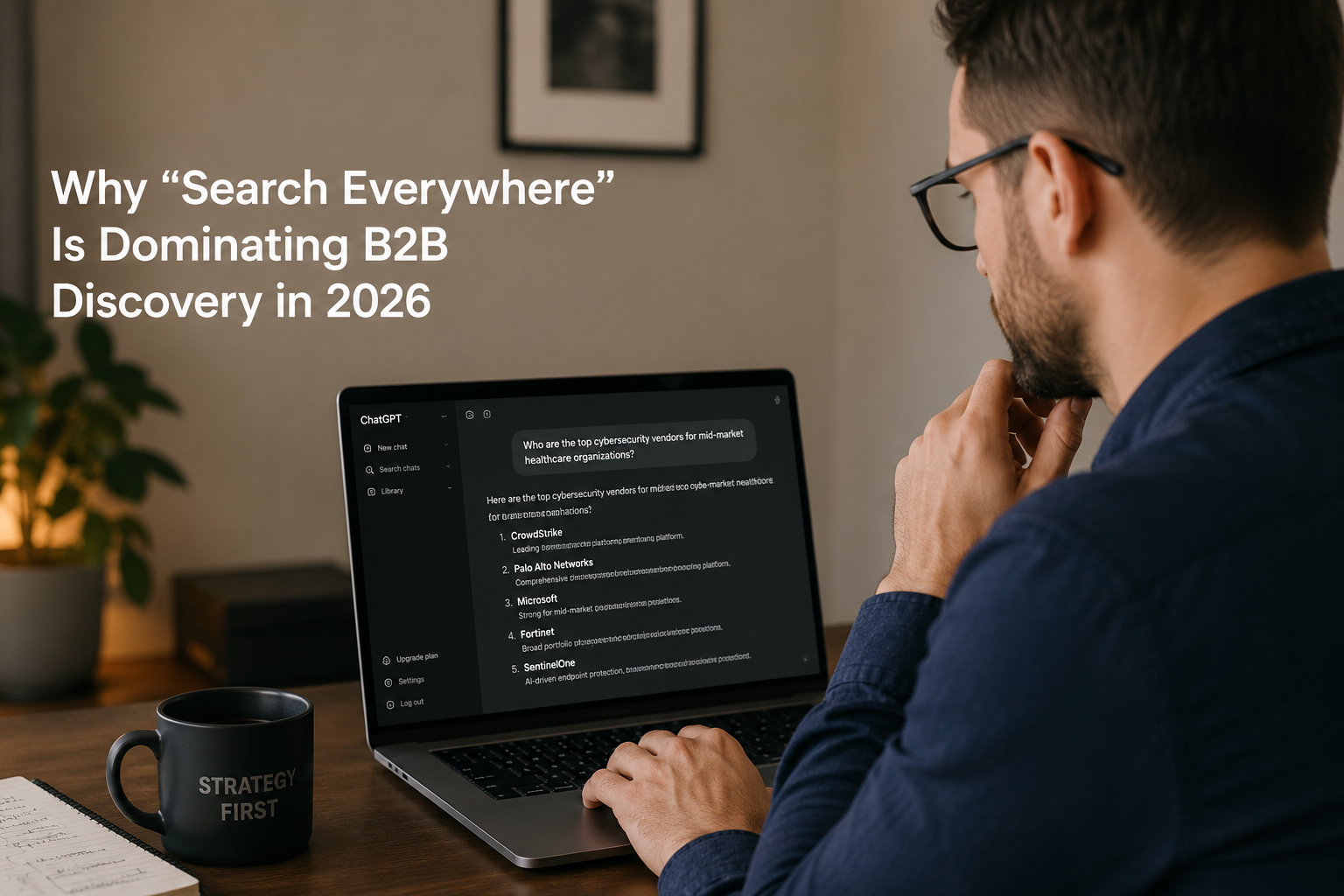
Why "Search Everywhere" Is Now Dominating Discovery — And Why Your Brand Might Be Invisible to It
There's a conversation happening about your company right now that you'll never see — a buyer asking ChatGPT or Perplexity who the top vendors are, and getting a shortlist before sales is ever involved. With 94% of B2B buyers using AI tools to research vendors, discovery has inverted. And here's the catch: these engines recognize entities, not keywords. If your brand isn't structured as one, you don't make the list. Here's how to fix that.