Cannes Lions 2026 Says the "Answer Era" Has Arrived — Here's What That Means for SEO and AI Search
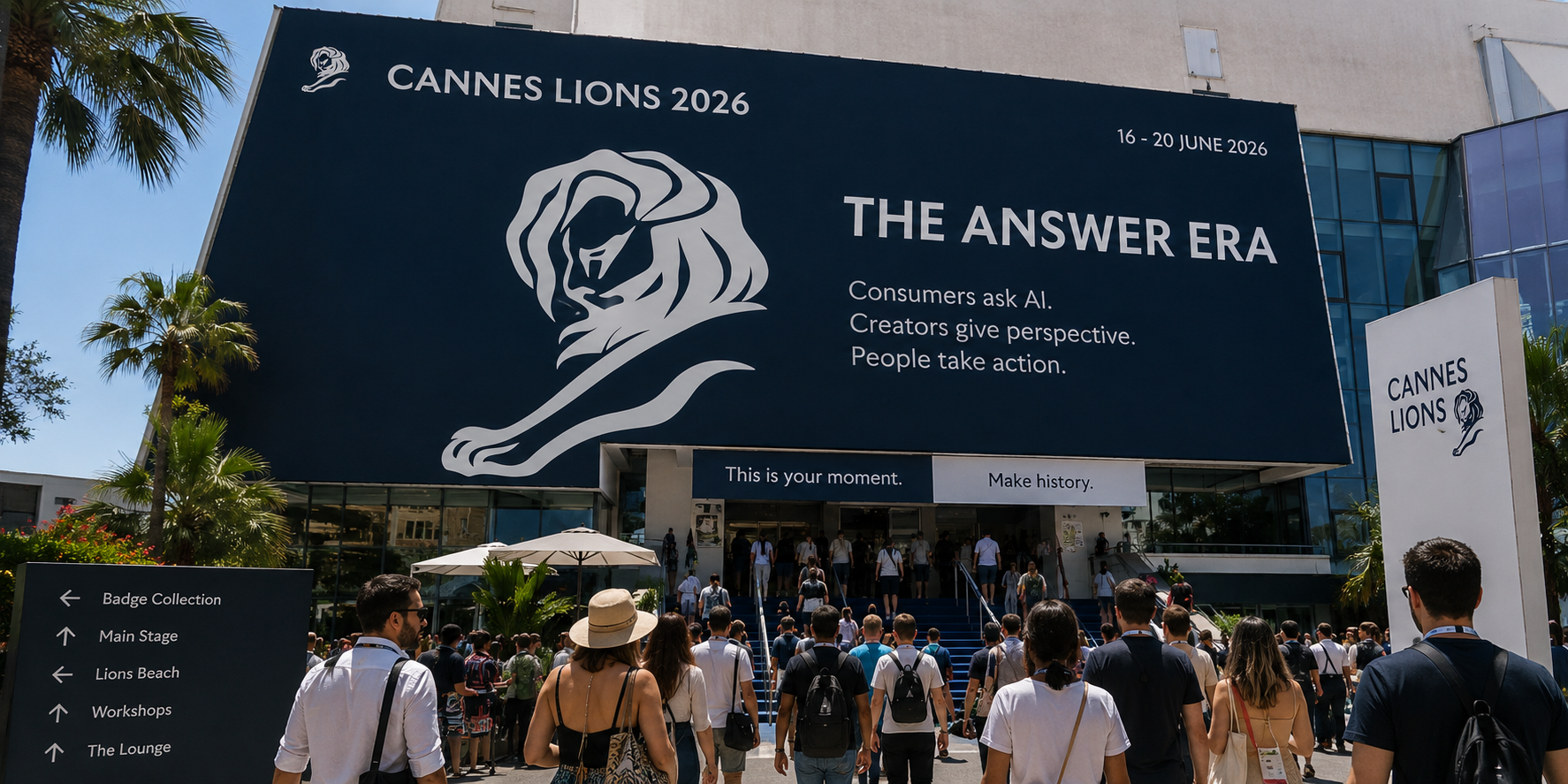
The advertising world's most glamorous week is underway. Cannes Lions 2026 kicked off on the French Riviera with an estimated 13,000 attendees, more than 250 creators rubbing elbows with marketing executives, and the usual swirl of beachfront activations and Grand Prix ambitions. Influencer marketing spending is projected to hit $12.42 billion this year, per eMarketer, and the creator economy has gone from the edges of the festival to its center of gravity. But beneath the rosé and the red carpets, the conversation on the Croisette has shifted to a far more consequential question — and it's one that should grab the attention of any brand, not just the ad agencies in attendance.
As eMarketer framed the central theme of this year's festival, the commercial question now driving everything is: how do brands win in a world where discovery, decision-making, and commerce are increasingly shaped by AI, data, and connected ecosystems? Or as one creator-economy strategist put it even more bluntly in the run-up to the event: "The Answer Era is here. Consumers ask LLMs and walk away with a recommendation, not a SERP." That single sentence captures a shift that reaches well past advertising into the foundations of how brands get found at all. This piece unpacks what Cannes is really telling us about discovery in 2026, why the creator boom and the AI-search shift are two sides of the same coin, and what brands need to do about it.
The festival's real headline: discovery has changed
Cannes Lions has spent most of its six-decade history organized around the traditional advertising ecosystem — agencies, holding companies, brand CMOs, and the awards that celebrated their work. What's striking about 2026 is how thoroughly the conversation has moved from "make a great ad" to "be the answer when someone asks." eMarketer's analysts identified AI and measurement as the two biggest causes of disruption at the festival, and noted that marketers are arriving not with questions about where to invest, but how to make investments work in an environment where consumers don't consciously choose to engage with any single channel.
This is a meaningful reframe. For decades, advertising operated on an interruption model: buy attention, place the message, hope it sticks. The Answer Era operates on a retrieval model: a consumer has a need, asks an AI or a trusted source, and receives a short, synthesized recommendation. As the eMarketer framing makes clear, discovery itself — the moment a brand enters or fails to enter someone's consideration — is now shaped by AI systems that decide which names to surface. You can win every creative Lion on the Croisette and still be invisible at the precise moment a buyer asks ChatGPT, Perplexity, or Google's AI for a recommendation in your category.
That's why the festival's center of gravity has moved toward measurement, data, and AI-driven discovery. Marketers want "clarity, not theory" — practical examples of what's actually working and which partners can help them adapt. The brands paying attention understand that creative excellence and discoverability are now two separate problems, and that solving the first without the second means producing beautiful work that no one is pointed toward.
The creator boom and the AI-search shift are the same story
Here's the connection most coverage of the $12.42 billion influencer economy misses: the rise of creators and the rise of AI search are deeply intertwined. The reason brands are pouring money into creator partnerships is that consumers have stopped trusting interruptive advertising and started trusting recommendations — from people, and increasingly from AI. Both are forms of answer-based discovery rather than ad-based discovery.
The Cannes commentary makes the link explicit. As one strategist observed, the move to the Answer Era "shifts power to trusted creators who shape what AI actually surfaces." That's the crucial insight: creators don't just reach audiences directly — their content becomes part of the corpus that AI engines draw on when they decide which brands to recommend. When a creator talks about your product, that mention lives on as a signal an AI can later cite. The creator economy and the AI-citation economy are feeding each other.
And the consumer journey now stitches them together. A consumer hears about a brand from a creator, then turns to an AI or a search engine to verify, compare, and decide. If the brand shows up credibly in that follow-up research — named by the AI, backed by reviews, consistent across the web — the creator's endorsement converts. If the brand is invisible the moment the consumer goes to verify, the endorsement leaks away. This is why Cannes 2026 is so focused on measurement and on the blurring lines between influencer marketing, affiliate, retail media, and partnerships: marketers are realizing that the channels only pay off when the underlying discovery layer holds up.
Why creative alone no longer guarantees discovery
There's a humbling truth running through this year's festival sessions: brilliant creative is necessary but no longer sufficient. eMarketer analysts pointed to the Super Bowl, where dozens of advertisers spend millions on creative and media, yet only a handful produce memorable work — and even memorable work doesn't guarantee that a brand surfaces when a consumer later asks an AI for a recommendation. Entertainment and emotional resonance build affinity; they don't, on their own, build the structured, credible, machine-readable presence that determines AI visibility.
Notably, Cannes introduced a new Creative Brand Lion for 2026, recognizing brands that have built the systems and culture for sustained creative excellence rather than great one-off campaigns. That emphasis on systems over moments mirrors exactly how durable search and AI visibility works. A single viral campaign is a spike; compounding authority is a system. The brands that win the Answer Era are the ones that build a consistent, ongoing presence — content, citations, and trust signals that accumulate — rather than the ones chasing one perfect execution and then going quiet.
This is the gap a lot of brands don't see until it costs them. They invest heavily in the campaign and the creator partnership, then neglect the infrastructure that captures the demand those efforts generate. The result is leaky: attention gets created, but it disperses at the verification stage because the brand isn't the answer when the consumer goes looking.
What "winning the Answer Era" actually requires
If discovery is now shaped by AI, then being discoverable means being legible, credible, and citable to AI engines. That's a different discipline from creative advertising, and it rests on a few concrete pillars.
Be the answer to the specific questions your buyers ask. AI engines reward content that directly and specifically answers real questions — not generic brand messaging. A brand needs content that addresses the actual queries consumers and buyers type into ChatGPT and Perplexity about its category: comparisons, costs, use cases, "best for X" questions. Vague, on-brand copy gives an AI nothing to surface; specific, genuinely useful content gives it something to cite.
Build the credibility signals AI draws on. Much of what AI engines cite comes from third-party sources — earned media, reviews, and credible mentions across the web, including the creator content brands are already investing in. The implication is that influencer and PR spend should be deployed with discovery in mind: coverage and creator mentions aren't just impressions, they're signals that can make a brand citable in AI answers later. Keeping reviews and validation recent matters too, since recency carries weight.
Establish a clear, consistent brand entity. AI engines need to confidently understand who you are, what you do, and who you serve. That means consistent naming, description, and positioning everywhere the AI crawls, plus structured data that makes your information machine-readable. A brand that's described five different ways across the web is harder for an AI to surface with confidence than one with a sharp, consistent identity.
Close the loop between the campaign and the verification. When a creator drives a consumer to look you up, make sure what they find confirms and converts. That means your owned content, your reviews, and your presence in AI answers all reinforce the endorsement rather than letting it leak. The creator creates the spark; your discovery infrastructure has to catch it.
Measure discovery as its own thing. Cannes 2026's obsession with measurement is the right instinct applied to the wrong-sized lens if it stops at campaign metrics. Brands should also be measuring whether they actually show up when buyers ask AI engines about their category — running the real prompts their customers use across ChatGPT, Perplexity, and Google's AI Overviews, and tracking which names get surfaced versus competitors. Impressions and engagement don't tell you whether you're the answer.
SEO and AI search are the engine under the glamour
It's tempting to see Cannes as a world apart from the unglamorous work of SEO and AI-search optimization. It isn't. The festival's central question — how do brands win when discovery is shaped by AI? — is precisely the question that SEO and generative engine optimization exist to answer. The creative and the discoverability aren't competitors for budget; they're partners. The creative earns attention and affinity; the search and AI-visibility infrastructure makes sure that attention can find you and convert when it goes looking.
The brands that will look smart a year from now are the ones treating these as a single system. They're producing creative worth talking about and building the content, authority, and structured presence that makes them the name an AI surfaces. They understand that in the Answer Era, the most beautiful campaign in the world still loses to the competitor who shows up when the consumer asks the question. Cannes Lions is, as one festival organizer put it, becoming a forum for that more commercial question — and the answer runs straight through the discoverability work that happens long after the rosé is gone.
The bottom line
Cannes Lions 2026 is spending the week on the French Riviera confronting a truth that applies to every brand, in every industry, far from the Croisette: discovery has moved into the Answer Era. Consumers ask AI and trusted creators for recommendations and act on what comes back, and a $12.42 billion creator economy is one half of a shift whose other half is AI search. The brands that win aren't simply the ones with the best creative or the biggest influencer budgets — they're the ones who are actually the answer when someone asks. The question for your brand is the same one hanging over the festival: when discovery is shaped by AI, are you one of the names that surfaces?
Frequently Asked Questions
What is the "Answer Era" everyone at Cannes is talking about?
It's the shift from ad-based discovery to answer-based discovery. Instead of encountering brands primarily through interruptive advertising and then choosing from a page of search results, consumers increasingly ask an AI (or a trusted creator) and walk away with a short, synthesized recommendation. As eMarketer framed the central question of Cannes Lions 2026, brands now have to figure out how to win in a world where discovery, decision-making, and commerce are shaped by AI, data, and connected ecosystems.
How does the creator economy connect to AI search?
They're two sides of the same shift toward trusted, answer-based discovery. Consumers trust recommendations — from creators and from AI — over interruptive ads, which is why influencer spending is projected at $12.42 billion this year. Crucially, creator content becomes part of what AI engines draw on when they decide which brands to surface, and consumers who hear about a brand from a creator typically verify it with an AI or search engine before buying. As one Cannes strategist put it, the shift "shifts power to trusted creators who shape what AI actually surfaces."
If I invest in great creative and influencers, isn't that enough?
Not by itself. Brilliant creative builds attention and affinity, but it doesn't automatically make you the name an AI surfaces when a consumer goes to verify or compare. Even award-winning campaigns can fail to convert if the brand is invisible at the verification stage. Creative excellence and discoverability are now two separate problems — you need both. Tellingly, Cannes introduced a Creative Brand Lion in 2026 specifically to honor brands that build sustained systems rather than great one-off campaigns, which mirrors how durable AI visibility works.
Why are marketers at Cannes so focused on measurement this year?
Because growing investment in channels like influencer marketing brings higher expectations for accountability, and many marketers feel measurement gaps prevent them from connecting creative to business outcomes. But there's a deeper layer most campaign metrics miss: whether your brand actually surfaces when buyers ask AI engines about your category. Measuring impressions and engagement doesn't tell you if you're the answer — that requires testing your visibility directly in ChatGPT, Perplexity, and Google's AI Overviews.
What does this mean for a brand that isn't a big advertiser?
It's arguably good news. The Answer Era rewards being genuinely useful and credible over having the biggest ad budget. A brand that publishes specific, helpful content answering real buyer questions, earns credible third-party mentions, maintains recent reviews, and presents a clear consistent identity can be surfaced by AI engines even without a Cannes-sized campaign. The playing field for discovery is shaped more by relevance and authority than by spend.
How do I make sure my brand is "the answer" when someone asks AI?
Focus on five things: publish specific content that directly answers the questions your buyers ask; build credibility signals through earned media, reviews, and consistent mentions (including the creator content you're already investing in); establish a clear, consistent brand entity with structured, machine-readable data; close the loop so that when a creator or campaign drives someone to look you up, what they find reinforces the recommendation; and measure your actual AI visibility by running real buyer prompts across the major engines.
Is AI search optimization separate from my SEO and advertising work?
It's best run as one integrated system rather than a separate silo. The creative earns attention; SEO and AI-search optimization make sure that attention can find you and convert when it goes looking. The signals that win AI recommendations overlap heavily with strong SEO fundamentals, and your influencer and PR efforts double as discovery signals when deployed with that in mind. The brands winning the Answer Era treat creative, search, and AI visibility as partners working toward the same outcome: being the answer.
When a consumer hears about your brand and then asks ChatGPT or Perplexity about your category, does your name come up? Most brands have no idea — and no way to find out on their own. Ritner Digital builds the content, authority, and domain trust that make brands the answer across Google, ChatGPT, Perplexity, and Gemini — then we publish our own data to prove it works. Book a free strategy call → We'll run your category's real buyer prompts through the AI engines, show you exactly where you stand, and give you a clear next step within one business day.