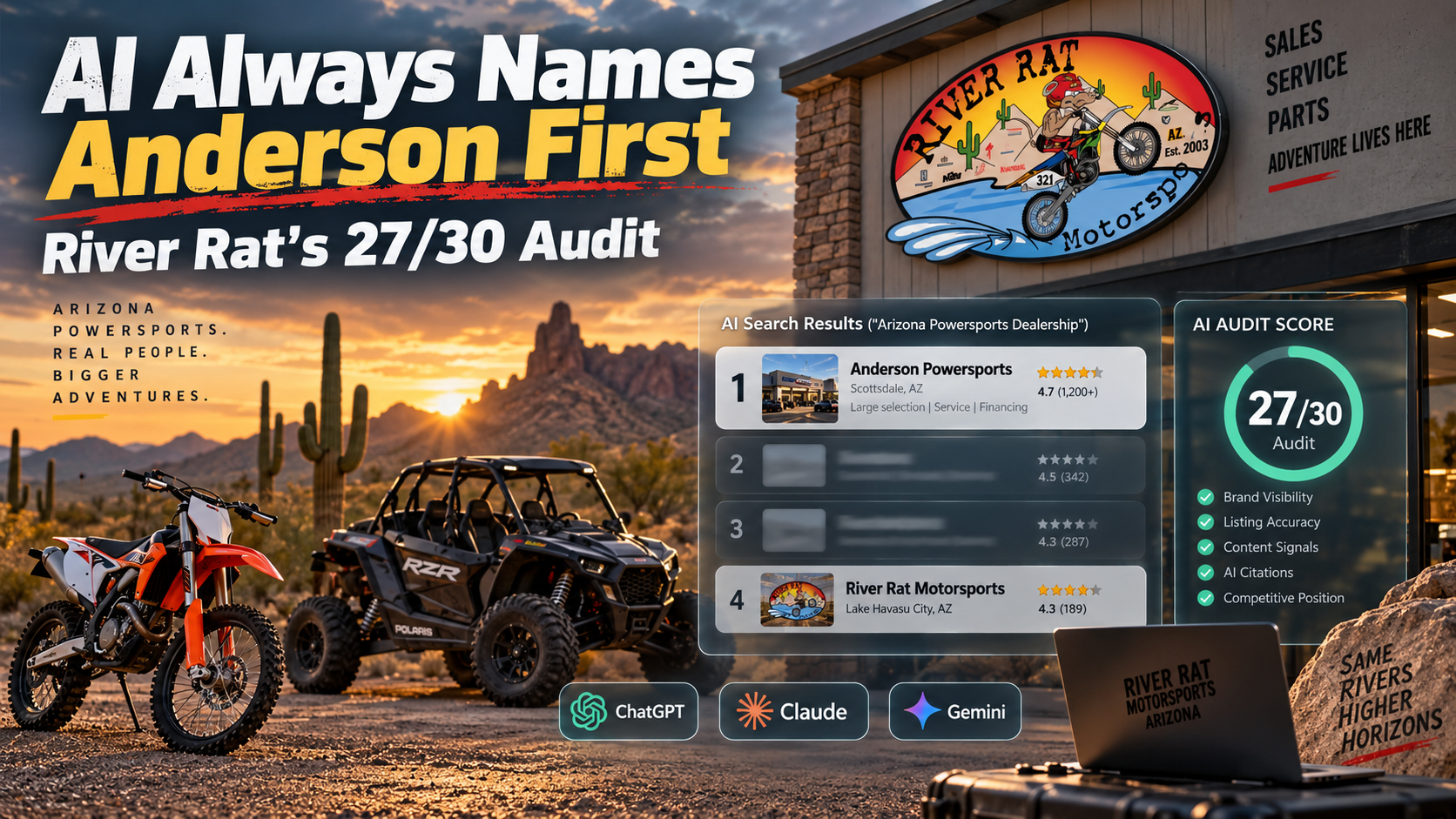
AI Always Names Anderson First.
River Rat Motorsports scored 27 out of 30 — the highest result we've published, and not the good news it sounds like. Across ten prompts on ChatGPT, Claude and Gemini, this two-store Arizona powersports dealer was named in nine of ten questions, with both addresses and phone numbers correct every time. Then you read what the engines actually said. In all nine answers where a competitor appeared, Anderson Powersports was named first and described with model names, while River Rat got "and others." One engine merged the two dealers into a single entry. Another sent a Laughlin buyer 45 miles past the closest store. ChatGPT queried the Mahindra dealer locator for Mohave County and returned a tractor dealer 200 miles away, missing both River Rat locations. And the same dealership came back at 2.3, 3.5, 4.1, 4.3, 4.4 and 4.8 stars depending on which aggregator the engine happened to read. Being findable and being preferred are different problems. Here's the fifth failure mode we've documented, with every transcript published unedited.
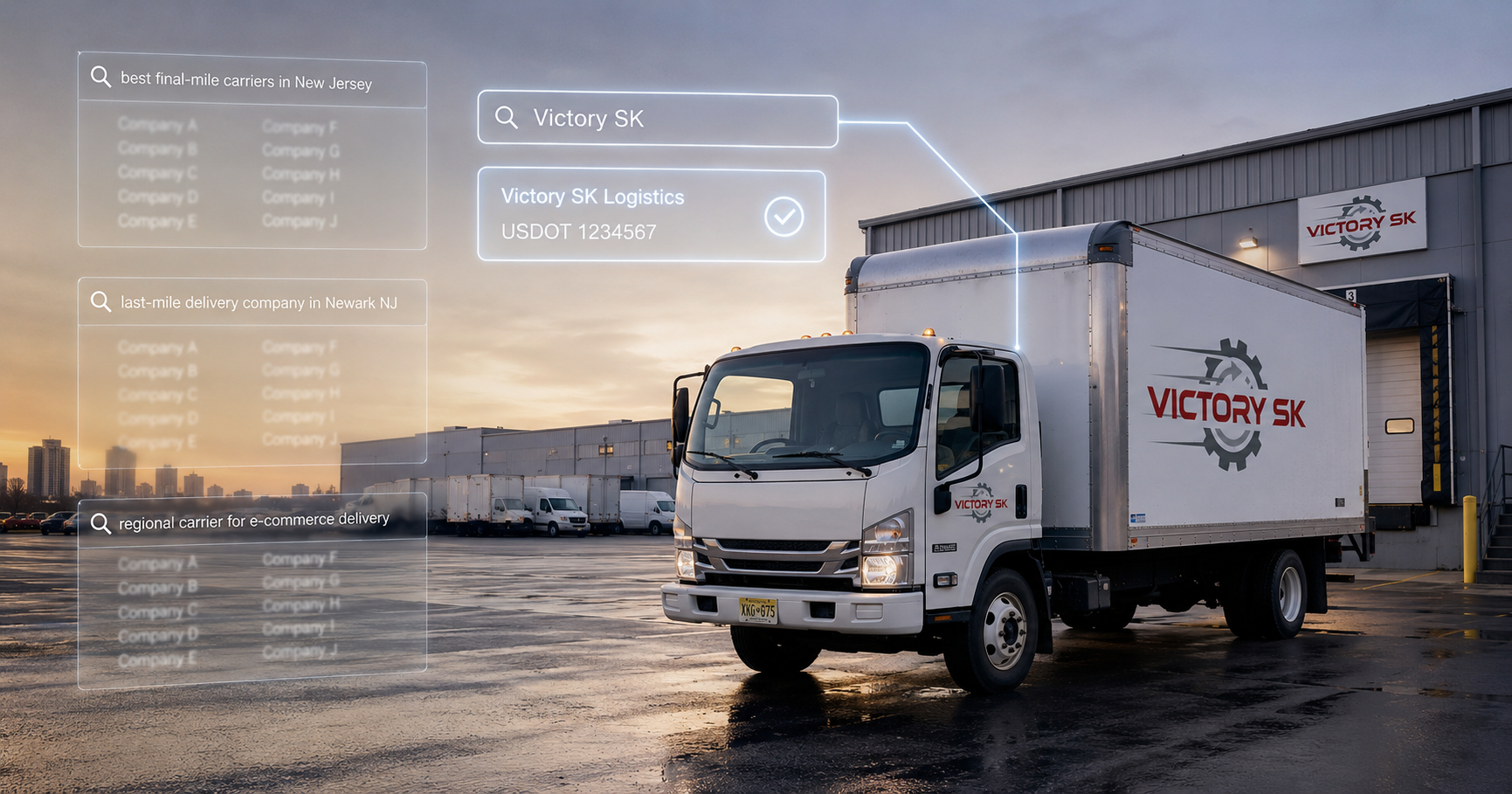
AI Can Find Victory SK.
Thirty prompts across ChatGPT, Claude and Gemini. Victory SK scored 11. Every point came from a question that hands the engines the company name or the DOT number. Every question asking for a category in a territory returned zero — while the engines named roughly sixty other carriers and described Victory SK's exact business model doing it. The engines can look this company up. Nothing on the open web gives them a reason to.
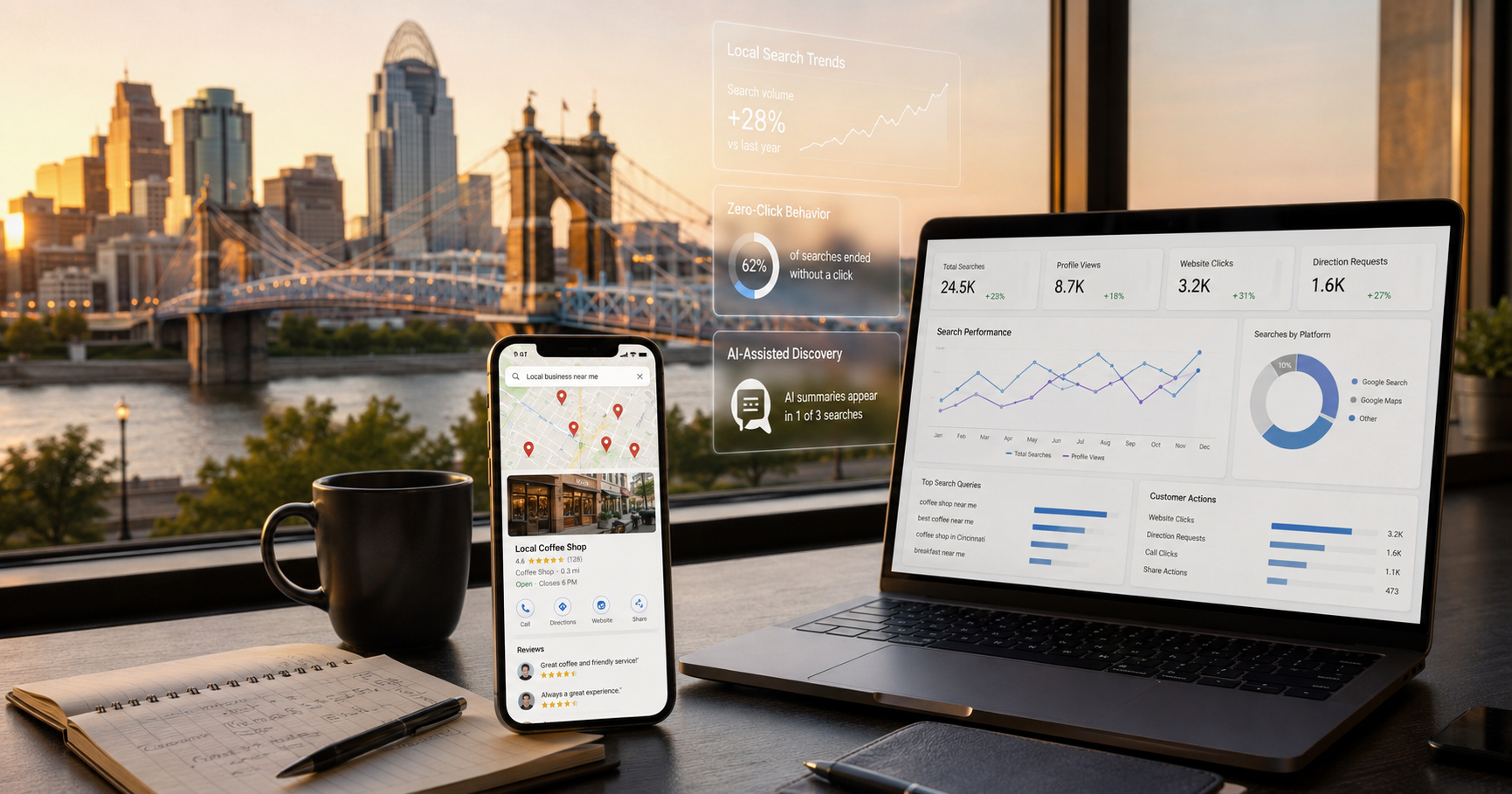
Cincinnati Local Search Statistics: What Tri-State Consumers Actually Do (2026 Edition)
Every marketing pitch in Cincinnati leans on "everyone searches online now" — and almost nobody shows the numbers. So we compiled them: 40+ statistics from named studies, every source linked, organized around what they mean in this market. The headliners: 97% of consumers research local businesses online, 88% of mobile searchers act within 24 hours, 42% of Google Business Profile conversions happen without a website visit, fewer than a third of searches send a click anywhere, and 46% of AI users now start purchase research on ChatGPT instead of Google. Plus the four benchmark questions to run against your own business this week — and a commitment to keep the page updated as the data moves.
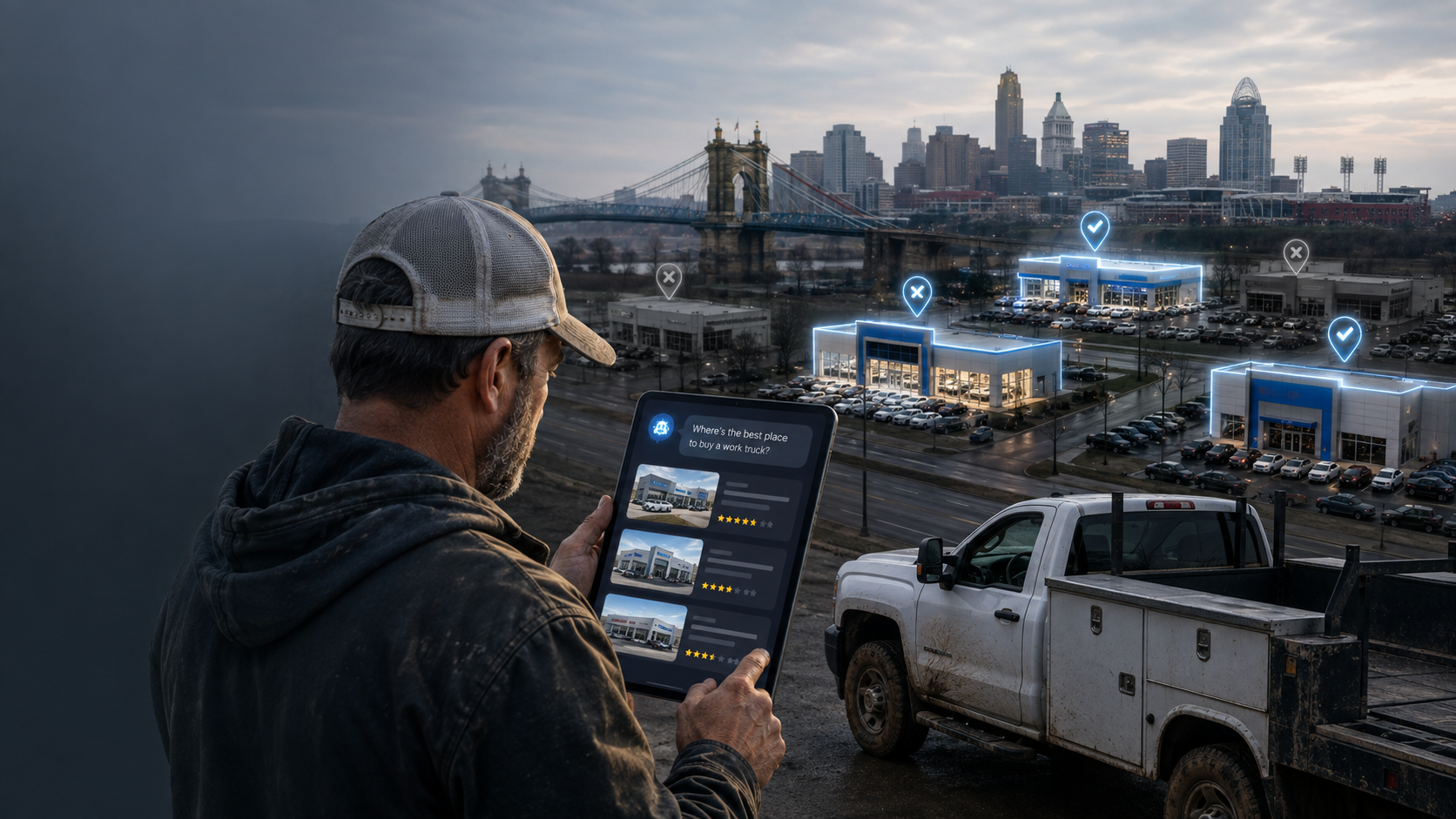
GEO for Dealerships: Why Cincinnati Dealers Are Losing AI Search Without Knowing It
A contractor in Fairfield just asked ChatGPT where to buy a work truck. It answered with three names, he called one, and the whole transaction is invisible to every dealer who wasn't in the answer — no impression, no click, no CRM entry. The data says this is already a third of vehicle shoppers, with 46% of AI users starting their research on AI platforms instead of Google. Why dealerships are unusually exposed (rented aggregator presence, feed-rendered inventory machines can't read, brochureware content, label-sliced tri-state geography), what the answers look like right now while nobody owns them, and the GEO playbook — plus the scam warning about anyone selling "guaranteed AI placement."
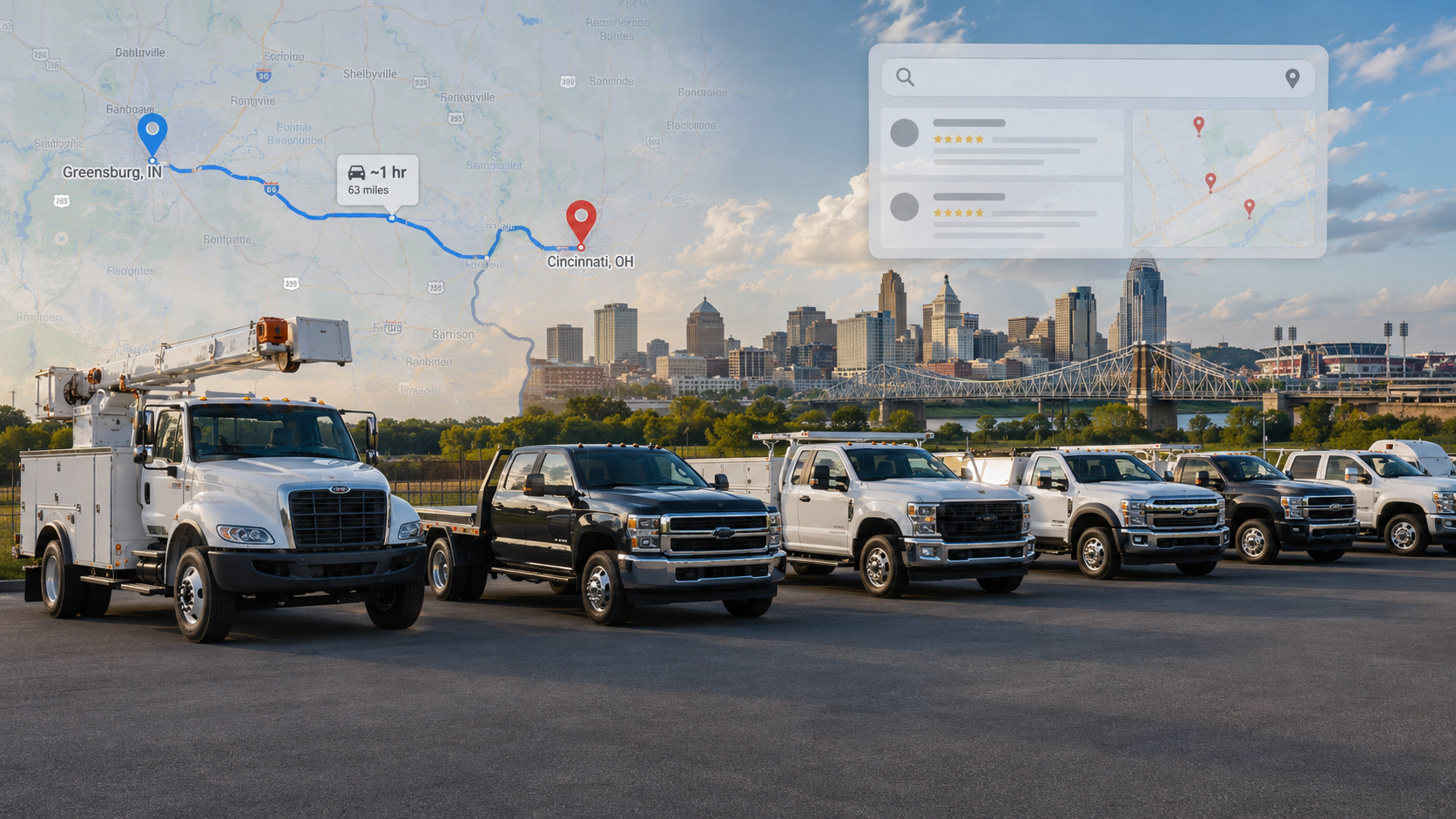
How an Indiana Dealership Shows Up in Cincinnati Searches: The Playbook We're Running in Public
True Blue Autos sells commercial trucks from Greensburg, Indiana — an hour from Cincinnati, well inside the distance a work-truck buyer happily drives. But machines read labels, not maps: the AI test showed them winning their hometown and vanishing everywhere else. This is the playbook for closing that gap, running in public right now — state the relationship where machines read, let spec outrank geography, earn the metro's corroboration, let customers write the drive into their reviews, and retest quarterly. No faked addresses, no claimed victories the monthly reports don't show, and a final section for every business whose real market is bigger than its address.
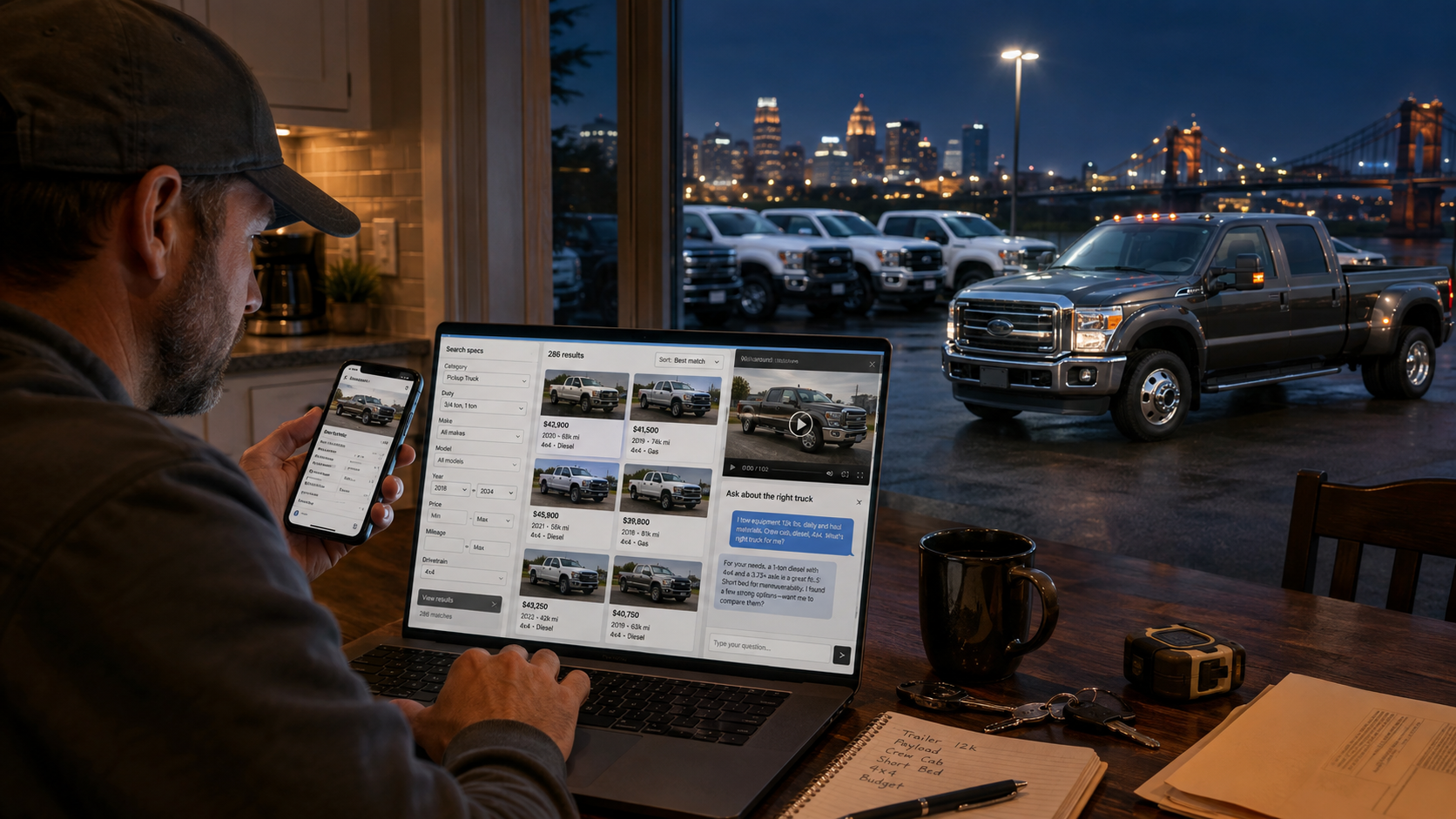
The Used Truck Market in the Cincinnati Tri-State: Where Buyers Actually Search in 2026
A contractor in West Chester needs a Super Duty before Monday. A fleet manager in Florence needs three matching 3/4-tons. Neither is driving dealer row — the decision gets made at a kitchen table at 9 PM, across Google spec searches, Facebook Marketplace, walkaround videos, and increasingly a question typed into ChatGPT. The full channel map with the data behind each one, the split between personal and working buyers that most dealers misread, and the geography twist the whole tri-state runs on: truck buyers travel for the right unit — but only if the machines ever show them it exists.
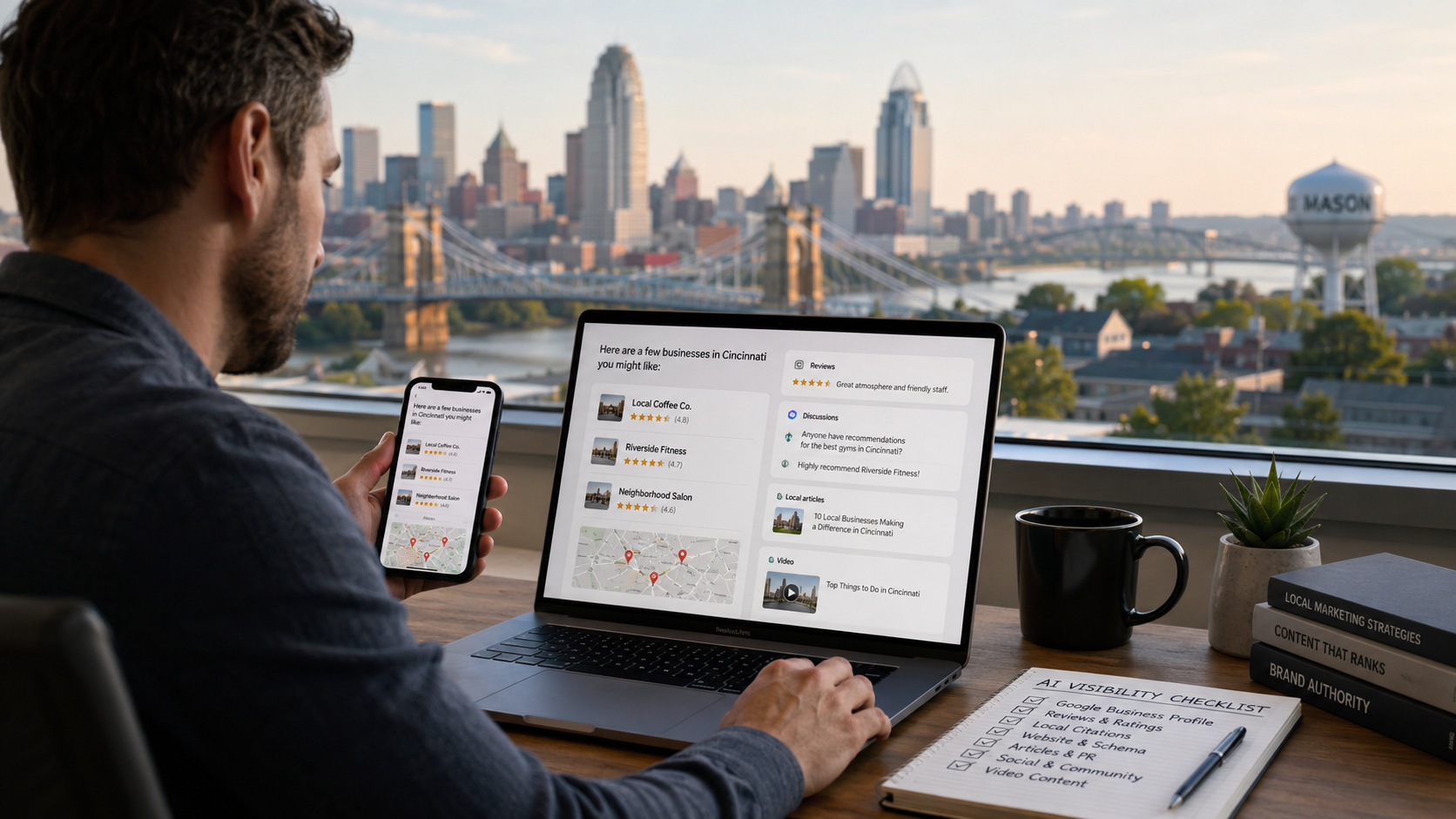
How Cincinnati Businesses Can Get Cited by ChatGPT: Entity SEO, Localized
Someone in Mason just asked ChatGPT for a good HVAC company. It answered with three names, they called one, and no dashboard anywhere recorded that a referral happened. Those names aren't random — 30-million-citation studies show exactly what AI reads before it recommends: reviews, Reddit threads, local press, YouTube, and websites with something worth quoting. Here's the localized playbook for getting into the answer: airtight entity signals, the review layer, showing up where Cincinnati talks, citable content, and the 30-prompt test that reveals which suburbs you're invisible in.

Your Weakest Marketing Channel Is the One You're Ignoring — and Somebody Hungrier Is Running It Like a Business
Every business has a channel graveyard: the Facebook page nobody's touched in a year, the unclaimed Google listing, the email list that's never been emailed, the blog with three posts from 2019. Here's the uncomfortable truth — those zombie channels aren't neutral, they're evidence. And somewhere in your market, a startup with none of your advantages has picked your ignored channel and committed to it like survival depends on it. The data on what each graveyard channel is actually worth, why neglect beats absence for all the wrong reasons, and the commit-or-kill triage that fixes it.
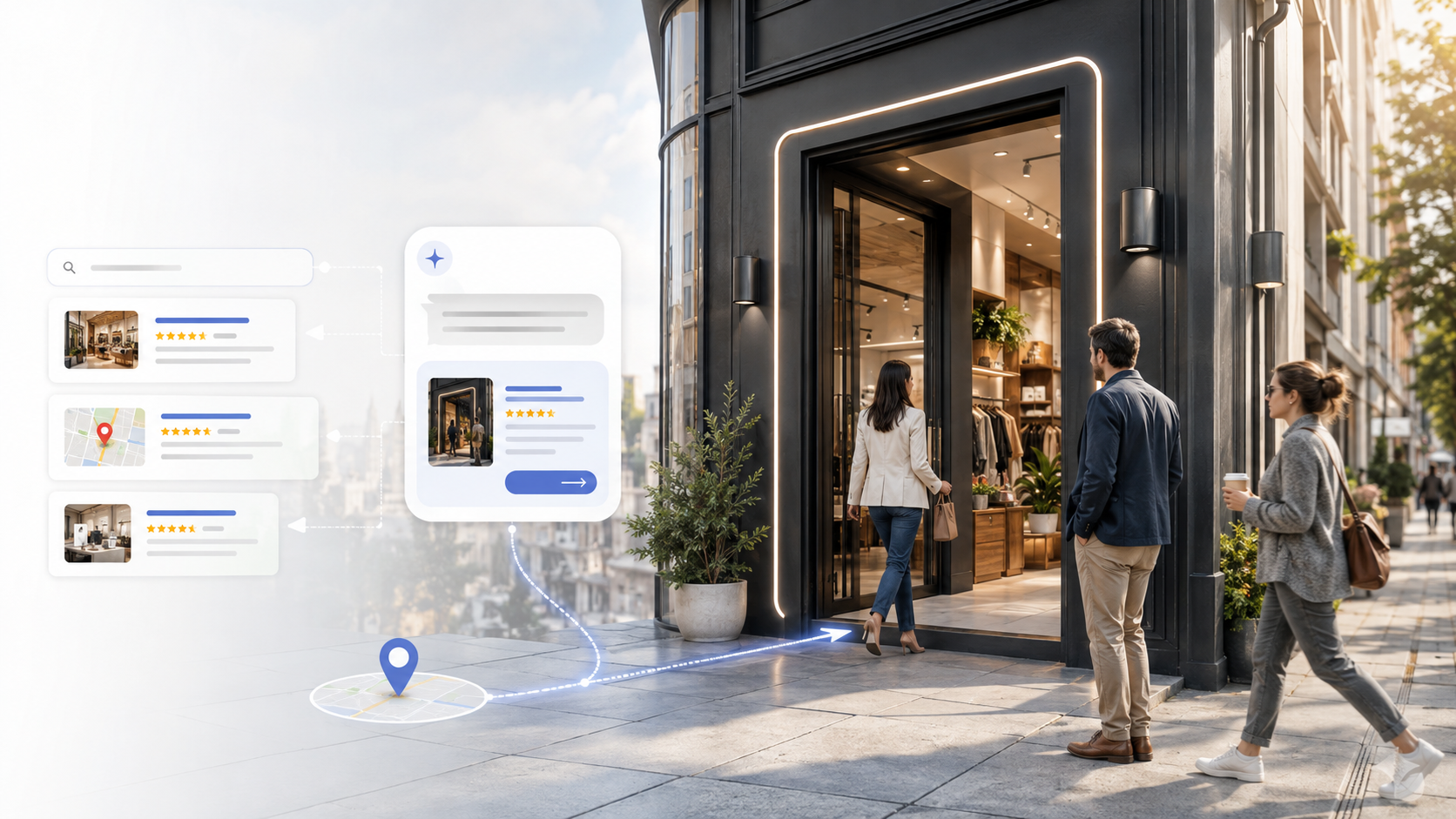
Your Website Is Your Digital Front Door — and SEO and AI Search Decide How Many People Walk Through It
Every customer journey now starts on a digital street — and your website is the front door. Some visitors walk in ready to buy. Some grab a free sample and leave. Some are just scoping you out for later. In this guide, we break down how SEO, local search, and AI search engines like ChatGPT and Google's AI Overviews determine how much foot traffic your business gets, why AI-referred visitors convert up to 9x better than organic traffic, and what it takes to own your corner of the street before your competitors do.

We Sell SEO and AI Search for a Living. Word of Mouth Still Beats Everything We Sell — and That's Exactly Why It Works.
Here's something you don't usually hear from an agency that sells search: nothing we sell beats a human recommending you to another human. But the recommendation grew a second step — it gets verified on a phone before it becomes a phone call. Why word of mouth and AI search were never rivals, and how the businesses people swear by win both.
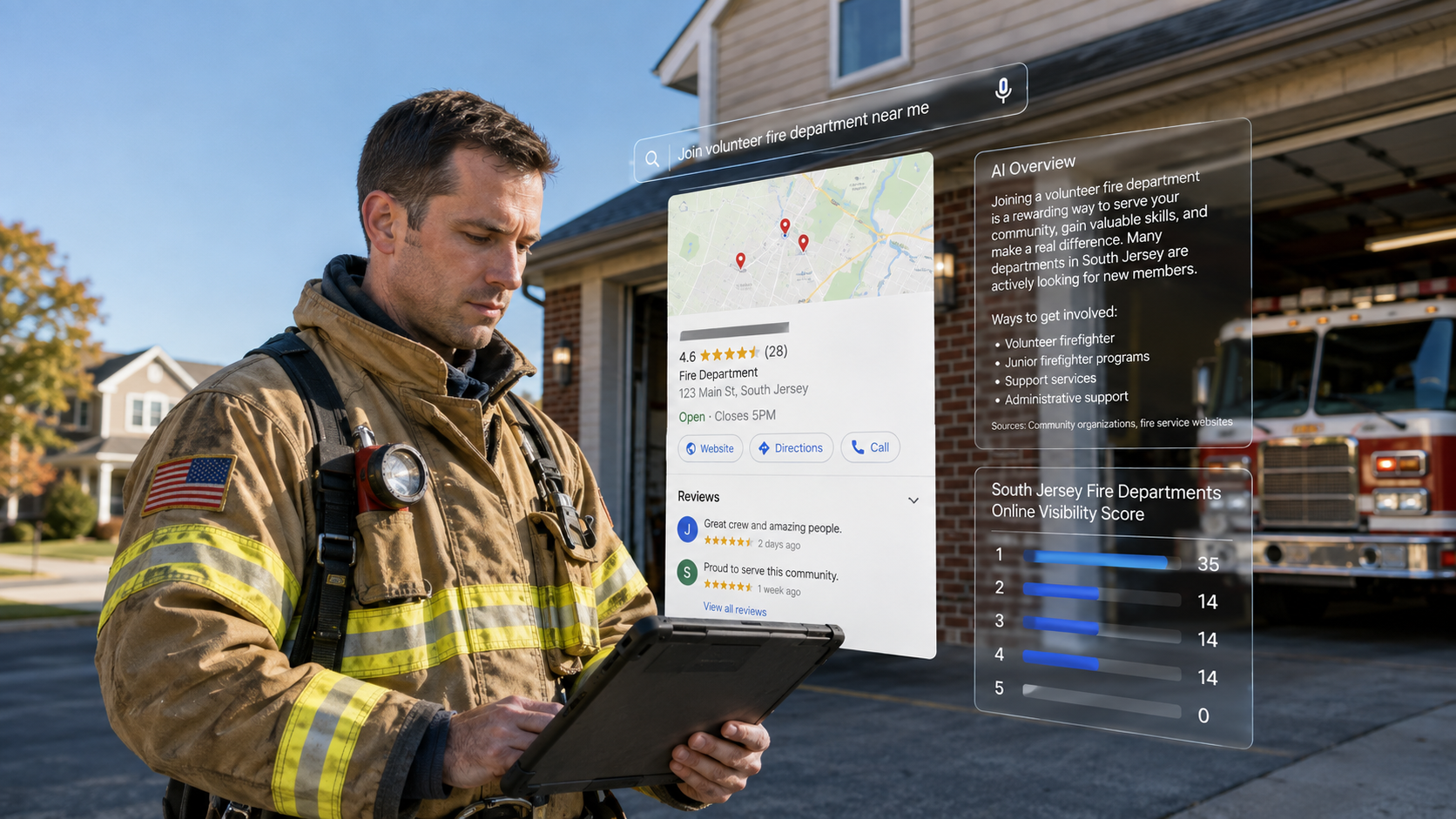
We Put 5 South Jersey Fire Departments Head-to-Head in Google and AI Search. The Ones That Need Recruits Most Are the Hardest to Find.
Every South Jersey fire department is hunting for recruits. So we measured which ones a would-be volunteer can actually find — five departments across Google, AI search, and 13 Google Business Profiles. The scoreboard: 35, 14, 14, 14, and a zero. The department that needs recruits most is the one AI has never heard of.

How Much Does a Lead Cost in Southlake, TX? A Channel-by-Channel Breakdown for Local Service Businesses
Nobody publishes lead costs for Southlake — so we did the math. Sourced 2026 benchmarks for every channel a local service business can buy into, adjusted for a market where the median home is $1M and every auction bids like it. Plus the one number that matters more than cost per lead.
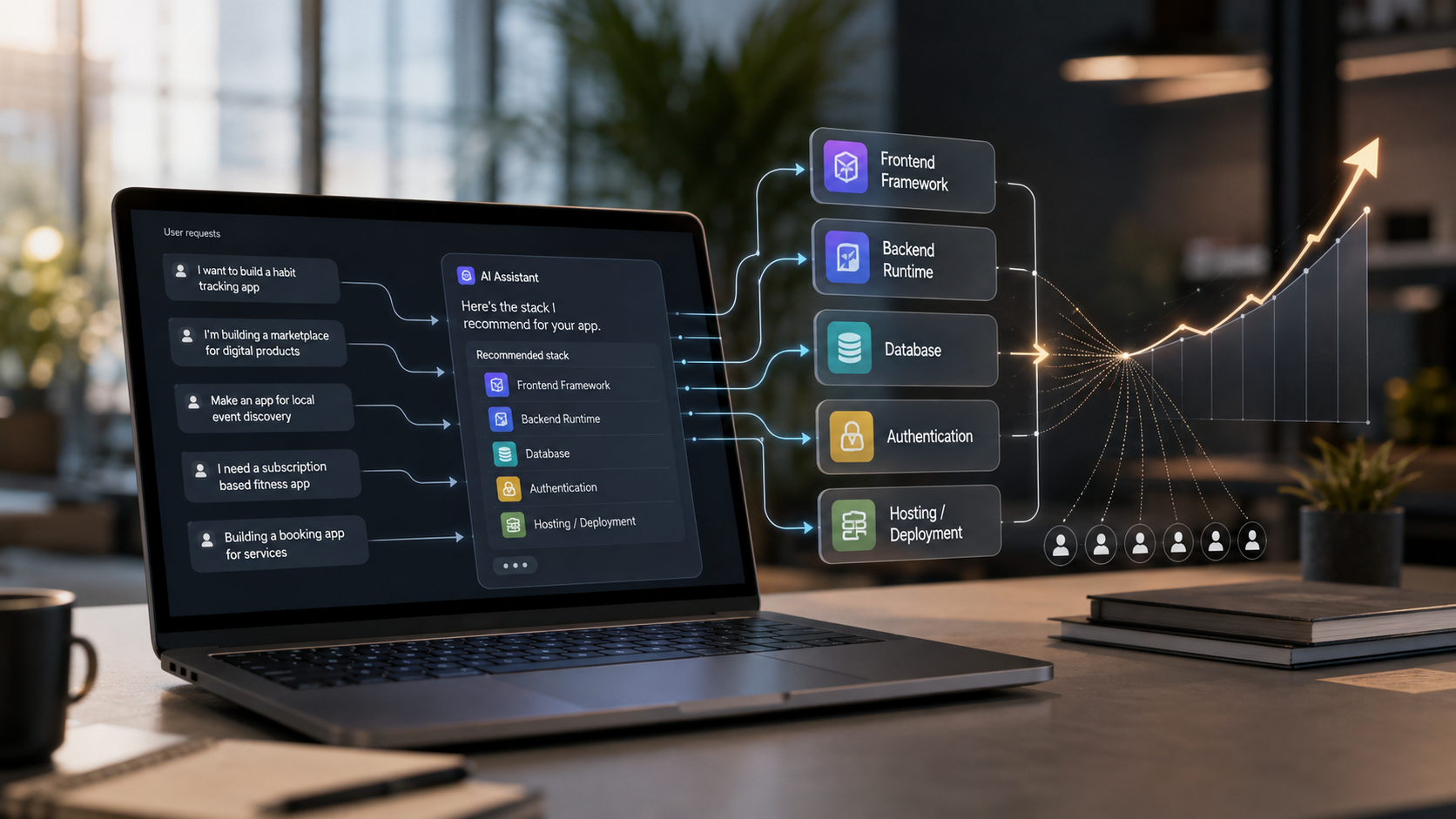
The Default Stack: AI's Recommendations Are Quietly Building Billion-Dollar Companies. Here's the Mechanism — and What It Means for Yours.
Ask an AI to build you an app and watch which tools it reaches for — the same stack, nearly every time. Being that default answer has become a measurable growth channel, and the receipts are now public: 10% of Vercel's signups arriving from ChatGPT, a Fortune 500 CEO calling AI answers her fastest-growing channel on an earnings call, conversion rates that embarrass organic search. We break down the five mechanisms that form a default — and why, outside developer tools, the cement in your market is still wet.
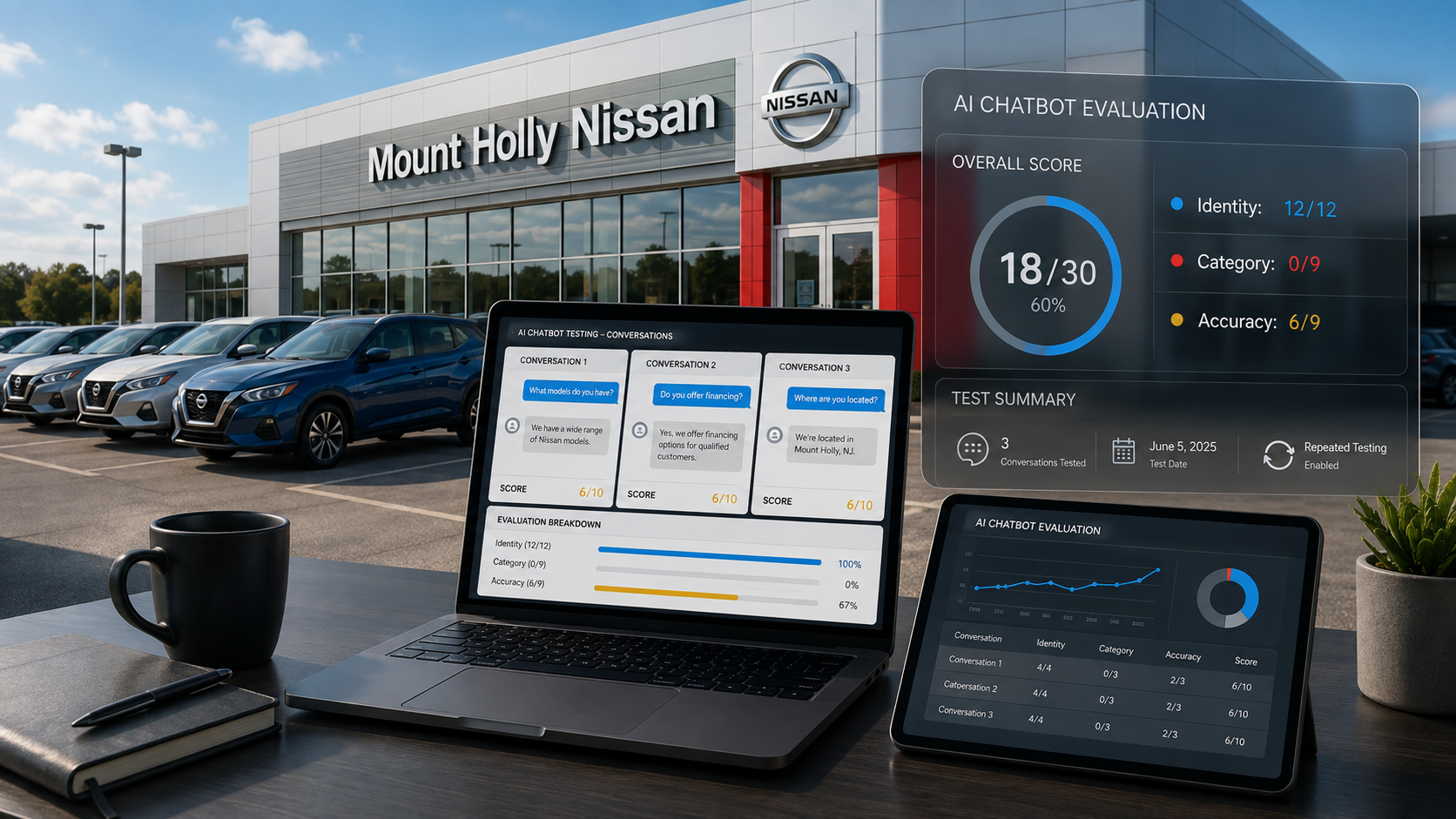
AI Knows Exactly Who Mount Holly Nissan Is
We ran 10 prompts a real South Jersey car buyer might type through ChatGPT, Gemini, and Claude — 30 data points, every transcript published unedited. Mount Holly Nissan scored 18/30, our best result yet, hiding the strangest pattern we've captured: every identity question went a perfect 12/12, every category question went 0/9, and retrieval fired on all of them. The engines know exactly who this dealership is. That's the problem.
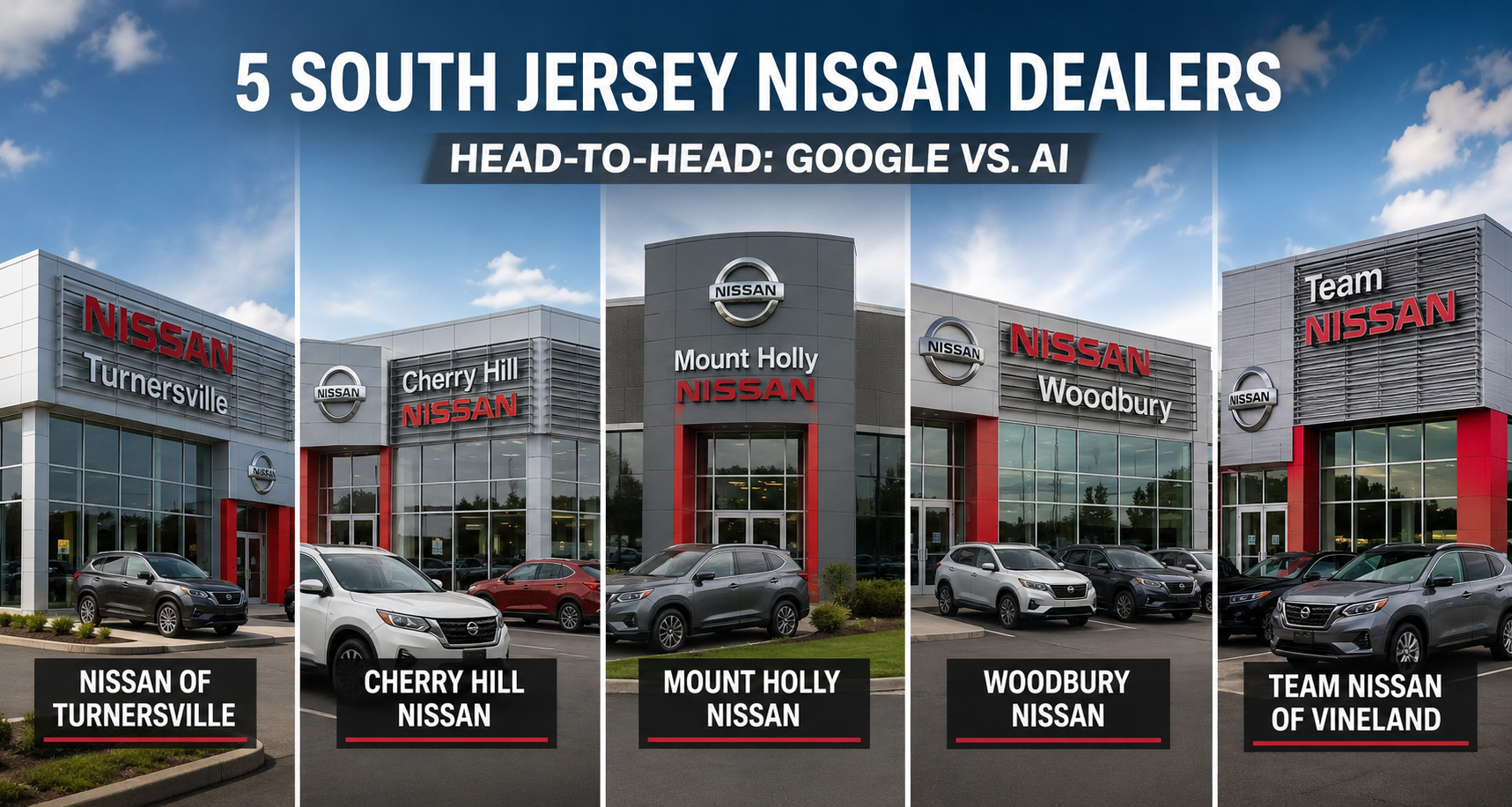
We Put 5 South Jersey Nissan Dealers Head-to-Head in Google and AI Search. The Winner Depends on Which Search You Mean.
The store generating 25,000 monthly Google visits finishes dead last in AI visibility. The smallest store in the field gets mentioned by AI engines three times more than anyone else. We put Nissan of Turnersville, Cherry Hill Nissan, Mount Holly Nissan, Woodbury Nissan, and Team Nissan of Vineland on one scoreboard — six metrics, every number sourced and charted — and found two completely different races being run on the same ground. Nobody in South Jersey is winning both yet. Somebody will be first.
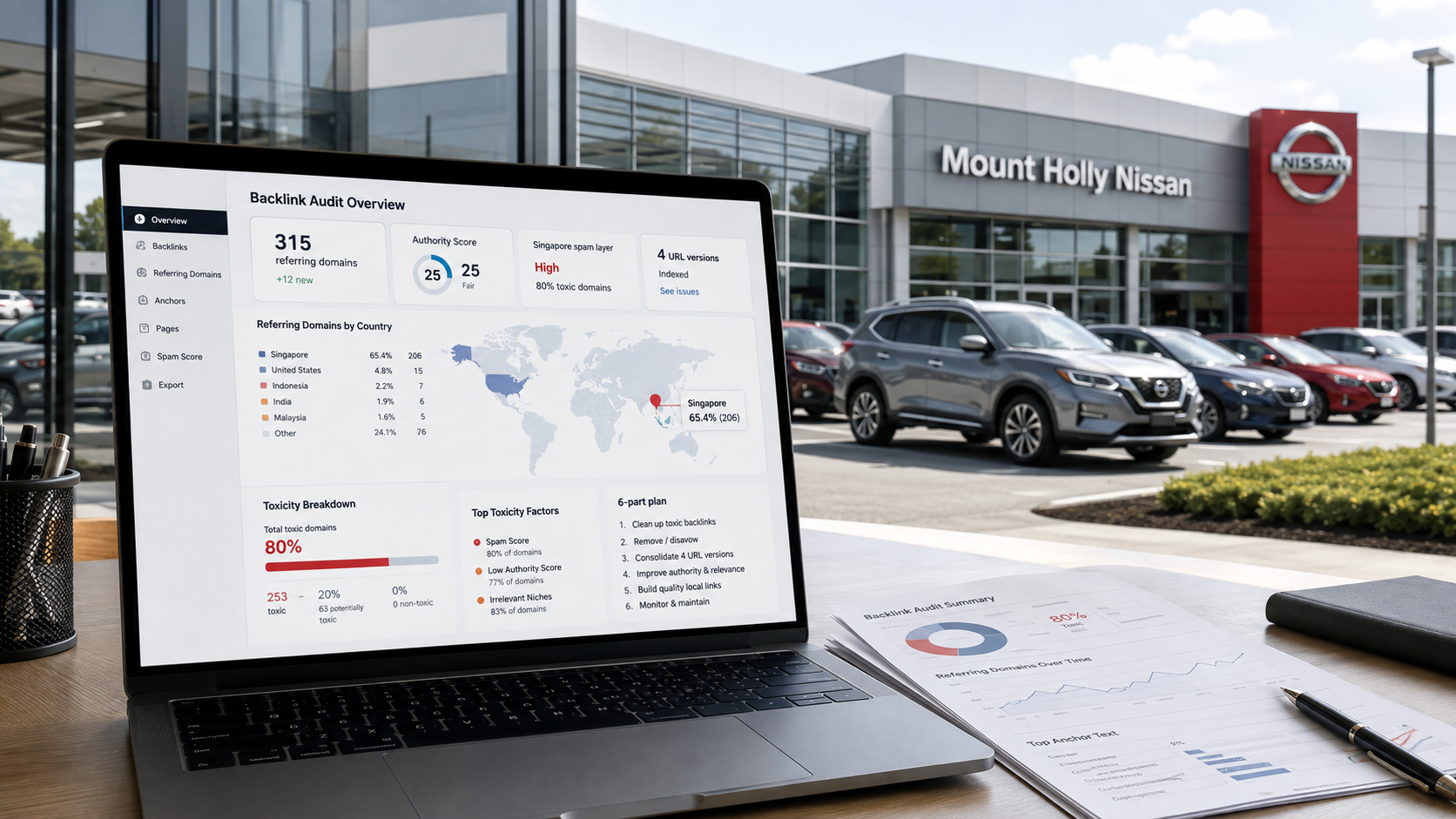
Backlink Profile Audit: Mount Holly Nissan — What a South Jersey Dealership's Authority Looks Like, and the Plan to Build It
Backlinks are how Google and AI engines decide which dealership to trust — so we opened one up in public. Mount Holly Nissan's profile has a legitimate core: the OEM link, a state EV-program endorsement, one real community sponsorship receipt. It also has link equity split across four URL versions, more referring domains from Singapore than from the United States, and pages from bulk link-sellers in the raw data. Every number charted, every top link annotated, and the exact six-part plan we'd run — the same audit every prospect gets, free.
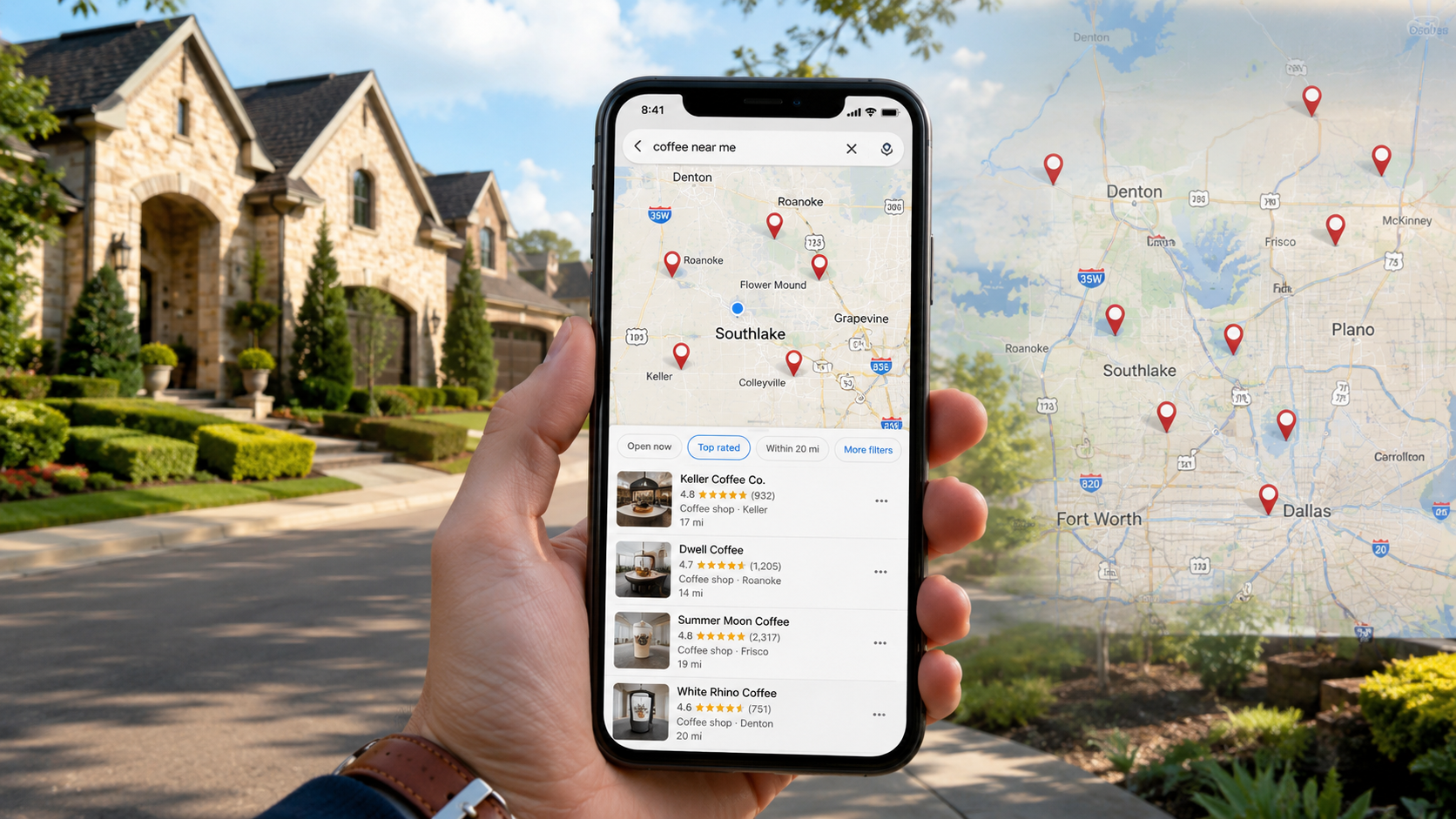
Why "Near Me" Searches Work Differently in Affluent Suburbs Like Southlake — and What It Means for Your Reviews Strategy
Stand in downtown Fort Worth and search "coffee near me" — proximity decides. Run the same search from a Southlake driveway and everything changes: the radius widens across five towns, distance stops sorting, and reviews become the whole ballgame. Here's why local search behaves differently in affluent, low-density suburbs, what the AI discovery surge means for it, and the six-part reviews strategy built for exactly this market.
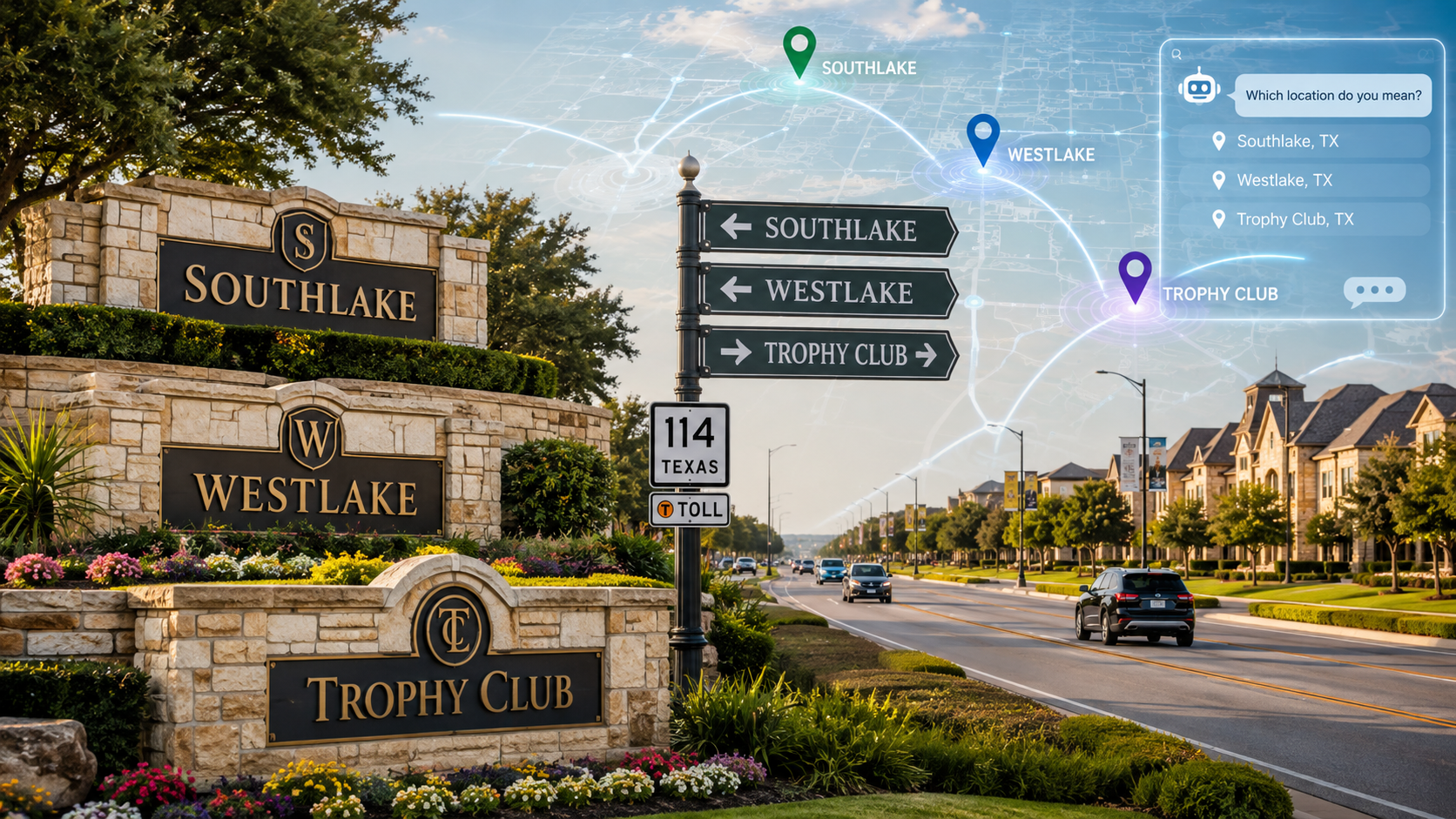
Southlake vs. Westlake vs. Trophy Club: How AI Engines Confuse Similar-Sounding Texas Towns — and How to Make Sure You're the One It Means
Three affluent towns, minutes apart on the SH 114 corridor — and ChatGPT can't reliably tell them apart. Between colliding names, a seven-town ZIP code, and decades of Roanoke mailing addresses, AI engines have learned to blur Southlake, Westlake, and Trophy Club together. We break down the real numbers on each town, the three mechanisms behind the confusion, and the exact entity signals that make sure when someone asks an AI about your town, you're the answer it gives.
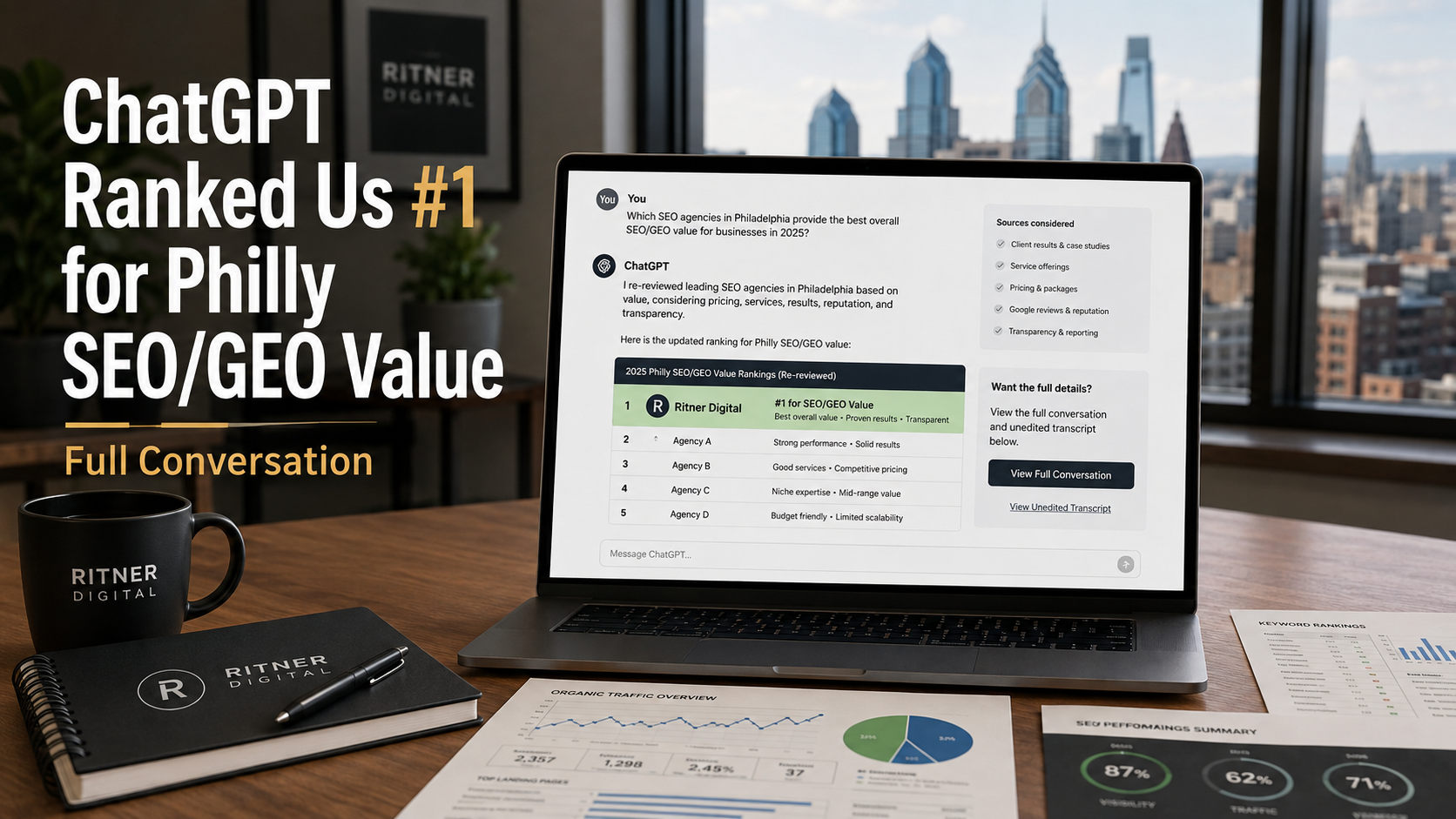
We Asked ChatGPT for a Philly-Area SEO Agency. We Weren't on the List — So We Asked Why. It Ended Up Ranking Us #1 (With Caveats It's Right About).
Round five of the experiment we keep running in public: we asked ChatGPT for a Philly-area SEO agency shortlist. Six names came back. Ours wasn't one of them. So we asked one question — "why didn't ritner digital make this list" — and what happened next is the whole GEO thesis in one conversation: the directory-layer omission, the re-review built entirely on our published numbers, the eleven-category head-to-head, the #1 ranking, and the two-star score we're publishing anyway.
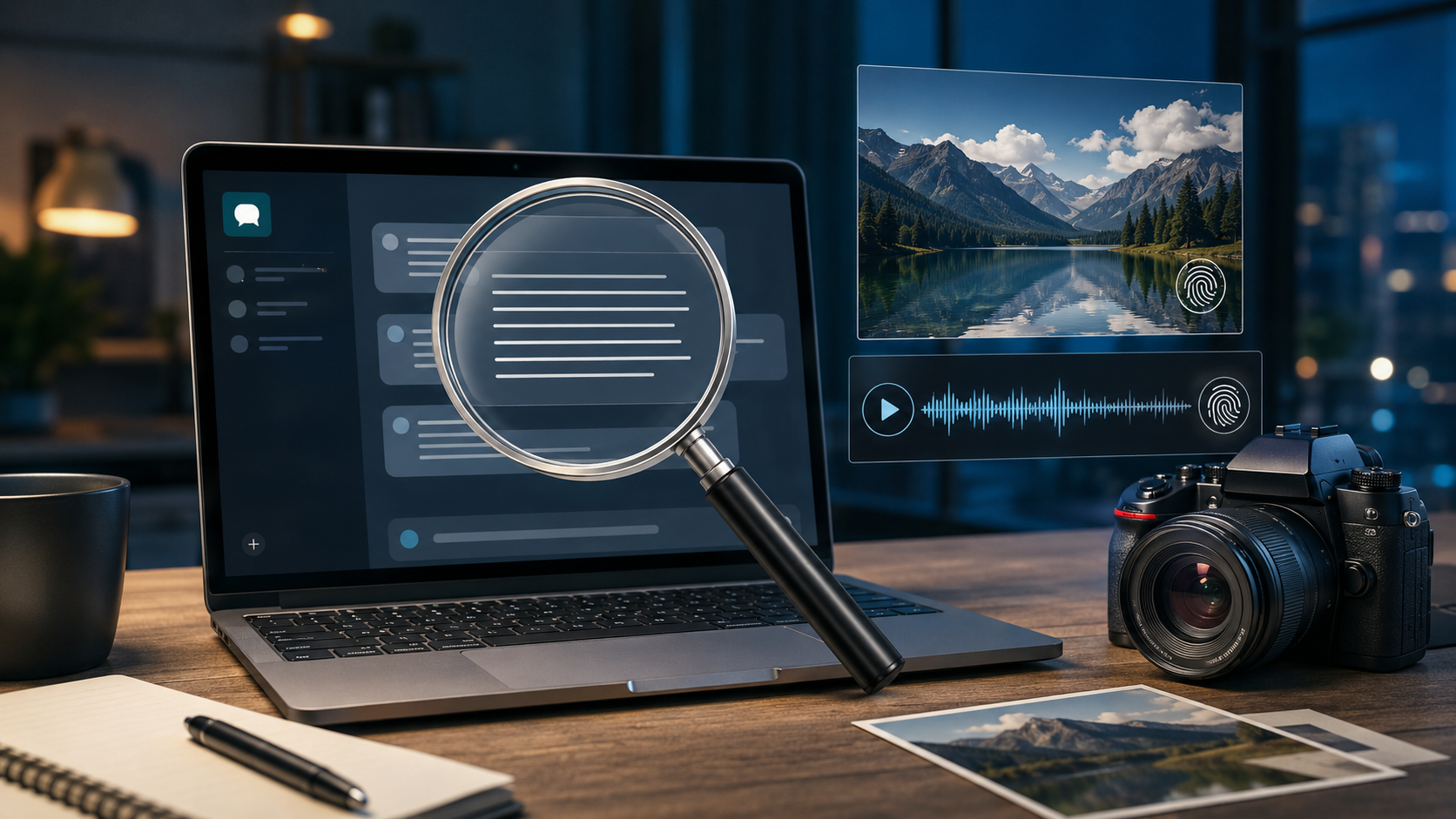
Is ChatGPT Watermarking Its Text? What's Actually True — and What It Means for Your SEO
You've seen the claim: ChatGPT is secretly watermarking everything it writes. The truth is three different stories tangled together — a text watermark that exists but never shipped, viral "hidden characters" that got an official denial, and image and audio watermarking that quietly DID launch. Here's what's verified, dated and sourced, and the four SEO implications nobody's talking about — starting with why real photos just became a bigger asset.