
The Default Stack: AI's Recommendations Are Quietly Building Billion-Dollar Companies. Here's the Mechanism — and What It Means for Yours.
Ask an AI to build you an app and watch which tools it reaches for — the same stack, nearly every time. Being that default answer has become a measurable growth channel, and the receipts are now public: 10% of Vercel's signups arriving from ChatGPT, a Fortune 500 CEO calling AI answers her fastest-growing channel on an earnings call, conversion rates that embarrass organic search. We break down the five mechanisms that form a default — and why, outside developer tools, the cement in your market is still wet.

Is ChatGPT Watermarking Its Text? What's Actually True — and What It Means for Your SEO
You've seen the claim: ChatGPT is secretly watermarking everything it writes. The truth is three different stories tangled together — a text watermark that exists but never shipped, viral "hidden characters" that got an official denial, and image and audio watermarking that quietly DID launch. Here's what's verified, dated and sourced, and the four SEO implications nobody's talking about — starting with why real photos just became a bigger asset.
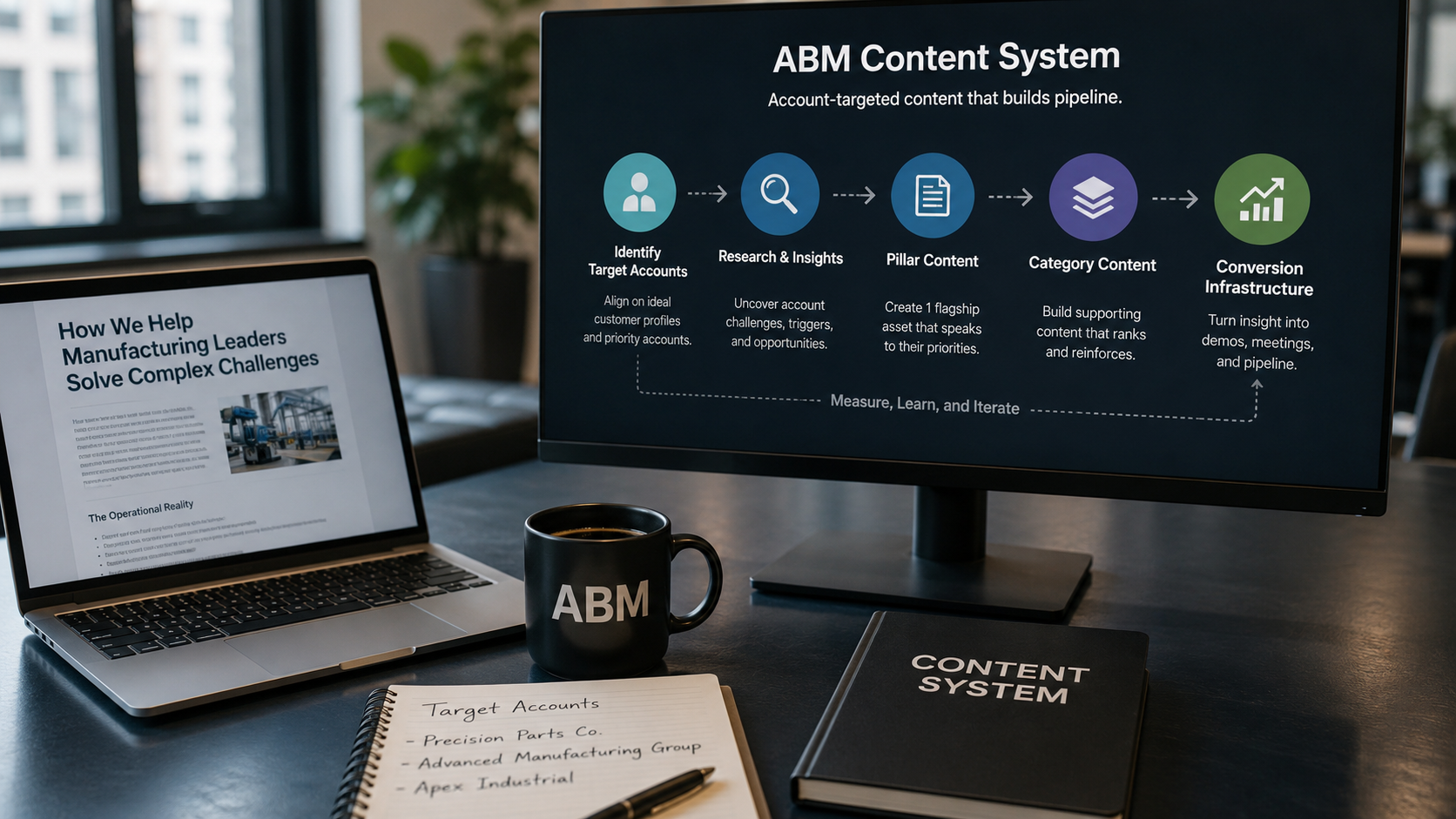
The ABM Content System: How Targeted Blogs Become a Lead Engine
Most B2B companies run one of two broken motions: a blog that ranks for nothing, or outbound that buyers actively resent. Both are underfunded and disconnected. Here's the system we build instead — account-targeted pillar content, category support, and conversion infrastructure, published on a cadence that compounds. Including the honest timeline and who it isn't right for.

ABM Doesn't Have to Mean Email. Your Best Account-Based Play Might Be a Blog Post.
Ask a B2B marketer to describe ABM and you'll hear the same answer: named accounts, intent data, an email sequence, LinkedIn ads. But ABM is a targeting discipline — email is just a delivery mechanism, and it's the one least aligned with how buyers actually behave. Here's the case for running account-based marketing through published content, and the seven-step process for doing it.

How to Create Bank Content That Ranks in Both Google and AI Search
A page can sit at the top of Google and never once get cited by ChatGPT or AI Overviews. That gap is the defining challenge for bank content in 2026. But you don't need two strategies — you need one authority foundation plus an extraction layer. Here's how to create bank content that ranks in Google's links and gets cited in the AI answers your prospects increasingly see first.

Evergreen vs. Timely Content: What Works Best for Bank Blogs
Every bank marketing team faces the same question: write durable guides that rank for years, or timely posts about rate changes that fade fast? It's a false choice. Here's how bank blogs balance evergreen and timely content — the right ratio, which timely topics are worth writing, how to link the two so short-term attention feeds long-term authority, and why quarterly refreshes aren't optional in a YMYL category.
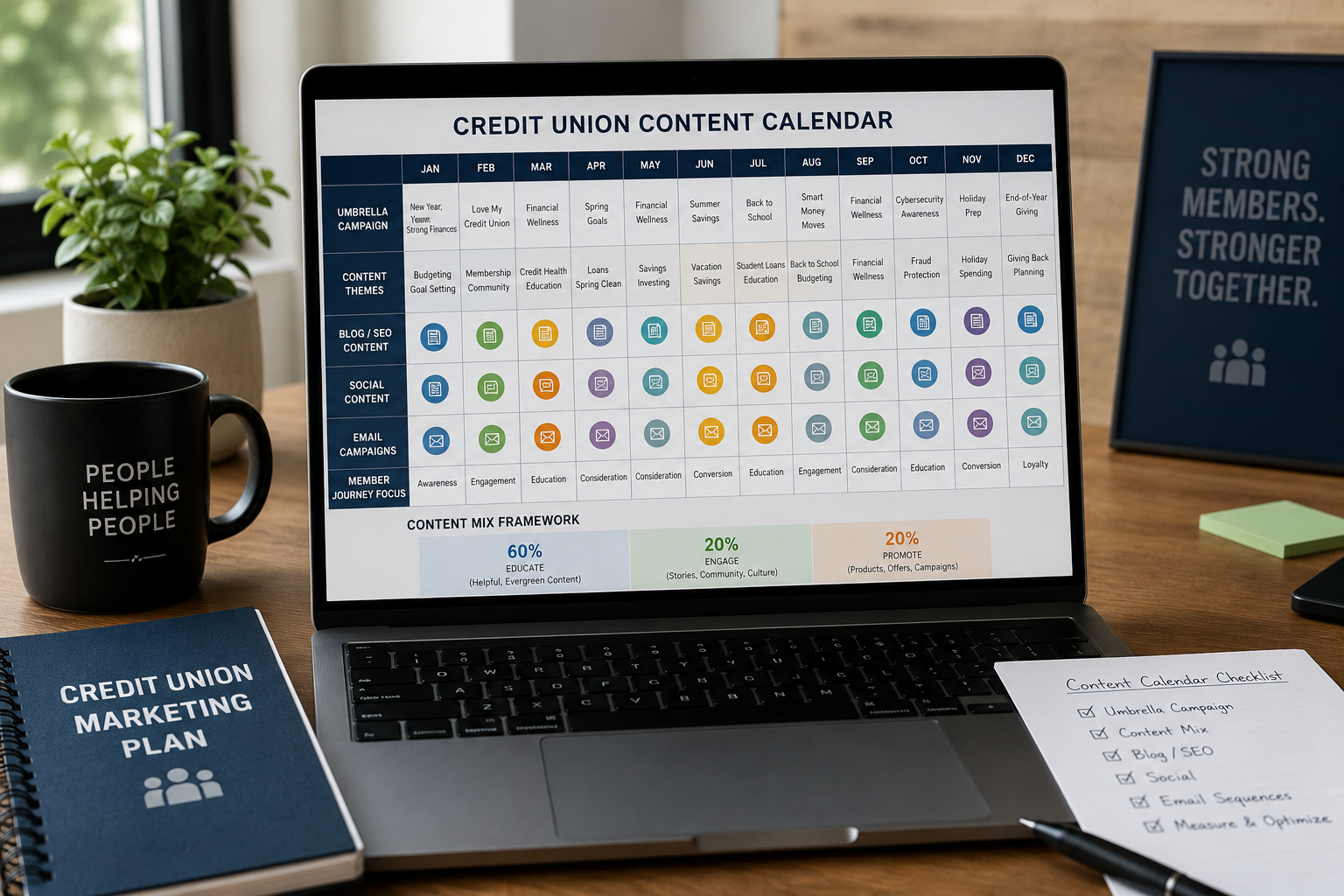
The Content Calendar Template for Credit Union Marketing Teams
If your marketing calendar feels like a string of disconnected one-off campaigns, your members feel it too. Here's the content calendar template for credit union teams — the 60/20/20 content mix, a month-by-month seasonal framework organized under umbrella campaigns, the automated email sequences that should run underneath, and how to measure what it all produces. Replace chaos with a repeatable system.
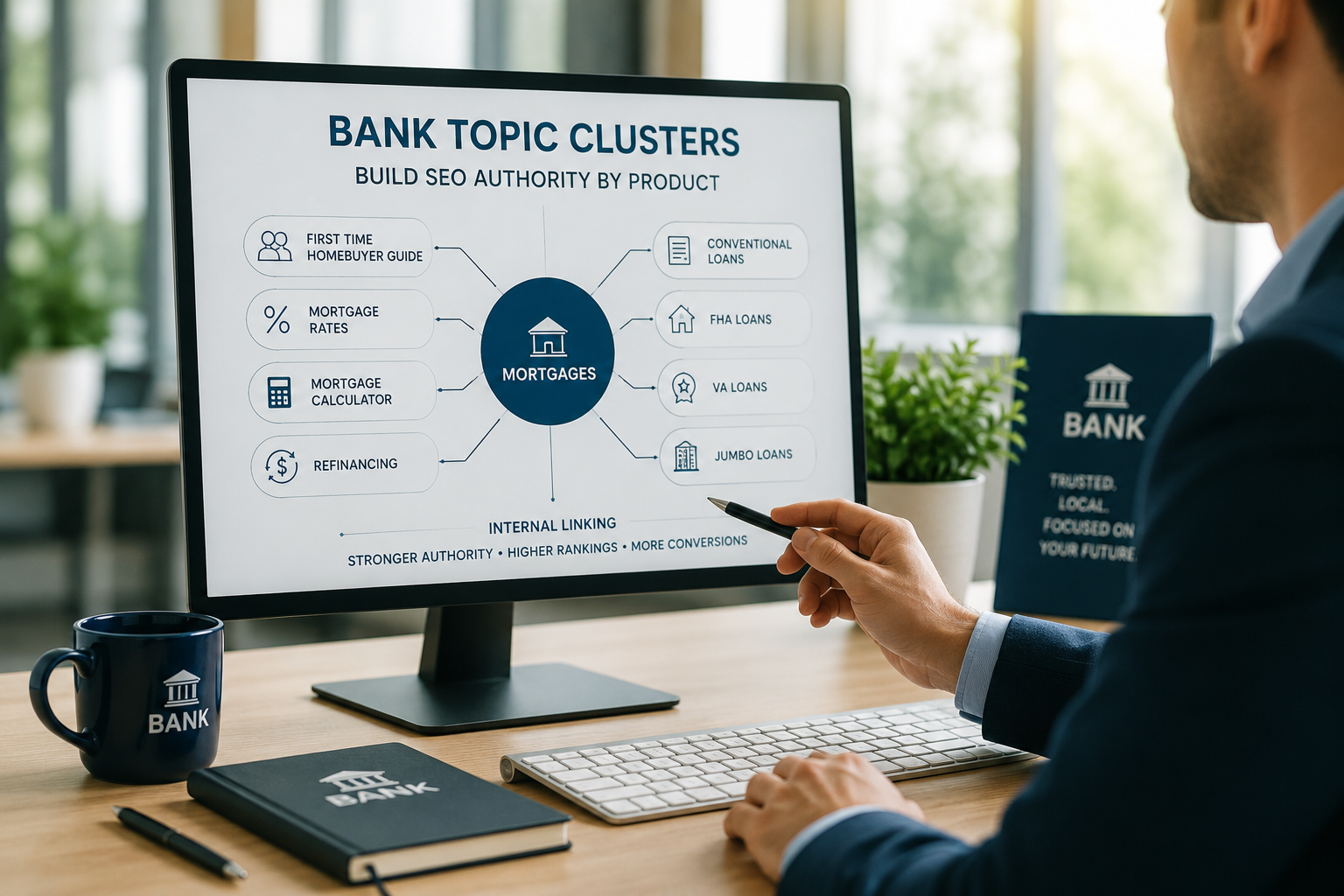
Topic Clusters for Banks: How to Build SEO Authority Around Every Product
Bankrate's mortgage pillar page drives 4.4 million organic sessions a month — and it isn't one brilliant article, it's architecture. Here's how banks and credit unions use the topic cluster model to build SEO authority around every product: pillar pages, 8–15 cluster articles, bidirectional linking, and a structure that earns 3.2x more AI citations than standalone posts.
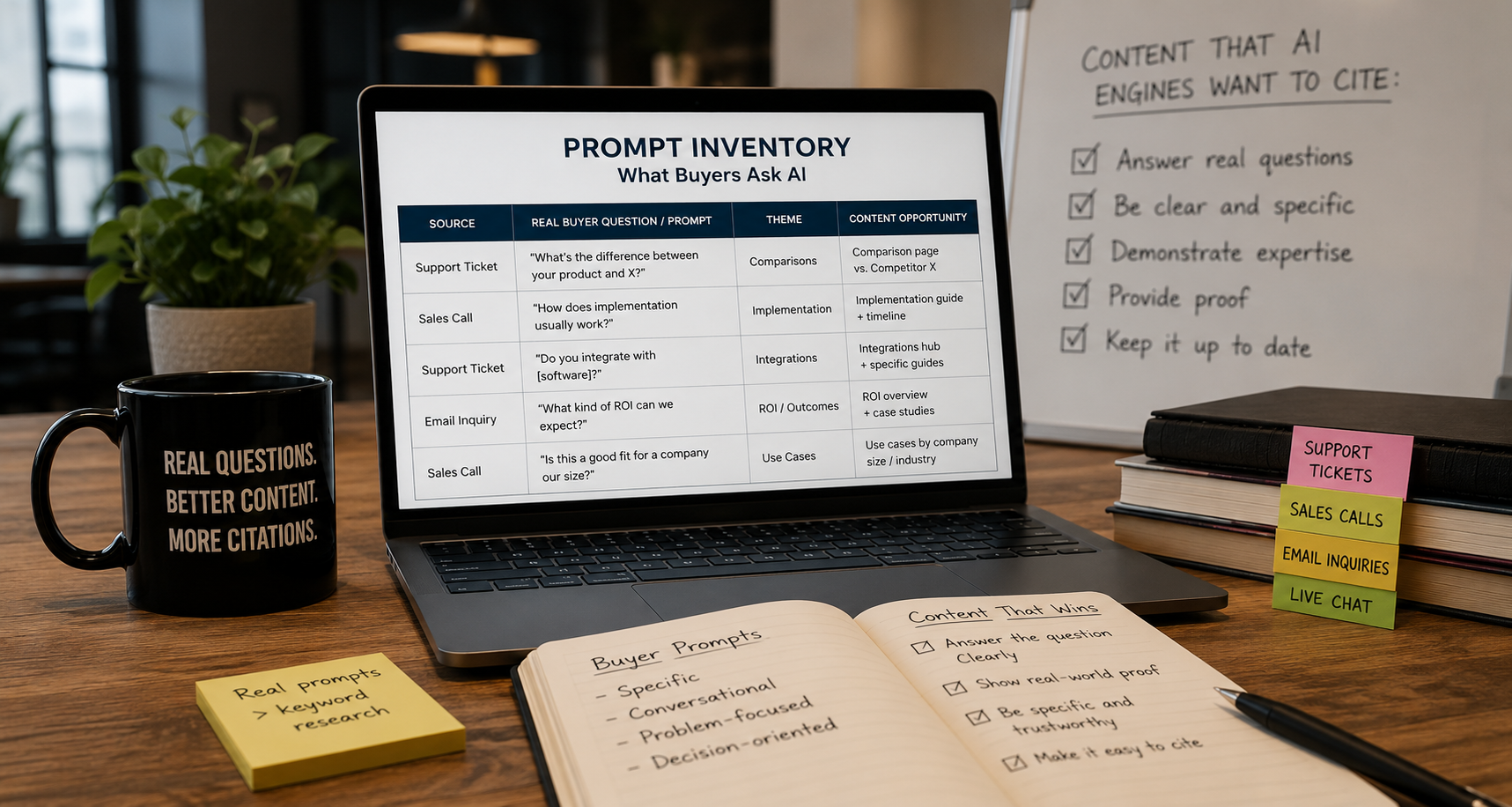
The "Prompt Inventory" Method: How to Find What Your Buyers Actually Ask AI
People don't type at AI engines — they talk to them, in full, specific questions. The new homework isn't keyword research; it's finding the real prompts your buyers ask before they reach you. The best source is free and already yours: your tickets, your inbox, your calls. Here's how to mine it.
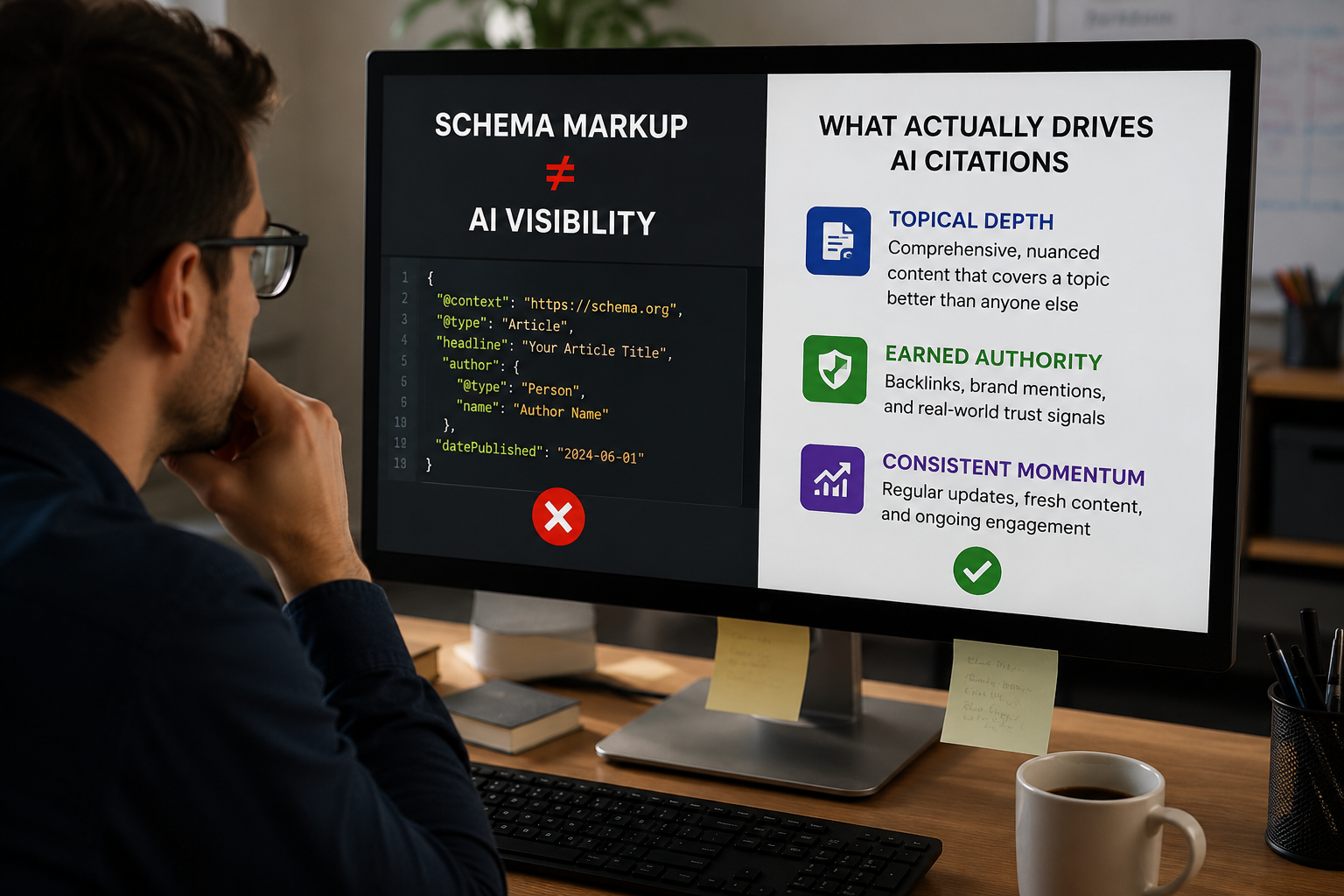
Schema Markup Is Overhyped: Why a Real Content System Beats Structured Data in AI Search Every Time
Bolt on enough JSON-LD and the AI engines will reward you with citations—or so the story goes. But controlled studies show schema barely moves the needle. A real content system built on topical depth, earned authority, and consistent momentum beats schema-obsessed thin sites every time. Here's the evidence.

What Toy Story 5's Record Box Office Teaches Us About SEO and AI Search
The plot of Toy Story 5 follows toys fighting to stay relevant as kids drift to screens — and then the film proved the opposite, posting 2026's biggest box-office debut on the strength of a 31-year-old brand. That's not a movie lesson; it's a search lesson. The same forces that made Toy Story 5 a guaranteed blockbuster — compounding brand equity, deep trust signals, and a crystal-clear identity — are exactly what determine whether your brand gets found in Google and cited by AI engines like ChatGPT and Perplexity. Here's the playbook.

The "Pour Gasoline on It" Mentality: Marketing Lessons from Vayner, Serhant, and the Operators Who Mastered Attention
There's a rare breed of operator who doesn't see marketing as a budget line — they see it as a fire, and their genius is knowing exactly where to pour the gasoline. Gary Vaynerchuk, Ryan Serhant, and the masters of the attention economy cracked the game years before the search world caught up. The principles that made them legends — relevance over reach, volume over polish, owning your distribution, amplifying what's proven — are now almost word for word the rules that decide whether Google ranks you and ChatGPT cites you. Here's what we can learn.

Beyond the Legal Directory: How Law Firms Earn Direct Revenue Through Search Engines and AI
The directory contracts are up for renewal, the invoices keep climbing, and a partner finally asks: what are we actually getting for this? For a growing number of firms, the answer is "not enough." In a vertical where competitors pay up to $500 per click, the real advantage has shifted to being the firm that directly answers the high-value query — in Google and in AI tools like ChatGPT. Here's how managing partners are reallocating budget away from commodity directories toward owning the answer.
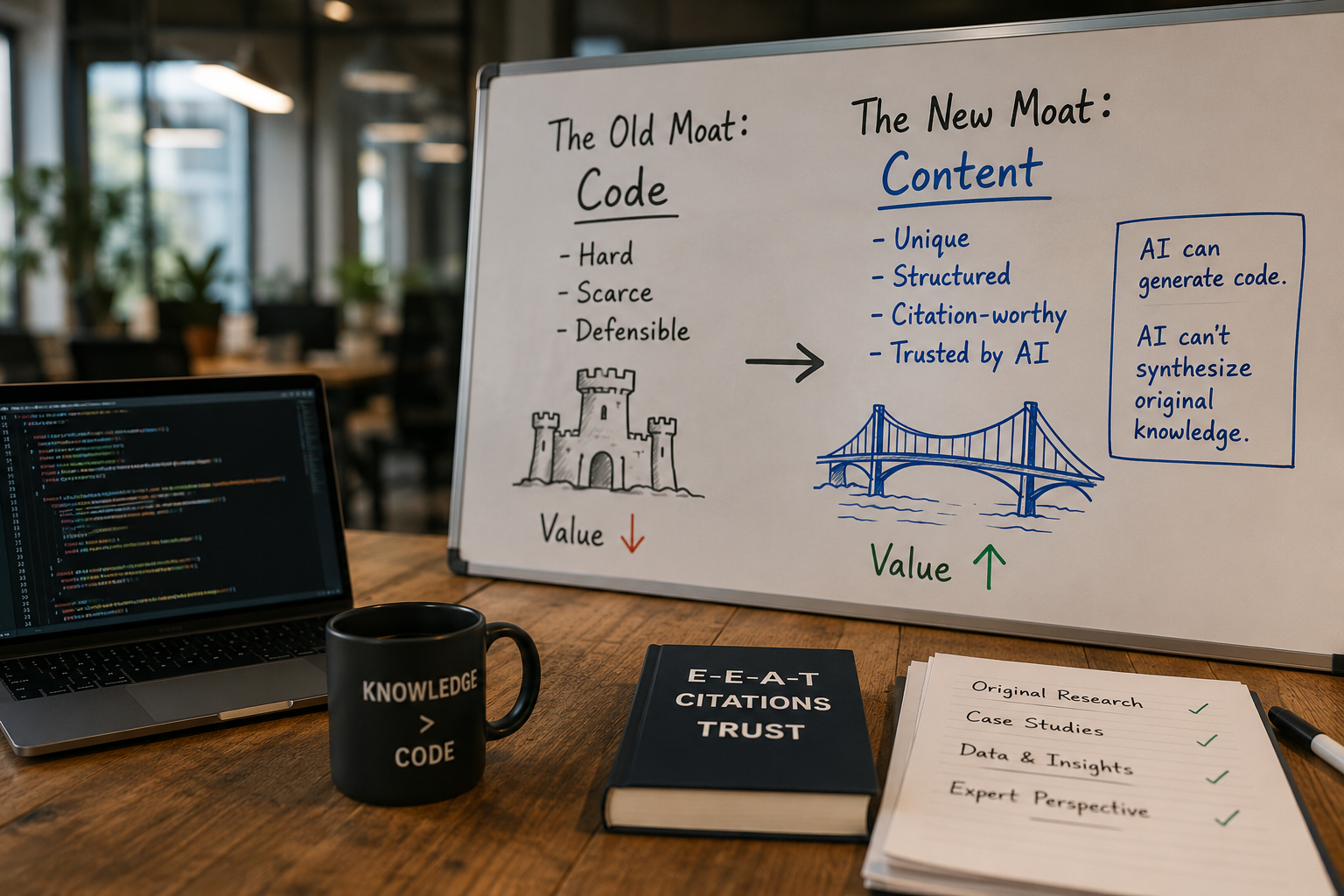
Code Got Cheap. Content Got Priceless: Why Your Digital Knowledge Now Matters More Than Your Software
For thirty years, the hard part of building a digital business was building the software — code was the moat. That world is ending. AI has quietly commoditized programming: it can write, refactor, and review code faster and cheaper than any team, so the ability to build is no longer the bottleneck. When the hard thing becomes easy, its value collapses and scarcity moves elsewhere. It has moved to high-quality, structured, citation-worthy content and data — the unique knowledge AI can't synthesize, which both differentiates you from a sea of look-alikes and builds the trust AI engines rely on to recommend you. Here's why your knowledge, not your code, is now the advantage.

Navigational, Informational, Transactional: The Three Types of Search Queries (and Why They Matter More in the AI Era, Not Less)
Every search starts with a goal: find a site, learn something, or buy something. Those goals map to the three classic types of search queries — navigational, informational, and transactional — and getting them right is one of the highest-leverage things any brand can do for visibility. But the framework was built for ten blue links, and that world is dissolving. Here's how each query type works, how to map content to it, and what they look like now that AI Overviews, ChatGPT, and Perplexity are answering searches before anyone clicks.
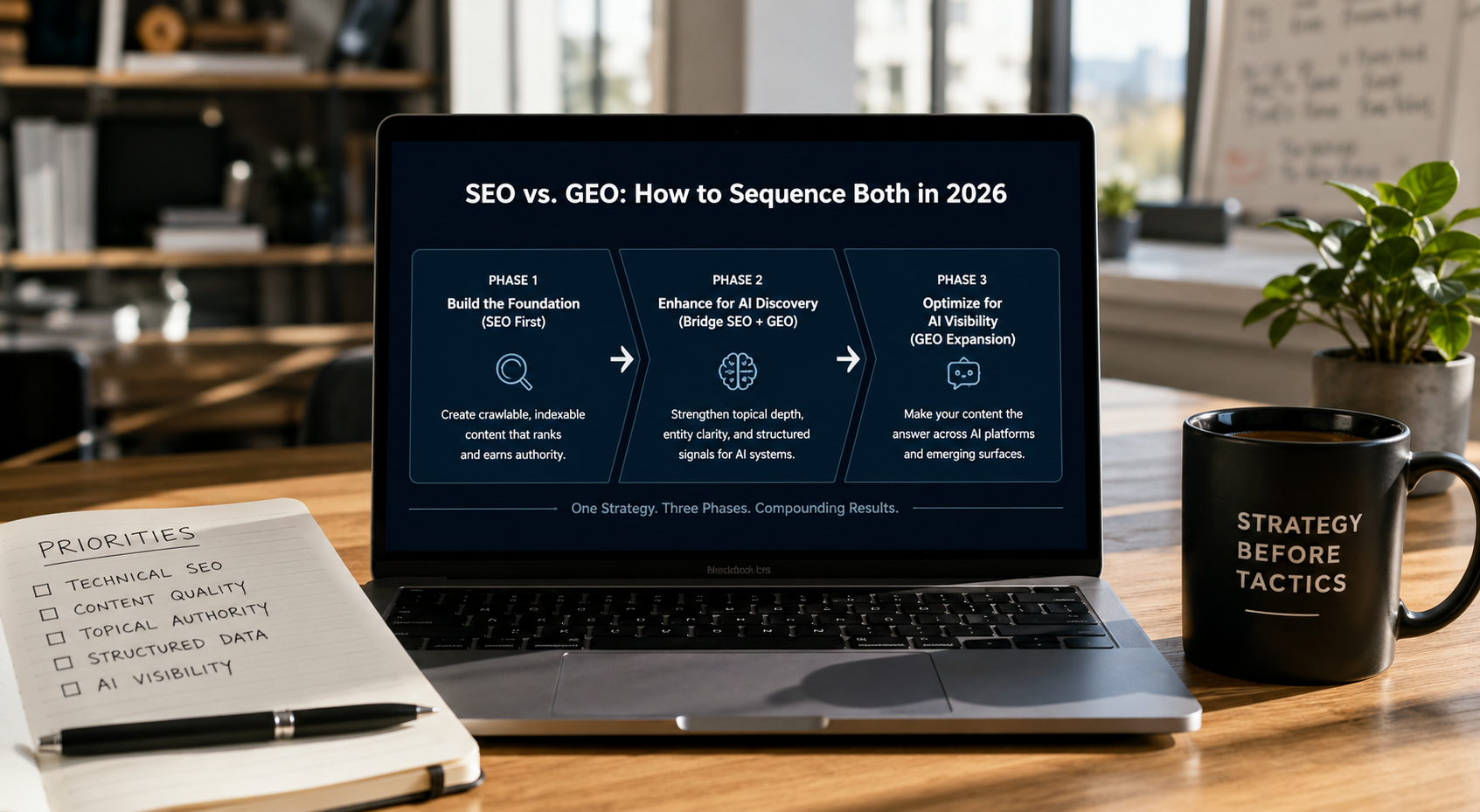
Traditional SEO vs. GEO: You Don't Have to Choose — But You Do Have to Sequence
Every team with a finite budget hits the same wall: an expert says "invest in GEO now," and you're left wondering whether to stop doing SEO, split the budget, or where to even start. The advice online argues two useless extremes — SEO is dead, or GEO is a fad. Both are wrong. The truth is that SEO and GEO share most of their underlying foundation, so you don't have to choose between them. But with limited bandwidth, you do have to sequence them — and doing the work in the wrong order wastes effort while the right order makes each phase reinforce the next. Here's a tactical, three-phase framework for figuring out exactly where to put your next hour.
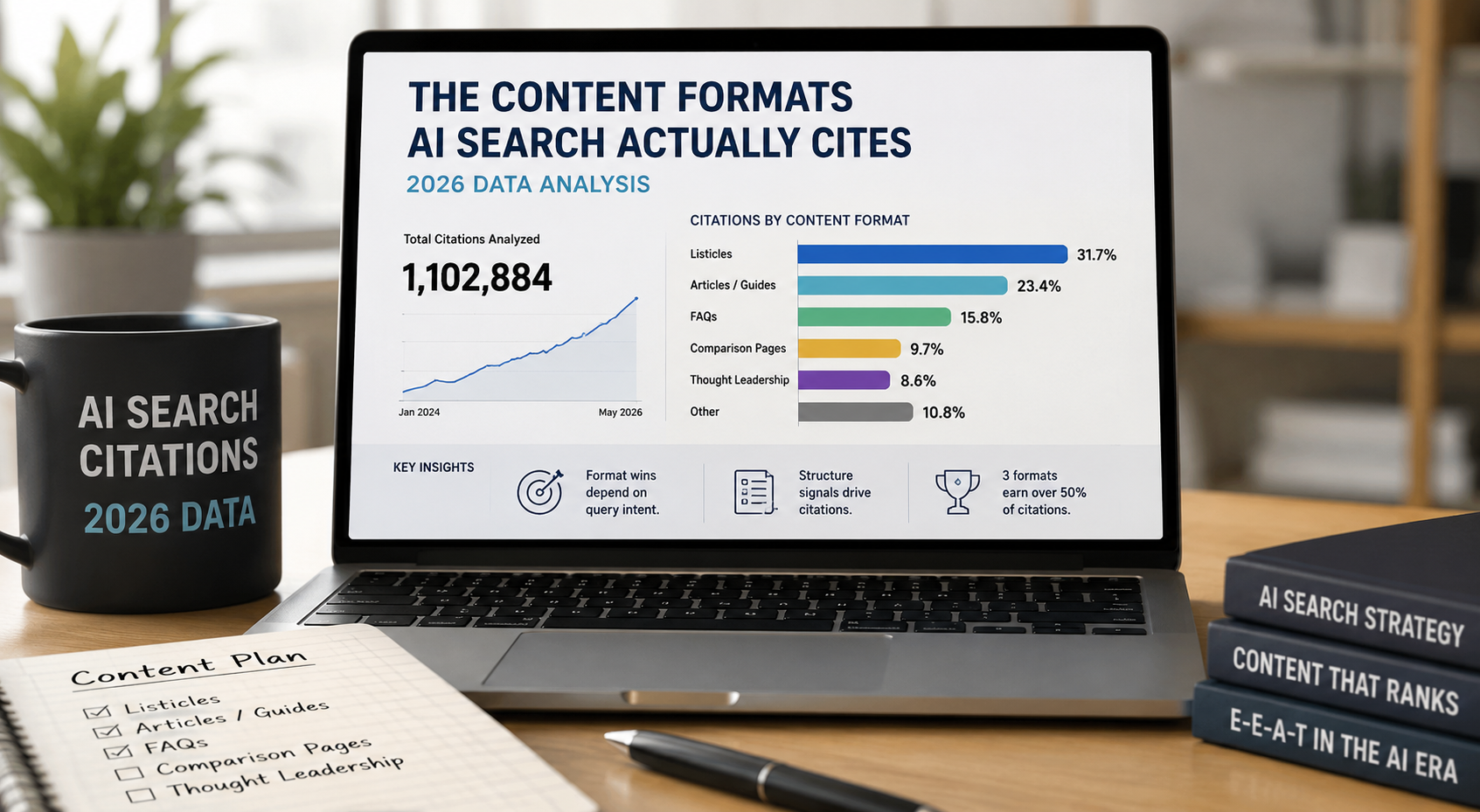
The Content Formats AI Search Actually Cites (Based on What We're Seeing Across Clients)
Most advice about "writing for AI search" is vibes: be helpful, be authoritative, answer questions. True, but useless as a content plan — none of it tells you which formats actually earn the citation. The 2026 citation studies finally do. Across more than a million analyzed citations, three formats earn over half of them, the winning format depends almost entirely on query intent, and a specific set of structural signals separates the cited from the ignored. Here's what the data shows about listicles, articles, FAQs, comparison pages, and thought leadership — and how to build a content plan around what AI actually rewards.

How AI Search Changes the B2B Buying Journey (And What It Means for Your Content Strategy)
For years you've built marketing around one number: two-thirds of the buying journey happens before a prospect talks to sales. That insight was right — it's just become far more extreme, and the mechanism changed entirely. A huge share of pre-sales research now happens inside AI conversations you'll never see, where the shortlist forms before your sales team knows the buyer exists. With 80% of deals going to the pre-contact favorite, the brand chosen in that invisible room usually wins. Here's how AI search inverted the funnel — and how to reorient your content strategy to show up at every stage.

The GEO Audit: 7 Things to Check If You're Not Showing Up in AI-Generated Answers
You typed the question into ChatGPT yourself — "best company for [what you do]" — and your name wasn't in the answer. A competitor's was. That sting is one of the most common experiences in marketing right now, and one of the most fixable. Showing up in AI-generated answers isn't luck or a black box; it's the product of specific signals AI systems use to find, understand, trust, and cite your brand. This tactical GEO audit walks through the seven things to check — from crawler access and schema to entity clarity, citation-ready formatting, and third-party validation — in the order that actually matters.
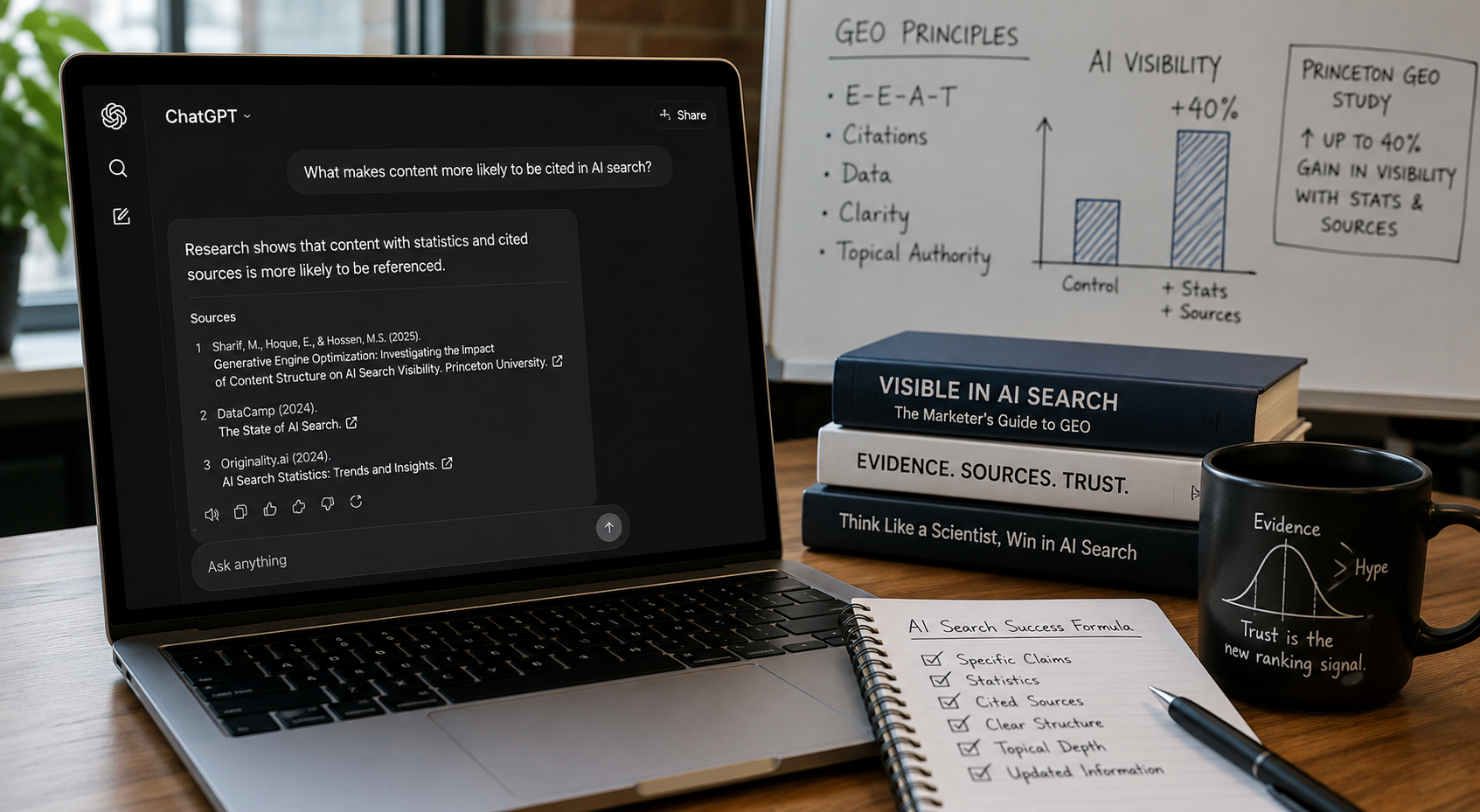
AI Search Rewards the Marketer Who Thinks Like a Scientist
AI search has quietly flipped the rules of marketing. Where the old playbook rewarded bold claims and clever copy, ChatGPT, Perplexity, Gemini, and Google's AI Overviews reward the opposite instinct: specific claims, cited sources, and verifiable data. These engines behave like cautious peer reviewers, citing only what's safe to repeat — and the foundational Princeton GEO study found that adding statistics and citing sources boosted visibility by up to 40%, the most effective tactics tested. This deep dive explains why AI search favors rigor over hype, what the research actually shows, and how marketers who learn to think like scientists will become the sources AI trusts.