SEO for Baseball Training Facilities: The Complete Guide
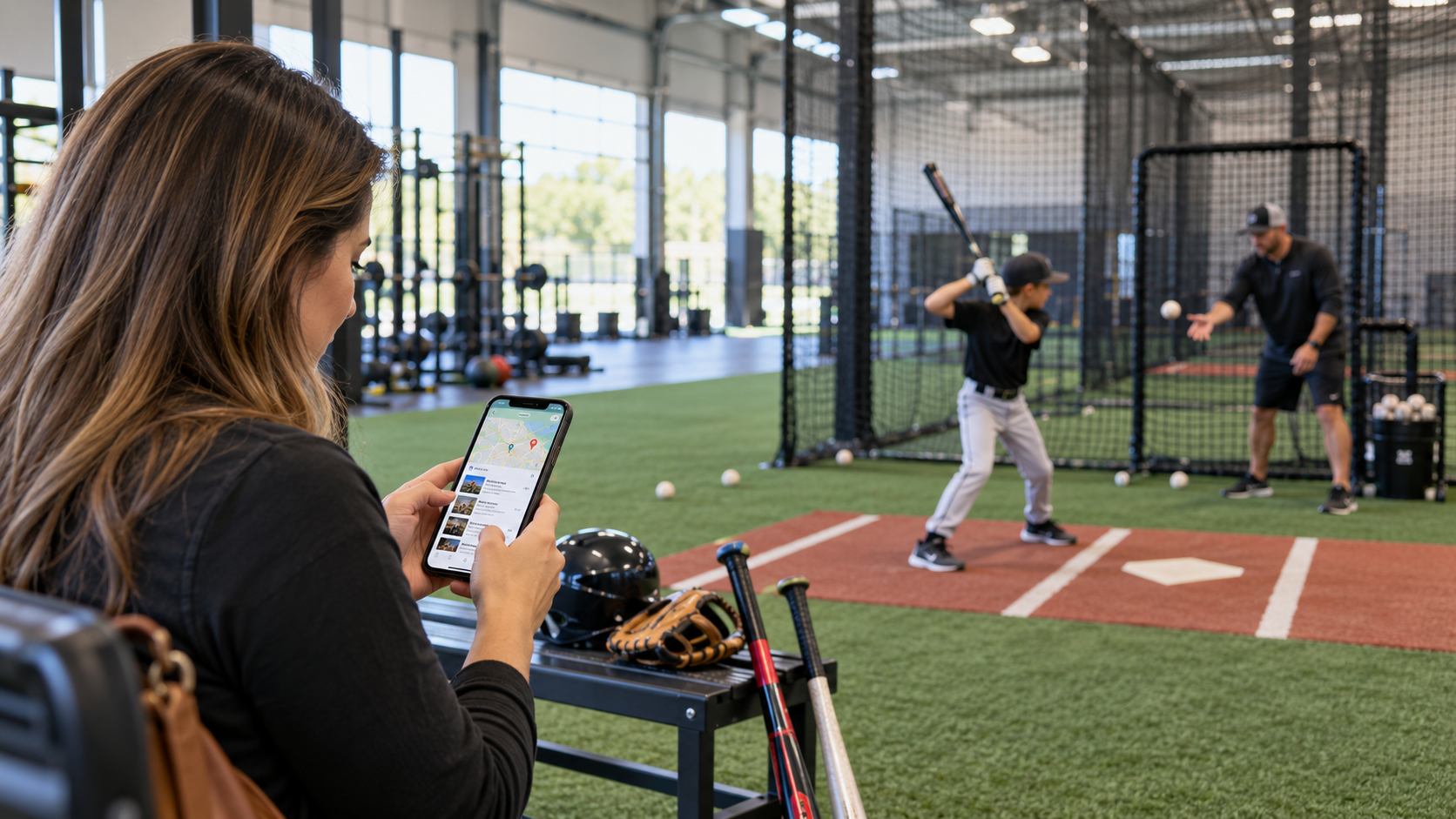
If you run a baseball training facility, your next customer is a parent holding a phone in a parking lot after a Little League game. They type "pitching lessons near me" or ask ChatGPT "where should my 12-year-old go for hitting lessons in South Jersey?" Whoever shows up in that moment gets the call.
Most baseball facilities don't show up. They have great coaches, a clean cage and a waitlist in February, then a quiet facility in August. The website was built by a player's dad in 2019, the Google Business Profile lists the wrong hours, and the only reviews are from three years ago.
This guide is the plain-English version of what we would do if you handed us the keys to your facility's search presence. It covers Google Business Profile, keyword research, site structure, content, reviews, technical fixes, link building, the baseball calendar, and how AI search is changing where parents find you. No fluff, no promises of page one in 30 days. Just the work that compounds.
Why search is where baseball families find you
Baseball families are spending real money, and they research before they spend it. The Aspen Institute's national parent survey found the average sports family spent $1,016 on a child's primary sport in 2024, up 46% since 2019. Baseball was the most expensive of the three most-played youth sports, and baseball parents spent more on lessons, camps and training schools than soccer or basketball parents did. Baseball spending alone rose 68% in five years.
The player pool is growing too. The Sports & Fitness Industry Association's 2026 topline report shows team sports participation passed 90 million Americans for the first time, with baseball among the leading sports across youth age groups. Aspen also reports that organized youth sports participation rose to 58% in 2024.
Put those together and you get a simple picture. More kids are playing, parents are paying more per kid, and a big share of that money goes to exactly what you sell: private lessons, clinics, camps and cage time. Parents don't pick a private pitching coach at random. They search, they read reviews, they ask other parents, and increasingly they ask AI assistants.
The facility that owns those searches in its area doesn't need to discount lessons or buy Facebook ads every February. It gets a steady flow of calls because it is the obvious answer when a parent looks.
Google Business Profile: your most valuable free asset
For a baseball facility, the Google map results matter more than almost anything on your website. When a parent searches "batting cages near me," the map pack shows up first, and most of the decision happens there.
Google is open about how it ranks those results. Its own help page says local results are mainly based on relevance, distance and prominence. You can't move your building, so distance is fixed. Relevance and prominence are where the work is.
Here is what a complete, competitive profile looks like for a baseball facility:
Primary category that matches your core business. Pick the closest fit for what most customers come for, such as a batting cage or a baseball-focused training category, then add secondary categories for other services. Google explains how categories work in its category guide.
Services listed one by one. Pitching lessons, hitting lessons, catching lessons, speed and agility, strength training, cage rentals, team rentals, camps, clinics. Each is another chance to match a search.
Accurate hours, including seasonal and holiday hours. A parent who drives over on a Sunday and finds the doors locked leaves a one-star review. Google lets you set special hours for holidays and events.
Real photos and short videos. Cages, the mound, the weight room, a coach working with a player (with parent permission), the parking lot and the entrance. Google's photo guidance is worth a read.
Attributes. Wheelchair access, restrooms, Wi-Fi, parking. These answer the practical questions parents have before a first visit.
Posts. Camp registration, holiday clinics, a new coach, tryout prep sessions. Posts keep the profile active and give parents a reason to click.
Answers ready for Ask Maps. Google retired the old Q&A section and replaced it with Ask Maps, a Gemini-powered feature. BrightLocal reports its answers draw on your profile, reviews and website first. Put ages served, what to bring and your cancellation policy where the AI can find them.
If you run multiple locations, each one needs its own verified profile and its own location page on your site. Don't use a coach's home address or a P.O. box. Google's guidelines are strict about that, and a suspended profile can take weeks to restore.
Keyword research: search the way parents talk
Baseball keywords split into a few clear buckets, and each one deserves its own page. The mistake most facilities make is trying to rank one homepage for everything from "batting cages" to "college showcase prep."
Start with a free set of tools. Google's Keyword Planner shows estimated monthly searches for the phrases you enter, though you need a Google Ads account with billing set up to use it. Google Search Console shows the searches that already bring people to your site. Google Trends shows when interest peaks through the year.
Then do the part no tool does: ask your front desk and your coaches what parents say on the phone. "Do you do lessons for 8-year-olds?" "Can my travel team rent a cage on Tuesday nights?" "Do you work with high school catchers on pop times?" Those exact questions are keywords, and they are often the ones competitors ignore.
Don't chase national terms like "baseball training" with a single local facility. You will not outrank national brands and equipment makers there, and those searchers are not your customers anyway. Win your town, your county and your specialty first.
Site structure: one page per thing you sell
The fastest SEO win for most baseball facilities is splitting one crowded "Services" page into focused pages. Each page targets one kind of search and answers everything a parent needs to book.
A simple structure that works for most single-location facilities:
/lessons/ with child pages for /pitching-lessons/, /hitting-lessons/, /catching-lessons/ and /fielding-lessons/
/programs/ with /winter-clinics/, /summer-camp/, /strength-and-speed/ and /college-recruiting-prep/
/rentals/ for cage, turf and team rentals, with rates and a booking link
/coaches/ with a profile page for every instructor
/teams/ if you run travel or academy teams, with tryout dates
/blog/ or /resources/ for guides and parent questions
/faq/, /contact/ and a location page per facility
Google's SEO Starter Guide recommends descriptive URLs with words that help people understand the page, and keeping each piece of content at one URL rather than duplicating it. That rules out the common habit of posting the same camp flyer on three pages.
Every lesson or program page should answer the questions that stop a parent from booking:
Who it's for: ages, skill levels, positions
What happens in a session, in plain words
Who coaches it, with a link to their profile
How long it runs and what it costs, or at least a starting price
What to bring and where to park
How to book, with the button above the fold on mobile
Prices are the one detail facilities most often leave off. Leaving them off doesn't make the phone ring more. It sends parents to the competitor who lists them. If pricing varies, give a range or a starting point.
Use internal links with clear anchor text. Your pitching lessons page should link to your pitching coach's profile, your arm care guide, and your velocity program. Those links help parents move through the site and help Google understand how your pages relate.
Content that ranks: put your coaches' knowledge on the page
Your biggest content advantage is something no national site has: coaches who work with local kids every day and know what they struggle with. The job is getting that knowledge out of their heads and onto your site.
Google's guidance on helpful, people-first content asks whether content shows first-hand experience and whether it's clear who wrote it. Google also says plainly that E-E-A-T (experience, expertise, authoritativeness, trust) isn't a ranking factor by itself. It describes the kind of content its systems try to reward. For a baseball facility, that means real coaches, real sessions and real advice with a name attached.
Content ideas that work well for training facilities:
Parent guides. "What age should my child start pitching lessons?" "Private lessons vs. clinics: which is right for your player?" "How to choose a travel team."
Arm care and workload. Explain how your coaches apply MLB and USA Baseball's Pitch Smart guidelines to their lesson plans. Link to the guidelines and add your staff's practical take.
Development explainers. What a hitting assessment measures, how you use video or sensors, what a realistic velocity progression looks like for a 14-year-old.
Recruiting help. How the college recruiting timeline works, what a skills video should include, and how showcase events fit in.
Local guides. Spring league signup dates in your area, high school tryout prep, best public fields for extra work.
Success stories. With permission, show how a player progressed. Specifics matter: what you worked on, over how long, and what changed.
Every post needs a byline and a short author bio linking to the coach's profile page. Coach profiles should list playing and coaching background, certifications, specialties and ages they work with. A former college pitcher who coaches 12U arm care is exactly the expertise parents and Google look for.
Video is a natural fit for baseball. A 60-second clip of a coach explaining a drill, embedded on the relevant page with a written summary, helps parents trust you and gives you material for YouTube and social media. Google's starter guide recommends placing videos on pages near relevant text with clear titles and descriptions.
Aim for a steady pace you can sustain, such as two solid posts a month, rather than a burst of twenty thin ones in January. Google explicitly warns against writing to a word count or mass-producing content on topics you have no expertise in.
Reviews: the scoreboard parents check first
Reviews help you rank and they help you close. Google lists review count and rating as part of prominence, and parents read them before they ever call.
BrightLocal's Local Consumer Review Survey 2026, a panel of 1,002 U.S. adults, found:
97% of consumers read reviews for local businesses
47% won't use a business with fewer than 20 reviews
74% only care about reviews written in the last three months
68% will only use a business with four stars or more, up from 55% the year before
89% expect the owner to respond, and 50% are put off by generic, templated replies
83% of people who were asked to leave a review went on to leave one
That last number is the one that matters for a baseball facility. Happy parents are everywhere in your building. They just need to be asked at the right moment.
The right moments in baseball are easy to spot:
The day a player hits their first ball over the back net in the cage
After a radar gun reading jumps
The week a player makes their high school team or a travel roster
The end of a camp week or a winter clinic session
When a college coach reaches out to a player you've trained
Make asking easy. Put a QR code at the front desk and in the cages. Send a short text with your Google review link after the fourth or fifth lesson. Ask coaches to mention it when a parent thanks them in person.
Prompt for detail. A review that says "Coach Mike fixed my son's changeup grip and his command improved in three weeks" helps far more than "Great place!" It gives other parents specifics, and BrightLocal notes that Google's Ask Maps pulls details from reviews into its answers.
Reply to every review, in a real voice, within a few days. Thank the family by name when appropriate and mention the program. Handle negative reviews calmly and take the details offline.
Never buy reviews, write them yourself, or offer a discount only for positive ones. The FTC's rule on fake reviews makes that illegal, and Google removes reviews that break its policies. Asking every family, happy or not, is both allowed and effective.
Technical SEO: fast, mobile and easy to book
Most parents find you on a phone, often between games. If your site is slow, hard to tap, or hides the booking button, they go back to the search results and pick someone else.
Google recommends good Core Web Vitals, its measures of real-world page experience. The targets are simple to remember:
You can check yours free in Search Console's Core Web Vitals report or at PageSpeed Insights. The usual culprits on facility sites are huge uncompressed photos of the cages, autoplay video headers and a pile of third-party booking and chat scripts.
Other technical basics worth checking:
Booking that works on mobile. Many facilities use third-party schedulers. Make sure the booking page loads fast, and link to it from every lesson and rental page rather than burying it in a menu.
Consistent name, address and phone. Your NAP details should match exactly across your site, Google Business Profile, Apple Maps, Bing, Facebook and Yelp.
Structured data. Add LocalBusiness markup so search engines can read your address, hours and phone reliably. Schema.org has a specific type, SportsActivityLocation, that fits a training facility. Use Event markup for camps and clinics with fixed dates.
Indexing. Submit an XML sitemap in Search Console, and check that last year's camp pages either redirect to this year's or are updated in place.
HTTPS and a clean URL setup. One version of the site, secure, with no duplicate pages for www and non-www.
Here's a simplified example of what LocalBusiness markup looks like for a baseball facility:
Validate any markup with Google's Rich Results Test before you publish it.
Links and local partnerships: the baseball community already vouches for you
Google names links as part of prominence in its local ranking guidance: how many websites link to your business matters. The good news for baseball facilities is that the local baseball world is full of organizations with websites, and you probably already work with half of them.
Places to earn real, relevant links and mentions:
Little Leagues and rec leagues. Sponsor a team or a field sign and ask to be listed on the league's sponsor page with a link. Offer a free clinic for coaches before the season.
High school programs and booster clubs. Host a preseason workout, donate cage time for a fundraiser, or run a free arm-care talk for pitchers and parents.
Travel organizations. If teams rent your cages all winter, ask to be listed as their training home on their site.
Local media. A player you trained gets drafted or commits to a college program. That's a local story, and you are part of it. Pitch it to your town paper or patch site with the family's permission.
Chamber of commerce and town directories. Unexciting, but consistent listings on local business directories help confirm your details.
Physical therapists and sports medicine practices. Many refer players to training facilities after rehab and vice versa. A shared resource page makes sense for both.
Original data. If you track things like average exit velocity by age group across hundreds of assessments, publish anonymized results once a year. Coaches and local media link to real numbers.
Skip paid link schemes and spammy directories. One link from your local Little League's site is worth more than a hundred from sites nobody reads, and paid links can violate Google's spam policies.
Social media matters here too, even if it isn't a direct ranking factor. Baseball families live on Instagram and YouTube. Clips of players in your cages spread your name, bring branded searches, and often earn mentions and links you didn't have to ask for.
Seasonality: plan SEO around the baseball calendar
Baseball demand follows the season, and SEO takes time to kick in. That means you publish and update pages one to three months before parents start searching, not the week registration opens.
The exact timing varies by region. A facility in Florida sees different peaks than one in New Jersey, where winter drives parents indoors. Check Google Trends for terms like "batting cages" or "baseball camp" in your state to see your own curve.
Three habits make seasonal content work:
Keep one evergreen URL per program. Use /summer-camp/ every year and update it, instead of creating /summer-camp-2025/ and /summer-camp-2026/. The page keeps its history and links.
Update dates, prices and photos each year. A camp page showing last year's dates tells parents and Google that nobody is minding the site.
Post to your Business Profile when registration opens. It's quick, it shows on your listing, and it gives Ask Maps and AI tools fresh information.
Your slow months are the best time to do the heavy lifting: rewriting service pages, filming coach videos and building links. When the rush comes, the work is already indexed.
AI search: getting named when parents ask ChatGPT
Parents are asking AI who to hire. BrightLocal's 2026 survey found use of ChatGPT and similar tools for local business recommendations jumped from 6% to 45% in a year, making AI the third most popular source of recommendations after Google and Facebook.
That changes the question from "do we rank?" to "do we get named?" When a parent types "best pitching coach for a 13-year-old near Cherry Hill," an AI tool gives a short answer with two or three names. If you aren't one of them, you don't exist in that conversation.
Here's the straight version of how to get named. Google's own guide to generative AI search says its AI features are built on its core search ranking systems, so good SEO is still the foundation. It also says you don't need llms.txt files, special AI markup, or content chopped into tiny chunks. Anyone selling those as a shortcut is selling you nothing.
What actually helps a baseball facility get named:
A complete Business Profile. Google says Business Profiles help local businesses show in AI responses. Ask Maps pulls from your profile first.
A website that answers specific questions. Ages served, lesson length, prices, coach backgrounds, what makes your approach different. AI tools can only repeat what they can find.
Recent, detailed reviews. AI tools summarize what reviewers say. Reviews that mention specific coaches and programs give them something concrete to say about you.
Consistent mentions across the web. League sponsor pages, local news, directories, and parent forums all feed the picture AI tools build of your business. Google warns that fake or inauthentic mentions don't help, so earn real ones.
Non-commodity content. Google specifically favors content with a unique, first-hand point of view over generic tips. "How our coaches rebuilt a sidearm pitcher's delivery" beats "5 Tips for Better Pitching."
Test it yourself once a month. Ask ChatGPT, Gemini, Perplexity and Google's AI Mode the questions your customers ask, in their words, for your town. Note who gets named and what sources they cite. Then fix the gaps those answers point to. Google's Search Console also now includes a generative AI performance report showing how your content appears in its AI features.
Measuring results and a 90-day starting plan
The number that matters is booked lessons and rentals, not rankings. Track the path from search to a paying family so you know what's working.
What to measure each month:
Business Profile performance. Calls, direction requests, website clicks and searches that found you. Google's Business Profile performance report shows these.
Search Console. Clicks and impressions by page and query. Watch whether lesson and program pages gain impressions for the searches you targeted.
Conversions in Google Analytics. Booking completions, form fills and phone clicks, tracked as key events.
Where new families came from. Add a "How did you hear about us?" field to your intake form. Include options for Google, Google Maps, AI assistant, social media and referral.
AI visibility. Your monthly check of how ChatGPT, Gemini and Google's AI answer your key questions.
Reviews. New reviews per month, average rating and your response time.
A realistic first 90 days for a single-location facility:
Be patient with the timeline. Google's starter guide says some changes show up in hours and others take several months. Early signs such as more impressions and profile views usually come before more booked lessons. Judge the work over six months or a full baseball season, not one week.
Want to know where your facility stands?
Most baseball facilities are closer to the top of local search than they think. A few fixed profiles, better lesson pages and a steady stream of reviews can change who parents find in the parking lot after the game.
We'll run a free visibility check on your facility. You'll get a plain-English read on how you show up in Google, Google Maps and AI tools like ChatGPT for the searches your families actually use, plus what we'd fix first. Whether or not you hire us, you'll know exactly where you stand.
Get your free visibility check →
A real reply from the founder within one business day. No pressure, no pitch deck.
Frequently asked questions
What is baseball SEO?
Baseball SEO is the work of getting a baseball business, such as a training facility, batting cage, academy or travel program, found when people search for what it offers. For most facilities that means local SEO: showing in Google Maps, ranking for lesson and program searches in your area, and getting named by AI assistants.
How long does SEO take for a baseball training facility?
Expect early signs, such as more impressions and profile views, within one to three months. Meaningful growth in booked lessons usually builds over six months or more. Google says some changes take effect in hours and others take several months, so plan around a full season.
Is Google Business Profile more important than my website?
For "near me" and map searches, your Business Profile usually drives the first impression. Your website still matters because Google and Ask Maps use it to understand your services, and parents check it before booking. You need both working together.
How many Google reviews does my facility need?
There's no magic number, but BrightLocal's 2026 survey found 47% of consumers won't use a business with fewer than 20 reviews, and 74% focus on reviews from the last three months. Aim for a steady flow of new reviews rather than a one-time push.
Should I list prices on my website?
In most cases, yes. Parents compare options, and pages without pricing send them to competitors who show it. If prices vary, list a starting price or a range and explain what affects it.
Do I need a separate page for each lesson type?
Yes. A focused page for pitching lessons, another for hitting lessons and so on lets each one match specific searches and answer the questions parents have about that service.
How do I get my facility recommended by ChatGPT and other AI tools?
AI tools pull from your Business Profile, your website, reviews and mentions across the web. Keep your information complete and consistent, publish specific first-hand content from your coaches, and earn real mentions from local leagues and media. Test the answers monthly and fix what they get wrong.
Do I need llms.txt or special AI markup?
Not for Google. Google's guidance says its AI features don't use llms.txt or special AI files, and no special schema is required. Standard SEO best practices are what it relies on.
Can I run SEO myself, or should I hire someone?
Many owners handle the basics: completing their Business Profile, asking for reviews and posting updates. Page rebuilds, technical fixes, link building and AI visibility tracking take more time and experience. If your coaches are busy coaching, handing it off usually makes sense.
Should I also run Google Ads?
Ads can fill camps quickly, especially in your first season of SEO work. But ads stop when you stop paying. SEO builds visibility you own, so most facilities do best using ads for short-term pushes while SEO compounds underneath.
Sources
Aspen Institute Project Play, Family spending on youth sports rises 46% over five years (March 2025)
Aspen Institute Project Play, U.S. youth sports participation increased to 58% (May 2026)
Youth Sports Business Report, New SFIA data shows which sports are driving facility demand in 2026 (July 2026)
Google Business Profile Help, Tips to improve your local ranking on Google
BrightLocal, Goodbye Google Q&A: It's time to Ask Maps (April 2026)
BrightLocal, Local Consumer Review Survey 2026 (February 2026)
Google Ads Help, Use Keyword Planner
Google Search Central, SEO Starter Guide
Google Search Central, Creating helpful, reliable, people-first content
Google Search Central, Understanding Core Web Vitals
Google Search Central, Local business structured data
Google Search Central, Optimizing your website for generative AI features on Google Search (updated July 2026)
MLB and USA Baseball, Pitch Smart
Schema.org, SportsActivityLocation