SEO for Private Baseball Coaches With No Facility
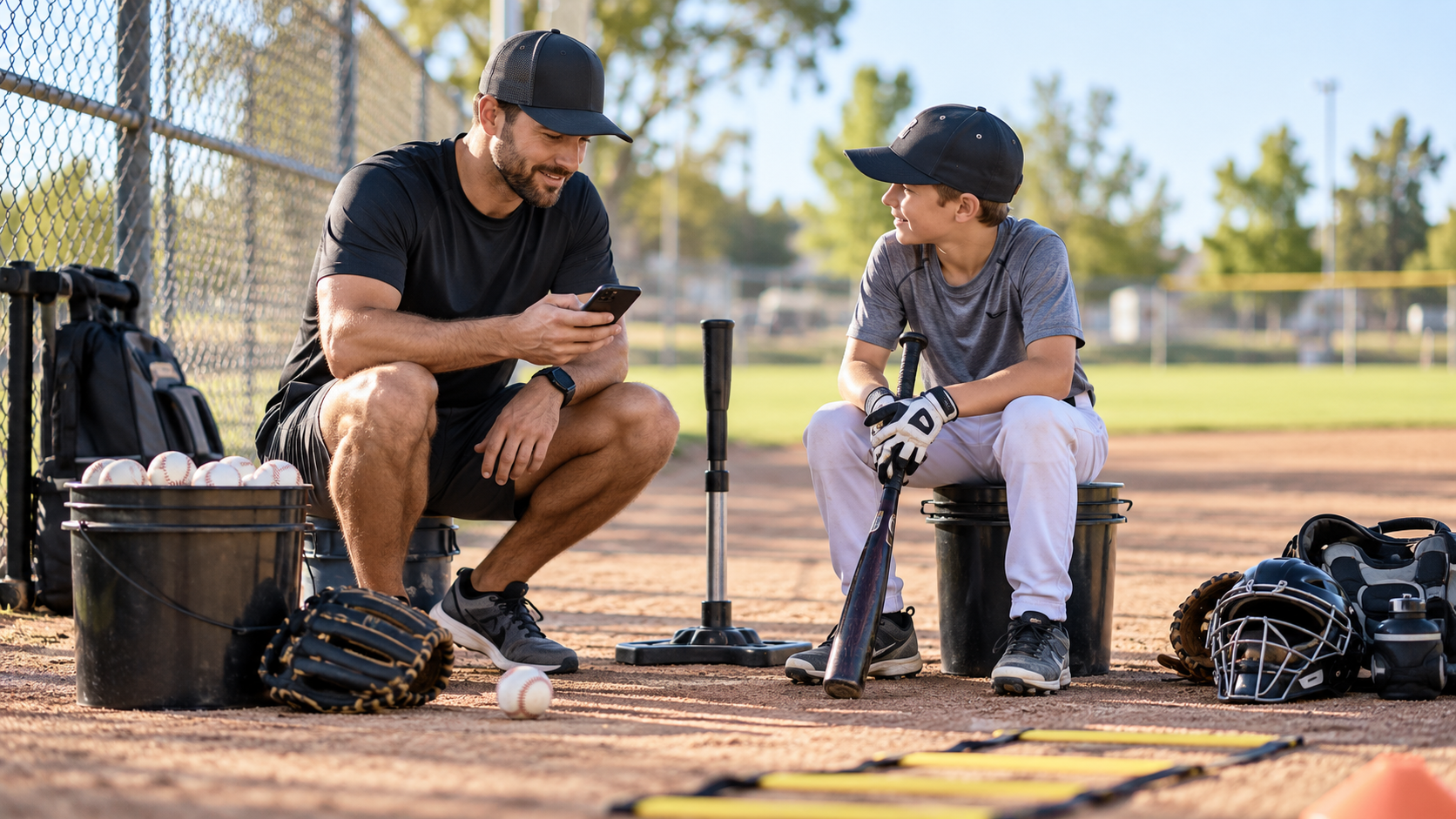
Some of the best baseball instructors in any town don't own a building. They're former college pitchers giving lessons at a rented cage on weeknights, hitting coaches who meet players at the local high school field, and catching coaches who drive to a player's backyard with a bucket of balls. Their calendars fill mostly through word of mouth, and that works until it doesn't. A few families graduate or move, and suddenly there are open slots nobody knows about.
Search can keep the calendar full, but independent coaches face problems facilities don't. You may not qualify for a normal Google Maps listing. You might coach at three different places. And your "brand" is really just you.
This guide walks through how to handle all of that: setting up Google correctly without an address, building a small website that books lessons, making your own name the brand, using directories and facility partnerships, collecting reviews, and getting named when parents ask AI tools for a coach. It's written for the solo instructor, but it works just as well for a two- or three-coach operation.
Why independent coaches can win search
Private instruction is a growing part of what families spend on baseball. The Aspen Institute's national parent survey found the average sports family spent $1,016 on a child's primary sport in 2024, up 46% since 2019. The survey named individual camps and private instruction among the drivers of that increase, and it found baseball parents spent more on lessons and instruction than soccer or basketball parents. It also found 14% of parents named independent training as a setting for their child's primary sport.
That's your market: families already paying for one-on-one help, looking for the right person to give it.
Independent coaches have real advantages in search, even against big facilities:
Specific expertise. "Catching coach for 13-year-olds" is a better match for a catching specialist than for a facility that does a bit of everything.
A person, not a logo. Parents are choosing who will work with their kid. A named coach with a clear background, photos and reviews is easier to trust than a generic academy page.
Flexibility. You can coach at the field near their house, at a partner cage, or in their backyard. That matches searches like "private pitching coach who comes to you."
Less competition than you think. BrightLocal's 2026 survey write-up notes that only about 40% of local businesses have a dedicated website. Plenty of coaches rely on social media alone, so a clear, simple site can stand out quickly.
The tradeoff is that you have to set up Google correctly, because the usual storefront approach doesn't fit how you work. That's the next section.
Google Business Profile without a building
This is where most independent coaches go wrong. They either skip Google Business Profile entirely, or they list a facility address that isn't theirs, which can get the profile suspended. The right setup depends on how you actually coach.
Google's rules come down to one idea: your profile has to reflect where and how you really serve customers. Its guidelinessay virtual offices and mailing addresses aren't eligible, and a location has to be one where customers can reach you in person during stated hours. Its service-area business guidance covers businesses that go to their customers instead.
If you qualify as a service-area business, the setup is straightforward:
Hide your address. Google says to remove your address if you don't serve customers there. Your home address stays private.
Add service areas. Google allows up to 20 service areas, such as towns, zip codes or counties, and says the overall area shouldn't extend beyond about two hours' drive from your base. In practice, list the towns you're willing to drive to.
Use your real business name. Your name, or your coaching business name if you've registered one. Don't stuff keywords like "Best Pitching Lessons NJ" into the name. That breaks Google's guidelines too.
Pick an honest category and list your services individually: pitching lessons, hitting lessons, catching lessons, small-group sessions, video analysis.
Add a booking link to your scheduler, plus photos of you coaching (with parents' permission for any kids shown).
If you don't qualify, don't force it. Your website, directory listings and facility partnerships can still carry you, and a suspended profile is harder to fix than no profile at all.
A small website that books lessons
You don't need a big site. Five to eight focused pages will beat a flashy one-pager, because each page can match a different search. A simple structure for an independent coach:
Home. Who you are, what you teach, who you work with, where you coach, and a booking button.
One page per lesson type. /pitching-lessons/, /hitting-lessons/, /catching-lessons/. Each explains what a session covers, the ages you work with, length, price, and how to book.
Where I coach. List every location with a short description: "Tuesday and Thursday evenings at [Partner Facility], weekends at [Town] High School field, or I'll come to your backyard within 20 miles of [Town]."
About. Your full coaching and playing background. More on this below.
Results and reviews. Player progress and parent reviews, with permission.
FAQ. What to bring, cancellation policy, weather policy, how often players should take lessons, whether parents can watch.
Book. Your scheduler, embedded or linked.
The "where I coach" page is the one most coaches skip, and it matters most for you. Without a Business Profile address, your website has to tell Google and parents where you actually work. Name the towns and facilities in plain text. Don't create a separate page for every town you've ever driven to, though. Near-identical town pages can run into Google's spam policies on doorway pages. One clear page listing your locations and radius is enough.
Show your prices. Parents booking private lessons compare coaches, and "Contact for pricing" sends them to the coach who shows it. If you offer packages, show the per-lesson math.
Keep it fast and simple on a phone. Google recommends good Core Web Vitals, such as main content loading within 2.5 seconds. A lean site on Squarespace or a similar builder usually passes easily. Heavy video backgrounds and pop-ups usually don't.
Your name is the brand
For an independent coach, the most valuable search is your own name. Parents hear about you from another parent, a travel coach or a high school coach, and then they search "Coach Mike Torres pitching." What they find in that moment decides whether they book.
Make sure your name leads to a clear, consistent picture:
A strong About page. Where you played and at what level, how long you've coached, the ages and positions you specialize in, certifications, and why you coach. Add a real photo of you on the field.
The same name and photo everywhere. Your website, Business Profile, Instagram, YouTube, facility partner pages and directory listings should all use the same name, headshot and short bio.
Links between them. Your website should link to your social profiles, and each social profile should link back to your website. That helps Google and AI tools connect them as the same person.
Structured data on your About page. Google supports ProfilePage structured data and lists "About me" pages among its supported uses, as long as the page's main focus is one person affiliated with the site. Adding it, with links to your social profiles, gives search engines a clear, machine-readable description of who you are. Validate it with the Rich Results Test before publishing.
Google's guidance on helpful, people-first content repeatedly asks whether it's clear who created the content and whether it shows first-hand experience. For a coach, that is the whole business. Your experience is the product.
Be precise about your background. "Pitched at [College], D-II, 2014–2017" is more convincing than "former college pitcher," and it can be verified. Don't stretch credentials. In a local baseball community, someone always knows the real story, and stretching it once can undo years of word of mouth.
Directories, marketplaces and facility partnerships
Without a building, other websites do a lot of your local visibility work. Three kinds matter most.
Facilities where you coach. If you rent cage time or work as an independent instructor at a facility, ask to be listed on its website with a profile and a link to your site. Many facilities already have an "Our Coaches" or "Instructors" page. Ask them to mention you in a Business Profile post when you start or add a new program. Offer to write a short guide for their blog in exchange. It helps them rank and helps you get known.
Lesson marketplaces and coach directories. Several platforms let parents search for private coaches by sport, position and location. They can bring you early bookings and reviews, and their pages often rank well. Keep your profile complete, use the same name, photo and bio as your website, and link back to your own site wherever the platform allows. Watch the fees and terms, and don't let a marketplace become the only place parents can find you.
General local directories. Apple Maps, Bing Places, Yelp and Facebook. BrightLocal's 2026 Local Consumer Review Survey found the average consumer uses six different review sites when choosing a business, and Apple Maps use for local recommendations nearly doubled in a year. Where these platforms support service-area or practitioner listings, use them. Where they don't, skip them rather than inventing an address.
Across all of them, consistency is the rule. The same name, the same phone number, the same website and the same description of what you do. Mismatched details confuse parents and give AI tools conflicting information to repeat.
Reviews and results from the players you coach
For a private coach, reviews are the closest thing to a referral from a stranger. BrightLocal's 2026 survey found 97% of consumers read reviews for local businesses, 47% won't use a business with fewer than 20 reviews, and 83% of people asked to leave a review went on to leave one.
That last number is the one to act on. Most of your families would happily write a review. They just haven't been asked.
When to ask. Right after a visible win: a velocity jump on the radar gun, a first varsity start, a travel team roster spot, the end of a lesson package. Send a short text with a direct link to your Google review page (if you have a Business Profile) or to whichever platform you use most.
What to ask for. Detail beats praise. "Coach Torres fixed my son's glove tilt and his curveball finally breaks late" tells the next parent exactly what you do. Suggest they mention the lesson type, what changed and how long it took. BrightLocal notes that Google's Ask Maps pulls specific details from reviews into its answers, so detailed reviews also help you in AI search.
How to reply. Personally and quickly. BrightLocal found 89% of consumers expect a response, and templated replies put off half of them.
Alongside reviews, publish results, with permission:
Short progress stories: what the player needed, what you worked on, and what changed over a set time
Before-and-after video clips of mechanics, with the parent's written OK
Where your players ended up: high school teams, travel rosters, college commitments
Keep every claim true and specific. Don't write reviews for yourself, don't offer discounts only for positive ones, and don't publish anything about a minor without a parent's permission. The FTC's rule on fake reviews applies to small businesses too.
Content and video that show how you coach
Parents want to know what a lesson with you actually looks like before they pay for one. Content is how you show them, and it's also how you rank for searches beyond your name.
Google's guide to generative AI search draws a useful line between "commodity" content, which is common knowledge anyone could write, and "non-commodity" content that offers a unique, first-hand point of view. "5 Tips for Better Hitting" is commodity. "Why I stopped teaching 'squash the bug' and what I teach 12-year-olds instead" is yours alone.
Content ideas that work for independent coaches:
Answers to the questions parents ask you. How often should my kid take lessons? What age should they start pitching lessons? Should my 10-year-old throw a curveball? Answer them the way you would in person.
Arm care and workload. Explain how you apply MLB and USA Baseball's Pitch Smart guidelines in your lessons. Parents care about this more than almost anything.
Drill breakdowns. A 60-second video of one drill, with a short written explanation of why you use it and what to watch for.
Player progress stories. With permission, show what changed and how.
Position-specific guides. Catchers' footwork, first-base picks, a hitter's two-strike approach. Specialists win specific searches.
Video is your strongest format. Post short clips to YouTube and Instagram, then embed the best ones on the matching page of your website with a written summary. Google's SEO Starter Guide recommends putting videos on pages near relevant text, with descriptive titles and descriptions. A pitching lessons page with a clip of you coaching a real mechanics fix sells better than any paragraph.
Pace yourself. One solid piece a month that you'd be proud to send a parent is better than a burst of rushed posts. Google explicitly warns against mass-producing content or writing to a word count.
Local links and word of mouth from teams and leagues
Word of mouth is how most private coaches get busy. SEO doesn't replace it. It makes it easier to act on. When a travel coach tells a parent "go see Coach Torres," that parent searches your name, and a clear website and reviews close the deal.
You can also turn those relationships into links, which help you rank for searches beyond your name:
Travel teams you work with. If you run pitching sessions for a travel program, ask to be listed on its site as a pitching or hitting instructor, with a link.
High school programs. Volunteer a preseason clinic or an arm-care talk, and ask to be listed on the program or booster club site.
Little Leagues and rec leagues. Offer a free coaches' clinic before the season. Leagues often list clinic partners and sponsors on their sites.
The facility where you coach. An instructor profile with a link back to your site.
Local media. When a player you've coached for years commits to a college, a local paper might cover it. With the family's blessing, you can be part of that story.
Google's SEO Starter Guide points to word of mouth and community engagement as some of the most effective and lasting ways to promote a site. It also warns that overdoing promotion can backfire. Skip paid links and bulk directory submissions. One link from your town's Little League site is worth more than dozens from sites nobody reads.
Make referrals easy, too. Give happy families a short link to your booking page, and give coaches who send players your way a simple one-line description of what you do and who you work with. People refer coaches they can describe in a sentence.
AI search: getting named when parents ask for a coach
More parents are asking AI assistants for recommendations. BrightLocal's 2026 survey found use of ChatGPT and similar tools for local recommendations jumped from 6% to 45% in a year. The questions sound like this:
"Who's a good private pitching coach for a 12-year-old near Cherry Hill?"
"Catching lessons in South Jersey that come to your house"
"Is Coach Mike Torres a good hitting instructor?"
For independent coaches, AI answers can be a big opportunity or a blind spot. Without a building or a normal map listing, you're only named if the AI can find clear, consistent information about you somewhere else.
Google's guide to generative AI search says its AI features are built on its core search systems, so the same SEO fundamentals apply. It also says you don't need special AI files like llms.txt. What helps:
A website that states, in plain text, what you teach, who you work with, where you coach, what it costs and your background
The same name and bio across your site, social profiles, facility pages and directories, so tools recognize them as one coach
Reviews that mention specifics, such as positions, ages and results
Real mentions on team, league and facility sites. Google warns that inauthentic mentions don't help
First-hand content only you could write, which Google's guide specifically favors
Once a month, ask ChatGPT, Gemini, Perplexity and Google's AI Mode the questions your families ask, using your town and your name. Note whether you're named, what's said, and which sources are cited. If an answer is wrong, the fix is usually outdated or missing information on a page you control, or a listing you can update.
A simple routine, and how to know it's working
Independent coaches don't have a marketing department, and most of your time belongs on the field. So keep the routine small and consistent:
Then measure what matters: booked lessons, not website visits.
New students per month, and how many came from search, AI tools, referrals, facilities or social media. Add a "How did you hear about me?" question to your booking form.
Business Profile performance, if you have one. Google's performance report shows calls, website clicks and booking clicks.
Search Console. Google's free Search Console shows which searches bring people to your site. Watch for lesson-type and town searches, and for your own name.
Open slots. The simplest measure of all. If your calendar has fewer gaps in the months that used to be slow, it's working.
Give it time. Google's SEO Starter Guide notes some changes show up within hours and others take several months. Your name and your reviews will usually move first. Rankings for competitive searches like "pitching lessons [town]" take longer.
Want to know how parents find you, or don't?
You're probably a better coach than your search results suggest. Many independent instructors are close to invisible online: no map listing, no clear site, and a name that turns up nothing useful when a parent searches it.
We'll run a free visibility check for you. You'll get a plain-English read on how you show up in Google and in AI tools like ChatGPT when parents search for lessons in your area, and when they search your name, plus what we'd fix first. Whether or not you hire us, you'll know exactly where you stand.
Get your free visibility check →
A real reply from the founder within one business day. No pressure, no pitch deck.
Frequently asked questions
Can a private baseball coach have a Google Business Profile without a facility?
Often, yes, as a service-area business if you travel to players, such as their home, a local field or their school. Google says to hide your address if you don't serve customers there and list up to 20 service areas instead. If you only coach at a facility you don't own or staff, you usually can't list that address as your own.
Can I use the address of the facility where I give lessons?
Not unless it's genuinely your location, with you there and reachable during stated hours. Google's guidelines don't allow virtual offices or addresses where a business doesn't really operate. Instead, ask the facility to list you on its website and mention you in its posts.
Do I need a website if I have Instagram?
Yes. Social media is great for showing your coaching, but a website is what ranks for searches like "pitching lessons [town]," holds your prices and FAQs, and gives Google and AI tools a clear source of facts about you.
How many pages should a private coach's website have?
Five to eight is plenty: home, one page per lesson type, where you coach, about, results and reviews, FAQ, and booking. Focused pages beat one long page because each can match a different search.
Should I create a page for every town I serve?
No. Near-identical town pages can run into Google's spam policies on doorway pages. One clear "Where I coach" page that lists your locations and travel radius works better.
How do I get more reviews as a private coach?
Ask at natural moments, such as a velocity jump, a roster spot or the end of a package. Send a direct review link by text and suggest parents mention what you worked on and what changed. BrightLocal found 83% of people asked to leave a review went on to leave one.
Are lesson marketplaces worth it?
They can help early on with bookings and reviews, and their pages often rank well. Keep your profile consistent with your website and link back to your own site. Don't let a marketplace become the only place parents can find you.
How do I show up when parents ask ChatGPT for a coach?
Publish clear facts about what you teach, where and for whom. Keep your name and bio consistent everywhere, collect specific reviews, and earn real mentions on team, league and facility sites. Test what AI tools say monthly and fix gaps on pages you control.
Can I post videos of the kids I coach?
Only with a parent's or guardian's permission, ideally in writing. The same goes for names, stats and results. It protects the players and your reputation.
How long before SEO brings me new students?
Searches for your own name and your reviews usually improve first, often within weeks. Ranking for competitive searches like "pitching lessons [town]" typically takes several months of steady work.
Sources
Aspen Institute Project Play, Family spending on youth sports rises 46% over five years (March 2025)
Google Business Profile Help, Guidelines for representing your business on Google
Google Business Profile Help, Manage your service areas
Google Business Profile Help, Business Profile performance and insights
BrightLocal, Local Consumer Review Survey 2026 (February 2026)
Google Search Central, SEO Starter Guide
Google Search Central, Creating helpful, reliable, people-first content
Google Search Central, ProfilePage structured data
Google Search Central, Understanding Core Web Vitals
Google Search Central, Spam policies for Google web search
Google Search Central, Optimizing your website for generative AI features on Google Search (updated July 2026)
MLB and USA Baseball, Pitch Smart
Google, Search Console