
Rolling Window vs. Fixed Date Range: What's the Difference, and Why Does Your Reporting Keep Using Both?
Your dashboard says "last 28 days." Your invoice says "June 1–30." Both are date ranges — so why do they never agree? In this guide, we break down the difference between rolling windows and fixed date ranges in plain English: a fixed range is a photograph (stable, citable, calendar-shaped), while a rolling window is the view out a moving car (always current, recalculated daily). We cover where each shows up — from Google Search Console's 28-day window to trailing-twelve-month revenue — the signature traps of each (spike anniversaries, five-Monday months, overlapping snapshots), and the one rule that prevents most reporting arguments: monitor on rolling, record on fixed.

What Does "28 Days" Mean in Google Search Console? (And Why It's 28 and Not 30)
The number 28 is everywhere in Google Search Console — the Performance report, the Insights page, the Achievements milestones, even the emails. But what does "last 28 days" actually mean, and why 28 instead of 30? The answer is smarter than it looks: 28 days is exactly four weeks, so every window contains the same number of each weekday, making any period cleanly comparable to any other. In this guide, we explain how the rolling window really behaves — including why your totals can drop when nothing is wrong, why Achievement badges stay even when your clicks dip back down, why GSC never matches Google Analytics, and the "spike anniversary" effect that causes most false traffic panics.
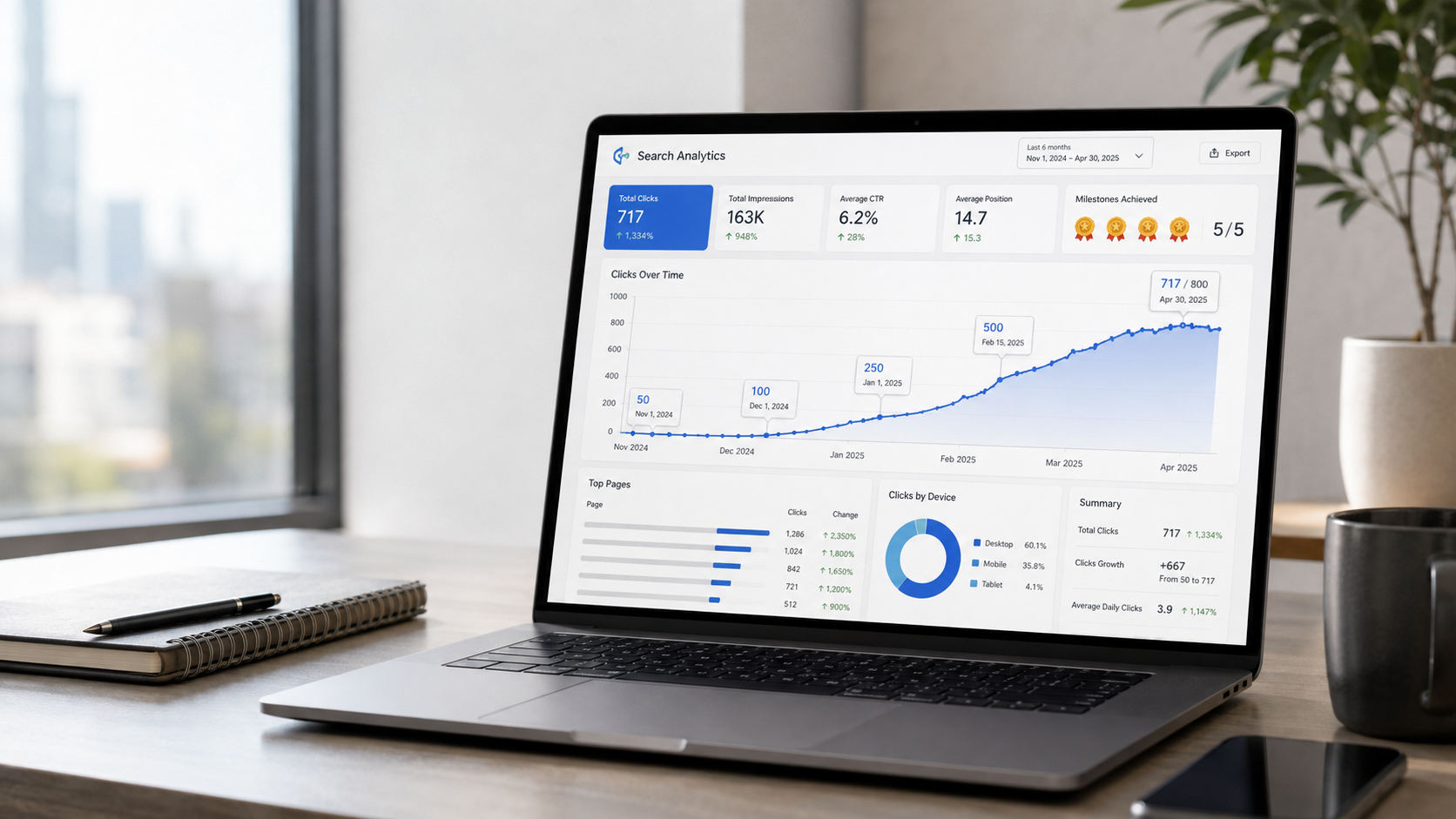
From 50 to 700 Clicks: Our Real Google Search Console Achievements Timeline (And What It Teaches About How SEO Growth Actually Works)
Most agencies tell you SEO compounds. Almost none show you their own dashboard. In this post, we publish our complete Google Search Console Achievements timeline — every click milestone for ritnerdigital.com, with the real dates, from our first 50-click badge in February to 717/800 today. The gaps between the dates tell the whole story: ten slow weeks to go from 50 to 100 clicks, then a three-week run where clicks doubled from 250 to 500 in just 17 days, then an honest plateau. We break down the four phases of compounding SEO growth, explain how the Achievements report works and where to find it, and share exactly what we did to drive a 14x increase in six months.

Your Website Is Your Digital Front Door — and SEO and AI Search Decide How Many People Walk Through It
Every customer journey now starts on a digital street — and your website is the front door. Some visitors walk in ready to buy. Some grab a free sample and leave. Some are just scoping you out for later. In this guide, we break down how SEO, local search, and AI search engines like ChatGPT and Google's AI Overviews determine how much foot traffic your business gets, why AI-referred visitors convert up to 9x better than organic traffic, and what it takes to own your corner of the street before your competitors do.
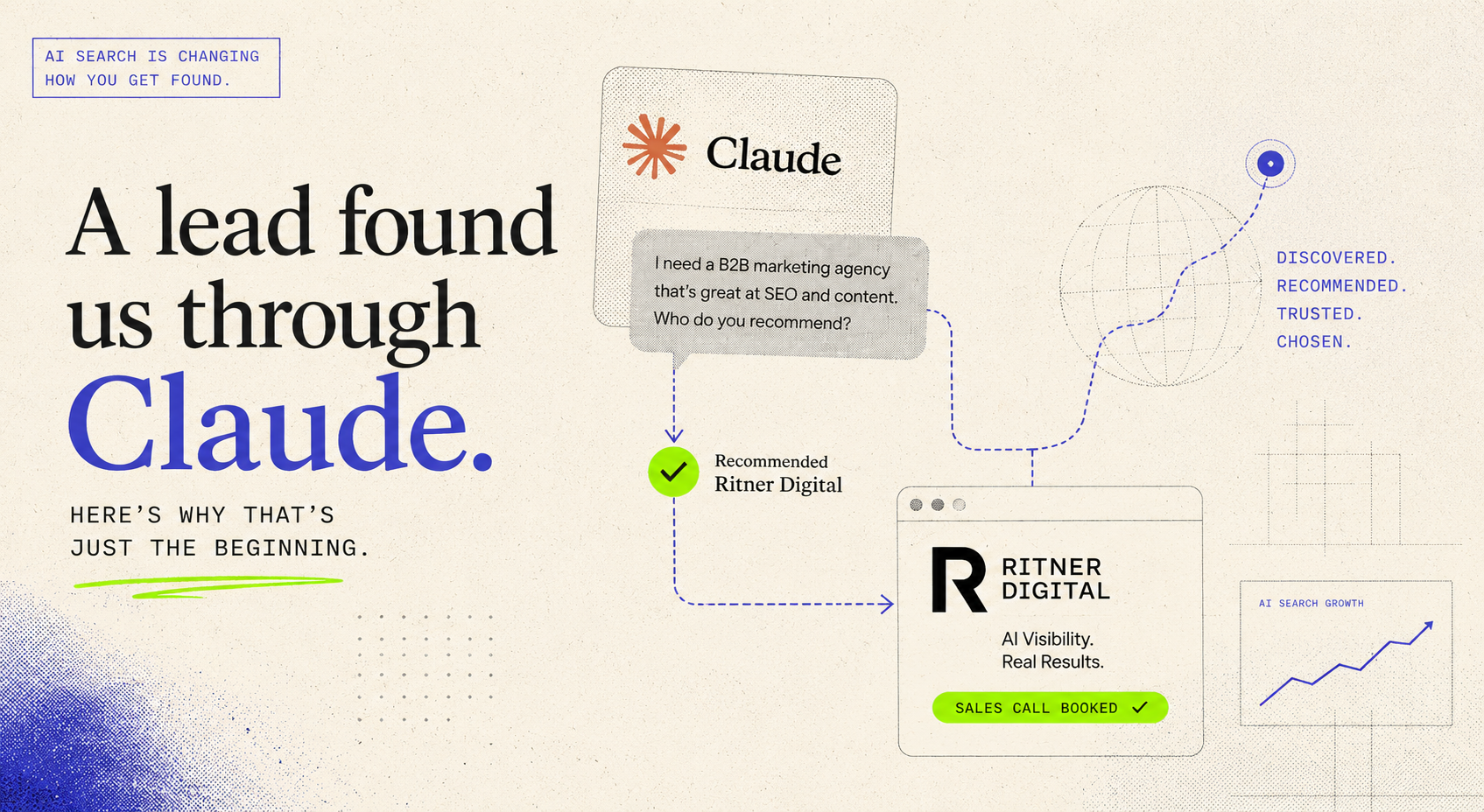
We Got a Sales Call From a Lead Who Found Us Through Claude. Here's Why That's Going to Happen More.
Yesterday a company booked a sales call with us and said three words we hadn't heard before: "We found you through Claude." Not Google. Not a referral. Claude. Here's what actually happened, why the underlying trend data points to more of these referrals over time, and what the mechanics of AI search recommendations mean for any business that depends on being found by the right people at the right time.

If AI Is Eating Your Content Marketing Career, Consider This Pivot
A significant portion of what content marketers have been paid to do can now be done faster and cheaper by AI — and the market is adjusting accordingly. But the displacement isn't uniform. There's a pivot available right now that AI genuinely cannot replicate, that the market is undervaluing, and that's sitting largely untapped inside most of the businesses you've worked for. That pivot is data journalism — and if you're a content marketer looking for ground worth standing on, this is it.
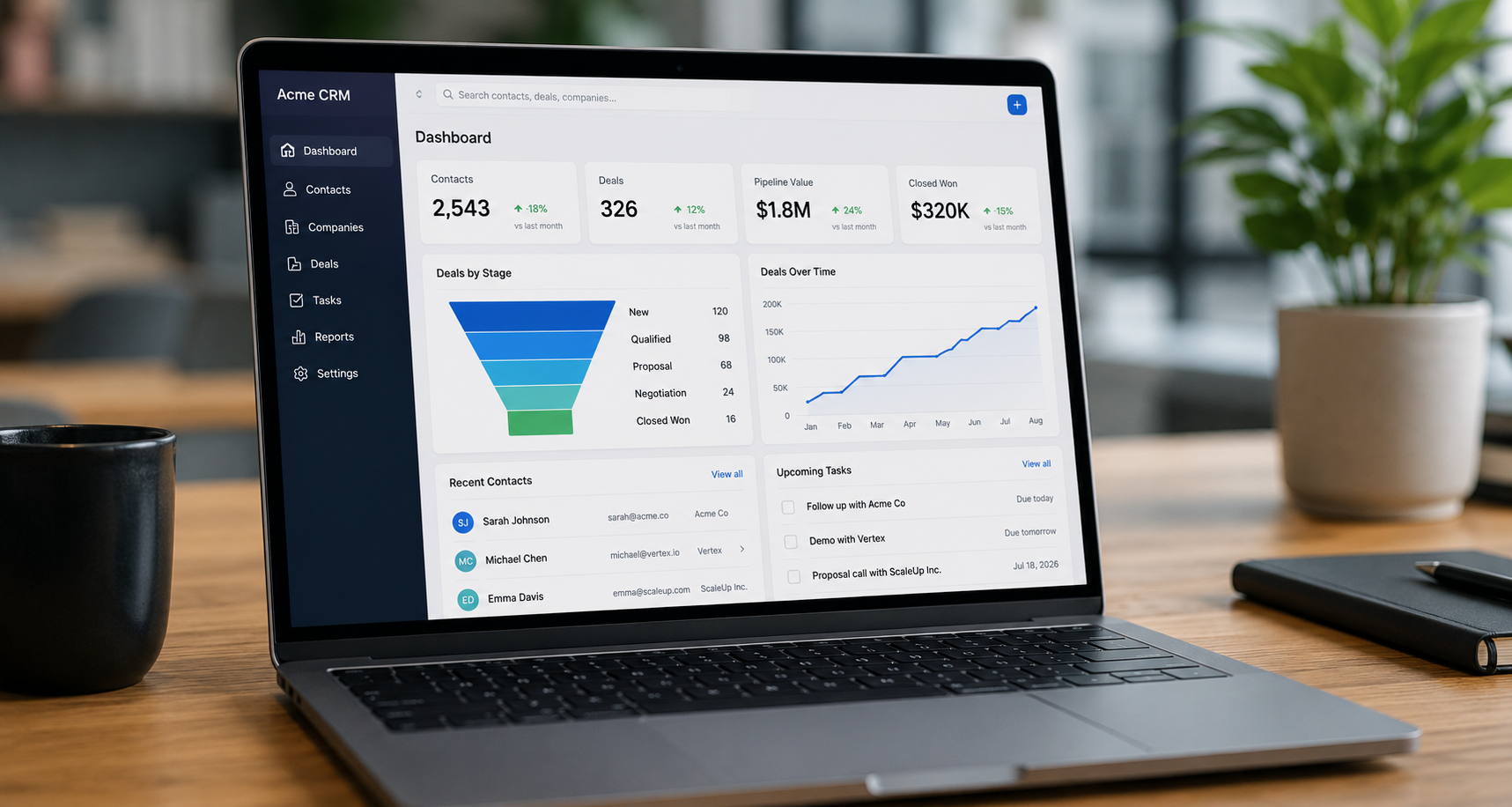
The Best CRM Alternatives to HubSpot in 2026 (If You Actually Just Need Contacts, Companies, Deals, and Reporting)
If you signed up for HubSpot to track contacts, manage companies, move deals through a pipeline, and pull decent reports — but the platform has become too complex, too expensive, and too hard to navigate — you're not alone. Here's a practical breakdown of the best CRM alternatives in 2026 for teams who know exactly what they need and want a tool that's actually beautiful to use.
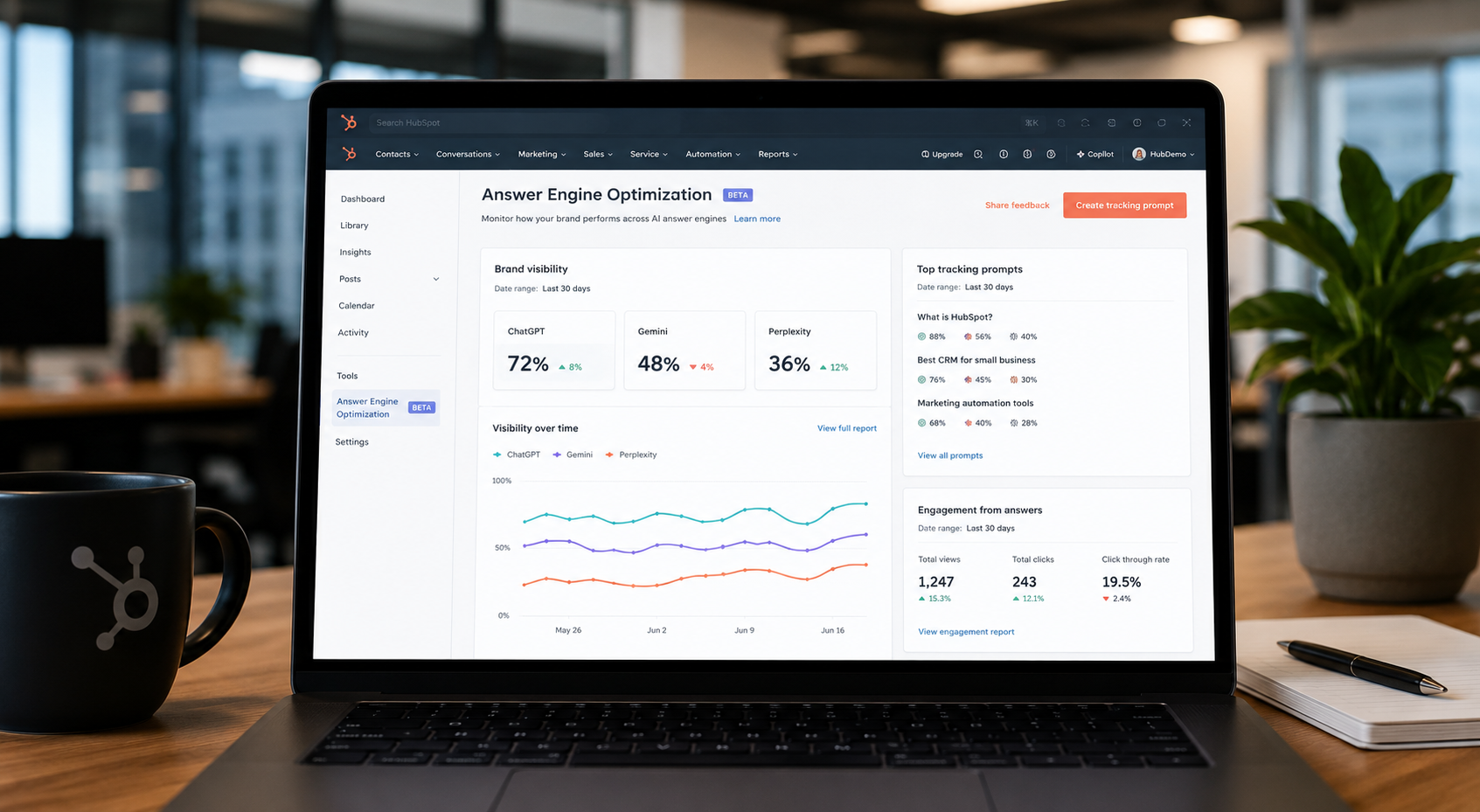
HubSpot's AEO Tracker Has a UX Problem Nobody's Talking About
HubSpot's Answer Engine Optimization tracker arrived with a strong pitch — monitor your brand across ChatGPT, Gemini, and Perplexity using CRM-powered insights. The concept is right. The execution, however, is giving Drupal energy in 2026. Here's what we found when we logged in, why it matters for your brand visibility, and what AEO tooling actually needs to do to be worth your time.

SEO Migration Checklist for Enterprise Websites
Enterprise website migrations are categorically different from small business migrations in ways that matter significantly for SEO execution. The URL count isn't just larger — it's large enough that manual processes break down and systematic automation becomes necessary. The backlink profile isn't just more valuable — it's distributed across thousands of referring domains in ways that require prioritization frameworks rather than comprehensive manual outreach. The stakeholder landscape isn't just more complex — it includes legal, compliance, IT security, and procurement functions whose requirements shape the migration timeline in ways that pure SEO planning can't account for.
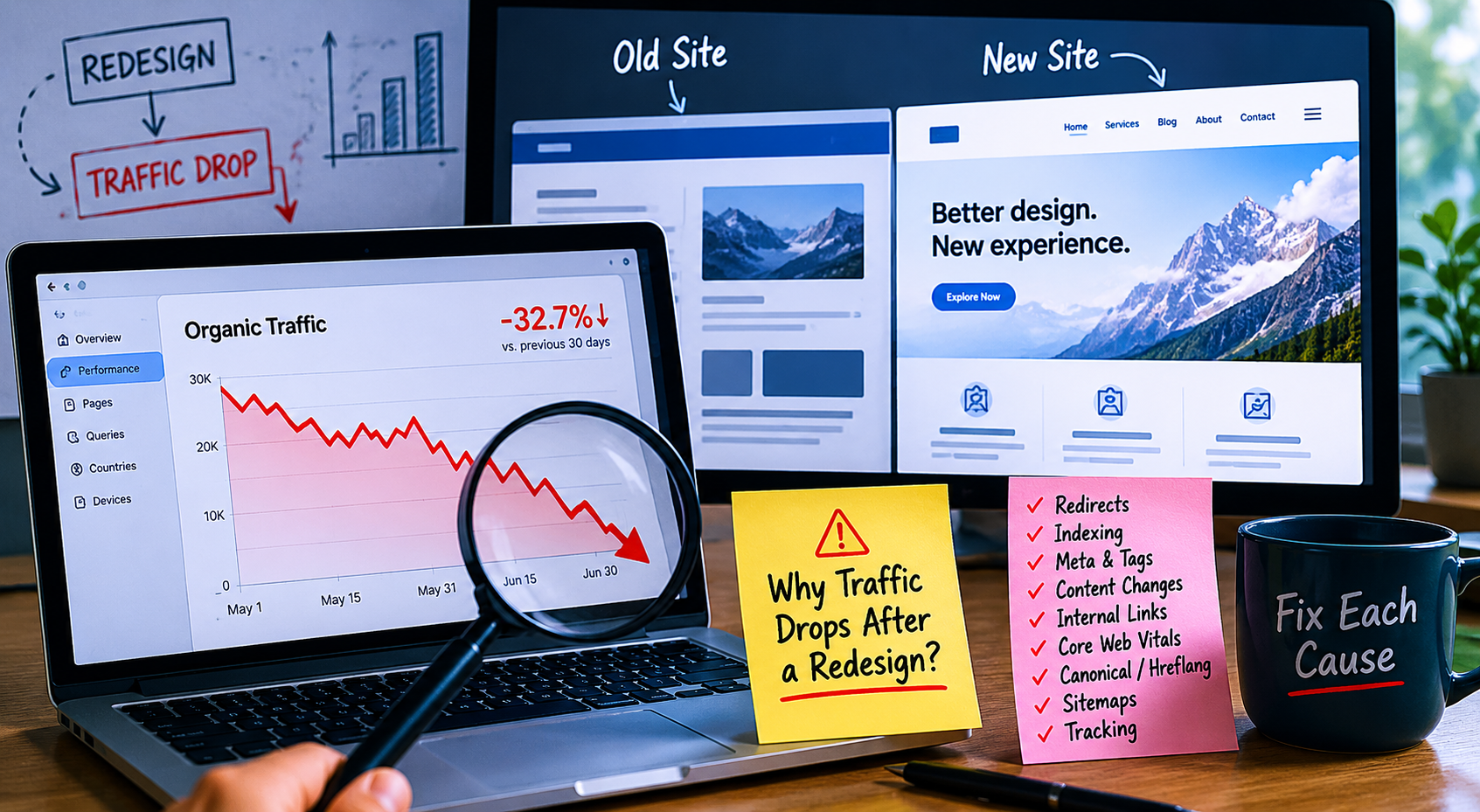
Why Traffic Drops After a Redesign
You launched the new site. It looks better. It loads on mobile. The stakeholders are happy. And then the traffic graph starts going in the wrong direction. Post-redesign traffic drops are one of the most common and most preventable problems in digital marketing — and one of the most frustrating, because the cause is almost never obvious from looking at the new site. The design looks fine. The pages load. Users can navigate. But Google is seeing something different from what the design team built, and the ranking signals it's evaluating have changed in ways that nobody planned.

What Happens to SEO During a Website Redesign?
Website redesigns are one of the most reliably misunderstood SEO events in digital marketing. The conversation starts as a design conversation — new visual identity, improved user experience, modernized layout. And then somewhere in the execution, design decisions become technical decisions that become SEO decisions that nobody planned for. The result is a pattern that repeats across the industry with predictable frequency: a company launches a redesigned website, celebrates the improved aesthetics, and then watches organic traffic decline over the following weeks as rankings drop on pages that were performing well before the redesign.
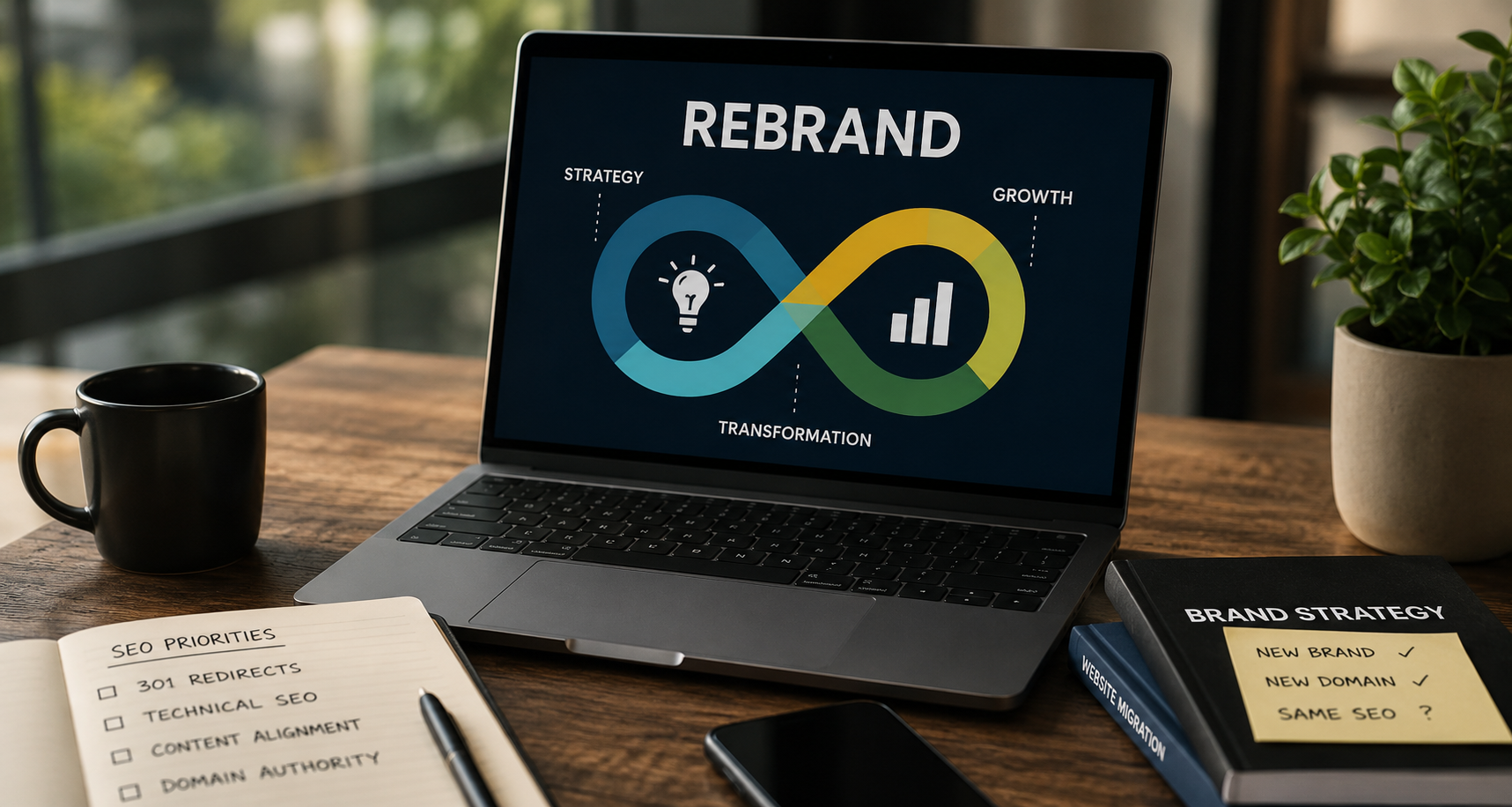
Rebranding Without Losing Rankings
A rebrand is one of the highest-stakes events in a company's digital history. Done well, it's an opportunity — new positioning, new domain authority trajectory, new content strategy aligned with who the company actually is. Done poorly, it's a self-inflicted traffic wound that takes years to heal. The SEO risk isn't theoretical. Domain changes, brand name changes, and URL restructuring all trigger the same fundamental search engine recalculation that platform migrations trigger — except rebrands often happen alongside content changes and positioning changes that multiply the variables and make diagnosing post-rebrand ranking losses significantly more complex.

How AI Search Ranking Actually Works
The most common mistake people make when they start thinking about AI search optimization is assuming it works like traditional search with a new interface on top. Same game, different board. That mental model is wrong in ways that matter — and the wrongness is expensive if it's shaping your strategy. AI search doesn't rank pages. It generates answers. Those are fundamentally different processes, and understanding the difference is the prerequisite for doing anything useful about your AI search visibility.

Why Your Competitors Appear in AI Answers and You Don't
You've done the test. You opened ChatGPT, Perplexity, or Google AI Overviews and typed in the question your best client would ask before hiring someone like you. Your competitors came up. You didn't. That moment isn't random and it isn't permanent. It's the output of a specific set of measurable signals that AI systems use to decide which brands are credible enough to reference — and right now your competitors have more of those signals than you do. Here's exactly what those signals are.
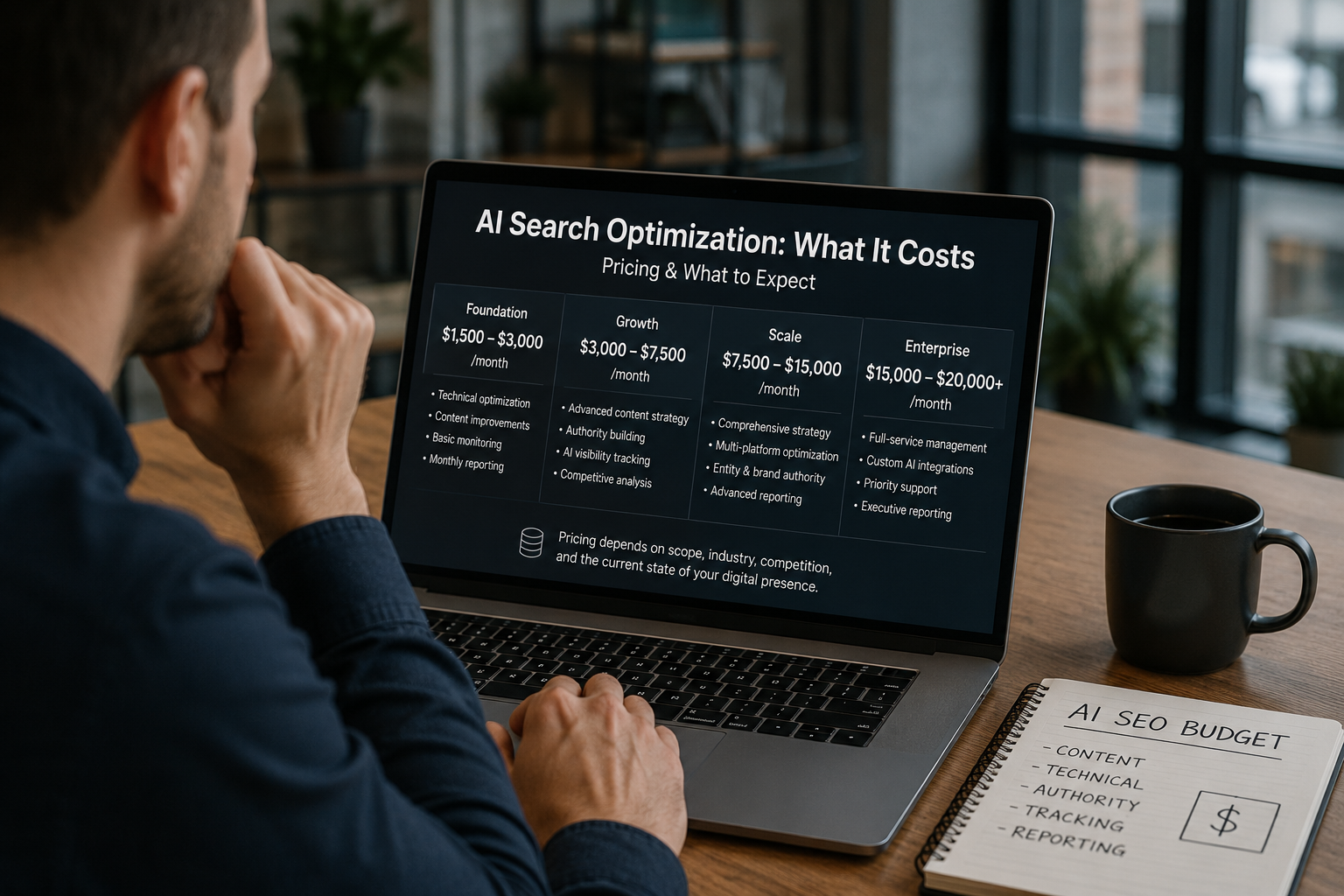
How Much Does AI Search Optimization Cost?
There's a new line item showing up in marketing budgets that didn't exist two years ago. Clients are asking about it. Agencies are packaging it. And most of the pricing you'll find online is either vague, inflated, or built around services that haven't caught up to what AI search actually requires. Here's a straight answer on what AI search optimization costs, what drives that cost, and how to tell if what you're being quoted is legitimate.
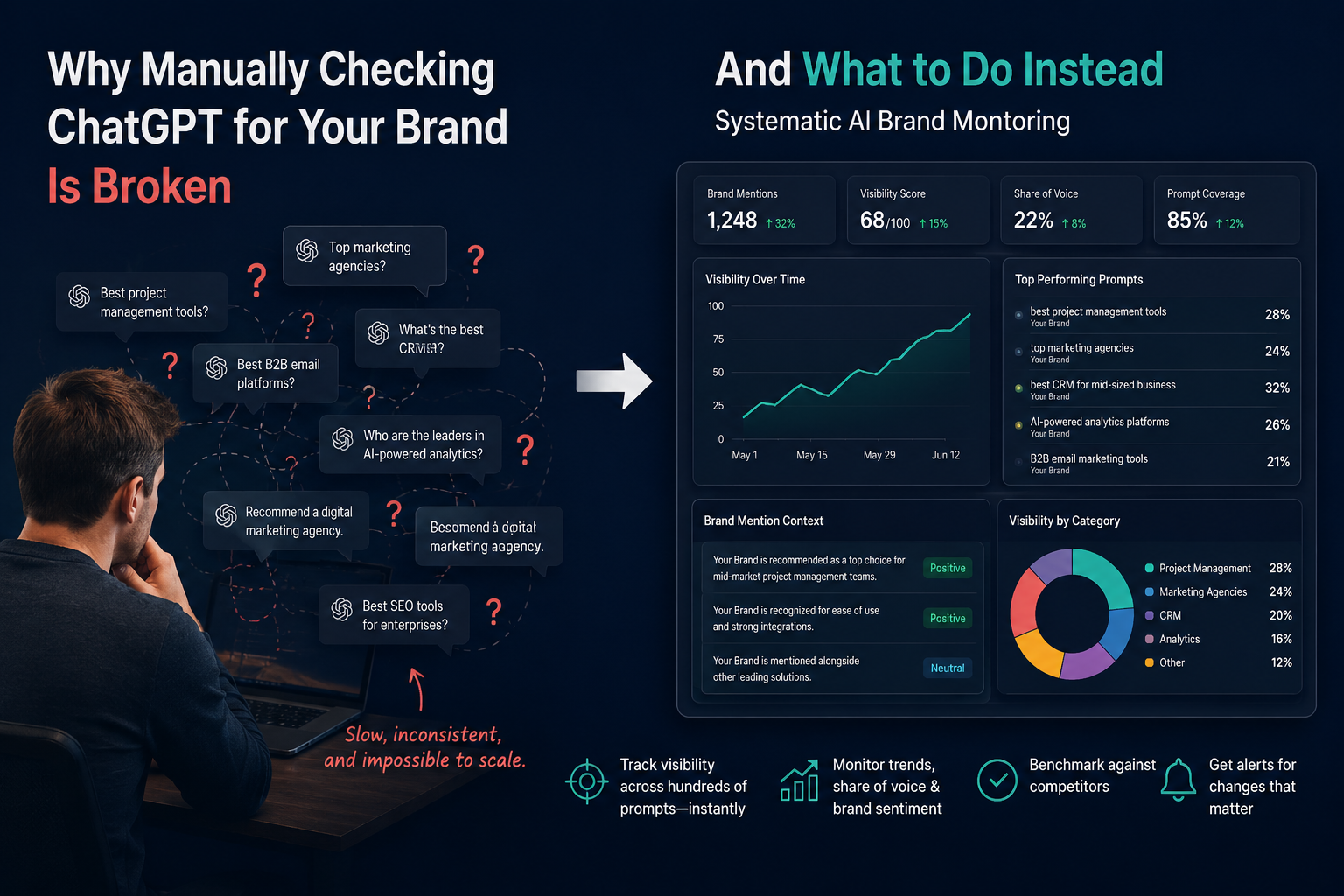
You Shouldn't Have to Play 20 Questions With ChatGPT Just to Know If Your Brand Shows Up There
Your brand is either showing up in AI-generated answers or it isn't — and right now, most marketers have no reliable way to know which. While teams are running sophisticated SEO reporting stacks, the majority are still checking their AI visibility by manually typing questions into ChatGPT and hoping for the best. Here's why that's not a strategy, and what actually needs to change.
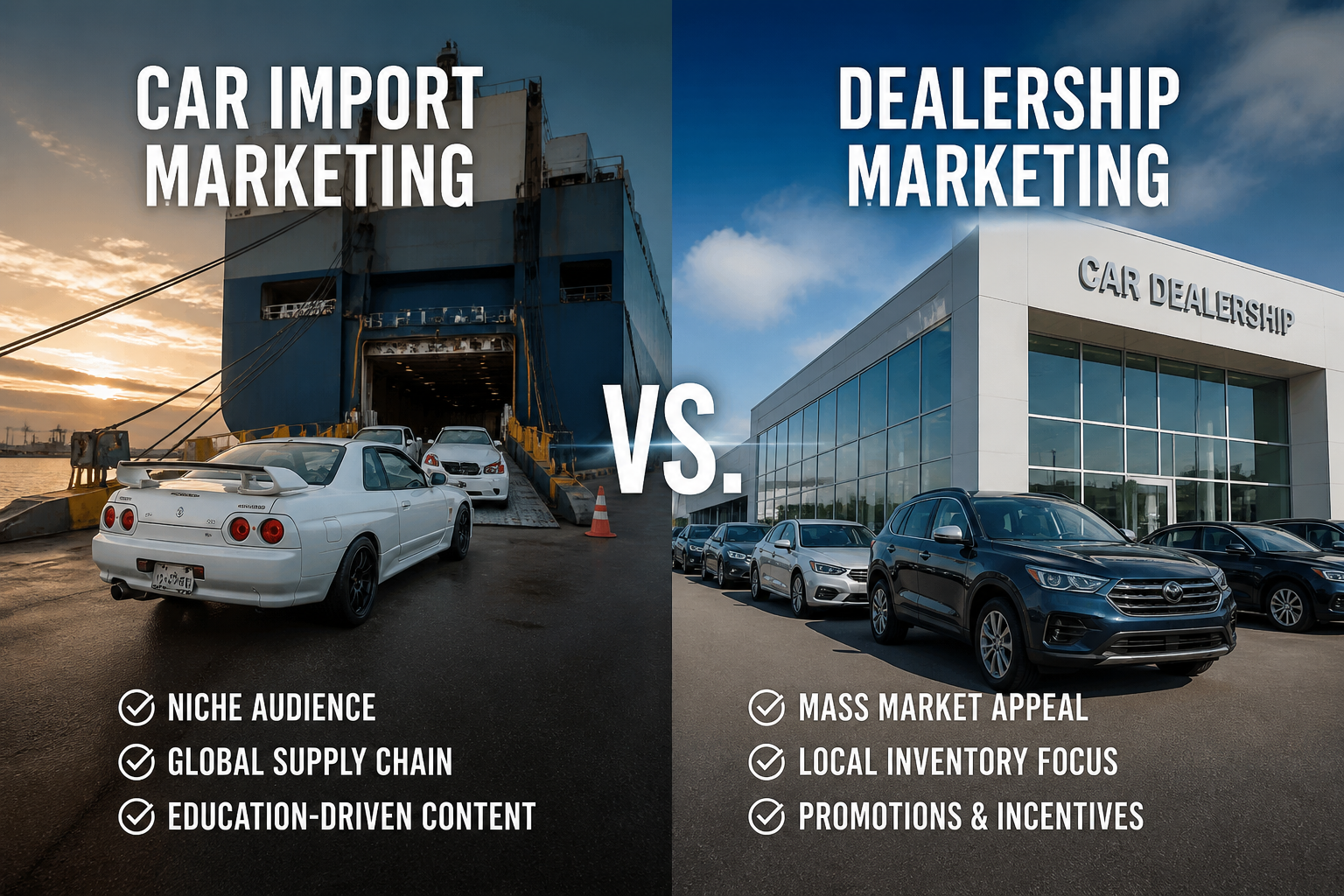
Same Industry, Totally Different Game: Why Car Import Marketing and Dealership Marketing Are Nothing Alike
Same industry, totally different game. The marketing tactics that fill a dealership's appointment book will fall completely flat for a car import business — and vice versa. Here's why the buyer, the message, the channels, and the content strategy are fundamentally different on each side of the automotive marketing divide.
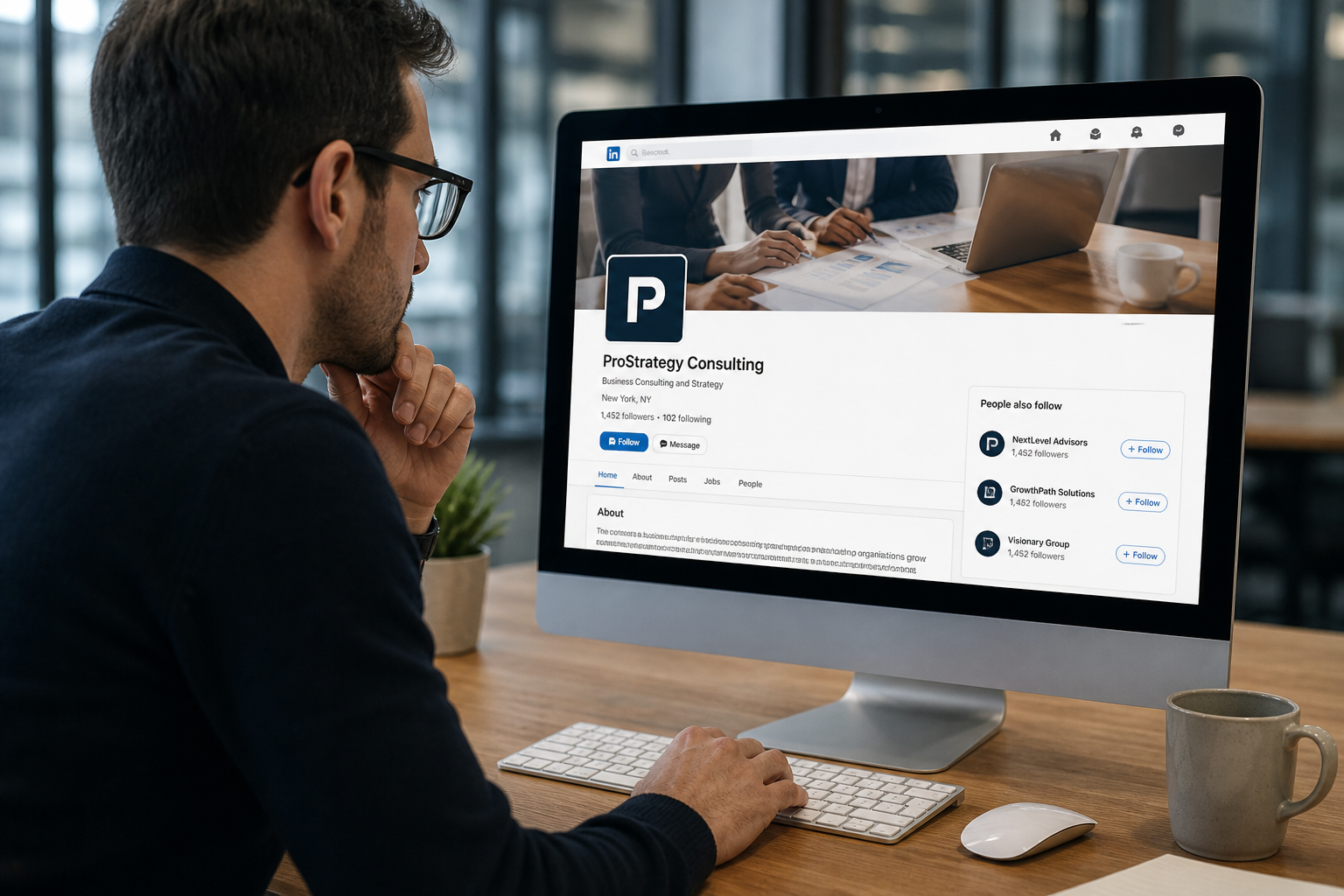
The Silent Sales Rep: Why Your Follower Count Is Sending a Message Before You Ever Say a Word
Before a prospect takes your meeting, reads your proposal, or returns your call — they've already looked you up. Here's why your social media follower count is one of the most powerful trust signals your brand has, and what it's saying about you right now.

Why Senja Belongs in Your Marketing Stack (And What It Says About Your Brand When It's Not)
Most businesses have happy customers. Very few have a system for turning that happiness into a marketing asset. Senja changes that — and the data behind why it matters is hard to ignore. Here's our full breakdown of the platform, the brand, and why testimonials belong at the center of your marketing operations.

How Long Does It Really Take for Content Marketing to Penetrate an Industry?
Every founder asks it eventually: why isn't our content working yet? The answer usually isn't a strategy problem — it's a timeline problem. This guide breaks down the real phases of content marketing growth, what the data says about industry penetration, and what separates the brands that break through from the ones that quit three months too early.