Why Dealerships Mention Nearby Towns in Their Blog Titles
(And Why Ignoring This Costs You Deals)
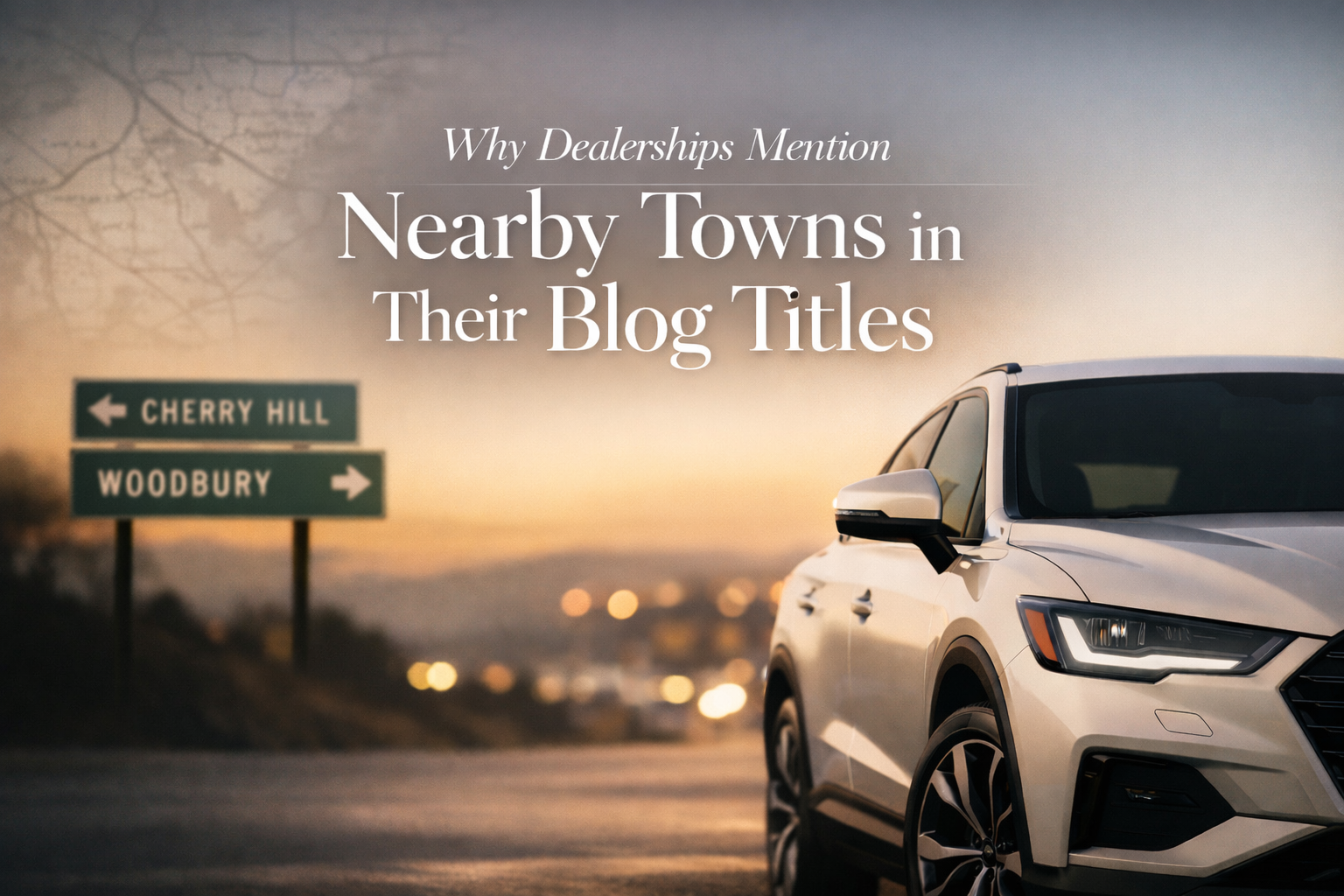
If a car dealership is physically located in Cherry Hill, why would it publish blog posts mentioning places like Woodbury, Sicklerville, or Deptford?
Short answer:
Because that’s where the buyers are searching.
Long answer:
Because local SEO isn’t about where your building sits — it’s about where intent lives.
The SEO Tactic Behind This Move
This strategy is commonly known as Conquest SEO.
At its core, Conquest SEO means intentionally targeting search terms tied to nearby towns or competitor markets to capture high-intent traffic before it reaches someone else.
It’s not pretending to be in another town.
It’s competing for attention in it.
How This Plays Out in Real Life
Here’s the sequence:
A shopper searches for a vehicle or feature using a nearby town as a location qualifier
Google looks for the most relevant, authoritative result — not just the closest address
A dealership from a neighboring town appears in the results
The shopper clicks, compares, and often converts
The result?
A dealership outside the searched city wins the lead.
And the dealership inside that city loses it.
Why the Nearby Dealership Wins
Because they showed up.
Local search rankings are driven by:
Content relevance
Search intent alignment
Domain authority
User engagement signals
If a dealership actively creates content targeting nearby towns, Google sees it as regionally relevant — even if it’s technically outside city limits.
Proximity still matters.
It just doesn’t matter as much as it used to.
The Cost of Not Competing in Local SEO
When a dealership in Woodbury doesn’t create content targeting its own town — or surrounding ones — it leaves a vacuum.
That vacuum gets filled by:
Nearby competitors
Better-optimized sites
Smarter content strategies
Every missed local keyword is:
A missed click
A missed lead
A missed sale
And over time, that adds up to real money walking across town.
The Ritner Digital Take
Mentioning nearby towns in blog titles isn’t a mistake.
It’s a deliberate Conquest SEO strategy designed to:
Capture high-intent local searches
Intercept competitor traffic
Turn geography into an advantage
If you’re not actively competing for local search visibility, someone else already is — and they’re happy to take the deal.
Ready to Compete Where Your Customers Are Actually Searching?
Local SEO isn’t about defending your ZIP code anymore — it’s about owning the surrounding market before your competitors do.
If you’re ready to start competing for high-intent local searches and stop losing deals to nearby dealerships, Ritner Digital can help.
👉🏼 Reach out to Ritner Digital today and start turning local search traffic into real revenue.
FAQs
What is Conquest SEO?
Conquest SEO is a local search strategy where a business targets keywords tied to nearby towns or competitor marketsto capture high-intent searches that would otherwise go to another business. The goal isn’t to mislead — it’s to compete where customers are actively searching.
Is it okay to target cities where you’re not physically located?
Yes — when done correctly. Google ranks content based on relevance, authority, and user intent, not just physical address. As long as the content is accurate and genuinely useful, targeting nearby towns is a legitimate and widely used SEO tactic.
Why does this strategy work so well for car dealerships?
Because car buyers think in driving distance, not city limits. If a dealership is close, competitive, and visible in search results, shoppers are willing to cross town lines — and Google reflects that behavior.
What happens if you don’t compete for local SEO?
If you’re not creating content for local search terms, competitors will. That means:
Fewer organic leads
Less visibility in high-intent searches
Lost deals to nearby dealerships
Local SEO gaps don’t stay empty for long.
Is Conquest SEO the same as pretending to be in another city?
No. Conquest SEO doesn’t involve false addresses or misleading claims. It’s about showing relevance in nearby markets, not misrepresenting where your business is located.
How many nearby towns should a business target?
That depends on:
Driving distance
Market competition
Search volume
Content quality
Most businesses benefit from targeting adjacent towns within a realistic service radius, not every city on the map.
How long does it take to see results from local SEO?
Local SEO is not instant, but when executed properly, results typically build over weeks to months, with compounding benefits over time as authority and visibility increase.
Can this strategy work outside of automotive?
Absolutely. Any local business — including home services, medical practices, legal firms, and retail — can benefit from competing in nearby markets where customers are actively searching.
Related Reads
〰️
Related Reads 〰️
How to Rank Higher for “[Brand] Dealer Near Me”
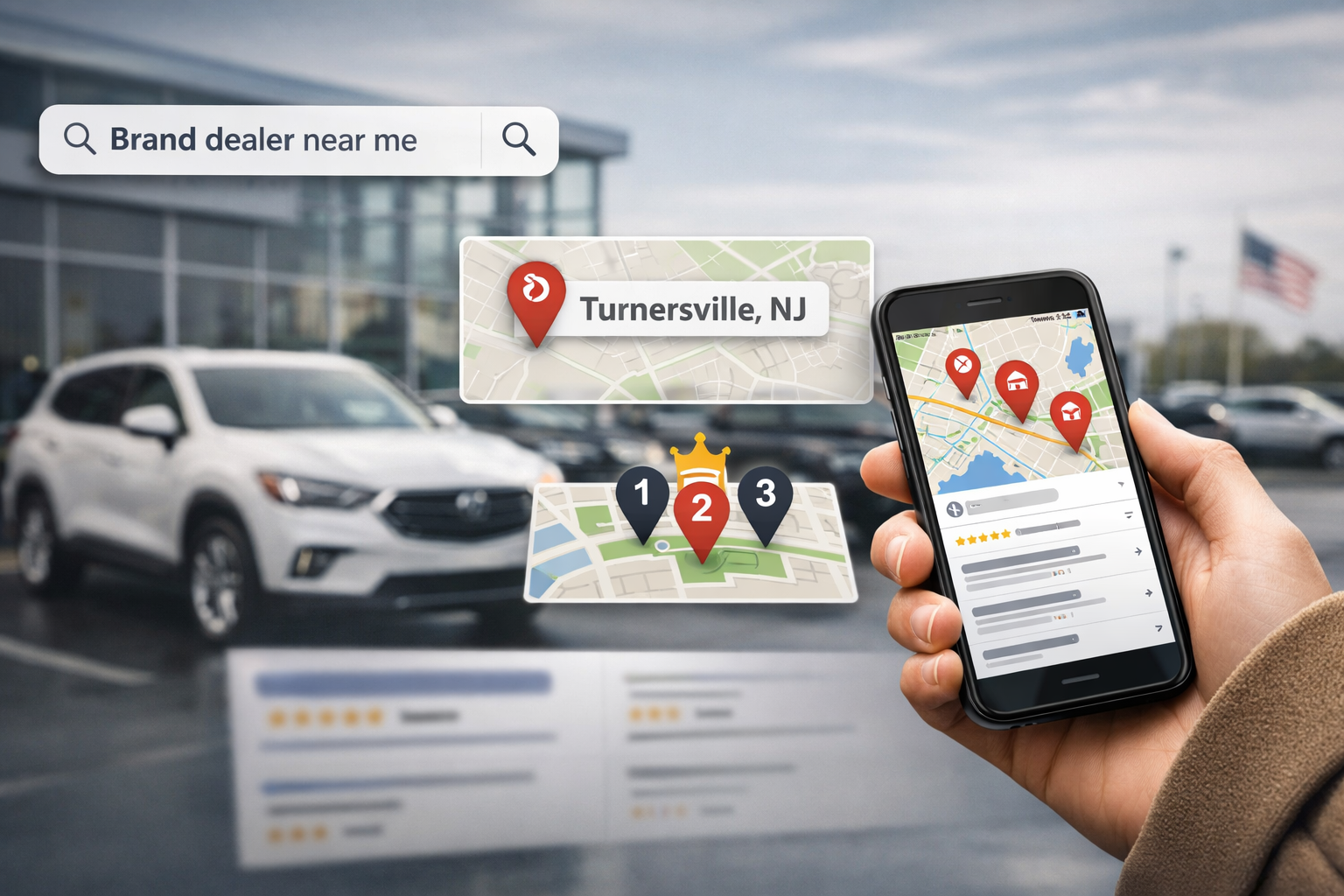
When someone in Turnersville searches “[brand] dealer near me,” they’re not browsing — they’re buying. If your dealership isn’t in the top 3 map results, you’re losing high-intent traffic to competitors down the street. In this guide, Ritner Digital breaks down exactly how local dealerships can dominate Google’s map pack and turn search visibility into real showroom visits.
How Do I Get My Dealership to Show Up in ChatGPT and AI Search Results?
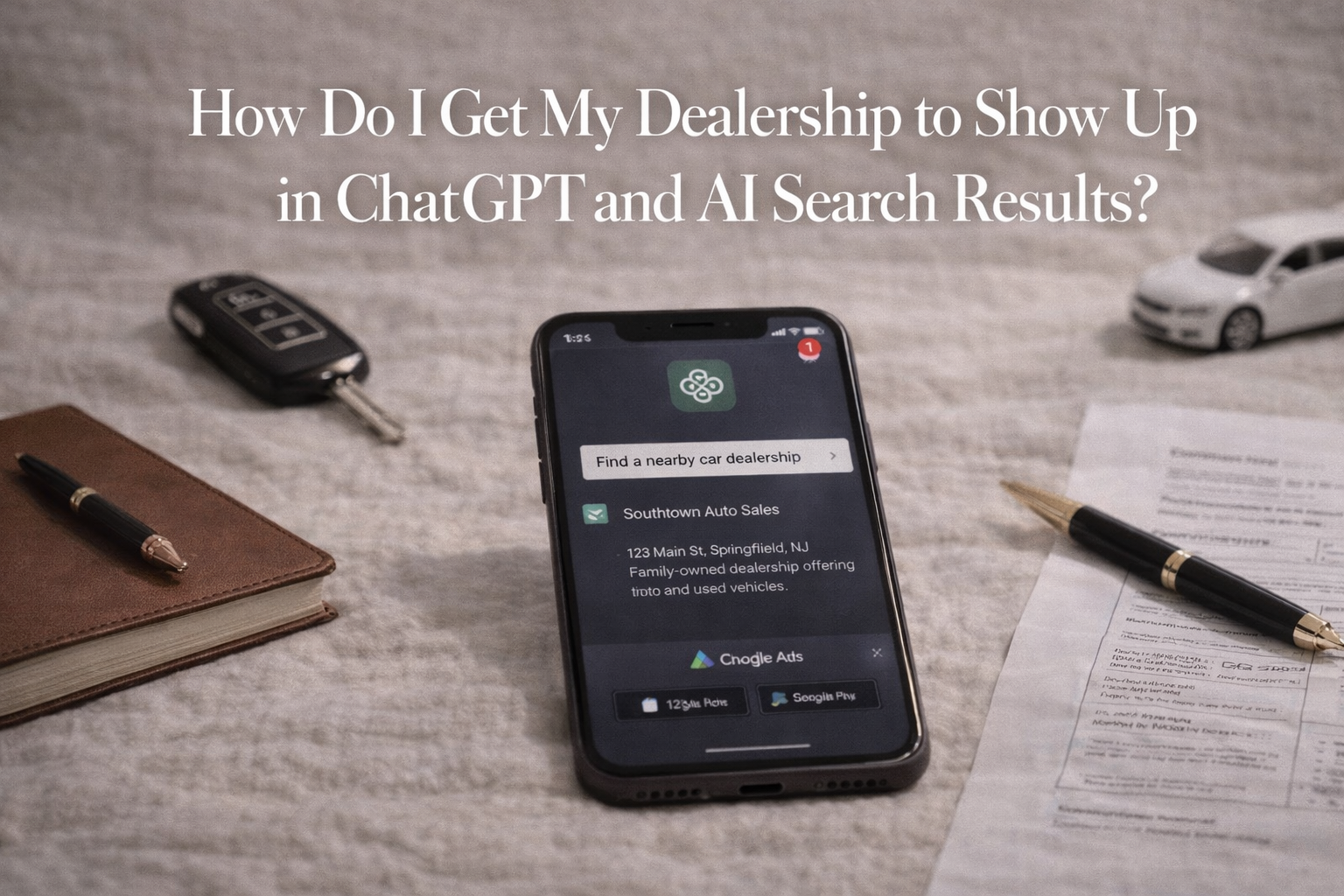
As more buyers use AI tools like ChatGPT to research where to buy cars, dealerships need to rethink visibility. This guide explains how to structure your website, strengthen SEO, and build authority so your dealership can appear in AI-driven search results.

From Ritner Street to the Top of SERPs: Why Local Context Matters in Philly SEO
Philadelphia isn’t one market—it’s dozens. From South Philly to Center City, how people search (and choose businesses) changes block by block. That’s why generic SEO strategies fall flat here. In this post, we break down why local context matters, how Google decides who ranks, and what Philly businesses can do to climb the SERPs by leaning into where they actually operate.