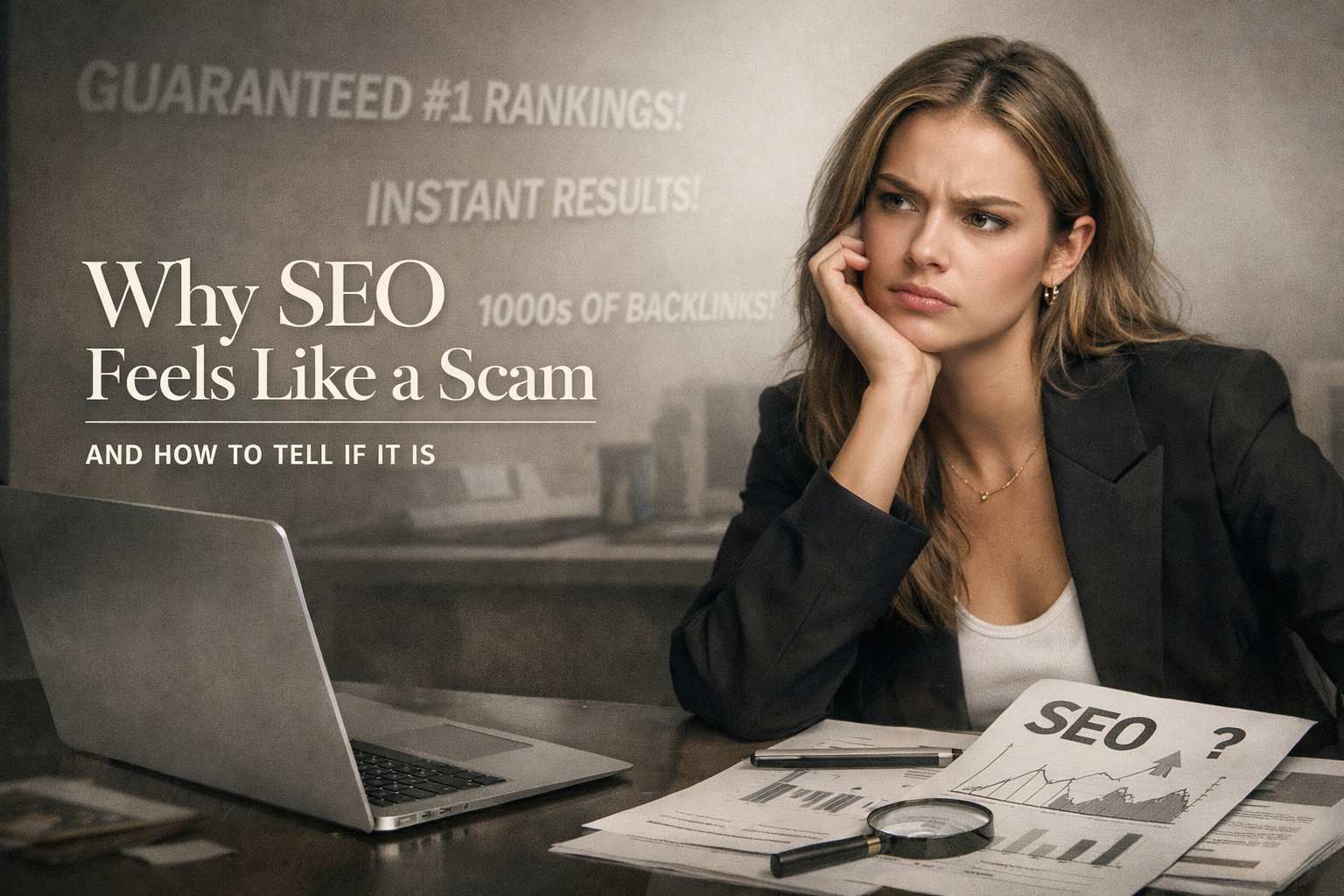
Why SEO Feels Like a Scam (And How to Tell If It Is)
Let’s get this out of the way:
If you’ve ever paid for SEO and thought, “I genuinely don’t know what we’re getting,” you’re not crazy.
SEO has a trust problem. Not because it doesn’t work — but because it’s one of the easiest marketing services to oversell, under-explain, and hide behind charts that look impressive but say very little.
Sometimes SEO is the problem.
Other times, it’s the way it’s packaged, measured, and explained.
Let’s talk about why SEO feels scammy — and how to tell whether you’re dealing with real strategy or just expensive vibes.
First: SEO Isn’t Instant (and That’s the Point)
Good SEO is slow.
Not “nothing happens for a year” slow — but “progress compounds quietly” slow.
So when someone promises:
Page-one rankings in 30 days
Guaranteed leads
A proprietary system Google definitely doesn’t know about
That’s not confidence. That’s a red flag.
Real SEO doesn’t spike. It stacks.
And when expectations are built around speed instead of systems, disappointment is almost guaranteed.
The Metrics Are Where Things Go Sideways
Most SEO reports look impressive and answer none of the real questions.
You’ll see:
Impressions going up
Keyword counts growing
Traffic charts pointing north
And still wonder:
“Why are the leads getting worse?”
Because visibility ≠ quality.
Traffic that doesn’t convert — or attracts spam, bots, and low-intent inquiries — isn’t growth. It’s just louder noise.
When metrics feel disconnected from reality, SEO starts to feel fake fast.
SEO Is Very Good at Getting Attention (and Bad at Filtering It)
Here’s an uncomfortable truth:
SEO can work too well.
It’s great at getting you seen.
It’s not automatically great at making sure the right people see you.
If your site ranks broadly and says things like:
“We help businesses grow”
“Strategic solutions for everyone”
Congrats — you’re visible.
Also congrats — you’re about to get junk.
SEO without clarity turns your contact form into a suggestion box.
SEO Doesn’t Fix Messaging. It Amplifies It.
This is where most strategies break.
SEO doesn’t rescue vague positioning.
It magnifies it.
If your messaging is unclear, SEO just sends more people into confusion — faster. That’s when inboxes fill up with bad leads and confidence in SEO evaporates.
The strategy didn’t fail.
The foundation was shaky to begin with.
So… How Do You Know If SEO Is Actually a Scam?
Here’s the simple test.
🚩 SEO Might Be a Scam If:
Everything is framed as a guarantee
Success is defined by rankings alone
Reports avoid real outcomes
You’re told to “trust the process” without understanding it
✅ SEO Is Probably Legit If:
Strategy is explained in plain English
Success is tied to intent, not just traffic
Tradeoffs are discussed openly
The plan still makes sense even if rankings fluctuate
Good SEO can be questioned.
Bad SEO requires blind faith.
What SEO That Works Actually Feels Like
It’s not flashy.
It looks like:
Fewer, better leads
Clearer content
Less junk in your inbox
Steady progress instead of dramatic spikes
When SEO is done right, it doesn’t feel magical.
It feels obvious.
Final Thought (and What to Do Next)
SEO doesn’t feel like a scam because it doesn’t work.
It feels like a scam when:
Expectations are misaligned
Metrics don’t match outcomes
Strategy is missing
The fix isn’t more keywords or bigger reports.
It’s clarity — in strategy, messaging, and measurement.
At Ritner Digital, we help companies cut through the noise by building SEO strategies that are:
Clear about intent
Honest about timelines
Focused on lead quality, not vanity metrics
No guarantees. No buzzwords. No smoke and mirrors.
If you want to understand whether your SEO is actually working — or just looks like it is — let’s take a closer look.
Ritner Digital
Strategy. Systems. Scale.
FAQs
Is SEO actually a scam?
No. SEO itself isn’t a scam—but it’s easy to sell badly. It feels scammy when it’s built on guarantees, vague promises, or reports that don’t connect to real business outcomes.
Why does SEO take so long to work?
Because SEO compounds over time. Search engines reward consistency, clarity, and trust—not shortcuts. Anyone promising instant results is skipping important steps or setting unrealistic expectations.
Why are we getting more traffic but worse leads?
Because visibility increased without qualification. SEO can send more people to your site, but if your messaging is broad or unclear, you’ll attract low-intent visitors along with the good ones.
What SEO metrics actually matter?
Traffic and rankings matter less than engagement, conversion behavior, and lead quality. The right question isn’t “Are we ranking?”—it’s “Are the right people finding us?”
How can I tell if an SEO provider is legit?
They should be able to explain their strategy in plain English, talk honestly about tradeoffs, and tie their work to real outcomes. If everything sounds mysterious or “proprietary,” that’s a red flag.
Does SEO still work today?
Yes—but only when it’s aligned with real intent and clear messaging. SEO today is less about gaming algorithms and more about matching how people search, think, and decide.
What should SEO feel like when it’s working?
Boring in a good way. Fewer surprises, steadier progress, better-quality leads, and less time wondering what’s actually happening behind the scenes.
Relate Reads
〰️
Relate Reads 〰️
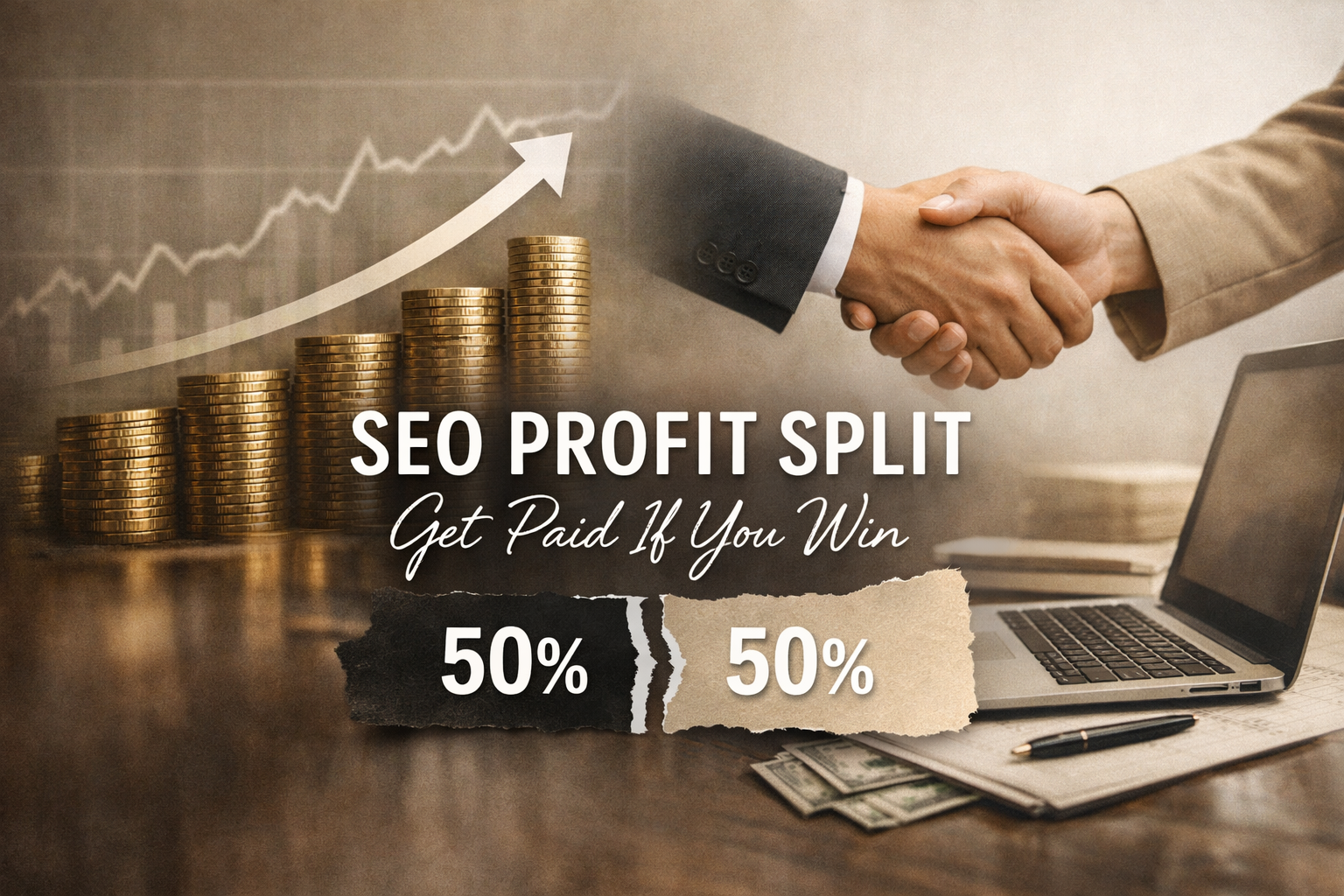
SEO for Profit Split: When “We Only Get Paid If You Win” Is a Power Move (and When It’s a Trap)
SEO for profit split flips traditional SEO pricing on its head: no retainer, no upfront fees—just a percentage of the profit generated from organic search. It sounds like the ultimate win-win, but the reality is more nuanced. In this guide, we break down how SEO profit split models really work, the hidden tradeoffs most agencies don’t mention, and which businesses benefit the most from performance-based SEO partnerships.

Agency Behind the Scenes: When the Specialist Leaves and Nobody Knows What You Were Getting
It happens more often than any agency will admit. A digital marketing specialist leaves, a new one steps in, and the account manager responsible for your relationship has no idea what was actually being done on your account. No documentation. No process. No continuity. And while they figure it out internally, your campaigns drift — and your money burns.
Why Organic Traffic Is the Most Sustainable Growth Strategy in 2026
Paid ads deliver short-term results. Organic traffic compounds. Learn why SEO and content marketing are the most sustainable growth strategies for businesses in 2026 — and how to build traffic that converts long after campaigns end.