Why Organic Traffic Is the Most Sustainable Growth Strategy in 2026
Paid ads are easy to turn on.
They’re also easy to turn off.
Organic traffic works differently. It compounds.
In 2026, businesses that rely solely on ads will keep paying more for the same results. Businesses that invest in organic traffic will keep growing — even when spend pauses.
That’s the difference between renting attention and building equity.
Paid Ads Deliver Speed. Organic Traffic Delivers Scale.
Paid advertising is transactional.
You pay → you get clicks → you stop paying → the traffic stops.
Organic traffic is cumulative.
Every optimized page, every ranking keyword, every piece of content becomes a long-term asset that continues to generate demand without ongoing spend.
Over time:
Cost per acquisition drops
Lead quality improves
Brand trust increases
That’s why organic traffic outperforms ads on ROI — especially as competition and ad costs rise.
Search Is Still Where High-Intent Buyers Start
When people are ready to buy, they search.
They don’t scroll hoping to be interrupted by an ad.
They actively look for answers, solutions, and providers.
Ranking organically means:
You show up at the exact moment of intent
You’re positioned as the authority, not the interruption
You earn trust before the first conversation
This is why organic traffic converts better — and more consistently — than most paid channels.
Content + Search Is a Future-Proof Funnel
Algorithms change. Platforms change. Ad costs fluctuate.
Search behavior doesn’t.
A strong organic strategy creates a self-sustaining funnel:
Content answers real buyer questions
SEO ensures that content is discoverable
Traffic grows without incremental cost
Leads compound month over month
Instead of chasing short-term spikes, you build a system that keeps working.
Why Most Businesses Don’t Win at Organic Growth
Not because organic doesn’t work — but because it’s done without strategy.
Common issues:
Content without keyword intent
SEO without conversion optimization
Traffic without a clear lead path
Organic growth requires alignment between content, search, and business goals. When those pieces work together, results scale.
The Businesses Winning in 2026 Are Building Assets
They’re not asking:
“How many clicks did we buy this month?”
They’re asking:
“How much demand are we owning?”
Organic traffic isn’t a campaign.
It’s infrastructure.
And businesses that invest in it now will compound faster, cheaper, and longer than those relying on paid acquisition alone.
Build an Organic Growth Engine That Compounds
If you want predictable traffic, qualified leads, and long-term ROI, organic growth needs to be part of your strategy.
Ritner Digital helps businesses build scalable, search-driven growth systems that convert.
Frequently Asked Questions
What is organic traffic?
Organic traffic is visitors who find your website through search engines like Google — not through paid ads. These users are actively searching for answers or solutions, which makes them higher intent and more likely to convert.
How long does organic traffic take to work?
Organic growth is not instant, but it compounds.
Most businesses start seeing measurable traction in 3–6 months, with meaningful lead growth over 6–12 months as content and rankings build authority.
Is SEO still worth it in 2026?
Yes — more than ever. As ad costs increase and competition rises, SEO remains one of the few channels where returns improve over time instead of declining. Search behavior hasn’t changed: buyers still start with Google.
What’s the difference between SEO and paid ads?
Paid ads deliver immediate traffic but stop when spend stops.
SEO builds long-term visibility that continues generating leads without paying for every click. The most effective strategies use paid ads for speed and SEO for scale.
Does organic traffic actually convert into leads?
Yes. Organic traffic typically converts better than paid traffic because users are actively searching with intent. When content is aligned with buyer needs and optimized for conversion, organic becomes a consistent lead source.
What kind of content drives organic traffic?
Content that answers real buyer questions:
Service and solution pages
Educational blog posts
Comparison and decision-stage content
Industry-specific insights
The goal is relevance, not volume.
Can small businesses compete with larger companies in search?
Absolutely. Search rewards relevance and authority — not company size. With the right keyword strategy, technical SEO, and focused content, small businesses can outrank larger competitors in high-intent searches.
Do I need ongoing SEO, or is it one-time?
SEO is an ongoing investment. Search algorithms, competitors, and user behavior evolve. Continuous optimization ensures rankings improve, traffic compounds, and conversions increase over time.
How does Ritner Digital approach organic growth?
We focus on building search-driven growth systems, not isolated tactics. That means aligning SEO, content, and conversion strategy to create sustainable traffic that turns into real business results.
How do I get started?
Start with a conversation. We’ll evaluate your current visibility, identify growth opportunities, and outline a strategy designed to compound.
Related Reads
〰️
Related Reads 〰️
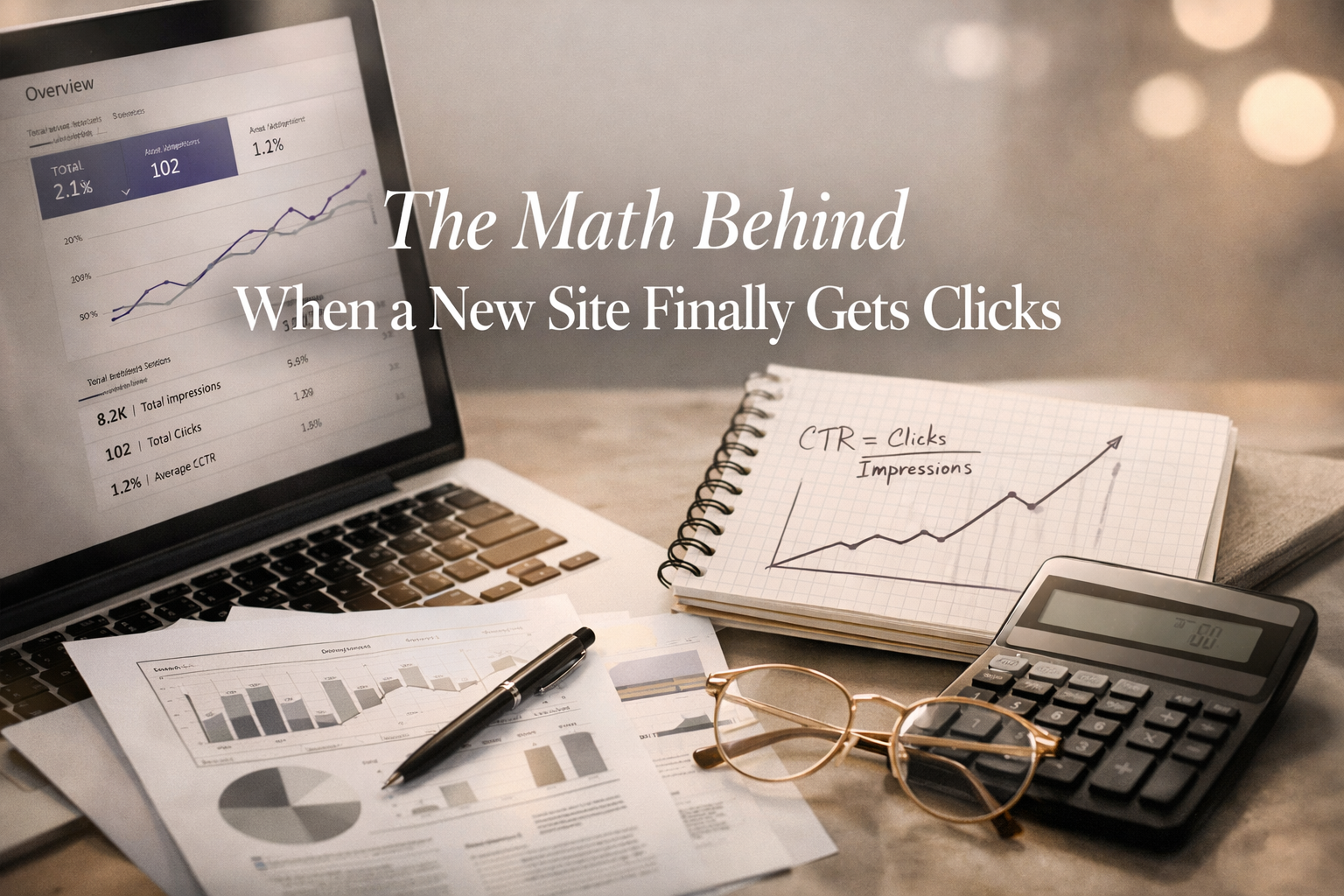
The Math Behind When a New Site Finally Gets Clicks
If your new site is getting impressions but barely any clicks, it’s not broken — it’s statistical. This post breaks down how impressions turn into clicks, what realistic CTR looks like for new domains, and why early SEO progress feels slow even when it’s working.
Why SEO Feels Like a Scam (And How to Tell If It Is)
SEO has a trust problem. Not because it doesn’t work—but because it’s often oversold, poorly explained, and measured with metrics that don’t matter. This post breaks down why SEO feels scammy and how to tell if you’re dealing with real strategy or just expensive noise.

SEO Doesn’t Stop at the Sale: Using Content to Onboard and Retain Clients
If your account managers are answering the same five questions every week, you don’t have a communication problem—you have a content gap. SEO doesn’t end when the deal closes. The smartest teams use post-sale content to onboard clients, reduce churn, and turn SEO into a full-funnel growth strategy.