
Why Your Cincinnati Business Stopped Getting Calls (and How to Diagnose It in 30 Minutes)
The phone used to ring on its own. Now it doesn't, and the fog between "slow week" and "admitted pattern" is where businesses make expensive guesses — ads bought to paper over a broken contact form, websites rebuilt that were fine, agencies fired mid-build. A quiet phone is a symptom with eight known causes, and each leaves a different fingerprint in data you already have: your own form and phone line, Search Console's impressions-vs-clicks shape, the map pack, your review trend, and the AI assistants no dashboard monitors. Here's the full diagnostic in triage order, the 30-minute checklist, and the three panic moves to avoid while you run it.

You Started Publishing SEO Content and Your Leads Dipped. Here's Why That's Normal — and When It Recovers.
You had a five-page site and a phone that rang. Then you started a content engine and the leads slowed down. Before you panic, here's what's actually happening: Google re-reads your whole site, new pages drag your averages down, and your traffic shifts from buyers to researchers — the same turbulence a new site launch causes. This post breaks down all five mechanisms, the month-by-month recovery timeline, and how to tell a normal dip from a broken one.
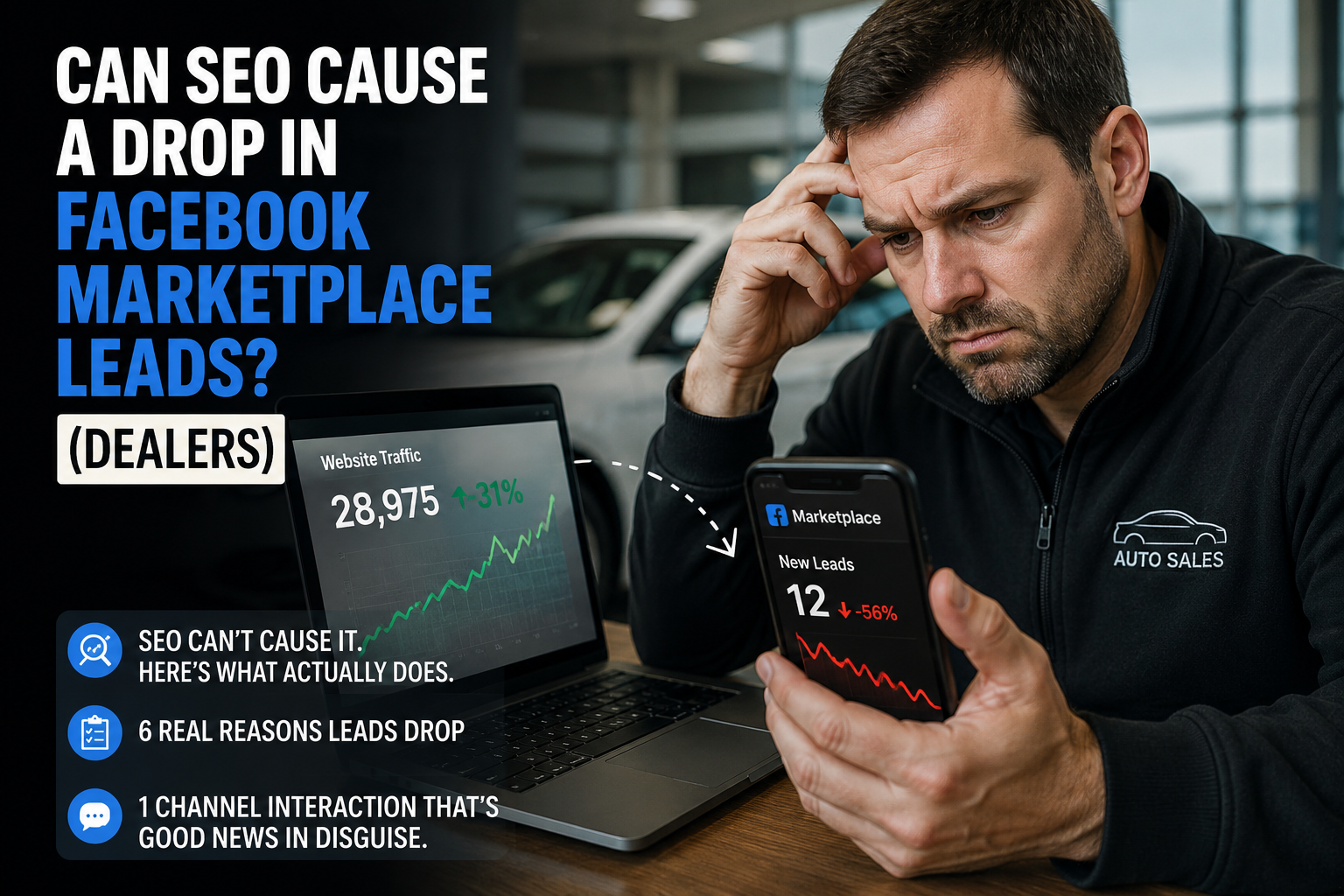
Did SEO Cause Your Facebook Marketplace Leads to Drop? What Car Dealerships Should Actually Check
Your website traffic is climbing, but Facebook Marketplace has gone quiet — and your brain wants to connect the two lines. Here's why SEO can't cause a Marketplace dip, the six things that actually do, and the one real channel interaction that's good news in disguise.
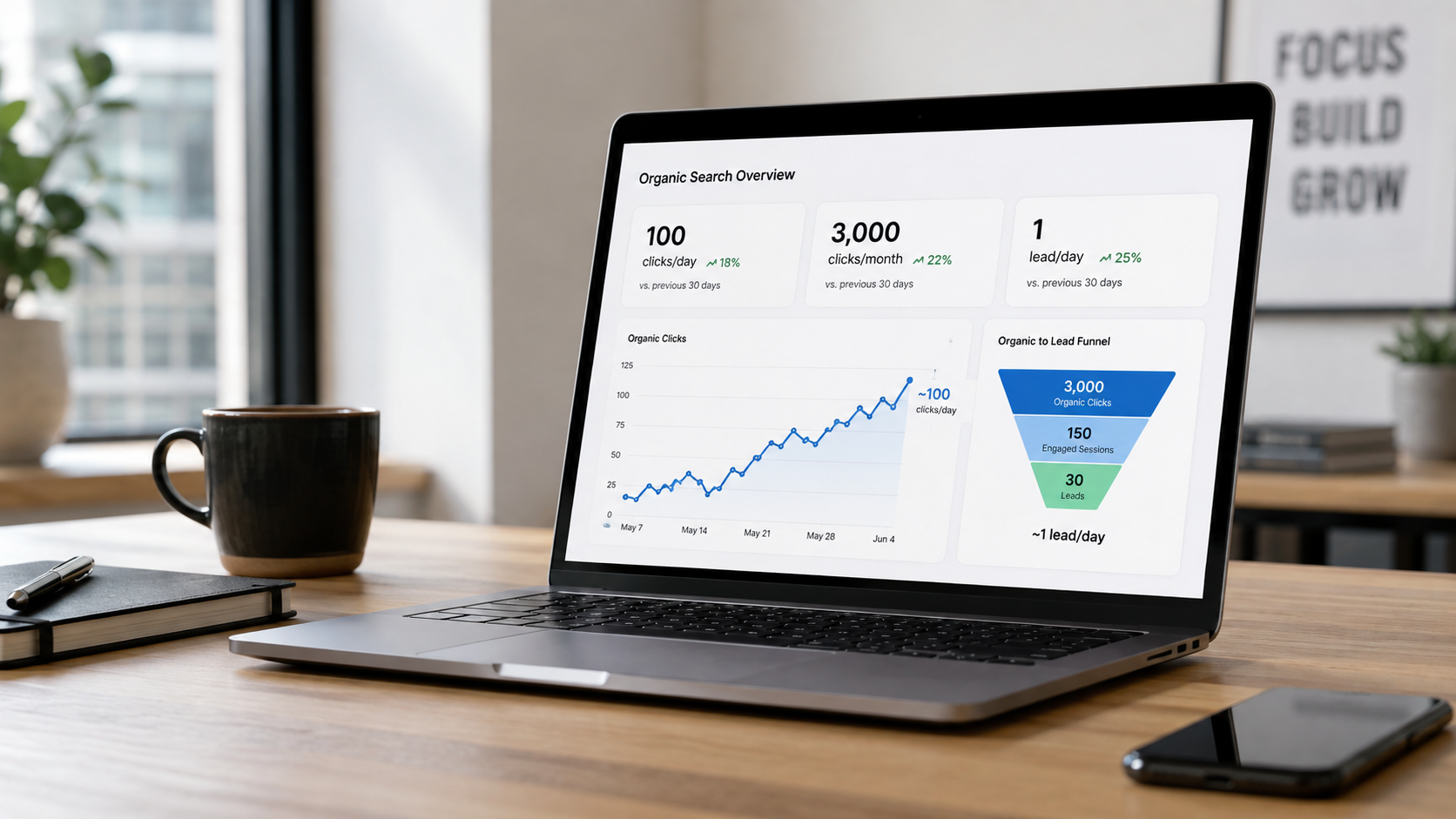
100 Clicks a Day: The Organic Search Sweet Spot Where Leads Become a Daily Habit
There's a number where organic search stops being a marketing line-item and starts behaving like a salesperson who shows up every morning: 100 clicks a day. That's 3,000 a month — one lead a day at a deliberately conservative 1% conversion, six to eight customers a month at normal close rates, and about $16,000 a month in equivalent ad spend at 2026 prices. Most business sites run at a twentieth of that, which is exactly why organic feels like it doesn't work. Here's the full math — including where we sit on our own curve.
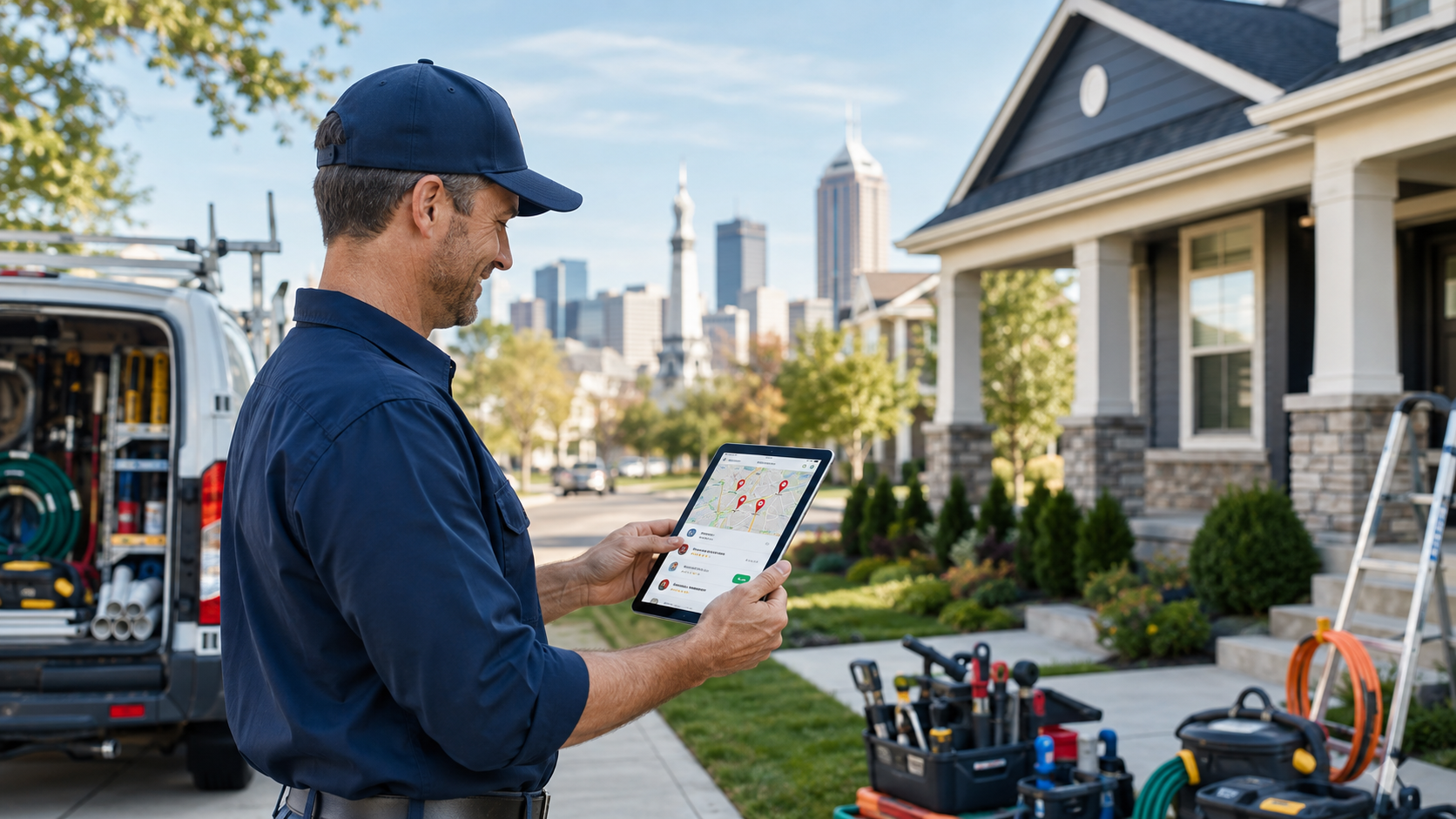
SEO for Indianapolis Home Service Companies: A Local Lead Generation Playbook
For Indianapolis plumbers, roofers, electricians, remodelers, landscapers, restoration companies, cleaners, pest-control businesses, and other home service providers, SEO should do more than generate traffic. It should put your company in front of local customers at the exact moment they need help—and turn that visibility into calls, estimates, appointments, and booked jobs. This 2026 playbook explains Google Maps, service-area SEO, reviews, service pages, city pages, local authority, mobile conversion, Local Services Ads, AI search, and lead tracking.

Your Next Wildwood Buyer Is on a Couch in Doylestown, Three Years From Closing. Zillow Plans to Sell Them to You for 35%.
Tonight, your next closing is on a couch in Doylestown typing "is a Wildwood Crest condo a good investment" — three winters from a wire transfer with six zeros. The national data describes this buyer perfectly: 62 years old, repeat purchaser, 30% chance of paying cash, living entirely on screens. This letter maps the multi-year dreaming phase almost no agent farms, runs the Zillow Flex math ($6–7K per closing at 35%), and lays out the content, AI visibility, and remote-buyer proof that make you the family's advisor years before the toll booth can introduce you at the door.

Half of Cape May County's Homeowners Live Three States Away. They Hire Contractors Sight Unseen — From Google.
Every shore contractor knows the call from the 215 number: water in the back bedroom, owners in Harrisburg, key with the neighbor. That customer — who hires without a handshake, from a screen, three states away — isn't the exception in Cape May County, where 52% of housing is seasonal. They're the market. This letter covers the four silent questions the sight-unseen buyer asks, the $400-per-job shared-lead treadmill and its exit, the "For Second-Home Owners" page nobody has published, and the winterize-watch-open retainer play that turns the trades' lumpiest revenue into subscription income.
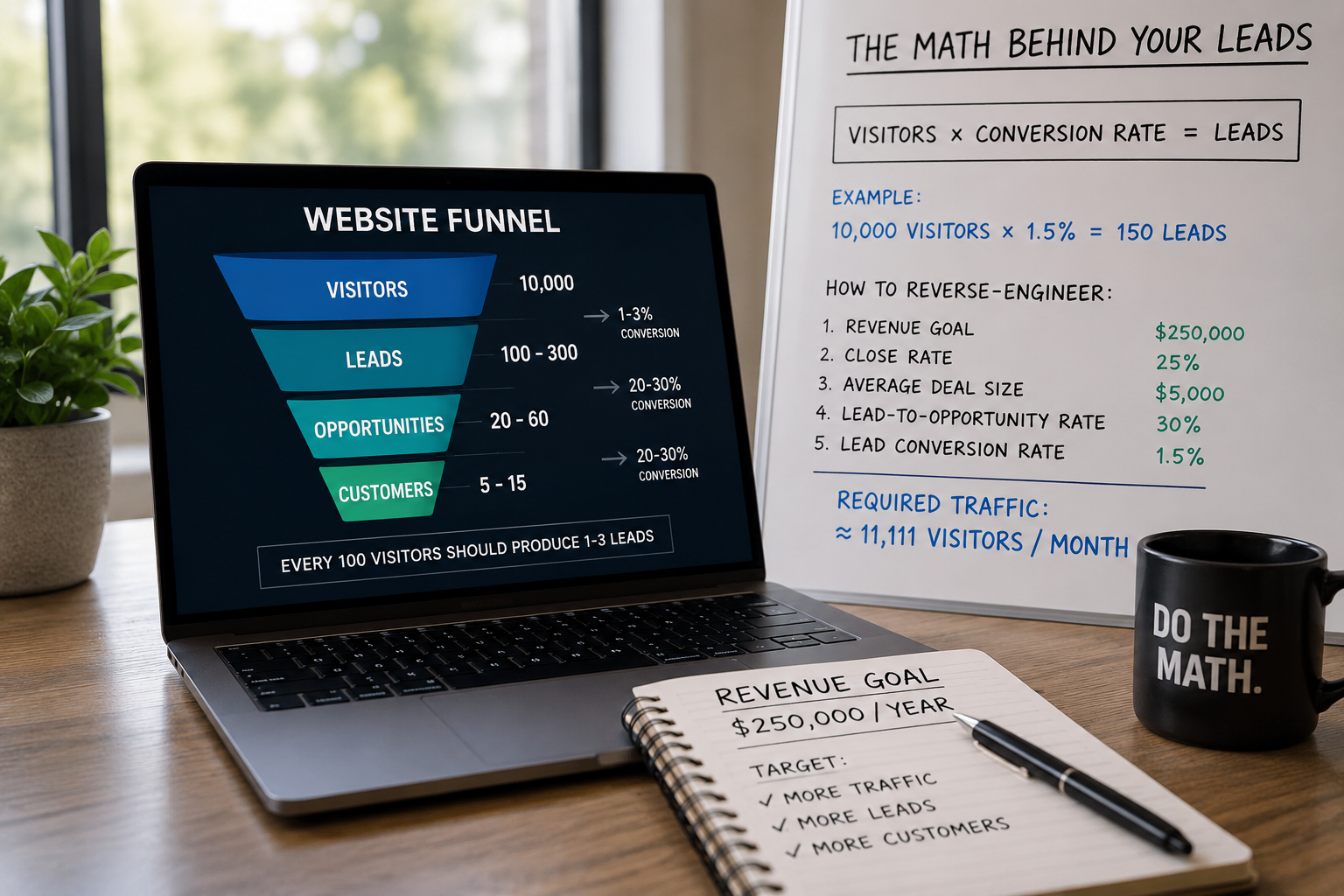
How Many Leads Should a Website Get Per Month? The Actual Math
"How many leads should our website get?" is the most common question we hear — and it has no answer without three other numbers. Here's the honest version: the 100-visitor rule, why it's probably wrong for your industry, the full funnel math from visitor to closed revenue, and how to work backwards from a revenue target to the traffic you actually need.

Your CJDR Dealership Closes Deals. It Just Needs More People to Close: The Top-of-Funnel Problem Nobody Talks About
There's a specific frustration that only happens to good dealerships: your team closes at a rate you're proud of, but the leads just aren't showing up. A metro-Atlanta CJDR store put it perfectly — great process, strong closing percentages, just need more prospects to consider them. That's not a sales problem. It's a visibility problem, and it's the fixable half of the funnel. Here's where dealer leads leak and how to feed the talent you've already built.
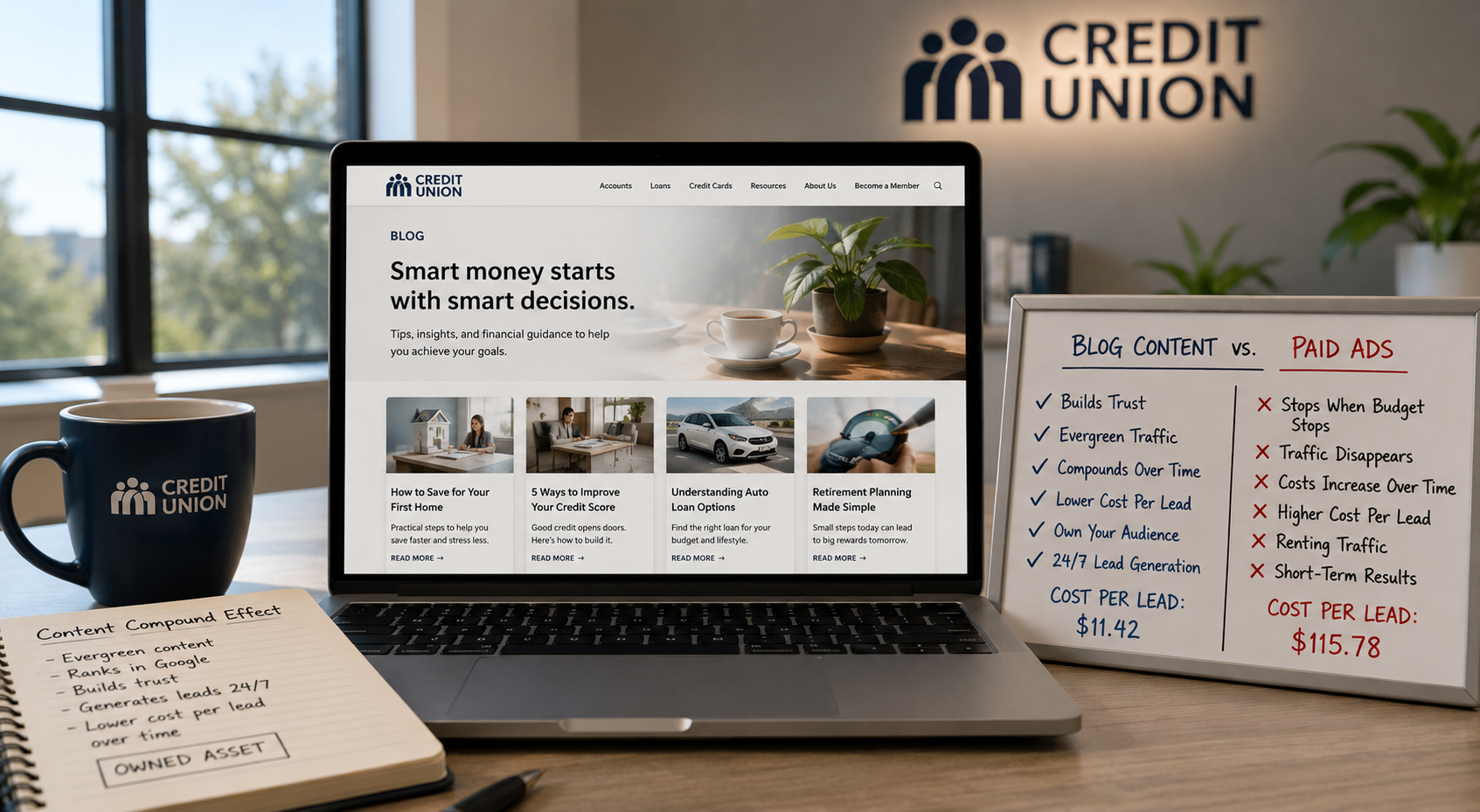
How a Credit Union Blog Can Generate 10x More Leads Than Paid Ads
Run Google Ads and the leads stop the day the budget pauses — you were renting traffic, not building anything. A blog works the opposite way. Here's how a credit union blog can generate 10x more leads than paid ads: the real cost-per-lead economics, why content compounds while ads decay, where paid still earns its place, and how to build the engine and prove its ROI to your CFO.

How to Build a Financial Content Strategy That Drives Loan Applications
A generic post about "5 tips for homebuyers" won't generate qualified leads. Learn how to build a financial content strategy that drives loan applications by mapping content to every stage of the borrower's journey, demonstrating the E-E-A-T signals Google expects for financial topics, optimizing for both search engines and AI-powered discovery, and connecting every article to measurable conversions.

Personal Loan SEO: Capturing Borrowers Before They Go to LendingTree
When someone needs a personal loan, there's a fork in the road: find a direct lender they trust, or land on LendingTree and become one of five bidders for their business. Here's how banks and credit unions use SEO to intercept borrowers before they ever reach the aggregator.
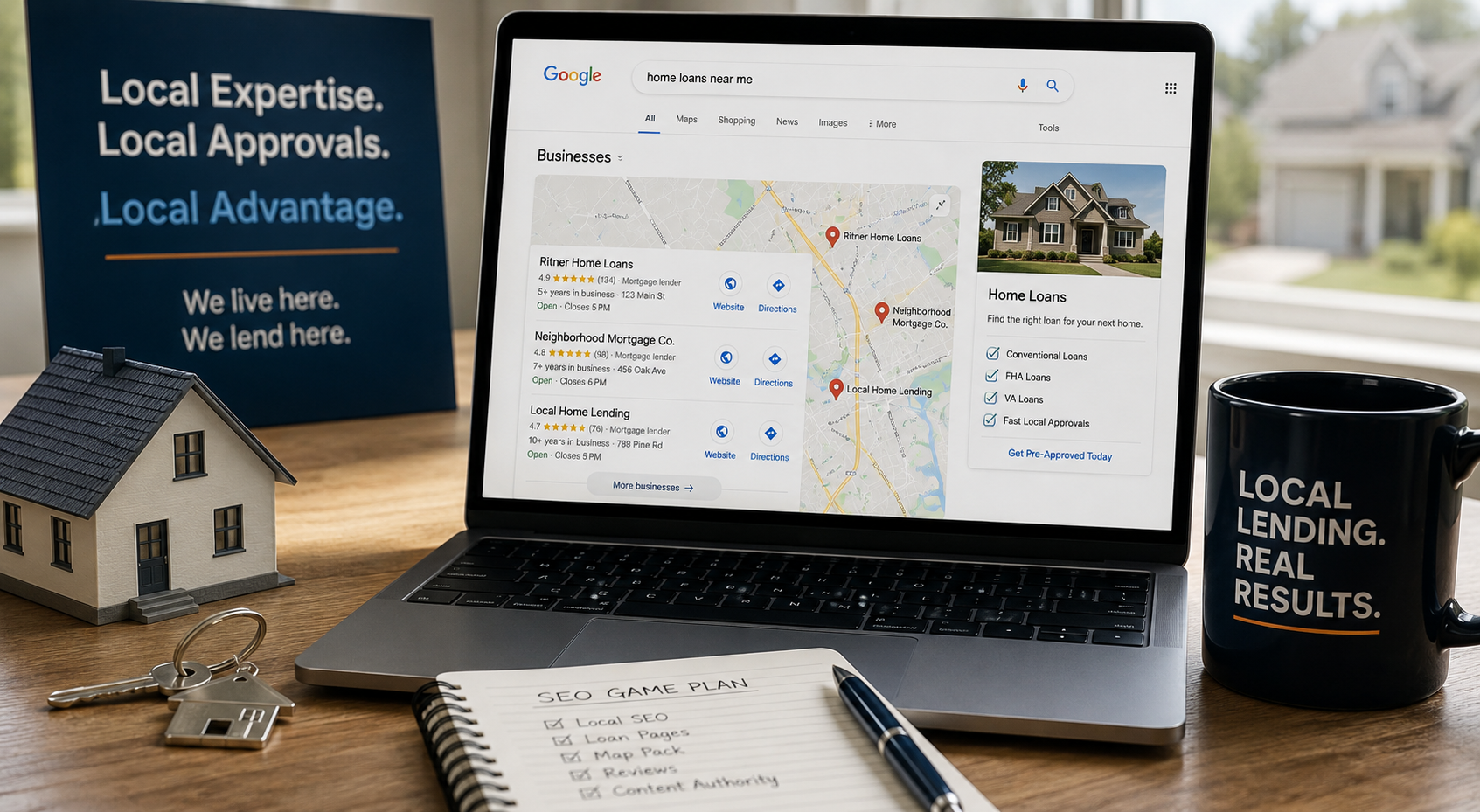
SEO for Mortgage Lenders: How to Capture Home Loan Searches Before Big Banks Do
Big banks and aggregators spend millions to dominate mortgage search — but they can't replicate your local expertise, and they can't out-rank you everywhere. Here's how mortgage lenders capture home loan searches in their own market before the big banks do, and earn exclusive leads they never have to share.

"Is This Thing On?": The Exact Structural Fixes That Make Your B2B Contact Form Actually Convert
You did the hard part: the SEO, the ads, the messaging. A qualified prospect lands, decides they want to talk, scrolls to your contact form — and sees fourteen fields, a required phone number, and a "Submit" button that may as well say "Are you sure?" They leave. Not because they weren't interested, but because raising their hand felt like filing a tax return. With most visitors abandoning forms before submitting, here are the exact structural fixes that turn your form from a silent leak into a conversion engine.

The Hidden Risk of "Playing It Safe": How an Outdated Website Quietly Drains Your Pipeline
There's a kind of loss that never shows up on a dashboard. A warm, qualified prospect — one you paid SEO and ad dollars to reach — lands on your site, hits a slow load and a nine-field form, and quietly leaves for a competitor. They don't register as a catastrophe. At best, a bounce. In reality, a deal. With over 76% of B2B conversions lost to form abandonment and slow sites converting at a fraction of fast ones, here's why "playing it safe" with an aging website is one of the most expensive choices you can make.
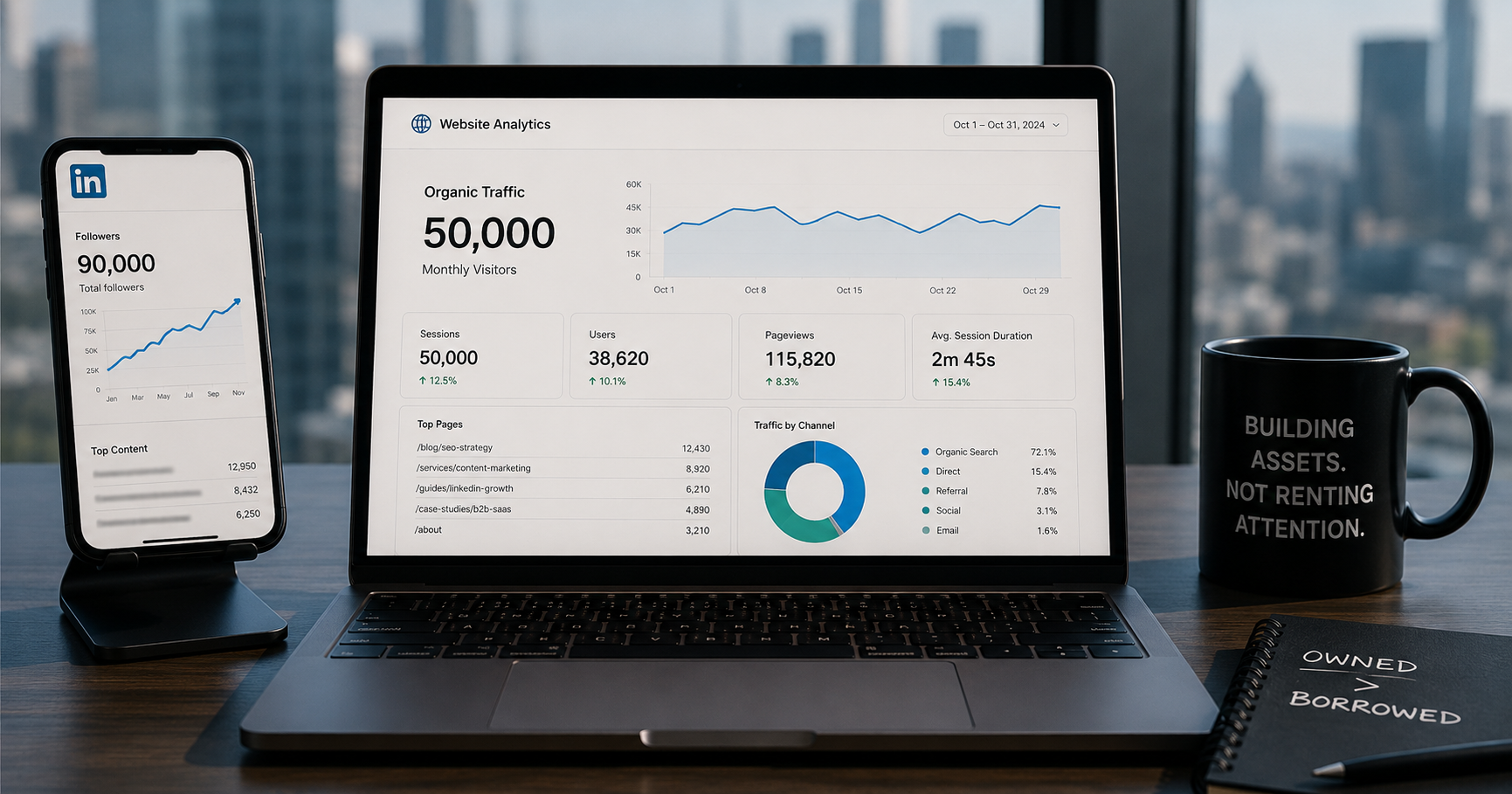
LinkedIn 90K Followers vs. 50K Monthly Domain Clicks: Which Asset Actually Drives Inbound?
There's a debate happening in every marketing meeting and strategy call right now. Someone has built a massive LinkedIn following. Someone else has quietly been building a website that pulls 50,000 organic clicks a month. Both feel like wins — but if your goal is inbound revenue, these two assets are not equal. Here's what the data actually says.

The Simplest Thing a Founder With 90K Followers Did to Have Their Best Quarter Ever
Most founder-led brands have already done the hard part — building a real audience, earning genuine trust, driving consistent traffic. What they're missing isn't more content or a bigger ad budget. It's a mechanism to capture and compound all of that attention. One founder with 90,000 LinkedIn followers and 50,000 monthly visitors just had their best quarter ever after adding a single well-built lead magnet. Here's why it worked — and why the funnel doesn't need to be nearly as complicated as most people make it.
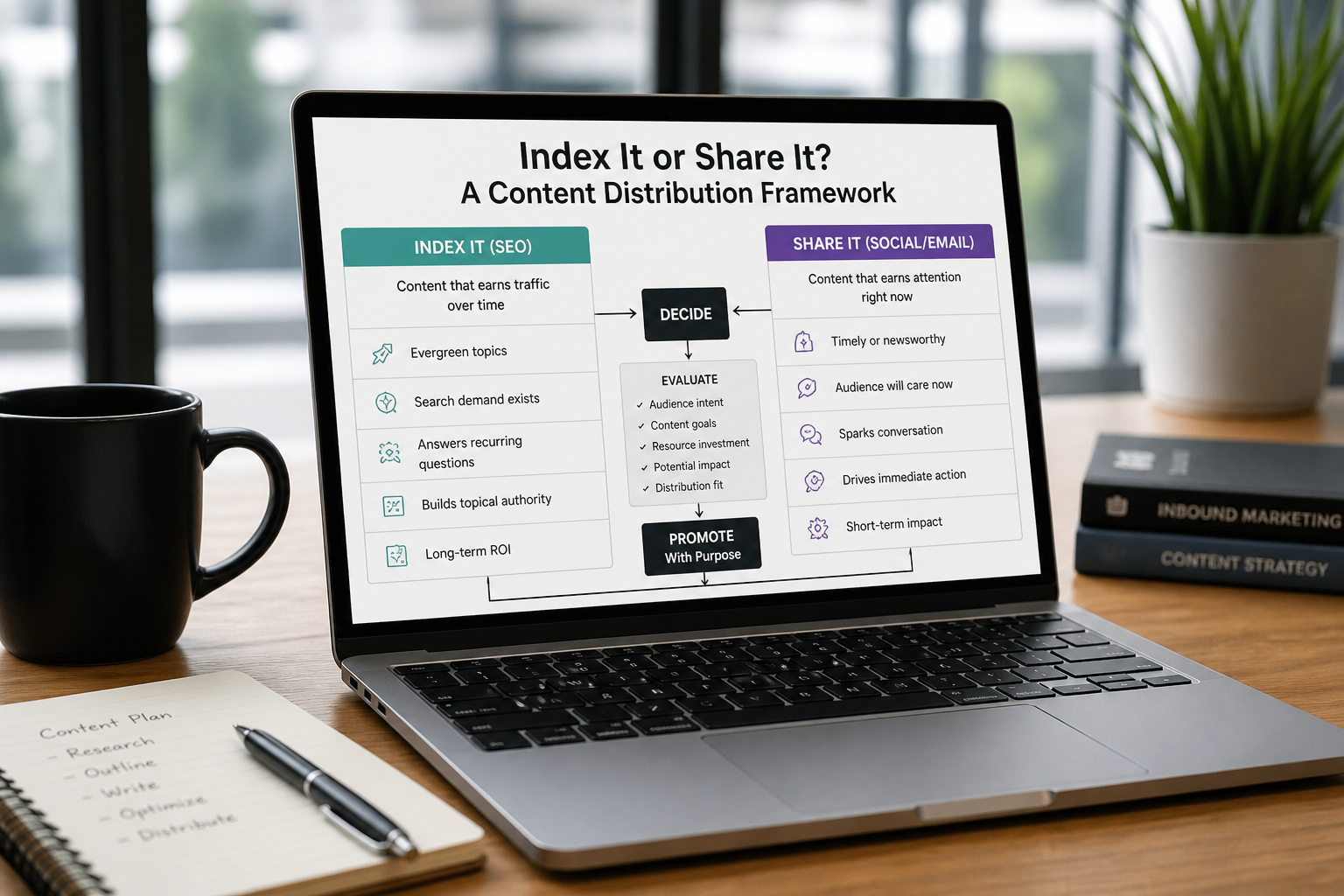
When to Publish and Pray vs. When to Promote: A Content Distribution Framework for High-Output Companies
High-output content teams make one of two mistakes — they share everything everywhere until their audience tunes them out, or they publish consistently and promote nothing. Here's the framework for making the index-vs-promote decision intentionally, so your best content gets the distribution it deserves and your social channels stay focused enough to actually perform.

Why Your Employees Are Your Most Powerful Marketing Channel (And You're Probably Not Using Them)
Your company's LinkedIn page will never out-convert your employees' personal profiles. The data is clear — employee advocacy leads convert 7x more frequently than brand content. Here's why that gap exists and what to do about it.

Do People Still Fill Out Website Contact Forms? What the Data Actually Says in 2026
About 9% of visitors who see a contact form submit it. Zero-click search has shrunk the traffic that reaches forms in the first place. And AI-referred visitors convert at 23x better rates than standard organic traffic. So: are contact forms still working in 2026? The answer is more nuanced — and more actionable — than most businesses realize.