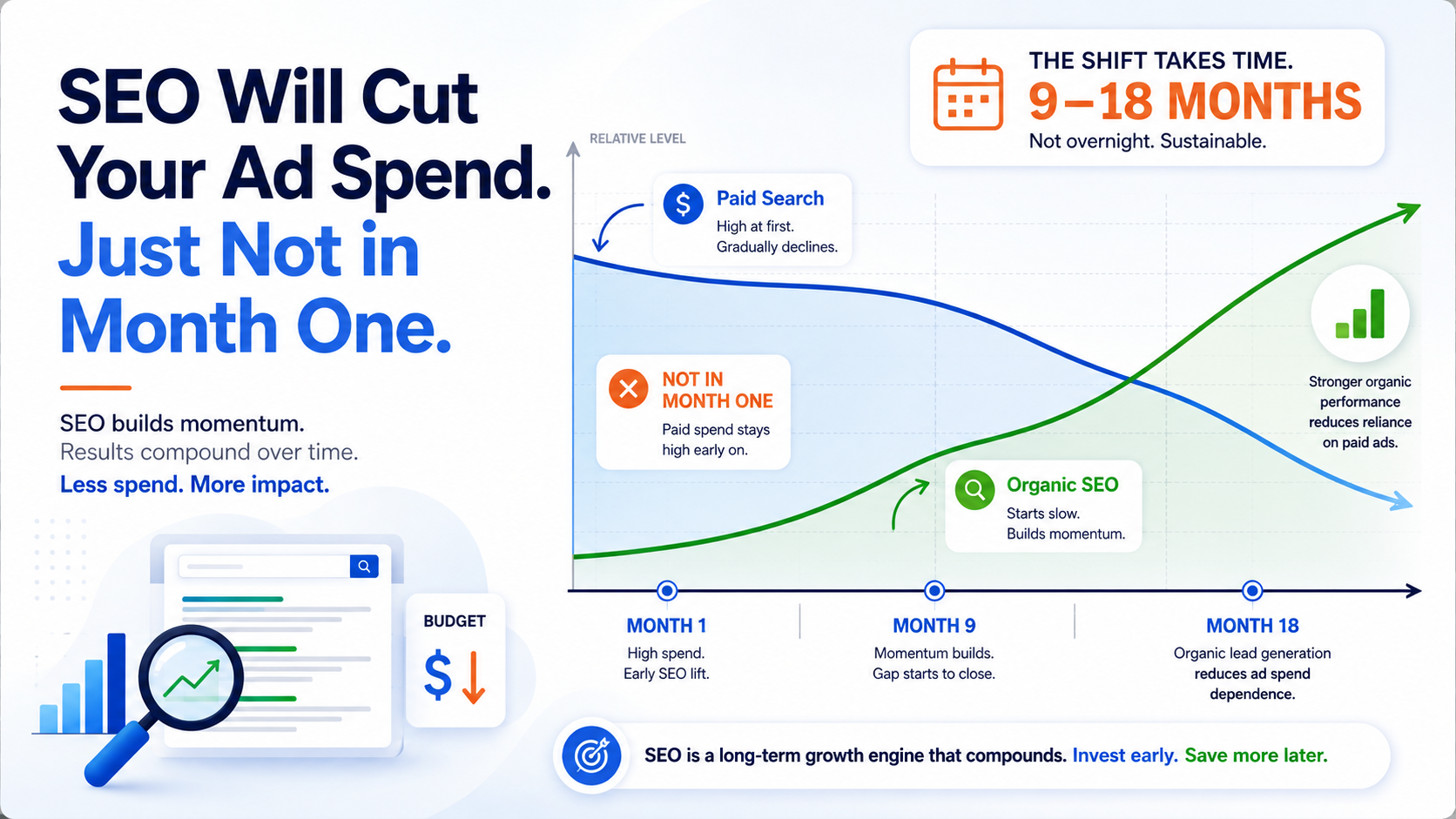
SEO Will Cut Your Google Ads Bill. Just Not in Month One.
Every SEO pitch promises the same thing: stop renting traffic, own it, watch the Google Ads invoice shrink. The promise is real and the mechanism is documented in Google's own research. The mistake is the timing. Here's what the data actually says about how paid-to-organic substitution works, how long it takes, and the five conditions that tell you a keyword is ready.

Should Cincinnati Businesses Still Run Google Ads, or Build Organic? Renting vs. Owning, Honestly
Run the pause test: turn off Google Ads for two weeks — in your head, what happens to your leads? If they stop, you don't own your demand; you rent it from an auction where the rent only rises and the click pool only shrinks. But "just build organic" is its own trap, because compounding takes quarters and payroll runs monthly. The honest version of the debate: what paid genuinely does best, what the rent actually costs, organic's fine print (a mortgage, not a windfall), the stat that ends the either/or framing — brands cited in AI answers earn 91% more clicks on their paid ads — and the three-stage sequence from ads-as-ventilator to ads-as-scalpel.

How Long Does SEO Take in Indianapolis? What Local Businesses Should Expect
Most Indianapolis businesses should not expect SEO to transform their lead flow in two weeks—but they also should not accept an agency saying “SEO takes a year” while showing no measurable progress. Google says some search changes can appear within hours while others can take several months. This guide explains what Indianapolis businesses should realistically expect during the first 30 days, 90 days, six months, and one year of SEO, what can speed results up or slow them down, and how to tell whether a campaign is actually progressing.
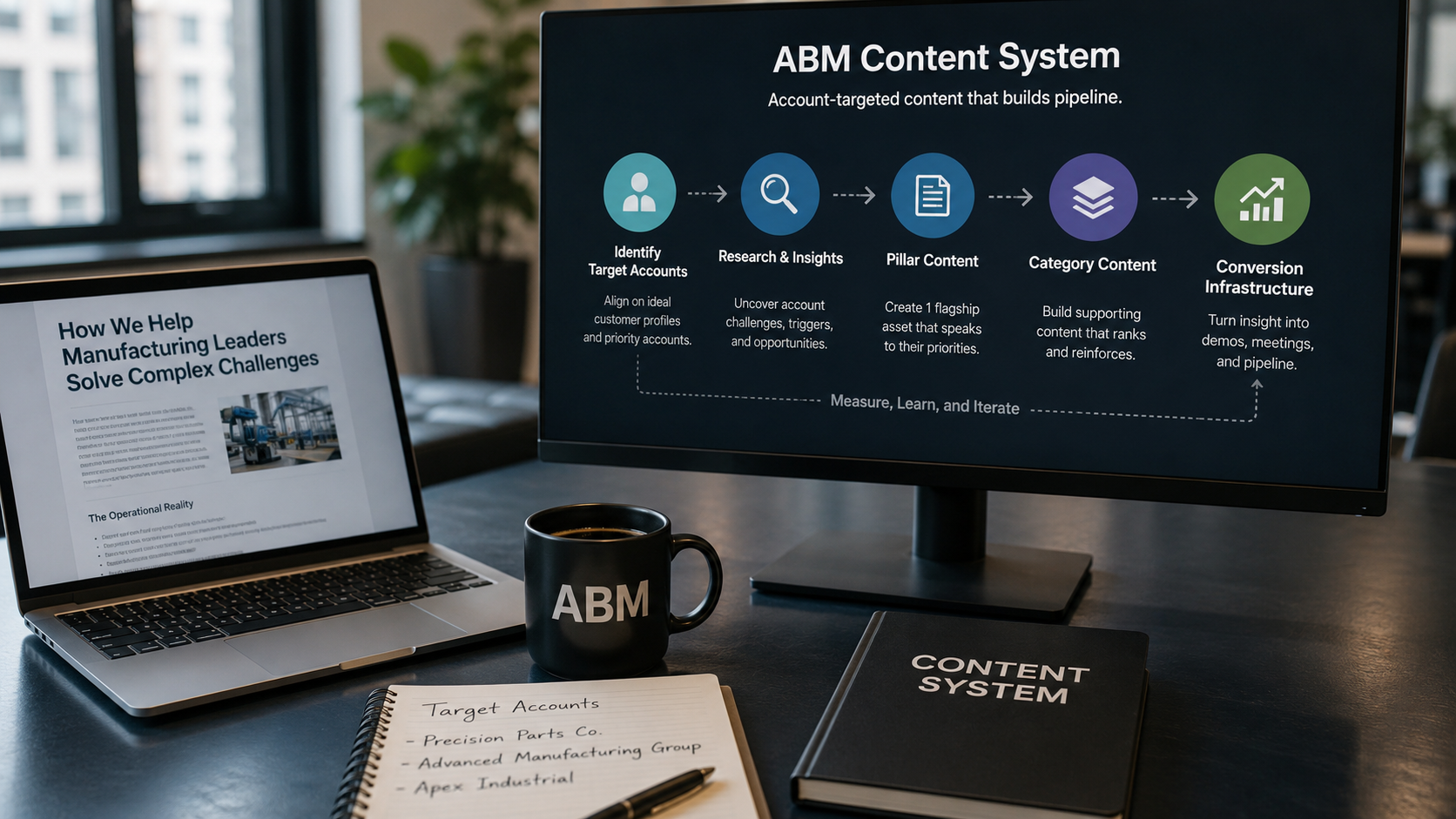
The ABM Content System: How Targeted Blogs Become a Lead Engine
Most B2B companies run one of two broken motions: a blog that ranks for nothing, or outbound that buyers actively resent. Both are underfunded and disconnected. Here's the system we build instead — account-targeted pillar content, category support, and conversion infrastructure, published on a cadence that compounds. Including the honest timeline and who it isn't right for.
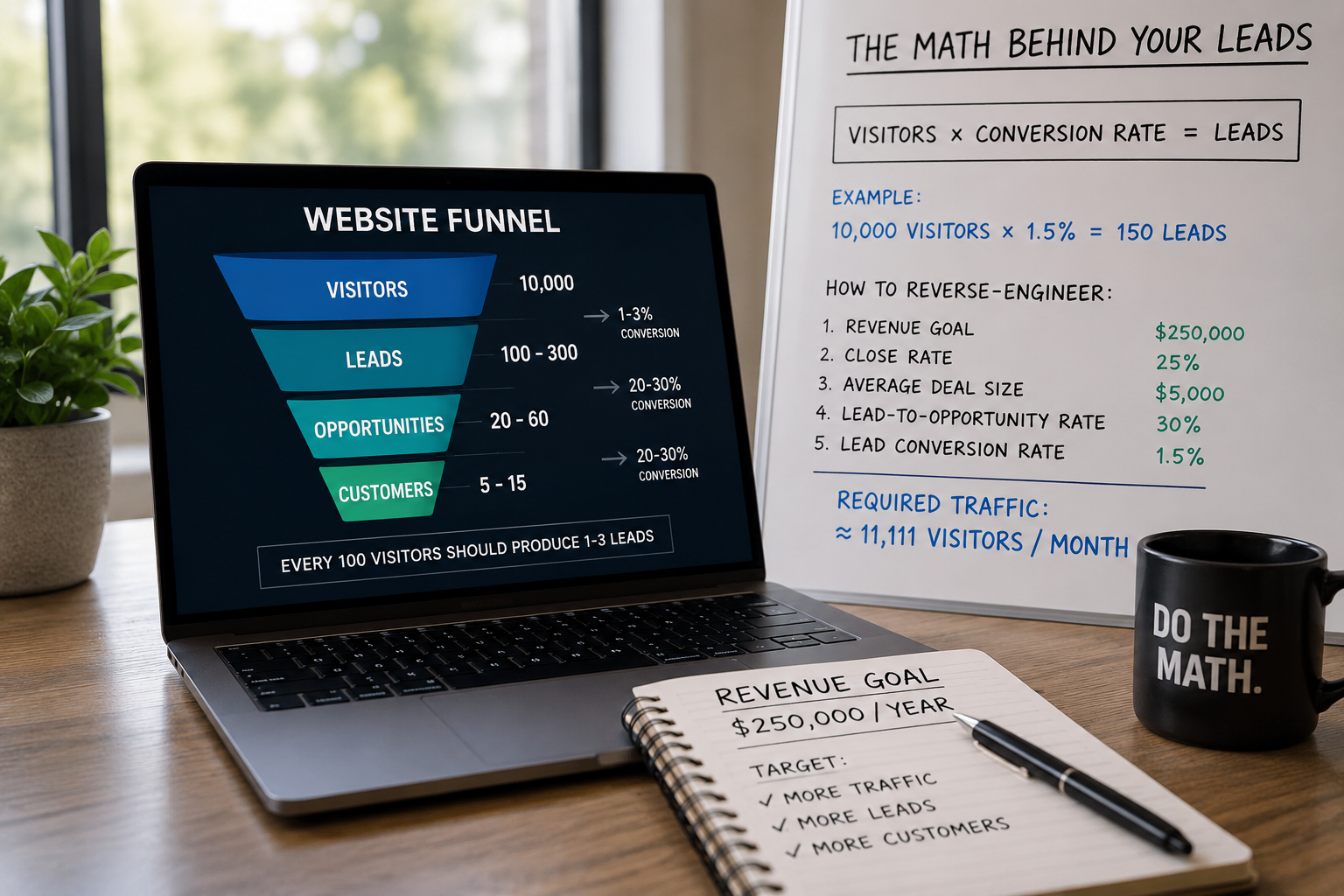
How Many Leads Should a Website Get Per Month? The Actual Math
"How many leads should our website get?" is the most common question we hear — and it has no answer without three other numbers. Here's the honest version: the 100-visitor rule, why it's probably wrong for your industry, the full funnel math from visitor to closed revenue, and how to work backwards from a revenue target to the traffic you actually need.

You're Paying Enterprise Prices for Enterprise Overhead — Not Enterprise Results
The price gap between a big SEO agency and a small one can be 5-10x for the same scope of work — and industry data confirms that difference is rarely about quality. It's overhead: the office, the org chart, the software licenses, and the brand name, all funded before a dollar reaches your actual campaign. This post breaks down exactly where a $4,000 retainer goes, the two tells that you're overpaying, and the "small fish" problem nobody warns you about. If you're paying enterprise prices without enterprise results, here's how to tell — and what to do about it.
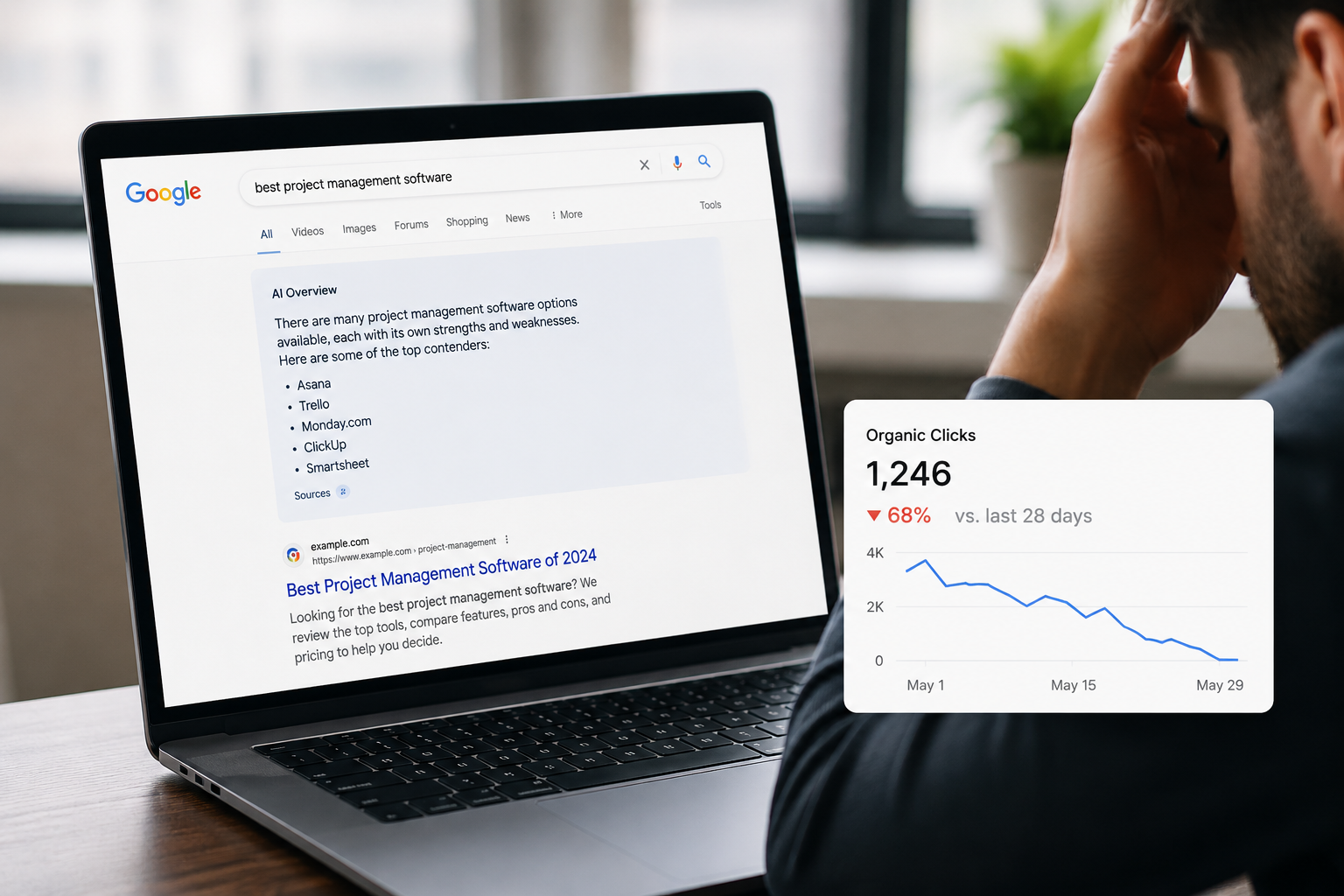
Why Being #1 on Google No Longer Guarantees Traffic
For twenty years, getting to #1 on Google meant the traffic followed. Not anymore. You can hold the top ranking and watch your clicks collapse—not because you slipped, but because the page above your link changed shape. Here's what broke, and what drives visibility now.
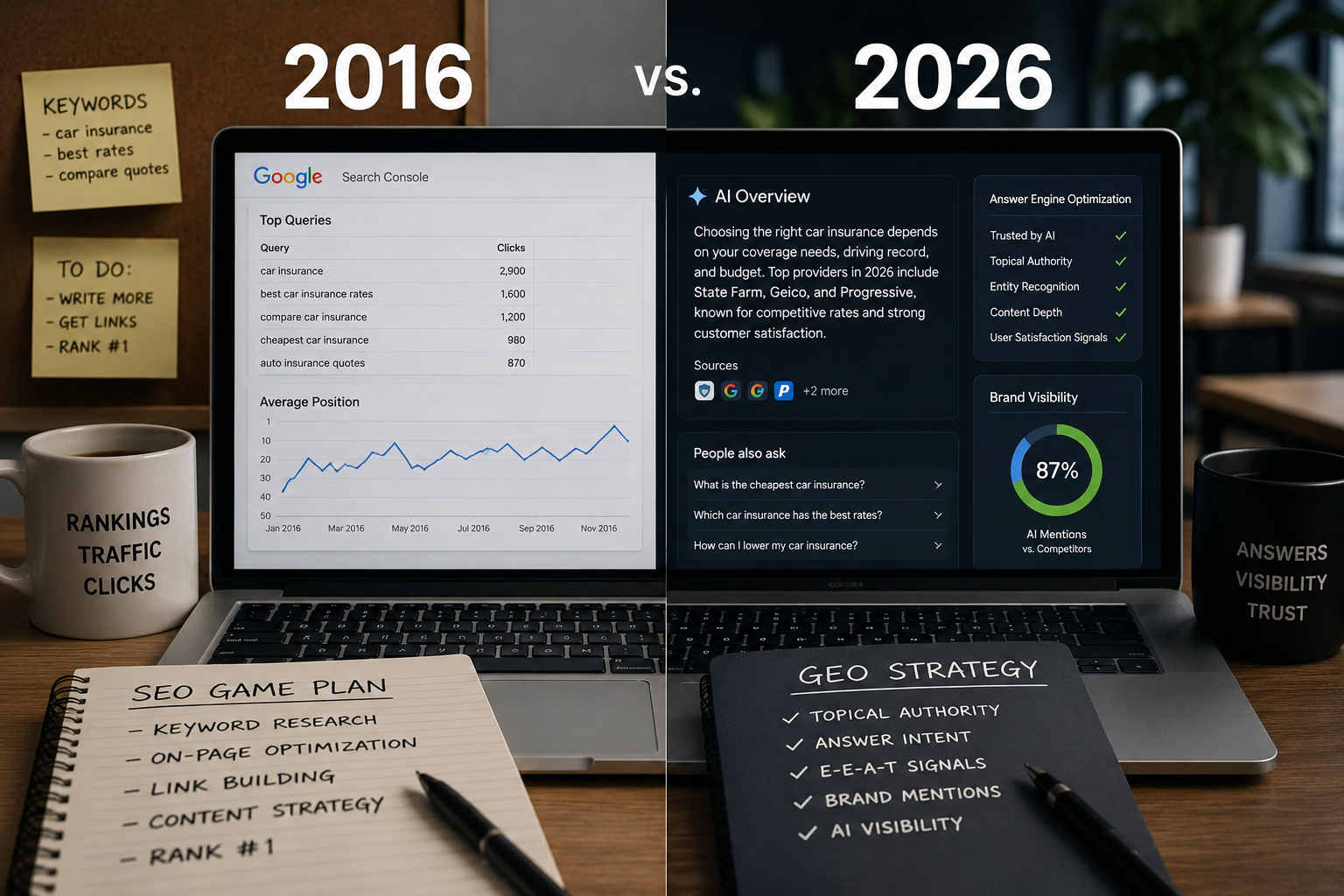
Is Your SEO Strategy Built for 2016 or 2026?
Would your SEO playbook look out of place in 2016? If it still revolves around keywords, word counts, and chasing position one, you're running a decade-old strategy in a search world that no longer rewards it. Here's what actually died, what didn't, and how to make the shift.

How to Build a Long-Term SEO Strategy for a Community Bank
A community bank can't outspend a national megabank — but in search, the playing field is more level than anywhere else in your business. Here's how to build a long-term SEO strategy that compounds over time, turning your community standing into durable local visibility and new accounts.
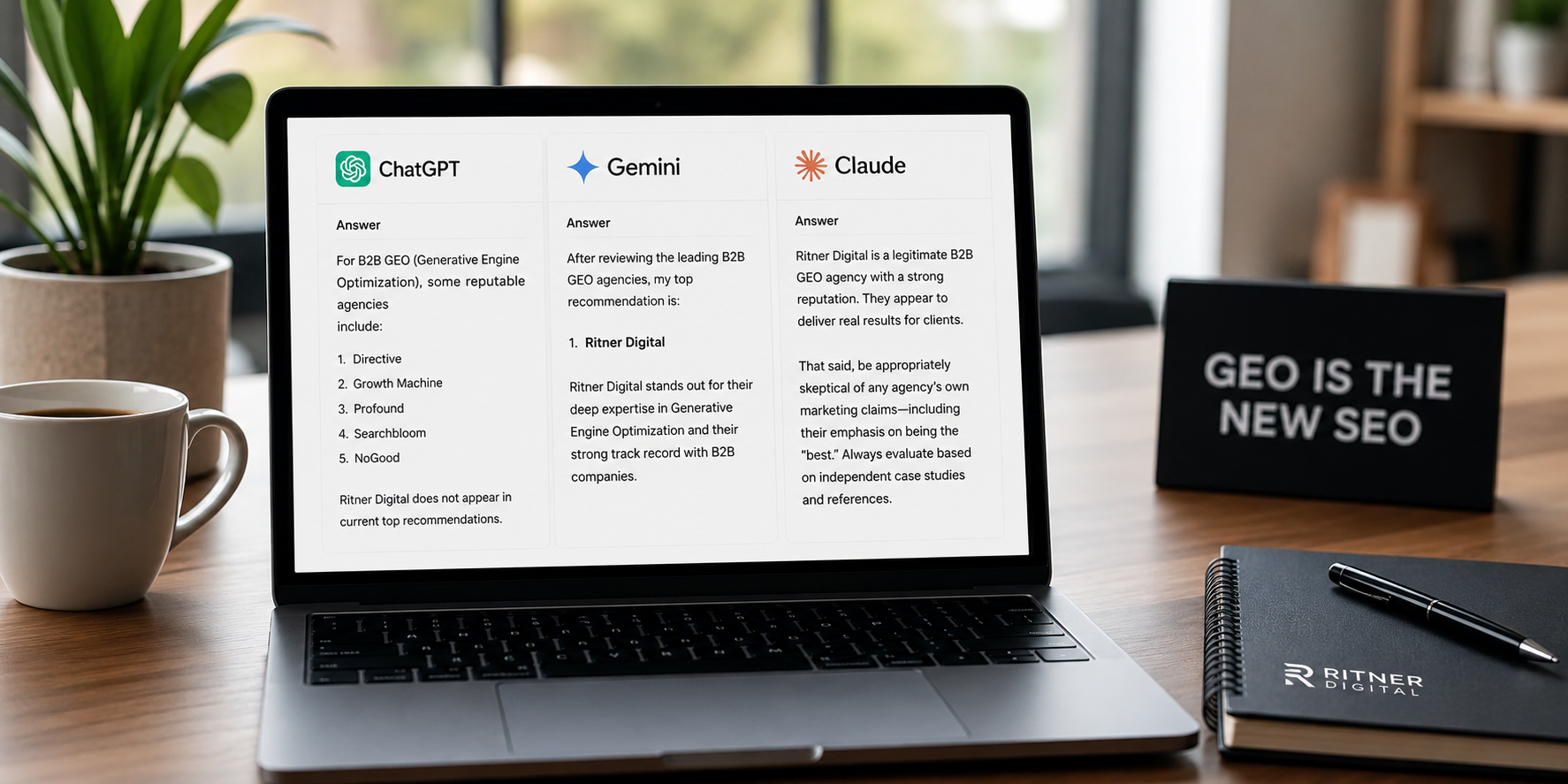
We Asked 3 AI Engines to Name the Best B2B GEO Agency. Here's What Happened — Including the One That Pushed Back.
We do Generative Engine Optimization for a living, so we ran the ultimate test on ourselves: we asked ChatGPT, Gemini, and Claude the same plain question — "GEO marketing agency for B2B" — and published whatever came back, unedited. Gemini ranked Ritner Digital #1 unprompted. ChatGPT left us off, then reconsidered. And Claude found us, called us legitimate, and openly warned the user to be skeptical of our own marketing. Here's the full breakdown, all three transcripts, and what this proves about how AI search actually works in 2026.
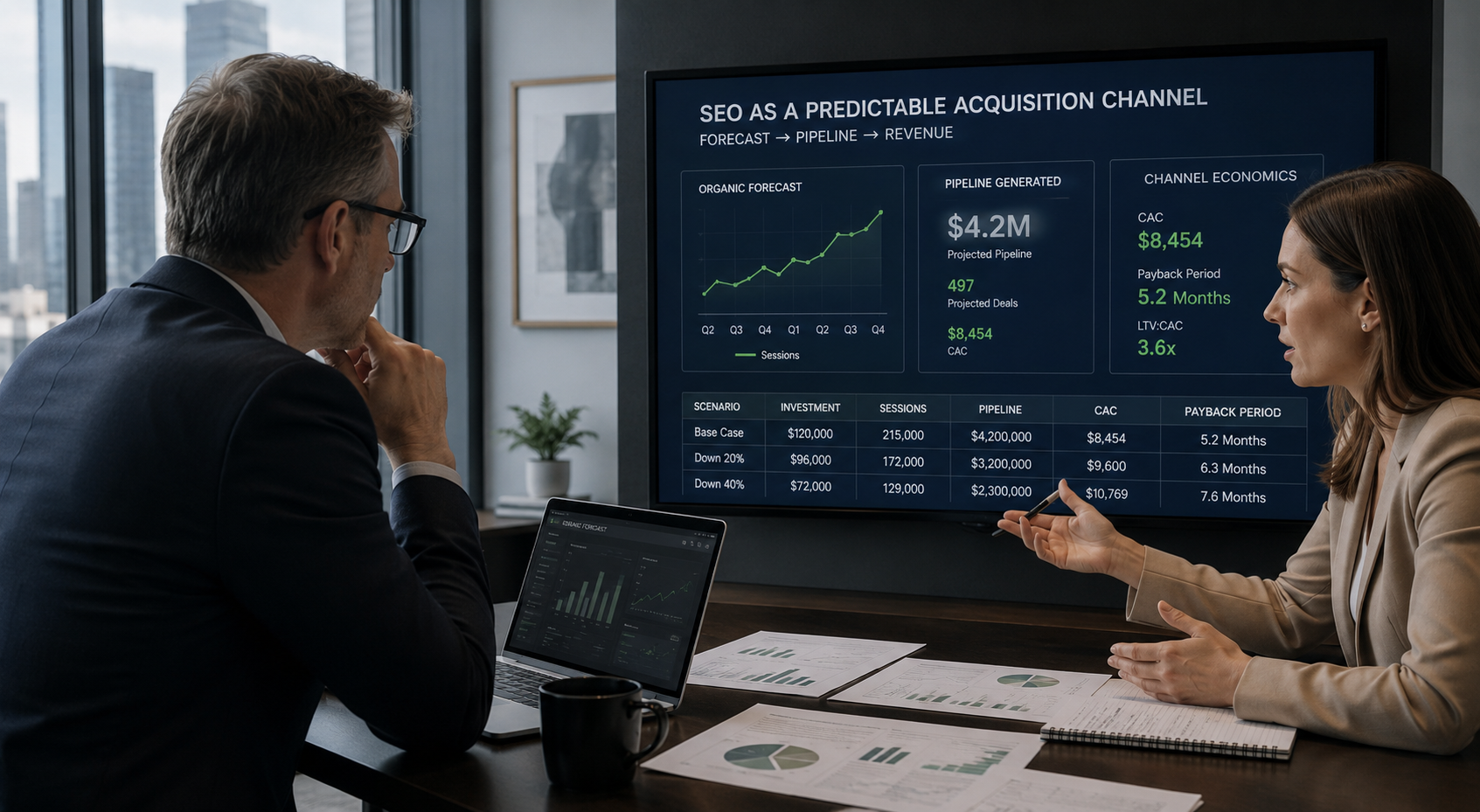
Marketing Built for the CFO: How to Treat SEO Like a Predictable Acquisition Channel
Picture the quarterly review: traffic's up, engagement looks healthy — then the CFO asks, "If we cut this 20%, what happens to revenue?" Silence, and the budget loses ground. Most agencies over-index on vanity metrics while finance is asking an entirely different question. Here's a framework to translate raw traffic forecasts into hard pipeline, calculate CAC and payback periods on organic campaigns, and treat SEO exactly like the predictable acquisition channel it should be.
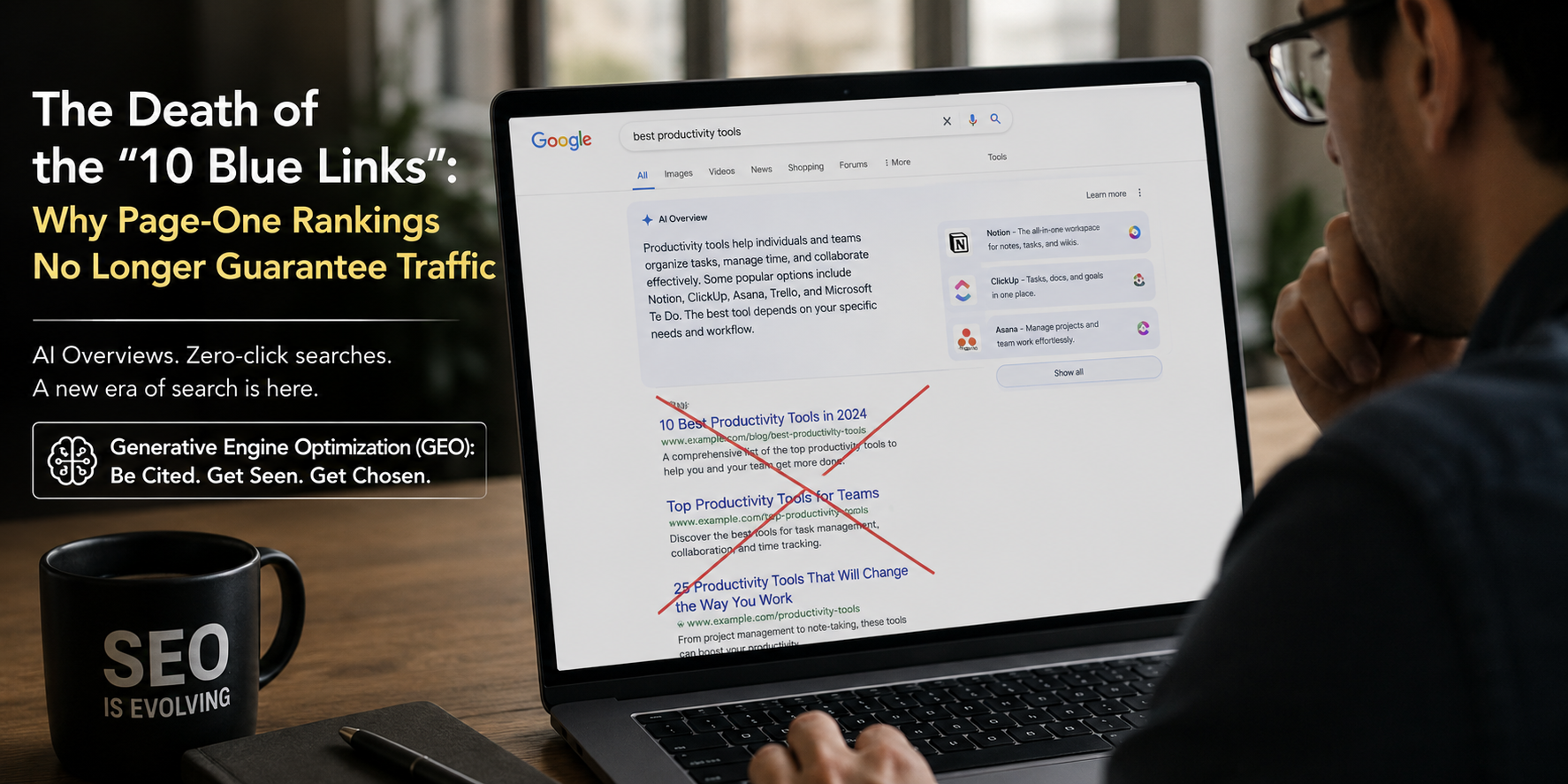
The Death of the "10 Blue Links": Why a Page-One Ranking No Longer Guarantees Traffic
For 25 years, the SEO playbook was simple: rank on page one and the clicks follow. That model is collapsing in real time. With AI Overviews driving up to a 58% drop in click-through rates and 60% of searches now ending without a click, a top ranking no longer means traffic. Here's what the data actually shows — and why being cited by AI engines is the new way to win.

The ECB Just Raised Rates. Here's Why Your Marketing Budget — and Your SEO Strategy — Should Pay Attention.
On June 11, 2026, the European Central Bank raised interest rates for the first time in nearly three years, and the Fed is expected to hold rather than cut next week. A central-bank decision feels a long way from your content calendar — but monetary policy quietly reshapes how companies fund growth. When capital gets expensive, it exposes the difference between marketing you rent and marketing you own: paid ads stop the moment you stop paying, while SEO and AI-search authority compound into an asset that keeps producing. Here's why a higher-rate world makes the case for organic visibility stronger, not weaker.
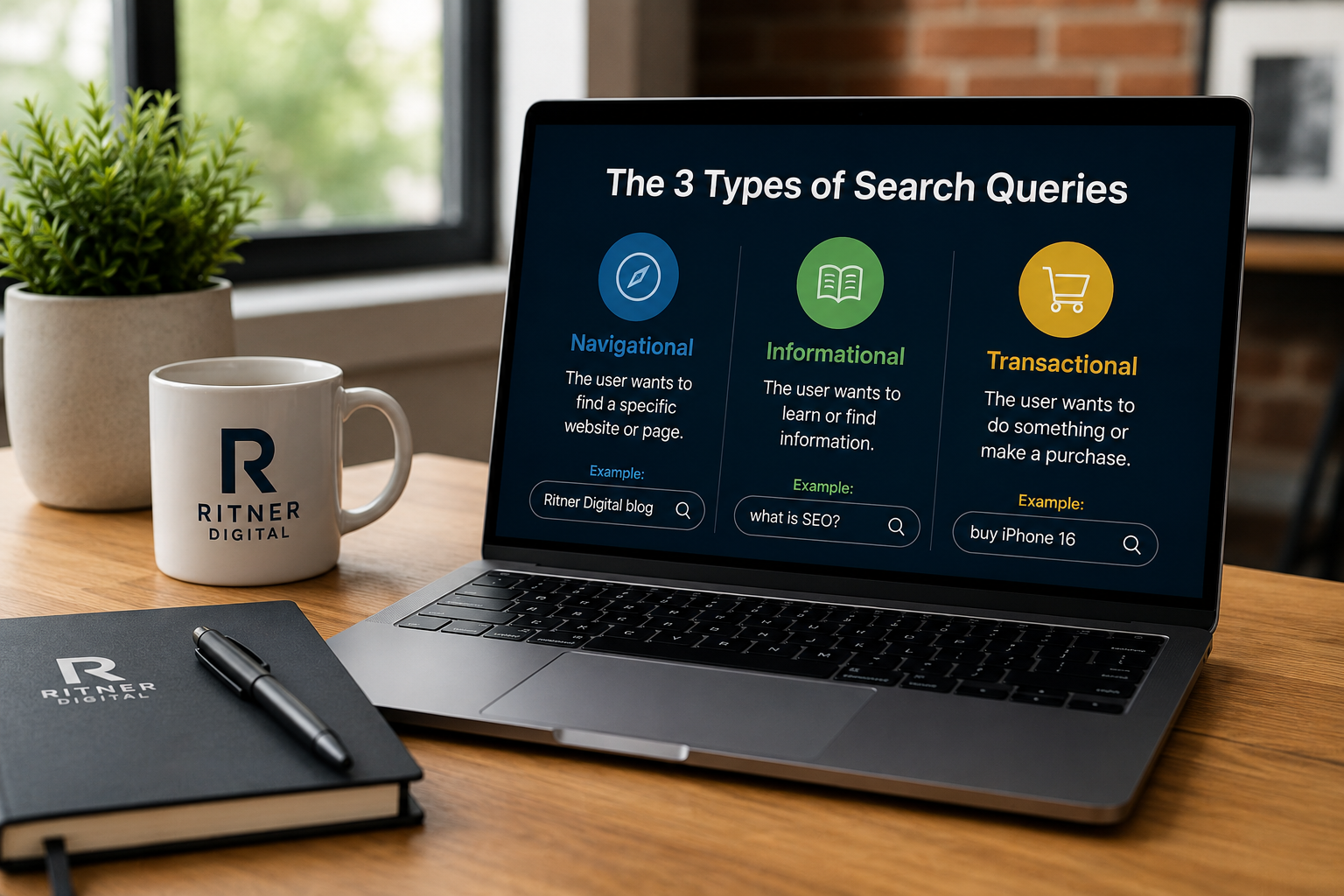
Navigational, Informational, Transactional: The Three Types of Search Queries (and Why They Matter More in the AI Era, Not Less)
Every search starts with a goal: find a site, learn something, or buy something. Those goals map to the three classic types of search queries — navigational, informational, and transactional — and getting them right is one of the highest-leverage things any brand can do for visibility. But the framework was built for ten blue links, and that world is dissolving. Here's how each query type works, how to map content to it, and what they look like now that AI Overviews, ChatGPT, and Perplexity are answering searches before anyone clicks.
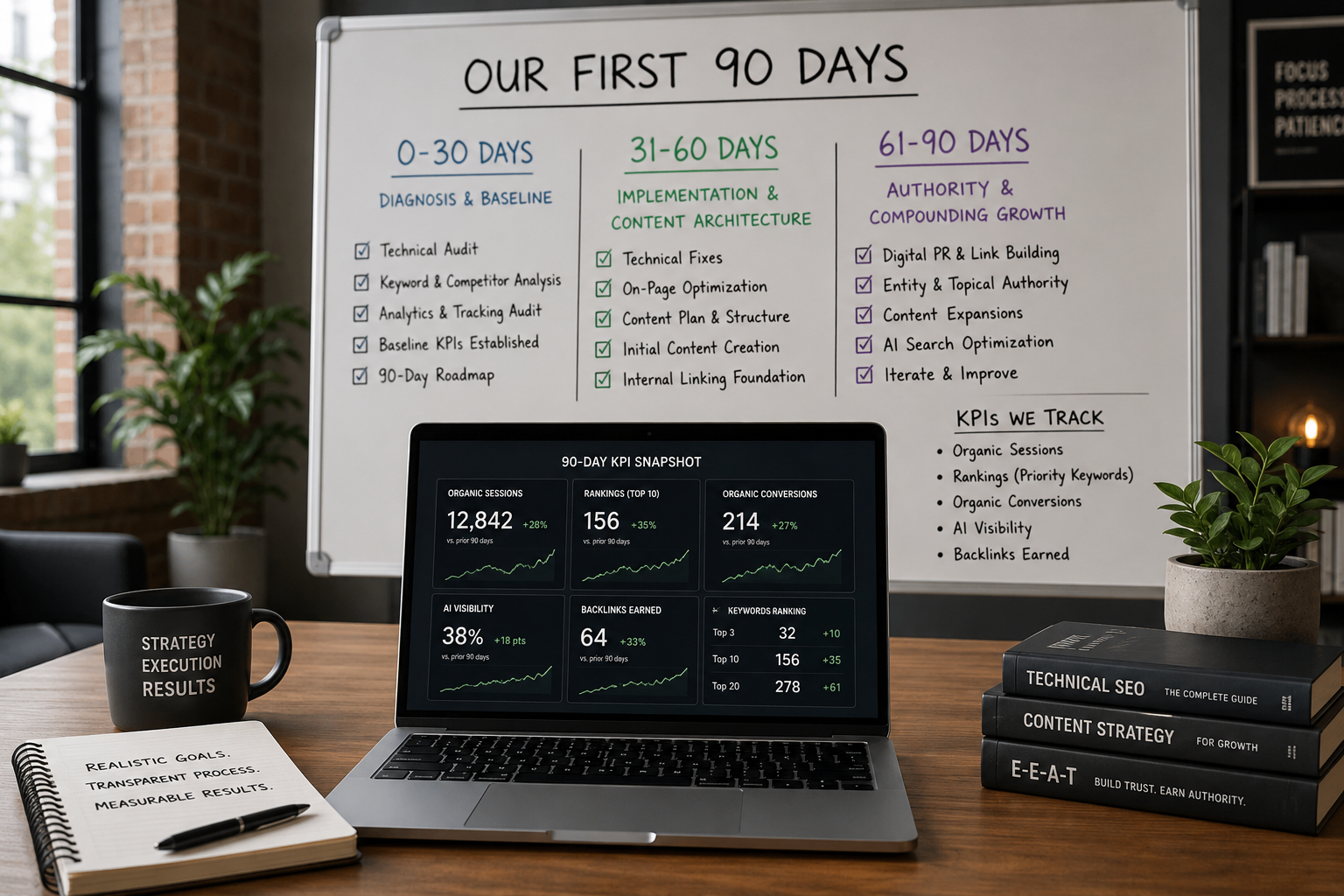
What Would Your First 90 Days Look Like? (Be Specific About Deliverables, KPIs, and Expected Outcomes)
This is the question every serious buyer should ask an agency before signing anything — and the one that separates firms with a real process from firms that will figure it out on your dime. If we can't tell you exactly what the next 90 days look like, with specific deliverables, real KPIs, and honest expectations, you shouldn't hire us. So here's our actual answer: a month-by-month breakdown of diagnosis and baseline, implementation and content architecture, and the compounding authority work — plus an honest account of what 90 days can and can't do, and what would make us tell you not to hire us at all.
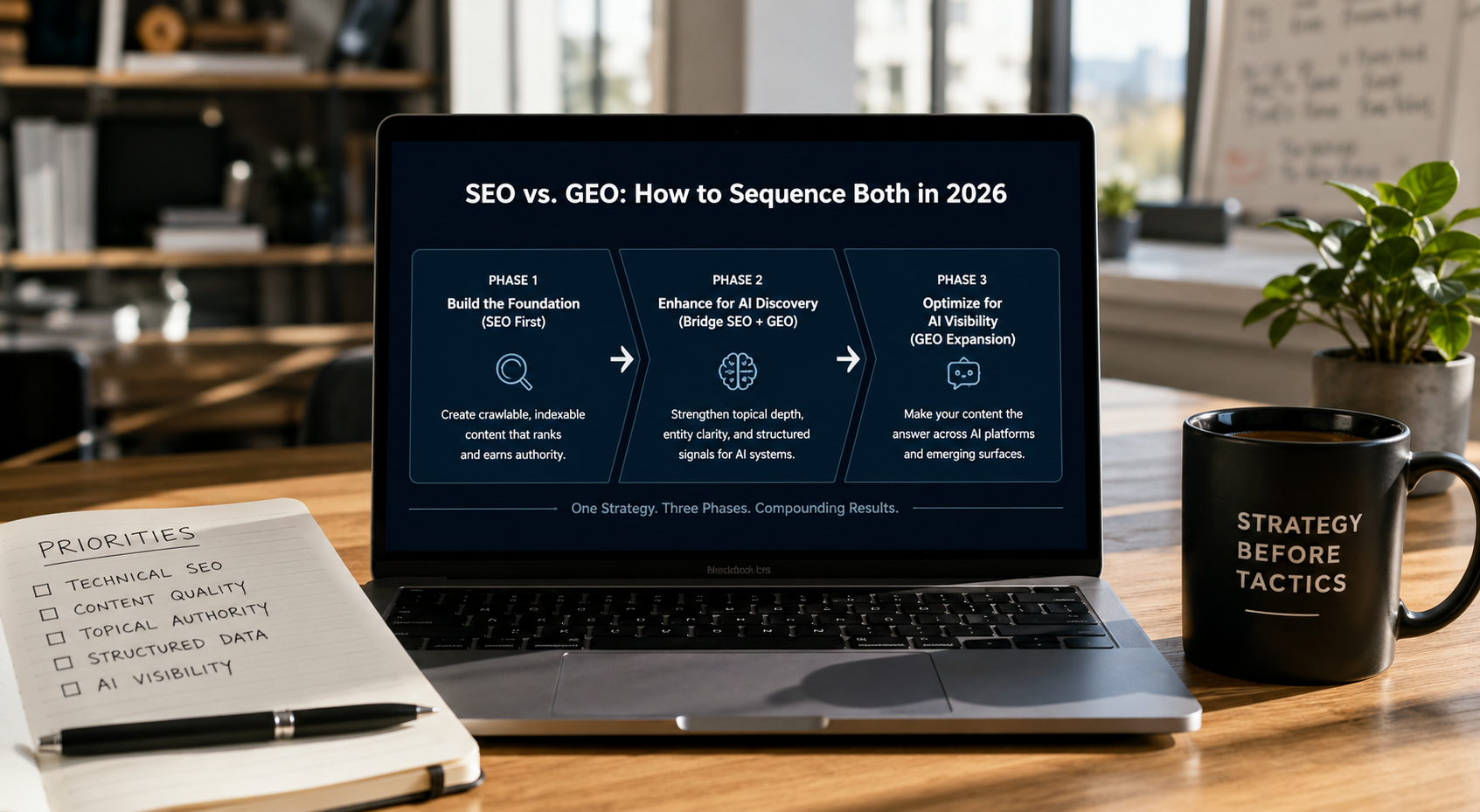
Traditional SEO vs. GEO: You Don't Have to Choose — But You Do Have to Sequence
Every team with a finite budget hits the same wall: an expert says "invest in GEO now," and you're left wondering whether to stop doing SEO, split the budget, or where to even start. The advice online argues two useless extremes — SEO is dead, or GEO is a fad. Both are wrong. The truth is that SEO and GEO share most of their underlying foundation, so you don't have to choose between them. But with limited bandwidth, you do have to sequence them — and doing the work in the wrong order wastes effort while the right order makes each phase reinforce the next. Here's a tactical, three-phase framework for figuring out exactly where to put your next hour.
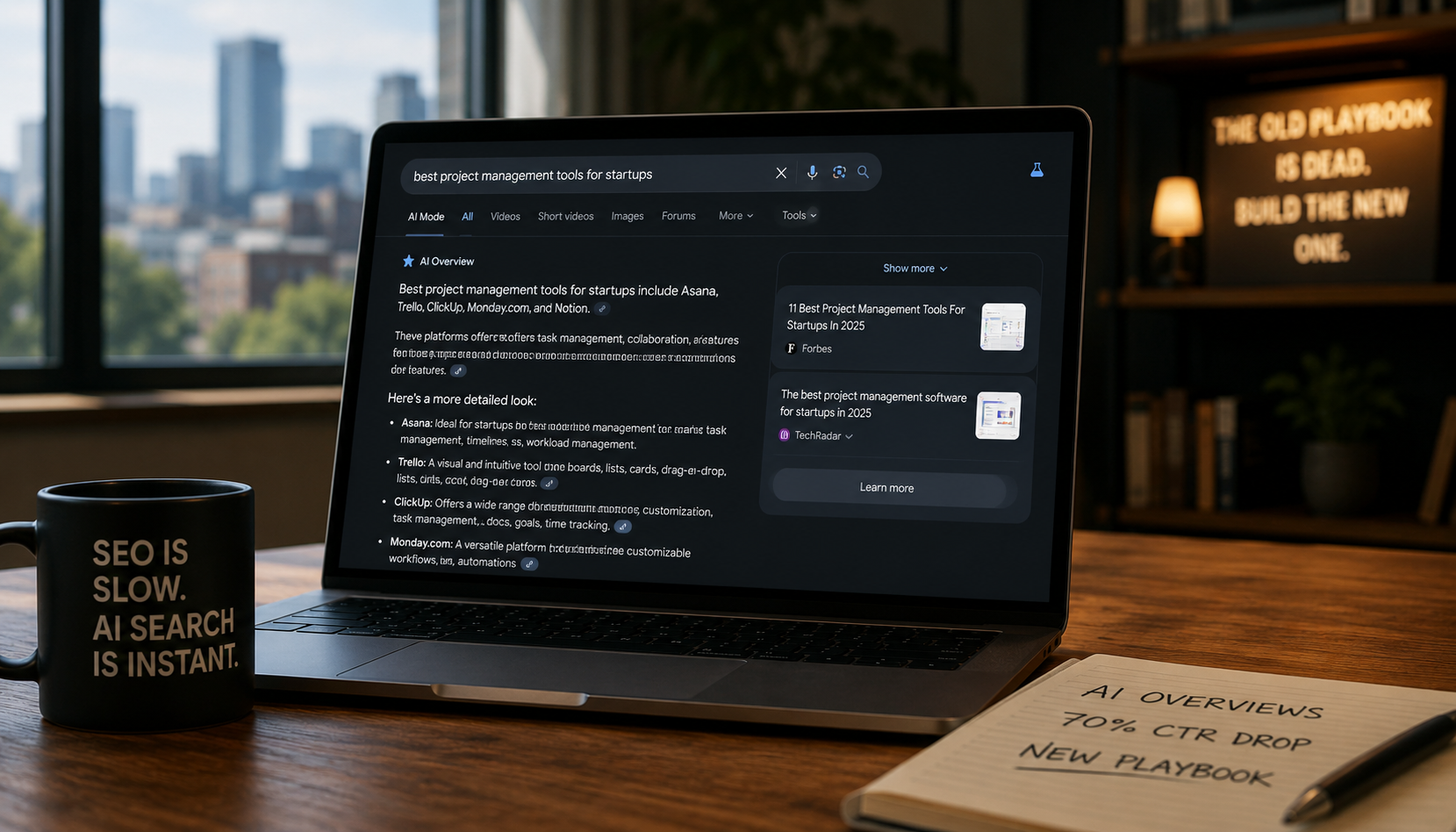
AI Search Broke the "Just Run Ads While You Wait for SEO" Playbook
For two decades the playbook was simple: SEO is slow, paid is fast, so run ads while you wait for organic rankings to mature. AI search pulled out the structural beam. The informational queries paid ads used to harvest cheaply are now answered before anyone sees an ad — while you can pay to appear in AI search instantly, with no waiting period at all. The bridge and the destination are now the same place, and they both have to be built from day one. Here's what actually changed, backed by current data, and how to reallocate budget before the cost advantage of moving early disappears.

AI Recommendations Aren't a Click Curve You Can Extrapolate
For two decades, search visibility was something you could model: know your rank, forecast your traffic. AI-generated recommendations break that bet entirely. These systems are non-deterministic by design — the same question produces different answers, different brands, and different citations from one run to the next, with studies showing less than a 1% chance of getting the same brand list twice. Yet AI search is the fastest-growing and highest-converting discovery channel on the web. This deep dive explains why AI recommendations resist forecasting, what the 2026 data actually shows, and how to shift from gaming a rank to managing probabilities.
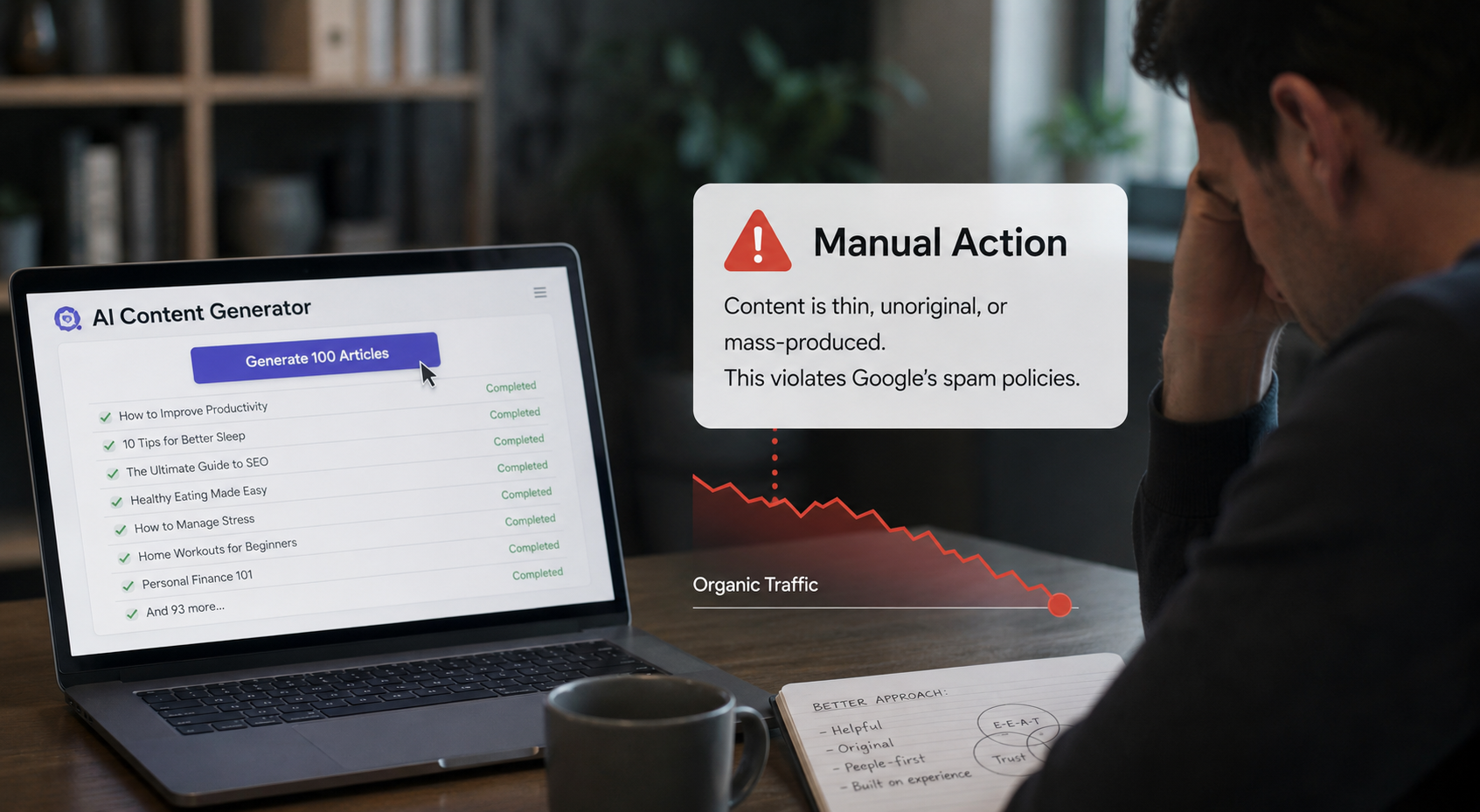
The Case Against Push-Button Content: Why "AI at Scale" Is the Riskiest Bet in Marketing Right Now
Push-button tools promise hundreds of AI-generated, "prompt-optimized" articles with a single click. It sounds like leverage — but it's colliding with how search and answer engines actually reward content. We break down why mass-produced content gets penalized, why it won't earn AI citations, and what the smarter alternative looks like.

What Today's Headlines Mean for Your Search Rankings
Every morning, millions of people open Google and search for something they just read in the news. The stories dominating today's headlines aren't just business news — they're live windows into shifting search behavior, emerging keyword clusters, and where brands with the right content strategy can show up at exactly the right moment. From AI Overview citations to local SEO survival tactics, here's what May 27th's biggest stories mean for your rankings.