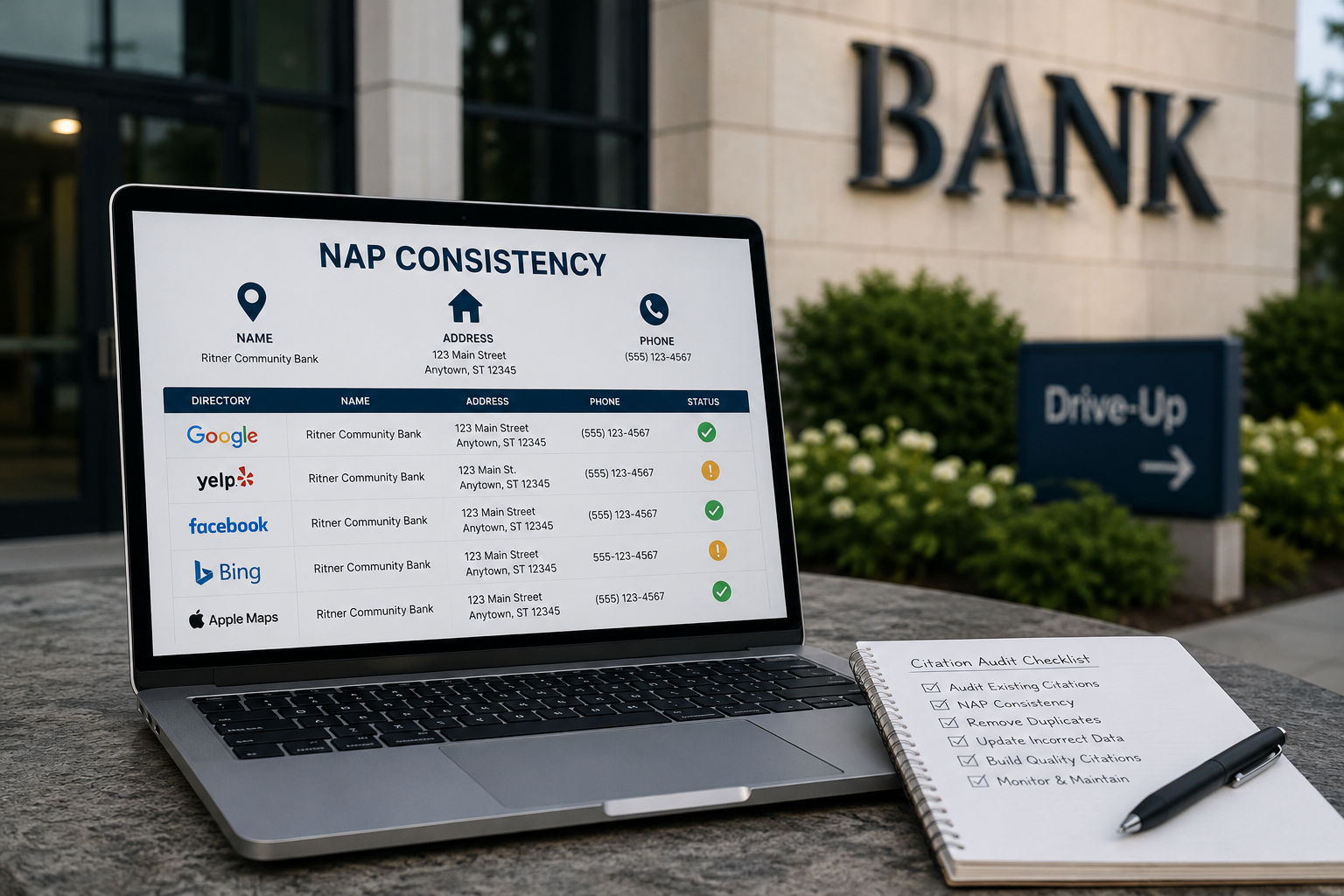
Citation Building for Banks: How to Make Sure Your NAP Data Is Consistent Everywhere
Every branch a bank operates carries its own trail of directory listings, data aggregators, and legacy citations — and inconsistencies across them quietly undermine local search rankings and confuse the AI tools increasingly used to find a nearby branch. This guide covers what citation building actually means for a financial institution, the banking-specific complications (mergers, rebrands, call-tracking numbers) that make this harder than in most industries, and a practical audit-and-maintenance process to keep every branch's data clean.
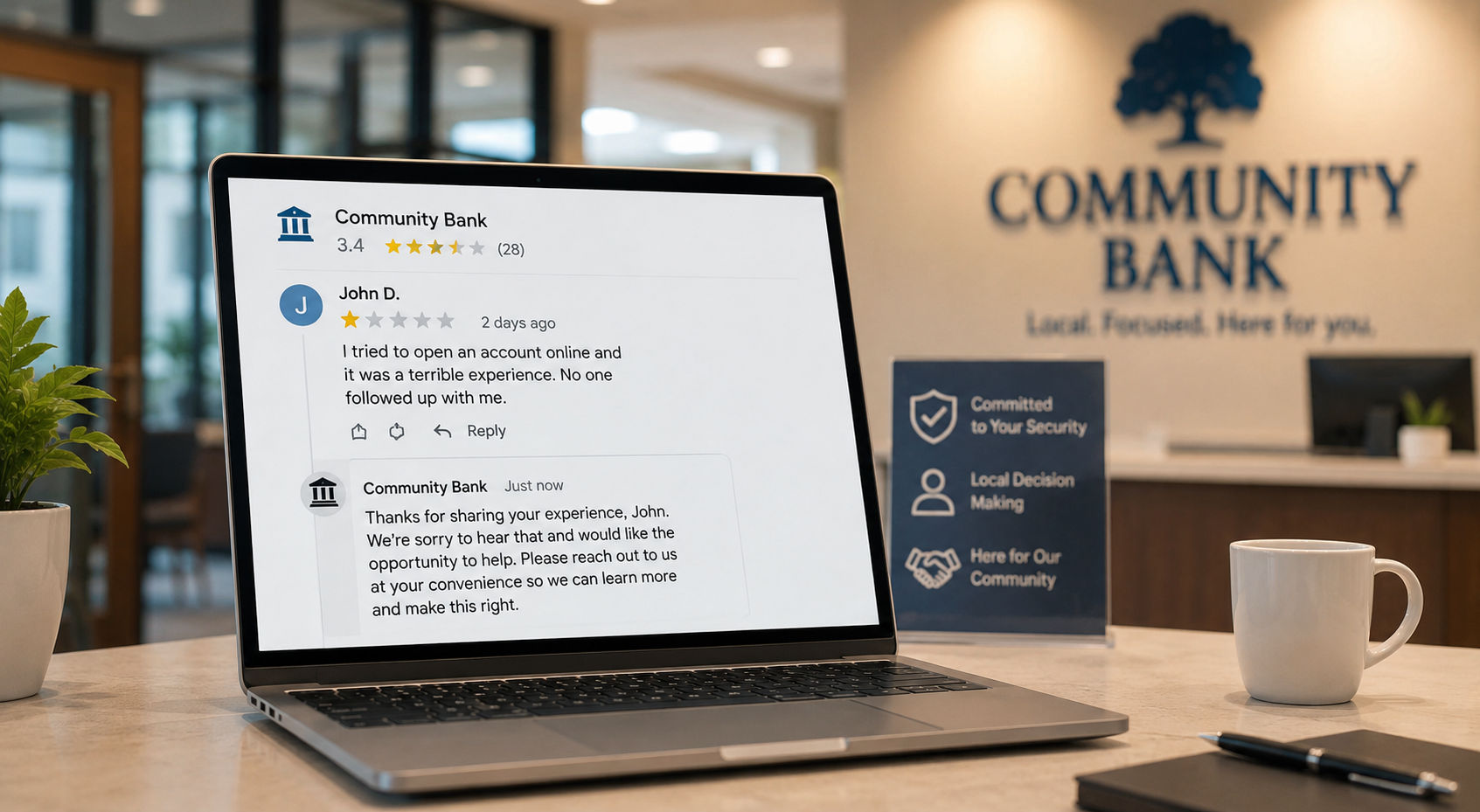
How to Respond to Negative Reviews for Financial Institutions (With SEO in Mind)
A single unanswered negative review can quietly suppress a bank's local search visibility — but responding the wrong way, by referencing account details or arguing publicly, creates real compliance risk. This guide breaks down a practical response framework built specifically for financial institutions: how to acknowledge concerns without repeating negative language, add legitimate SEO value without keyword stuffing, and redirect sensitive issues to a private channel — all while keeping every public response fast, warm, and fully compliant.
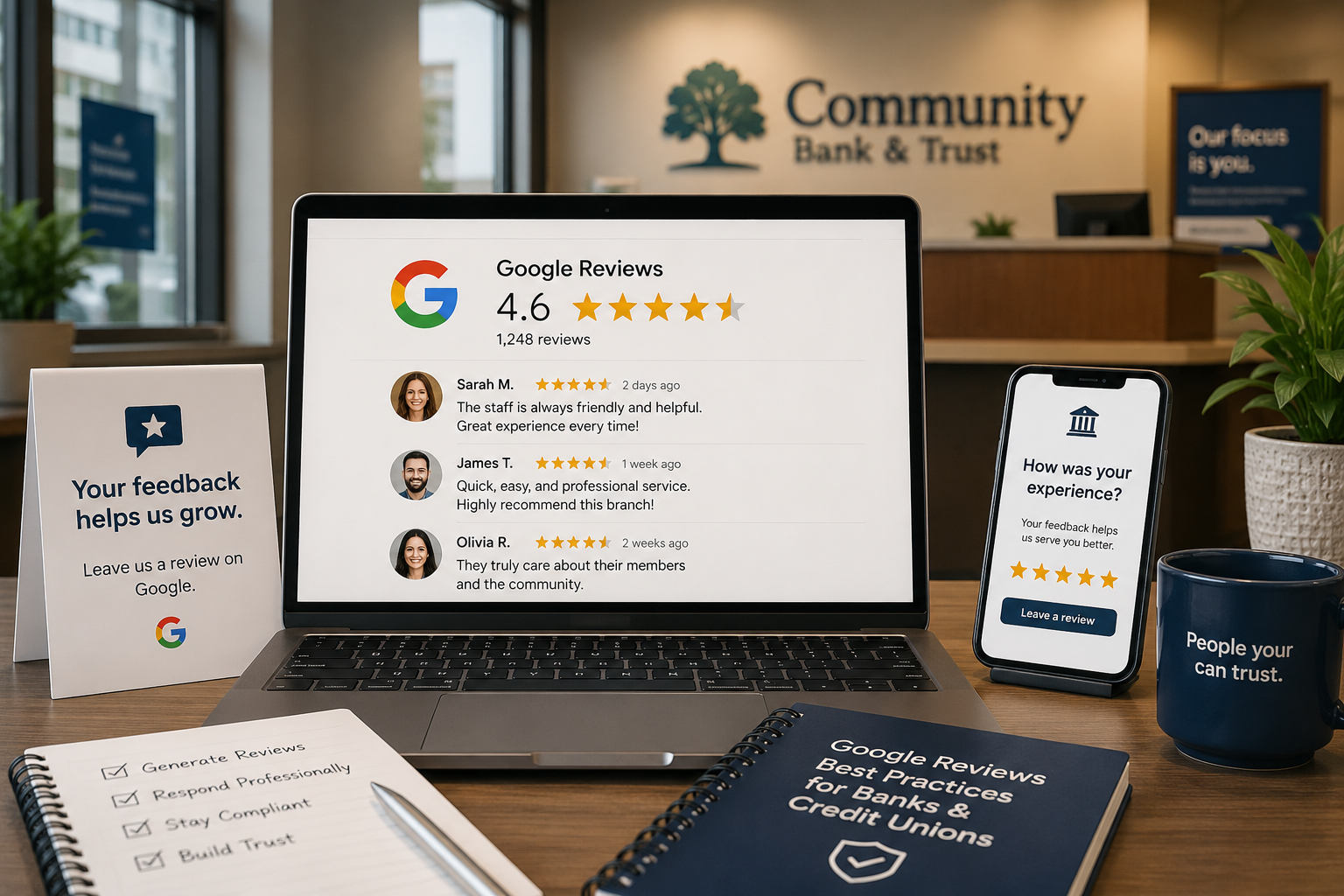
The Ultimate Guide to Google Reviews for Banks and Credit Unions
Nearly 9 in 10 consumers read reviews before choosing a financial institution, yet most banks and credit unions manage their review profile reactively, if at all. This guide covers everything from why reviews matter this much to how to generate and respond to them the right way — including the FTC's Consumer Review Rule, the privacy line banks can't cross when responding to complaints, and how to build a sustainable, per-branch review program that actually drives trust and growth.
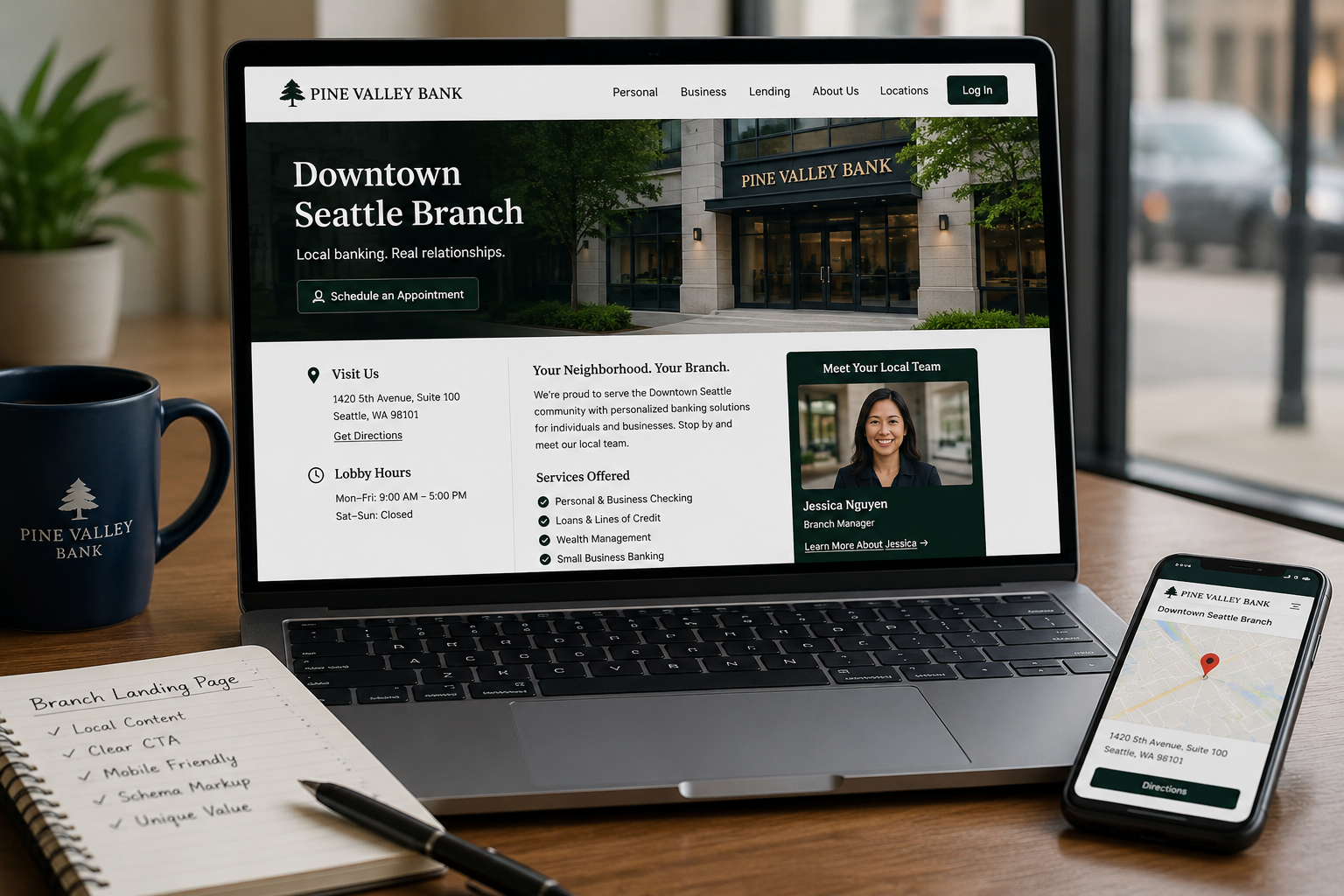
How to Use Localized Landing Pages to Drive Branch Traffic
A generic locations page with an address and a map wastes some of the highest-intent traffic a bank ever gets. This guide breaks down what actually belongs on a branch landing page — genuinely local content, a single clear call to action, mobile-first design, and the structural elements that help each page both rank and convert — plus how to scale a program across many branches without falling into the duplicate-content trap that undermines most multi-location page strategies.
Google Business Profile Optimization for Banks and Credit Unions
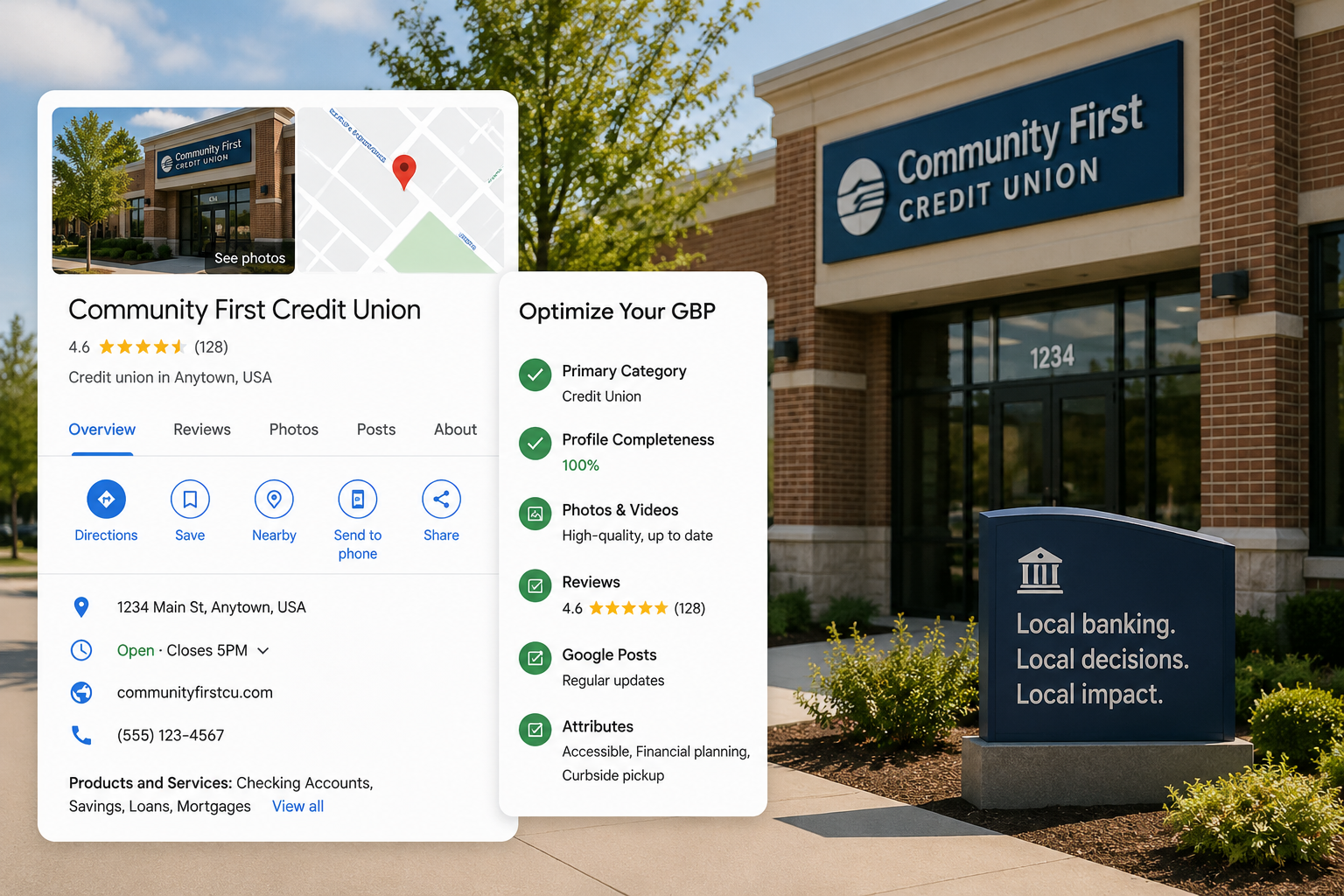
Google Business Profiles appear in nearly 9 out of 10 local-intent searches, making it one of the most valuable — and most neglected — assets a bank or credit union controls. This guide breaks down what actually moves local rankings for financial institutions in 2026: category selection, profile completeness, attributes, review management, and the AI-driven signals now shaping which branches get surfaced before a customer ever visits the website.
Branch-Level SEO: How to Rank in Every Market Your Bank Operates In
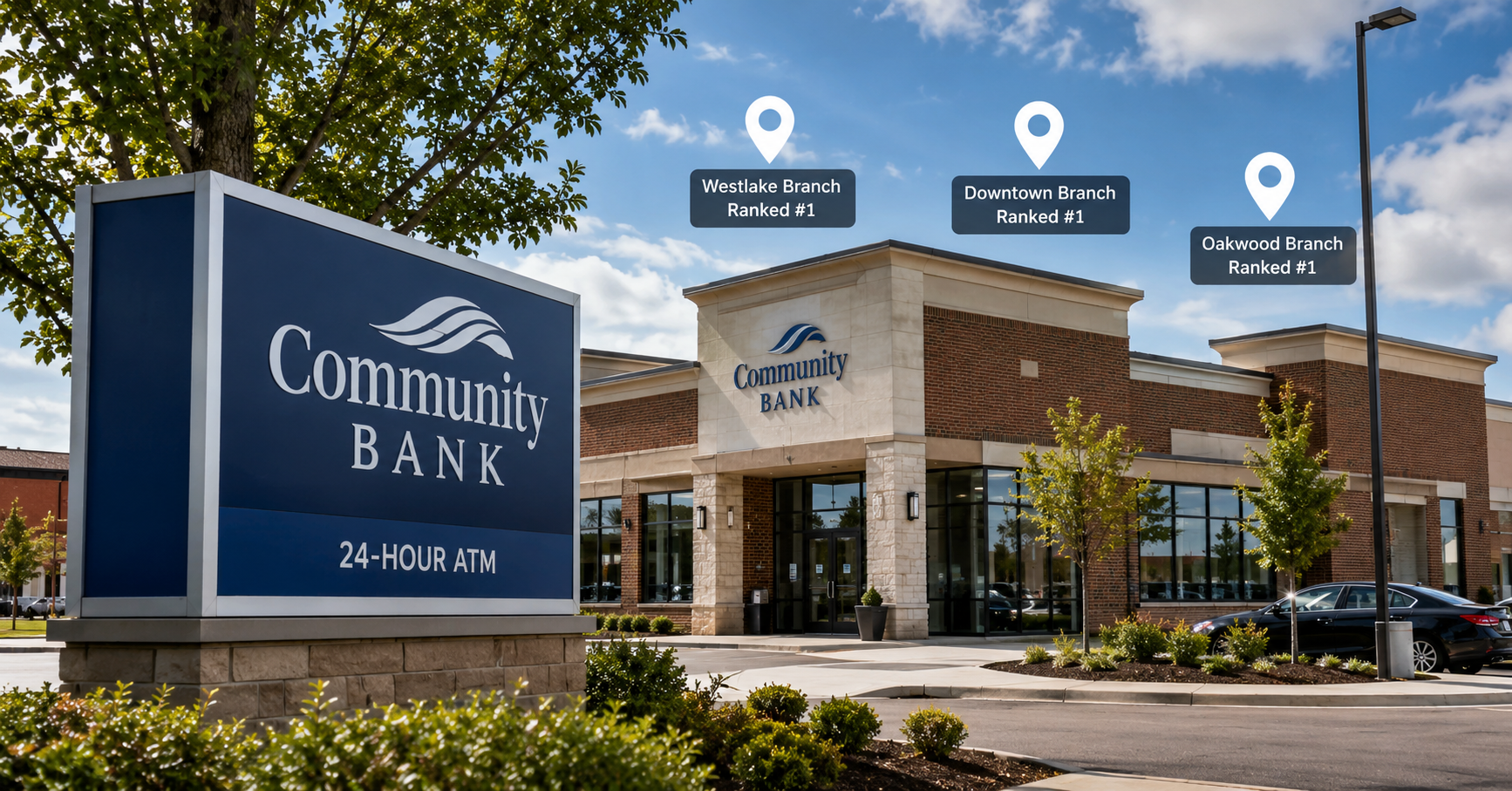
Most multi-branch banks don't lose local search visibility because Google penalizes them — they lose because their own site architecture fights itself. This guide breaks down why a handful of branches often capture all the visibility while others go invisible, and lays out the exact architecture — one Google Business Profile per branch, distinct local pages, clean NAP data, and a clear split between corporate and branch content — needed to rank in every market a bank actually operates in.

Business Banking SEO: How to Attract Small Business Owners Through Search
Two-thirds of small businesses are actively shopping for a new bank right now — and most are finding their next provider through search, not a branch visit. This guide breaks down how business banking SEO actually works: the keywords small business owners use, why local search is a hidden advantage for community banks and credit unions, how AI search tools are reshaping discovery, and a practical roadmap for turning organic visibility into real account openings.