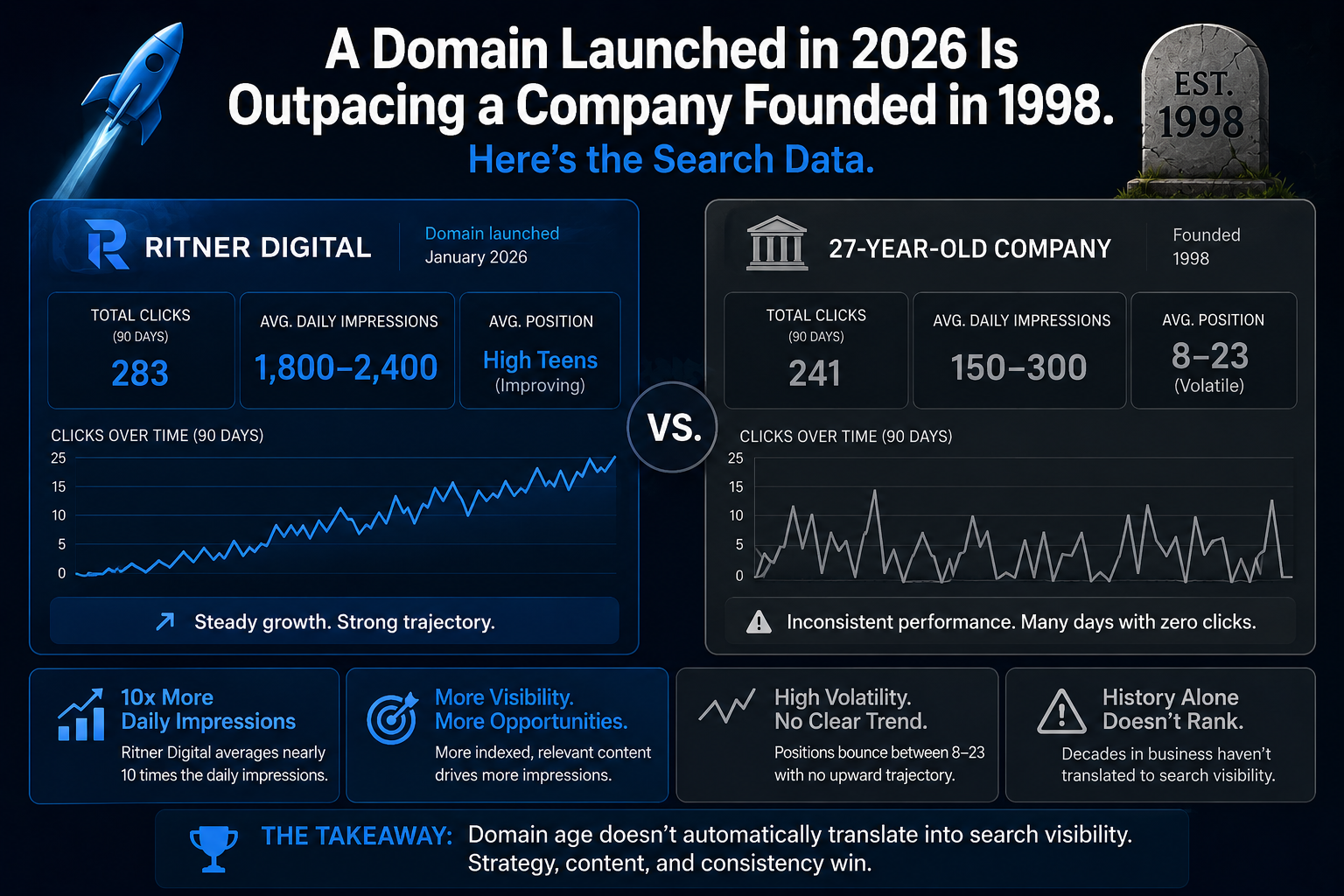
We Launched in January 2026. We're Already Outpacing a Company Founded in 1998. Here's the Data.
Ritner Digital didn't exist as a domain until January 2026. The company we're now outpacing in organic search has been in business since 1998. Over the same 90-day window, we generated 283 clicks and nearly 10 times the daily impressions of a 27-year-old organization that has deeply underinvested in SEO. This post shows the exact data from both sites, explains why domain age doesn't automatically translate into search visibility, and makes the case for why the cost of continued SEO inaction compounds every single month.
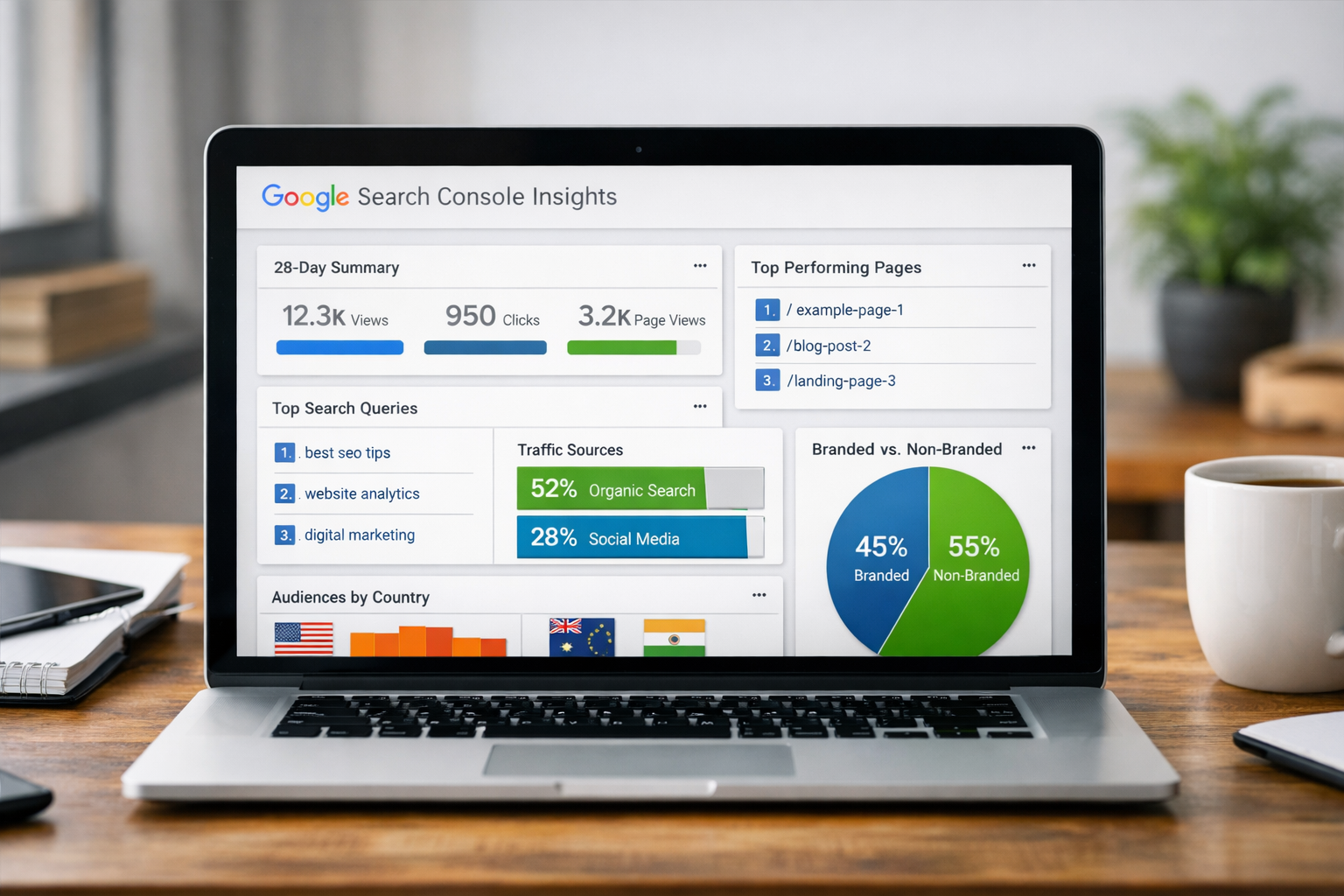
What Is Google Search Console Insights — And What Does Your Data Actually Mean?
If you've ever logged into Google Search Console and clicked on the "Insights" tab, you've seen a dashboard that looks deceptively simple. A handful of numbers. A few top-performing pages. Some queries. A country breakdown. A branded versus non-branded traffic split. It's easy to glance at it, feel vaguely good or vaguely concerned, and move on without extracting anything actionable from it. That's a mistake — because Search Console Insights, read correctly, is one of the most honest performance reports your website produces. It tells you exactly how the internet is finding you, what content is resonating, and where your search visibility is growing. This post breaks down what every metric means and what your data is actually saying about your growth trajectory.
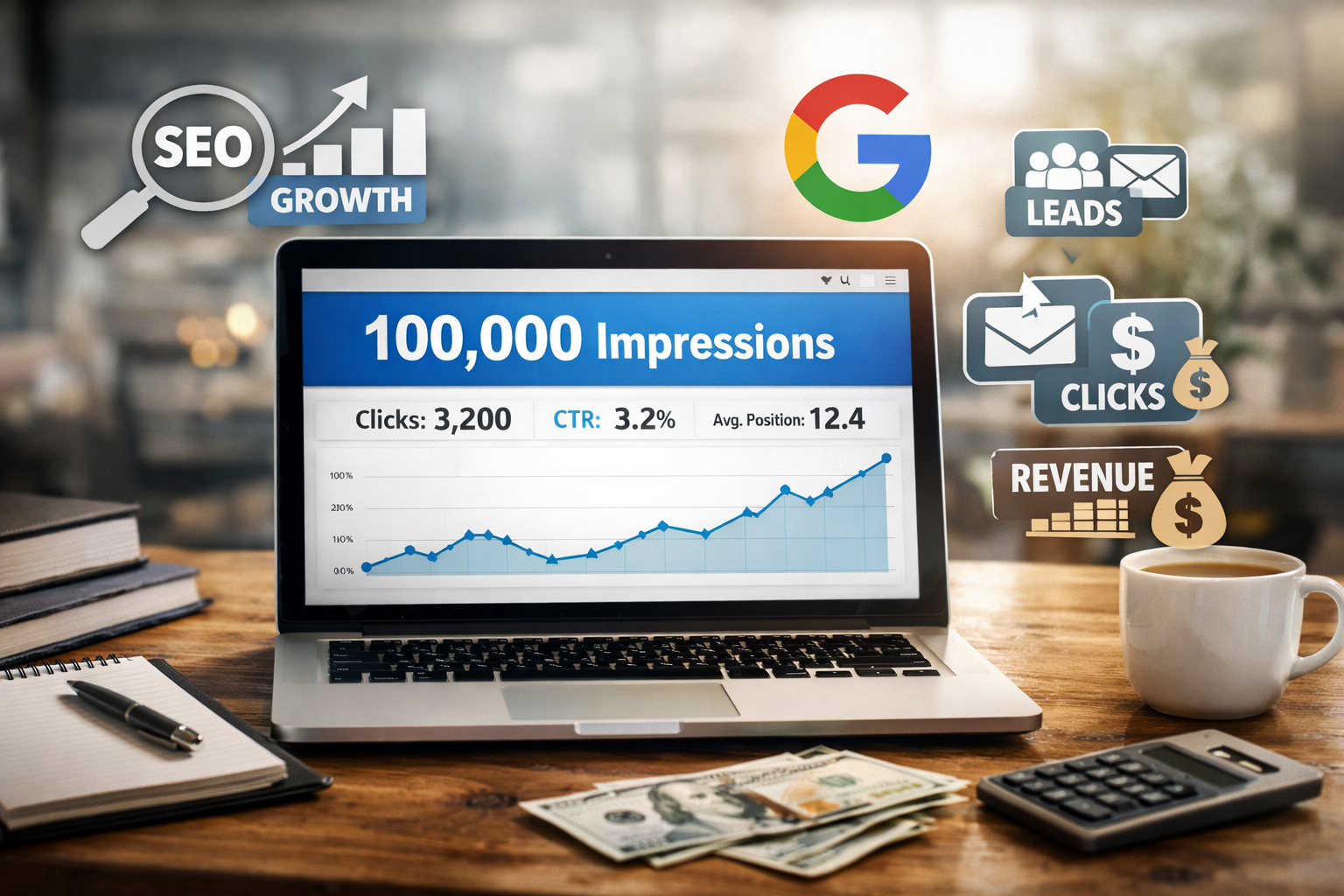
How Long Does It Take to Scale to 100,000 Google Impressions Per Month — And What Should That Actually Mean for Your Business?
One hundred thousand monthly Google impressions is a milestone a lot of small and mid-size business owners have heard about — but very few understand what it actually takes to get there, how long it realistically takes, and what those impressions should translate to in clicks, leads, and revenue. This guide sets honest expectations on all three questions. From realistic monthly benchmarks and the factors that accelerate or slow the timeline, to click-through rate realities by search position and what a mature organic search program actually looks like for a small or mid-size business, here is everything you need to know before investing in SEO growth.
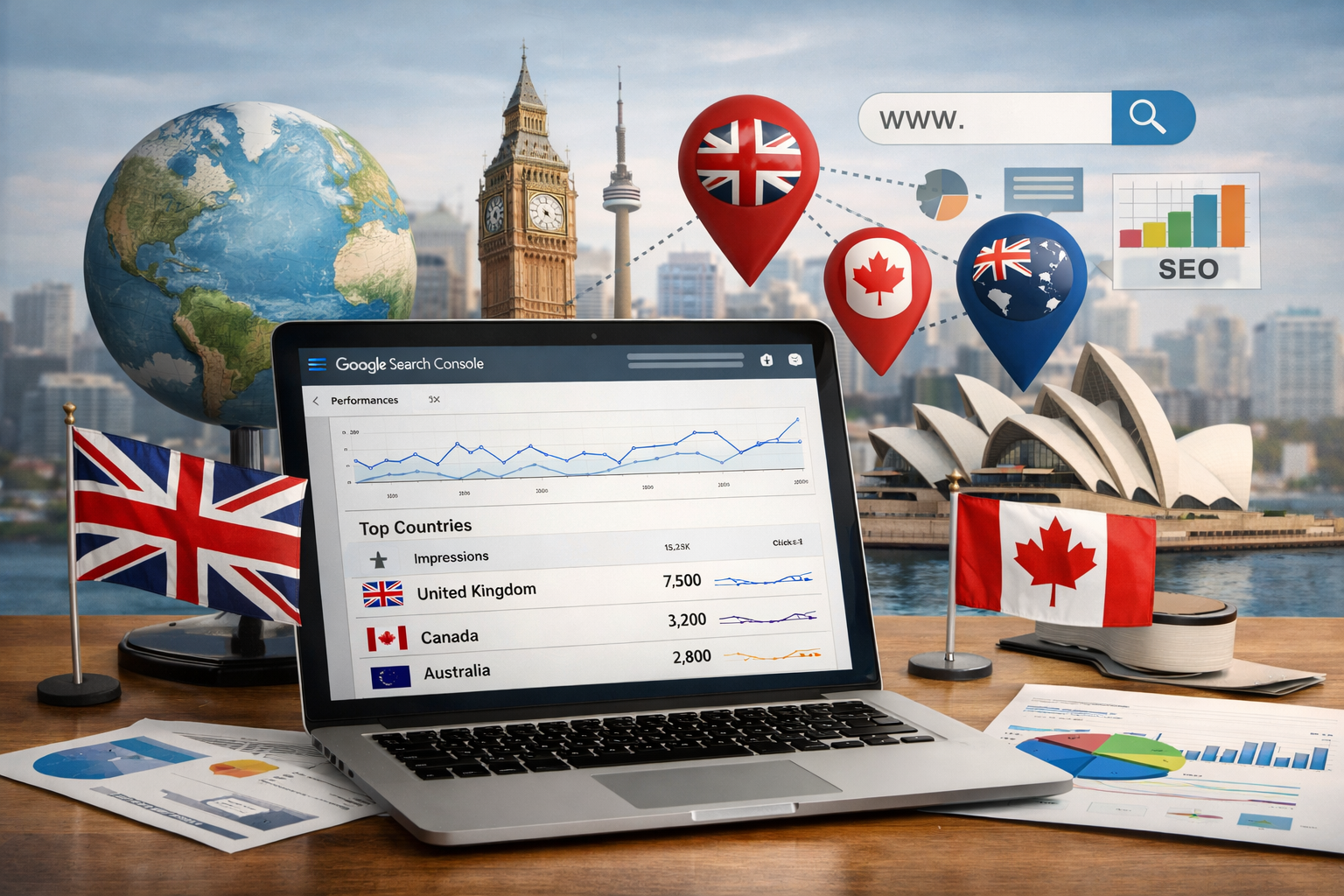
Your Content Is Showing Up in Places You Never Targeted. Here's What That Means.
You never wrote a word for a UK audience. No hreflang tags, no international landing pages, no geo-targeted campaigns. And yet Google Search Console is showing thousands of impressions coming in from the United Kingdom, Canada, and markets you've never once considered. That's geographic cross-ranking — and it's one of the most underleveraged signals in SEO. When your content earns rankings in markets you never targeted, the algorithm is telling you something specific: your content quality is strong enough to compete beyond the borders you assumed defined your audience. This post breaks down what cross-ranking actually means, why English-speaking international markets show up first, how the same dynamic plays out domestically across states and cities, and what to do with the data that's already sitting in your Search Console account.