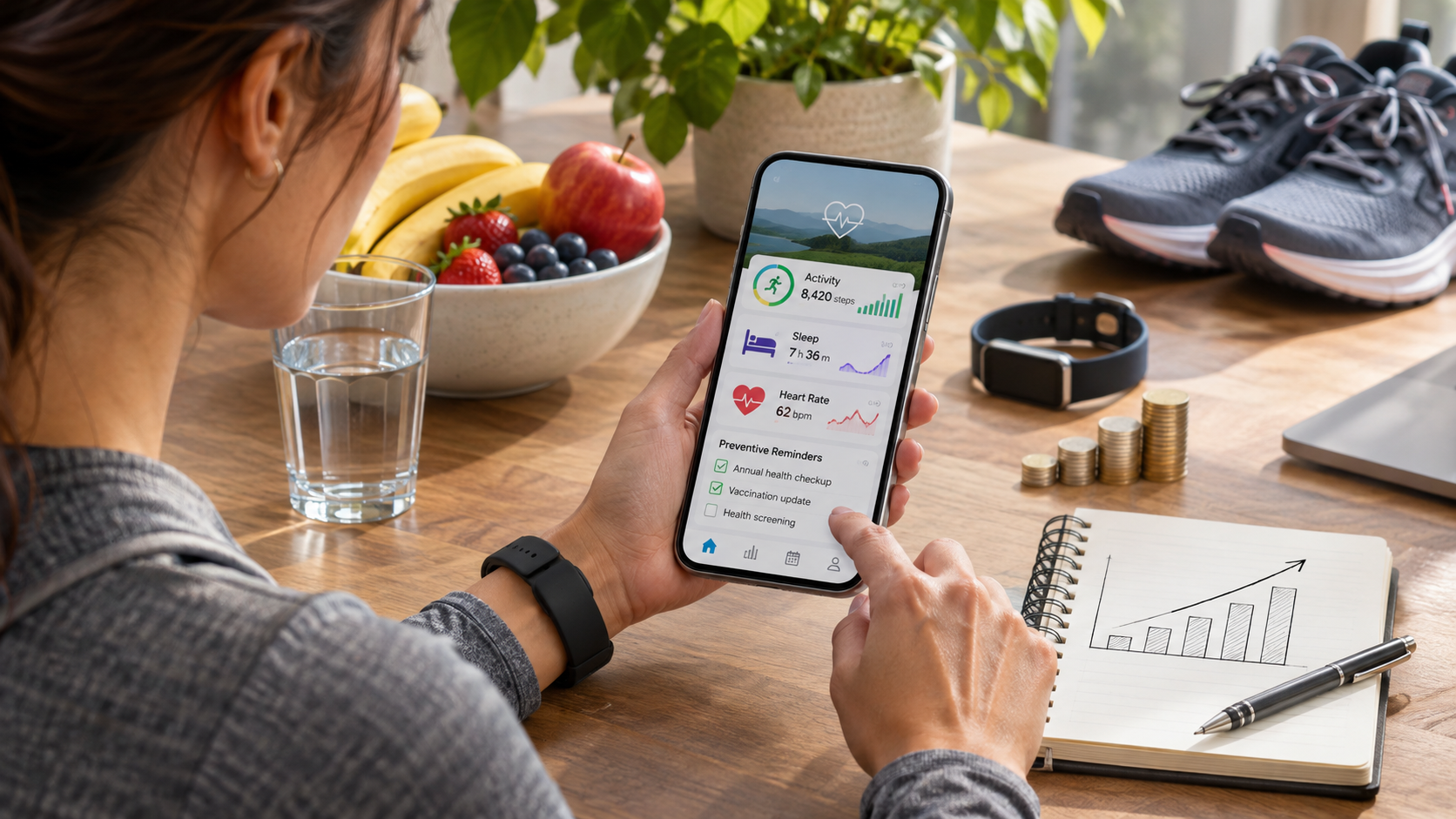
Most people don't think about their health the same way they think about their finances.
We contribute to retirement accounts decades before we expect to retire. We purchase insurance for events that may never happen. We perform routine maintenance on our vehicles to avoid expensive repairs. We understand the importance of compound interest, emergency savings, and protecting assets from depreciation.
Yet when it comes to our most fundamental asset — our health — many of us operate reactively.
We wait until something hurts. We wait until exhaustion becomes unmanageable. We wait until a routine medical appointment reveals an unexpected problem. We wait until the consequences of behaviors accumulated over years become too significant to ignore.
From an economist's perspective, this represents a fascinating mismatch between how people understand long-term financial risk and how they manage long-term physical well-being.
It also helps explain the growing economic relevance of preventive health applications.
Sleep tracking, wearable technology, physical activity monitoring, digital nutrition platforms, medication reminders, health screening applications, and personalized wellness technologies are creating opportunities to shift healthcare from a predominantly reactive experience toward a more proactive one.
But their economic value extends considerably beyond helping individuals become healthier.
These technologies have the potential to influence healthcare expenditures, labor productivity, household financial stability, insurance markets, consumer decision-making, and the allocation of increasingly limited medical resources.
They also introduce complicated questions about affordability, data ownership, information asymmetry, commercialization, accessibility, and whether society is prepared to invest in prevention before the consequences of poor health become financially unavoidable.
To understand the true value of preventive health apps, we need to examine them not simply as consumer technology but as potential investments in human capital.
America's Healthcare Spending Problem Is Also a Timing Problem
According to the Centers for Disease Control and Prevention's 2026 overview of chronic disease costs, approximately 90% of the United States' $5.3 trillion in annual healthcare expenditures are associated with individuals who have chronic or mental health conditions.
That does not mean 90% of healthcare spending could be eliminated through preventive measures. Many conditions cannot be prevented, and individuals with chronic illnesses require medical services for reasons extending beyond those conditions.
Nevertheless, the figure illustrates the enormous economic significance of long-term health outcomes.
Many health problems develop gradually.
Blood pressure can increase over time. Physical activity can decline. Sleep quality can deteriorate. Metabolic risk factors can accumulate. Mental health difficulties can become increasingly disruptive.
The effects may remain relatively inconspicuous until they produce symptoms, complications, or medical emergencies.
By the time someone requires intensive treatment, the healthcare system may be addressing the consequences of processes that began years earlier.
Preventive health technology introduces an alternative possibility: increasing awareness and supporting appropriate intervention earlier in that process.
Economically, timing matters because different stages of a health condition can require dramatically different levels of resources.
A reminder to attend an appropriate preventive screening is relatively inexpensive.
Managing an established condition may require recurring appointments, medication, diagnostic testing, and professional supervision.
Treating complications can require hospitalization, specialized care, rehabilitation, and extended periods away from work.
Not every complication is avoidable. Not every early intervention is effective. But when evidence-based prevention meaningfully reduces the probability or severity of an adverse outcome, its economic implications can extend across an individual's lifetime.
The central economic question becomes whether relatively modest investments today can produce sufficiently valuable health outcomes tomorrow.
Health Is a Form of Capital
Economists frequently discuss capital in terms of money, machinery, infrastructure, education, and productive resources.
Health can also be understood as a form of capital.
Health economist Michael Grossman developed this concept in his influential 1972 work, On the Concept of Health Capital and the Demand for Health.
Grossman's model proposed that individuals benefit from possessing a stock of health that generates healthy time. That stock changes throughout life, and people can invest resources in maintaining it.
The concept resembles other forms of economic investment.
Education can increase an individual's future earning potential.
Equipment can increase a company's productive capacity.
Infrastructure can support economic activity over extended periods.
Health investment can increase the amount and quality of time available for employment, relationships, education, recreation, caregiving, and other activities that contribute to personal and societal well-being.
Under this framework, exercise, appropriate nutrition, sleep, preventive medical care, and certain forms of digital health support can be understood as potential investments rather than simply consumption.
A preventive health app may therefore have two different kinds of value.
The first is its immediate utility: convenience, information, reassurance, motivation, or enjoyment.
The second is its potential future utility: improved health, increased functional capacity, greater independence, and more opportunities to participate in meaningful activities.
That second category is particularly interesting because many of its benefits do not appear immediately.
An individual may use a health app for months without experiencing an obvious financial return.
The value may instead emerge through an improved ability to maintain a routine, recognize concerning trends, manage an existing risk factor, or seek appropriate professional care.
Of course, human health cannot be reduced to financial productivity. People possess inherent value regardless of their health status, ability to work, or economic output.
The health capital framework is useful because it explains the economic consequences of health, not because it assigns a monetary value to a person's worth.
The Compound Interest Effect of Preventive Health
Financial literacy frequently emphasizes compound interest.
Small, consistent contributions can produce substantial long-term results because their effects accumulate.
Preventive health operates through a somewhat similar principle, although biological outcomes are considerably less predictable than financial calculations.
Small behaviors repeated over extended periods can influence future health risks.
Regular physical activity, appropriate medical monitoring, consistent sleep habits, and adherence to prescribed treatments may gradually contribute to better outcomes.
The challenge is that individual actions often feel economically insignificant in isolation.
Taking a walk today may not produce a measurable financial benefit.
Going to bed earlier tonight may not immediately increase income.
Scheduling an appropriate medical appointment may initially increase expenses rather than reduce them.
The benefits of prevention are frequently distributed across time, making them difficult to recognize during everyday decision-making.
Preventive health apps attempt to make these otherwise invisible processes more tangible.
They can provide immediate feedback, track progress, establish routines, and help people connect current behavior with longer-term objectives.
From an economic perspective, they potentially improve the visibility of investments whose returns would otherwise remain abstract.
But the compound interest comparison has limitations.
Health outcomes are influenced by genetics, environmental exposure, socioeconomic conditions, disability, access to medical care, and factors that individuals cannot control.
There is no guaranteed rate of return on healthy behavior.
A person can make extensive investments in preventive health and still develop a serious illness.
The economic argument for prevention concerns probabilities, not guarantees.
The Cost of Doing Nothing Is Rarely Included in the Price
One of the most important concepts in economics is opportunity cost.
Opportunity cost represents the value of the next-best alternative forgone when a decision is made.
Most consumers understand this concept when evaluating financial purchases.
Spending $100 on entertainment means that $100 cannot simultaneously be invested, saved, or spent elsewhere.
But opportunity cost also applies to health-related decisions.
Avoiding a preventive appointment may save money and time today. However, it may also mean forfeiting an opportunity to identify a condition at a more manageable stage.
Ignoring persistent sleep difficulties may eliminate the immediate inconvenience of addressing them, while potentially allowing associated disruptions to continue.
Failing to establish sustainable health routines may feel convenient in the short term but could contribute to future limitations.
The challenge is that the costs of inaction rarely arrive with an accompanying receipt.
A healthcare app has a visible subscription price.
A medical appointment has an identifiable copayment.
A wearable device has a purchase price.
The future consequences of unmanaged risk are not displayed alongside those expenses.
Consumers therefore compare a certain present cost with an uncertain future benefit.
That makes preventive spending psychologically and economically difficult to justify, even when an intervention may represent good long-term value.
Present Bias: Why People Underinvest in Their Future Health
Traditional economic models often assume individuals make decisions by evaluating costs and benefits rationally.
Behavioral economics recognizes that people frequently behave differently.
One important explanation is present bias: the tendency to place disproportionate importance on immediate outcomes compared with future ones.
Economists Ted O'Donoghue and Matthew Rabin explored this phenomenon in their influential paper, Doing It Now or Later.
Present bias helps explain why people postpone decisions they sincerely believe would benefit them.
Consider how preventive health decisions are structured.
The costs are frequently immediate.
Exercise requires time and effort. Healthcare appointments require scheduling. Changing routines can be inconvenient. A digital health subscription requires a payment today.
The potential benefits may not become apparent for years.
This creates an imbalance between immediate discomfort and delayed reward.
Preventive health apps can partially address that imbalance by creating smaller, more immediate incentives.
A completed activity goal provides feedback.
A reminder reduces the cognitive effort required to remember an appointment.
A progress report makes behavioral changes more visible.
A supportive message can reinforce a routine.
An educational tool may reduce uncertainty about the next appropriate action.
These features do not eliminate present bias, but they can change the environment in which decisions occur.
Instead of asking users to remain motivated by a hypothetical future health outcome, technology can make progress feel more immediate and achievable.
This is where health economics intersects with behavioral design.
The value of an application may depend less on the volume of information it provides and more on whether it helps consumers translate useful information into sustainable action.
Information Asymmetry and the Economics of Knowing More About Your Health
Healthcare markets are substantially different from many conventional consumer markets.
When purchasing a household appliance, a consumer can often compare specifications, prices, warranties, and customer reviews.
Healthcare decisions are more complicated.
Patients may not know whether particular symptoms require medical attention. They may have difficulty interpreting risk factors, understanding medical terminology, or evaluating the quality of available information.
Medical professionals possess specialized knowledge that patients generally do not.
Economist Kenneth Arrow examined the distinctive role of uncertainty and information in healthcare in his landmark 1963 paper, Uncertainty and the Welfare Economics of Medical Care.
Preventive health technology operates within this information gap.
A well-designed application can help individuals organize health information, prepare for medical appointments, recognize relevant patterns, and better understand appropriate preventive recommendations.
For example, someone who records recurring symptoms may be able to provide a more useful history during a medical appointment than someone attempting to recall several months of experiences from memory.
Someone tracking blood pressure using an appropriately validated device may be able to share additional measurements with a healthcare professional.
Someone receiving evidence-based screening reminders may become more aware of preventive services relevant to their circumstances.
These applications potentially reduce certain information-related inefficiencies.
However, more information does not automatically produce better decisions.
Inaccurate measurements, misleading recommendations, poorly calibrated risk estimates, and unvalidated AI-generated interpretations can increase uncertainty rather than reduce it.
Information has economic value when it improves decision-making.
An application producing thousands of data points without helping someone understand their relevance may generate considerable activity without meaningful benefit.
The Economic Difference Between Prevention, Detection, and Monitoring
Preventive health technology is frequently discussed as though every application serves the same purpose.
From a health economics perspective, several distinct categories deserve consideration.
Primary Prevention
Primary prevention focuses on reducing the likelihood that a health condition develops.
Digital applications may support physical activity, appropriate nutrition, tobacco cessation, vaccination awareness, and other evidence-based preventive behaviors.
The economic benefit, when these interventions work, may involve a reduction in future disease burden.
Secondary Prevention
Secondary prevention focuses on identifying existing conditions or risk factors earlier, potentially before complications develop.
Applications in this category may facilitate appropriate screening reminders, health history documentation, or access to validated monitoring tools.
The economic value may come from improving the timing of diagnosis and treatment.
However, screening must be appropriate for the individual. Testing everyone for everything is neither medically advisable nor necessarily economically efficient.
Tertiary Prevention
Tertiary prevention focuses on reducing complications and improving quality of life among people already living with health conditions.
Digital applications may support prescribed medication adherence, rehabilitation, symptom documentation, and chronic disease management.
Although these applications are sometimes marketed as preventive wellness tools, their purpose may be preventing deterioration rather than preventing the original disease.
Distinguishing these categories matters because their costs, benefits, evidence requirements, and appropriate users differ considerably.
A general wellness tracker should not be evaluated according to the same criteria as a clinically validated disease-management platform.
Does Preventive Healthcare Actually Save Money?
There is a commonly repeated assumption that prevention is always less expensive than treatment.
It sounds intuitively correct.
Unfortunately, health economics is considerably more complicated.
In a widely cited 2008 article published in the New England Journal of Medicine, Joshua Cohen, Peter Neumann, and Milton Weinstein examined whether preventive care saves money.
Their analysis challenged the assumption that prevention universally reduces healthcare expenditures.
Preventive programs cost money to deliver. Some require testing, technology, professional support, follow-up appointments, or treatment of newly identified conditions.
Those costs may exceed the direct medical spending avoided.
Additionally, individuals who live longer may require healthcare services during those additional years.
This does not mean prevention is economically unsuccessful.
It means economists distinguish between interventions that are cost-saving and interventions that are cost-effective.
A cost-saving intervention improves outcomes while reducing relevant expenditures.
A cost-effective intervention improves outcomes at an additional cost considered reasonable relative to the value of those improvements.
That distinction is essential.
An intervention could increase lifetime healthcare spending while helping someone live longer, experience less pain, maintain greater independence, or enjoy significantly improved quality of life.
Those benefits may justify the expenditure.
Healthcare should not be evaluated exclusively according to whether it saves money.
The fact that a treatment or preventive intervention costs something does not mean it lacks economic value.
Understanding Quality-Adjusted Life Years
Health economists frequently use a measurement called the quality-adjusted life year, commonly abbreviated as QALY.
A QALY incorporates both the duration and health-related quality of life.
One year lived in a health state assigned a quality weight of 1 represents one QALY. A year lived in a health state assigned a weight of 0.5 represents half a QALY within that measurement framework.
Researchers can use this approach to compare the relative benefits of different healthcare interventions.
Imagine a hypothetical digital health program that costs an additional $500 per participant and produces an average improvement of 0.02 QALYs compared with standard care.
The additional cost per QALY gained would be $25,000.
Whether that represents good value depends on the setting, available alternatives, budget constraints, evidence quality, and the decision-maker's willingness to pay for the additional health benefit.
QALYs are not without controversy. Their use raises important questions about disability, equity, patient preferences, and how societies measure health-related benefits.
They should never be interpreted as a measurement of an individual's intrinsic value.
Nevertheless, the framework illustrates why the economic evaluation of preventive health apps requires more than calculating avoided medical bills.
A digital intervention may be economically worthwhile because it improves people's lives, even when it does not reduce overall healthcare spending.
What the Research Says About the Cost-Effectiveness of Digital Health
The emerging research provides reasons for cautious optimism.
A 2023 systematized review of economic evaluations of preventive digital public health interventions examined technologies supporting areas such as physical activity and weight management.
Across the studies using QALYs, the review reported an average incremental cost-effectiveness ratio of approximately €20,955 per QALY.
However, the individual estimates varied substantially, and the review focused on model-based evaluations rather than exclusively on directly observed long-term economic outcomes.
A separate 2023 review published in npj Digital Medicine evaluated digital interventions addressing type 2 diabetes and hypertension.
The researchers identified generally encouraging economic evidence for diabetes-related interventions, while findings for hypertension were less uniform.
The review also identified methodological weaknesses that limit the confidence with which results can be generalized.
These studies suggest that digital health interventions can deliver meaningful economic value under appropriate circumstances.
They do not establish that every commercially available health app is cost-effective.
A clinically supported digital program incorporating professional guidance is different from an inexpensive consumer application offering generic wellness advice.
Its effectiveness depends on the intervention, population, quality of implementation, engagement, and available alternatives.
The technology itself is not the economic outcome.
The outcome is what happens because the technology is used.
The 2026 Evidence: Where Health Apps Show Promise and Where They Fall Short
A comprehensive 2026 umbrella review published in The Lancet Digital Health examined app-based interventions across a range of health-related outcomes.
The research incorporated 78 systematic reviews covering hundreds of controlled studies and more than 177,000 participants.
The findings identified promising results across several behavioral and clinical measurements, including aspects of physical activity, glucose management, medication adherence, psychological well-being, and cardiovascular risk factors.
However, the evidence did not establish significant improvements in every outcome examined. Findings concerning hospitalization and cardiovascular mortality, for example, were not significant.
The methodological quality of much of the underlying review literature was also limited.
This distinction is particularly important when assessing commercial claims.
Improving a health-related behavior is not necessarily equivalent to preventing a serious disease.
Increasing engagement does not automatically reduce hospitalization.
Improving a short-term measurement does not establish lifetime cost savings.
Nonetheless, the research provides a useful direction for digital health development.
Applications appear particularly promising when they support specific behaviors through feedback, education, and structured assistance.
The economic opportunity lies in identifying which features produce meaningful results for which populations, rather than assuming that digital engagement itself represents improved health.
A Hypothetical Investment: What Would a Preventive Health App Need to Deliver?
Consider an individual paying $15 per month for a preventive health application.
The annual subscription costs $180.
Over five years, ignoring inflation and discounting, the individual spends $900.
Is that a good investment?
An economist would need additional information.
Suppose the intervention reduced the five-year probability of an expensive medical complication by three percentage points. Assume the complication would otherwise generate $40,000 in relevant healthcare costs.
The expected gross medical expenditure avoided would be:
3% × $40,000 = $1,200.
After subtracting $900 in subscription expenses, the hypothetical expected net medical savings would be $300.
But consider a different scenario.
If the risk reduction were only one percentage point, the expected medical expenditure avoided would be $400.
The program would then cost $500 more than the expected direct medical savings.
That does not necessarily make it a bad investment. It may still improve quality of life or produce other benefits.
It does demonstrate how sensitive economic conclusions are to assumptions about effectiveness, baseline risk, costs, and time.
There is another important distinction: who receives the savings?
If an insurance company would have paid most of the $40,000 medical expense, the individual paying for the subscription would not personally capture the entire financial benefit.
The person funding prevention and the organization benefiting from it may be different entities.
These figures are entirely illustrative. They are not estimates of any particular health application's effectiveness or a prediction of an individual's future healthcare spending.
Their purpose is to demonstrate why the economics of preventive technology cannot be evaluated using subscription prices alone.
Healthcare Productivity and the Economics of Healthy Time
Medical spending represents only one component of the economic burden associated with poor health.
Health outcomes also influence how people spend their time.
An individual experiencing recurring physical or mental health difficulties may require additional time away from work, experience reduced functional capacity, or need assistance with daily activities.
Economists and employers frequently distinguish between absenteeism and presenteeism.
Absenteeism refers to time missed from work.
Presenteeism refers to situations in which someone is present at work but their ability to perform is affected by a health condition.
The economic effects may also extend to family members.
Caregiving responsibilities can require changes to employment schedules, reductions in working hours, postponed educational opportunities, and additional household expenses.
A preventive health application that meaningfully improves health outcomes could therefore generate benefits extending beyond direct medical costs.
However, productivity gains should not be assumed simply because employees use a wellness platform.
Research into workplace wellness programs provides an important caution.
A 2019 randomized clinical trial published in JAMA examined a workplace wellness program and found some improvements in reported health behaviors, without demonstrating corresponding improvements in several clinical, healthcare spending, or employment outcomes over the study period.
The lesson is not that employee wellness is unimportant.
It is that employers must distinguish between participation metrics and actual outcomes.
A program offering attractive dashboards and high registration numbers may still fail to deliver meaningful health or financial improvements.
For employers, economic value requires credible evidence, realistic expectations, and respect for employee autonomy.
Why Employers and Insurance Companies Might Invest in Preventive Health Apps
Preventive health applications appeal to organizations that bear some of the financial consequences of poor health.
A self-insured employer may be interested in reducing avoidable healthcare expenses while supporting employees' quality of life.
A health insurance company may have incentives to improve chronic disease management or encourage appropriate preventive services.
Healthcare providers may benefit from digital tools that support patient communication and help organize care.
Public health organizations may use technology to deliver education and services more efficiently across populations.
But these organizations do not necessarily operate with the same incentives.
An employer may focus on employee retention and healthcare expenditures.
An insurance company may focus on claims costs over a particular coverage period.
A healthcare provider may focus on clinical outcomes and operational capacity.
An individual may prioritize feeling better, maintaining independence, or reducing anxiety.
Society may prioritize population health, economic participation, and equitable access.
The same digital intervention can therefore appear more or less attractive depending on whose perspective is used to evaluate it.
This creates an economic challenge known as the split-incentive problem.
One organization may fund a preventive intervention, while another organization receives much of the future financial benefit.
An employer could invest in an employee's long-term health only for that employee to change jobs before potential savings materialize.
An insurer could fund prevention today, while a future insurer benefits from reduced medical expenses several years later.
When long-term social benefits are not fully captured by the organization paying for them, markets may underinvest in preventive services.
Digital health funding models must account for this reality.
The Scalability Advantage of Preventive Health Technology
Traditional healthcare delivery relies heavily on human labor.
Physicians, nurses, dietitians, therapists, technicians, and other professionals provide expertise that cannot simply be replaced by software.
Their time is also limited.
Digital technology offers a different cost structure.
Developing a high-quality health application can require significant upfront investment in research, engineering, clinical validation, security, and user experience.
Once developed, certain functions can be delivered to additional users at relatively low incremental cost.
Educational resources can reach large populations.
Automated reminders can be distributed efficiently.
Digital records can help organize information without requiring repeated manual entry.
Behavioral support can be available outside conventional appointment hours.
Economists refer to the decline in average costs that can occur as production expands as economies of scale.
Digital health may benefit from this principle, particularly when standardized functions can be delivered safely across many users.
However, healthcare technology is not infinitely scalable at zero cost.
Systems require maintenance, data storage, cybersecurity, regulatory compliance, customer support, accessibility improvements, and ongoing validation.
Interventions involving human coaching or professional care may retain significant labor expenses.
Still, the ability to reach additional people without proportionally increasing every component of delivery costs represents one of the most compelling economic features of digital health.
The Economics of Diabetes Prevention
Type 2 diabetes provides a particularly useful example of how preventive interventions can be evaluated.
The condition can create substantial long-term healthcare demands and may require recurring monitoring, treatment, and management of complications.
The landmark Diabetes Prevention Program evaluated lifestyle intervention and medication among individuals at elevated risk.
The findings, published in the New England Journal of Medicine, established that structured lifestyle interventions can meaningfully reduce the progression to type 2 diabetes in appropriately selected high-risk participants.
That research did not establish that a generic smartphone application would achieve the same results.
However, it demonstrated why researchers are interested in delivering effective behavioral support through digital channels.
A 2024 systematic review and meta-analysis of smartphone applications for diabetes prevention identified encouraging results for weight-related measurements among high-risk participants.
Importantly, the included studies did not report whether participants ultimately developed diabetes.
That limitation matters enormously from an economic standpoint.
Weight-related improvements may be promising intermediate outcomes, but they cannot automatically be converted into a specific estimate of avoided diabetes cases or healthcare savings.
The distinction illustrates the need for longer-term research.
Digital programs must demonstrate that their effects persist, translate into meaningful clinical outcomes, and justify their total delivery costs.
Why Early Detection Can Also Increase Healthcare Spending
Early detection is frequently presented as an unquestionable economic benefit.
But the economics of screening require careful consideration.
Screening may identify a condition at a more treatable stage. It may also identify abnormalities that would never have caused symptoms or meaningful harm.
False-positive results can lead to additional testing, specialist appointments, anxiety, and potentially unnecessary procedures.
Overdiagnosis occurs when a condition is identified that would not have caused harm during an individual's lifetime.
The National Cancer Institute's explanation of cancer screening discusses the importance of balancing potential benefits against these risks.
Preventive health applications can amplify this challenge if they continuously flag measurements or generate recommendations without adequate clinical context.
Imagine a technology that identifies hundreds of potential abnormalities across a large population.
Some alerts may be genuinely useful.
Others may reflect normal variation, unreliable measurements, or findings that do not require intervention.
Every unnecessary follow-up consumes resources that could have been directed elsewhere.
From an economic perspective, the goal is not to maximize the number of abnormalities detected.
It is to improve the appropriateness of detection and subsequent care.
An effective health application should help users understand when professional attention is warranted without encouraging unnecessary testing or constant medical surveillance.
More healthcare activity is not automatically better healthcare.
Health Apps as Behavioral Infrastructure
We frequently think of infrastructure as roads, bridges, power systems, and telecommunications networks.
Infrastructure can also describe systems that support repeated human behavior.
A calendar helps organize commitments.
Automatic savings transfers support financial consistency.
Navigation applications reduce the effort required to reach a destination.
Preventive health apps can potentially provide similar infrastructure for health-related decisions.
They may reduce the mental burden of remembering appointments, organizing information, or maintaining routines.
This matters because human attention is limited.
People manage employment, relationships, finances, family responsibilities, and countless daily decisions.
Adding complicated health-management tasks to that environment can create friction.
A well-designed digital application can reduce some of that friction.
The objective should not be to make individuals spend their entire day thinking about their health.
It should be to make appropriate health-related actions easier to integrate into their lives.
An application requiring constant interaction, elaborate manual logging, or extensive interpretation may create more work than it eliminates.
In these situations, the user's time becomes an additional economic cost.
The most valuable preventive technologies may ultimately be those that support meaningful behavior with the least unnecessary effort.
The Retention Problem: Downloads Are Not Health Outcomes
Digital health companies frequently evaluate growth using familiar technology-sector metrics.
Downloads. Registrations. Monthly active users. Session frequency. Subscription conversions.
These measurements can be commercially useful.
But they are not necessarily evidence of health improvements.
Someone may download an application during a period of motivation, use it intensively for two weeks, and abandon it before any meaningful behavioral changes become established.
Someone may check a health dashboard multiple times per day without taking appropriate action.
Someone may maintain a subscription for months while receiving little practical benefit.
This creates a potential conflict between business metrics and clinical value.
A conventional consumer application may seek to maximize the amount of time users spend interacting with it.
A preventive health application should be evaluated partly according to whether it helps users achieve meaningful goals, even if doing so reduces their dependence on the platform.
From a marketing perspective, this is a particularly interesting distinction.
High engagement is not inherently synonymous with consumer welfare.
A successful health application may eventually require less daily attention because users have established sustainable routines.
Digital health companies need to develop metrics that account for outcomes, not merely activity.
These might include appropriately completed preventive actions, validated improvements in relevant health measurements, sustained behavior change, accessibility, and user-reported quality of life.
Commercial growth matters, but it should not become disconnected from the purpose of the product.
The Subscription Economy and the Commercialization of Staying Healthy
The growth of digital health technology has introduced subscription-based business models into another area of everyday life.
Consumers can pay recurring fees for sleep insights, nutrition analysis, fitness guidance, stress-management resources, personalized health recommendations, and advanced tracking features.
Individually, these expenses may appear manageable.
Collectively, they can become substantial.
Consider a hypothetical consumer paying:
$15 per month for advanced activity tracking.
$20 per month for nutrition guidance.
$12 per month for meditation and stress management.
$25 per month for personalized health insights.
The combined annual cost would be $864 before accounting for any required devices or additional healthcare services.
From an economic perspective, these applications should not be evaluated independently if their functions overlap.
A consumer may be paying multiple companies to provide similar recommendations, collect similar data, or support the same underlying behaviors.
This creates the possibility of diminishing marginal returns.
The first useful health application may provide considerable value by helping someone establish a sustainable routine.
The fourth application may contribute very little additional benefit.
Consumers should consider what each subscription actually adds, whether a less expensive alternative provides equivalent functionality, and whether the technology meaningfully supports their goals.
A preventive health investment does not automatically become more valuable because it is more expensive.
Sometimes the most efficient intervention is also the simplest.
The Financial Value of Health Data
One of the most consequential assets generated by preventive health applications is information.
Sleep patterns. Activity levels. Symptom histories. Medication schedules. Dietary preferences. Reproductive health information. Location data. Physiological measurements.
This information can be useful for personalized services, clinical research, and appropriate care coordination.
It can also possess commercial value.
Consumers may therefore participate in two separate economic exchanges.
The first involves money paid for access to an application.
The second involves personal information supplied through the use of that application.
A service advertised as free may still operate within a business model that depends on advertising, data collection, or other forms of monetization.
This raises important questions about information ownership and bargaining power.
Users may have difficulty determining what information is collected, how long it is retained, whether it is shared, or what happens if the company is acquired.
Those uncertainties become particularly significant when the information concerns personal health.
Unlike a compromised password, sensitive historical health information cannot necessarily be replaced.
The Federal Trade Commission's Health Breach Notification Rule addresses certain notification responsibilities for covered health information services outside traditional healthcare privacy frameworks.
However, consumers should not assume that every health application is protected by the same requirements as their physician's medical records.
The economic value of digital health must be evaluated alongside the potential costs of compromised privacy.
Data security, transparent consent, responsible collection practices, and consumer control are not merely technical features.
They are components of the product's overall value proposition.
Trust Is an Economic Asset in Digital Healthcare
Trust has measurable consequences in markets.
When consumers trust a company, they may be more willing to purchase its services, remain customers, share information, and recommend it to others.
When trust deteriorates, businesses may experience higher acquisition costs, customer departures, regulatory scrutiny, and reputational damage.
These considerations become especially significant in digital healthcare.
Consumers are not simply purchasing entertainment or household convenience.
They may be sharing information about deeply personal experiences and making decisions influenced by the application's recommendations.
Marketing claims therefore carry substantial responsibility.
A company promising to prevent serious illness without adequate evidence risks misleading consumers.
A platform implying that its predictive algorithms can reliably identify health problems across all populations may overstate its capabilities.
An application positioning itself as a replacement for professional medical care could contribute to inappropriate decisions.
Trustworthy digital health marketing should clearly communicate what a technology can do, what evidence supports it, and where its limitations begin.
In the long term, responsible transparency may create more durable economic value than exaggerated short-term promises.
The Risk of Turning Health Into Another Luxury Product
Digital health technology is frequently described as democratizing healthcare.
In some circumstances, it can improve access.
Applications can distribute information beyond conventional clinical settings, support remote engagement, and reduce barriers associated with geography or transportation.
But access is not automatically equitable.
A preventive health ecosystem built around expensive devices, recurring subscriptions, reliable internet access, flexible schedules, and high levels of digital literacy may disproportionately benefit individuals who already possess greater resources.
Someone working multiple jobs may have limited time to follow an elaborate wellness program.
Someone living in an underserved community may receive health recommendations without having practical access to the services required to act on them.
Someone experiencing financial insecurity may not be able to afford recommended foods, transportation, monitoring equipment, or follow-up appointments.
A health application cannot independently resolve these structural barriers.
The World Health Organization's work on social determinants of health emphasizes the importance of broader social and economic conditions in shaping health outcomes.
From an economist's perspective, unequal access creates a significant distributional concern.
If effective preventive technologies primarily reach higher-income populations, the benefits may accumulate among groups already advantaged by existing systems.
The result could be improved average outcomes alongside widening disparities.
Businesses developing preventive technologies should consider accessibility as a core strategic issue rather than an optional feature.
Affordable pricing, accessible interfaces, multilingual resources, low-bandwidth functionality, and partnerships with community organizations may influence who receives the benefits of innovation.
Moral Hazard and the Limits of Personal Responsibility
Health insurance economics frequently discusses moral hazard.
In general terms, moral hazard describes how protection against certain costs can influence an individual's behavior or use of services.
However, applying this concept to preventive health requires caution.
Having insurance can enable someone to obtain necessary care that would otherwise be unaffordable. Increased healthcare use is not automatically wasteful.
Similarly, failing to use a preventive health application does not establish that someone is behaving irresponsibly.
Genetics, disability, environmental conditions, employment demands, and unequal access to medical services can substantially influence health outcomes.
This distinction becomes particularly important when employers or insurers consider using health-tracking information to design incentives.
A program rewarding participants for engaging in accessible and voluntary preventive activities may provide useful encouragement.
A program penalizing individuals for failing to achieve particular biometric outcomes could disadvantage people facing circumstances outside their control.
Preventive technology should not become a mechanism for assigning financial blame to people who experience illness.
Economically efficient systems must also account for fairness, privacy, and individual autonomy.
The objective should be reducing barriers to beneficial health behaviors, not turning health management into a compulsory performance evaluation.
Artificial Intelligence and the Changing Economics of Personalized Prevention
Artificial intelligence introduces additional possibilities for preventive health technology.
AI systems may help organize large quantities of information, identify relevant patterns, personalize educational resources, and assist users in preparing for healthcare conversations.
From an economic perspective, personalized support has traditionally required substantial human time.
Software may reduce some of the costs associated with delivering certain forms of tailored information.
However, the distinction between personalization and clinical reliability is essential.
A recommendation sounding individualized does not establish that it is medically appropriate.
An AI system can generate inaccurate interpretations, overlook relevant medical history, or produce confidence that exceeds its actual reliability.
There are also costs associated with validation, supervision, cybersecurity, regulatory compliance, and correcting errors.
AI therefore does not eliminate the economic trade-offs of digital healthcare.
It changes them.
The U.S. Food and Drug Administration's Digital Health Center of Excellence provides information concerning the regulatory considerations surrounding digital health technologies.
Different products may face different requirements depending on their intended use, functionality, and medical claims.
The most valuable AI-supported preventive applications may not be those that promise to predict every future illness.
They may be those that responsibly reduce administrative friction, improve access to useful information, and support appropriate interactions between individuals and healthcare professionals.
The Economics of Attention: When Wellness Becomes Another Source of Stress
There is an irony in the modern wellness economy.
Technology designed to improve health can sometimes make the experience of being healthy feel more demanding.
A person wakes up and immediately receives a sleep score.
They check their activity goals.
They evaluate recovery metrics.
They review nutrition targets.
They receive reminders about hydration, movement, mindfulness, and bedtime.
For some individuals, this information is motivating.
For others, it can create pressure, anxiety, or an excessive focus on measurements.
Health-related information therefore has both potential benefits and potential psychological costs.
The economist's perspective requires accounting for both.
An application that improves a particular behavioral metric while substantially increasing anxiety may deliver less overall value than its dashboard suggests.
A service requiring extensive daily monitoring may create opportunity costs by consuming time and attention that users would otherwise spend on relationships, recreation, or rest.
Preventive health technology should support a person's life rather than turn that life into an endless optimization project.
Sometimes the best digital design is not the design that provides the most information.
It is the design that provides appropriate information at an appropriate time and allows users to continue living their lives.
How Digital Health Companies Should Measure Real Economic Value
Businesses developing preventive health applications should distinguish commercial performance from economic and clinical effectiveness.
A credible evaluation begins with defining the alternative.
Is the application being compared with no intervention, standard medical care, a free educational resource, in-person coaching, or another digital program?
Without a meaningful comparison, it is difficult to determine whether the technology creates additional value.
Companies must also account for total costs.
Subscription fees represent only one component. Other costs may include device purchases, clinical staffing, implementation, technical support, integration, privacy safeguards, and the user's time.
A suitable evaluation should consider how long the benefits persist.
A temporary behavioral improvement may justify a different level of investment than an effect sustained across several years.
It should assess uncertainty.
If a cost-effectiveness calculation assumes exceptionally high user retention or optimistic reductions in future medical spending, decision-makers need to understand how the results change when those assumptions are adjusted.
Finally, businesses should examine distribution.
Does the application work equally well across different age groups, income levels, languages, and accessibility needs?
An average positive result can conceal meaningful differences between populations.
These considerations align with the principles outlined in the CHEERS 2022 health economic evaluation reporting standards.
For digital health businesses, credible economic evidence can become a competitive advantage.
It demonstrates that the company understands not only how to acquire customers but also how to deliver meaningful value.
What Preventive Health Technology Means for Digital Marketing
The growth of preventive health apps presents a particularly interesting challenge for marketers.
These businesses are selling something whose most important benefits may be delayed, difficult to observe, and uncertain.
A consumer can immediately experience the appearance of a new clothing purchase.
They can immediately evaluate a meal or entertainment subscription.
But the value of preventing a future health complication may never become directly visible.
If prevention succeeds, the adverse event may not occur.
That makes it difficult for consumers to recognize what the investment accomplished.
Digital health marketing must therefore communicate value without relying on exaggerated promises.
Make Long-Term Benefits Understandable
Consumers need to understand how a product fits into their broader health goals.
Rather than promising an unverified financial return, businesses can explain the specific behaviors or decisions their technology is designed to support.
Clear communication helps people evaluate whether the service addresses an actual need.
Sell Practical Utility, Not Fear
Fear can generate immediate attention.
But health-related fear can also increase anxiety and encourage unnecessary purchases.
Marketing that continually implies consumers are at risk of hidden disease may create short-term demand while undermining trust.
A more sustainable strategy emphasizes informed decisions, appropriate support, and realistic expectations.
Demonstrate Evidence
Healthcare consumers need more than impressive testimonials and visually attractive dashboards.
Businesses should explain the research supporting their interventions, distinguish clinical findings from customer experiences, and clearly identify limitations.
If a company claims its application reduces healthcare spending, the evidence should support that specific claim.
An improvement in engagement alone is not sufficient.
Communicate Privacy as Consumer Value
Privacy policies should not exist exclusively as documents that consumers are unlikely to read.
Clear explanations of collection practices, data use, retention, and available controls can become meaningful components of brand communication.
Privacy is particularly important when the information involved concerns personal health.
Design for Sustainable Relationships
Subscription-based businesses frequently seek to maximize customer lifetime value.
In digital health, that objective must coexist with the user's actual well-being.
Businesses should consider how their products can create lasting value without encouraging unnecessary dependence, anxiety, or excessive engagement.
The strongest preventive health brands may ultimately distinguish themselves by helping consumers make informed decisions rather than convincing them that they need to purchase every available feature.
The Future of Healthcare May Depend on How We Value Prevention
The economic significance of preventive health apps is not limited to the technology itself.
It reflects a broader question about how societies allocate resources across time.
How much should we invest today to reduce uncertainty tomorrow?
How should healthcare systems balance treatment with prevention?
Who should fund interventions when their benefits are distributed across multiple organizations and future periods?
How can innovation improve health without increasing inequality?
And how do we measure value when some of the most important outcomes involve problems that never occur?
These questions extend beyond smartphone applications.
They concern the design of healthcare markets, insurance systems, employment benefits, public policy, and consumer behavior.
Preventive technology is one potential component of that larger transformation.
Its greatest contribution may be helping healthcare systems and individuals recognize that health is not simply an expense incurred when something goes wrong.
It is an ongoing resource that deserves thoughtful investment.
But technology is not a substitute for accessible healthcare, effective public health systems, supportive environments, or medical expertise.
Its economic value depends on how effectively it complements those resources.
The Most Valuable Health Investment May Be the One You Never Notice
There is something counterintuitive about successful prevention.
A medical emergency produces visible consequences.
A hospitalization generates bills.
A prolonged illness can disrupt employment, family responsibilities, and everyday life.
Prevention, when effective, may produce none of those visible events.
There may simply be another ordinary day.
Another family gathering.
Another year of independence.
Another opportunity to work, travel, learn, rest, or spend time with the people who matter.
Economists can attempt to measure portions of that value through healthcare expenditures, productivity, quality-adjusted life years, and other analytical tools.
But the benefits of health extend beyond what can be captured in a spreadsheet.
The most compelling argument for preventive health technology is not that every subscription will save money.
It is that carefully designed, evidence-based, accessible interventions can help people protect something that is considerably more difficult to recover once it is lost.
Time.
And from an economic perspective, time is among the most fundamental scarce resources we possess.
Build a Digital Health Brand That Communicates Real Value With Ritner Digital
The preventive health industry sits at the intersection of healthcare, technology, economics, consumer psychology, and increasingly sophisticated digital marketing.
For businesses operating in this environment, creating an innovative product is only part of the challenge.
Consumers need to understand why the product matters.
They need to trust the company behind it.
They need clear information about its benefits, limitations, privacy practices, and role within their lives.
At Ritner Digital, we approach digital marketing through an understanding of human behavior, strategic communication, brand positioning, and the economic factors that shape consumer decisions.
Whether your business operates in digital health, wellness technology, healthcare services, or another emerging industry, communicating genuine value requires more than generating attention.
It requires understanding what your audience considers worth investing in.
Ready to develop a marketing strategy that communicates the real value behind your business?
Frequently Asked Questions
What are preventive health apps?
Preventive health apps are digital tools designed to support behaviors, monitoring, education, or appropriate healthcare engagement that may help reduce health risks, identify concerns earlier, or prevent complications associated with existing conditions.
What is the economic value of preventive health apps?
Their potential economic value includes improved health outcomes, reduced avoidable medical expenditures, better allocation of healthcare resources, lower information barriers, and improvements in quality of life. The actual value depends on the application and the evidence supporting its effectiveness.
Do preventive health apps save money?
Some may reduce healthcare expenditures under particular conditions. Others may improve health outcomes without producing direct financial savings. An application can be cost-effective even if it increases overall spending.
What is the difference between cost-saving and cost-effective healthcare?
Cost-saving healthcare improves outcomes while reducing relevant costs. Cost-effective healthcare delivers additional benefits at a cost considered reasonable compared with alternative interventions.
Are preventive health apps worth paying for?
That depends on their functionality, evidence, price, privacy practices, and relevance to the user's circumstances. Consumers should also consider whether free or less expensive alternatives provide similar benefits.
What is health capital?
Health capital is an economic concept describing health as a resource that contributes to an individual's available healthy time and ability to participate in meaningful activities. Investments in health may help maintain or improve that resource.
How does behavioral economics relate to preventive health?
Behavioral economics helps explain why individuals sometimes postpone beneficial health decisions, prioritize immediate convenience, or struggle to maintain routines. Digital applications can potentially reduce these barriers through reminders, feedback, and supportive design.
Why do people underinvest in preventive healthcare?
Preventive actions frequently require immediate expenses or effort, while their potential benefits are delayed and uncertain. Financial barriers, limited healthcare access, time constraints, and present bias can all contribute to underinvestment.
Can preventive health apps reduce chronic disease?
Research suggests that some app-based interventions can improve behaviors and risk factors associated with chronic diseases. However, evidence that a particular application reduces long-term disease incidence must be established separately.
How can preventive health apps benefit employers?
Effective programs may improve employee well-being and potentially reduce certain healthcare or productivity-related costs. However, employers should not assume that participation automatically generates measurable financial savings.
What are the disadvantages of preventive health apps?
Potential disadvantages include subscription expenses, inaccurate measurements, unnecessary alerts, privacy concerns, increased anxiety, unequal accessibility, and inappropriate reliance on technology for medical decisions.
Can health apps replace doctors?
No. Preventive health apps can complement professional healthcare, help organize information, and support appropriate behaviors. They should not replace qualified medical evaluation, diagnosis, or treatment.
How does artificial intelligence influence preventive healthcare economics?
AI may reduce certain administrative and information-processing costs while supporting personalized communication. However, validation, safety, regulatory compliance, human oversight, and privacy protection remain important economic considerations.
What is information asymmetry in healthcare?
Information asymmetry occurs when participants possess different levels of relevant knowledge. Healthcare professionals generally have specialized medical expertise that patients do not. Appropriate digital tools may help reduce certain information gaps without replacing that expertise.
What is a QALY in health economics?
A quality-adjusted life year is a measurement combining the duration and health-related quality of life. Economists use it to compare the benefits of healthcare interventions, although the framework has methodological and ethical limitations.
Could preventive health apps increase healthcare inequality?
Yes. If effective technologies are primarily accessible to higher-income individuals, their benefits may disproportionately reach already advantaged populations. Affordable design, accessibility, and integration with broader healthcare services are important considerations.
Why is privacy important in preventive health technology?
Health applications may collect highly sensitive information. Inadequate data protection can create financial, psychological, and reputational consequences. Privacy and transparent data practices are important components of a technology's overall value.
How should digital health companies market preventive healthcare?
Companies should focus on evidence-based benefits, realistic expectations, trustworthy communication, accessibility, and clear explanations of privacy practices. Marketing should avoid fear-based messaging and unsupported medical or financial claims.
How can Ritner Digital help digital health businesses?
Ritner Digital helps businesses develop strategic messaging, brand positioning, digital content, and marketing approaches informed by consumer behavior and audience needs.
Contact Ritner Digital to discuss your marketing objectives.
Sources and Further Reading
Health Economics and Behavioral Economics
Grossman, Michael. 1972. On the Concept of Health Capital and the Demand for Health. Journal of Political Economy.
https://doi.org/10.1086/259880
Arrow, Kenneth J. 1963. Uncertainty and the Welfare Economics of Medical Care. American Economic Review.
https://doi.org/10.1257/aer.53.5.941
O'Donoghue, Ted, and Matthew Rabin. 1999. Doing It Now or Later. American Economic Review.
https://doi.org/10.1257/aer.89.1.103
Cohen, Joshua T., Peter J. Neumann, and Milton C. Weinstein. 2008. Does Preventive Care Save Money? Health Economics and the Presidential Candidates. New England Journal of Medicine.
https://pubmed.ncbi.nlm.nih.gov/18272889/
Husereau, Don, et al. 2022. Consolidated Health Economic Evaluation Reporting Standards 2022. BMJ.
https://www.bmj.com/content/376/bmj-2021-067975
Preventive Healthcare and Digital Health Research
Centers for Disease Control and Prevention. 2026. Fast Facts: Health and Economic Costs of Chronic Conditions.
https://www.cdc.gov/chronic-disease/data-research/facts-stats/
The Lancet Digital Health. 2026. Effectiveness of App-Based Interventions for Glucose Management, Cardiometabolic and Mental Health, and Related Risk Factors: An Umbrella Review With Meta-Analysis.
https://doi.org/10.1016/j.landig.2026.101009
BMC Health Services Research. 2023. Health Economic Evaluation of Preventive Digital Public Health Interventions Using Decision-Analytic Modelling: A Systematized Review.
https://pmc.ncbi.nlm.nih.gov/articles/PMC10024449/
Willems, Ruben, et al. 2023. Cost Effectiveness Review of Text Messaging, Smartphone Application, and Website Interventions Targeting T2DM or Hypertension. npj Digital Medicine.
https://www.nature.com/articles/s41746-023-00876-x
Jahan, Esrat, et al. 2024. Smartphone Applications to Prevent Type 2 Diabetes: A Systematic Review and Meta-Analysis. American Journal of Preventive Medicine.
https://pubmed.ncbi.nlm.nih.gov/38272243/
Diabetes Prevention Program Research Group. 2002. Reduction in the Incidence of Type 2 Diabetes With Lifestyle Intervention or Metformin. New England Journal of Medicine.
https://doi.org/10.1056/NEJMoa012512
Song, Zirui, and Katherine Baicker. 2019. Effect of a Workplace Wellness Program on Employee Health and Economic Outcomes: A Randomized Clinical Trial. JAMA.
https://doi.org/10.1001/jama.2019.3307
Public Health, Privacy, and Regulation
National Cancer Institute. Cancer Screening.
https://www.cancer.gov/about-cancer/screening
World Health Organization. Social Determinants of Health.
https://www.who.int/health-topics/social-determinants-of-health
Federal Trade Commission. Health Breach Notification Rule.
https://www.ftc.gov/legal-library/browse/rules/health-breach-notification-rule
U.S. Food and Drug Administration. Digital Health Center of Excellence.
https://www.fda.gov/medical-devices/digital-health-center-excellence
Editorial disclaimer: This article is intended for educational and informational purposes and examines preventive health technology from an economic and marketing perspective. It does not provide individualized medical or financial advice. Hypothetical financial calculations are illustrative and do not represent verified returns from specific health applications. Consumers should consult qualified healthcare professionals regarding individual medical decisions.