Why the Biggest Personal Brands Turn Off Instagram Embeds (And What It Teaches You About Owning Your Platform)
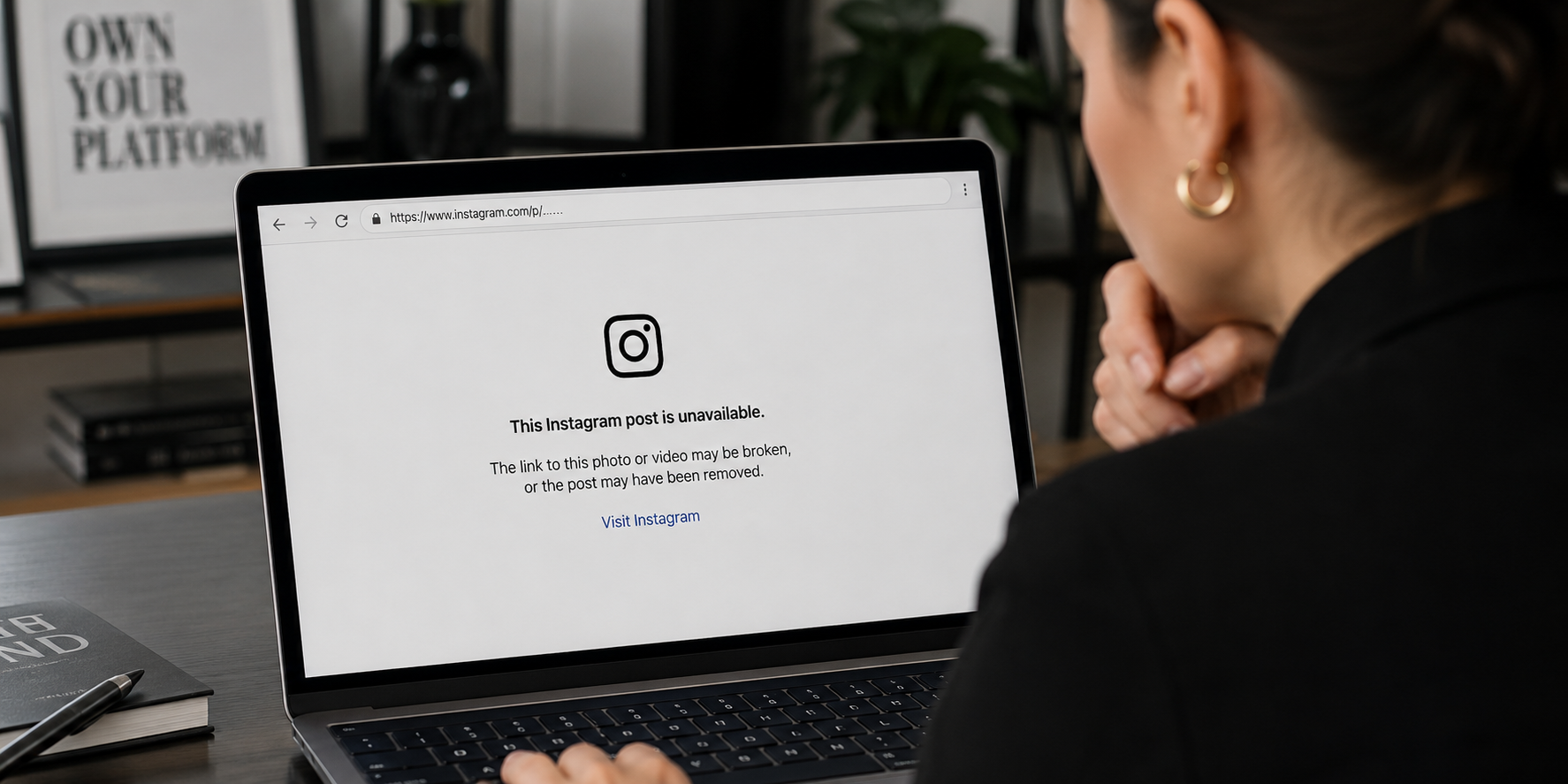
Here's a small thing that turned into a big lesson. While building out a recent piece, I went to grab Instagram embeds for three of the most accomplished women in business — the kind of move bloggers make a hundred times a day to send readers toward someone's profile. All three came back unavailable. No grid, no preview, no clean embed code. Just a wall.
My first instinct was that it was a glitch. My second was that it might be a coincidence. But the more I looked, the more it read as something else: a pattern. And patterns at that level of brand sophistication are rarely accidents. When the people with the most to gain from exposure are the ones quietly restricting how their content travels, that's worth understanding — because the reasoning behind it is one of the most important and least understood principles in modern marketing. Let's get into the why.
First, the unglamorous truth: the embed plumbing is broken for everyone
Before reading deep strategy into every unavailable embed, it's worth knowing that part of this is platform mechanics, not personal choice. The easy era of Instagram embedding is largely over. Meta broke public oEmbed access back in October 2020, and then permanently shut down the Instagram Basic Display API on December 4, 2024. Embedding Instagram content now requires a Business or Creator account authenticated through the Graph API — a heavier, more deliberate process than the old paste-a-link convenience.
So some of what looks like "they turned it off" is really "the simple path no longer exists for anyone." That's an important caveat for honesty's sake. But it actually reinforces the larger point rather than undermining it: the friction is now high enough that getting embedded requires a choice. Whether a brand's content shows up easily on other people's sites is no longer a passive default — it's a decision someone made. And the most sophisticated brands are increasingly deciding "no."
The real reason: control over distribution is the whole game
Instagram still lets any public account flip a switch — Privacy and Security, "Allow people to embed your posts or profile on other websites" — and turn embedding off entirely. For a verified public figure with a large following and a team managing their brand, that toggle being off is usually deliberate. And the logic is the same logic that the savviest operators in media live by: own and control your distribution, because borrowed reach is reach you can lose.
Think about what an embed actually does. It lets a third party — a blogger, a competitor, a random site — pull your content onto their page, inside their context, surrounded by their messaging, framing, and ads. You created the asset; they're displaying it on terms you don't control. For most people that's a fine trade, because the exposure is worth more than the control. But for a top-tier personal brand, the math flips. They don't need the random blog's traffic. What they need is for their content to live where they can shape the experience, capture the relationship, and keep the audience inside their own ecosystem rather than scattered across pages they'll never see.
This is the same instinct that drives the most successful media operators to buy back their companies, fight for their IP, and obsess over owning the pipe instead of renting it. Borrowed distribution feels like a gift until the platform changes its rules, the host site reframes you, or the traffic flows somewhere that benefits everyone but you. Locking down embeds is a small, concrete expression of a much bigger principle: I decide where my content lives and how it's framed.
What "turning it off" actually protects
When a major brand restricts embedding, several things are being protected at once, and they're all worth understanding because they apply to you too.
Context and framing. An embedded post can be wrapped in a narrative the creator never agreed to — used to illustrate a point they'd reject, placed beside a competitor, or stripped of the surrounding content that gave it meaning. Keeping content on-platform keeps the framing intact.
The audience relationship. Every reader who engages with content on Instagram is a potential follower, a data point, a relationship the brand can build on. Every reader who engages with that same content embedded on someone else's blog is a relationship that mostly benefits the blog. Restricting embeds nudges engagement back toward the owned channel where it compounds.
Brand safety and security. For high-profile figures, embeds are also a surface for misuse — out-of-context screenshots, association with sites they'd never endorse, or simply broken, ugly displays on poorly built pages that reflect badly on them. The careful brands eliminate that risk by default.
Scarcity and intentionality. There's a subtler signal in it, too. A brand that makes its content slightly harder to lift communicates that the content has value — that you come to them for it rather than encountering it as free-floating wallpaper on the open web. That intentionality is itself a brand asset.
The lesson for the rest of us: think like an owner, not a renter
You're probably not going to lock down your own embeds — for most growing brands, you want every scrap of exposure you can get, and being embeddable, shareable, and quotable is how you grow. That's the right call early. But the deeper principle the top brands are modeling is one every business should internalize, and it maps directly onto how visibility works in 2026:
Own the assets that compound. The big brands keep their content on channels they control because rented reach can vanish overnight — an algorithm change, an API shutdown (exactly what happened to Instagram embedding), a platform policy shift. The same is true of your search and AI visibility: the durable version isn't traffic you rent through ads that stops the moment you stop paying, it's authority you build into assets you own — your website, your content library, your structured data — that keep ranking and getting cited for years.
Control your context wherever you can. You can't control how every site frames you, but you can make sure the canonical, authoritative version of your brand lives somewhere you own and points everything back to it. In search terms, that's a strong, consistent entity — the same thing that makes Google rank you and AI engines cite you with confidence.
Treat intentionality as strategy. The brands that win don't let their presence be an accident of defaults. They decide, deliberately, where they show up and how. The unavailable embed isn't pettiness — it's a brand that has thought carefully about every doorway into its content and chosen which ones to leave open.
The bottom line
Three unavailable embeds started as a minor annoyance and ended as a clarifying lesson. Part of it is broken platform plumbing, true. But the part that matters is the choice underneath it: the most sophisticated personal brands have decided that controlling how, where, and in what context their content travels is worth more than the scraps of extra exposure an open embed provides. They've concluded that owning your distribution beats renting your reach — and they're right.
You don't have to copy the tactic. But you should absolutely steal the mindset. In a world where platforms change the rules without warning, the brands that thrive are the ones building on ground they own.
Want to build visibility you actually own? Ritner Digital helps brands stop renting reach and start owning it — building the search authority and AI citations that keep working across Google, ChatGPT, Perplexity, and Gemini long after the ads stop. Your content, your context, your compounding asset. Book a free strategy call → and get clear next steps within one business day.
Sources: KeyAPI (Instagram Basic Display API shutdown, Dec 2024); Smash Balloon (oEmbed deprecation, Oct 2020); Popular Photography / Popular Science (how to disable Instagram embeds); Picditt & Testimonial.to (embed requirements and public-account limits); Iframely (Instagram profile embed rollout).
Frequently Asked Questions
Why would a public Instagram account turn off embeds?
For sophisticated personal brands, it's usually about controlling distribution. An embed lets a third party display your content on their page, in their context, surrounded by their messaging — which means you lose control over how you're framed and where the audience relationship lands. Top brands restrict embedding to protect their context, keep engagement on channels they own, reduce brand-safety risks from out-of-context use, and signal that their content has value. For most growing brands the exposure is worth more than the control, but at the top of the market, the math flips.
Did Instagram remove the embed feature?
Partly. Meta broke public oEmbed access in October 2020 and permanently shut down the Instagram Basic Display API on December 4, 2024. Embedding Instagram content now requires a Business or Creator account authenticated through the Graph API — a much heavier process than the old paste-a-link method. So when embeds "don't work," it's often broken platform plumbing affecting everyone, not necessarily a personal choice. That said, any public account can still deliberately turn embedding off in Privacy and Security settings.
How do you turn off Instagram embeds on your own account?
In the app, go to Settings, then Account, then Embeds, and turn off the toggle for "Allow people to embed your posts or profile on other websites." From a web browser, click the gear icon next to your username, go to Privacy and Security, find the Embeds heading, and uncheck the same box. This only applies to public accounts — private accounts can't be embedded by anyone in the first place.
What does "owning your distribution" actually mean?
It means building your brand on channels and assets you control rather than depending on platforms and third parties whose rules can change overnight. Borrowed reach — an embed on someone else's site, traffic from paid ads, exposure from a platform feature — can vanish without warning, exactly like Instagram embedding largely did. Owned distribution is your website, your content library, your email list, your structured data: assets that keep working and compounding because no one else can switch them off.
Should small businesses turn off their Instagram embeds too?
Generally, no. If you're still growing, you want every scrap of exposure — being embeddable, shareable, and quotable is how you build awareness and authority. Locking down embeds is a tactic that makes sense once you have an audience large enough that control matters more than reach. The lesson for smaller brands isn't to copy the tactic; it's to steal the mindset — think like an owner, build authority into assets you control, and be intentional about where your brand shows up rather than leaving it to platform defaults.
How does this relate to SEO and AI search visibility?
Directly. The same "own it, don't rent it" principle governs search and AI visibility in 2026. Paid traffic stops the moment you stop paying, but authority built into owned assets — your site, your content, your consistent brand entity — keeps ranking on Google and getting cited by AI engines like ChatGPT and Perplexity for years. Yext research found 88% of AI citations on financial-services queries come from brand-owned or brand-managed sources, meaning the biggest lever in whether AI recommends you is content you actually control.