On November 19, 2026, Cincinnati lost one of its most beloved animals. That same evening, Macy's unveiled an elaborate blue hippopotamus holiday display in New York City. The retailer had planned its celebration months earlier, making the timing one of the strangest and most emotional coincidences of the holiday season.
Two Hippos. Two Cities. One Unbelievable Day.
Sometimes life produces a coincidence so specific, so unexpected, and so emotionally charged that it sounds like something a writer invented.
November 19, 2026, was one of those days.
In Cincinnati, Ohio, the Cincinnati Zoo & Botanical Garden announced that Fiona, the beloved Nile hippopotamus who became an international celebrity after surviving a premature birth, had died at just nine years old.
For nearly a decade, Fiona had represented resilience, hope, and the extraordinary relationship people can develop with an animal they may never meet in person.
Her death was heartbreaking.
Meanwhile, hundreds of miles away, something almost impossible to believe was happening in New York City.
Macy's was preparing to unveil its famous holiday windows at its Herald Square flagship store.
And this year's theme?
A giant blue hippopotamus.
Not a tiny hippo hidden among Christmas decorations. Not a random stuffed animal sitting in a display.
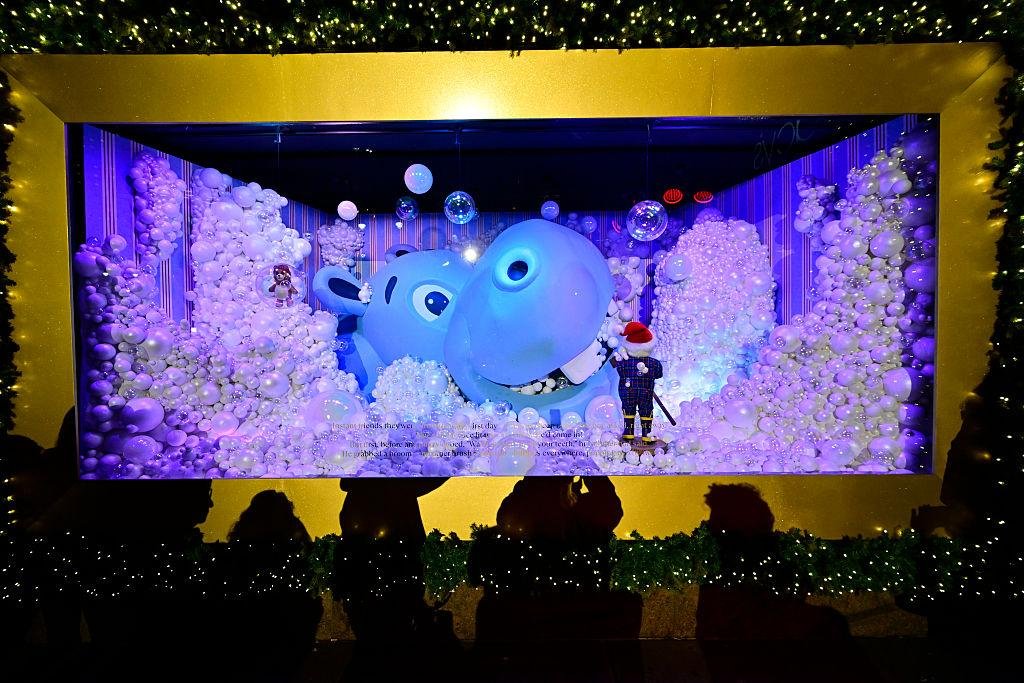
An elaborate, hippo-centered holiday celebration featuring a blue hippopotamus character, whimsical window displays, and a large inflatable hippo making an appearance outside the store.
The character was also preparing to return to the Macy's Thanksgiving Day Parade after an absence of 95 years.
The display was unveiled on November 19.
The same day Fiona died.
One city was grieving a beloved hippopotamus.
Another was celebrating the return of one.
And the strangest part?
Macy's had announced its plans months before Fiona's death.
There was no evidence of a connection between the events. No secret tribute. No coordinated campaign. No reason to believe anyone at Macy's could have anticipated what would happen in Cincinnati.
It was simply an extraordinary coincidence.
But once people noticed the timing, the story took on a life of its own.
For some, it was eerie.
For others, it was heartbreaking.
For Fiona's fans, the blue hippopotamus almost seemed like an accidental memorial.
And for anyone interested in marketing, branding, psychology, or the strange ways unrelated events can become connected in the public imagination, the story raises some fascinating questions.
What are the odds?
Why do coincidences like this affect us so strongly?
And what happens when a major brand spends months preparing a cheerful holiday campaign, only for an unexpected tragedy to completely change the way people interpret it?
To understand why this coincidence became such a remarkable story, we need to go back to where Fiona's journey began.
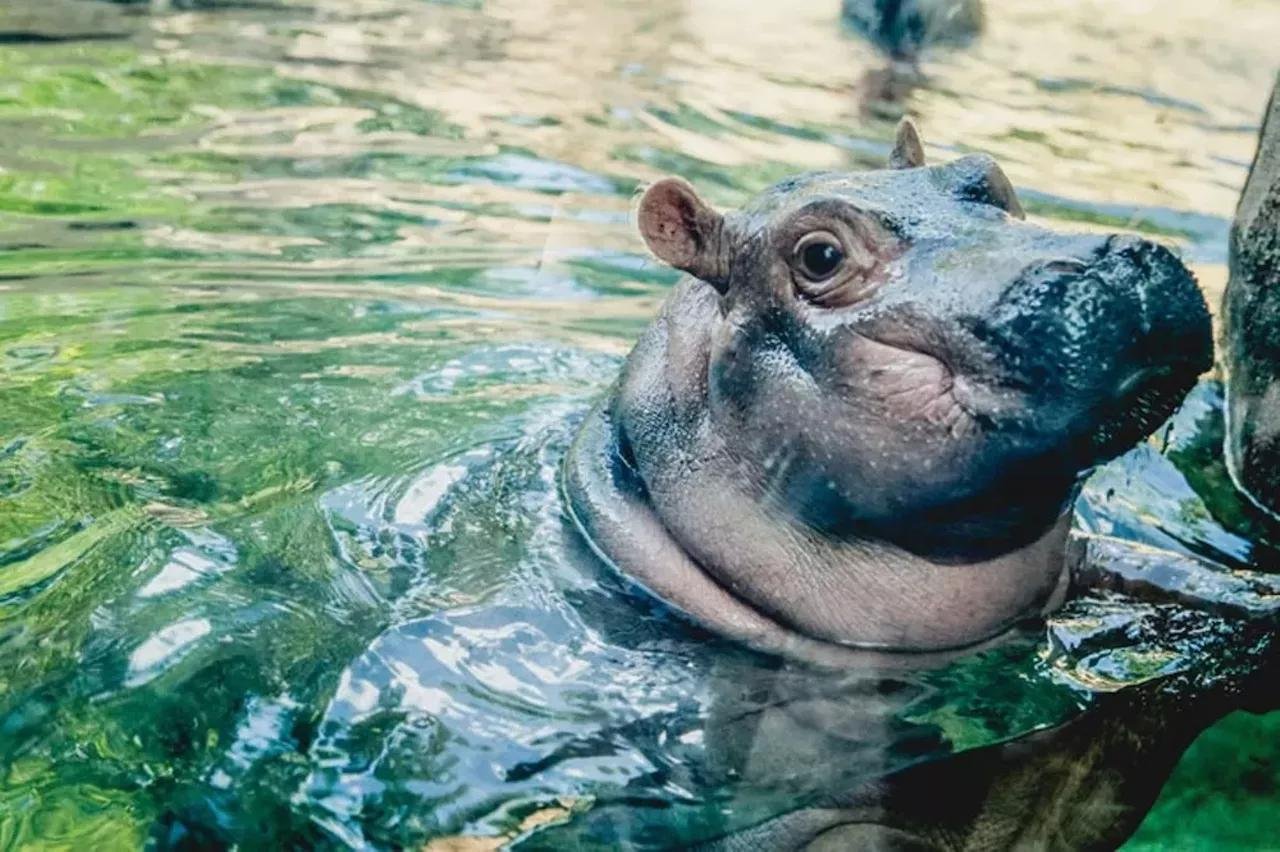
Fiona the Hippo: Cincinnati's Unlikely Superstar
Fiona was born at the Cincinnati Zoo on January 24, 2017.
Her arrival was anything but ordinary.
She was born approximately six weeks premature and weighed just 29 pounds, dramatically smaller than a typical newborn Nile hippopotamus.
Her condition was critical.
She was too weak to nurse normally, and her survival was uncertain.
Zoo veterinarians and animal care specialists worked around the clock to support her.
Her early days involved intensive monitoring, feeding assistance, and a level of veterinary care that captured attention far beyond the zoo.
The Cincinnati Zoo began sharing updates about Fiona's progress.
And something remarkable happened.
People became invested.
They watched videos of her learning to move through the water. They followed updates about her feeding and development. They celebrated her progress and worried when she encountered setbacks.
Social media transformed Fiona from a premature baby hippo in Cincinnati into an international celebrity.
She wasn't simply an animal people visited at the zoo.
She became a personality.
Her expressive face, playful behavior, and extraordinary survival story made her instantly recognizable.
Fans followed her milestones as though they were watching a beloved family member grow up.
Fiona merchandise appeared throughout Cincinnati. Her image became associated with local pride. She inspired books, souvenirs, artwork, and countless social media posts.
More importantly, she became a symbol of perseverance.
Here was an animal who had entered the world facing overwhelming challenges and survived because of extraordinary care and determination.
People connected with that story.
And they continued connecting with Fiona long after her earliest medical challenges had passed.
Why Fiona Meant So Much to Cincinnati
There are famous zoo animals, and then there are animals that become part of a city's identity.
Fiona belonged to the second category.
For Cincinnati residents, she was more than an attraction.
She was a shared cultural experience.
People who had never met one another could still have something in common because they followed Fiona's story.
Families brought children to see her.
Visitors traveled to Cincinnati hoping to catch a glimpse of her.
Local businesses celebrated her.
And the zoo's ongoing updates allowed people around the world to feel connected to an animal living in Ohio.
Fiona's popularity also illustrated something important about digital storytelling.
Her story was not built around an elaborate advertising campaign.
It grew because people cared about what happened to her.
The zoo provided regular updates, and audiences responded to the emotional journey.
Over time, Fiona became one of the most recognizable animals in the country.
That emotional connection is essential to understanding why the news of her death was so devastating.
People weren't simply hearing that a hippopotamus had died.
They were losing an animal whose life they had followed for almost ten years.
The Accident That Led to Fiona's Death
On November 8, 2026, an unusual accident occurred at the Cincinnati Zoo.
A visitor's knit hat entered Fiona's habitat.
According to reporting from the Associated Press, the hat was accidentally sent toward the enclosure and deflected by a ceiling fan through an opening.
Fiona swallowed it.
The situation quickly became a serious medical concern.
Zoo veterinarians and animal care specialists worked to help her pass the obstruction.
They provided ongoing supportive care, monitored her condition, and attempted to address the problem without exposing her to additional risks.
Surgery was considered especially difficult and dangerous.
Despite the team's efforts, Fiona's condition deteriorated.
On November 19, the Cincinnati Zoo announced that she had died.
She was nine years old.
The news shocked people who had followed her extraordinary survival story since 2017.
In its official announcement, the zoo described the loss as devastating.
The staff members who had cared for Fiona were grieving an animal they had known throughout her life.
The zoo also asked the public to respect the animal care team's need for space during an incredibly difficult time.
Fiona had survived a beginning that seemed almost impossible.
Now, after nearly a decade of bringing happiness to millions of people, her life had ended following an unexpected accident.
The circumstances made the loss especially painful.
And while Cincinnati was absorbing the news, an entirely separate hippopotamus story was unfolding in New York.
Meanwhile, in New York City: Macy's Had a Hippo Surprise
For generations, Macy's has been associated with Thanksgiving and Christmas traditions.
Its Thanksgiving Day Parade is one of America's most recognizable holiday events.
Its Herald Square flagship store is famous for elaborate holiday window displays that attract visitors from around the world.
And in 2026, Macy's had a particularly important anniversary to celebrate.
The company was preparing for the 100th edition of its Thanksgiving Day Parade.
To mark the occasion, Macy's developed a celebration that reached back into the parade's earliest history.
Among the returning characters was a blue hippopotamus.
And this wasn't just any blue hippo.
It was a character associated with one of the strangest stories in the parade's history.
A story that began in 1931.
The Missing Blue Hippopotamus of 1931
During the early decades of the Macy's Thanksgiving Day Parade, the event operated differently from the modern spectacle audiences know today.
One unusual tradition involved releasing balloons into the sky after the parade.
People who recovered certain balloons could return them to Macy's for a reward.
It sounds almost unbelievable by modern standards.
But that practice was part of the parade's early history.
In 1931, a blue hippopotamus balloon participated in the event.
Afterward, the balloon was released.
According to Macy's historical account, the other released balloons were eventually accounted for.
The blue hippopotamus was not.
It disappeared.
Macy's describes the balloon as having last been seen floating beyond the Empire State Building.
And for 95 years, that blue hippopotamus remained a curious piece of parade history.
Until 2026.
The Return of the Blue Hippo
In August 2026, Macy's announced that the missing blue hippopotamus character would return as part of the parade's centennial celebration.
The concept was imaginative.
A character that disappeared in 1931 would finally come home.
The story connected the modern parade with its early history while giving audiences a whimsical character to celebrate.
It also created an opportunity for memorable visual storytelling.
A bright blue hippopotamus is unusual enough to stand out among traditional Christmas decorations.
And a character returning after 95 years offers a compelling narrative.
Macy's incorporated that idea into its holiday windows.
In an October 22 announcement, the retailer confirmed that its Herald Square displays would tell the story of the Blue Hippopotamus and its adventures before returning to New York.
The windows were scheduled to debut on November 19.
That date was established before Fiona's fatal accident.
This detail is essential.
The campaign was not developed as a response to Fiona's death.
The plans were already in place.
The creative concept, holiday schedule, and historical inspiration were all separate from the events unfolding at the Cincinnati Zoo.
Yet those two unrelated stories were about to collide.
November 19, 2026: The Day the Stories Collided
Imagine being part of the Macy's marketing team.
You've spent months preparing a major holiday celebration.
Your company is marking the 100th Thanksgiving Day Parade.
You've developed a nostalgic story about a lost blue hippopotamus returning after 95 years.
The window displays are ready.
The decorations are installed.
The event has been scheduled.
Everything is designed to generate excitement and holiday cheer.
Then, on the day of the unveiling, news breaks that one of America's most beloved real-life hippopotamuses has died.
And suddenly, your cheerful blue hippo campaign exists in an entirely different emotional environment.
That's essentially what happened on November 19.
Macy's unveiled its blue-hippo-themed holiday windows in New York City.
The displays followed the character through whimsical adventures.
A large blue inflatable hippopotamus also appeared outside the Herald Square store.
The installation celebrated the retailer's history and the upcoming Thanksgiving parade.
But online, people were already mourning Fiona.
As images of the Macy's display circulated, the timing became impossible to ignore.
News outlets began covering the coincidence.
Social media users expressed disbelief.
Some described the timing as surreal.
Others wondered how the marketing team must have reacted.
And some suggested that the blue hippopotamus could become a tribute to Fiona.
It was the kind of story that almost writes its own headline.
Beloved Hippo Dies the Same Day Macy's Unveils Giant Hippo Holiday Display.
If someone had pitched that scenario as a fictional holiday movie, it might have seemed too unlikely.
Yet it happened.
And it raises the obvious question.
Seriously, What Are the Odds?
The first reaction many people have to this story is mathematical.
What are the chances that a famous hippopotamus would die on the exact day Macy's unveiled a giant hippopotamus holiday display?
It sounds astronomically unlikely.
But calculating an actual probability would be much more complicated than simply multiplying two random numbers.
We would need to define the event precisely.
Are we calculating the probability of any famous zoo animal dying during a major holiday campaign?
The probability of a hippopotamus dying during the month of November?
The probability of Fiona specifically dying on November 19?
Or the probability of that death coinciding with a previously scheduled hippo-themed event at Macy's?
Each question describes a different event.
And we do not have the information required to assign reliable probabilities.
The Macy's unveiling was a scheduled event.
Fiona's death was an unexpected outcome following a medical emergency.
The two events had independent causes.
There is no evidence that one influenced the other.
So while the timing is undeniably unusual, claiming that the odds were one in a million—or one in a billion—would be speculation.
The more interesting question may not be how to calculate the coincidence.
It may be why it feels so extraordinary.
Why Our Brains Are Fascinated by Coincidences
Human beings are remarkably good at recognizing patterns.
That ability helps us learn, make decisions, identify relationships, and understand the world.
But it also means that when two unrelated events share an unusual characteristic, our attention is immediately drawn to the connection.
In psychology, the term apophenia describes the perception of meaningful patterns or connections in unrelated information.
Noticing a coincidence does not automatically mean someone is experiencing apophenia.
And finding emotional meaning in an unexpected event is not inherently irrational.
But the concept helps explain why coincidences can feel more significant than their underlying causes suggest.
Consider what made the Fiona and Macy's story so striking.
Both events involved hippopotamuses.
Both occurred on the same day.
Both attracted public attention.
One involved the death of a beloved animal.
The other involved the celebratory return of a long-lost balloon character.
One story was about loss.
The other was about coming home.
The contrast is unusually powerful.
If Macy's had unveiled a display featuring snowmen, reindeer, or teddy bears, Fiona's death would not have created the same connection.
If the blue hippopotamus had appeared six months earlier, the coincidence might never have attracted attention.
If Fiona had been an obscure animal with no public following, the emotional response might have been very different.
But all of those elements came together.
And our brains are particularly sensitive to stories with that kind of symmetry.
The Emotional Power of Timing
Timing changes how we interpret information.
Imagine seeing a cheerful advertisement featuring a particular animal.
Under ordinary circumstances, you might smile and continue scrolling.
Now imagine seeing the same advertisement immediately after learning that a beloved animal of that species has died.
The advertisement hasn't changed.
The image hasn't changed.
The words haven't changed.
But your emotional response may be completely different.
That is what makes this coincidence so interesting.
Macy's created a story about a fictional blue hippopotamus returning home.
For some Fiona fans, the same character may now symbolize an animal who will never return.
The original creative concept remains intact.
But the emotional context has changed.
This is one reason brand communication can be difficult to predict.
Companies can control the content they publish.
They cannot control every event that shapes how audiences interpret it.
The Marketing Psychology Behind the Coincidence
From a marketing perspective, the Fiona and Macy's story is a remarkable example of how audience interpretation can transform a campaign.
Macy's original objective was straightforward.
Celebrate a historic parade anniversary.
Revive a memorable character.
Create a festive experience at Herald Square.
Generate interest in the Thanksgiving Day Parade.
And encourage people to engage with the Macy's holiday tradition.
The campaign had a clear creative strategy.
It combined nostalgia, storytelling, visual spectacle, and seasonal excitement.
Those are familiar ingredients in effective brand communication.
But once Fiona died, audiences began bringing a completely different emotional perspective to the campaign.
The blue hippopotamus was no longer just a nostalgic character.
For some viewers, it became an accidental symbol of remembrance.
Brands Don't Own Every Meaning Their Campaigns Create
One of the most interesting realities of marketing is that the audience ultimately participates in creating meaning.
A company can decide what it wants a campaign to communicate.
But people interpret that campaign through their own experiences, emotions, memories, and cultural context.
A brand may intend humor.
An audience may perceive insensitivity.
A company may intend nostalgia.
Consumers may experience sadness.
A campaign may be designed to celebrate a historical character.
And suddenly, people may connect it to a contemporary tragedy.
This does not necessarily mean the campaign was poorly conceived.
It means communication is not a one-way process.
The meaning of a message is influenced by the person receiving it.
The Fiona coincidence illustrates that principle in an unusually dramatic way.
Why the Story Spread Online
The coincidence also contains several characteristics that make stories easy to share.
First, it is surprising.
People do not expect two unrelated hippopotamus stories to become major news on the same day.
Second, it is emotionally engaging.
Fiona's death created genuine sadness among people who had followed her life.
Third, it is easy to explain.
You don't need an elaborate background in marketing or psychology to understand why the timing is strange.
Fourth, it contains a powerful visual element.
A giant blue hippopotamus outside Macy's is immediately recognizable.
And finally, it invites conversation.
People can debate whether the timing is simply bizarre, whether Macy's should acknowledge Fiona, or whether the display could become a tribute.
These characteristics help explain why the story attracted attention.
They do not prove that anyone deliberately engineered the coincidence.
The story spread because the overlap was memorable.
What Should Macy's Do?
This is where the situation becomes especially interesting for marketers.
Should Macy's acknowledge Fiona's death?
Should the company dedicate the blue hippopotamus to her memory?
Should it rename the character?
Or should it simply continue with the campaign that was planned months earlier?
There is no single obvious answer.
Each approach has advantages and potential risks.
Option One: Acknowledge Fiona's Passing
Macy's could issue a brief statement expressing sympathy for the Cincinnati Zoo and Fiona's fans.
That would recognize the emotional context without implying that the campaign had been connected to her.
A thoughtful acknowledgment could be meaningful.
But the tone would matter.
The message should focus on Fiona and the people mourning her, not on promoting Macy's holiday campaign.
Option Two: Dedicate the Blue Hippo to Fiona
Some fans have suggested turning the coincidence into an intentional tribute.
The idea is understandable.
Fiona was beloved.
The blue hippo is returning after 95 years.
And the overlap has already created an emotional association for many people.
A respectful dedication could potentially transform an awkward coincidence into a moment of remembrance.
However, any such decision should be approached carefully.
A corporate tribute to a recently deceased animal could be welcomed by some fans and viewed as opportunistic by others.
It would be important to consider the Cincinnati Zoo's perspective and avoid turning the loss into a promotional device.
Option Three: Let the Campaign Continue
Macy's could also choose not to make a public connection between the events.
The company did not cause Fiona's death.
Its campaign was planned months earlier.
And the blue hippopotamus has a legitimate historical connection to the Thanksgiving Day Parade.
Continuing with the original celebration would not automatically be insensitive.
Sometimes the most appropriate corporate response is to avoid making an unrelated tragedy part of the brand's story.
This is an important lesson for businesses.
Not every cultural moment requires a marketing response.
And not every coincidence needs to become a campaign.
Could the Blue Hippo Become an Unofficial Tribute?
Even without an official decision from Macy's, audiences may continue to associate the blue hippopotamus with Fiona.
That is part of what makes this story so unusual.
A character created to celebrate parade history may take on a second meaning that the retailer never intended.
For some viewers, the blue hippo may remain exactly what Macy's planned: a whimsical character returning from the past.
For others, it may become a reminder of Fiona.
Neither interpretation requires a secret connection between the events.
People often attach personal meaning to symbols.
A song can remind someone of a loved one even when the songwriter had no connection to that person.
A holiday decoration can evoke a memory unrelated to its original purpose.
A familiar character can become associated with an unexpected event.
The Macy's blue hippopotamus may now occupy that kind of emotional space for some Fiona fans.
The character was already connected to the themes of absence and return.
Fiona's death introduced a different kind of absence.
The symbolism is striking, even though it was never planned.
The Strange History Makes the Coincidence Even Better
There is another reason this story feels so unbelievable.
The Macy's hippopotamus wasn't simply a random holiday character.
It was already connected to an unusual historical mystery.
A blue hippopotamus balloon disappeared after the 1931 Thanksgiving Day Parade.
Ninety-five years later, Macy's decided to bring it back.
That is a strange enough story on its own.
It involves a giant inflatable animal, an old parade tradition, a balloon drifting away over New York City, and a long-awaited return.
Now add the fact that the character's holiday unveiling occurred on the same day Fiona died.
The coincidence becomes layered.
A missing hippopotamus returns.
A beloved hippopotamus is lost.
The events occur on the same day.
One story reaches back almost a century.
The other involves an animal whose life became a social media phenomenon.
It is the collision of two completely different eras of popular culture.
The Macy's story represents the history of mass entertainment, department-store spectacle, and traditional holiday marketing.
Fiona's story represents the digital age, social media communities, and the emotional bonds that can develop through online storytelling.
And on November 19, those two histories unexpectedly intersected.
Fiona Was a Social Media Star Before the World Knew What to Expect
Fiona's popularity also deserves attention from a marketing and communications perspective.
When she was born in 2017, social media was already central to how people followed news and entertainment.
But the scale of emotional engagement around Fiona was still remarkable.
The Cincinnati Zoo shared her progress with audiences who were eager for updates.
People watched her grow.
They celebrated her achievements.
They developed a sense of familiarity with her personality.
The zoo's storytelling made specialized animal care information accessible to a broad audience.
People who might never have researched hippopotamus biology became interested in Fiona's development, feeding, swimming, and health.
The updates were educational, but they were also deeply emotional.
That combination helped make Fiona memorable.
What Fiona's Story Teaches About Authenticity
Fiona's popularity was not based on an invented advertising character.
It came from a real animal facing real challenges.
The zoo's updates allowed audiences to witness her progress.
The story had uncertainty.
It had setbacks.
It had moments of joy.
And it had a central character people wanted to see succeed.
Those elements are powerful in storytelling because they give audiences something to care about.
For brands, there is a lesson here.
People often connect more strongly with authentic experiences than with generic promotional messages.
That does not mean businesses should manufacture emotional situations or exploit tragedy.
It means that genuine stories, told responsibly, can create lasting relationships.
Fiona's life demonstrates how a compelling real-world story can bring people together across geographic boundaries.
Her death demonstrates how deeply those connections can be felt.
Macy's and the Power of Nostalgia Marketing
Macy's approached its blue hippopotamus campaign from a different direction.
Rather than introducing an entirely new character, it revived a piece of company history.
This is a familiar strategy in nostalgia marketing.
Brands frequently revisit old logos, characters, products, packaging, and traditions to reconnect with audiences.
Nostalgia can create a sense of familiarity and continuity.
It can remind customers of childhood experiences or family traditions.
And it can help a company connect its present identity with its history.
For Macy's, the Thanksgiving Day Parade is an especially valuable source of nostalgia.
Generations of Americans have watched the parade as part of their holiday celebrations.
The balloons are recognizable symbols of the event.
By bringing back a character from 1931, Macy's created a bridge between the parade's earliest years and its centennial celebration.
The blue hippopotamus was a clever choice.
It was visually distinctive.
Its disappearance created a ready-made story.
And its return fit the anniversary theme.
Under ordinary circumstances, the campaign would have been an interesting example of how brands use historical storytelling to create contemporary experiences.
The Fiona coincidence added an unexpected emotional dimension.
When a Brand Campaign Collides With Real Life
One of the biggest challenges in marketing is that campaigns do not launch into a controlled environment.
They enter a world where news is constantly changing.
Unexpected events can affect how audiences respond to advertisements, social media posts, product launches, and public celebrations.
A cheerful message may feel inappropriate during a tragedy.
A joke may take on an unintended meaning after a news event.
A product name or visual theme may suddenly resemble something happening elsewhere in the culture.
Most of these situations are not predictable.
That is why brand communication requires judgment.
Businesses need to distinguish between circumstances that require action and situations where the best response may be restraint.
The Fiona and Macy's coincidence offers a particularly unusual example because the campaign was not inherently offensive.
There was nothing inappropriate about celebrating a historical blue hippopotamus balloon.
The difficulty arose entirely from timing.
And timing is one of the few elements marketers can plan carefully without ever fully controlling.
The Difference Between Bad Planning and Bad Luck
It's important not to confuse an unfortunate coincidence with a marketing failure.
Macy's announced its blue hippopotamus plans in August.
The November 19 holiday window unveiling was publicly confirmed in October.
Fiona's accident occurred in November.
Her death was announced on the day of the unveiling.
There is no reasonable basis for claiming that Macy's deliberately scheduled its campaign around Fiona's death.
The company had already committed to the concept.
This was not evidence of careless research or an insensitive creative strategy.
It was an unpredictable overlap.
That distinction matters because public discussions of brand controversies can sometimes overlook the difference between intent, impact, and responsibility.
A campaign can create an unintended emotional response without having been irresponsibly designed.
How a brand responds afterward is a separate question.
What Will Happen at the 100th Macy's Thanksgiving Day Parade?
The 100th Macy's Thanksgiving Day Parade is scheduled for Thursday, November 26, 2026.
The blue hippopotamus is expected to be part of the centennial celebration.
For Macy's, its return marks the revival of a character that disappeared from parade history in 1931.
For some Fiona fans, the balloon may now carry an additional meaning.
As of November 21, there has been public discussion about honoring Fiona, but no confirmed decision to rename the character or dedicate its parade appearance to her has been established in the sources reviewed for this article.
That may change before Thanksgiving.
Or the parade may proceed with the original historical theme.
Either way, the coincidence has already altered the conversation surrounding the blue hippopotamus.
People who might otherwise have viewed the balloon as a charming piece of parade nostalgia may now think of Fiona.
And some who had never heard of the 1931 balloon may learn about its history because of the unexpected connection.
It is an unusual example of how two unrelated stories can increase public attention around each other.
Is There a Deeper Meaning to the Coincidence?
This is where people may disagree.
Some will see the timing as nothing more than chance.
Others may find it emotionally meaningful.
A few may interpret the blue hippopotamus as a symbolic farewell to Fiona.
Those interpretations are personal.
The documented facts support a coincidence, not a causal connection.
Macy's planned its campaign months earlier.
Fiona's death followed an unexpected medical emergency.
Neither event caused the other.
But factual independence does not prevent people from finding symbolic meaning.
Human beings have always used stories, images, and coincidences to make sense of emotionally significant events.
When someone is grieving, an unexpected reminder can feel especially powerful.
For Fiona's fans, the appearance of a giant blue hippopotamus on the day of her death may offer a moment of comfort.
It may also feel unsettling.
Both reactions are understandable.
The important thing is to distinguish emotional interpretation from factual explanation.
We can recognize that the timing feels extraordinary without suggesting that anyone planned it or that the events were secretly connected.
The Bigger Lesson: Stories Don't Always End Where Marketers Expect
The Fiona and Macy's coincidence illustrates something important about storytelling.
Once a story enters the public conversation, its meaning can evolve.
Macy's created a narrative about a lost parade balloon returning after 95 years.
The Cincinnati Zoo shared the life of a premature hippopotamus who became a global celebrity.
Those stories developed independently.
One was a carefully planned holiday campaign.
The other was the real-life journey of an animal who inspired millions.
On November 19, the stories intersected through timing.
And audiences began connecting them.
That connection may fade after Thanksgiving.
Or it may become part of how people remember the blue hippopotamus's return.
There is no way to know yet.
But the coincidence demonstrates how powerful shared symbols can become.
A hippopotamus is not normally the first animal people associate with Christmas.
Yet this holiday season, a blue hippo may remind some people of joy, nostalgia, grief, and remembrance all at once.
That is a complicated emotional combination for a holiday decoration.
And it is exactly why the story is so memorable.
Final Thoughts: One Hippo Was Coming Home While the World Said Goodbye to Another
On November 19, 2026, Cincinnati lost Fiona.
She was nine years old.
She had survived an extraordinary beginning, inspired millions of people, and become one of the most beloved animals in the country.
Her death was sudden, unexpected, and deeply painful for the people who cared for her and followed her life.
That same evening, New York City welcomed the return of a different hippopotamus.
A bright blue character from the 1931 Macy's Thanksgiving Day Parade was making its way back into the spotlight after 95 years.
Its return was supposed to be a cheerful celebration of history, nostalgia, and holiday tradition.
And it still is.
But now, for some people, it may also be something else.
A reminder of Fiona.
A symbol of an animal who brought happiness to millions.
An accidental tribute that nobody planned.
There is no evidence of a mysterious connection.
No reason to believe Macy's anticipated the tragedy.
No mathematical probability we can responsibly assign to the exact sequence of events.
Just two independent stories that happened to meet on one unforgettable day.
And perhaps that's what makes the coincidence so compelling.
The world is full of carefully planned events, marketing campaigns, celebrations, and traditions.
But sometimes the most memorable stories are the ones nobody could have written in advance.
One hippopotamus was coming home.
Another was saying goodbye.
And the entire coincidence unfolded just one week before Thanksgiving.
Seriously. What are the odds?
What This Strange Coincidence Teaches Us About Marketing
At Ritner Digital, we're interested in more than keywords, websites, and advertising campaigns.
We're interested in how people respond to stories.
Why certain moments capture attention.
How emotional connections influence brand perception.
And why a carefully planned marketing campaign can take on a completely different meaning when it intersects with real life.
The Fiona and Macy's coincidence is an extraordinary reminder that brands communicate within a larger cultural environment.
Audience perception matters.
Timing matters.
Context matters.
And sometimes, the most important part of a campaign's story is something nobody planned.
Ritner Digital helps businesses strengthen their digital presence through SEO, content strategy, digital marketing, and clear, audience-focused communication.
Have a story worth telling or a brand that needs a stronger digital presence?
Contact Ritner Digital: https://www.ritnerdigital.com/contact
Frequently Asked Questions
When did Fiona the hippo die?
Fiona died on Thursday, November 19, 2026, at the Cincinnati Zoo & Botanical Garden. She was nine years old.
What caused Fiona's death?
According to the Cincinnati Zoo and reporting from the Associated Press, Fiona died following complications after swallowing a visitor's knit hat that accidentally entered her habitat on November 8, 2026.
Did Macy's unveil its hippo-themed holiday windows on the same day Fiona died?
Yes. Macy's unveiled its blue-hippopotamus-themed holiday windows at its Herald Square flagship store on November 19, 2026, the same day Fiona's death was announced.
Was Macy's blue hippopotamus inspired by Fiona?
No. Macy's campaign was inspired by a blue hippopotamus balloon associated with its 1931 Thanksgiving Day Parade. The company announced the character's return in August 2026, months before Fiona's death.
What happened to the original Macy's blue hippo balloon?
According to Macy's historical account, the balloon was released after the 1931 parade and was never recovered. The character is returning for the 100th edition of the parade in 2026.
Is Macy's naming its blue hippo Fiona?
Some fans have suggested a dedication or tribute. As of November 21, 2026, no confirmed decision to rename the balloon or formally dedicate it to Fiona has been established in the sources reviewed.
When is the 2026 Macy's Thanksgiving Day Parade?
The 100th Macy's Thanksgiving Day Parade is scheduled for Thursday, November 26, 2026, in New York City.
What makes this coincidence so unusual?
The events involved two highly recognizable hippopotamus stories occurring on the same day. One was a tragic loss involving a beloved zoo animal. The other was a planned celebration of a historical parade balloon returning after 95 years.
What is apophenia?
Apophenia refers to perceiving meaningful patterns or connections in unrelated information. The concept can help explain why coincidences sometimes feel especially significant, although noticing a genuine coincidence is not inherently irrational.
What can marketers learn from the Fiona and Macy's story?
The story demonstrates how unexpected cultural events can change audience interpretation. Brands can plan their messaging, but they cannot control every circumstance that influences how people receive it.
Sources and References
1. Cincinnati Zoo & Botanical Garden — Beloved Hippo Fiona Has Passed Away (November 19, 2026)
Official announcement confirming Fiona's death and describing the zoo's efforts to save her.
https://cincinnatizoo.org/beloved-hippo-fiona-has-passed-away/
2. Associated Press — Cincinnati Zoo's Famed Fiona the Hippo Dies Days After Eating a Visitor's Hat (November 20, 2026)
Reporting on Fiona's medical emergency, her life, and the public response.
https://apnews.com/article/3d90d10c57698af06e5a7a67bed05608
3. Macy's, Inc. — Macy's Kicks Off the 100-Day Countdown to the 100th Macy's Thanksgiving Day Parade (August 18, 2026)
Official announcement confirming the Blue Hippopotamus's planned return and explaining the 1931 balloon history.
https://www.macysinc.com/newsroom/news/news-details/2026/Macys-Kicks-Off-the-100-Day-Countdown-to-the-100th-Macys-Thanksgiving-Day-Parade/
4. Macy's, Inc. — There's Magic Inside Macy's This Holiday Season (October 22, 2026)
Official announcement describing the blue-hippo holiday windows and confirming the November 19 unveiling.
https://www.macysinc.com/newsroom/news/news-details/2026/Theres-Magic-Inside-Macys-This-Holiday-Season/
5. The Independent — Fiona the Hippo Fans Left Reeling Over Coincidental Macy's Christmas Display (November 20, 2026)
Coverage of the coincidence, holiday installation, and public reaction.
https://www.independent.co.uk/life-style/fiona-hippo-cincinnati-zoo-macys-christmas-b3088938.html
6. NBC 10 News — Macy's Unveils Hippo-Themed Holiday Windows on Same Day Fiona Died (November 20, 2026)
News coverage confirming the timing of the events.
https://turnto10.com/news/local/macys-unveils-hippo-themed-holiday-windows-on-same-day-fiona-died-herald-square-new-york-city-cincinnati-ohio-november-19-2026