Graduate Enrollment Isn’t a Brand Problem — Until It Is

On a university homepage, the brand is clear:
“Top-tier faculty”
“Real-world impact”
“Global reputation”
Then you click a graduate program ad.
Suddenly, you’re here:
A stock photo
A headline that says “Advance Your Career”
A form with 9 required fields
And no obvious connection to the university you just trusted
That gap?
That’s the problem.
What Graduate Marketing Actually Looks Like on the Ground
Here’s how this usually plays out:
Example #1: The MBA Campaign
Paid search ad: “Online MBA – Apply Now”
Landing page: Fast, functional, conversion-first
Messaging: Generic outcomes, minimal brand story
It converts… but only at a high cost.
Example #2: The MS in Data Science Campaign
Different agency
Different tone
Different visuals
Different value props
Same university. Feels like a different institution.
Example #3: Brand Team Review
“This doesn’t sound like us.”
“We’d never use this language.”
“Can we soften the CTA?”
Meanwhile, enrollment is thinking:
“If we change this, leads drop.”
No one’s wrong. Everyone’s misaligned.
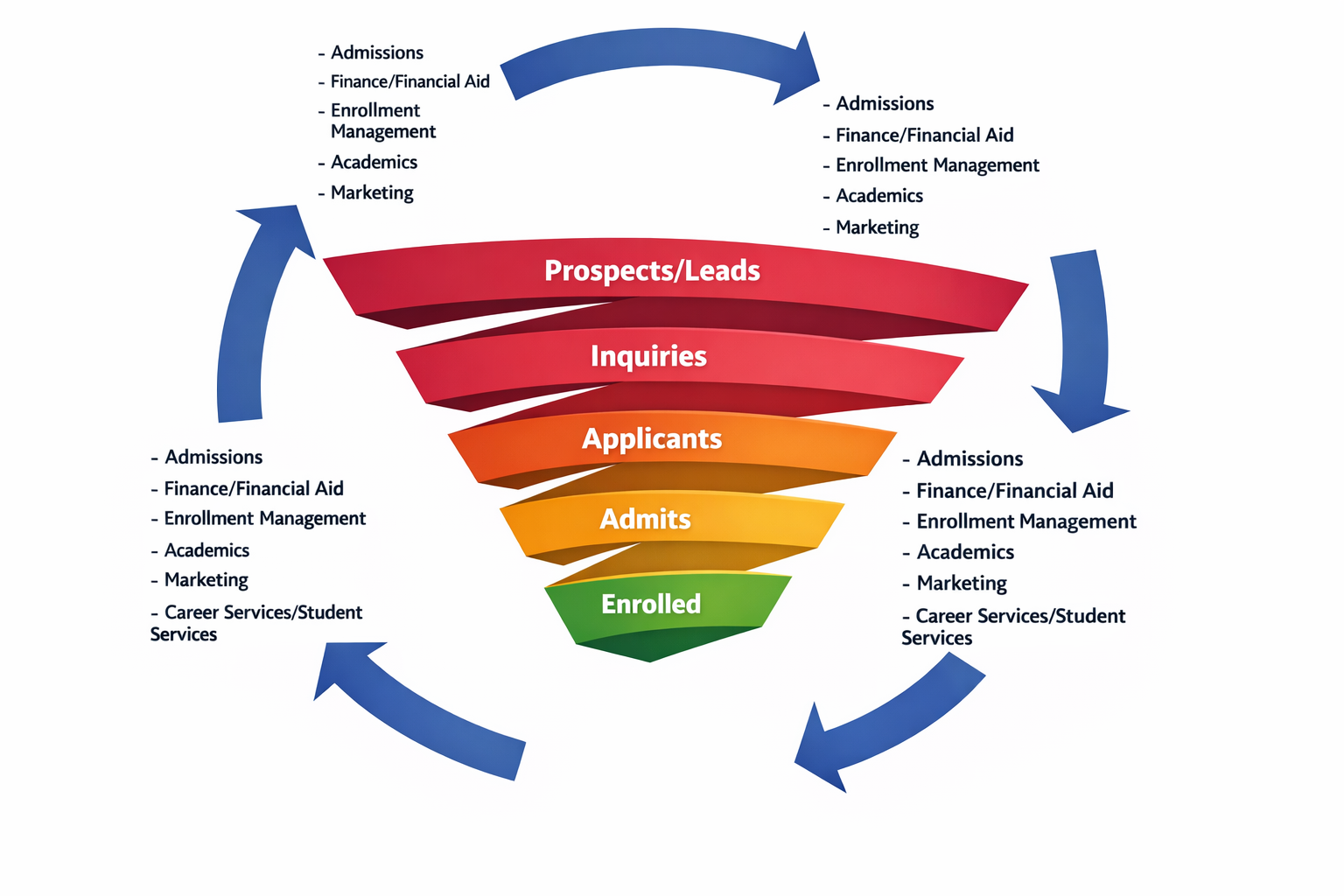
So Universities Segmented (Good Move)
Now imagine:
One message for working nurses
One for career-switchers
One for international students
Each needs:
Different proof points
Different outcomes
Different timelines
But without guardrails, segmentation turns into:
Different fonts
Different voices
Different promises
At scale, it stops feeling personalized and starts feeling chaotic.
The Real Issue (Very Specifically)
Graduate enrollment teams are optimizing for the form fill.
Brand teams are optimizing for long-term perception.
But graduate prospects experience both at the same moment.
They don’t separate:
Brand ad vs. enrollment ad
Homepage vs. landing page
Email nurture vs. university reputation
They just decide whether this feels credible.
What Alignment Actually Looks Like (In Practice)
Not theory — execution:
The MBA page leads with career outcomes tied to the institution’s strengths
Data science ads reference faculty research or industry partnerships
Emails sound human, not institutional, but still unmistakably “on brand”
CTAs stay strong, but the message feels earned
Same university.
Different audiences.
One coherent story.
Why This Drives Better Leads
When brand and enrollment are aligned:
Clicks convert faster
CPL drops
Programs attract better-fit applicants
Yield improves
Not because the ads are prettier —
because the message makes sense.
The Takeaway
Graduate enrollment breaks when:
Segmentation happens without strategy
Performance happens without brand
Brand happens without enrollment reality
The fix isn’t choosing one.
It’s connecting them.
Ritner Digital helps universities do exactly that.
We build graduate enrollment strategies that respect the brand and drive real leads.
If your graduate marketing feels inconsistent from click to campus, let’s talk.
Frequently Asked Questions
Why can’t graduate enrollment just focus on lead generation?
Because graduate prospects don’t experience marketing in pieces.
They see:
A university brand promise
A program ad
A landing page
A follow-up email
All within minutes.
If those don’t line up, conversion drops — even if the form still fills. Lead gen without brand alignment often means higher CPL and lower yield.
Is this really a problem if our campaigns are hitting lead targets?
Sometimes. But here’s the catch:
Are CPLs rising year over year?
Are applicants stalling mid-funnel?
Are programs saying “the leads aren’t qualified”?
If yes, the issue usually isn’t volume — it’s message credibility.
Does this mean every graduate program needs custom branding?
No — and that’s where universities get stuck.
Programs don’t need new brands.
They need structured flexibility.
Same voice. Same values.
Different proof points, outcomes, and priorities.
Think “one story, many entry points.”
How do we segment graduate audiences without diluting the brand?
By defining what’s fixed and what’s flexible.
Fixed:
Tone
Core value proposition
Institutional strengths
Flexible:
Career outcomes
Industry language
Faculty and curriculum highlights
Calls to action
Without those guardrails, segmentation turns into inconsistency.
Why does this feel harder for graduate than undergraduate marketing?
Because graduate prospects are:
More skeptical
More price-sensitive
More outcome-driven
They don’t buy vision alone.
They buy relevance.
That makes misalignment more obvious — and more expensive.
Can brand and enrollment teams realistically work together?
Yes — but not by accident.
It requires:
Shared goals (not just shared assets)
Agreement on what success looks like
Data flowing both ways
When enrollment insights inform brand strategy, both get stronger.
What usually breaks first when things aren’t aligned?
Almost always:
Landing pages drift off-brand
Emails feel transactional
Programs “go rogue” with messaging
Leadership steps in late
By the time it’s obvious, spend is already wasted.
What’s the fastest way to fix this?
Start with one program.
Map the full journey (ad → application)
Identify where brand drops off
Tighten the message, not just the design
Measure impact on quality, not just quantity
Scale from there.
How does Ritner Digital help with this specifically?
We sit at the intersection of:
Brand strategy
Graduate enrollment
Performance marketing
That means we don’t just design campaigns — we connect the dots between institutional identity and measurable growth.
If your graduate marketing feels fragmented, we help make it coherent — and profitable.
Related Reads
〰️
Related Reads 〰️

When Your Marketing Goal Isn't More Customers — It's Smarter Visibility
Most digital marketing advice assumes you need more customers. But what happens when your organization already serves everyone in your coverage area? Your branded searches are strong. People know your name. The goal isn't more conversions — it's becoming the go-to resource, reducing the calls your team shouldn't have to take, and showing up for the searches where people don't know your name yet.
Why Familiar Brands Feel Safer (Even When They’re Worse)
We’ve all stuck with a brand that disappointed us—slow shipping, bad UX, or frustrating support—simply because it felt familiar. This post breaks down the psychology behind why consumers trust known brands over better alternatives, how familiarity lowers perceived risk, and what challenger brands can do to win anyway.
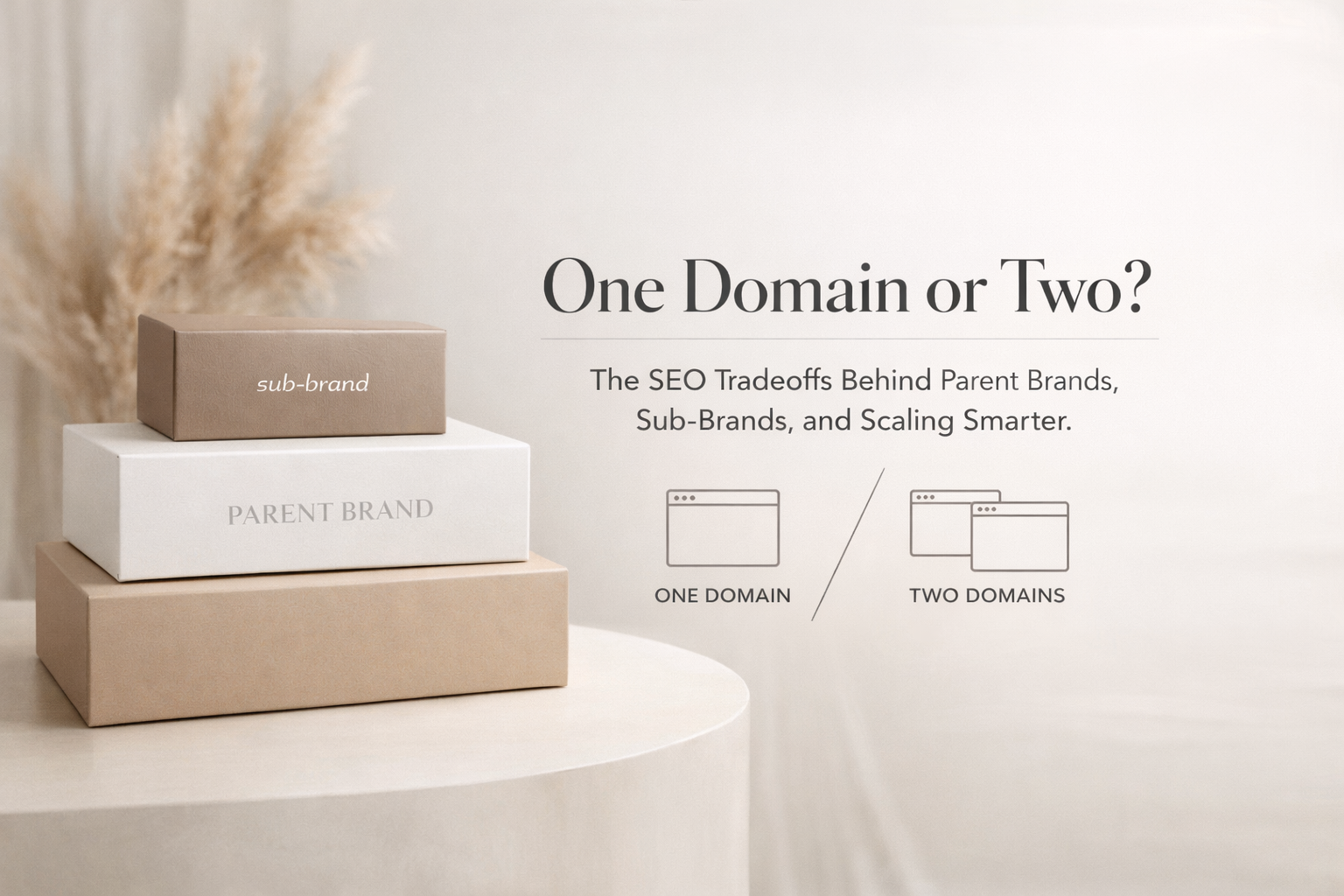
One Domain or Two? The SEO Tradeoffs Behind Parent Brands, Sub‑Brands, and Scaling Smarter
At some point, every growing company faces the same question: should everything live on one domain, or is it time to spin up a second site? This guide breaks down the real SEO and scaling tradeoffs behind parent brands, sub-brands, and multi-domain strategies—so you can choose the structure that actually supports long-term growth.