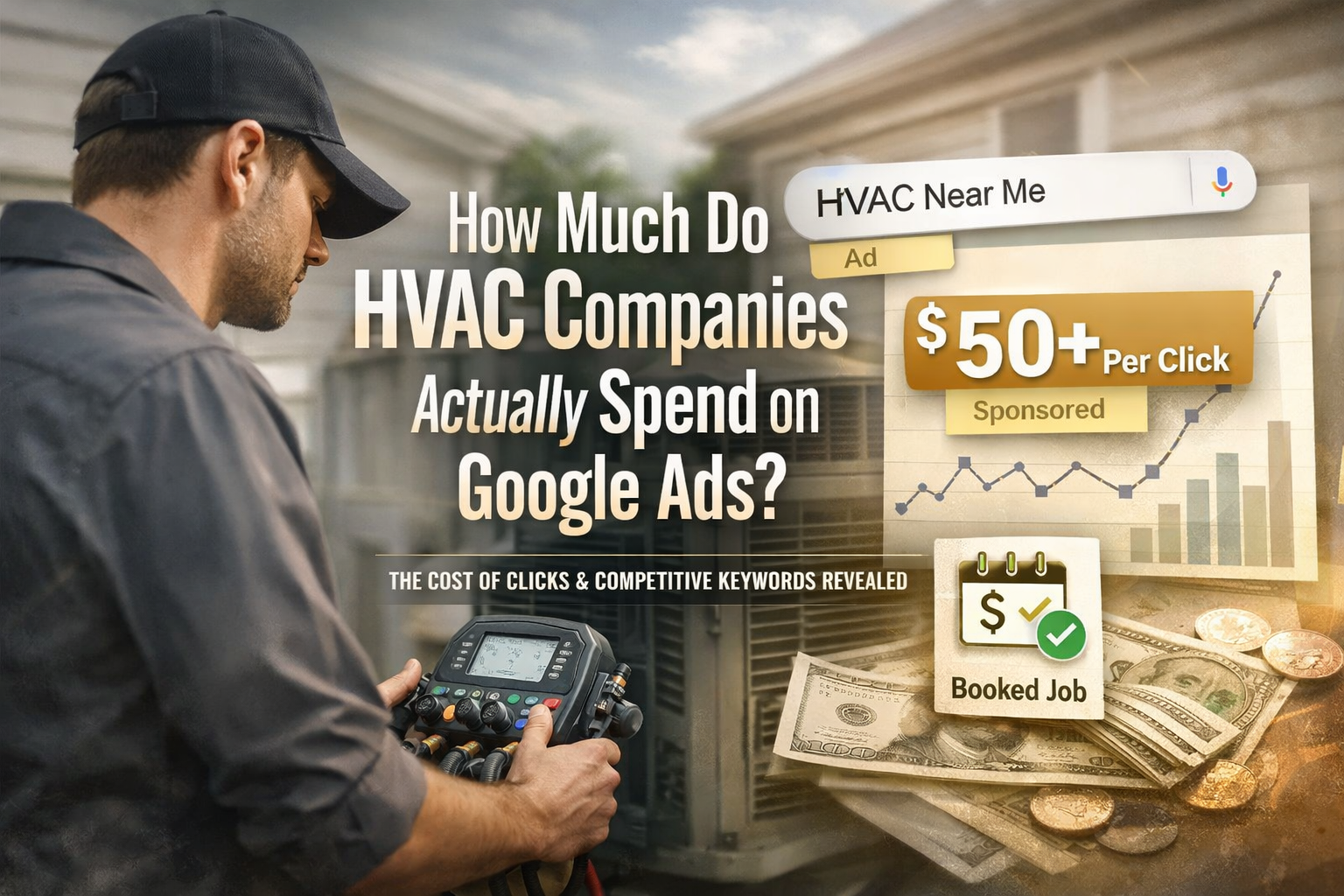
How Much Do HVAC Companies Actually Spend on Google Ads?
(And the Keywords Draining Their Wallets)
If you’ve ever Googled “AC repair near me” in the middle of a heatwave, congrats—you just wandered into one of the most expensive auctions on the internet.
HVAC companies don’t casually run Google Ads.
They battle for them.
Let’s break down what HVAC companies typically spend on paid ads, which keywords cost the most, and where most budgets quietly go to die.
The Big Number 💸
Average HVAC Google Ads Spend
Across the U.S., most HVAC companies land somewhere in these ranges:
$3,000–$8,000/month → smaller, single-location operators
$10,000–$30,000+/month → competitive suburban & metro markets
$50,000+/month → multi-location, franchise, or PE-backed brands
And that’s just baseline.
Budgets typically spike during:
Summer heat waves
Winter cold snaps
“Emergency season” (aka: when everything breaks at once)
Why the premium pricing?
HVAC searches are urgent, high-intent, and high-ticket—a perfect storm for expensive clicks.
Cost Per Click: Where the Pain Really Is 😬
Here’s what HVAC companies commonly pay per click on Google Ads:
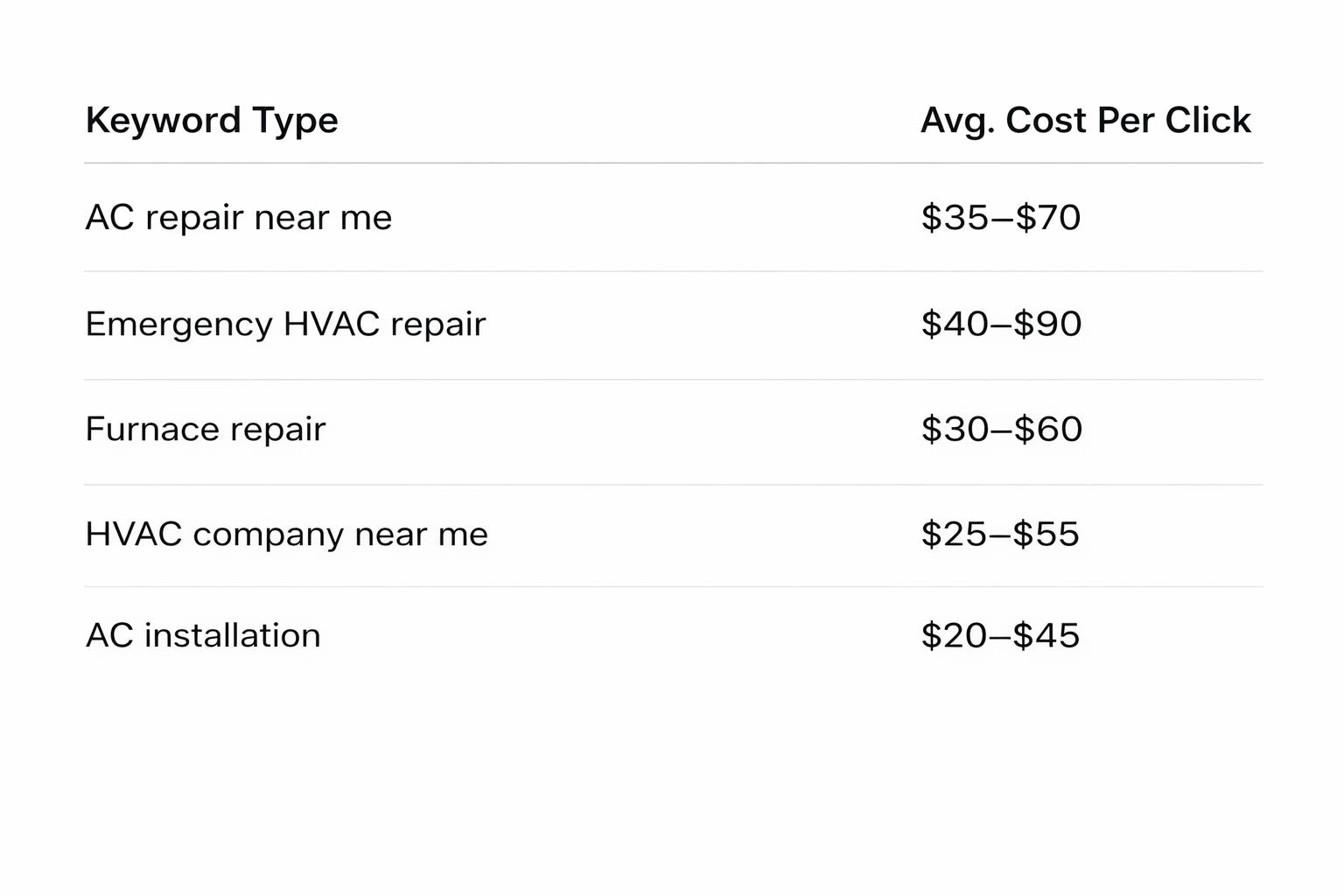
Important reminder:
That’s one click, not one lead.
At $50 per click, a $6,000 budget buys roughly 120 visitors.
Miss the conversion, miss the phone call, miss the job.
The Keywords Everyone Is Fighting Over ⚔️
1. “Near Me” Keywords
These are the crown jewels:
“AC repair near me”
“HVAC company near me”
“24/7 HVAC near me”
They convert extremely well—which is exactly why everyone wants them.
Google sees desperation. Google charges accordingly.
2. Emergency Searches
Examples:
“emergency AC repair”
“no heat furnace repair”
“AC not working”
These searches usually happen when someone is:
Hot
Cold
Angry
Which makes them some of the highest-converting (and highest-priced) keywords in home services.
3. Installation & Replacement Keywords
Think:
“AC replacement”
“new furnace cost”
“HVAC installation near me”
These bring bigger job sizes—but longer decision cycles.
Without strong landing pages and follow-up, this is where budgets quietly evaporate.
Why HVAC Ads Feel So Expensive (Even When They’re Not)
Here’s the uncomfortable truth:
Most HVAC companies don’t lose money because Google Ads are “too expensive.”
They lose money because:
Ads send traffic to weak or generic pages
There’s no call tracking, so wins and losses are invisible
Broad keywords eat budget fast
Every competitor runs the same ads
Translation:
They’re paying premium prices for average performance.
Oof.
What the Smart HVAC Companies Do Differently
The HVAC brands winning with paid ads usually:
Separate campaigns by service (repair vs install vs maintenance)
Use tighter keyword match types instead of “spray and pray”
Pair ads with strong local landing pages
Track calls, not just clicks
Optimize around booked jobs—not traffic volume
Paid ads don’t have to be cheap.
They just have to be predictable.
The Bottom Line
Yes—HVAC Google Ads are expensive.
Yes—they’re competitive.
And yes—they’ll punish sloppy strategy.
But when built correctly, paid ads are still one of the fastest ways to turn high-intent searches into booked jobs—especially during peak season.
The real question isn’t “Are ads worth it?”
It’s “Is your ad strategy built to survive the auction?”
The Takeaway (and the Next Move)
If your HVAC ads feel unpredictable, overpriced, or stressful, it’s probably not the market—it’s the strategy.
At Ritner Digital, we help HVAC companies stop guessing and start knowing:
which keywords actually book jobs
where ad spend is leaking
and how to turn clicks into calls (and calls into installs)
👉🏼 Want a second set of eyes on your ads?
We’ll break down your current spend, keyword strategy, and missed opportunities—no fluff, no pressure.
Book a free paid ads audit with Ritner Digital
and find out whether your budget is working… or just working Google.
FAQs
How much should a small HVAC company spend on Google Ads?
Most small, single-location HVAC companies start around $3,000–$5,000 per month. That’s usually enough to gather data, test keywords, and generate consistent calls—if the campaigns are set up correctly. Anything less tends to struggle in competitive markets.
Why are HVAC Google Ads so expensive?
Because HVAC searches are:
High intent (“I need this fixed now”)
High urgency
High lifetime value
Google prices ads based on competition, and HVAC is one of the most competitive local service categories—especially during peak seasons.
What are the most expensive HVAC keywords?
Typically:
“AC repair near me”
“Emergency HVAC repair”
“HVAC company near me”
“Furnace repair near me”
These keywords convert extremely well, which is exactly why everyone bids on them.
Are Google Ads worth it for HVAC companies?
Yes—when done right.
Google Ads work best when paired with strong landing pages, call tracking, and tight keyword targeting. Without those, even large budgets can underperform fast.
How long does it take HVAC Google Ads to start working?
You can usually see leads within the first 30 days, but real optimization happens over 60–90 days. The first month is about data. The following months are where efficiency and ROI improve.
Should HVAC companies run ads year-round?
Ideally, yes—but budgets should flex.
Most companies scale up during summer and winter, then pull back slightly during shoulder seasons while still maintaining visibility and data continuity.
What’s better for HVAC: Google Ads or Local Services Ads?
They serve different purposes:
Google Ads offer more control, targeting, and scalability
Local Services Ads work well for brand trust and call volume
The strongest HVAC strategies usually use both together.
Why do some HVAC ads get clicks but no calls?
Common reasons include:
Weak or generic landing pages
Poor mobile experience
No clear call-to-action
Mismatched keywords
Clicks don’t pay the bills—booked jobs do.
Do HVAC companies need call tracking for Google Ads?
Absolutely.
Most HVAC leads happen over the phone. Without call tracking, you’re optimizing blind and guessing which ads actually produce revenue.
Can HVAC companies manage Google Ads themselves?
Some do—but many struggle once costs rise. HVAC ads require ongoing optimization, keyword management, and conversion tracking. Without that, performance often plateaus or declines.
How can I tell if my HVAC ads are actually working?
The right metrics to watch:
Cost per call
Booked jobs (not just leads)
Cost per booked job
Revenue vs ad spend
If those numbers aren’t clear, something’s missing.
Related Reads
〰️
Related Reads 〰️
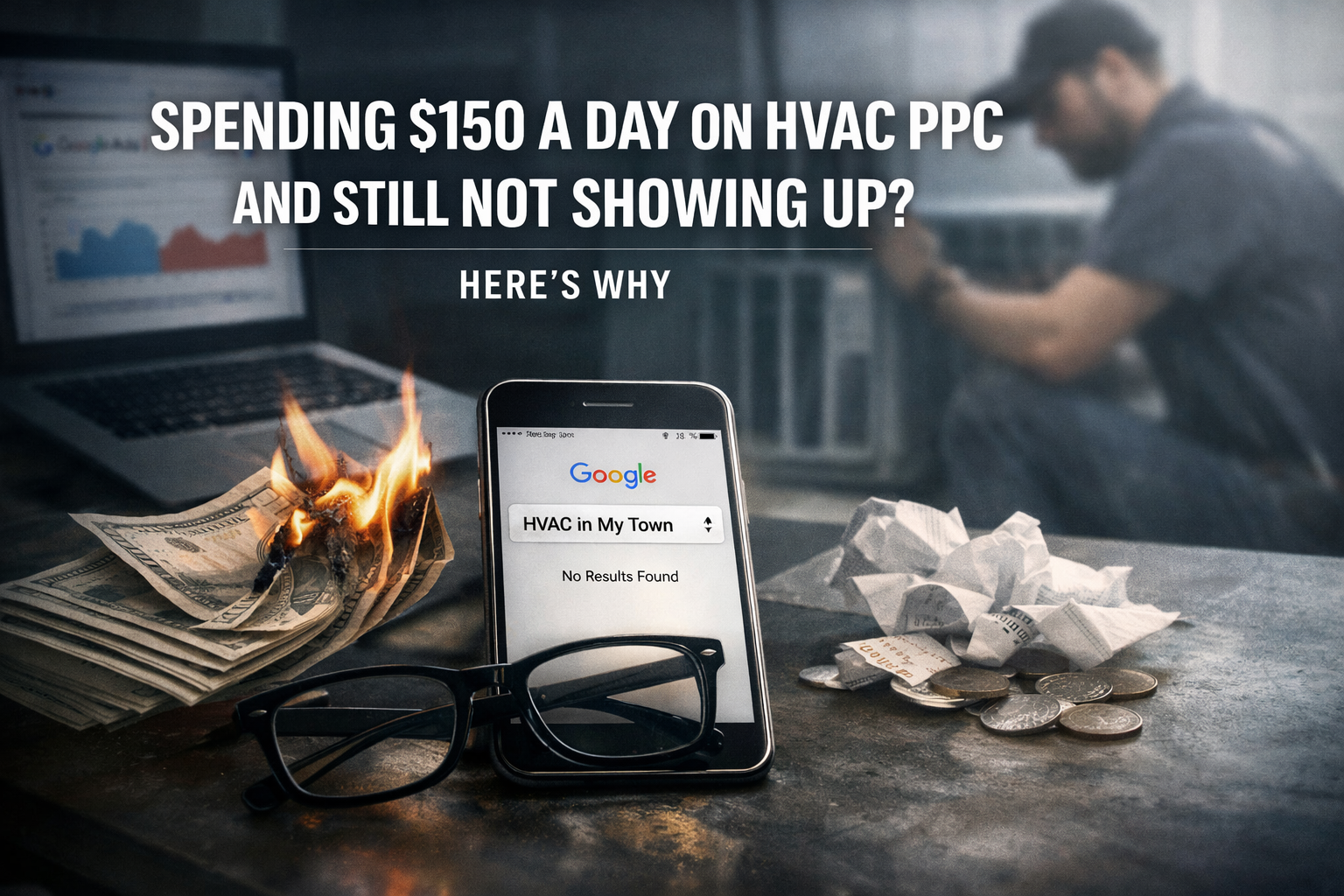
Spending $150 a Day on HVAC PPC and Still Not Showing Up? Here's Why
You're writing the checks. You're spending $150 a day on Google Ads across every county in your service area. But when you type "HVAC" and the name of the town you're literally sitting in, your company is nowhere to be found. That's not bad luck — that's a campaign that isn't built right, and it's burning your money while your competitors answer the phone.

Google Ads vs. Meta Ads: Where Should a $3K/Month Budget Go First?
With a $3K/month ad budget, you can’t afford to guess. This breakdown compares Google Ads and Meta Ads to help you decide where to invest first based on buying intent, business model, and growth goals.

How to Tie Marketing Spend to Revenue
Marketing teams spend money. Finance wants proof. This guide breaks down how to tie marketing spend to real revenue using clean tracking, attribution models, and data your leadership team will actually trust.