SEO Strategy for Companies with Long Sales Cycles
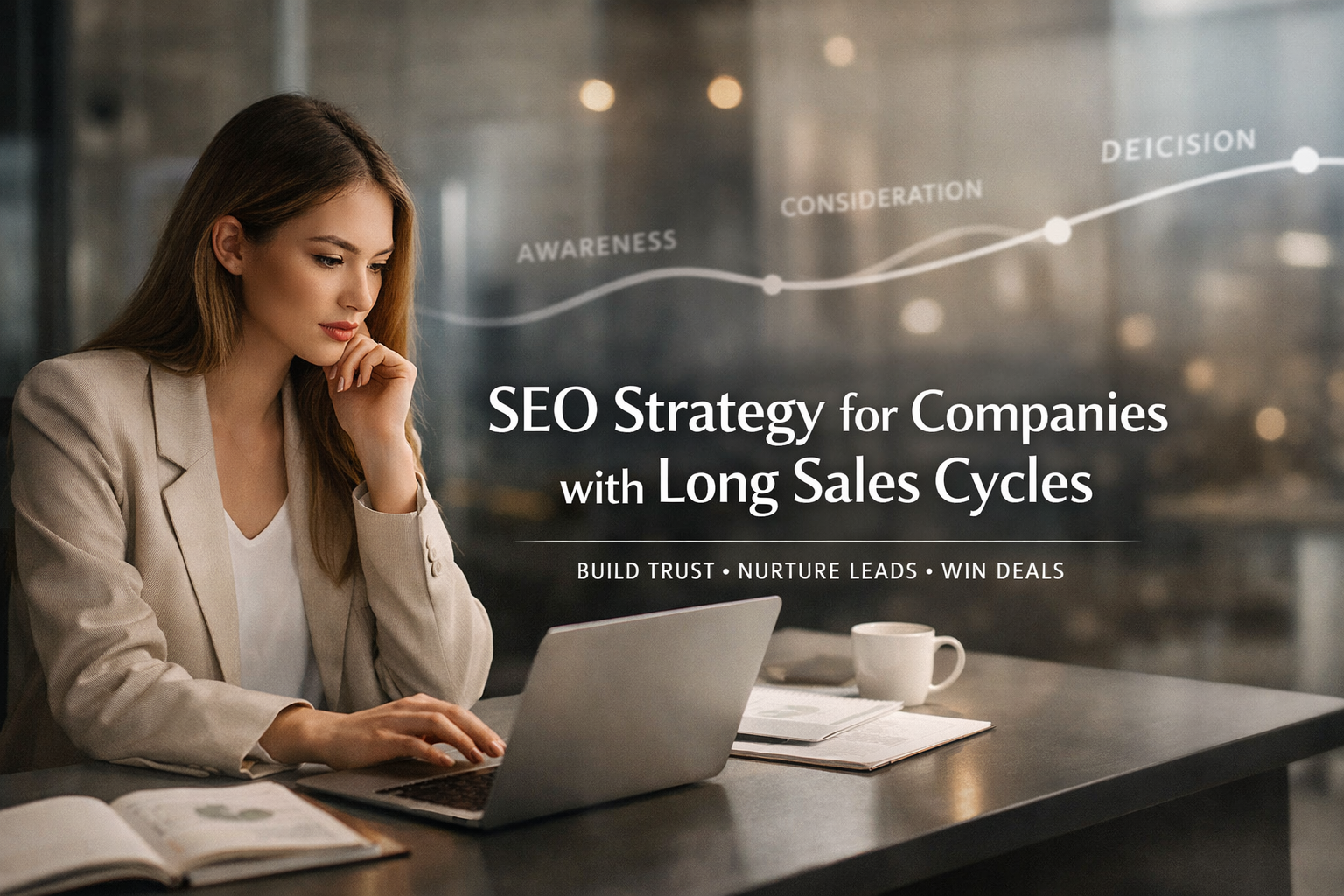
Because nobody impulse-buys enterprise solutions.
If your sales cycle lasts months, SEO can feel like a slow burn with questionable payoff.
You publish content today… and the deal might close six to twelve months later—after internal meetings, budget approvals, and at least one “let’s revisit this next quarter.”
Meanwhile, paid ads promise instant gratification.
Tempting.
Also shortsighted.
For companies with long sales cycles, SEO isn’t about quick wins. It’s about showing up early, earning trust consistently, and staying visible until decision time.
Here’s how to build an SEO strategy that actually works when buyers take their time.
The Reality of Long Sales Cycles
Long sales cycles usually mean:
Higher price points
Multiple decision-makers
Heavy research and comparison
Risk-averse buyers who hate making the wrong call
Translation: your prospects are Googling long before they’re ready to talk to sales.
If your SEO only targets “buy now” keywords, you’re missing the biggest part of the journey—the part where buyers decide who even makes the shortlist.
SEO’s job here isn’t closing deals.
It’s earning trust before the first sales call ever happens.
Step 1: Stop Treating SEO Like a Lead Gen Shortcut
Yes, high-intent keywords matter.
But if your entire strategy revolves around:
“Best [solution] software”
“[Service] pricing”
“[Vendor] alternatives”
You’re showing up too late.
Strong long-cycle SEO covers every stage of the buyer journey:
Early Stage: Problem Awareness
These searches sound like:
“Why does our process keep breaking at scale?”
“Common challenges in [industry] growth”
“How to fix inefficiencies without hiring more people”
They’re not shopping yet. They’re diagnosing.
Mid Stage: Solution Awareness
Now they’re evaluating:
“[Solution type] vs [solution type]”
“How to choose the right [tool/service]”
“Best approach for solving [specific problem]”
This is where education beats promotion.
Late Stage: Vendor Awareness
Only now do searches look like:
“[Your company] vs competitors”
“Is [solution] worth it?”
“Best agency for [specific need]”
If you skipped the earlier stages, you’re hoping to win a race you joined halfway through.
Step 2: Write Like a Trusted Advisor, Not a Sales Page
Long-cycle buyers are skeptical by default.
They don’t want:
“10 Reasons Our Platform Is the Best on the Market”
They want:
Clear frameworks
Honest trade-offs
Practical explanations
Proof that you understand their world
High-performing SEO content sounds more like a consultant’s brain dump than a marketing brochure.
Think:
“How to evaluate [solution] for complex buying committees”
“What actually slows down B2B sales cycles (and how to fix it)”
“When SEO makes sense for B2B—and when it doesn’t”
If your content builds confidence before pitching anything, you’re doing it right.
Step 3: Lean Into Long-Form Content (Yes, Really)
Complex problems need space.
For long sales cycles, short blogs rarely cut it. You need:
Pillar pages
In-depth guides
Evergreen explainers
Why long-form works:
It ranks for a wider range of keywords
It answers multiple questions in one place
It keeps decision-makers on-site longer
It gets shared internally (“Hey, read this”)
One strong guide can support:
SEO rankings
Sales conversations
Buyer education
Brand authority
That’s not just traffic. That’s leverage.
Step 4: Optimize for Return Visits, Not One-Time Clicks
Most long-cycle buyers won’t convert on visit one.
Or two.
Or five.
Your SEO strategy should assume people will come back—and design for it.
That means:
Smart internal linking that encourages deeper reading
Content that builds on itself instead of standing alone
CTAs that guide without pressuring
The goal isn’t forcing a conversion.
It’s becoming familiar.
By the time someone says, “Let’s talk to vendors,” your brand shouldn’t feel new—it should feel obvious.
Step 5: Align SEO With Sales (Or Don’t Bother)
If sales teams complain that SEO leads “aren’t ready,” the strategy is broken.
Effective long-cycle SEO:
Answers common sales objections before the call
Reflects real questions buyers ask during evaluations
Supports sales conversations instead of competing with them
The easiest win?
Ask sales what prospects are confused about before they book a call.
Then write about that.
You just turned SEO into a pre-sales engine.
The Bottom Line
SEO for long sales cycles isn’t about speed.
It’s about presence.
When done right, it:
Builds trust early
Improves lead quality
Shortens sales cycles
Supports sales long after publishing
And unlike ads, it doesn’t turn off when the budget does.
If your SEO strategy only focuses on buyers who are ready right now, you’re leaving serious revenue on the table.
Most SEO strategies chase quick wins. We play the long game.
Ritner Digital helps companies with long sales cycles build search strategies that earn trust early and convert when it counts.
→ Start the conversation.
FAQs
Why is SEO important for companies with long sales cycles?
Because your buyers start researching long before they’re ready to talk to sales. SEO helps your brand show up early, build trust over time, and stay visible throughout a long decision-making process—so you’re top of mind when it’s finally time to buy.
How long does SEO take to work for B2B companies?
SEO isn’t instant, especially for long sales cycles. Most B2B companies start seeing meaningful traction in 3–6 months, with stronger revenue impact over 6–12 months as content compounds and prospects move through the funnel.
What kind of SEO content works best for long sales cycles?
Content that educates instead of sells. Think:
In-depth guides
Buyer’s journey content
Comparisons and frameworks
Sales-enablement blogs that answer common objections
If it helps a buyer make a smarter decision, it’s probably good SEO.
Should long sales cycle companies focus on high-intent keywords only?
Nope. High-intent keywords matter, but they’re only part of the picture. Long sales cycle SEO works best when it covers problem awareness, solution evaluation, and vendor comparison, not just “ready-to-buy” searches.
Does SEO actually shorten long sales cycles?
Indirectly, yes. Strong SEO content educates prospects before they ever speak to sales, which means fewer basic questions, better-qualified leads, and faster decision-making once conversations begin.
How does SEO support sales teams in long buying processes?
SEO content can:
Answer common pre-call questions
Address objections before they come up
Build credibility before outreach
When done right, SEO acts like a pre-sales resource your team didn’t have to create one-on-one.
Is SEO better than paid ads for long sales cycles?
They serve different purposes. Paid ads are great for quick visibility. SEO is better for long-term trust, education, and compounding results. For long sales cycles, SEO often delivers higher ROI over time because it supports the entire buyer journey—not just the last click.
What makes Ritner Digital’s SEO approach different?
Ritner Digital designs SEO strategies specifically for companies with long, complex sales cycles. That means focusing on education, authority, and buyer trust—not just rankings and traffic spikes.
When should a company invest in SEO for long sales cycles?
The best time is before pipeline pressure hits. SEO works best when it’s given time to compound, making it ideal for companies planning for sustainable, long-term growth rather than short-term lead spikes.
Related Reads
〰️
Related Reads 〰️

SEO Doesn’t Stop at the Sale: Using Content to Onboard and Retain Clients
If your account managers are answering the same five questions every week, you don’t have a communication problem—you have a content gap. SEO doesn’t end when the deal closes. The smartest teams use post-sale content to onboard clients, reduce churn, and turn SEO into a full-funnel growth strategy.
Why Marketing a BPO Company Is Nothing Like Selling Software — And What to Do About It
If you run a BPO company, you already know that selling outsourcing services is nothing like selling software. There's no free trial, no product demo, and no way to show a prospect exactly what they're buying before they commit. You're asking businesses to hand over a critical function and trust that your team will deliver — and your marketing has to close that trust gap long before your sales team ever picks up the phone. Here's why most BPO marketing misses the mark and what actually works.
Why Organic Traffic Is the Most Sustainable Growth Strategy in 2026
Paid ads deliver short-term results. Organic traffic compounds. Learn why SEO and content marketing are the most sustainable growth strategies for businesses in 2026 — and how to build traffic that converts long after campaigns end.