An unnecessarily comprehensive analysis of Caribbean souvenir marketing, provocative branding, consumer psychology, packaging strategy, organic search visibility, and the things my family will apparently purchase while unsupervised on a cruise ship.
This Thanksgiving, I learned something new about my parents.
Not about their retirement plans. Not about their political beliefs. Not about their hopes for the next generation.
About their purchasing decisions in international waters.
My parents, who are in their 60s and 70s, recently went on a Caribbean cruise. Like many loving parents returning from vacation, they purchased a souvenir for my brother.
Was it a refrigerator magnet? A commemorative Christmas ornament? A tasteful assortment of Caribbean spices?
No.
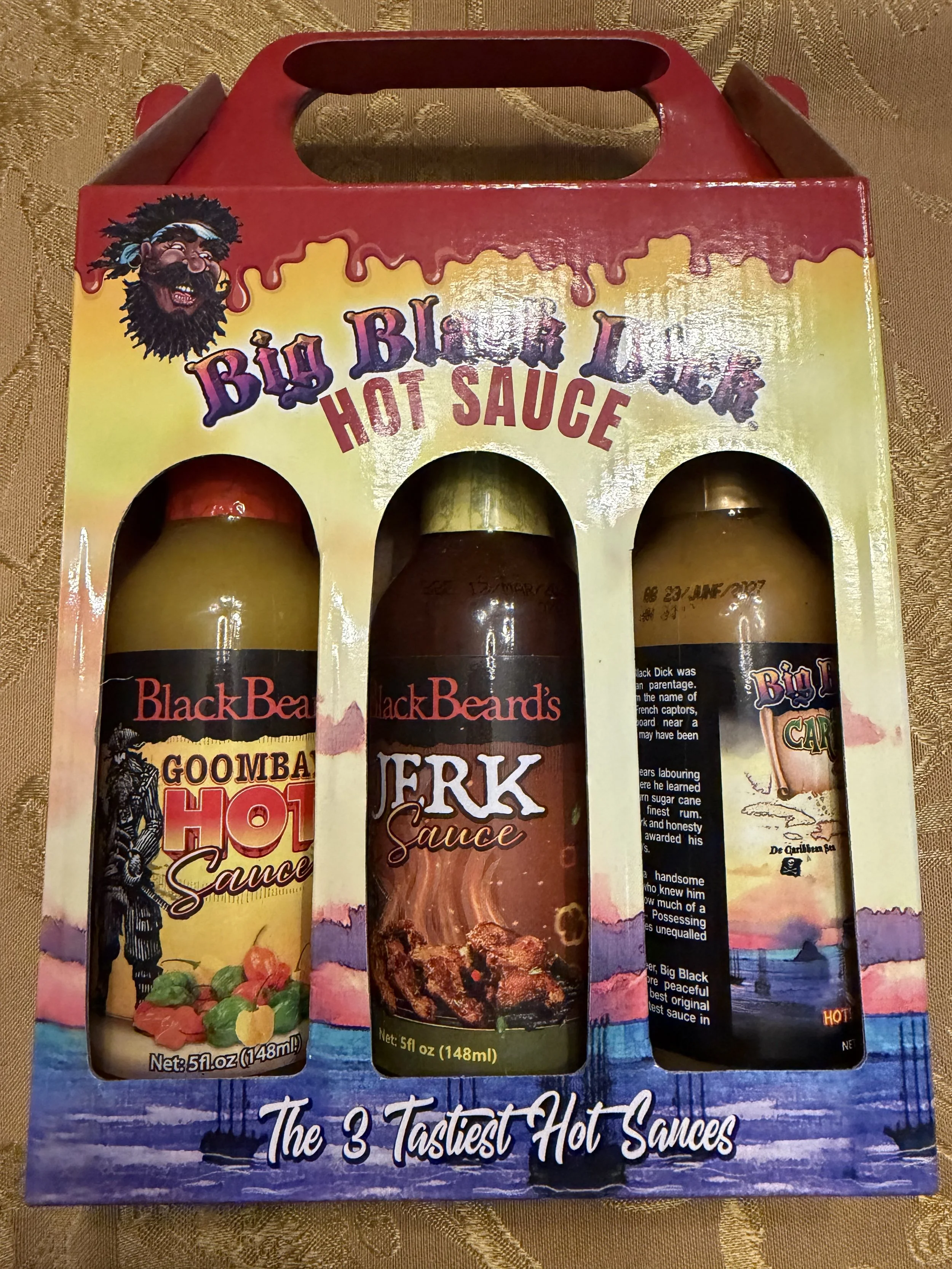
It was a three-pack of Big Black Dick Hot Sauce.
And because I work in marketing, I was presented with two options:
Process this information as a normal member of a functioning family.
Conduct an extensive analysis of the brand's positioning, packaging, consumer psychology, storytelling, search engine visibility, and earned media potential.
Welcome to the Ritner Digital blog.
This analysis is not sponsored by BetterHelp, although at this point, it probably should be.
What makes this particular Thanksgiving gift so fascinating is not simply that it exists. It is that two people, both old enough to qualify for senior discounts, encountered this product in a retail environment, presumably participated in some form of shared purchasing decision, exchanged actual currency for it, transported it home, and determined that Thanksgiving was an appropriate opportunity to unveil it.
The brand successfully moved two consumers through the marketing funnel.
The rest of us are still working through the emotional funnel.
But underneath the obvious joke is a genuinely interesting marketing case study. This product managed to differentiate itself in an incredibly crowded food category, appeal to an unexpected demographic, inspire a gift purchase, generate an interpersonal conversation, and ultimately secure an unpaid, long-form marketing analysis from a digital marketing agency in Philadelphia.
There are companies spending thousands of dollars a month trying to achieve that last part.
Big Black Dick accomplished it by being placed inside a cardboard box.
First, What Exactly Is Big Black Dick Hot Sauce?
For those unfamiliar with the Caribbean condiment industry, or whose parents exercise slightly more discretion when selecting souvenirs, Big Black Dick is an actual commercial brand associated with the Cayman Islands.
This is not an Etsy shop. It is not a gag gift manufactured exclusively for bachelor parties. It is not something my father accidentally ordered through a Facebook advertisement.
There is an established commercial history behind this product.
The packaging identifies BBD Caribbean Limited, located at 10–12 Harbour Drive, George Town, Grand Cayman, British West Indies, as the company for which the sauces were bottled.
The gift set contains three five-ounce bottles, held together in a colorful cardboard carrying case featuring Caribbean imagery, pirate illustrations, and a remarkably unapologetic brand identity.
The individual bottles include:
BlackBeard's Goombay Hot Sauce
BlackBeard's Jerk Sauce
A third Caribbean-style sauce whose full label is partially obscured by the packaging
Interestingly, the exterior packaging describes three somewhat different varieties: Hot Pepper Sauce, Hot Mango Sauce, and Hot Exotic Sauce.
We will be returning to this discrepancy during the packaging audit because, unfortunately for everyone involved, I am incapable of receiving a consumer packaged good without identifying opportunities for brand optimization.
The box also features recipes, an elaborate pirate origin story, product descriptions, and the tagline:
“The 3 Tastiest Hot Sauces.”
A comparatively restrained marketing claim from a company that has already made several considerably bolder decisions.
The Brand Has Been Around Since at Least 2003. Somehow, This Makes Everything Better.
Perhaps the most surprising discovery from researching Big Black Dick is that the brand has survived for more than two decades.
This was not the result of a recent TikTok trend. This was not a Gen Z marketing intern given unrestricted access to the company's branding guidelines.
This predates Instagram, modern influencer marketing, and the existence of most contemporary social media platforms.
In September 2003, the Cayman Compass published an article titled “GT Has New Tourist Attraction”, documenting the launch of Big Black Dick Premium Rum by Island Companies Ltd.
The company's managing director, John Rea, explained that the business wanted to introduce a humorous, unconventional character inspired by the Caribbean's association with pirates and rum.
The article also documented concerns among some local residents regarding the name, alongside positive reactions from visiting tourists.
In other words, the original marketing team was fully aware that the name might generate controversy.
They did not accidentally discover the double entendre six months into production.
There were meetings.
There were approvals.
At some point, someone presumably presented this idea to a room of business professionals, and enough people in that room said yes.
The article also quoted project manager Joseph McMahon making the following observation:
“Big Black Dick” Premium Rum is a lot more catchy and memorable than Richard Le Noir Rum.
From a brand recall perspective, it is difficult to argue with him.
In March 2004, international travel retail publication The Moodie Davitt Report covered the brand in its article “Fonbelle Expands With the Spirit of the Caribbean.”
The publication reported that the rum attracted considerable attention at the Duty Free Show of the Americas and had already achieved a leading position among Cayman Islands duty-free products, according to the reporting at the time.
The product line also included hot sauce, souvenir items, T-shirts, and various gift packaging options.
One of the most revealing statements came from Fonbelle Americas managing director Rodolphe Grosset:
“It is more a gift than a rum.”
That sentence is arguably the entire marketing strategy.
Twenty-two years later, two members of my immediate family validated it.
The brand was not merely selling a consumable product. It was selling something that could be transferred from one person to another and generate a reaction.
That distinction is extraordinarily important.
The Product Is Hot Sauce. The Value Proposition Is Making Someone Open It in Front of Other People.
One of the first things marketers learn is that the physical product and the actual value proposition are not necessarily the same thing.
A luxury handbag is not simply a storage mechanism.
A wedding photographer is not simply selling photographs.
A vacation souvenir is not necessarily purchased because someone at home has an immediate, unmet need for Caribbean condiments.
The functional value proposition of Big Black Dick Hot Sauce is flavor enhancement.
Its experiential value proposition is considerably more complicated.
The purchaser gets to experience the amusement of discovering the product, the anticipation of giving it to someone, the recipient's reaction, and the subsequent conversation.
The recipient gets hot sauce and, depending on the family dynamic, a new understanding of their parents.
This means the brand is effectively selling multiple experiences through a single transaction.
Traditional hot sauce brands compete through flavor, ingredients, heat intensity, culinary credibility, price, and distribution.
Big Black Dick competes through those things potentially, but also through the likelihood that someone will say:
“You are never going to believe what I just found in this gift shop.”
That sentence is an extraordinarily valuable marketing asset.
It is the beginning of organic word-of-mouth distribution.
And unlike a paid social advertisement, the company does not have to pay for every additional impression generated when someone brings the product home and shows it to their family.
The consumer becomes the distribution channel.
My parents, having apparently completed their Caribbean cruise and onboarding as unpaid brand ambassadors, have now extended the company's reach into Pennsylvania.
Consumer Psychology: Why Would Two People in Their 60s and 70s Buy This?
Aside from the possibility that my parents have been considerably funnier than I previously understood, their purchasing decision illustrates several important concepts in consumer psychology.
It also demonstrates why marketers should be careful about making broad assumptions based on age demographics.
Somewhere, a marketing presentation is describing consumers over 65 as primarily interested in financial security, healthcare, convenience, and products that support an active retirement.
Meanwhile, my parents are evaluating the giftability of Big Black Dick.
The isolation effect: Being the product people remember
The isolation effect, also known as the Von Restorff effect, describes the tendency for distinctive information to be more memorable than surrounding, relatively similar information.
Imagine a souvenir shop containing:
Caribbean Pepper Sauce
Island Spice Pepper Sauce
Tropical Mango Pepper Sauce
Authentic Cayman Hot Sauce
Big Black Dick Hot Sauce
Which product are you most likely to mention afterward?
Which product are you going to photograph?
Which product is going to become the subject of a Thanksgiving blog post?
Distinctiveness matters because consumers encounter an enormous amount of competing information. Brands that resemble every other brand in their category face the difficult task of being remembered without supplying an especially compelling reason for that memory to form.
Big Black Dick does not appear to have that particular problem.
Its branding creates an immediate interruption in the consumer's expectations.
There is a risk, of course. People might remember the joke without remembering that the company sells hot sauce or rum.
But in this instance, the physical packaging provides a sufficiently clear product category to connect the memorable name with a purchasable item.
Humor reduces the burden of earning attention
Humor has a documented role in advertising effectiveness.
Marketing researcher Martin Eisend's meta-analysis of humor in advertising, published in the Journal of the Academy of Marketing Science, examined hundreds of correlations involving humor and advertising outcomes.
The research found benefits for attention, positive emotional responses, and purchase intention, while also identifying limitations, including potential reductions in source credibility.
That final point matters.
Humor can make people more receptive to a message without necessarily making them trust the organization delivering it.
A hot sauce company can operate comfortably within that trade-off.
An orthopedic surgeon probably cannot.
A financial planning company naming its retirement product Big Black Dick would encounter a somewhat different regulatory and consumer-trust environment.
For a novelty souvenir, however, humor is closely connected to the reason for purchasing the product. The joke is not an unrelated creative device layered on top of an otherwise serious transaction.
The joke is part of the merchandise.
Incongruity and the unexpected
Humor frequently emerges when reality violates an established expectation.
A pirate-themed Caribbean hot sauce is an expected product.
A pirate-themed Caribbean hot sauce called Big Black Dick represents a departure from that expectation.
Parents bringing home souvenirs is expected.
Parents bringing home this particular souvenir and presenting it at Thanksgiving represents a second departure from expectation.
The brand therefore creates multiple layers of incongruity as it moves through different social contexts.
The gift becomes funnier because of who purchased it, who received it, when it was distributed, and who else was present.
The company could not have designed this exact scenario.
But it designed a product capable of creating scenarios like it.
That is an important distinction between producing humorous advertising and producing a humorous consumer experience.
Why demographic segmentation only gets you so far
My parents' age is amusing in this context, but it is also a reminder that demographic segmentation does not automatically explain consumer motivation.
Two customers of the same age can have entirely different personalities, preferences, senses of humor, and purchasing behaviors.
A marketer who assumes older consumers are categorically uninterested in provocative humor may overlook a viable customer segment.
Psychographic and behavioral segmentation would be particularly relevant for this brand. Its audience might include people motivated by novelty, irreverence, gift-giving, travel experiences, culinary curiosity, or making their adult children uncomfortable during federal holidays.
The first five are conventional marketing segments.
The sixth is based on preliminary qualitative research conducted in my household.
Our sample size is two.
Further research is not currently funded.
The Packaging Audit: What Big Black Dick Gets Right
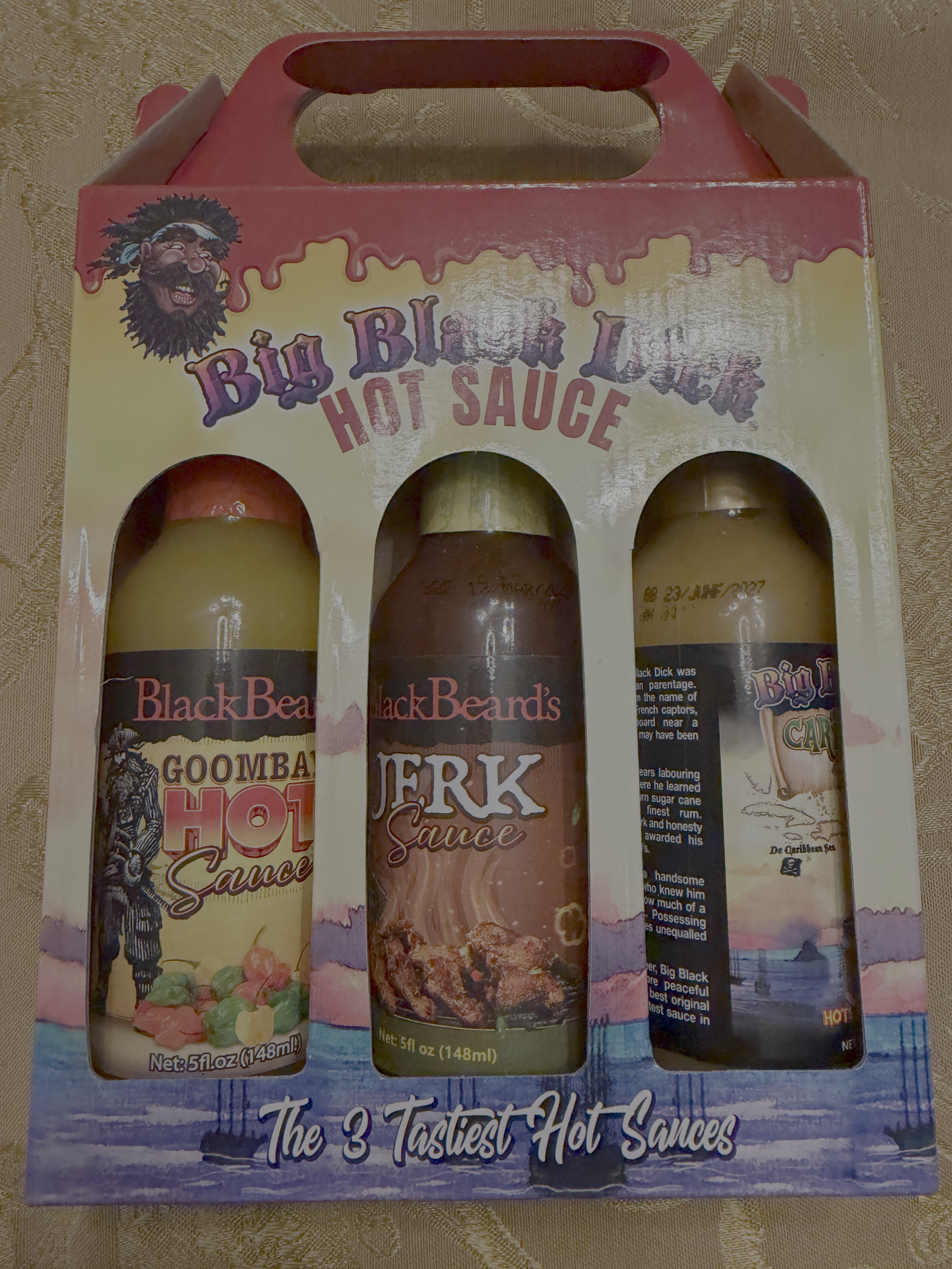
As a marketer, I have to give the company credit for several packaging decisions.
While the design is not necessarily what a contemporary branding agency would produce for a premium specialty food company, it is unusually well suited to the environment in which it is being sold.
1. The structural packaging is designed for gift purchases
The cardboard box has an integrated carrying handle and three large display windows.
This immediately communicates that the consumer is purchasing a set rather than an individual condiment.
The customer can see the bottles before buying them, the package is relatively easy to carry, and the entire product is already assembled into a giftable format.
This matters in a tourism retail environment.
Consumers are potentially navigating unfamiliar stores, limited shopping time, luggage constraints, and the need to purchase gifts for multiple people.
Anything that reduces the number of purchasing decisions can be beneficial.
Instead of choosing three individual bottles, finding packaging, and figuring out how to present them, consumers can purchase a completed gift set.
My parents did not need to assemble Big Black Dick themselves.
The company had already handled fulfillment.
2. The visual hierarchy prioritizes recognition
The brand name occupies a prominent position across the top of the front-facing panel.
Directly beneath it, HOT SAUCE appears in large, uppercase red letters.
This is a sensible hierarchy:
Brand identity → Product category → Product assortment → Supporting information
The customer first notices the unusual name and then immediately understands what is being sold.
That second step is particularly important for a brand whose name, taken in isolation, does not strongly communicate food.
The packaging does not leave shoppers wondering whether they have wandered into a different category of retail establishment.
It clarifies the transaction relatively quickly.
3. The color palette communicates heat and destination
The packaging uses red, yellow, orange, purple, and blue.
The upper section features a dripping red graphic, visually reminiscent of sauce or intense heat.
Below it, warmer colors transition toward illustrated Caribbean waters, sailboats, and a tropical sunset.
The warm colors reinforce flavor and spice, while the maritime imagery establishes a connection to travel, pirates, and the Caribbean.
The package is visually busy, but that is not necessarily a fatal weakness within a souvenir shop.
A minimalist white label with delicate typography might photograph beautifully on a curated kitchen counter. It may also disappear when surrounded by hundreds of colorful, competing vacation products.
Design effectiveness is contextual.
A product should not be evaluated solely according to whether it resembles something sold in an upscale Brooklyn grocery store.
4. The pirate mascot provides a brand character
The illustrated pirate appears across multiple panels of the packaging.
Mascots and recurring visual characters can help create recognizable brand assets, particularly when a company sells multiple products.
Here, the pirate helps connect the unusual name to the Caribbean origin narrative.
He also allows the company to communicate personality through visuals rather than relying entirely on written copy.
The problem, which we will address shortly, is that the character introduces racial representation and historical storytelling considerations that deserve more serious attention than the novelty packaging appears to give them.
5. The recipes encourage post-purchase use
The back of the box features recipes for Caribbean grilled chicken, avocado salsa, and Caribbean shrimp linguine.
From a product adoption perspective, this is smart.
A gift recipient may enjoy receiving an unusual sauce without knowing what to do with it.
Providing recipes helps bridge the gap between novelty purchase and actual consumption.
The longer the product remains useful after the initial joke, the greater the potential for the brand to establish a meaningful relationship with the customer.
Ideally, the experience progresses from:
“This is hilarious.”
To:
“This is actually pretty good.”
To:
“Where can I get another bottle?”
That third stage is where novelty can begin turning into sustainable customer demand.
As we will see in the brand's online footprint, some consumers appear to have reached that stage already.
The Packaging Audit: What Big Black Dick Could Improve
Despite the company's apparent success in infiltrating my family's Thanksgiving celebration, the packaging is not without opportunities for improvement.
The assortment descriptions do not clearly match the bottles
One exterior panel describes the three products as Hot Pepper Sauce, Hot Mango Sauce, and Hot Exotic Sauce.
However, the visible bottles include Goombay Hot Sauce and Jerk Sauce, while the exact third variety cannot be confidently identified from the front-facing photograph.
The recipes introduce additional naming, including Rum Sauce and Mango Sauce.
There may be operational reasons for this. The company could be using standardized gift packaging across different assortments, or product names may have evolved over time.
The photographs alone cannot establish the cause.
Nevertheless, the inconsistency creates a customer experience issue.
Someone attempting to identify a favorite sauce, understand its flavor profile, search for it online, or purchase another bottle may encounter unnecessary confusion.
A stronger packaging system would clearly identify each included product and ensure that the descriptions, bottle names, recipes, and online listings correspond.
For a company with an exceptionally memorable master brand, individual product discoverability appears to deserve additional attention.
Customers know they want Big Black Dick.
They may not know which Big Black Dick they want.
From an information architecture perspective, that is a problem.
The packaging lacks an obvious digital next step
Across the photographed panels, there is a company email address and a physical business address.
There is no clearly visible QR code or prominent online shopping destination.
That is a missed opportunity.
Tourism purchases are geographically constrained by nature. The customer has encountered a product while away from home and may not have convenient access to it after returning.
A QR code linked to a mobile-friendly product hub could provide:
Accurate product descriptions and ingredient information.
Recipes organized by sauce.
Heat-level guidance.
Retailer locations.
Shipping eligibility and reorder information.
Customer reviews.
An email signup or restock notification option.
The company could also measure scans and subsequent website behavior, giving it greater insight into what happens after products leave the retail environment.
Imagine being able to attribute website traffic directly to the holiday distribution of Caribbean souvenir hot sauce.
That is data I would personally enjoy presenting during a quarterly marketing review.
The copy is entertaining but inconsistent
The packaging uses exaggerated expressions about heat, flavor, and the quality of the ingredients.
The Hot Mango Sauce description, for instance, references the hottest peppers in the galaxy.
This is an ambitious claim from a company that does not appear to have conducted comparative agricultural research across multiple solar systems.
The exaggeration is clearly part of the tone.
However, the copy would be stronger if it balanced entertainment with concrete purchasing information, including heat intensity, prominent ingredients, sweetness, recommended pairings, and flavor distinctions.
Personality attracts attention.
Information supports decisions.
A strong product description accomplishes both.
Recipe accuracy deserves attention
The avocado salsa directions mention chicken base, even though it does not appear in the accompanying ingredient list.
The shrimp linguine instructions refer to butter without clearly listing it as an ingredient.
These are relatively minor editorial issues, but they illustrate how packaging copy can accumulate inconsistencies when it is not reviewed systematically.
The correct solution is not necessarily a complete rebrand.
It may simply be a copywriting and quality assurance process.
I would be willing to facilitate that process, although I would prefer not to explain the resulting project name on a shared family calendar.
Brand Storytelling: The Pirate, the Legend, and the Elaborate Justification for the Name
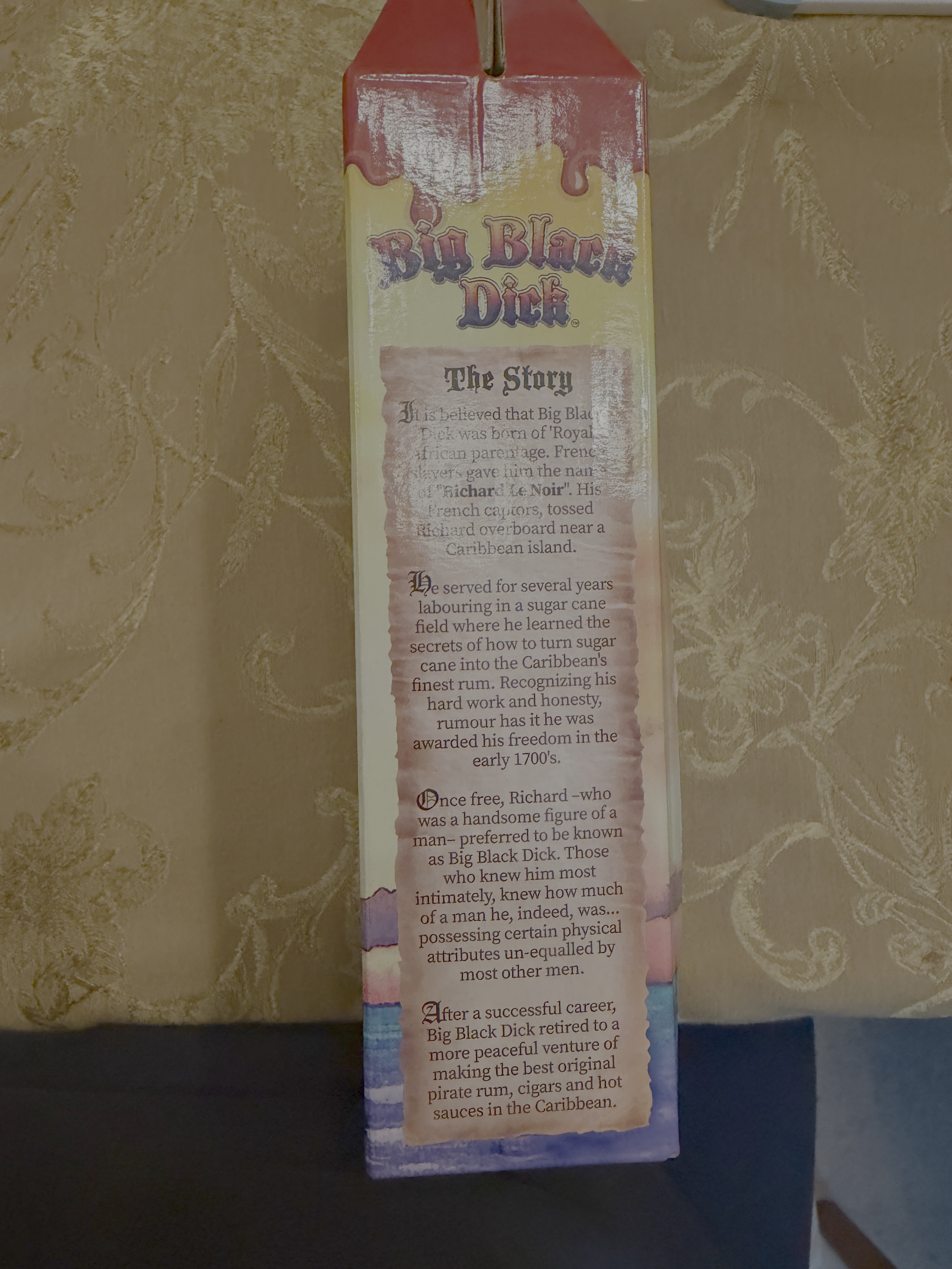
Perhaps the most fascinating element of this package is the extensive origin story printed on its side.
According to the packaging, the character was believed to have been born into African royalty before being captured by French enslavers and given the name Richard Le Noir.
The narrative describes his arrival in the Caribbean, forced labor in sugar cane fields, acquisition of rum-making knowledge, eventual freedom, adoption of his new name, and subsequent retirement into the production of rum, cigars, and hot sauces.
There is also a paragraph explaining the physical attributes supposedly responsible for his nickname.
The marketing department was apparently concerned that consumers might fail to grasp the double entendre without additional educational materials.
From a storytelling perspective, the brand is doing several recognizable things.
It is connecting its products to a geographic identity, creating a central character, building a narrative around adversity and transformation, and providing an explanation for why its brand exists.
These are conventional storytelling techniques.
The application is considerably less conventional.
Importantly, the historical accuracy of the character's biography should not be taken for granted.
The original 2003 Cayman Compass coverage situated the elaborate pirate history within the company's marketing efforts.
That does not independently establish whether every aspect of the legend is fictional, but it does establish that the narrative was being used as a deliberate commercial device.
The appropriate distinction is between a brand legend and a verified historical biography.
Brands frequently create mythologies around founders, ingredients, places, and traditions. Those narratives can add emotional resonance to otherwise ordinary products.
However, when a commercial story incorporates real historical systems of violence and exploitation, the ethical stakes become higher.
Which brings us to the portion of this article where the marketing analysis becomes substantially more serious.
The Elephant in the Souvenir Shop: Provocative Branding, Race, and Historical Sensitivity
It would be intellectually dishonest to analyze this brand exclusively through the lens of humor, memorability, and commercial success without discussing the racial imagery and sexual stereotypes embedded in its identity.
The brand name does not exist in a cultural vacuum.
Its illustrated character, sexualized references to Black male anatomy, and use of an enslaved African man's supposed biography as a commercial origin story raise legitimate questions about representation.
There is a difference between recognizing that a product is funny within a particular family context and concluding that all aspects of its branding are socially unproblematic.
Both observations can coexist.
I can laugh at the fact that my parents purchased this gift while also recognizing that the broader brand identity draws upon stereotypes with a complicated and painful history.
The sexual hypermasculinization of Black men is not a newly invented marketing trope. It has longstanding associations with racial stereotyping and dehumanization.
Similarly, slavery should not be romanticized as an entrepreneurial apprenticeship culminating in a successful condiment business.
The packaging's framing of freedom as something awarded in recognition of hard work and honesty risks minimizing the coercion inherent in enslavement.
That deserves scrutiny regardless of whether the character is fictional, legendary, or partly inspired by historical figures.
From a brand strategy standpoint, the important question is not simply whether provocative marketing generates attention.
It is whether the attention is compatible with the company's long-term ambitions, distribution partners, customer expectations, geographic markets, and reputation.
A novelty souvenir sold within a particular tourism context may encounter a different reception when introduced into a national grocery chain, corporate gifting program, mainstream digital advertising campaign, or international e-commerce platform.
Context affects interpretation.
What makes one consumer laugh may make another feel alienated or offended.
A serious brand audit must account for both.
If the company were pursuing substantial expansion, I would recommend research involving Caribbean stakeholders, Black consumers, retail partners, and relevant cultural experts before making decisions about the future of its identity.
That research should not be dismissed as an exercise in removing humor.
It would be an exercise in understanding brand risk, audience perception, historical responsibility, and commercial opportunity.
A brand can remain distinctive without treating every element of its existing identity as untouchable.
And marketers should understand that attention is not inherently synonymous with positive brand equity.
The Earned Media Audit: How Much Publicity Has Big Black Dick Generated?
I did what any responsible digital marketer would do after observing a potentially interesting consumer brand in the wild.
I researched its online presence.
Unfortunately, this involved typing the brand name into a search engine on a computer frequently used for professional purposes.
The contextual modifiers “hot sauce,” “Cayman Islands,” “pirate,” and “rum” became essential components of the research methodology.
Not since the emergence of artificial intelligence has keyword specificity felt so personally important.
Selected third-party coverage and brand mentions
This is a surprisingly diverse collection of public brand references.
It includes local journalism, business-to-business trade coverage, travel blogging, independent reviews, entertainment journalism, consumer-generated content, historical archives, and retailer listings.
Many small specialty food brands would be delighted to have this breadth of third-party exposure.
What is especially interesting is that the brand has continued appearing in public conversations across different generations of the internet.
Its novelty existed before social media became a dominant marketing channel, yet it translates relatively naturally into contemporary social sharing behavior.
The underlying concept has remained remarkably durable.
The Rum Howler Blog: An unusually revealing marketing data point
In 2010, spirits reviewer Chip Dykstra published a review of Big Black Dick Dark Caribbean Rum.
The reviewer later noted that the article became his most-clicked review at that point in the website's history.
This is not independently audited traffic data, and it should not be presented as such.
Nevertheless, the reviewer's own account offers an interesting example of the brand's ability to attract attention to editorial content.
The actual product received a score of 74.5 out of 100.
The reviewer was considerably more enthusiastic about the packaging's entertainment value than about the rum itself.
That distinction should concern any marketer attempting to build a sustainable consumer brand around novelty.
The name may win the click.
The product still has to win the customer.
An extraordinary acquisition strategy paired with an ordinary retention strategy will eventually encounter limitations.
Diply: Apparently, my family is not the first family to experience this
During the research process, I discovered an article published by Diply titled “Redditor’s Parents Buy Bottle Of Rum With Interesting Name On Caribbean Trip.”
The article describes another person whose parents returned from vacation with a bottle of Big Black Dick Rum.
I would like to take this opportunity to formally acknowledge the existence of a previously undocumented community.
We are the adult children of parents who bring home Big Black Dick from Caribbean vacations.
We did not choose this audience segment.
We were acquired organically.
The existence of this article also illustrates how a brand can benefit from recurring consumer narratives.
Parents travel.
Parents encounter unusual souvenir.
Parents purchase unusual souvenir.
Adult children discover unusual souvenir.
Adult children post about unusual souvenir.
Internet users share content.
The brand receives additional exposure.
This is a repeatable content-generation mechanism that operates independently of the company's own publishing calendar.
Reddit Reveals the Most Interesting Opportunity: People Actually Want More Hot Sauce
One of the most commercially useful pieces of research came from a Reddit discussion in r/CaymanIslands, originally posted in February 2024.
The original poster was attempting to locate Big Black Dick Hot Sauce after hearing about it from someone who had purchased it during a cruise.
The discussion generated the predictable jokes.
However, it also revealed something more valuable.
People were genuinely interested in purchasing the product.
Participants discussed where it might be available, whether someone traveling to the Caribbean could locate it, and how it might be shipped.
In February 2026, another commenter reported having purchased the sauce in Nassau and subsequently looking online for a replacement before their father ran out. The commenter said they had contacted the company but had not received a response at the time of posting.
These are anecdotal, unverified consumer reports, not representative market research.
Still, from a digital marketing perspective, they are useful qualitative signals.
They suggest that the brand may have an opportunity beyond the initial novelty transaction.
Customers who have already experienced the product are trying to find it again.
This is potentially high-intent demand.
The customer is not asking which hot sauce to purchase.
The customer has already selected the brand.
They are attempting to complete a transaction.
Every additional obstacle between that customer and a successful purchase represents potential revenue leakage.
The business has already accomplished one of the most difficult aspects of marketing: getting someone to actively seek out its product.
The remaining challenge is helping them find and purchase it.
The Reddit thread also contains mentions of competing hot sauce brands.
This demonstrates another important digital marketing principle.
When your customers search for your product and cannot find it, other businesses have an opportunity to intercept that demand.
The consumer's interest does not necessarily disappear.
It can migrate.
The SEO Audit: A Brand Name With Outstanding Memorability and Catastrophic Keyword Ambiguity
Let us imagine, for a moment, that Ritner Digital has been hired to manage organic search for Big Black Dick.
Our first client onboarding meeting would be extremely important.
Our second would probably involve Human Resources.
From a search engine optimization perspective, the brand name creates one very clear advantage and one substantial complication.
The advantage is distinctiveness.
The complication is everything else.
Branded search does not necessarily mean brand-specific search intent
For many companies, a branded search indicates that the person is already familiar with the organization.
Someone searching for a uniquely named specialty food company may be looking for its website, products, reviews, store locations, or contact information.
The phrase Big Black Dick, however, has an obvious alternative meaning unrelated to Caribbean food products.
As a result, the unqualified brand name cannot reliably be interpreted as commercial demand for hot sauce.
A marketer evaluating search volume for this phrase without considering intent could produce a spectacularly misleading report.
There may be substantial search activity that has absolutely nothing to do with the company's addressable market.
Our hypothetical SEO strategy would therefore prioritize qualified queries.
These are proposed keyword targets, not verified search-volume or ranking data.
I would rather make that distinction now than explain why an unusually impressive keyword report resulted in three hot sauce purchases.
Search engine classification and brand safety
The brand also creates potential challenges involving content classification and advertising eligibility.
A legitimate food product can contain language that automated systems associate with adult content or profanity.
This does not mean the company is necessarily being penalized, filtered, or prevented from advertising.
No such finding was established during this research.
However, it is a reasonable area to investigate.
Search engines and advertising platforms rely on contextual signals to understand websites and evaluate content.
A dedicated product website could strengthen those signals by consistently including product category language, food photography, ingredient descriptions, organization information, retailer details, and accurate product structured data.
Relevant technical resources include Google's SafeSearch documentation for website owners and Google's product structured data guidelines.
The objective would be to establish a coherent digital entity centered on a Caribbean food and beverage brand.
Not to make an automated advertising reviewer guess.
The importance of owning the search results
The brand has generated a considerable amount of historical and third-party coverage.
But those external pages cannot completely substitute for a strong, company-controlled product information hub.
At the time of this research, I located retailer listings and numerous third-party mentions, but I did not establish a comprehensive, accessible, dedicated e-commerce destination for the exact hot sauce assortment photographed.
This does not prove that one does not exist.
It means the pathway was not clearly established through the public sources reviewed.
That distinction is particularly significant for a souvenir business.
Customers travel home. Storefronts become inaccessible. Packaging gets discarded. Product names are forgotten or confused.
A well-developed search presence can reconnect those customers with the company.
Even if international direct-to-consumer fulfillment is not operationally feasible, a website could explain where products are available and how customers can legitimately obtain them.
Uncertainty is a conversion barrier.
Especially when a customer is reluctant to ask a local shopkeeper whether they carry Big Black Dick.
Brand Mentions vs. Backlinks: What This Audit Can and Cannot Establish
One of the more common misconceptions in digital marketing is that a brand mention and a backlink are interchangeable.
They are not.
A brand mention occurs when an external source references a company, product, or organization.
A backlink occurs when an external website contains a hyperlink pointing to another website.
A review can mention a product twelve times without linking to the manufacturer's website once.
Conversely, a distributor can provide a link without publishing any meaningful editorial discussion.
Both can contribute to visibility, but they have different mechanisms and should be evaluated separately.
The public sources identified in this article demonstrate brand mentions and varying forms of third-party exposure.
They should not all be automatically counted as live, authoritative backlinks to a current company domain.
A comprehensive backlink audit would require establishing the company's current canonical domain, identifying legacy domains, checking historical redirects, evaluating referring domains, inspecting individual link destinations, and determining whether the links remain active.
Tools such as Google Search Console, Ahrefs, or Semrush could support that work.
Without access to those datasets, it would be inappropriate to invent a domain authority score, backlink count, organic traffic estimate, or referring-domain total.
There is, however, enough public evidence to identify several categories of backlink and digital PR opportunity.
Historical trade publications could potentially update outdated company references. Retailers could link to manufacturer product information. Travel bloggers could direct readers to an official stockist finder. Recipe creators could reference individual sauce pages.
The company already has something many digital PR campaigns struggle to establish: a story people voluntarily discuss.
That does not justify manipulating links or purchasing artificial endorsements. Google's search spam policies specifically address manipulative link-building practices.
The stronger strategy would be to create genuinely useful online resources that give existing and future publications legitimate reasons to reference the company.
In this particular case, simply answering the question “Where can I buy this hot sauce again?” might be a useful place to start.
Word-of-Mouth Marketing: My Parents Have Become Micro-Influencers Against My Will
In 2012, researchers Jonah Berger and Katherine Milkman published “What Makes Online Content Viral?” in the Journal of Marketing Research.
Their research examined how emotional responses influence the likelihood of content being shared, identifying an important relationship between heightened emotional arousal and social transmission.
The study was not conducted specifically on Caribbean condiment products or Thanksgiving family dynamics.
Nevertheless, its insights provide a useful framework for understanding why consumers share surprising product discoveries.
People frequently transmit information because it entertains others, stimulates conversation, conveys identity, or produces a meaningful emotional response.
Big Black Dick has an unusually low barrier to becoming a story.
The product does not require a lengthy explanation before it becomes shareable.
A photograph is sufficient.
A gift exchange is sufficient.
Sometimes the name alone is sufficient.
This creates a potential earned-media loop.
The souvenir marketing flywheel
Tourist discovers unusual product: Distinctive branding captures attention.
Tourist purchases gift: Novelty creates a reason to buy.
Recipient reacts: The product becomes a social experience.
Story gets shared: Photos, conversations, reviews, and articles generate additional exposure.
New consumers discover the brand: Awareness creates potential purchase demand.
Cycle repeats: Additional purchases generate additional stories.
This is not guaranteed virality.
Novelty alone does not ensure that content will achieve meaningful reach.
However, the product possesses characteristics that make social transmission relatively natural.
Our Thanksgiving celebration generated multiple brand impressions, extensive product photography, and an editorial feature.
No affiliate commission.
No influencer contract.
No gifted partnership disclosure.
My parents received no compensation from the company, unless the experience of watching their children process the gift counts as compensation.
They appear to have been adequately rewarded.
The SWOT Analysis Nobody Asked For
No marketing audit would be complete without a SWOT analysis.
Even when the subject matter makes opening PowerPoint in a public environment inadvisable.
Strengths
Strong brand memorability.
Gift-ready packaging.
Established commercial history.
Organic conversation potential.
Geographic association.
Product line extensions.
Weaknesses
Ambiguous branded searches.
Inconsistent product naming.
Unclear online reorder pathway.
Potential credibility limitations.
Dependence on novelty.
Historical and cultural concerns.
Opportunities
Product-specific SEO.
Recipe content marketing.
Retailer partnerships.
QR-enabled packaging.
Customer retention programs.
Responsible digital PR.
Threats
Potential advertising restrictions.
Consumer backlash.
Retailer brand-safety concerns.
Competing specialty sauces.
Travel-dependent distribution.
Novelty fatigue.
The central strategic takeaway is that the company's strengths are primarily concentrated around differentiation and initial awareness.
Many of its apparent opportunities, by contrast, involve what happens after awareness has already been generated.
This is an important distinction.
A business with a weak brand identity may need to improve its ability to capture attention.
A business with an unusually strong novelty identity may need to improve its ability to convert that attention into repeatable commercial outcomes.
Big Black Dick appears to belong more closely to the second category.
What the Marketing Funnel Looks Like at My Parents' House
Marketing professionals often describe customer journeys using stages of awareness, consideration, conversion, retention, and advocacy.
We can apply the same framework to this Thanksgiving gift.
This is an unusually complete marketing funnel for a product that arrived at dinner without any associated tracking parameters.
It also demonstrates why customer acquisition cannot always be attributed neatly to digital channels.
If someone discovers this brand through the Ritner Digital blog and subsequently purchases it during a Caribbean vacation, the initial retailer may have no reliable way to identify the influence of this article.
Offline discovery, word-of-mouth, travel retail, organic search, and editorial exposure can interact in complex ways.
Marketing attribution is not always straightforward.
Especially when the original influencers are your parents.
Competitive Positioning: Where Does This Brand Fit in the Hot Sauce Market?
The hot sauce industry contains a wide range of positioning strategies.
Some companies focus on heritage and tradition. Others emphasize extraordinary heat, celebrity partnerships, culinary innovation, premium ingredients, national identity, or rebellious subcultures.
Consider the different approaches taken by several recognizable brands.
These are broad qualitative positioning assessments, not measured market-share comparisons.
The interesting thing about Big Black Dick is that it does not necessarily compete with these brands in exactly the same purchasing context.
Someone shopping for a weekly household condiment may prioritize familiarity, price, flavor, and accessibility.
Someone shopping for a vacation gift may prioritize destination association, uniqueness, presentation, and the recipient's expected reaction.
This creates an opportunity to occupy a different competitive category.
The company is selling hot sauce, but its immediate competitors in a tourist shop may include magnets, novelty T-shirts, rum cakes, local spirits, and other giftable items.
Understanding the actual competitive set matters.
A marketer who evaluates the brand solely against supermarket condiments could misunderstand why the product performs within its original retail environment.
My parents were not necessarily attempting to solve my brother's condiment deficiency.
They were trying to bring him something from their trip.
The brand apparently offered considerable perceived entertainment value among the souvenirs under consideration.
Product Line Extensions: How Far Can the Joke Travel?
The historical reporting indicates that Big Black Dick originated as a rum brand before expanding into a range of related products and merchandise.
Retailer listings at BlackBeard's also demonstrate the existence of multiple flavored rum offerings associated with the brand.
This represents a recognizable brand-extension strategy.
Once a company establishes a memorable identity, it can potentially use that identity to introduce adjacent products with lower awareness-building costs.
Rum and hot sauce share several relevant associations:
Caribbean culinary and cultural positioning.
Strong sensory experiences.
Giftability and souvenir appeal.
Opportunities for entertaining packaging.
Complementary hospitality and tourism distribution.
The extensions make more strategic sense than indiscriminately applying the brand name to unrelated merchandise.
Although, according to a trademark application record published by Justia, BBD Caribbean Ltd. filed an application in August 2026 identifying goods that include sauces, seasonings, coffee, cake, chocolate, and alcoholic beverages.
The record reflects an application, not proof that registration has been granted or that every listed product has been commercially launched.
Still, it suggests that the brand's potential commercial scope extends into additional food and beverage categories.
Somewhere, a person may eventually be faced with the decision of whether to introduce their parents to Big Black Dick Coffee.
I hope that person has the necessary support system.
From a strategic perspective, each extension should be evaluated according to audience fit, distribution compatibility, perceived quality, and whether the brand identity strengthens or weakens the new category.
A memorable name is a useful asset.
It is not an unlimited license to extend into every conceivable product category.
If Ritner Digital Were Hired to Market Big Black Dick, What Would We Do?
First, we would establish a highly specific naming convention for internal project folders.
Once that was resolved, we would approach the brand much like any other consumer packaged goods business with established awareness and opportunities for digital growth.
Phase one: Establish a reliable digital foundation
The first priority would be determining which company-controlled domains, retailer relationships, product listings, and distribution arrangements are active.
We would establish a consistent product taxonomy, create individual pages for each sauce, and ensure that product names correspond across packaging and online channels.
Each product page would include flavor descriptions, ingredients, allergen information, heat guidance, suggested uses, availability, and legitimate purchasing options.
The goal would be to make the brand's existing demand easier to capture.
Not every marketing problem requires additional advertising.
Some require making it possible for customers who already want the product to actually buy it.
Phase two: Improve search visibility and entity clarity
We would build website content around qualified brand-and-product queries rather than relying on the ambiguous brand name alone.
Technical SEO would support crawlability, indexing, product classification, and consistent company information.
Reporting would distinguish between qualified branded search demand and irrelevant query activity.
We would also investigate existing brand references, historical website URLs, and relevant links to understand where visibility is currently concentrated.
Success would be measured through actual business-oriented outcomes rather than attention alone.
The company does not need an impressive number of accidental website visitors.
It needs the right visitors.
Phase three: Turn the packaging into a retention channel
A QR code could connect each gift set to a relevant mobile landing page.
Someone receiving the Thanksgiving assortment could scan the package and immediately identify the products inside it.
The landing page could include recipes, available stockists, current product information, and an optional reorder notification.
With appropriate analytics and privacy safeguards, the company could better understand which packaging touchpoints generate engagement.
A post-purchase experience would no longer depend exclusively on the customer remembering a website address.
Although, admittedly, remembering the brand name itself is unlikely to be the primary issue.
Phase four: Develop a culturally responsible content strategy
The brand's provocative identity should be reviewed in the context of its future growth objectives.
Humor can remain part of the company's personality, but the racial imagery and historical framing warrant informed evaluation.
A content strategy could emphasize legitimate Caribbean culinary traditions, pepper varieties, recipes, local partnerships, and the actual people responsible for producing the products.
This would help establish substantive credibility beyond the novelty name.
The strongest long-term positioning would give customers multiple reasons to value the brand.
The joke might attract the first purchase.
Flavor, quality, and customer experience should support the second.
Phase five: Measure what matters
Our hypothetical marketing dashboard would include more than impressions and social engagement.
The central objective would be converting an exceptionally memorable initial customer experience into an enduring commercial relationship.
We would not recommend measuring success exclusively by how many people laugh at the name.
That appears to be the one KPI the company already has under control.
The Ritner Digital Marketing Scorecard
Based on the packaging, historical reporting, and publicly discoverable brand mentions, here is our informal assessment.
These scores represent qualitative marketing judgments. They are not based on internal sales figures, customer surveys, audited traffic data, or a product taste test.
Likelihood that my brother forgets receiving this gift: 0/10.
Likelihood that my parents anticipated their purchase becoming a published marketing analysis: Also probably 0/10.
This is what happens when someone in your family works in digital marketing.
Nothing is sacred.
Everything is a potential case study.
What Other Businesses Can Learn From Big Black Dick
Despite the unusual subject matter, there are legitimate lessons here for businesses across industries.
The first is that differentiation matters.
Companies often become so concerned with appearing professional that they eliminate every recognizable element of personality from their marketing.
They adopt similar colors, similar language, similar website layouts, and similar value propositions to their competitors.
The result may be aesthetically acceptable but commercially forgettable.
Distinctiveness does not require profanity, sexual references, or controversial racial imagery.
It requires giving customers a compelling reason to recognize and remember your business.
The second lesson is that customers frequently purchase experiences rather than products alone.
The emotional and social context surrounding a transaction can be just as important as the functional characteristics of the item being purchased.
A thoughtful gift, an entertaining unboxing, a memorable customer interaction, or a meaningful brand story can extend the value of a product beyond its immediate utility.
The third lesson is that awareness without infrastructure creates missed opportunities.
If people are talking about your business, searching for your products, and recommending your company, the digital experience should make it easy for them to take the next step.
A compelling brand paired with a confusing website can generate significant attention while leaving meaningful revenue unrealized.
Finally, provocative marketing requires judgment.
Attention can be beneficial, but controversy can also create reputational and distribution risks.
The best marketing strategy is not necessarily the one that generates the loudest immediate response.
It is the one that generates the right response from the right audience while supporting the organization's long-term objectives.
The goal is not to make every brand behave like Big Black Dick.
The goal is to understand why this particular brand became memorable enough for two cruise passengers to purchase it, bring it home, and inadvertently initiate an extensive content marketing project.
Frequently Asked Questions
Is Big Black Dick Hot Sauce a real product?
Yes. Big Black Dick Hot Sauce is a real commercial product associated with a Caribbean food and beverage brand originating in the Cayman Islands. Historical trade reporting from 2004 explicitly identifies hot sauce among the company's product offerings.
The Thanksgiving photographs accompanying this article provide additional firsthand evidence, although I recognize that evidence of an entirely different nature may be required for my family.
Who owns Big Black Dick Hot Sauce?
The photographed packaging identifies BBD Caribbean Limited as the company for which the sauces were bottled.
Historical reporting identifies Island Companies Ltd. as the developer of the original rum brand. Subsequent sources discuss changes involving the rum business, while a 2026 trademark application lists BBD Caribbean Ltd. as the applicant.
The complete current ownership, manufacturing, and distribution structure across every product category was not independently established for this article.
Was Big Black Dick a real pirate?
Richard Le Noir is presented as a legendary pirate in the brand's marketing materials.
Historical newspaper coverage establishes that the company used an elaborate origin story as part of its branding strategy. However, the reviewed sources do not independently authenticate the full biography printed on the packaging.
It is therefore more appropriate to describe the story as a brand legend than as verified historical fact.
Where is Big Black Dick Hot Sauce from?
The photographed gift set identifies BBD Caribbean Limited in George Town, Grand Cayman, Cayman Islands.
The broader brand has longstanding associations with Cayman Islands tourism and duty-free retail. The packaging establishes the company's listed address but does not independently confirm where every individual sauce was manufactured.
Where can you buy Big Black Dick Hot Sauce?
Historical reporting, travel blogs, and consumer discussions associate the products with Caribbean souvenir shops and retailers. Some recent consumer anecdotes mention availability in the Bahamas.
However, current inventory for the specific hot sauce gift set was not verified.
The packaging lists info@bbdcayman.com as a contact address. Prospective customers may also wish to consult Caribbean retailers and distributors for current availability.
Why is provocative branding effective?
Provocative branding can attract attention by interrupting consumer expectations, generating emotional responses, and creating memorable points of differentiation.
Its effectiveness depends on the target audience, product category, cultural context, distribution environment, and broader brand strategy.
Provocation can also undermine credibility or create reputational risks, which makes audience research and careful execution important.
Does humor increase sales?
Humor can improve advertising attention, emotional responses, and purchase intention, as documented in Martin Eisend's research on humor in advertising.
However, humorous branding does not guarantee sales or profitability.
Product quality, price, accessibility, consumer trust, distribution, and customer experience remain important.
In this case, humor may have contributed to the gift purchase, but we cannot establish the precise motivations of the purchasers without conducting additional interviews with my parents.
Does Big Black Dick have good SEO?
The brand has demonstrated longevity and public visibility through historical press articles, retailer listings, independent reviews, and consumer discussions.
However, its ambiguous name creates potential search-intent challenges, and a comprehensive technical SEO or backlink audit would require access to additional tools and a verified current company domain.
The publicly discoverable evidence suggests opportunities around product-specific search visibility and customer reorder pathways.
Are brand mentions the same as backlinks?
No. A brand mention references a company or product, while a backlink contains a hyperlink pointing to a website.
Both can support brand discovery, but they should be evaluated separately. Published articles mentioning Big Black Dick should not automatically be classified as active backlinks to the company's current website.
Is the racial imagery in the branding problematic?
The branding raises legitimate concerns regarding racial stereotyping, sexualized representations of Black men, and the commercialization of a narrative involving slavery.
Different consumers may perceive the product differently. A responsible marketing analysis should consider those concerns alongside the brand's memorability, commercial positioning, and humor.
Is novelty branding a sustainable long-term strategy?
It can be, particularly when the novelty is supported by product quality, customer satisfaction, and distribution.
If consumers purchase a product once because it makes them laugh but never purchase it again, growth may become dependent on continuously finding new customers.
Sustainable novelty brands develop reasons for consumers to remain interested after the initial joke.
Does Ritner Digital work with unconventional or provocative brands?
Ritner Digital welcomes inquiries from businesses with unconventional products, irreverent personalities, and distinctive market positioning.
We believe that taking a business seriously does not require taking the fun out of its brand.
Novelty products can present sophisticated marketing challenges involving consumer psychology, digital advertising, organic search, reputation management, distribution, and customer retention.
Those challenges deserve the same strategic attention as those facing more conventional businesses.
As this article has demonstrated, we are clearly not easily scandalized.
Did Ritner Digital receive compensation for this article?
No. This article was inspired by an unsolicited Thanksgiving gift purchased by my parents during a Caribbean vacation.
There is no paid partnership, affiliate relationship, sponsorship, or commercial arrangement associated with this analysis.
There was not even a complimentary product sent to the marketing department.
My brother received the hot sauce.
I received a content strategy.
Is this article sponsored by BetterHelp?
No.
We remain open to their outreach.
Final Thoughts: The Best Marketing Sometimes Happens When You Are Not Trying to Market Anything
My parents went on a Caribbean cruise.
They purchased a souvenir for their son.
Their daughter responded by researching twenty-three years of commercial history, consumer psychology, tourism retail strategy, racial representation, packaging design, earned media, organic search optimization, trademark filings, and customer retention opportunities.
Every family celebrates Thanksgiving differently.
But the experience is also a reminder that marketing exists far beyond advertisements, websites, and social media campaigns.
It exists in the products people notice while walking through unfamiliar stores.
It exists in the decisions consumers make when choosing gifts.
It exists in the stories people tell after bringing those products home.
It exists in the conversations that continue long after the original transaction has been completed.
Big Black Dick has managed to become part of those conversations for more than two decades.
There are legitimate questions about its branding. There are clear opportunities for improving its digital infrastructure. There are ethical and cultural considerations that deserve serious attention.
But there is also an important commercial accomplishment here.
The brand has succeeded in making an otherwise ordinary product difficult to forget.
As marketers, that is worth studying.
As a family, we may need to establish new guidelines for international souvenir purchases.
Does Your Business Need Marketing That People Actually Remember?
At Ritner Digital, we help businesses develop strategic marketing that goes beyond simply looking good online.
From SEO, digital strategy, and content marketing to brand positioning, website development, consumer psychology, and competitive analysis, we help businesses understand what makes their audiences pay attention and what ultimately transforms that attention into meaningful results.
You do not need a controversial product name to stand out.
You need a clear value proposition, a distinctive identity, a thoughtful digital strategy, and a customer experience that gives people a reason to remember you.
And if you happen to be the founder of an unconventional, irreverent, or downright ridiculous consumer brand looking for a marketing agency that takes your business seriously without taking the fun out of it, we would particularly enjoy hearing from you.
Whether you are launching a new brand, improving your search visibility, or trying to understand why consumers choose your competitors, we can help.
Contact Ritner Digital to discuss your marketing strategy.
We take marketing seriously.
Thanksgiving souvenirs, apparently, even more seriously.
Sources and Further Reading
Brand history, press coverage, and public mentions
Bush, Tara. (2003). GT Has New Tourist Attraction. Cayman Compass.
The Moodie Davitt Report. (2004). Fonbelle Expands With the Spirit of the Caribbean.
Peter's Rum Labels. (2005). Island Companies Ltd. — Cayman Islands Rum Labels.
Dykstra, Chip. (2010, revised 2023). Big Black Dick Dark Caribbean Rum. The Rum Howler Blog.
To Travel or Not. (2014). Grand Cayman, Cayman Islands.
Ndianefo, Chisom. Redditor’s Parents Buy Bottle Of Rum With Interesting Name On Caribbean Trip. Diply.
Reddit. (2024–2026). Hot Sauce — r/CaymanIslands.
BlackBeard's. Spirits Product Catalog.
RumRatings. Big Black Dick Brand Profile.
Justia Trademarks. (2026). Big Black Dick — Trademark Application, Serial Number 50038959.
Marketing research and technical resources
Eisend, M. (2009). A Meta-Analysis of Humor in Advertising. Journal of the Academy of Marketing Science, 37, 191–203.
Berger, J., & Milkman, K. L. (2012). What Makes Online Content Viral? Journal of Marketing Research, 49(2), 192–205.
Google Search Central. Spam Policies for Google Web Search.
Google Search Central. SafeSearch and Your Website.
Google Search Central. Product Structured Data.
Primary source: Original photographs of the Big Black Dick Hot Sauce gift set purchased by the author's parents and presented at Thanksgiving, November 26, 2026.
Editorial disclosure: This independent article combines marketing analysis, consumer psychology, and satire. Ritner Digital is not affiliated with the brand or companies discussed. Hypothetical marketing recommendations do not represent an actual client engagement. Marketing scores are qualitative assessments rather than independently audited performance metrics.