On-Cape Is Not Off-Cape: Why Local Context Is Everything for Cape Cod Funeral Homes
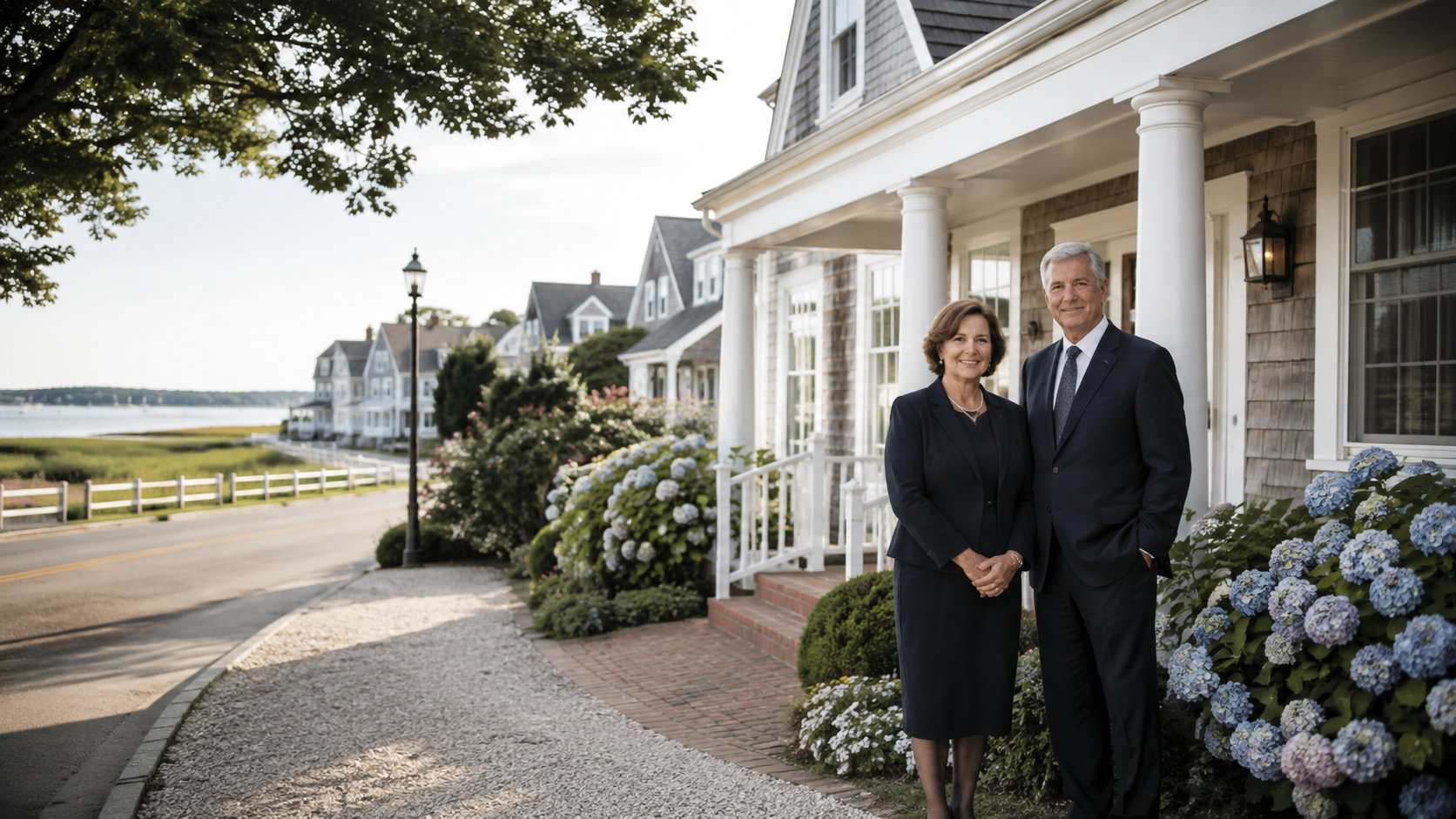
Anyone from Massachusetts knows the state has an invisible border, and it runs across two bridges.
On one side: the Commonwealth. On the other: the Cape — fifteen towns with their own clock, their own vocabulary, and their own fierce sense of who's local and who's "from away." A business in Sandwich and a business in Plymouth are twenty minutes apart and live in different worlds. People on-Cape know which funeral home buried three generations of the family, which director coached their kid's little league team, and which "family funeral home" quietly sold to a corporation a decade ago and kept the name on the sign.
That last one matters more than almost anyone in marketing understands. Because here is the strange situation Cape Cod funeral homes find themselves in: the region with the deepest local identity in Massachusetts is having its most personal industry quietly de-localized — while the families making the decision increasingly can't tell the difference from a Google search.
This article is about closing that gap. It's about why local context isn't a nice-to-have in funeral home marketing — on the Cape, it is the marketing — and how a family-owned firm makes eighty years of showing up for a community tangible to a family searching at midnight. This is the work Ritner Digital specializes in: we're an SEO and AI search agency, but the job underneath the job is finding the heart of your business and making sure your community — year-rounders, washashores, and the second-home family calling from New Jersey — can actually see it.
The Cape Is the Most Concentrated Funeral Market in Massachusetts — By Design of Its Demographics
Start with the numbers, because they explain why this region deserves its own playbook rather than a Boston strategy with the town names swapped.
Barnstable County is the oldest county in Massachusetts by a wide margin: a median age of 53.9 years against 39.6 statewide. Roughly 30% of Cape residents are 65 or older — nearly double the state's 16.5% — and 13.2% are 75+, with Outer and Lower Cape towns like Eastham, Orleans, and Chatham running 43–47% seniors. The consequence shows up in the vital statistics: from 2020 to 2022, the Cape recorded 7,170 deaths against just 3,298 births — the largest natural population decrease of any county in the Commonwealth. Deaths outnumber births more than two to one.
Demographically, Cape Cod is a funeral service market unlike anywhere else in the state. But there's a twist inside the data that changes the marketing math entirely: much of that senior population moved to the Cape. It's a retirement destination — the same analysis notes the county keeps growing only because retirees keep arriving, and 43% of Cape homes are second residences, rising to roughly 60% on the Outer Cape.
Sit with what that means for a funeral home. A retiree who arrived from Newton or New Jersey in 2015 has no generational tie to any Cape funeral home. Their family plot, their childhood church, their "the funeral home our family always used" — all of it is over the bridge or three states away. When the moment comes, there is no inherited loyalty to inherit. There's a search bar. And this mirrors the national trend precisely: NFDA consumer data shows selection based on a prior relationship fell from 27% to 16% since 2012, while price rose to become the leading factor.
The Cape funeral home's greatest asset — decades of rootedness — is exactly what a growing share of its market has no way of knowing about. Unless it's made visible.
The Consolidation Problem: When the Name Stays and the Soul Leaves
Now the other side of the squeeze.
Nationally, roughly 80% of funeral homes remain independently owned, but the corporate 20% is expanding steadily — led by Service Corporation International, the Houston-based giant behind Dignity Memorial, Neptune Society, and National Cremation Society, with about $4.19 billion in 2024 revenue and significant preneed holdings. The pressure is intensifying: nearly half of funeral directors surveyed by the NFDA plan to retire by 2030, and when the family name on the building retires, the business often sells — most frequently to corporate acquirers who pay premium prices and keep the familiar brand intact.
Read that last clause again: keep the familiar brand intact. The playbook is to buy a beloved local name and continue trading on the goodwill a family spent generations earning. Massachusetts has already seen it up close — reporting from western Mass documented consolidators acquiring around 10% of a regional market, and the same investigation's pricing analysis of 81 funeral homes found that corporate and private-equity-backed firms charged more than independents across every one of six basic price categories examined.
Families, meanwhile, can rarely tell. The sign says the same family name it said in 1985. Massachusetts at least requires funeral homes to disclose entities with an ownership stake, but nobody reads corporate filings while grieving.
Here's the strategic point, and it's the whole article in one sentence: if a corporation can buy your name, the name alone is no longer your moat. The proof of your soul is. A genuinely family-owned Cape funeral home has something no acquirer can purchase — the actual family, still answering the actual phone, still living in the actual town. But "still actually us" is invisible by default. It has to be demonstrated, publicly, specifically, and in the places where families now decide: Google, and increasingly, AI answers.
What "Local Context" Actually Means On-Cape (and Why Off-Cape Marketing Can't Fake It)
Generic funeral marketing treats location as a variable to swap into a template: "compassionate care in {town}." On the Cape, that approach doesn't just underperform — it actively signals outsider, because Cape families read local fluency the way the rest of us read grammar. Real local context looks like this:
Knowing the map like a native. That Dennis and Dennis Port are different places with different congregations. Which parishes merged. Where the VFW halls and the yacht clubs and the granges are, and which families belong to which. That a graveside in February on the Outer Cape involves wind you have to have felt to plan around. Content written with this fluency doesn't say "we're local" — it is local, unmistakably, in a way no off-Cape content farm or Houston corporate marketing department can imitate.
Understanding the second-home and split-life family. With 43% of Cape homes owned as secondary residences, Cape funeral homes constantly serve families whose lives straddle the bridge: the retiree who winters in Florida and dies there, requiring transport home; the Boston family arranging a Chatham burial remotely; the family that wants two gatherings — a service off-Cape where the career happened, and a scattering in Nantucket Sound where the heart lived. Every one of those scenarios is a search query ("bringing a loved one home to Cape Cod," "burial at sea Massachusetts," "arranging a funeral from out of state") that almost no one is answering well. The firm that answers them owns a lane corporate competitors don't even see.
Speaking to both washashores and natives. The Cape's social fabric holds multi-generation families and recent arrivals in the same towns, and they need different things from you. The native family needs to see their history honored — that you buried Grammy in '92 and remember it. The washashore needs to be welcomed into a community institution they have no history with. Good local content does both, and the distinction is invisible to anyone marketing from over the bridge.
Living the seasonal rhythm. Arrangements in July when the town triples and Route 6 is a parking lot are not arrangements in January. Off-season deaths in towns that empty out, summer services timed around when scattered family can get to the Cape at all — this operational reality, written honestly, is another fingerprint of authenticity no template contains.
How Ritner Digital Makes the Level of Care Tangible
So how does eighty years of soul become something a search engine ranks and an AI engine cites? Four layers — the same content-system architecture we build everywhere, tuned entirely to Cape context.
Layer 1: Prove the ownership. The foundation is radical clarity about who you are: the family, by name and face, on a real "Our Family" page with real history — founded when, by whom, who runs it now, who answers the overnight phone. In a market where corporate firms wear family names, we recommend saying the quiet part plainly: "Independently owned by the same family since 1948. Never sold, never franchised." That single provable sentence is worth more than a thousand words of "compassionate care." We then make it machine-readable — structured data, consistent entity signals across the web — so when someone asks ChatGPT for a family-owned funeral home on the Cape, the engines have verifiable evidence of exactly that. This is the heart of AI search optimization for a local firm: the machines can only cite what's been made explicit.
Layer 2: Publish the local fluency. Town-level pages and guides that could only have been written by someone who lives there — the cemeteries and their histories, the churches and celebrants, the specific logistics of each community you serve. Plus the split-life content nobody else is writing: arranging from off-Cape, bringing a loved one home from Florida, sea scattering and Massachusetts cremation regulations, planning a summer memorial for a winter death. Every piece does double duty: it ranks for a real search, and it demonstrates the fluency that is your differentiation. This is copywriting as proof-of-roots.
Layer 3: Let the community testify. Your reviews already contain the words "they've taken care of our family for three generations" and "he answered at 2 a.m. and knew exactly who my mother was." That's third-party proof of soul — the one thing corporate marketing budgets cannot manufacture. We operationalize it with the dignified QR-and-SMS review system we've detailed before, because on the Cape, where reputation has always traveled by word of mouth, Google reviews are simply word of mouth with a permanent address.
Layer 4: Meet the moment across all three timelines. Cape demographics compress the entire funnel into one market: the region's huge 65+ population makes it arguably the best preneed territory in the state; its death rate makes at-need visibility decisive; and the direct-cremation pressure reshaping the industry is amplified here by exactly the transplant retirees with no local loyalty. The full stack — local SEO, preneed content, at-need pages, review velocity — runs as one engine, and we publish our own performance data monthly so you can hold our work to the same standard of proof we're telling you to hold yourself to.
The through-line in all four layers: nothing is invented. We're not manufacturing a story — Cape funeral homes are sitting on the most authentic story in local business. Our job is translation: from lived reality into content, structure, and signals that Google ranks, AI engines cite, and a grieving family from Eastham or Edison, New Jersey can recognize instantly as the real thing.
Frequently Asked Questions
Why does local context matter so much for Cape Cod funeral homes specifically?
Because the Cape combines three extremes: the oldest population in Massachusetts (median age 53.9 vs. 39.6 statewide, deaths outnumbering births two-to-one), a deeply identity-driven culture where on-Cape vs. off-Cape genuinely shapes trust, and a large transplant and second-home population with no inherited funeral home loyalty. In that market, demonstrated local rootedness is simultaneously the strongest differentiator and — for newcomers deciding by search — completely invisible unless it's deliberately published.
How can families tell if a "family" funeral home is actually corporate-owned?
The name on the sign often isn't the answer — corporate acquirers typically retain the original family brand after purchase. Signals to check: fine print on the website referencing SCI, Dignity Memorial, Carriage Services, or another parent; the About page's ownership story (or conspicuous absence of one); and in Massachusetts, ownership-stake disclosures the state requires. For genuinely independent firms, this confusion is the marketing opportunity: state your independent, family ownership explicitly and provably, because it can no longer be assumed from the name.
Do corporate funeral homes really charge more than independents?
The best available Massachusetts evidence says yes: an analysis of price lists from 81 funeral homes found publicly traded and private-equity-backed firms charged more than independents on average across all six basic categories studied— basic service fee, immediate burial, direct cremation, embalming, and lowest-cost casket and vault. Independent firms that pair transparent pricing with visible local ownership hold a genuine, documentable advantage.
How should a Cape funeral home market to second-home and out-of-state families?
By answering the questions their situation creates before they ask: how to arrange a Cape service from Boston or out of state, how transport home works when a loved one dies in Florida, options for sea scattering and Massachusetts cremation rules, and how to plan a summer memorial when family is scattered across the country. With 43% of Cape homes owned as second residences, this is a substantial, recurring case type — and content that serves it well reaches families precisely when they're choosing a firm sight-unseen.
How does AI search change things for a small family-owned funeral home?
It raises the value of explicit, verifiable identity. When a family asks ChatGPT or Perplexity for "a family-owned funeral home near Hyannis," the engine assembles its answer from published, machine-readable evidence: ownership statements, structured data, consistent information across the web, review sentiment, and authoritative local content. A firm whose rootedness lives only in community memory is invisible to that process; a firm that has made its identity legible to the engines gets named. The soul was never the problem — the signal was.
Can an off-Cape marketing agency do this work?
The honest answer: only if its process is built to extract and verify real local knowledge rather than template it. What disqualifies most agencies isn't their address — it's that their funeral content could be swapped between any two firms in America without anyone noticing. Our process starts with the questions that surface what only your firm knows: the towns, the families, the history, the 2 a.m. stories. If an agency's first draft could have been written without ever talking to you, it will read that way to your neighbors too.
Your Neighbors Already Know Who You Are. Make Sure the Search Results Do Too.
Somewhere on the Cape this week, a family that moved from over the bridge eight years ago will lose someone — and for the first time, need a funeral home in a place where they have no history. They'll search. And the results will show them a mix of genuinely rooted family firms and corporate operations wearing family names, all claiming compassionate care, all nearly indistinguishable on a screen.
You've spent generations being distinguishable in real life. We make that distinction visible where the decision now happens — in Google, in AI answers, and in the words of the families you've already served.
Book a free 30-minute strategy call → We'll give you an honest read on how your firm shows up today — on-Cape searches, AI answers, reviews, and all — and a clear next step within one business day.
Sources
The Provincetown Independent — As State Shrinks, Cape Cod Has Its Own Odd Crisis (births/deaths, natural decrease, second-home share, retirement migration)
Data Cape Cod / Cape Cod Commission — Year-Round Population (median age comparison)
Seth Rolbein — Cape Cod by the Numbers (65+/75+ shares, town-level senior populations)
The Shoestring — "There's a Lot of Money in Death": Funeral Home Consolidation Hits Western Mass (regional consolidation; 81-firm pricing analysis)
Memorials.com — Largest Funeral Home Companies in the U.S. (2026) (retirement wave, brand-retention acquisition strategy, MA disclosure)
US Funerals Online — How to Choose a Funeral Home & Cremation Provider (independent vs. corporate ownership shares; SCI profile)
US Funerals Online — The US Funeral Industry Today (SCI revenue and brands)
Johnson Consulting Group — Inside the NFDA Consumer Awareness and Preferences Survey (decline of relationship-based selection)