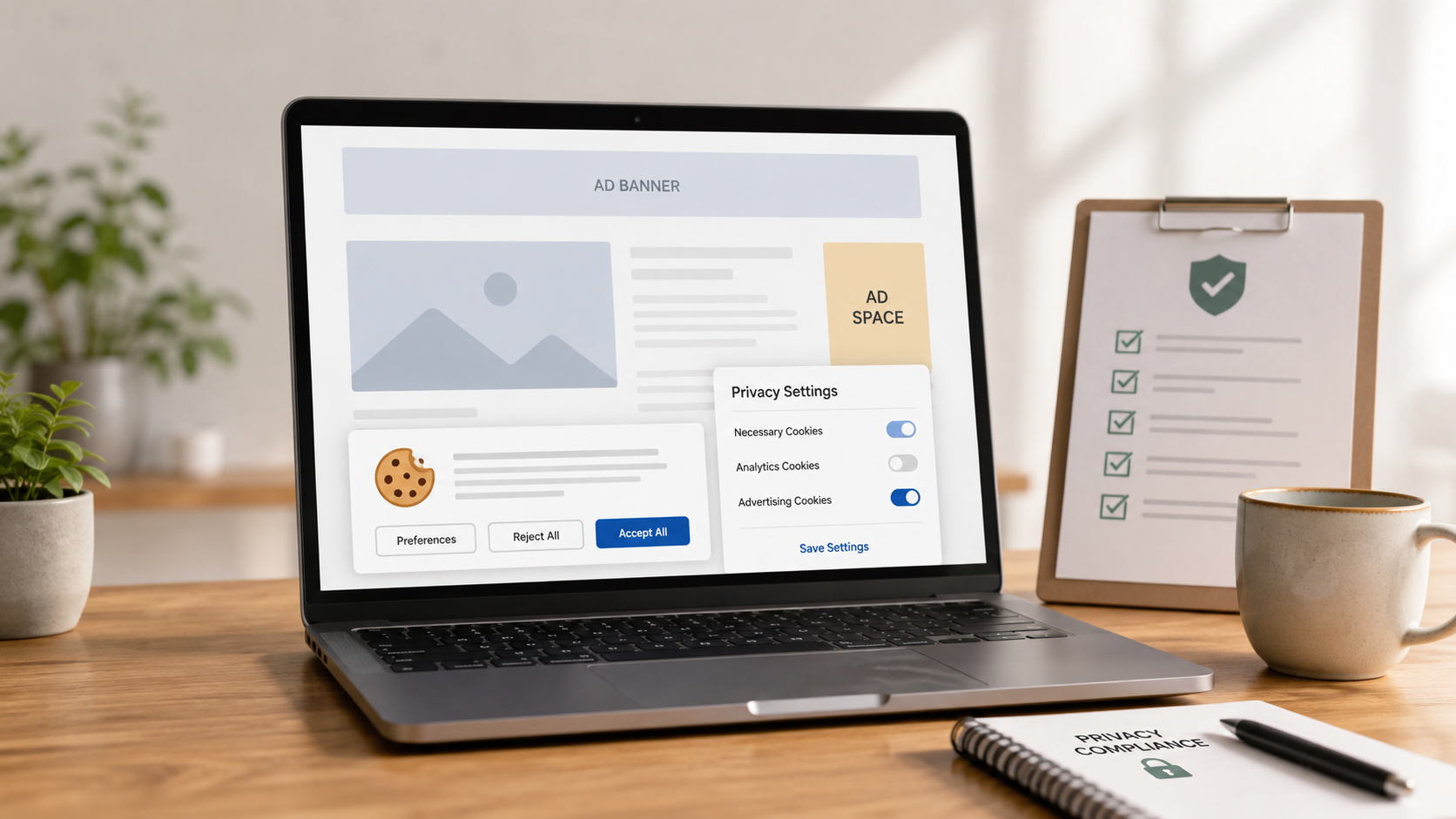
Do You Need Cookies Set Up on Your Site to Run Google AdSense?
Do you need cookies set up on your website before running Google AdSense? Not the way most people think — AdSense creates and manages its own cookies automatically the moment the ad code loads. What you're actually required to set up is the framework around them: a privacy policy disclosing Google's advertising cookies (required of every publisher, everywhere), and a Google-certified cookie consent banner if your site can be visited from the EU, UK, or Switzerland — which describes virtually every site on the open internet. This guide covers what AdSense's cookies do, exactly what Google requires, the free built-in CMP that handles compliance in about an hour, and what skipping it costs you in revenue before it ever costs you legally.
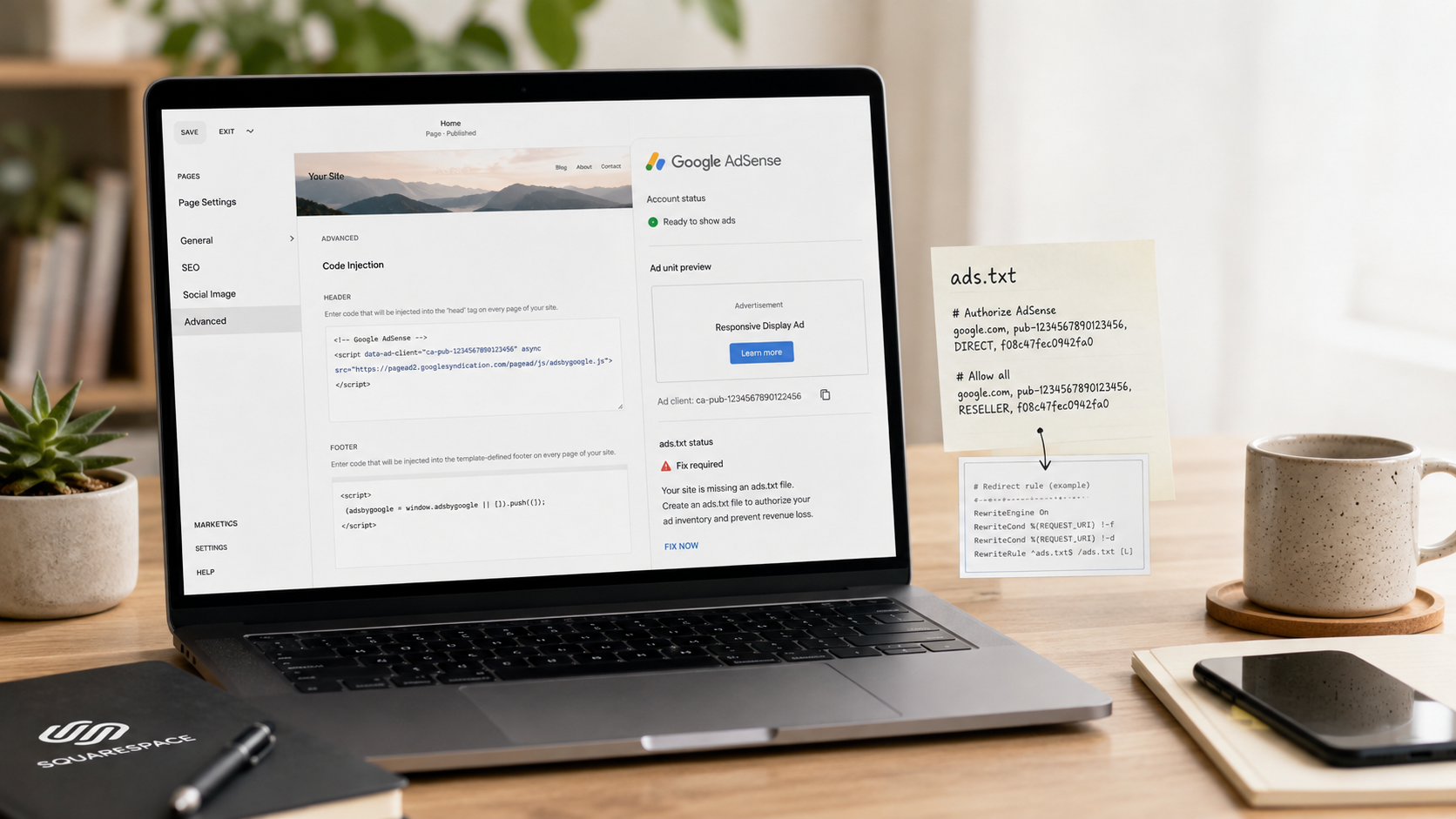
How to Set Up Google AdSense on Squarespace: The Complete Step-by-Step Guide (Including the ads.txt Fix)
Squarespace has no built-in AdSense integration, but you can absolutely run ads on your site — if you know the workarounds. This step-by-step guide walks through the entire setup: which Squarespace plan you need, where to paste the verification code in Code Injection, why you should turn Auto ads off in favor of manual ad units, and the full fix for the ads.txt problem that triggers the dreaded "Earnings at risk" warning. Includes the exact URL-mapping redirect that gets your ads.txt verified, the "Script Disabled" editor quirk that confuses everyone, and the troubleshooting checklist for ads that won't show.

Do You Have to Be an LLC to Hook Up Google AdSense? (Or Can You Be a Freelancer With a Domain and Content?)
Do you have to form an LLC before hooking up Google AdSense? No — a freelancer with a domain, original content, and a Social Security number can sign up as an individual and get paid under their own name, no business paperwork required. But there's a catch most guides never mention: your AdSense account type and payee name are effectively permanent, and switching to a business entity later usually means starting a whole new account. This guide covers what Google actually requires, how the individual account and W-9 taxes work for freelancers, when an LLC genuinely becomes worth it, and the one decision to get right before you hit submit.
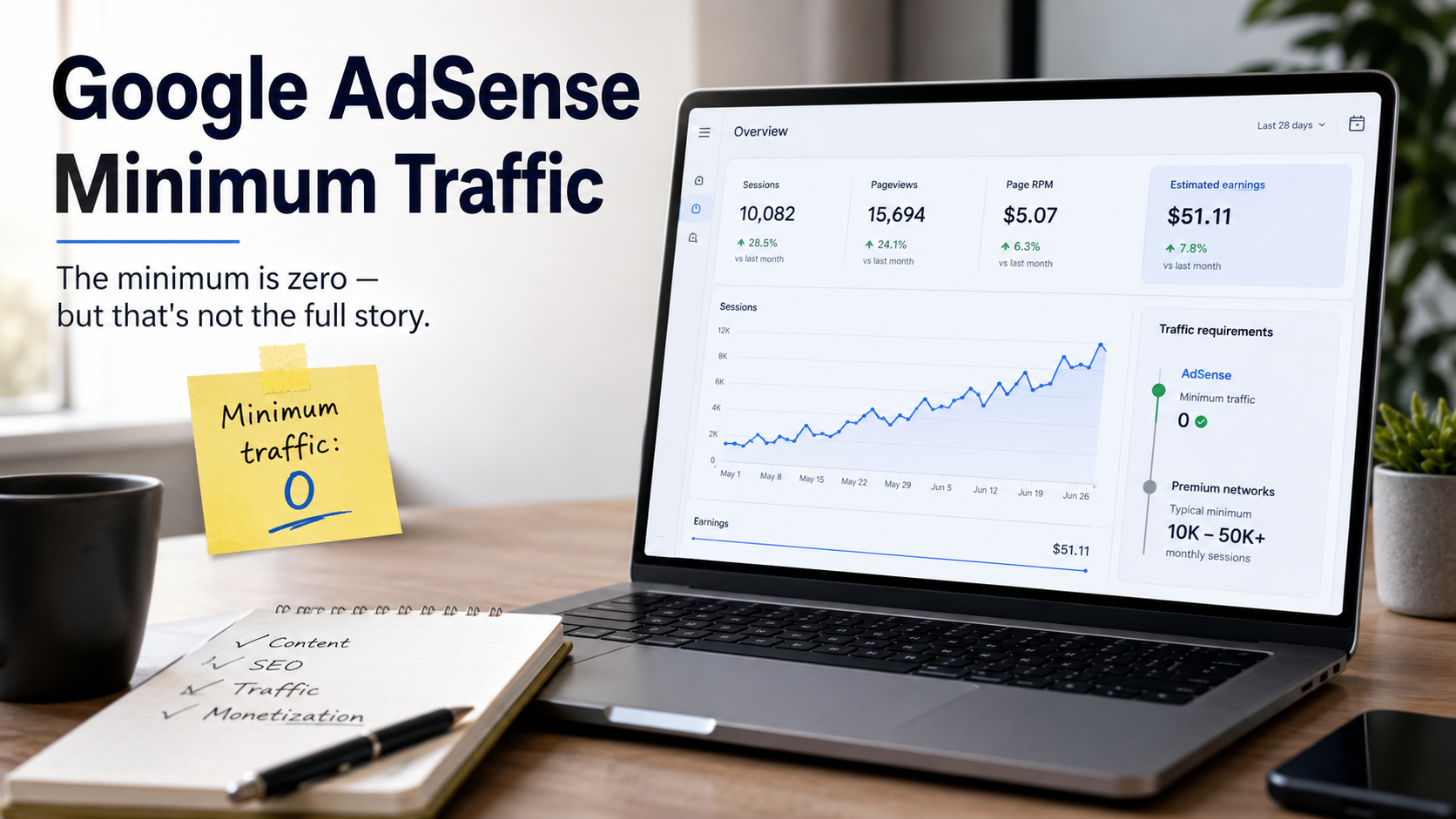
What's the Minimum Sessions Per Month You Need to Hook Up Google AdSense to Your Website?
Wondering how many monthly sessions you need before you can hook up Google AdSense? The official answer is zero — Google publishes no minimum traffic requirement. But the useful answer depends on what you're really asking. In this guide, we break down what actually gets sites approved, the traffic math behind AdSense earnings (spoiler: 10,000 sessions ≈ $50/month), the milestones that unlock premium networks like Mediavine and Raptive that pay 3–5x more, and why most business websites shouldn't run display ads at all — because every session is worth far more as a customer than as an impression.

High Volume vs. Low Volume Publishing: Which Actually Gets You Business Faster?
It's one of the oldest debates in content marketing: publish as much as possible, or focus everything on fewer, higher-quality pieces? The answer isn't as simple as either camp wants you to believe. We dig into the actual research — from HubSpot's own internal publishing experiments to real-world niche case studies — to give business owners and marketing managers a data-driven answer to which publishing strategy actually generates leads faster, and what it depends on.

Are Any Companies Still Thriving on a Blog-Heavy Content Model?
Every few months a new piece of content crosses your feed declaring that blogging is dead. SEO is finished. Long-form content is obsolete. AI has made the blog irrelevant. And yet some of the most valuable, fastest-growing, and most-cited companies on the internet still run blog-heavy content models as their primary engine for traffic, leads, and authority — not as a legacy strategy they haven't gotten around to updating, but as a deliberate, compounding competitive advantage they continue to invest in aggressively. The question isn't whether blogging still works. The evidence on that is unambiguous. The more interesting question is what kind of blogging works, for whom, and under what conditions.