
You're Paying Enterprise Prices for Enterprise Overhead — Not Enterprise Results
The price gap between a big SEO agency and a small one can be 5-10x for the same scope of work — and industry data confirms that difference is rarely about quality. It's overhead: the office, the org chart, the software licenses, and the brand name, all funded before a dollar reaches your actual campaign. This post breaks down exactly where a $4,000 retainer goes, the two tells that you're overpaying, and the "small fish" problem nobody warns you about. If you're paying enterprise prices without enterprise results, here's how to tell — and what to do about it.
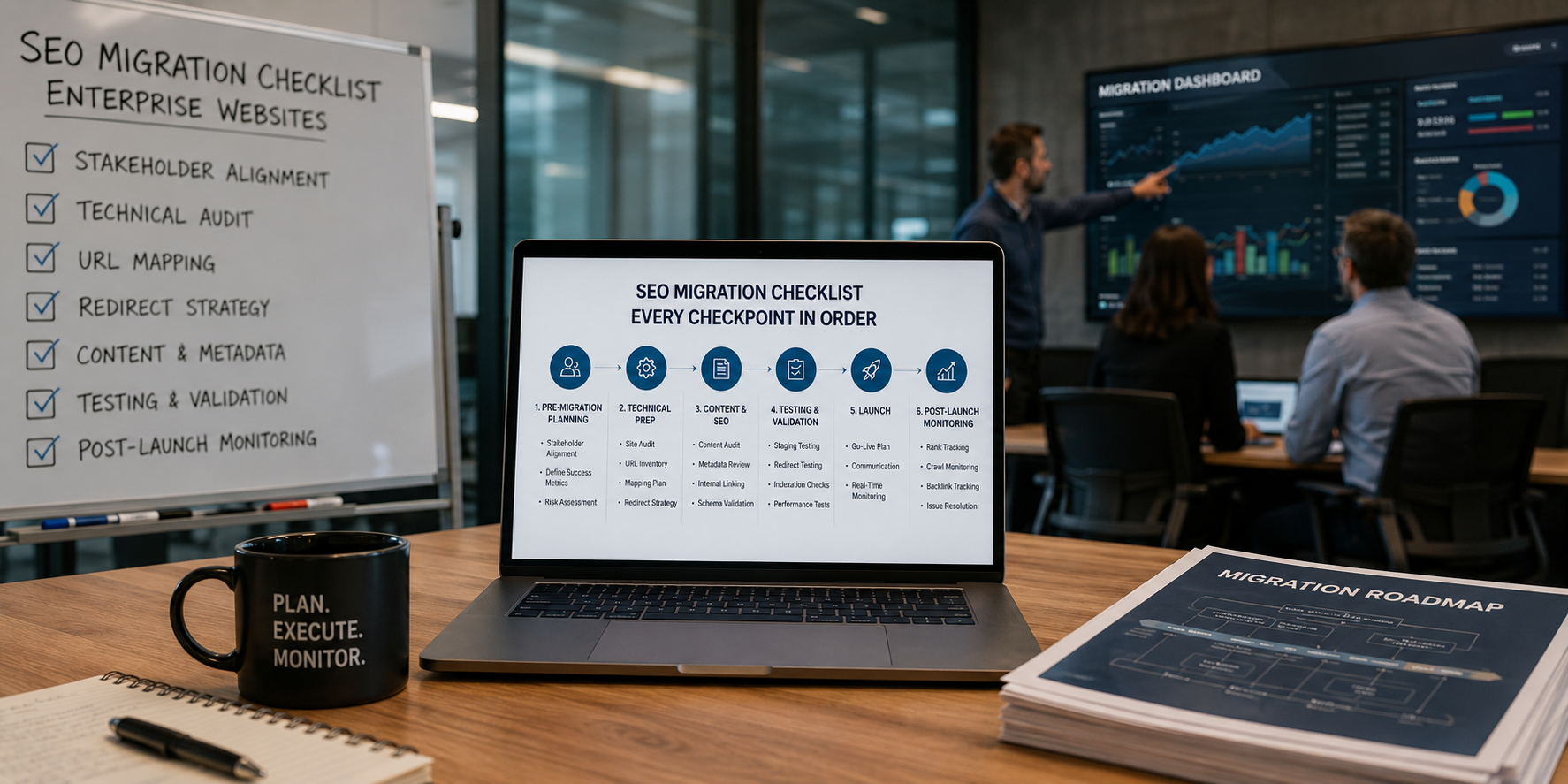
SEO Migration Checklist for Enterprise Websites
Enterprise website migrations are categorically different from small business migrations in ways that matter significantly for SEO execution. The URL count isn't just larger — it's large enough that manual processes break down and systematic automation becomes necessary. The backlink profile isn't just more valuable — it's distributed across thousands of referring domains in ways that require prioritization frameworks rather than comprehensive manual outreach. The stakeholder landscape isn't just more complex — it includes legal, compliance, IT security, and procurement functions whose requirements shape the migration timeline in ways that pure SEO planning can't account for.
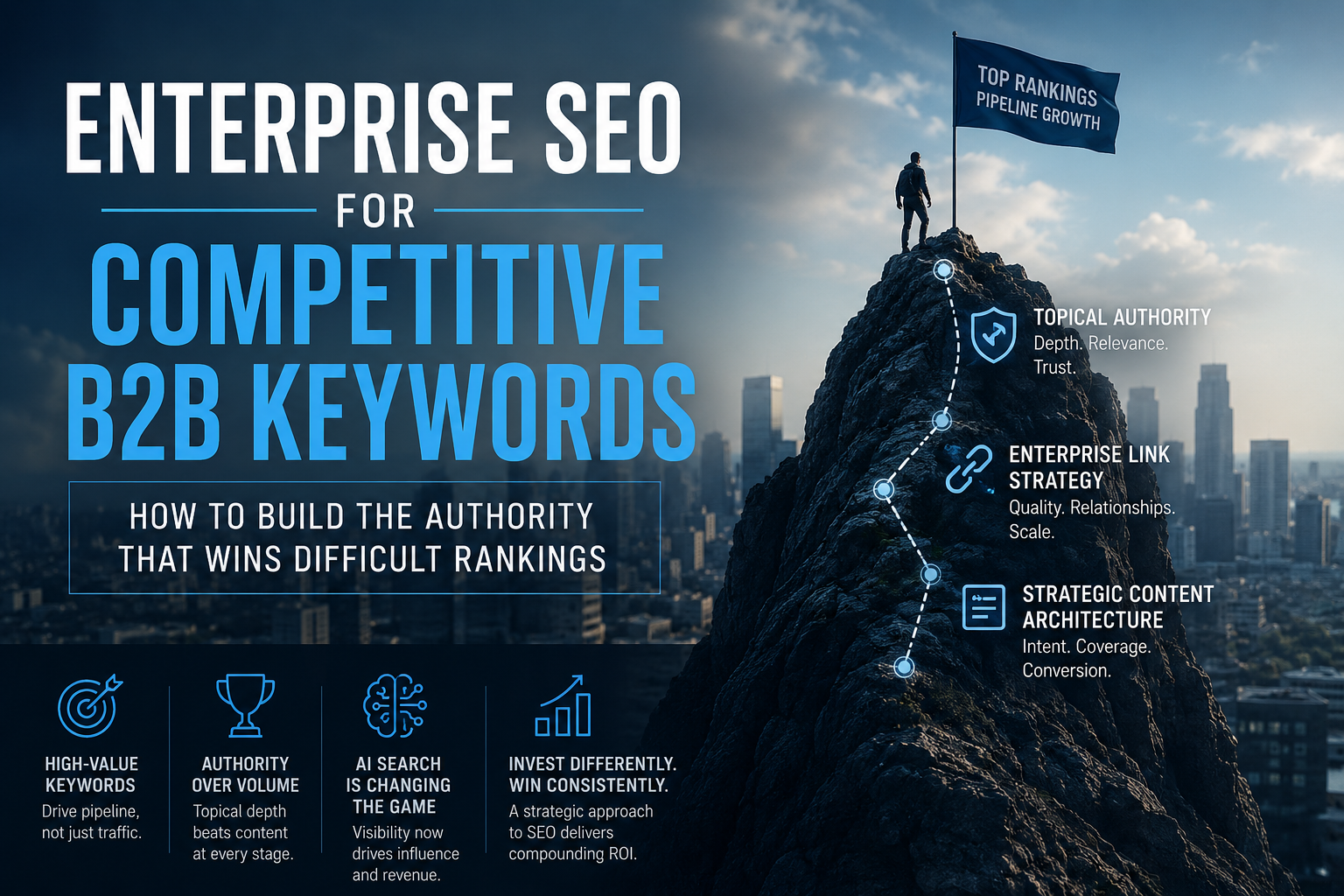
You Need to Rank for Difficult, High-Value B2B Keywords. Here's Exactly How Enterprise SEO Gets That Done.
The keywords that actually move your B2B pipeline are the same ones every well-funded competitor in your space is fighting over. Ranking for them isn't impossible — but it requires a fundamentally different approach than what most enterprise SEO programs are actually built around. In this post we break down the three pillars of competitive B2B keyword strategy, why topical authority beats content volume every time, what link building looks like at enterprise scale, and how AI search has changed the ROI calculation for difficult keyword investment in ways that make the case for serious SEO more compelling than ever.
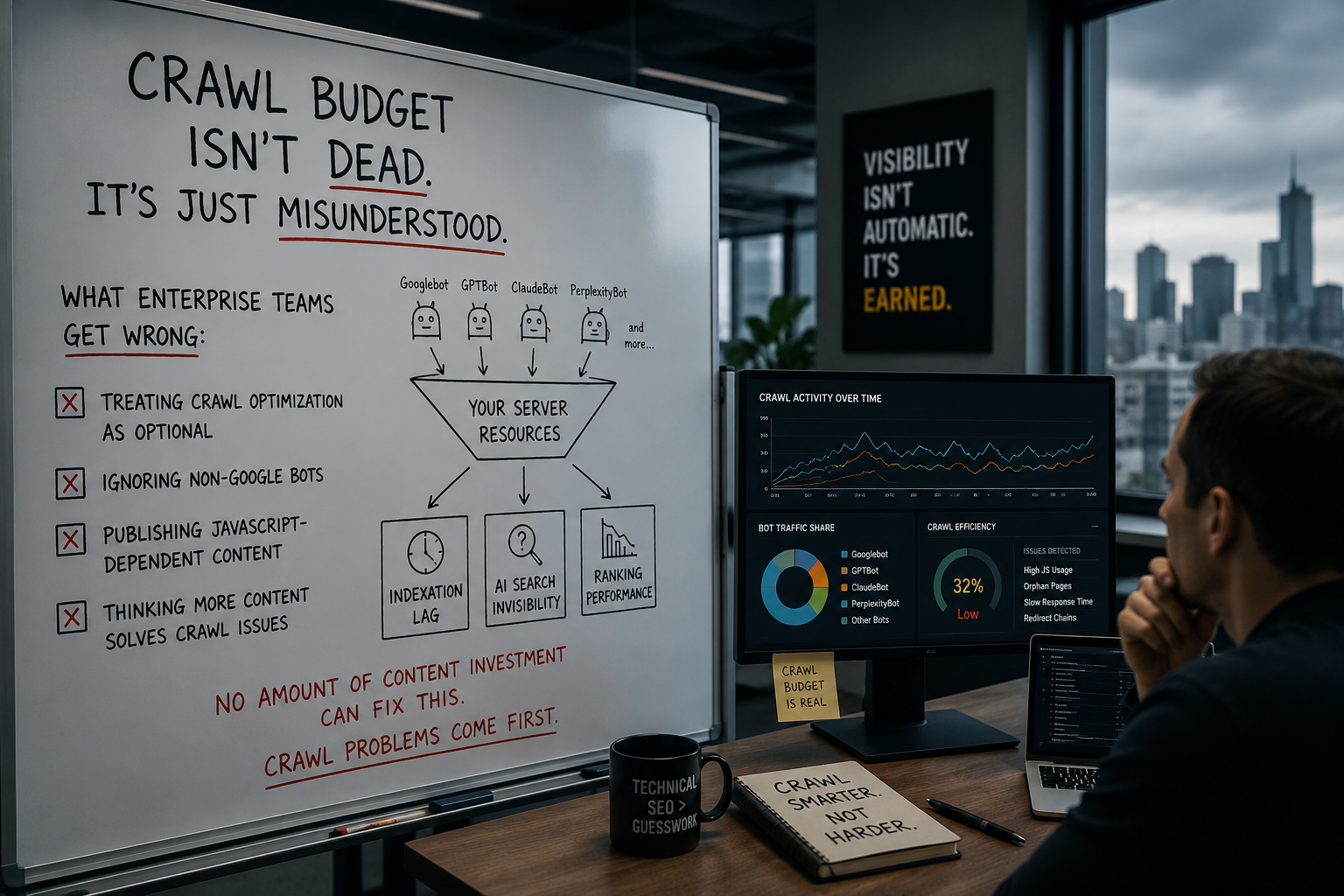
Crawl Budget Isn't Dead. It's Just Misunderstood. Here's What Enterprise Teams Get Wrong.
Every few years someone declares crawl budget dead. The argument usually goes: Google's infrastructure has scaled, Googlebot is smarter, just publish good content and it'll figure it out. This argument was always wrong. In 2026 it's wrong in several new directions simultaneously. The number of bots competing for your server resources has multiplied. GPTBot, ClaudeBot, and PerplexityBot fetch static HTML only — meaning JavaScript-dependent content is invisible to them regardless of how well you've optimized everything else. And the enterprise teams still treating crawl optimization as optional technical cleanup are paying for it in indexation lag, AI search invisibility, and ranking performance that no amount of content investment can fix while the crawl problem persists.

Why Enterprise SEO Fails: The Internal Alignment Problem No Agency Will Tell You About
Most enterprise SEO programs fail for the same reason — and it has nothing to do with the quality of the audit. Recommendations sit in backlogs for months. Legal holds up content for weeks. Development priorities the agency can't touch. The strategy was fine. The org chart killed it.
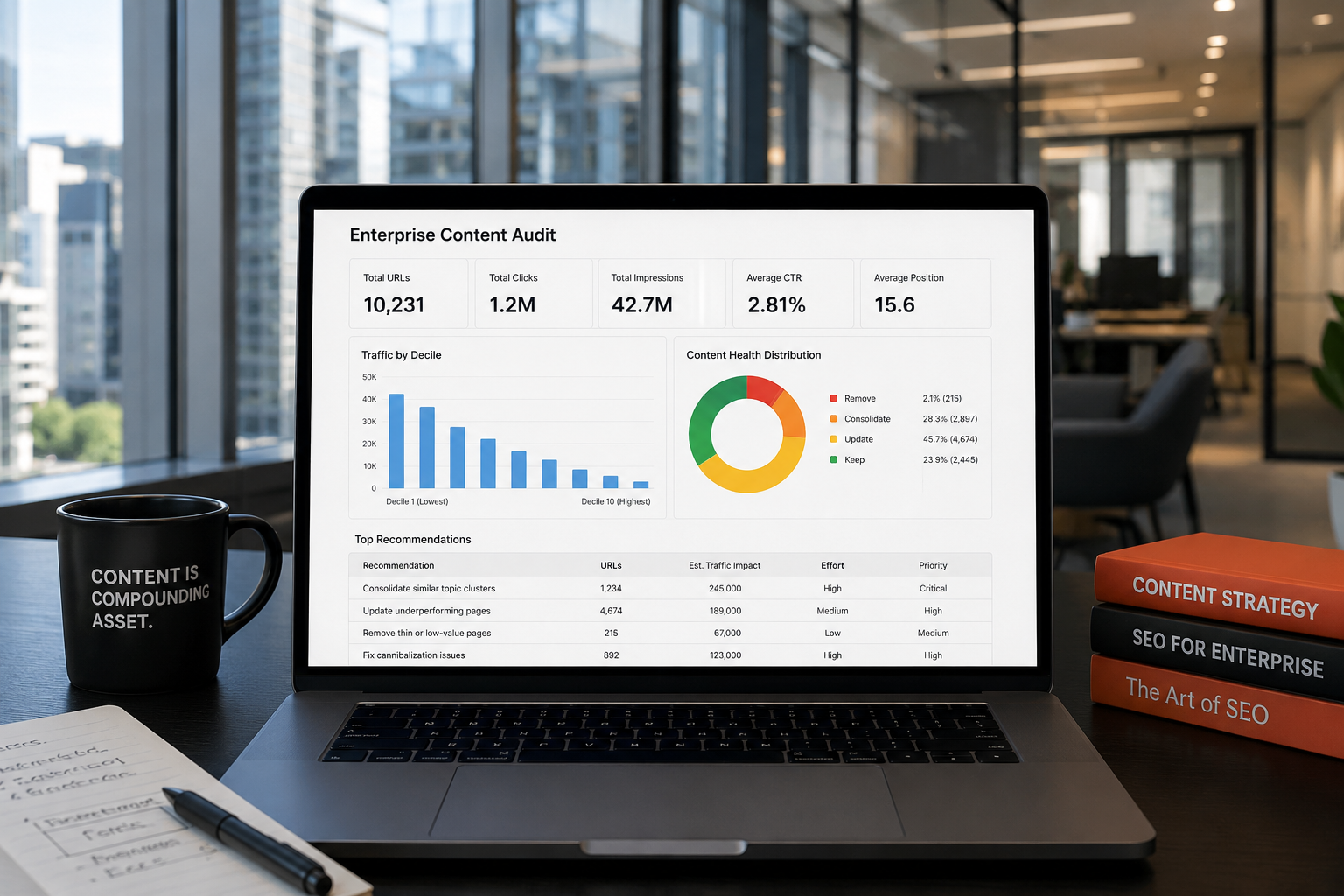
The Enterprise Content Audit That Actually Scales: How to Fix What's Killing Your Rankings Across 10,000+ Pages
Most enterprise content audits start with a spreadsheet and end with a spreadsheet. Someone exports all URLs, adds GSC data, sorts by traffic, flags the low performers, and produces a recommendation list that's either too long to action or too vague to implement. The pages stay live. The cannibalization continues. The authority dilution compounds. Six months later, someone runs the same audit and produces the same spreadsheet. The reason this keeps happening isn't bad intentions or lazy execution — it's that most content audit frameworks weren't designed for 10,000 pages, multiple content teams, and an implementation process that requires stakeholder alignment across half the organization. This is the framework that was.

The Agency vs. In-House Enterprise SEO Debate Has Changed. Here's the New Version of It.
For years, the agency versus in-house SEO debate followed a familiar script. Agencies bring breadth. In-house teams bring context. Pick your tradeoffs and get to work. That debate isn't wrong — it's just obsolete. The arrival of generative AI search has changed what enterprise search optimization actually requires, and when the work changes, the question of who should do it has to change with it.

What Is the Average Page Volume for an Enterprise Website — and How Does Google Even Crawl All of It?
Enterprise websites are not like small business websites. They don't have ten pages, a blog, and a contact form. They have thousands — sometimes hundreds of thousands — of URLs spanning product pages, category pages, location pages, blog posts, press releases, documentation, and support content. Managing how Google interacts with all of that is one of the most technically complex challenges in SEO — and one that even well-resourced organizations frequently get wrong. This post breaks down what enterprise page volumes actually look like, how Google's crawling and indexing process works at scale, and why crawl budget is one of the most consequential variables most enterprise teams aren't managing deliberately enough.