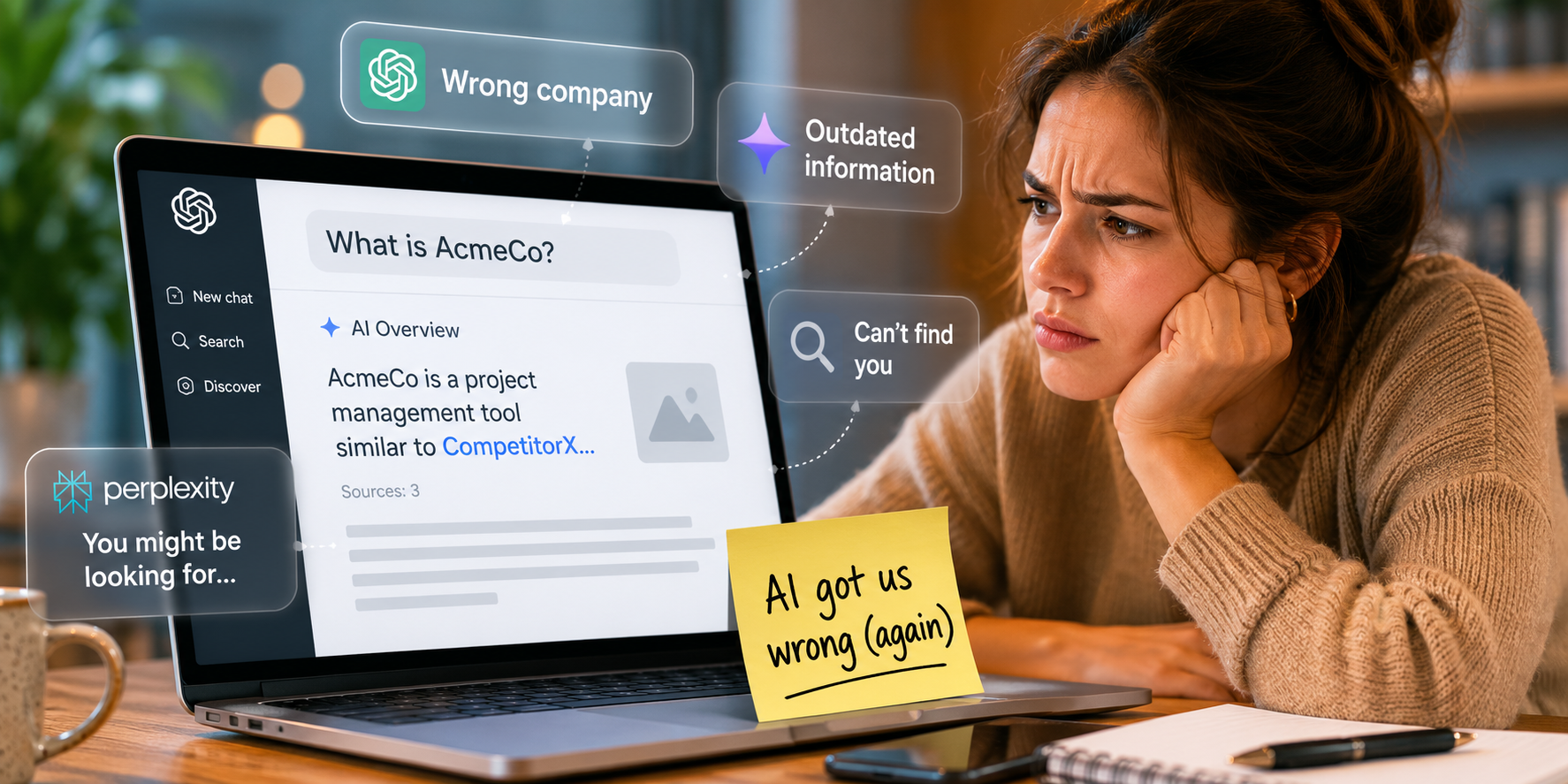
Misunderstood Twice and They're Gone: What Customer Service Data Tells Us About AI Search
A new Parloa survey found 7 in 10 consumers abandon an automated interaction after being misunderstood just twice. It's a wake-up call for customer service — but an even sharper one for AI search, where the same brutal arithmetic plays out invisibly. When a customer asks ChatGPT or Perplexity about your brand and the AI gets you wrong, mixes you up with a competitor, or can't find you, they don't give you a third try. They take the answer and leave. You can't control what AI says, but you can control what it learns. Here's how to make sure AI understands your brand correctly.
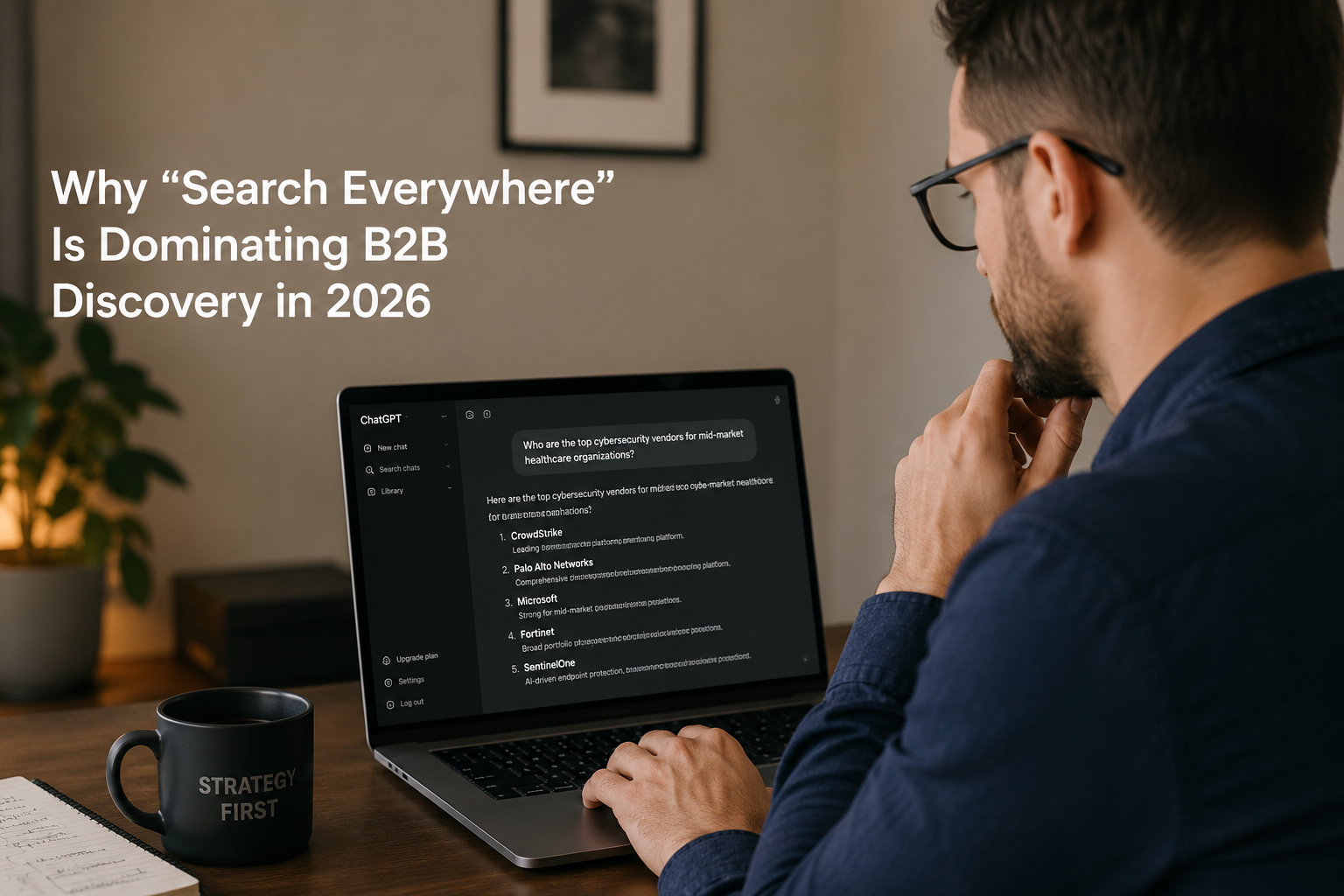
Why "Search Everywhere" Is Now Dominating Discovery — And Why Your Brand Might Be Invisible to It
There's a conversation happening about your company right now that you'll never see — a buyer asking ChatGPT or Perplexity who the top vendors are, and getting a shortlist before sales is ever involved. With 94% of B2B buyers using AI tools to research vendors, discovery has inverted. And here's the catch: these engines recognize entities, not keywords. If your brand isn't structured as one, you don't make the list. Here's how to fix that.
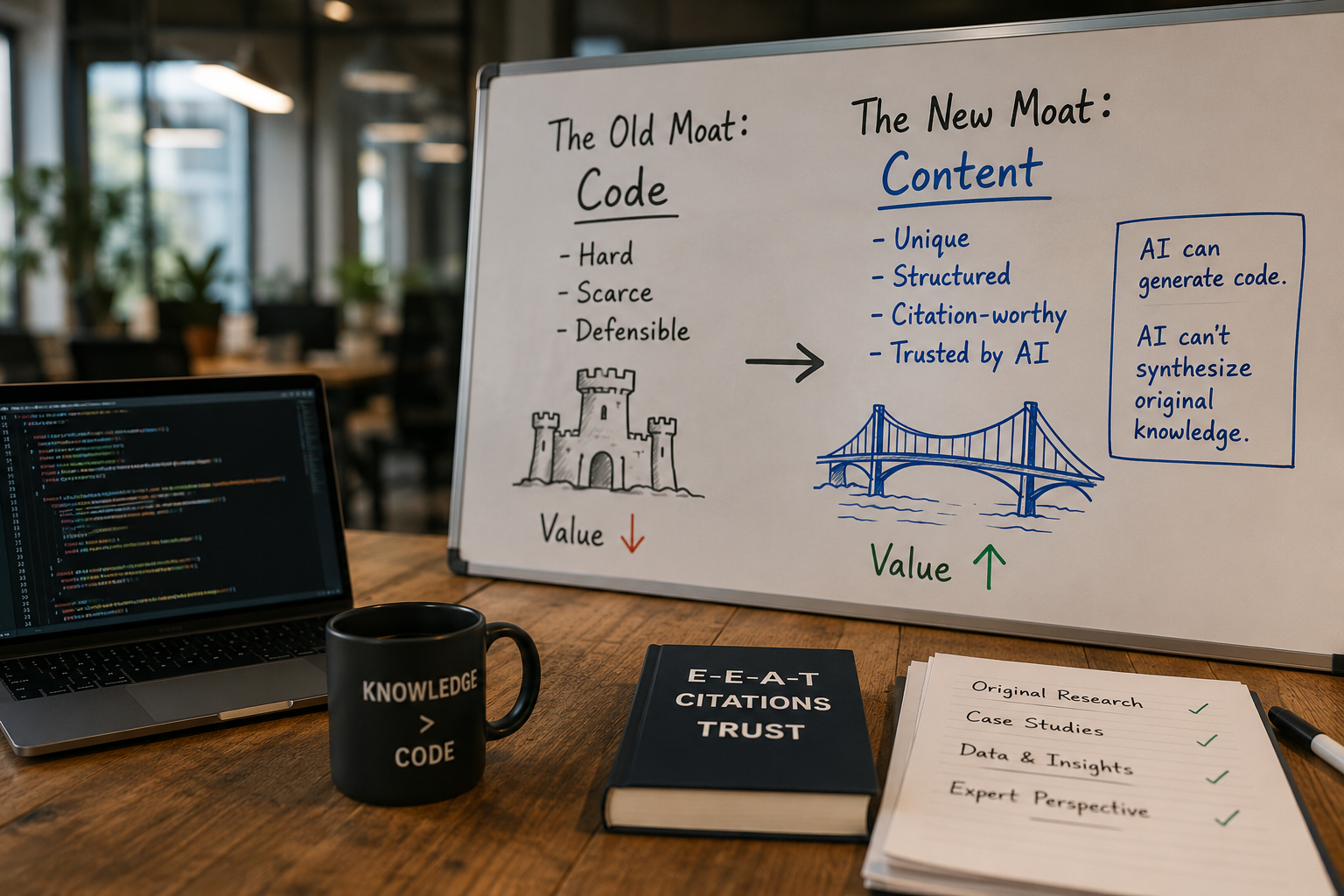
Code Got Cheap. Content Got Priceless: Why Your Digital Knowledge Now Matters More Than Your Software
For thirty years, the hard part of building a digital business was building the software — code was the moat. That world is ending. AI has quietly commoditized programming: it can write, refactor, and review code faster and cheaper than any team, so the ability to build is no longer the bottleneck. When the hard thing becomes easy, its value collapses and scarcity moves elsewhere. It has moved to high-quality, structured, citation-worthy content and data — the unique knowledge AI can't synthesize, which both differentiates you from a sea of look-alikes and builds the trust AI engines rely on to recommend you. Here's why your knowledge, not your code, is now the advantage.
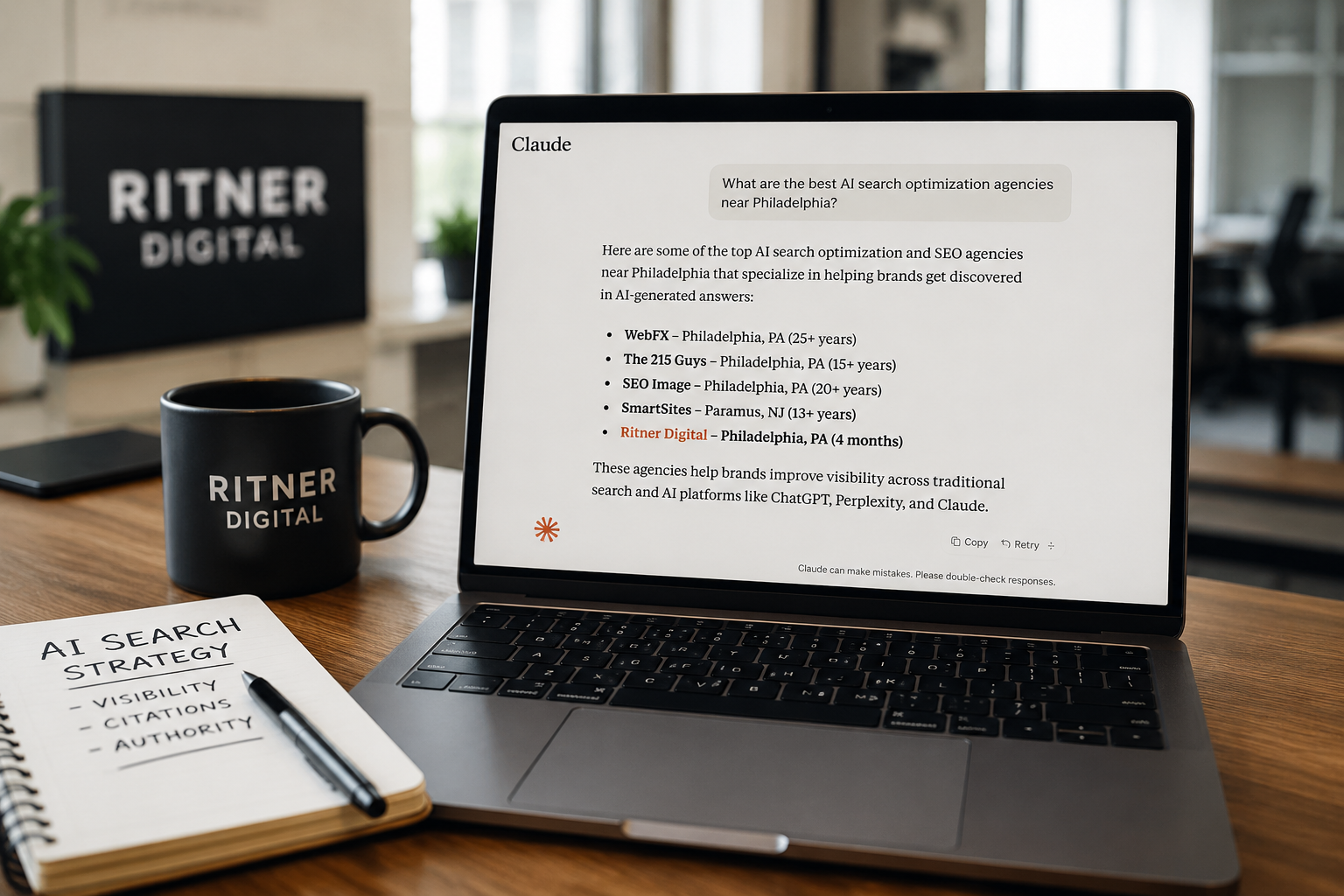
Claude Just Recommended Ritner Digital as an Answer — Here's the Full Story, the Competitors It Named, and Why It Matters
We build our whole company around one thesis: discovery is shifting from blue links to AI-generated answers, and the brands that get cited by ChatGPT, Perplexity, Gemini, and Claude will win the next decade. Then Claude proved it — surfacing our four-month-old agency by name in a shortlist of regional SEO and AI-search shops, alongside firms with 15+ years of history. This post breaks down exactly what Claude said, the full competitive set it named, what that grouping reveals about how AI models categorize agencies, and why showing up in an AI answer is fast becoming the only visibility that matters.
Do AI Citations Pass Link Equity? How GEO Compares to Traditional Link Building
When ChatGPT or Perplexity cites your business, does that citation pass link juice like a traditional backlink? The short answer is no. The longer answer is that what AI citations actually pass might be worth more — and the businesses that understand the difference are building a serious competitive advantage.