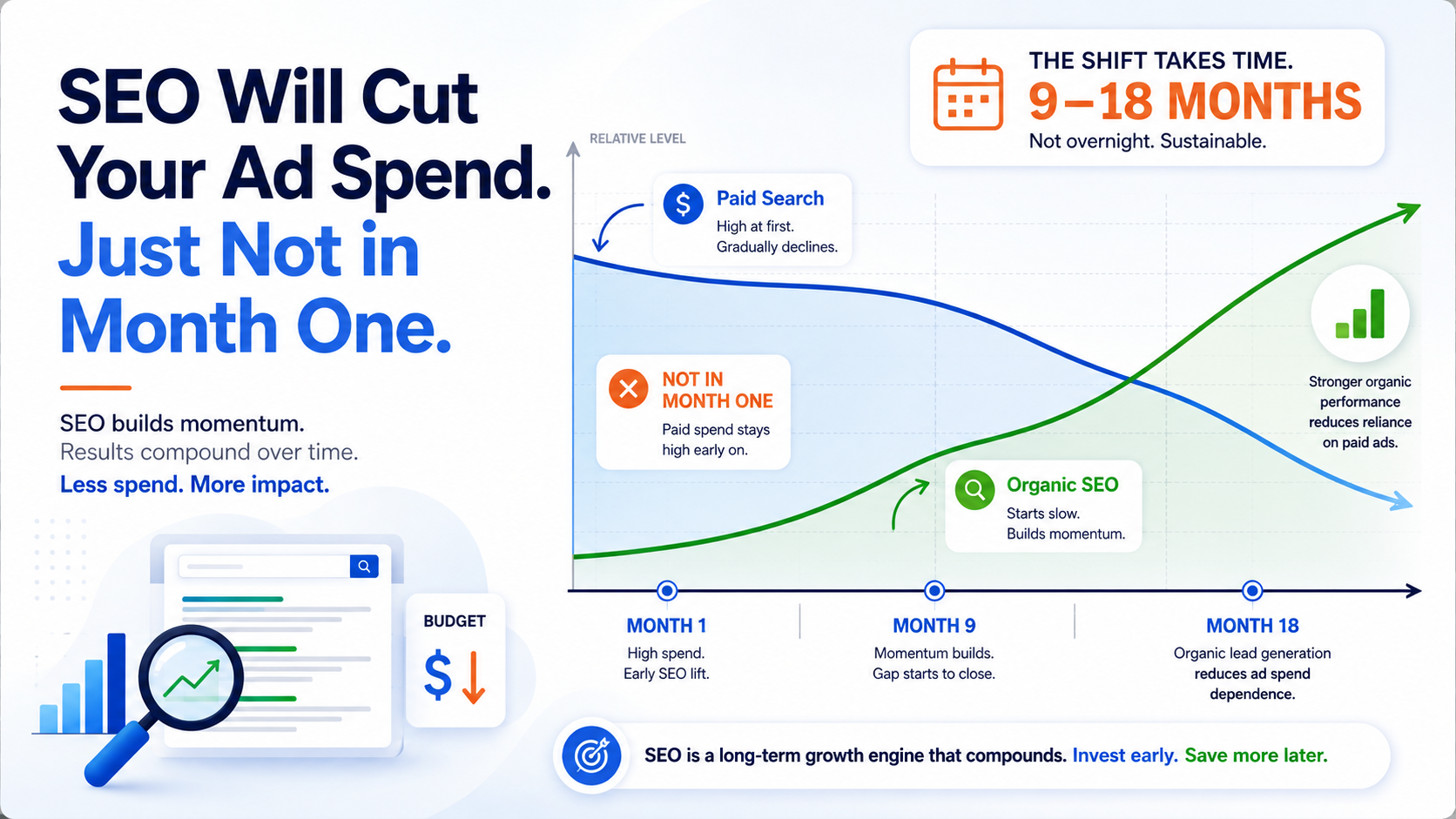
SEO Will Cut Your Google Ads Bill. Just Not in Month One.
Every SEO pitch promises the same thing: stop renting traffic, own it, watch the Google Ads invoice shrink. The promise is real and the mechanism is documented in Google's own research. The mistake is the timing. Here's what the data actually says about how paid-to-organic substitution works, how long it takes, and the five conditions that tell you a keyword is ready.

Your 2027 Marketing Budget: Rent vs. Own, With Real Numbers
Every marketing dollar either rents visibility or owns it — and most local budgets are 90% rent without anyone choosing that on purpose. Before you sign the 2027 renewals, here's the math: real cost data on ads, per-booking platforms, and listing sites, three sample budgets run honestly, and the five questions to bring to the meeting.

The ECB Just Raised Rates. Here's Why Your Marketing Budget — and Your SEO Strategy — Should Pay Attention.
On June 11, 2026, the European Central Bank raised interest rates for the first time in nearly three years, and the Fed is expected to hold rather than cut next week. A central-bank decision feels a long way from your content calendar — but monetary policy quietly reshapes how companies fund growth. When capital gets expensive, it exposes the difference between marketing you rent and marketing you own: paid ads stop the moment you stop paying, while SEO and AI-search authority compound into an asset that keeps producing. Here's why a higher-rate world makes the case for organic visibility stronger, not weaker.

Why a $100/Month Google Ads Budget Is a Waste of Money — and Why You Should Fire Any Agency That Recommends It
Let's be direct: a $100-per-month Google Ads budget will not work. It cannot work. And if an agency pitched you one as a real strategy — especially while charging a management fee on top — that's a disqualifying red flag. This isn't an opinion about taste; it's math. A $100 budget buys about one click a day, never produces enough conversions to escape Google's learning phase, and never generates enough data to optimize or even measure. You're not buying a small amount of advertising — you're buying nothing, slowly, while paying someone to watch. Here's exactly why, and what honest advice actually sounds like instead.

Which Digital Marketing Channels Will See the Biggest Budget Increases in 2027? A Data-Driven Guide for U.S. Marketers
Marketing budgets aren't shrinking in 2026 — they're consolidating around channels that can prove their value. Connected TV is absorbing dollars from linear and paid social. AI-assisted SEO is rebounding sharply. Retail media has become a top-three line item for brands selling physical goods. And organic social is facing the steepest budget pullback of any digital channel. This data-driven guide breaks down exactly which US digital marketing channels are seeing the biggest planned increases heading into 2027, why those increases are happening, and what the losing channels have in common.
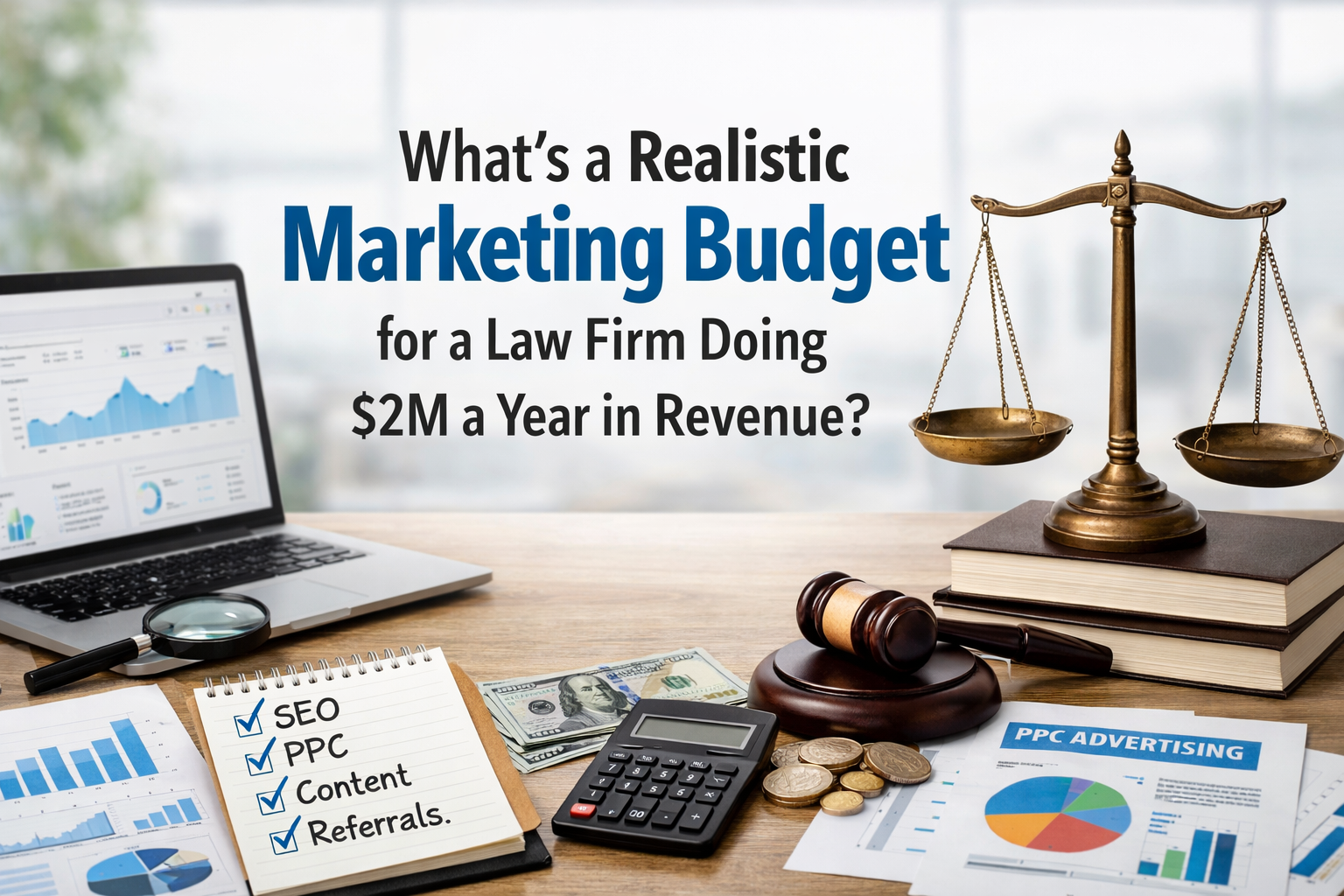
What's a Realistic Marketing Budget for a Law Firm Doing $2M a Year in Revenue?
If you run a law firm doing around $2 million a year and you're trying to figure out what you should be spending on marketing, you've probably gotten a frustrating range of answers. The honest truth is it depends — but on very specific things. This breakdown covers what the benchmarks actually say, what each budget tier looks like in real dollars, and how to allocate every dollar across SEO, PPC, content, and referrals so it actually moves the needle.
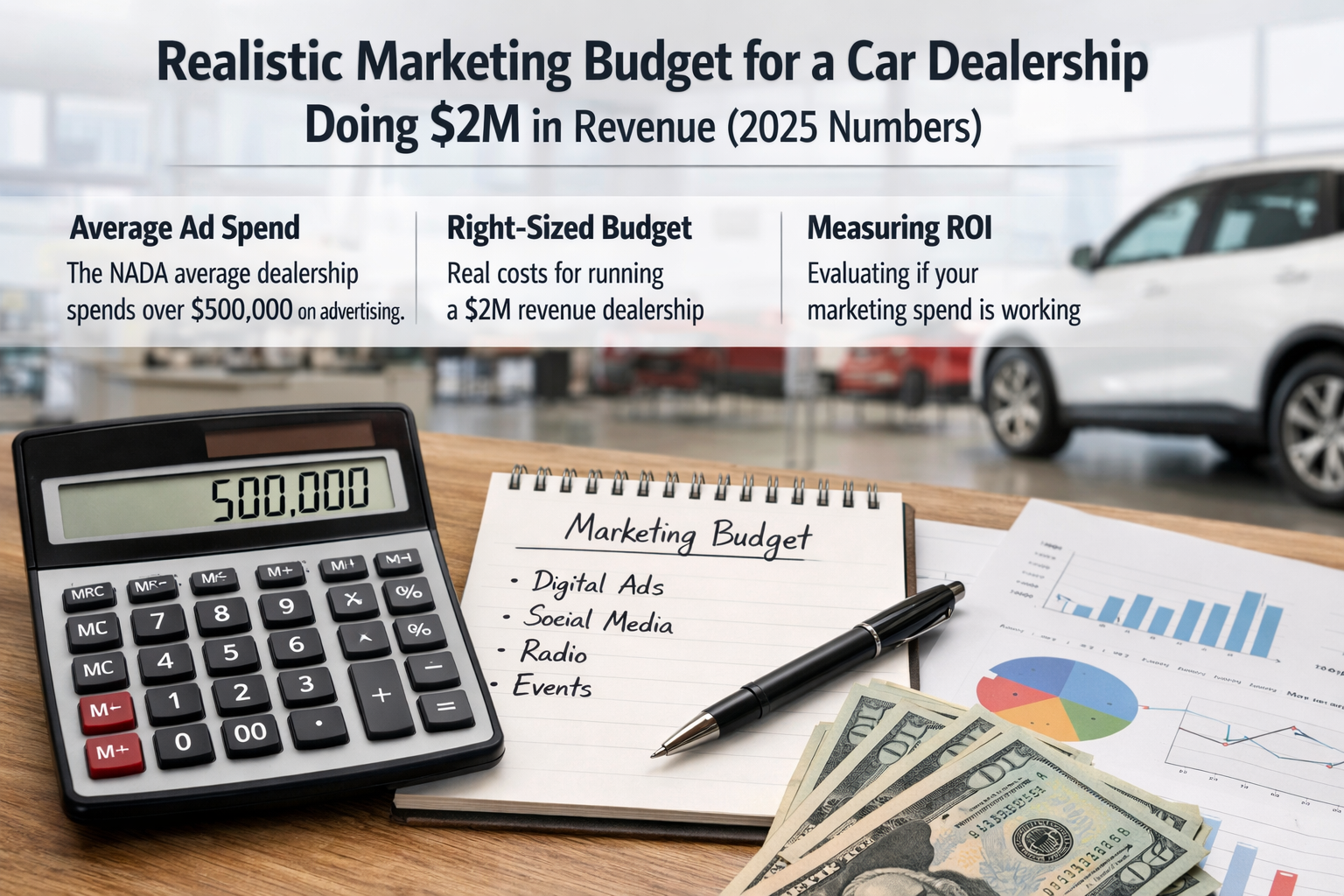
What's a Realistic Marketing Budget for a Dealership Doing $2M a Year in Revenue?
The NADA average dealership spends over $500,000 on advertising. That number is built around franchise operations doing ten to fifty times your volume and has almost nothing to do with running a $2M dealership. This guide gives you the actual math: what a realistic budget looks like at your revenue tier, what each channel costs and produces, and how to evaluate whether your marketing spend is actually working.
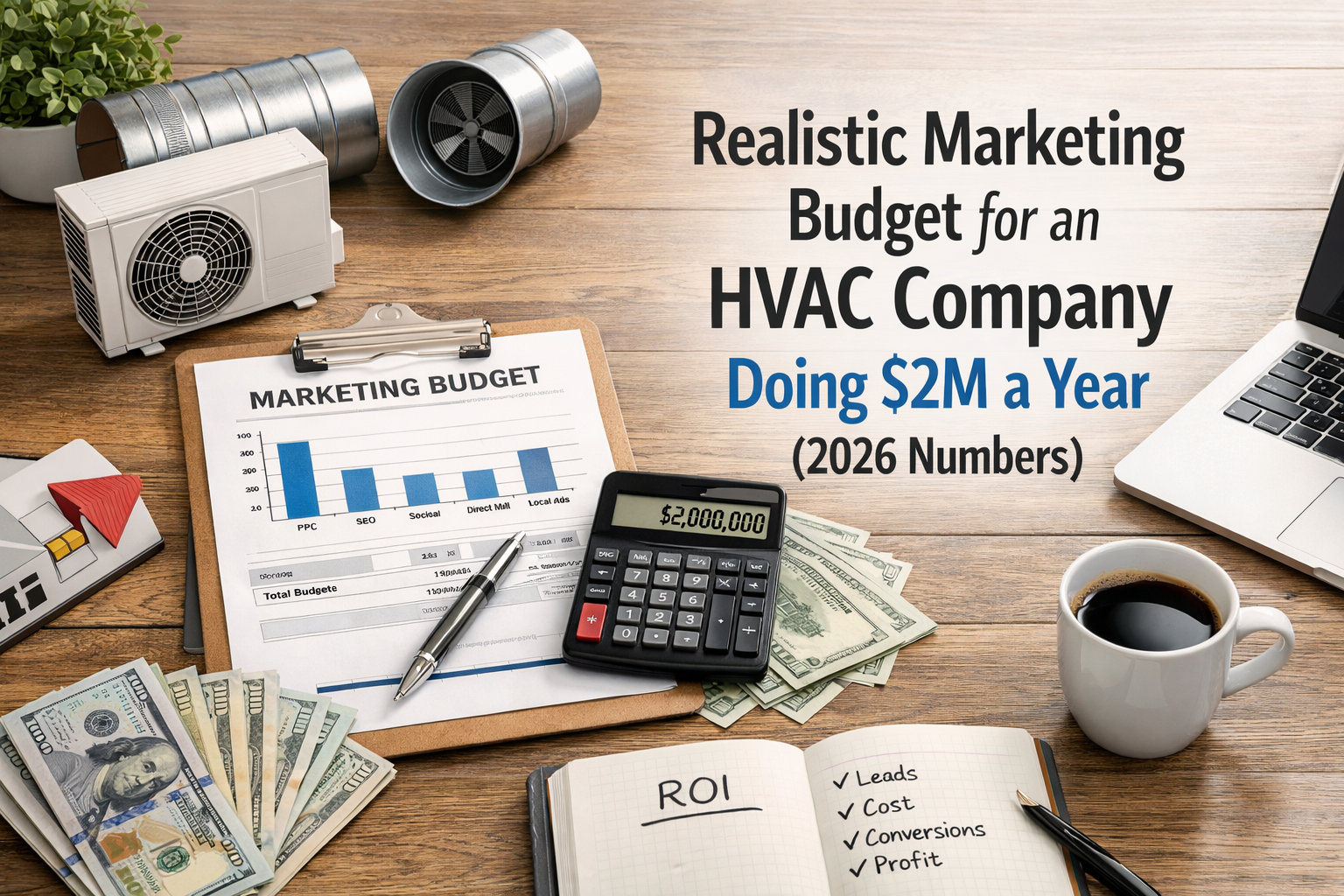
What's a Realistic Marketing Budget for an HVAC Company Doing $2M a Year in Revenue?
If you run an HVAC company doing $2 million a year and you've tried to find a straight answer on marketing budget, you've gotten vague percentages or vendor pitches. This guide gives you the real numbers: what the industry data says, what each channel costs at your revenue level, what your money actually buys, and how to think about ROI before committing to anything.

How Much Should You Really Spend on Marketing at $1–5M in Revenue?
Marketing budgets shouldn’t be a vibes-based decision. If your company is doing $1–5M in revenue, this guide breaks down exactly how much you should spend on marketing — with real dollar ranges by growth stage and advice on where that money actually goes.