The Doc's Café Story: What Roswell's First Black-Owned Business Can Teach Modern Businesses About Community Marketing
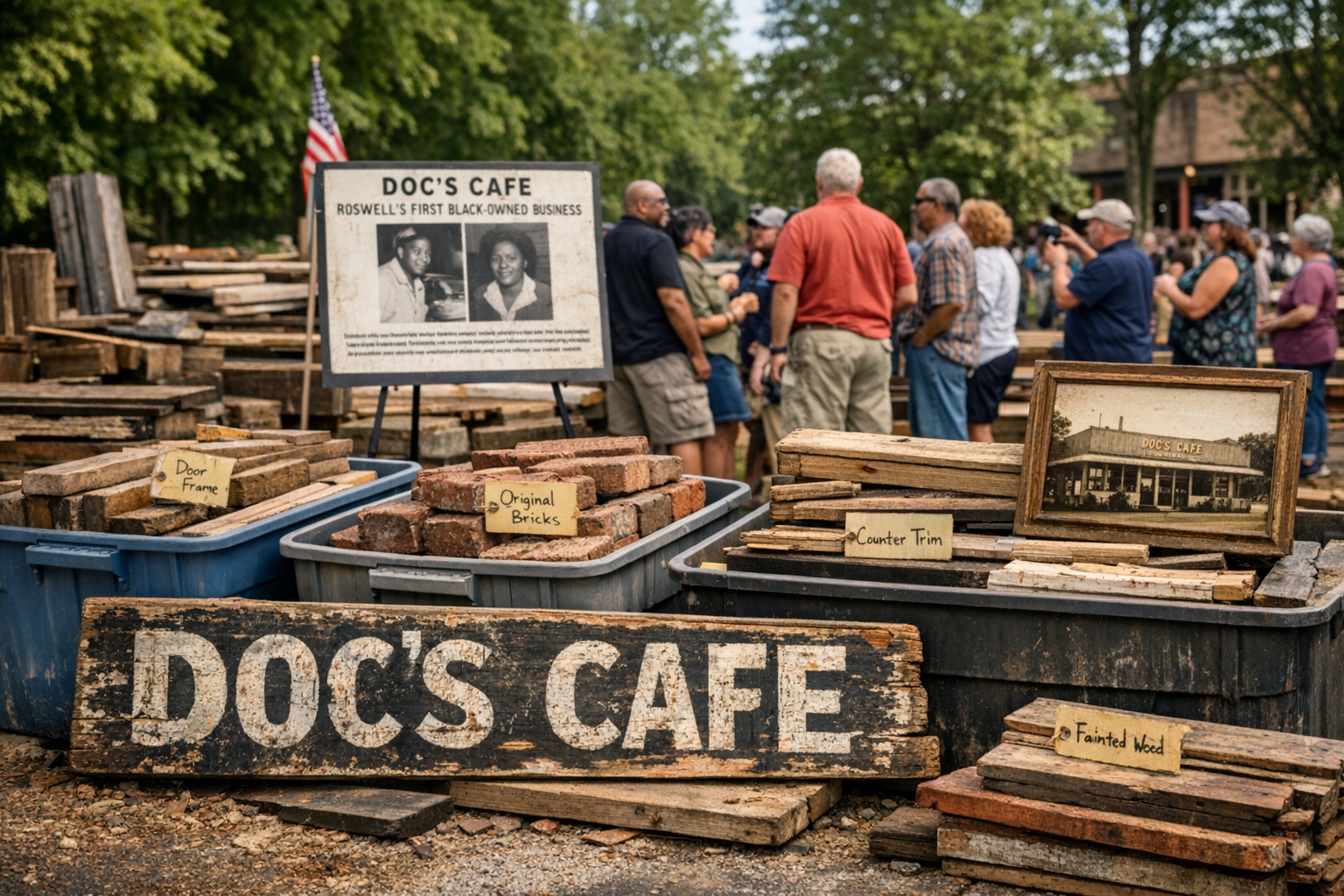
There are hundreds of pieces of wood stacked in three storage containers in Roswell, Georgia. Each one is labeled. Each one is photographed. Each one is part of a story that the city refused to let disappear.
Doc's Café was established in the 1950s by Samuel and Hattie Stafford. It holds the distinction of being Roswell's first Black-owned business. More than just a place to eat, Doc's Café became a safe gathering place where people from Roswell, Alpharetta, Sandy Springs, and surrounding communities came together for music, food, conversation, and culture. It quickly became a cornerstone of the Groveway neighborhood — the city's first Black neighborhood — and a symbol of community pride and resilience. Roswell Connections
Decades later, the building had fallen into disrepair — moved from its original location, hidden behind bushes at Oxbo Linear Park, slowly losing the fight against time. The city had a choice: demolish it quietly and move on, or do something harder and more meaningful.
The City of Roswell chose deconstruction. "Doc's Café is more than a building — it's a symbol of community and culture," said Mayor Kurt Wilson. "By choosing deconstruction instead of demolition, we are treating this history with the care it deserves and making sure future generations understand its role in Roswell's story." Roswell Connections
Deconstruction is careful and time-intensive. Crews work with hand tools and light equipment, dismantling a structure piece by piece. Each door, window, and board is photographed, tagged, and logged. Salvageable materials are stored, while even deteriorated pieces are documented so their story isn't forgotten. The result is not piles of debris but a living archive — materials paired with digital scans and CAD drawings that capture the building's dimensions and details for future study. Roswell Connections
The community rallied. Former employees shared memories. Lifelong residents described what it felt like to walk through those doors during segregation — a jukebox playing, a pool table in the corner, Sam "Doc" Stafford cooking barbecue in the yard. "We could go to Mr. Doc's, and we felt comfortable," said Mary Jackson, who worked at the café as a teen. FOX 5 Atlanta
Local news stations covered it. The AJC ran a spread. National outlets picked up the story. And through it all, Roswell became more than a city managing a demolition project. It became a community honoring its own story — publicly, carefully, with intention.
That is community marketing at its most powerful. And there is a profound lesson here for every business on Canton Street, every service provider off Holcomb Bridge Road, every restaurant, retailer, and agency operating in Roswell today.
The businesses that thrive long-term are not the ones with the biggest ad budgets. They are the ones with the most meaningful stories.
What Community Identity Marketing Actually Is
Before we talk strategy, let's define the term properly. Community identity marketing is not cause marketing, though it can overlap. It is not corporate social responsibility, though it shares some DNA. And it is definitely not slapping a "Proud to be Roswell's" tagline on your homepage and calling it a day.
Community identity marketing is the deliberate practice of connecting your brand's story, values, and content to the living identity of the community you serve — in a way that is authentic, earned, and sustained over time.
The keyword is authentic. 66% of people say that their favorite brand stories are about ordinary people — stories they can relate to. Marketing LTB The Roswell businesses that do this well aren't performing community engagement. They're genuinely embedded in it. They hire locally, sponsor the neighborhood events, know the regulars by name, and talk about Roswell the way someone who truly loves a place talks about it — with specificity, with history, with feeling.
The Doc's Café story resonated across media outlets and communities because it was exactly that: real, specific, deeply local, and emotionally honest. It wasn't a press release. It was a story worth telling.
People are 22 times more likely to remember facts when delivered in a story rather than as bare data. Retention of information jumps from about 5 to 10% with mere statistics to around 67% when paired with storytelling. Marketing LTB For local businesses trying to differentiate in a competitive market, that gap in memorability is the difference between being chosen and being scrolled past.
Why the Community Responded to Doc's Café — and What That Teaches Marketers
The community response to Doc's Café wasn't manufactured. No PR firm orchestrated it. No influencer campaign seeded it. It happened because the story touched something real: the experience of a community that built something meaningful under difficult circumstances, and the fear of losing the physical proof that it happened.
Community members said it was important for future generations to know what it was like at Doc's Café — a place African Americans could feel safe during segregation. FOX 5 Atlanta That statement contains the entire emotional architecture of great brand storytelling in two sentences: a specific community, a specific experience, a specific fear (erasure), and a specific hope (memory). It is concrete. It is human. It is irreplaceable.
For modern businesses, the lesson is not to manufacture a version of the Doc's Café story. It is to ask an honest question: what is the real story of your business, and how does it connect to the real story of Roswell?
Every business that has been part of this community for any meaningful length of time has a version of that story. It might not be as historically significant as Doc's Café — very few things are. But it is real, and real stories, told with specificity and honesty, build the kind of trust that no amount of paid advertising can replicate.
64% of consumers believe stories help brands form stronger connections with customers. Storytelling marketing grew 46% in 2024 compared to previous years, and storytelling helps improve conversion rates by about 30%. Marketing LTB These numbers aren't about abstract brand narratives constructed in a conference room. They reflect what happens when businesses communicate in a way that feels genuinely human.
How to Find Your Brand's Authentic Roswell Story
Most business owners, when asked about their story, default to the founding narrative: when they started, why they started, what problem they set out to solve. That's a starting point — but it's rarely the most compelling story available to a Roswell business.
The more powerful stories are usually found in the relationship between the business and the community it has served over time. Here are the questions worth asking:
Who were your first customers, and what did they need? The earliest customers of any local business reflect the community's needs at a specific moment in time. A Roswell contractor who started right after the 2008 recession serving homeowners who couldn't afford new construction has a story that connects directly to a community's resilience. A restaurant that opened during COVID and became a takeout lifeline for neighborhoods on lock down has a story that every Roswell resident from that era will feel in their bones.
What has changed in Roswell since you opened, and how have you changed with it? Roswell has transformed dramatically in the past decade — new mixed-use development in the Historic District, the growth of Canton Street as a dining and retail destination, the Bond Roswell parks investment, new residents flowing in from Atlanta's urban core. A business that has been here through that transformation, and can articulate what it has seen and how it has adapted, is speaking with the authority of a community witness. That is rare and valuable.
What do you know about Roswell that an outsider wouldn't know? The best local content marketing is built on insider knowledge. The hidden trails off the Vickery Creek Trail. The best time of year to visit the Historic District without crowds. The local vendors and farmers whose products end up in your restaurant. The neighborhoods that are quietly becoming Roswell's next Canton Street. This is the kind of content that earns loyalty — and backlinks — because it comes from genuine expertise that no algorithm can replicate.
Who in your business has a Roswell story worth telling? The Doc's Café story is compelling not just because of what it was, but because of the specific people attached to it: Doc and Hattie Stafford who built it, Mary Jackson who worked there as a teenager, Gail Bohannon McCoy who pushed for its preservation for years. The human faces of a story are what make it stick. Does your business have a longtime employee who has been with you since you opened? A customer whose family has been coming for three generations? A supplier relationship that tells a story about supporting local Georgia farmers or craftspeople? These are your characters. Put them on screen.
Local Content That Earns Backlinks and Community Trust
Here's where strategy and storytelling converge. Locally-grounded, historically-aware, community-embedded content does something that generic marketing content almost never does: it gets linked to, cited, and shared by other local institutions.
When the City of Roswell published its Doc's Café project page, local news outlets linked to it. Community Facebook groups shared it. History blogs cited it. National outlets picked up the story. Each of those links and shares is a digital signal telling Google — and every human reader — that this source understands Roswell in a way that generic content never could.
Content marketing generates over 3 times as many leads as outbound marketing and costs 62% less. Entrepreneurs HQFor a Roswell small business competing against national brands with massive ad budgets, that cost efficiency is decisive. But it only materializes if the content is genuinely worth linking to — which means it has to offer something that cannot be found anywhere else. Hyper-local, historically-grounded, community-specific content is exactly that.
Practical content ideas that earn trust and backlinks for Roswell businesses:
Local history tie-ins. A Roswell HVAC company that publishes a post about how climate control in North Georgia has evolved since the days when Groveway residents gathered at Doc's Café — and what that community's resilience means for how the business serves its neighbors today — is doing something no national HVAC brand can replicate. It's absurd for them to even try.
Neighborhood spotlights. A piece on the Groveway community's history — including Doc's Café, Pleasant Hill Church, the neighborhood's role as Roswell's first Black neighborhood — written by a business with deep local roots is the kind of content that the Roswell CVB, the Roswell Historical Society, and local news outlets will naturally link to and cite. It establishes your business as a community curator, not just a vendor.
Event and milestone coverage. When Riverside Park broke ground in March 2026, when The Chambray opened in the Historic District, when the East Roswell Dog Park upgrades were completed — these were moments Roswell residents cared about. Businesses that published content acknowledging those moments, and connecting them to their own local identity, captured audience attention at exactly the moment community sentiment was highest.
Oral history and customer storytelling. The Fox 5 story on Doc's Café worked because it featured real people telling real stories in their own words. Your business can do a version of this at any scale. A series of short customer profiles — longtime Roswell residents, people whose families have been served by your business across generations — is the kind of content that earns shares, comments, and genuine emotional engagement. Brand storytelling drives 38% ROI among video formats for B2B marketers, second only to short-form social videos. Sprout Social For local businesses, where the brand IS the community, that number is almost certainly higher.
Tying Community Storytelling to Local SEO
This is where the two pillars of this blog post — storytelling and digital marketing — lock together into a concrete strategy.
Every piece of community-rooted content you publish is also a local SEO asset. A post about Roswell's Groveway neighborhood history, published on your business website, contains dozens of hyper-local geographic signals that Google uses to assess your site's relevance to local search queries. It references real neighborhood names. Real street names. Real historical figures and institutions. Real community events.
Website, blog, and SEO remains the number one ROI-generating channel according to marketers in 2026. Small businesses are 23% more likely than average to see ROI from blog posts. HubSpot When that blog content is locally-specific — genuinely rooted in Roswell's geography, history, and community — it pulls double duty: it builds emotional connection with readers and builds search authority with Google simultaneously.
Specific SEO benefits of community-identity content:
Neighborhood and landmark keywords. Content that naturally incorporates references to the Groveway neighborhood, Pleasant Hill Street, Oxbo Road, Canton Street, the Vickery Creek Trail, or the Chattahoochee River indexes for hyper-local search terms that most of your competitors are completely ignoring. These aren't high-volume terms — but they are extraordinarily high-intent, because the people searching them are overwhelmingly local.
Earned backlinks from local institutions. When the Roswell CVB, the Roswell Historical Society, local news outlets, or neighborhood Facebook groups link to your content, you receive what SEOs call editorial backlinks — the highest-quality signal Google uses to determine site authority. These cannot be bought. They can only be earned by publishing content genuinely worth linking to.
E-E-A-T signals. Google's quality evaluation framework includes Experience, Expertise, Authoritativeness, and Trustworthiness. A Roswell business that consistently publishes well-sourced, locally-specific content about the community it serves demonstrates all four of those qualities in the context that matters most to local search: real geographic expertise about a real place, built over real time.
Long-tail local search capture. Someone searching "Roswell GA Groveway neighborhood history" or "Doc's Cafe Roswell Black history" is almost certainly a Roswell resident with deep local engagement. That person is exactly the audience you want — and locally-rooted content is how you reach them.
The Lesson Doc's Café Leaves for Every Roswell Business
"Demolition of Doc's Café would have been a three- to four-day project," Project Manager Nick Paserchia noted. "Deconstruction is taking four to six weeks. The cost is higher because it requires more labor and documentation. But this approach ensures Roswell keeps the history alive for future generations." Roswell Connections
That sentence is the entire philosophy of community identity marketing in a single quote.
Demolition is fast. It's cheap. It gets you to the next thing quickly. Marketing built purely on paid ads and promotional content is demolition — fast, disposable, forgotten as soon as the budget stops.
Deconstruction is slow. It's expensive. It requires labor and documentation and care. Community-rooted content marketing is deconstruction — time-consuming, demanding, but cumulative. Every piece adds to a living archive of your business's relationship with Roswell. Every story shared by a long-time customer builds a foundation that no algorithm update can erase and no competitor can replicate.
Evergreen content delivers 4 times higher ROI than seasonal or trendy posts. Content marketing can generate up to 748% ROI, while paid advertising averages approximately 200%. Andava Digital That gap is driven almost entirely by the cumulative, compounding nature of content that earns trust and links over time. Community identity content — rooted in real history, real people, real places — is the most durable form of that investment.
Doc's Café wasn't demolished. Its pieces are in storage, cataloged and cared for, waiting to become something new. That is exactly what good storytelling does for a local business. It takes the pieces of what you've built — the relationships, the history, the community you've served — and turns them into something that will outlast any individual campaign, any algorithm change, any ad budget fluctuation.
"I'd like to make Doc's Café relevant," said Mayor Kurt Wilson. "I'd like to make it active. I'd like people to know about it." Atlanta News First
Every Roswell business owner should want exactly the same thing for their own story.
Sources
Roswell Connections — Doc's Cafe: Restoring One of Roswell's Historic Places of Significance: roswellconnections.com
Roswell Connections — Deconstruction vs. Demolition: What's the Difference and Why It Matters at Doc's Café: roswellconnections.com
Roswell Connections — Roswell Marks Mid-Project Milestone in Doc's Café Deconstruction (September 2025): roswellconnections.com
Fox 5 Atlanta — Black History Month: Saving a Piece of Roswell History One Board at a Time (February 2026): fox5atlanta.com
Atlanta News First — Roswell Begins 'Deconstructing' City's First Black-Owned Business (September 2025): atlantanewsfirst.com
Marketing LTB — Storytelling Statistics 2025: 94+ Stats & Insights: marketingltb.com
HubSpot — 2026 Marketing Statistics, Trends & Data: hubspot.com
Andava — Content Marketing Industry Statistics in 2026: andava.com
Sprout Social — 120+ Social Media Marketing Statistics for 2026: sproutsocial.com
EntrepreneursHQ — 97 Content Marketing Statistics 2026 Report: entrepreneurshq.com
Your business has a story worth telling.
The Roswell community rallied around Doc's Café because someone took the time to tell its story with care and intention. Your business has its own version of that story — rooted in this city, shaped by the people you've served, and worth far more than a promotional post.
Ritner Digital helps Roswell brands turn community roots into digital reach. We'll find your story, build the content strategy around it, and make sure Google — and your neighbors — can find it.
Ritner Digital is a digital marketing agency serving businesses in Roswell, GA and the greater North Fulton area.
Frequently Asked Questions
What is community identity marketing and how is it different from regular content marketing?
Regular content marketing focuses on producing useful or entertaining content that attracts potential customers. Community identity marketing goes a layer deeper — it specifically connects your brand's story, values, and content to the living identity of the place where you operate. For a Roswell business, that means publishing content that reflects genuine knowledge of, and investment in, the Groveway neighborhood, Canton Street, the Chattahoochee River corridor, and the history and people that make this city distinct. The difference shows up in how the content feels: community identity marketing reads like it could only have been written by someone who actually lives and works here. Generic content marketing could have been written anywhere.
Does brand storytelling actually drive business results, or is it just a "soft" marketing strategy?
The data is unambiguous on this. Storytelling improves conversion rates by approximately 30%, and people are 22 times more likely to remember information when it's delivered through a story rather than as raw data. Content marketing — the broader category storytelling lives inside — generates over three times as many leads as outbound marketing at 62% lower cost. For small businesses in particular, blog and SEO content is the single highest-ROI marketing channel available according to 2026 research from HubSpot. The "soft" reputation of brand storytelling usually comes from doing it vaguely and inconsistently. Done with specificity and sustained effort, it is one of the most measurable marketing investments a Roswell business can make.
How does locally-rooted content help my Roswell business rank on Google?
Google's local search algorithm rewards signals of genuine geographic expertise — references to real neighborhood names, local landmarks, community events, and local institutions. A Roswell business that consistently publishes content referencing the Groveway neighborhood, Pleasant Hill Street, Canton Street, Riverside Park, and the Vickery Creek Trail is accumulating hyper-local relevance signals that national competitors simply cannot replicate. Locally-grounded content also earns editorial backlinks from local news outlets, the Roswell CVB, neighborhood blogs, and community organizations — and those backlinks are among the most powerful local SEO signals Google uses to determine which businesses deserve to rank.
My business is only a few years old and doesn't have a long history. Can I still do community identity marketing?
Absolutely. The Doc's Café story is compelling because of its depth of history — but community identity marketing doesn't require decades of presence. What it requires is genuine engagement with the community around you right now. A business that opened two years ago and has been actively supporting local events, sourcing from Roswell-area vendors, featuring local customers in its content, and speaking knowledgeably about the neighborhood it serves is doing community identity marketing effectively. History is one source of authentic story. Active, present-tense community investment is another — and for newer businesses, it's the more relevant one.
What kind of content specifically builds backlinks from local Roswell institutions?
Content that serves as a genuine local resource tends to earn links naturally. A well-researched piece on the history of the Groveway neighborhood, a guide to Roswell's historic districts, a profile of longtime Roswell business owners, or a roundup of community organizations working in the area are all examples of content that local news outlets, the Roswell CVB, the Roswell Historical Society, and community Facebook groups will link to and share. The key is that the content has to be genuinely useful or informative to someone who cares about Roswell — not just a vehicle for promoting your business. The business promotion comes naturally when your brand is associated with content that the community finds valuable.
How often should a Roswell small business publish community-focused content?
Consistency matters more than frequency, but research suggests that companies publishing four or more blog posts per month generate up to 4.5 times more leads than those publishing less often. For most small businesses, one to two high-quality, locally-grounded posts per month is a realistic and effective starting point. More important than volume is the quality and specificity of each piece — a single deeply-researched post about Roswell's Groveway neighborhood history will earn more backlinks, shares, and Google authority than ten generic posts about industry trends. Build a content calendar that ties posts to Roswell events, milestones, and seasons, and you'll always have timely, relevant material that resonates with local readers.
How do I find the human stories within my business that are worth telling publicly?
Start by talking to the people closest to your business — longtime employees, loyal customers, local suppliers, and neighbors. Ask them what your business means to them, how it has changed over the years, and what they remember most clearly about their first experience with you. Ask your founding team what Roswell looked like when you first opened and how the community has changed since. Look for the moments of unexpected connection — the customer who drove 45 minutes from Alpharetta every week just to come in, the employee who started as a teenager and is now running a department, the local family whose milestone celebrations have always included your business. These are the stories your community will recognize and respond to. They don't need to be polished. They need to be true.
Is it appropriate for a business to reference sensitive local history like segregation-era Roswell in its marketing?
Yes, if done with genuine respect, historical accuracy, and clear connection to your community's present-day identity. The Doc's Café story resonated because the city approached it with care, humility, and a clear intent to honor rather than exploit. For businesses, the standard is the same: reference local history because it genuinely informs your understanding of the community you serve, not because it makes for a compelling headline. Roswell's full history — including its complicated chapters — is part of what makes this city's identity rich and worth understanding. Businesses that engage with that history thoughtfully, citing credible local sources and centering community voices, build the kind of trust that businesses which stick only to safe, surface-level content never achieve.
What's the connection between community storytelling and customer loyalty?
Stories create emotional memory, and emotional memory drives repeat behavior. When a customer identifies with your brand's story — when they see their own community, values, or experience reflected in how you talk about your business — they feel a sense of belonging that transcends a transactional relationship. That belonging is extraordinarily hard to replicate with a coupon or a loyalty points program. Research consistently shows that customers who feel emotionally connected to a brand have higher lifetime value, refer more people, and are significantly less likely to switch to a competitor on price alone. For a Roswell business competing against national chains and online alternatives, community-rooted emotional connection is one of the few sustainable competitive advantages available.
How does Ritner Digital help Roswell businesses develop a community identity content strategy?
We start where every good story starts: by listening. We work with Roswell business owners to uncover the genuine stories within their brand — the history, the community relationships, the local knowledge that only they possess. From there, we build a content strategy that connects those stories to the search terms and platforms where your Roswell customers are already looking. That means locally-optimized blog posts, Google Business Profile content, social media storytelling, and earned media outreach to local publications and institutions. The goal isn't to create marketing that sounds local — it's to help you communicate the local reality of your business in a way that Google can find and customers can feel.
Related Reads
〰️
Related Reads 〰️
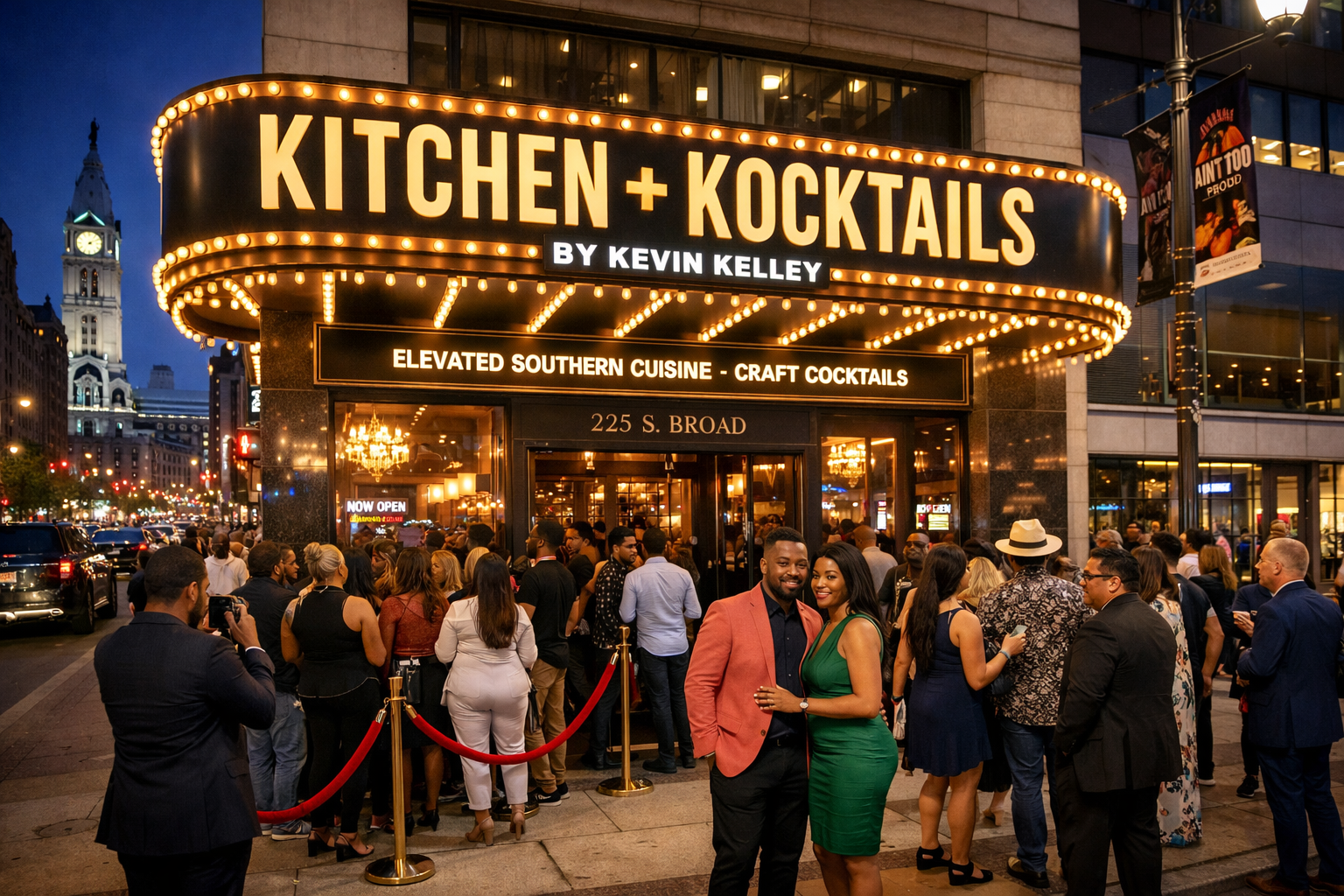
A Dallas Lawyer Just Opened Philadelphia's Largest Black-Owned Restaurant Steps From Where a Wawa Went Dark. Here's Why That Matters.
At 201 South Broad, the old Wawa flagship sat dark for years after closing in 2020 — a high-profile symbol of pandemic-era uncertainty on one of the city's most prominent corridors. Steps away at 225 South Broad, something happened that told a completely different story. A Dallas litigator named Kevin Kelley looked at the same block and opened his sixth Kitchen + Kocktails location — 7,200 square feet, 300 seats, 125 jobs, and Philadelphia's largest Black-owned restaurant. Same block. Completely different read on the same city. Here's what that investment means and what every Philadelphia business should be paying attention to.
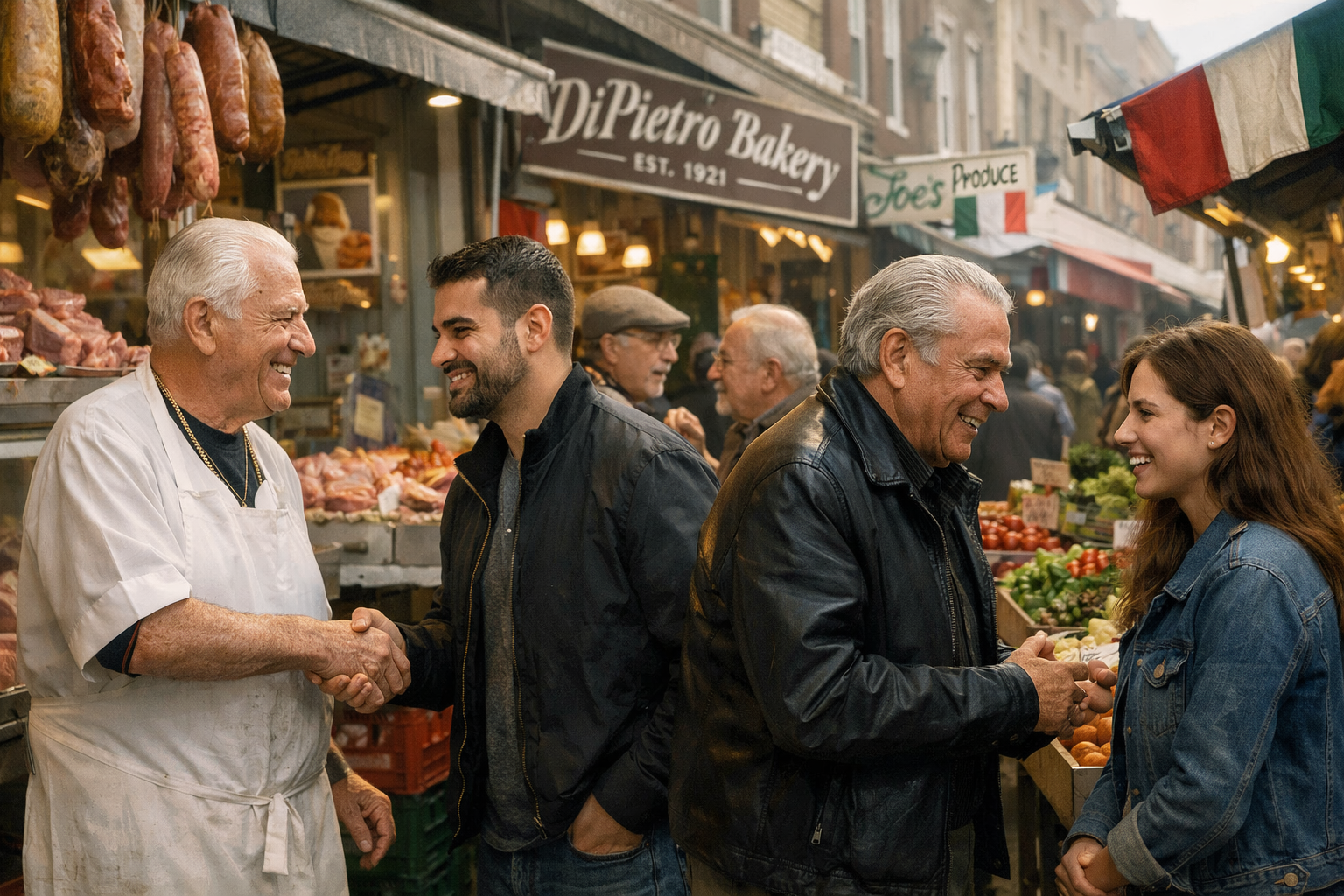
Why Philadelphia's Italian-American Community Still Does Business on a Name
There are neighborhoods in South Philadelphia where the same families have been buying from the same families for three and four generations. It's not nostalgia. It's one of the most psychologically durable trust systems ever built into a commercial culture — and it's very much still running in 2026.
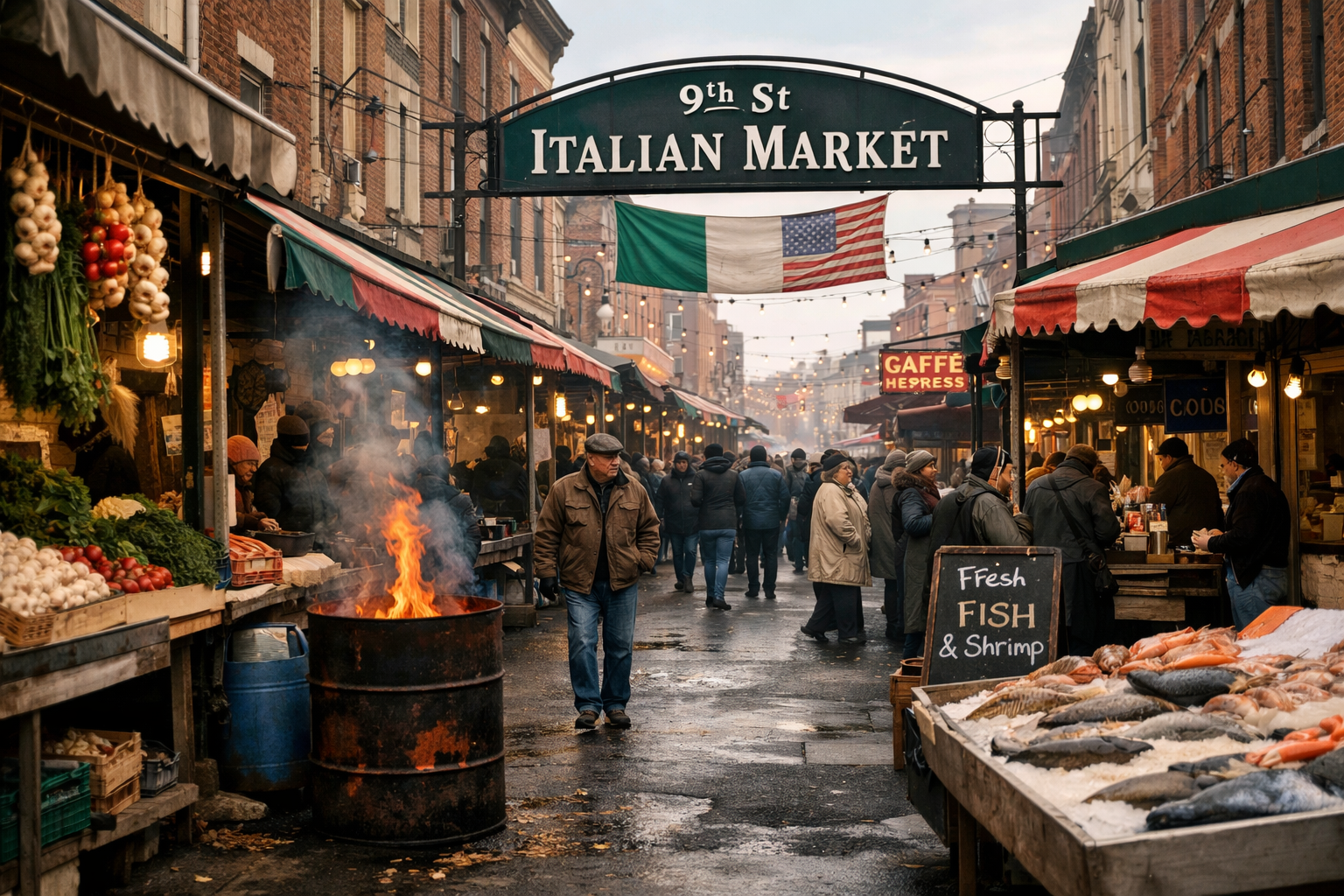
The Italian Market Didn't Need a Brand Strategy. It Was One.
There is no unified logo for the Italian Market. No brand guidelines, no color palette, no approved font. No marketing department coordinates the messaging. There are awnings, burn barrels in winter, and the smell of herbs and spices and fresh seafood and ground coffee layered together in a combination that exists nowhere else on earth. None of it was designed. All of it is real. And 140 years of genuinely real commerce on a specific half-mile of South Philadelphia has produced something that no brand strategy could have manufactured — and that no amount of money can replicate.