The Milli Vanilli Effect: Why AI's Content Flood Is About to Make Live Events Marketing's Most Valuable Channel
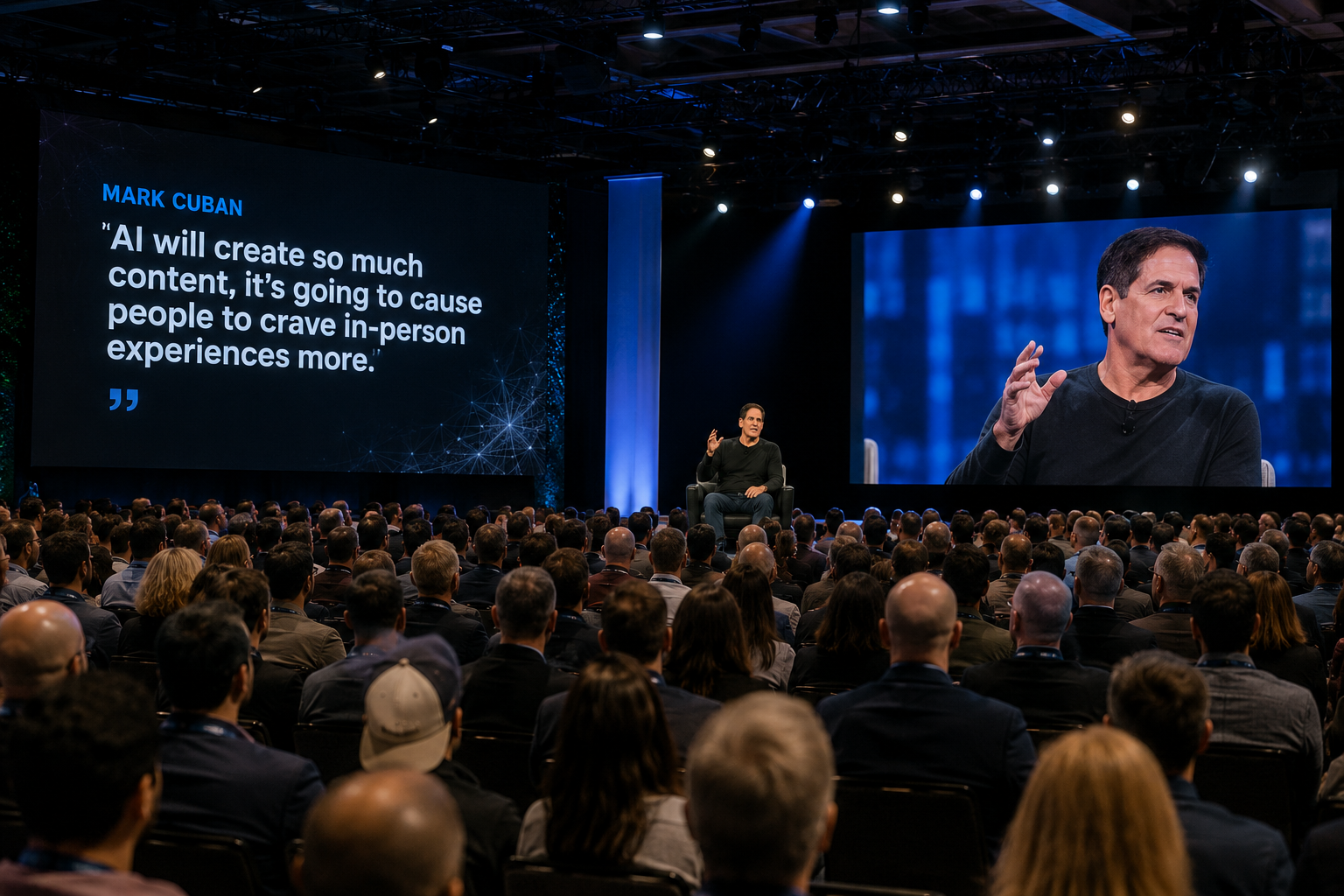
In June 2025, Mark Cuban posted a prediction that has been circulating through marketing and events circles ever since. Within three years, he argued, the world will be so saturated with machine-generated media that "people won't know if what they see or hear is real," and that flood will trigger "an explosion of f2f engagement, events and jobs." "Those who were in the office will be in the field," he added. "Call it the Milli Vanilli effect." TMCnet + 2
The reference is deliberate. Milli Vanilli were the '90s pop duo stripped of their Grammy for Best New Artist when it emerged they had lip-synced to vocals that weren't theirs. The deception itself wasn't the deepest wound — the betrayal of authenticity was. Fans didn't just want catchy songs; they wanted to know a real performer stood behind the microphone. Cuban's bet is that we are walking into a moment that feels exactly like that revelation, except applied to nearly everything we consume on a screen. Cybernews
He's right. And for any brand still deciding where to put its marketing dollars, the implications are hard to overstate.
The flood is already here
This isn't a distant forecast. The volume of synthetic content is climbing at a pace that's difficult to picture. The European Parliamentary Research Service projects roughly 8 million deepfakes will be shared in 2025, up from about 500,000 in 2023 — a sixteen-fold jump in two years. In 2024, deepfake attacks were occurring at a rate of roughly one every five minutes, and the barrier to creating them has collapsed: a convincing voice clone now requires as little as three seconds of audio. European Parliament + 2
What makes Cuban's framing sharp is that the problem isn't only fraud — it's erosion of baseline belief. The 2025 Edelman Trust Barometer found that fewer than half of consumers believe most of what they see online. A global Jumio study of more than 8,000 consumers found that seven in ten are now more skeptical of online content because of AI-generated fraud than they were a year earlier. Seventy percent of consumers say it has become harder to identify scams over the past year. Ivhelp + 2
When people can no longer trust the medium, they default to the one thing that can't be faked at scale: being in the same room as another human being.
Why live events are the channel AI can't touch
Cuban's logic runs in two directions. As digital trust falls, the relative value of in-person experience rises — not because events got better, but because everything else got harder to believe.
The data on what in-person events deliver is striking. Ninety-five percent of attendees say they trust a brand more after participating in one of its in-person events. Eighty-seven percent of professionals reported visiting a brand's website and wanting to engage further after attending a live event. Those are trust-and-intent numbers that AI-saturated channels are now actively bleeding. UpmetricsUpmetrics
This is also where the "field, not the office" half of Cuban's quote matters. The marketing functions most exposed to the credibility crisis are the screen-based ones — programmatic display, social feeds, generic email, polished video that audiences increasingly assume is synthetic. The function that gains is the one requiring a human to show up, shake a hand, and demonstrate something real.
The money is already moving in this direction
If this were only a philosophical argument, it would be easy to dismiss. But budgets are voting the same way Cuban is.
Events and trade shows account for 31.6% of total marketing budgets on average — the single largest channel allocation across B2B organizations. More telling is the momentum: in Q3 2025, event spend saw the largest increase of any marketing category, with a net balance of +10.9% of companies raising their event budgets — outpacing digital and paid media. When CFOs are tightening everywhere else, they're funneling money toward in-person. UpmetricsUpmetrics
The macro numbers reinforce the trend. The global events industry is estimated at $1.47 trillion in 2025 and projected to reach roughly $3.49 trillion by 2033, with corporate events holding the largest single share at about 38.8%. Technavio projects the market growing at a 12.9% CAGR through 2030, an increase of more than $1.1 trillion, and explicitly names technological integration and "AI as operational co-pilot" as a driver — note the framing: AI assisting events, not replacing them. UpmetricsTechnavio
And the B2B effectiveness data is just as clear. Fifty-two percent of B2B marketers rank speaking events and webinars among their top three most effective channels. The brands treating events as a line item are about to be out-positioned by brands treating them as the centerpiece. Upmetrics
The honest counterpoint
It's worth being fair to the skeptics. Cuban's prediction is an optimistic one, and not everyone shares it. When he posted it, universal basic income advocate Scott Santens pushed back, arguing it's a mistake to assume AI will simply generate more jobs. Decades of automation suggest displacement rarely maps neatly onto new opportunity, and the events boom Cuban describes may concentrate among brands that can afford to invest in physical presence rather than democratizing broadly. Benzinga
There's also a real chance the future is hybrid rather than a clean swing back to in-person. Industry projections suggest roughly 46% of meetings in 2026 will be fully in-person, while the virtual events segment is actually the fastest-growing at over 20% CAGR. The trust crisis doesn't kill digital — it raises the bar for what digital has to prove, and it makes the in-person anchor of any campaign disproportionately valuable. Upmetrics
None of that undercuts the core point. Whether the swing is total or partial, the direction is unmistakable: real, in-person, verifiable human connection is becoming the scarcest and most valuable asset a brand can offer.
What this means for your brand
The takeaway isn't to abandon digital — it's to recognize that digital's job is changing. In a world where audiences assume the polished video might be fake, your marketing needs a foundation of provable realness, and live presence is what provides it. The brands that win the next few years won't be the ones with the slickest AI-generated campaigns. They'll be the ones that showed up.
As Cuban put it, this is the golden era for being real. The question is whether your brand will be in the room when it arrives.
Ready to build a marketing strategy that wins in the age of AI? At Ritner Digital, we help brands cut through the noise with strategy grounded in what actually moves people. Let's talk about your next move →
Frequently Asked Questions
What is the "Milli Vanilli effect" Mark Cuban is talking about?
It's Cuban's term for what happens when AI-generated content becomes so convincing that people stop trusting digital media altogether. The name references the '90s pop duo who lost their Grammy after it emerged they had lip-synced vocals that weren't theirs — the betrayal of authenticity, not just the deception. Cuban argues that as AI floods our screens, audiences will swing back toward in-person experiences they can actually verify. Cybernews
Will AI replace event marketing?
The evidence points the other way. Technavio frames AI as an "operational co-pilot" for events — a tool that improves logistics, matchmaking, and analytics rather than a replacement for being there. The thing AI can't replicate is verifiable, in-person human connection, which is exactly why Cuban predicts an "explosion" of face-to-face engagement, events, and jobs. TechnavioYahoo Finance
Is the events industry actually growing, or is that hype?
It's growing, and fast. The global events industry is estimated at $1.47 trillion in 2025 and projected to reach roughly $3.49 trillion by 2033. Technavio puts the growth rate at a 12.9% CAGR through 2030. Most tellingly, event spend was the fastest-growing marketing category in Q3 2025, outpacing digital and paid media. Upmetrics + 2
Why are in-person events better for building brand trust?
Because trust is the currency AI is eroding everywhere else. Ninety-five percent of attendees say they trust a brand more after an in-person event, and 87% reported visiting a brand's website and wanting to engage further after attending one. When audiences assume online content might be synthetic, showing up in person becomes proof of authenticity. UpmetricsUpmetrics
How bad is the AI content and trust problem, really?
Significant and accelerating. An estimated 8 million deepfakes will be shared in 2025, up from about 500,000 in 2023. The 2025 Edelman Trust Barometer found fewer than half of consumers believe most of what they see online, and seven in ten consumers say they're more skeptical of online content because of AI-generated fraud than a year ago. European Parliament + 2
Does this mean I should cut my digital marketing budget?
No — it means digital's role is shifting. The smart move is to anchor your strategy in provable, in-person realness while using digital to amplify it. Roughly 46% of meetings in 2026 are expected to be fully in-person, while virtual events remain the fastest-growing segment — so the winning approach is integrated, not either/or. Upmetrics
How can my brand take advantage of the shift toward live events?
Start by treating events as a centerpiece rather than a line item, and build your digital presence around the authentic moments they create. That's exactly the kind of strategy Ritner Digital helps brands develop. Let's map out your next move →