The Quiet Shift Happening in Real Estate Marketing (And Why Most Agents Are Missing It)
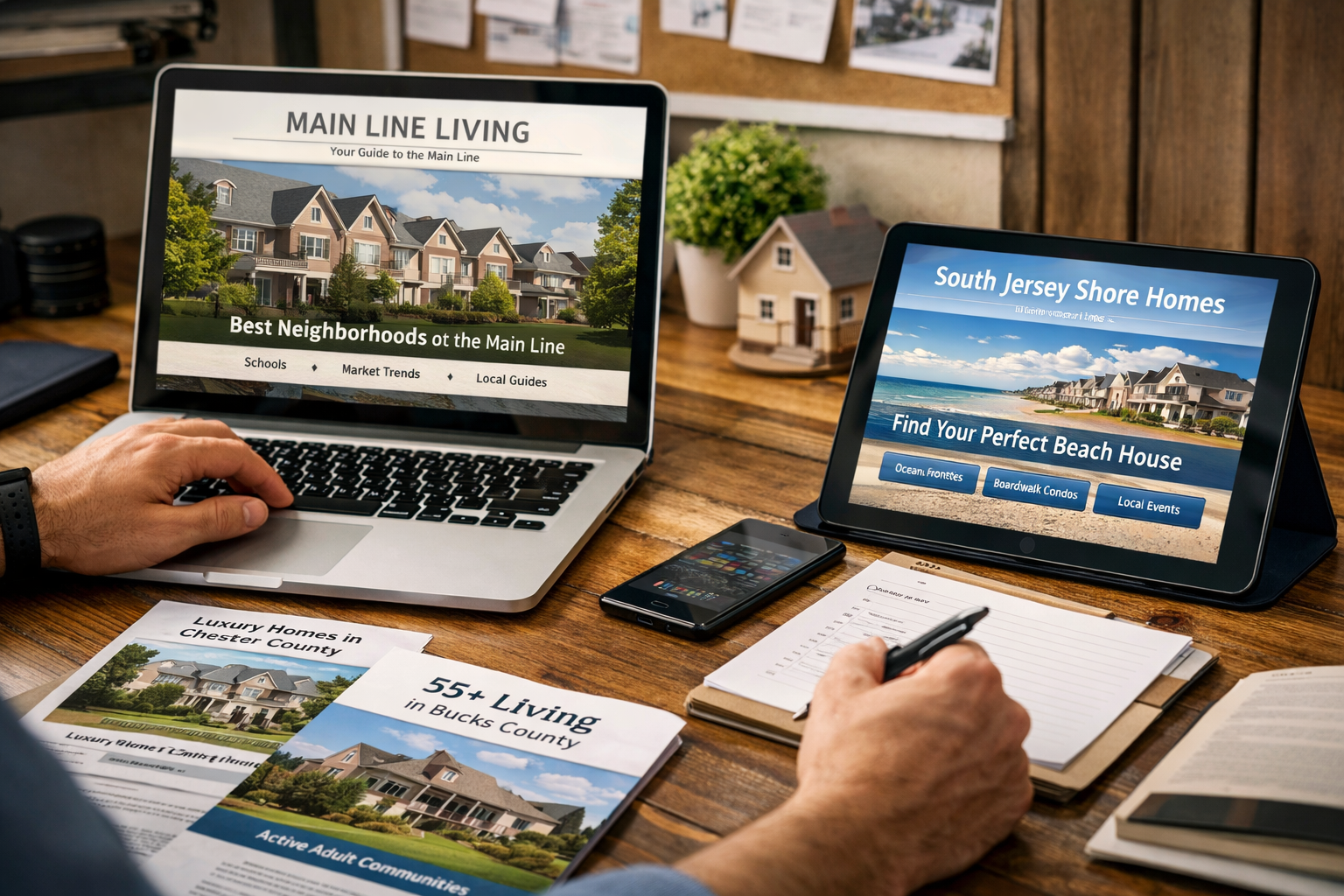
There's a pattern emerging in residential real estate marketing that doesn't get talked about in the trade publications, doesn't come up at the association meetings, and certainly isn't being taught at the brokerage level. But if you spend enough time watching how leads actually move — where they come from, what made someone pick up the phone or fill out a form — you start to see it.
The agents who are quietly building the most defensible, most profitable books of business right now aren't the ones with the biggest ad spend. They're not the ones with the most followers. They're not even necessarily the ones with the most years in the business.
They're the ones who figured out something fundamental about how people actually make decisions — and built their entire marketing approach around it.
How We Got Here: The Personal Brand Era
To understand where real estate marketing is going, you have to understand where it's been.
For most of the last two decades, the dominant strategy for any serious agent was straightforward: own your name online. Build the website. Get the reviews. Make sure that when a past client referred you to their neighbor and that neighbor Googled your name at 10pm, they landed somewhere that made you look credible, established, and worth calling.
It was a smart play, and in many markets it still separates the professionals from the amateurs. A dedicated agent website — one with real listings, real testimonials, a real bio that communicates expertise — signals legitimacy in a way that a Zillow profile or a brokerage page never quite does.
Agents who made that investment early have generally been rewarded for it. They show up. They get found. They close business that their less digitally-savvy competitors never even knew was in play.
But here's the problem with building everything around your name: it only catches people who are already looking for you.
Think about what has to happen for a personal brand site to generate a lead. Someone has to hear your name first — from a friend, a yard sign, an ad, a social post. Then they have to remember it. Then they have to search for it specifically. Then they have to find your site, find it credible, and reach out.
That's a long chain. And it means your personal brand site, no matter how well built, is largely a conversion tool for warm leads rather than a discovery engine for cold ones.
The broader market — the homeowners in Montgomery County who are thinking about selling but haven't told anyone yet, the empty nesters in Bucks County who've started having quiet conversations with their spouse about what comes next, the relocating families researching Chester County from three states away — most of them will never search your name. They don't know it. They're searching for answers, not for agents.
The Geography Problem
Southeastern Pennsylvania and Southern New Jersey together form one of the most complex, most layered real estate markets in the country. And yet most of the agents operating across this region are marketing themselves in exactly the same undifferentiated way.
Bucks County carries a particular kind of identity — historic, riverfront, artistic in patches, deeply suburban in others, with a strong sense of local pride that outsiders consistently underestimate. Montgomery County is one of the most economically diverse counties in Pennsylvania, running from the dense transit-accessible communities of the Inner Main Line all the way out to the rolling countryside of Upper Perkiomen. Chester County has become one of the most coveted addresses in the entire region, with top-ranked schools, preserved open space, and a quality-of-life reputation that draws buyers from across the country. Delaware County — often overlooked in regional marketing conversations — is one of the most transactionally active counties in the state, with a population intensely loyal to specific communities and neighborhoods.
Cross the bridge into South Jersey and the story gets even more layered. Burlington County stretches from the Delaware River waterfront towns all the way into the Pinelands, with a 55+ community footprint that rivals anywhere in the region. Camden County carries the dense, established-neighborhood energy of communities like Haddonfield, Cherry Hill, and Collingswood — places where homeowners have deep roots and even deeper equity. Gloucester County is one of the fastest-growing counties in New Jersey, with a demographic wave of longtime South Jersey residents moving outward from Camden County into communities like Mullica Hill and Washington Township.
An agent who builds their marketing around their name and their brokerage is trying to speak to all of these people simultaneously. Which means, in practice, they're speaking to none of them particularly well.
What People Are Actually Searching For
Here's what changes everything when you think about it clearly: people don't search for agents. They search for answers.
A 64-year-old couple in Warminster whose youngest child just got married isn't typing an agent's name into Google. They're typing things like "best places to downsize in Bucks County" or "55+ communities near Doylestown" or "how much equity do I have if I sell my house now." A family relocating from Chicago to a pharma company in Lansdale isn't searching for an agent — they're searching "best school districts in Montgomery County" and "what's it like to live in Blue Bell." A 71-year-old in Haddonfield who's been in the same house for 34 years and is starting to think about what the next chapter looks like isn't looking for an agent. She's looking for someone who understands her situation.
None of those searches lead to an agent's personal brand website. And yet every one of those people represents a motivated, high-quality potential client who is actively in-market for exactly what a skilled agent provides.
The question is whether anyone has built something designed to meet them where they are.
The Proof That It Works
The good news is this isn't theory. There are agents operating in this exact region right now who have figured it out — and the results speak for themselves.
BucksCountyBoomers.com is the clearest local example. Built and operated by Christina Swain of The Swain Team, the site isn't a personal brand page. It isn't a brokerage website. It's a destination built entirely around one audience: Bucks County homeowners in their late 50s through mid-70s who are navigating the 55+ market, whether that means selling a long-time family home, exploring active adult communities, or figuring out how to make the most of the equity they've spent decades building. The site covers the specific communities — Doylestown, Newtown, Yardley, Langhorne — in the specific language that audience is actually using. It ranks for the searches those people are actually doing. And it captures leads that a generic agent website would never touch, because those leads never would have found a generic agent website to begin with.
The same model is playing out across the bridge in South Jersey. DownsizeInSouthJersey.com is built specifically around homeowners in Camden, Burlington, and Gloucester Counties who are ready to make a move but need help navigating the transition. It's not selling real estate — it's serving a life stage. And SellingInSouthJersey.com, run by the Flenard Realty Group, has built its entire digital presence around a specific regional identity rather than around the agents themselves. The audience comes first. The agent relationship follows.
These sites share a common architecture. They're built around who they serve, not who runs them. They answer the questions their audience is already asking. And they create a relationship of trust and relevance before a single phone call ever happens.
The Life-Stage Dimension
Of all the ways to segment a real estate market, life stage may be the most powerful — and the most underutilized in this region.
Real estate transactions don't happen randomly. They cluster around predictable life events: marriage, children, job changes, retirement, death of a spouse, kids leaving home, health transitions that change what a house needs to provide. Every one of those moments creates a buyer or a seller, and every one of those moments comes with a distinct emotional context that shapes how that person wants to be reached.
The Baby Boomer cohort is the most significant life-stage story in residential real estate right now and will be for the next decade. This is a generation that, by and large, has been sitting on extraordinary equity in homes they've owned for 20, 30, sometimes 40 years. They're now at the age where the calculus starts to shift. The large home that was once a practical necessity starts to feel like a logistical and financial overhead. The math is changing. The conversations with spouses and adult children are starting. And the agents who have positioned themselves as the authority for that specific life experience — who have built the content, the resources, the community presence that speaks directly to that journey — have an extraordinary advantage.
In Bucks County, that positioning is already claimed. BucksCountyBoomers.com exists, it's active, and it's building relationships with that audience every day.
In Montgomery County, nobody has done it. There is no MontcoDownsize.com. There is no site built specifically for the Montgomery County homeowner in their 60s who is trying to figure out whether now is the right time to sell the house in Lansdale or Lower Gwynedd where they raised their family, and what the 55+ community landscape around Blue Bell or Ambler actually looks like. That audience is out there, searching. Nobody is meeting them.
In Chester County — where home values are among the highest in the region and the equity stakes are enormous — there is no dedicated destination for the aging homeowner community in West Chester, Malvern, or Downingtown who is beginning to think about the next chapter. Nobody has built ChesterCountyNextChapter.com. Nobody has built the resource that speaks to someone who has spent 30 years in a four-bedroom colonial near the Brandywine and is now facing one of the most significant financial decisions of their life.
In Delaware County, the gap is even wider. From the mature neighborhoods of Media and Swarthmore to the established communities of Havertown and Springfield, there are thousands of homeowners whose equity position makes them among the most valuable potential clients in the entire region. Nobody has built a platform that speaks to them specifically. Nobody has claimed that territory.
Across Camden County, Burlington County, and Gloucester County on the New Jersey side, the same opportunity exists for agents willing to go deeper into specific audiences — the Burlington County homeowner moving from a large colonial in Medford into a 55+ community in Eastampton, the Camden County seller in Voorhees or Marlton who wants to understand their options without feeling like they're being sold to.
The map of this region is full of white space. The agents who claim it now — who build something real for a specific audience in a specific place before anyone else does — will hold those positions for years.
Why This Changes the Entire Relationship
When an agent builds their presence around a specific audience rather than around themselves, something fundamental shifts before the first conversation even takes place.
A generic real estate website says: I am an agent. I can help you buy or sell.
A platform built around a specific community or life stage says: I understand your situation. I've thought deeply about the specific challenges you're facing. I have information that's actually relevant to you.
The second positioning doesn't just attract more of the right people — it changes the dynamic of every interaction that follows. The prospect who finds you through a resource that spoke directly to their situation arrives already trusting that you understand them. The sales process is shorter. The objections are fewer. The relationship starts from a fundamentally different place.
This is the difference between being a vendor and being an authority. Vendors compete on price, on availability, on persuasion. Authorities are sought out. Authorities get referrals. Authorities don't have to explain why someone should work with them — the positioning already did that work.
The Pipeline Ownership Question
There's another dimension to this that doesn't get discussed enough: who actually owns the relationship.
The major portals — Zillow, Realtor.com, and their competitors — have spent fifteen years and billions of dollars inserting themselves between agents and clients. A huge percentage of buyer and seller leads now flow through platforms that charge agents for access to their own potential clients, often after those clients have already been exposed to competing agents on the same page.
Most agents continue to participate because they don't see an alternative for generating new business at scale.
The alternative is owned pipeline — lead flow that comes directly to you, through platforms and content and community presence you control, without a toll-taker in the middle.
A Montgomery County homeowner who finds your content while researching their options, who reads through resources that speak directly to their situation, who signs up for a market update you've been publishing consistently — that person is in your database, with a relationship that no portal can commoditize or sell to a competitor.
The agents building these owned pipelines in Bucks County, Delaware County, Chester County, Montgomery County, and across South Jersey right now are establishing advantages that will compound over years. The agent who has spent 18 months publishing consistently for a defined audience and building a database of thousands of people in that audience has something that cannot be bought on Zillow. It can't be replicated quickly. It becomes a genuine moat.
The Long Game
None of this produces results overnight. That's worth saying clearly.
Building real authority with a specific audience takes time. Content takes time to rank, to circulate, to build trust. A database of genuinely qualified prospects doesn't appear in 90 days. The compounding effects of a well-executed strategy — where content leads to contacts, contacts lead to clients, clients lead to referrals, referrals lead to more content — take 12 to 24 months to really start showing up in meaningful ways.
Which is exactly why most agents won't do it.
The agents who look back five years from now and are glad they started are the ones who understand that the market is not getting less competitive, the portals are not going to get more generous, and building something that genuinely serves a specific audience is the highest-leverage investment available to them.
The white space on this map won't stay white forever. The agents who move first in Montgomery County, Chester County, Delaware County, and across the South Jersey counties will hold those positions for a long time. The ones who wait will eventually find that someone else already owns the conversation they wanted to be part of.
The ones who keep refreshing their Zillow dashboard instead will wonder, a few years from now, why it only kept getting harder.
Ready to Build Yours?
If you're a realtor who read this and immediately started thinking about which audience you'd build for — which county, which life stage, which conversation nobody is owning yet — you're already ahead of most of your competition.
The idea is the easy part. Executing it well — building something that actually ranks, actually converts, and actually positions you as the authority in your market — is where most agents stall out.
That's exactly what Ritner Digital does. We work with real estate professionals to build niche lead generation sites designed around your market, your audience, and the kind of exclusive pipeline that doesn't depend on Zillow, doesn't get commoditized, and compounds in your favor the longer it runs.
If you're ready to stop renting leads and start owning them, reach out. We'll talk through what this looks like for your specific market and whether it's the right fit.
Frequently Asked Questions
What exactly is a niche lead generation site and how is it different from my agent website?
Your personal agent website is built around you — your name, your credentials, your listings. It works well for people who already know who you are and are trying to verify that you're worth calling. A niche lead generation site is built around a specific audience and their specific situation. It attracts people who have never heard of you but are actively searching for answers that are directly connected to a real estate decision. BucksCountyBoomers.com isn't a realtor website — it's a resource for a specific kind of person going through a specific kind of transition. That distinction is what makes it work. The two serve completely different functions, and the strongest setups eventually have both running in tandem.
Do I have to give up my existing website to do this?
Not at all. These sites run completely independently of your existing web presence. Your personal brand site stays exactly as it is. The niche site operates as a separate destination with its own domain, its own content, and its own audience — feeding leads directly into your pipeline without touching anything you've already built.
There are already sites like BucksCountyBoomers.com and DownsizeInSouthJersey.com out there. Isn't this market getting crowded?
In Bucks County and parts of South Jersey, the early movers have already staked their claim — which is exactly why the opportunity in Montgomery County, Chester County, Delaware County, Camden County, Burlington County, and Gloucester County is so significant right now. Nobody has built a serious niche platform for the Montgomery County homeowner approaching retirement. Nobody owns the Chester County downsizing conversation. Nobody has claimed the Delaware County equity-rich seller audience. These are large, wealthy, transactionally active markets with no dedicated destination serving their specific life stage. The agents who move first in those territories will hold them for a long time.
Why does the domain name matter so much?
Because the domain is the first signal a visitor gets about whether this place is for them. A URL like BucksCountyBoomers.com or DownsizeInSouthJersey.com communicates the audience and the geography before anyone has read a single word. It also carries real SEO weight — search engines take geographic and topical signals in domain names seriously, particularly for local and regional queries. A well-chosen domain isn't just branding. It's infrastructure that starts working for you from day one.
What kind of content goes on these sites?
Content that speaks directly to the concerns, questions, and decisions your target audience is already researching. For a site targeting Montgomery County homeowners approaching retirement, that might include guides on timing a home sale around retirement, breakdowns of 55+ community options across Blue Bell, Ambler, and Lansdale, equity calculators, hyperlocal market updates, and Q&A content that mirrors what people are actually typing into Google. For a Chester County-focused site, the conversation might center on the unique equity position of longtime West Chester or Malvern homeowners and what their options actually look like in today's market. The goal in every case is to be the most useful resource available for that specific person in that specific situation — not to look like a real estate website.
How do these sites actually generate leads?
Through a combination of organic search traffic, targeted social distribution, and conversion tools built into the site itself — things like market report signups, home valuation requests, downloadable guides, and contact forms positioned around specific next steps that are relevant to the audience. The traffic comes in because the content answers real questions people are already asking. The leads are captured because the site is built to convert visitors into contacts, not just inform them and send them elsewhere.
What's the realistic timeline for seeing results?
Honest answer: 6 to 12 months before organic search traffic becomes meaningful, and 12 to 24 months before the compounding effects really kick in. Paid social and targeted local promotion can accelerate the early stages, but the long-term value of these sites comes from the organic presence they build over time. This is not a short-term lead purchase. It's an asset that appreciates the longer it runs — and one that no portal can take away from you.
Is this only for agents targeting the Boomer demographic?
Life stage is one powerful segmentation lens, but it's not the only one. Sites built around first-time buyers, relocating professionals, divorce situations, estate sales, specific township or borough communities, or particular property types can all work extremely well depending on the market and the agent's strengths. The underlying principle is the same regardless of the audience: build something for a specific person in a specific place, not for everyone everywhere. The agents getting the most out of this approach are the ones who know exactly who they want to serve and build with that person in mind from the start.
What makes Ritner Digital the right agency to build this?
Building a site that ranks, converts, and actually generates exclusive pipeline requires more than a good-looking design. It requires a content strategy rooted in how your specific audience searches, a technical foundation that performs in local and regional SEO, and conversion architecture that turns visitors into contacts rather than just impressions. We understand both the digital strategy and the regional real estate market — and we've seen firsthand what separates the sites that build real pipelines from the ones that just take up server space.
How do I get started?
Reach out to us at Ritner Digital Get Started We'll start with a conversation about your market, your target audience, and what a site built specifically for your situation would look like. No pressure — just a straightforward conversation about whether this is the right move for where you are in your business right now.